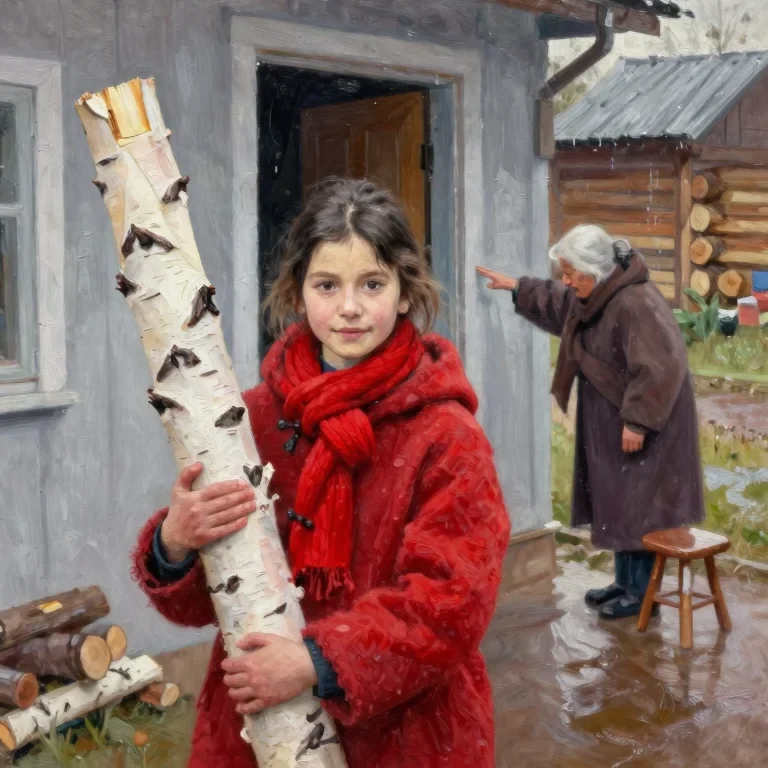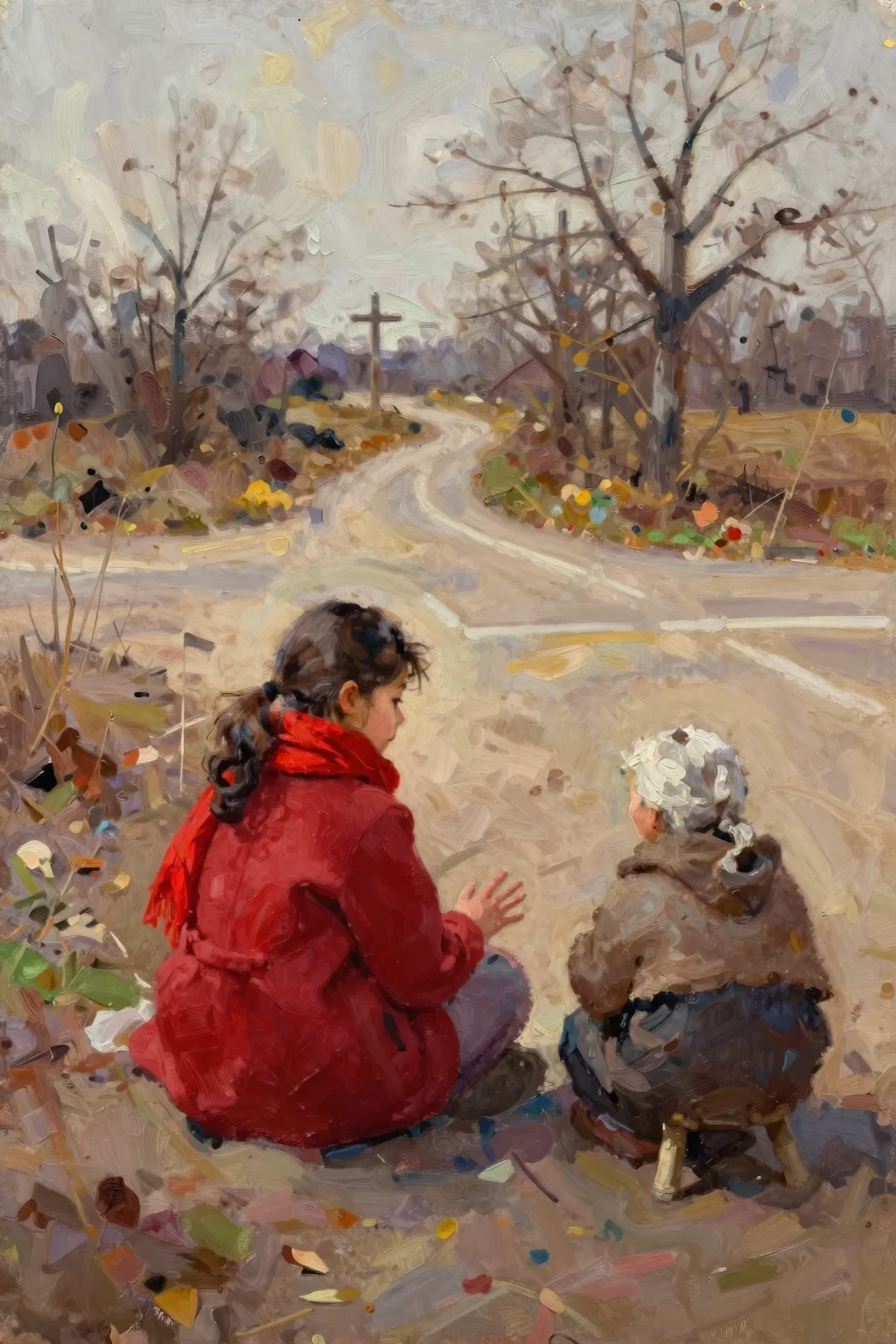
Nadya knew every story in the valley, and she knew which ones were true, and she was proud of the two things in that order. She was eleven years old, and she could tell the story of the hare and the three brothers in any of its four endings, and who had told it to her in which kitchen, and whether the teller had been crying at the end of it.
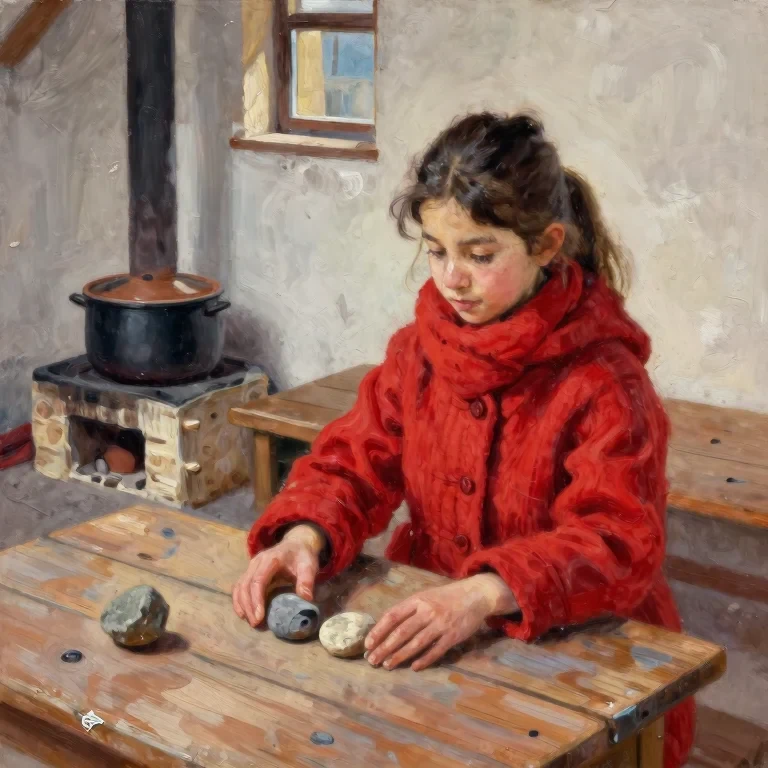
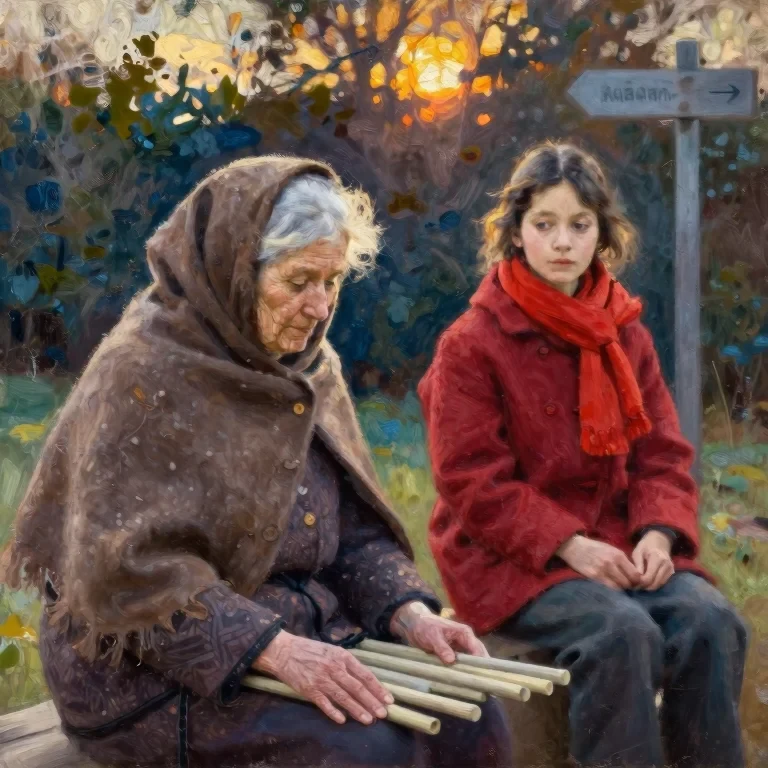
The crossroads was two hours up the winter road, past the frozen ford and the two birches that had been struck by lightning in a year nobody could date. There was nothing built at it. There was a three-legged stool, a bundle of ash rods tied with cord, and the Old Woman, who was small and bent and had no hut near her and no fence, and nothing behind her but four fields and the sky. Nadya's grandmother had spoken about this exactly once, in the autumn, and had said one thing and would not say a second. “She takes stories,” her grandmother had said. “Not coin. A story she has not heard. And she asks three times, and the third time is the one to watch.”
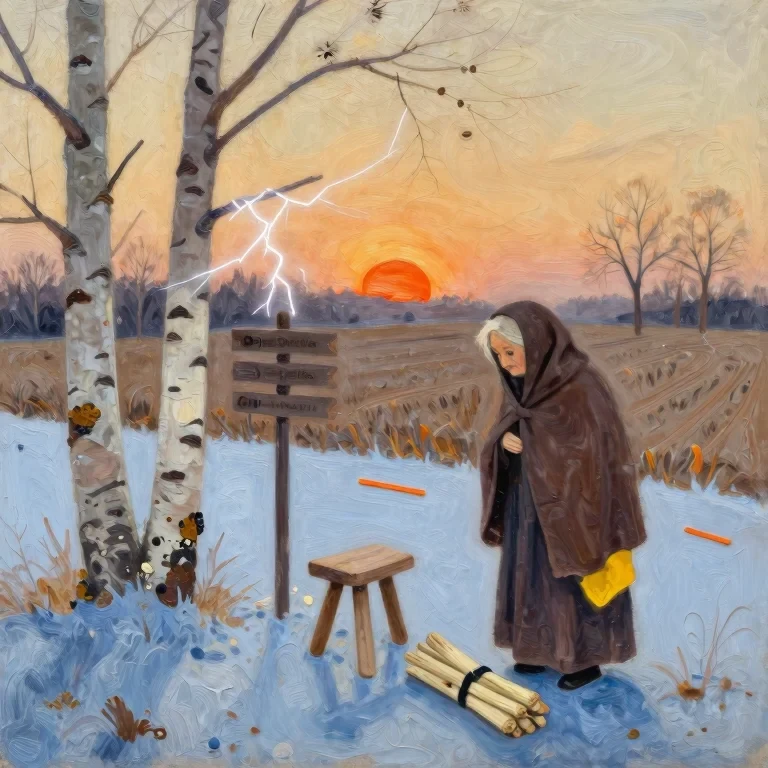
“You told me not to go.” “I told you not to go on your own.” Her grandmother turned her cup a quarter turn on the saucer. “I also told you to go. One of the two is the louder, and the louder one is the one that will keep you in this house all winter.” Nadya had thought about that for four months and then had gone.
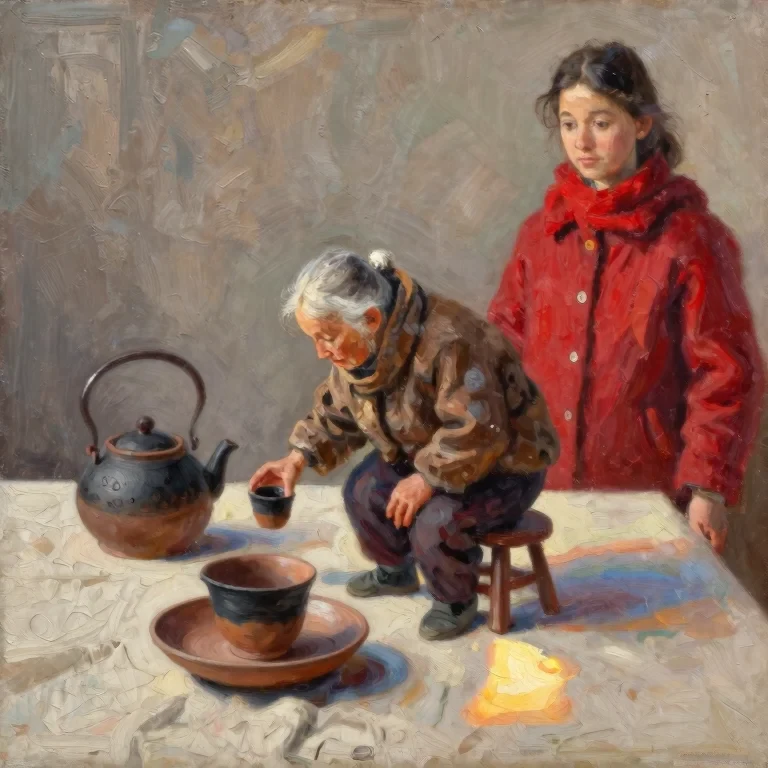
The first thing the Old Woman said was not a greeting. “Sit down, Nadya, and give me a story about a horse.” There was only the stool, so Nadya sat on the ground with the frost coming up through her skirt, and she told of the grey horse that pulled the sled up the frozen river in the year of the deep snow, and how it was the miller's horse and not his own. The Old Woman listened with her whole body. She did not move, and she did not put the bundle down. The tar on the cord smelled in that cold like a stove in another room. “That went down,” she said. “That was a story I had.”
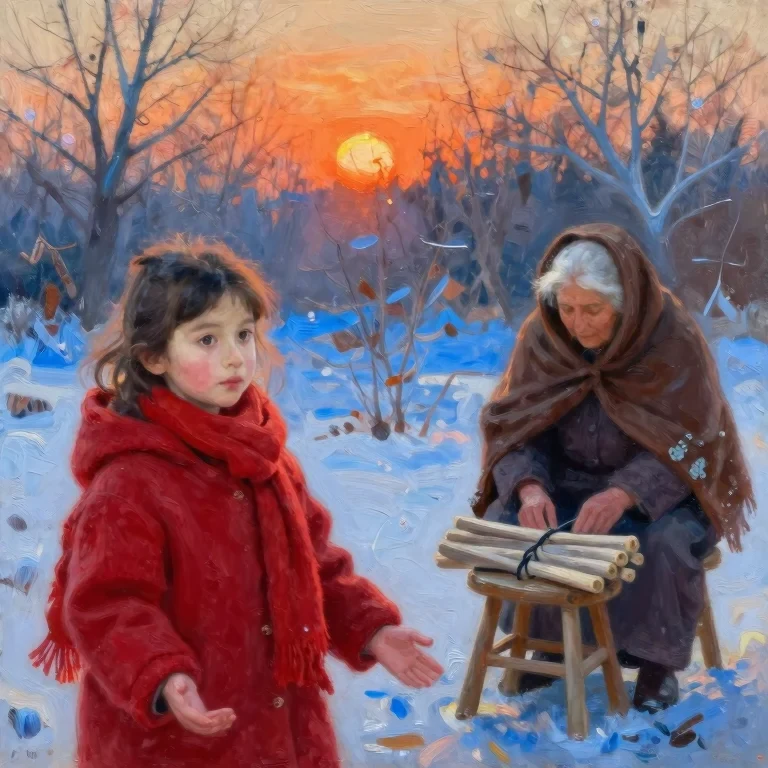
“Then take it,” said Nadya. “That is what you asked for.” “That was the first time.” The Old Woman turned the stool a hand's breadth. “Now a story about water, and make it one that nobody in your valley can go and check.”
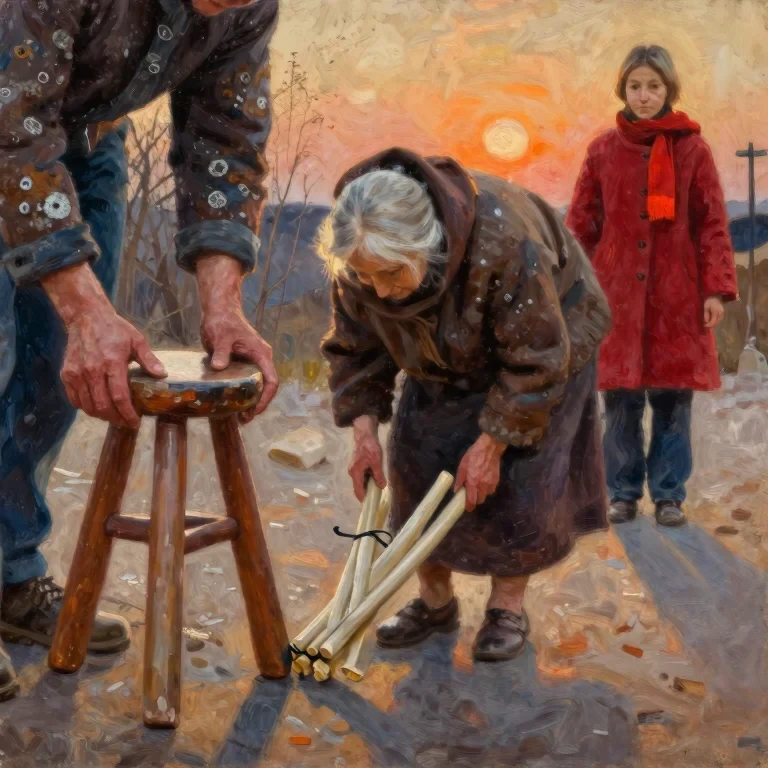
Nadya told the water one. The well behind the peat shed had gone dry three times in ninety years, and the third time it had been because somebody had put a horse in it. “You have told that one before,” said the Old Woman. “Not to me. You have told it with your hands. I could hear your hands.” Nadya's face went hot, because nobody had ever said it out loud, and being told it by an old woman in a field was worse than being told it by her aunt.
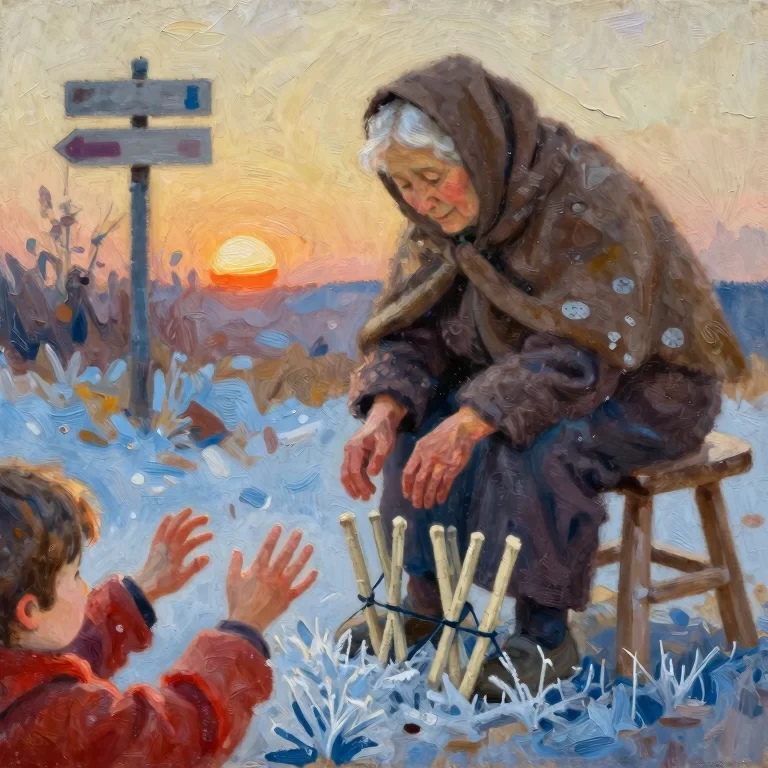
“The third time,” said the Old Woman, “I want a story about a woman who lied. And I want the one where the lie was true when she said it. The one about your aunt in the winter of the fever, and the six weeks, and what was said in the room.”
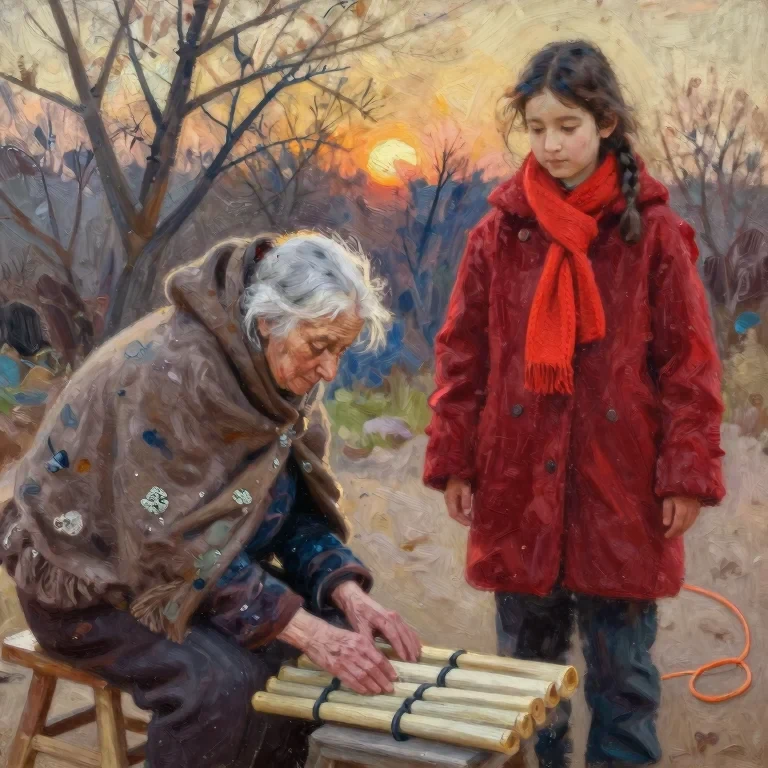
It was nine sentences, and she had been given it when she was five, and she had never once told it aloud to a living person. She stopped in the middle and drank snow. The Old Woman moved for the first time. She put both hands on the bundle of ash rods and squeezed once. “That one went down and I did not have to swallow it,” she said. “Two more.”
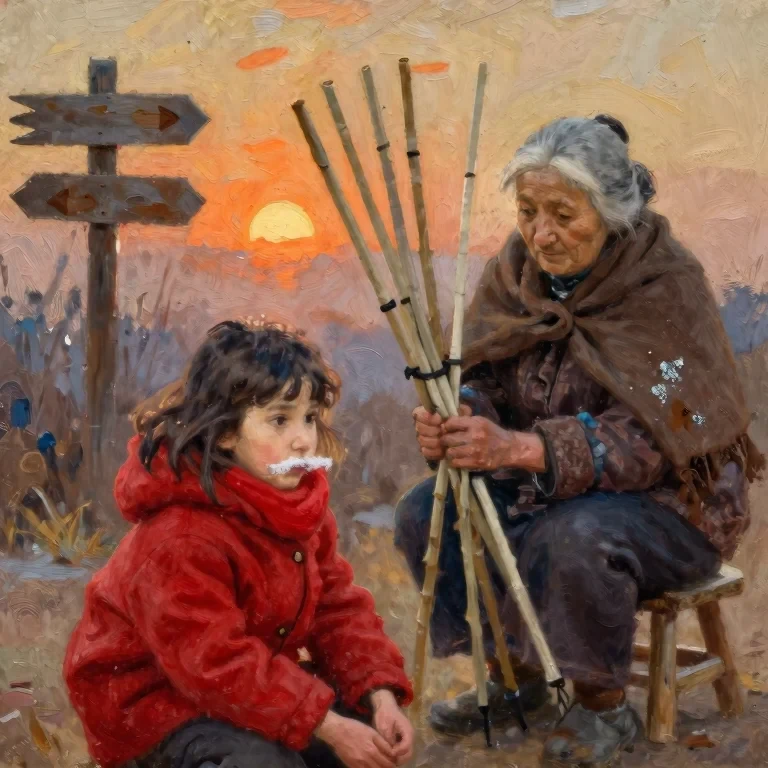
The sun came off the low fields and lay along the hedges. The third story was about a man who sold the same field twice and had to sell it a third time. When she had finished, the Old Woman said, “Good,” and nothing else. “Do you want another?” said Nadya. “I want the one you have not been given,” said the Old Woman.
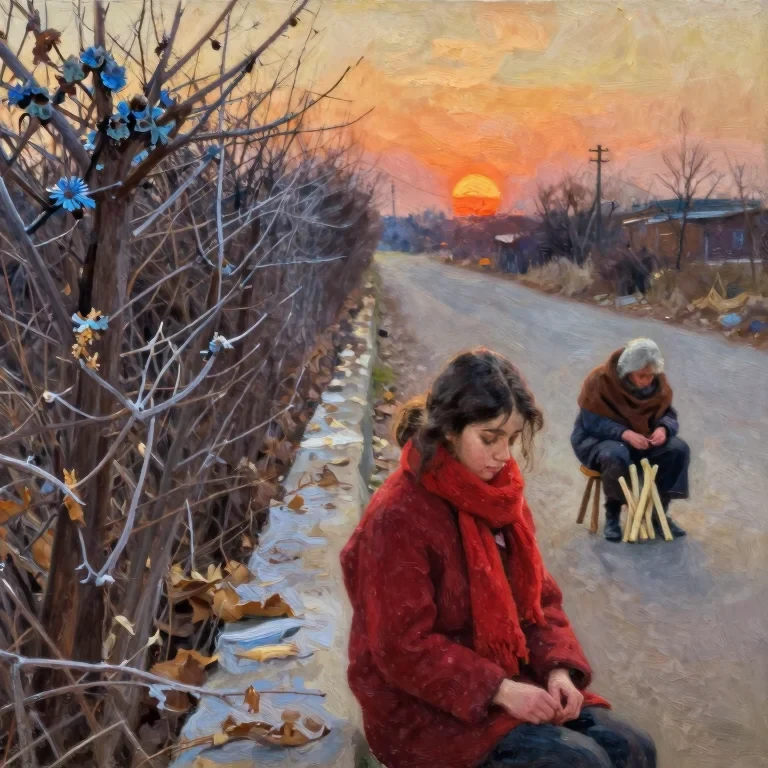
“Nobody has told me a story I have not had,” said Nadya. “I am not from anywhere else.” “Then I will say it plainly.” The Old Woman leaned down, and Nadya could smell the ash and the tar. “Not a story you have not heard. A story nobody has ever told you. One that has only ever been inside your own head, and that you have never said out loud to one living person. That one. That is the third time, and it is the one I watch for.”
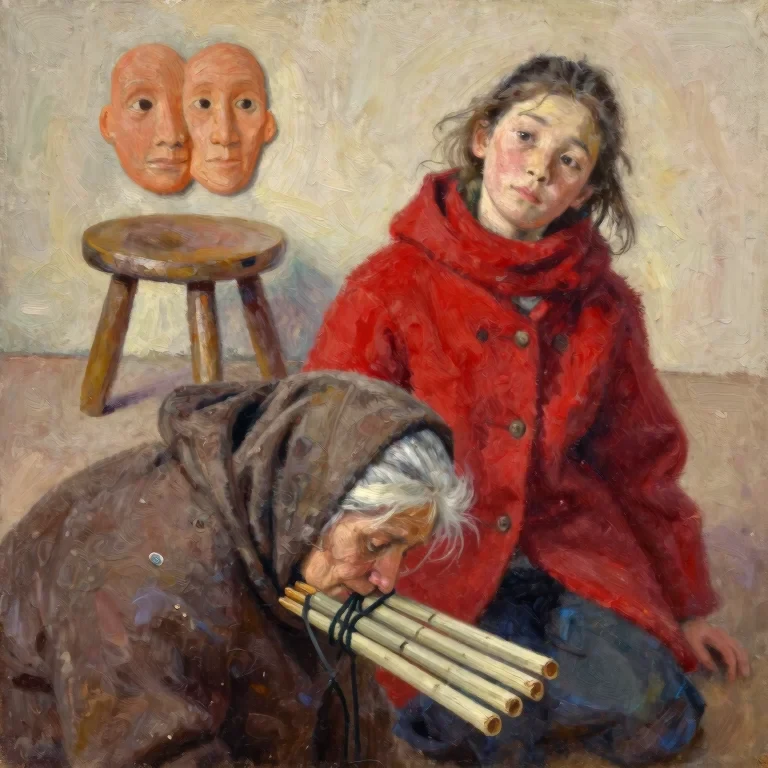
There was nothing in the field. There was one rook, somewhere off over the plough. Nadya opened her mouth and nothing came out of it. Then she understood that she knew exactly one story in the world the Old Woman did not have. It was a Wednesday in the sixth month of a year when Nadya was nine. It began with a lime sack in the passage and it ended with her mother at the gate. It had never once been in her mouth in words. So she told it.
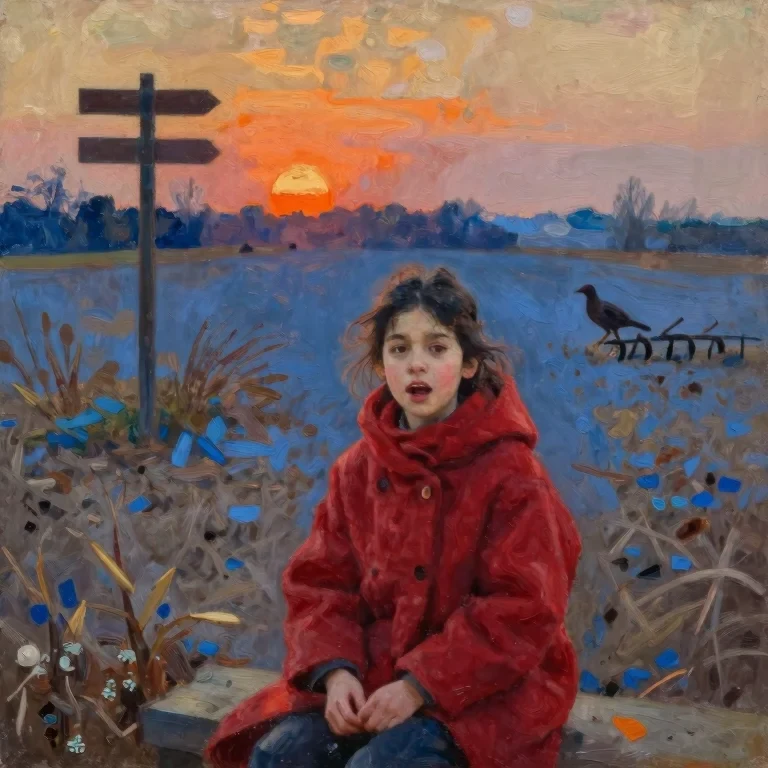
It took a long time. She told it in the order it had happened, and the Old Woman let her get all the way to the gate before she said one word. Nadya said that her mother had not looked back, and that she had been angry about it for a year, and proud of the anger. The Old Woman sat quite still with her two hands on the bundle of rods. At the end she nodded once. “Then it is mine now,” she said, “and it is not yours, and there is no putting it back.”
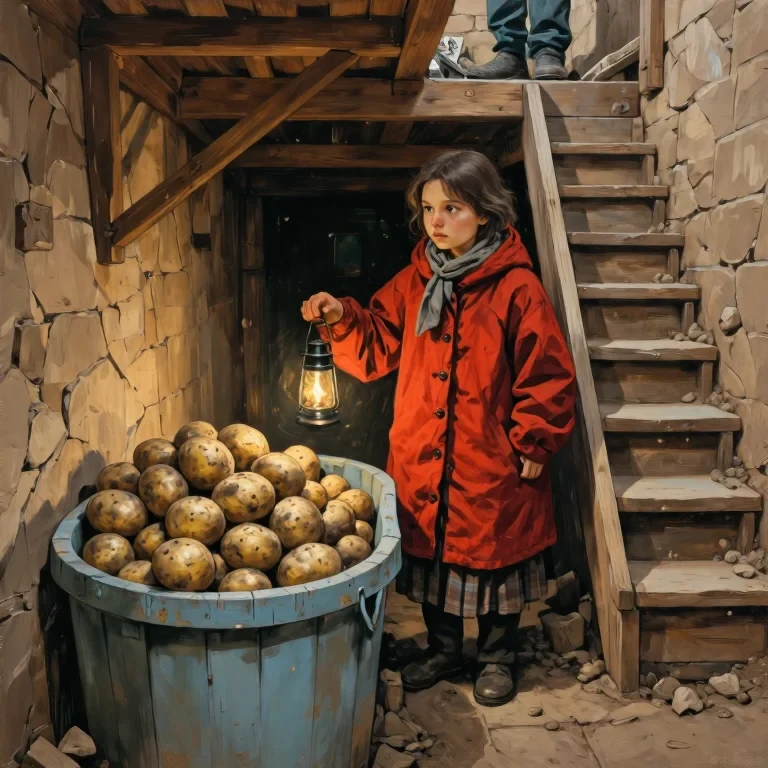
Nadya walked home in the dark, and it took her two hours longer than it should have done. The winter after that one was a winter. There was a great deal of wood to cut and Nadya cut all of it. Her grandmother's knee was bad from the Feast of the Colds onward. The river froze two hands thick and stayed frozen until the middle of the second month. Nobody in the house died. There were always enough potatoes and there were too many of that, and Nadya was the one who went down to the cellar and looked, and her grandmother said, “Well, and then what,” and then they both said what.
But the summer was gone. She found that out in the first month of the thaw, when the lane was mud to the axle. She sat on the step in front of her own house and waited, the way you wait for a tune, for the summer of the year she was nine. It would not come. She could get at the outside of it without any trouble. She could see the passage and the lime sack and the cart at the gate with the left wheel up, and her mother's back. She could remember, the way you remember a number, that her own face had been wet.
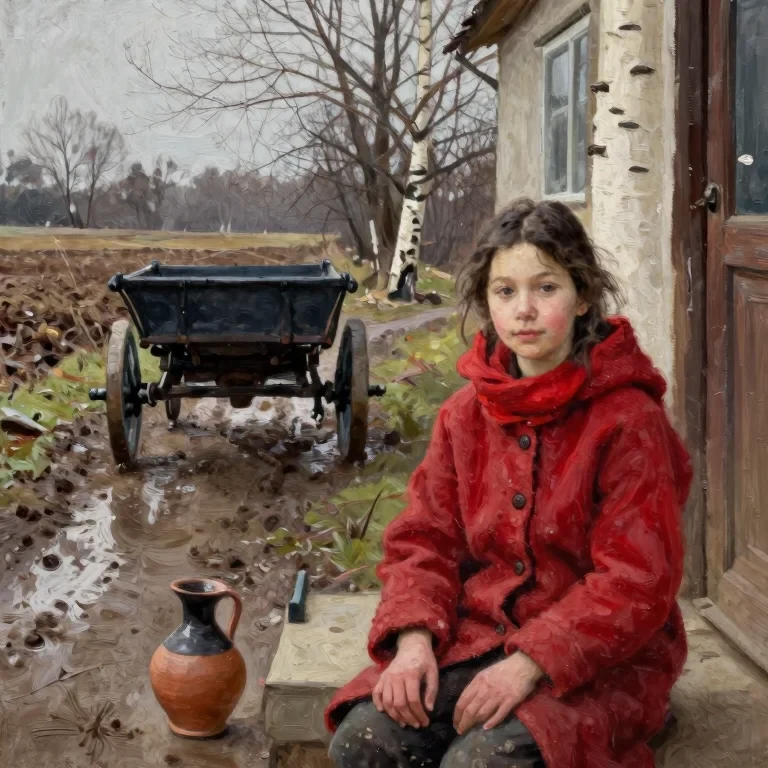
But the day itself was not there. Not the smell of the lane that day, not the hour of it, not what she had felt at the time. She had a shape with a hole in it the shape of herself, and where her mother was in it there was a place kept clear. By the third week she told her grandmother, because there was nobody else she could ask, and because nobody else would have noticed.
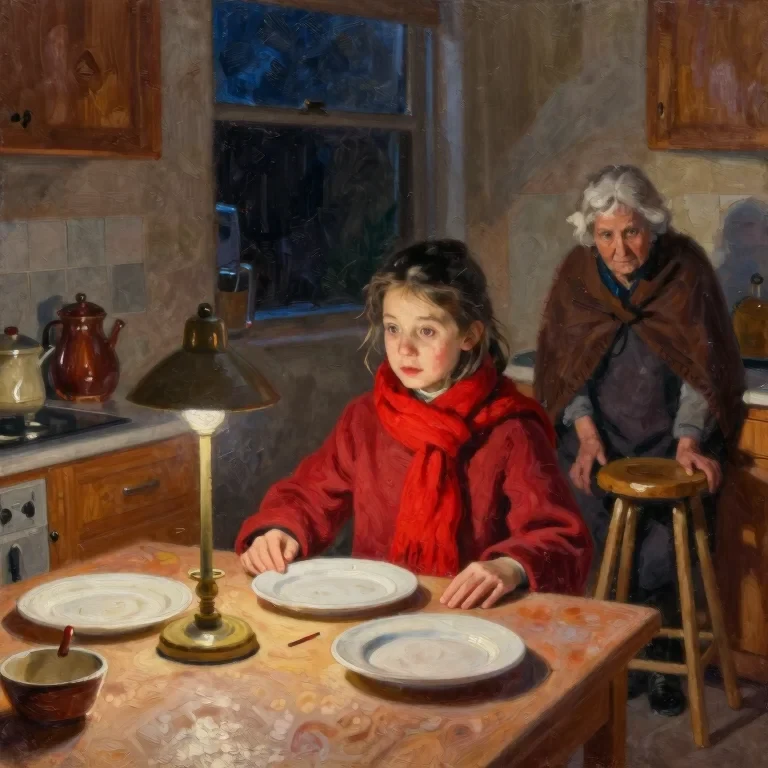
Her grandmother was quiet a long time. Then she sat down and told the story, which was a thing Nadya had never seen her do in eleven years. She told it in her own voice, and she told it better. She put in a thing about the lime, that the sack had split and left a white handprint on the doorframe which was still faintly there in a certain light. Her grandmother said she had noticed it every day for three years and had said nothing about it, which is a different thing and is not nothing.
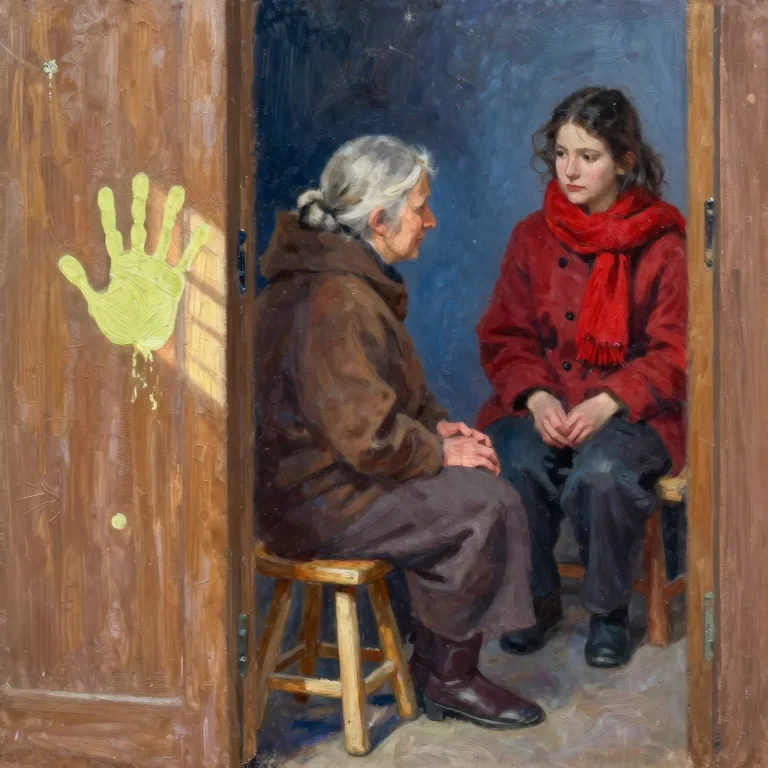
And Nadya listened to her own summer come back into the room in somebody else's mouth, and got the smell of it, and the hour of it, and what she had felt on the day. It was better because it had been said out loud in a warm room to somebody who already knew how it ended. And it was not hers. She cried about that once. Her grandmother let her, and then handed her the cloth and said there was bread and there was nothing the matter with it.
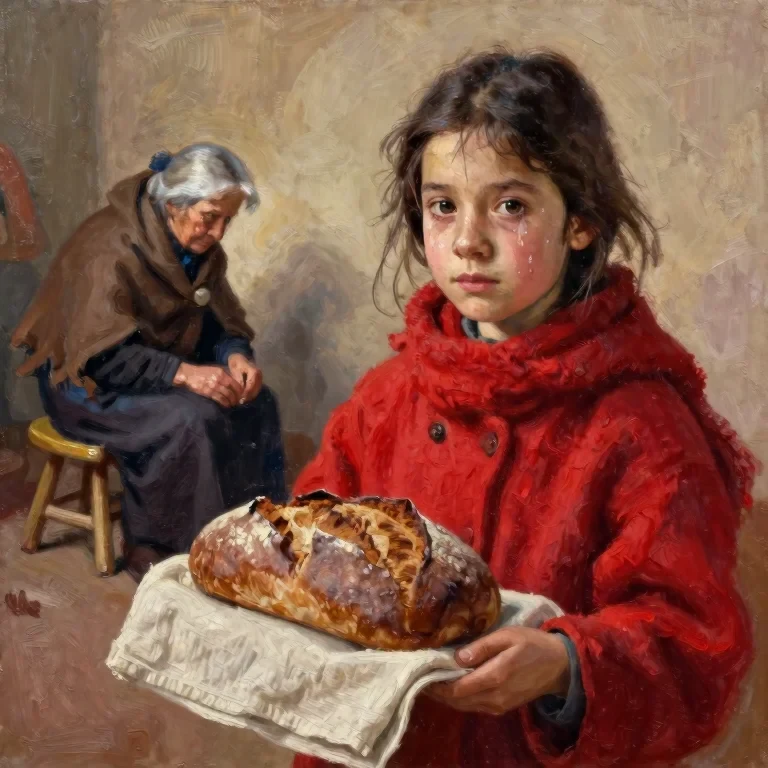
“Some things are worth telling,” her grandmother said. “And the price is that they stop being yours. That is the whole of it. It does not get cheaper, and it is not done to you as a punishment. I gave the best one I had for a thing I wanted at a crossroads, and I would give it again, and I have not found a better bargain since.” Nadya thought about the tar on the cord, and the rook over the plough. “All the same,” she said, “I would rather have it somewhere.” “That is the whole of what wanting is,” said her grandmother. “Now get the wood in, it is going to rain.”