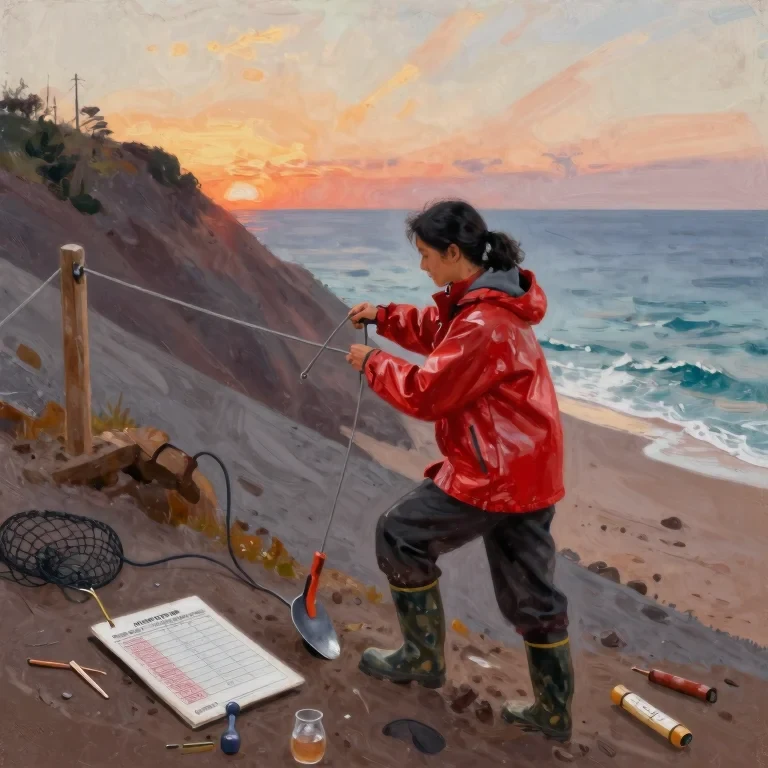
The count was four hundred and thirty one burrows and Miri Mahuru wrote it on the return sheet in the ship's lounge with a hand that had been wet for six hours, and the ship left the island on the Saturday at six in the morning because the ship always leaves on the Saturday. That sheet went into a databag in the radio room. It went into a spreadsheet in Auckland in March and into a graph in April, and the graph showed a line coming down, and somebody who was not on the island put a sentence under the line that said the colony had lost more than half its burrows since 2015. The sentence was true of the plot. It was not true of the seabirds, and nobody would find out which of those two things it was true of for another fourteen months.

Plot C is on the northern slope above the harbour, on Auckland Island, where it has been since 1994. It is a hundred metres along the contour and ten metres up it, which is a thousand square metres, and it is marked with four corner posts that were hammered in by a man called Colin Meikle and are still standing on the uphill side. The birds are sooty shearwaters. They come in over the water at night from the north Pacific and go to sea again in March, and they lay one egg in late November and the chick comes out of it late in January, so a count done in the second week of January finds eggs and a few chicks that are a day or two old and black and blind and no bigger than your thumb. You cannot count seabirds by looking at the sea. The ones in front of you are out fishing. What you can count is the holes.
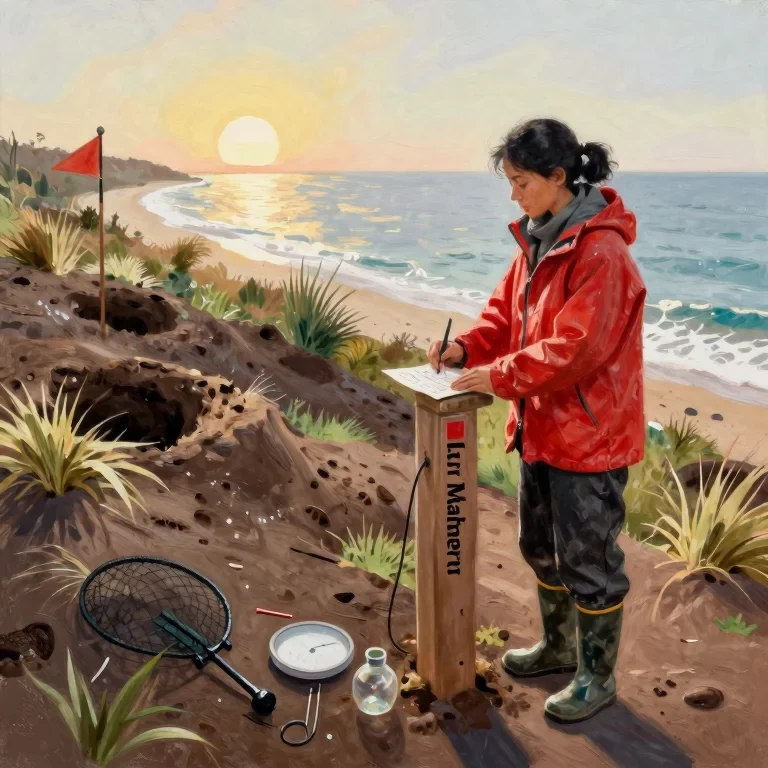
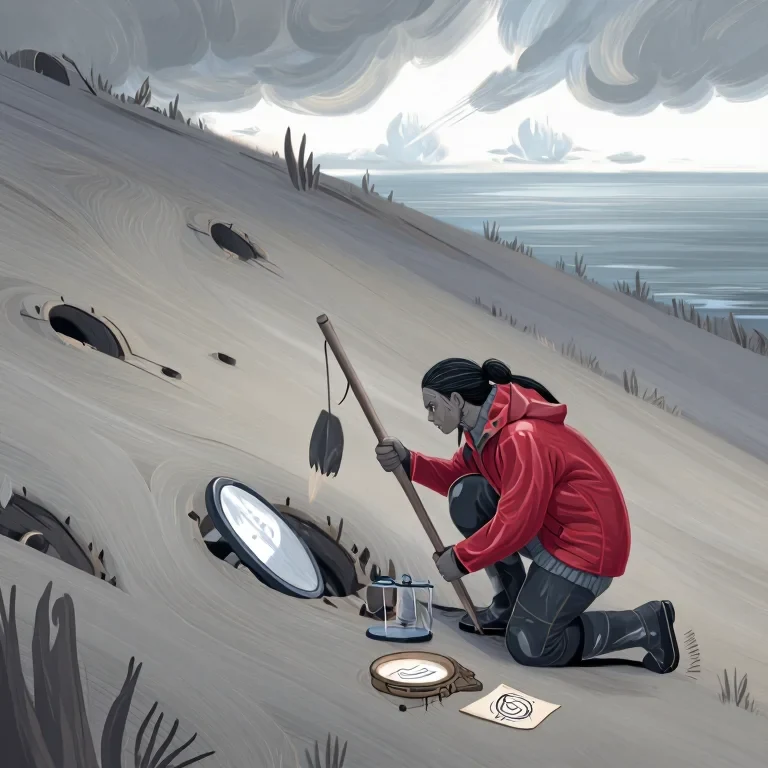
The method is a pole with a mirror on the end and a torch on the end, and you go along the line on your knees and you look down every hole. An active burrow with an egg or a chick is one. An active burrow with a bird sitting in it and nothing else is a prospector or a bird that lost its egg, and it gets recorded separately because the flock of birds that come back in November to walk round a colony they are not breeding in will fill a burrow for a fortnight and then go to sea again. A hole with old feathers and no bird is an old burrow and goes on its own line. A hole with no floor and a heap of dirt at the bottom is excavated. A hole that has come in at the side since last January is new and gets its own mark. Rule one is that you count in daylight, because in January the birds are at sea, and a bird standing at the mouth of its own burrow is counted and the burrow is not counted again.
The daylight window in the second week of January is about eleven hours and the birds are on the water for all of them, and the plot is a thousand square metres of ground with a slope you cannot walk straight up. It takes a counter two full days. It has always taken two, and it took two people, and in 2026 it took one person three days and a half, and when a survey takes longer than it used to the birds go from eggs to chicks in the middle of it and the last days of a plot do not look like the first days of a plot.
Plot C has other tenants. There are erect-crested penguins in the rock at the bottom of the slope and they nest in the same peat the shearwaters dig in, and a shearwater will take over a penguin burrow and a penguin will take back a shearwater burrow, and every one of those takeovers shows up in the count as a burrow that has come in at the side since last January. The point of the plot is that it is a frame that does not move, and a slope on an island where the sea is taking four metres of the bottom of it every winter is a poor place to keep one.
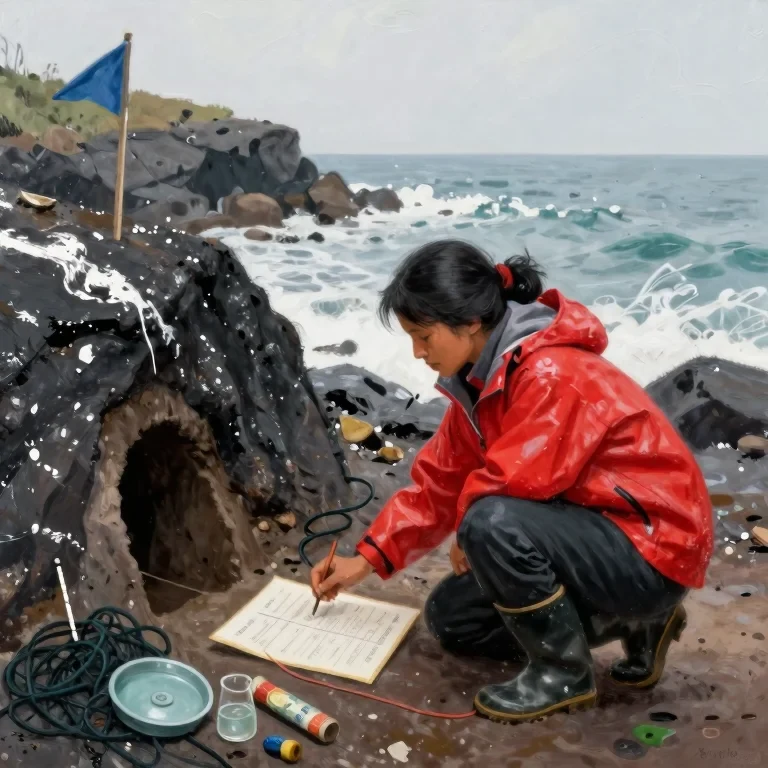
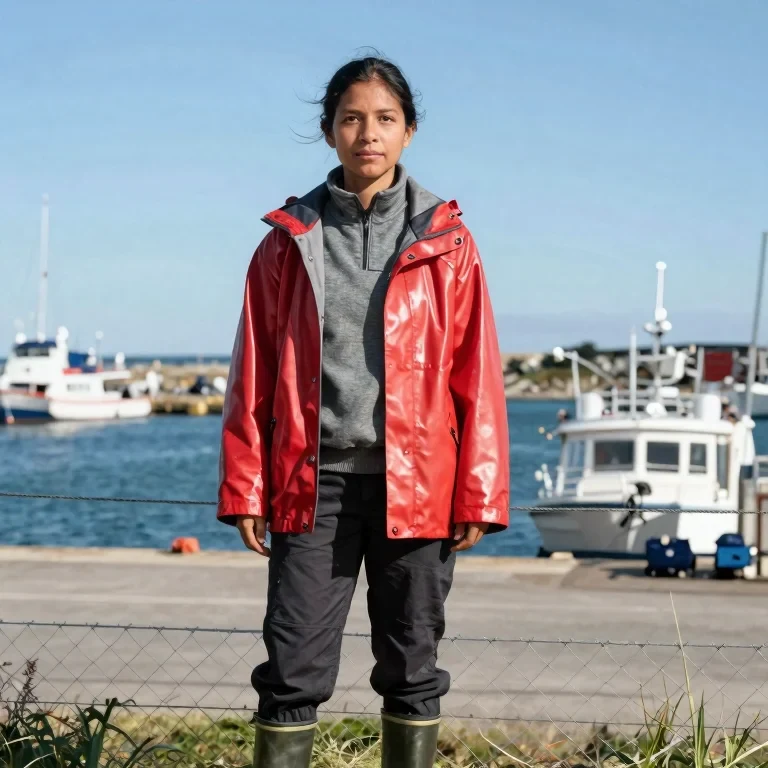
Colin Meikle is seventy-four. He counted Plot C for thirty-one seasons and then he had a stroke in the March of 2025 that took the left side of him and put him in a wheelchair for a while and then in a walking frame, and he came out on the ship in January 2026 to sit in the hut at the top of the slope with the radio and the weather and a flask, and Miri Mahuru counted the plot on her own for the first time. She was nineteen and this was her third season and it was the first season in which nobody walked the line with her, and she had the field book, which is his, with the setup notes for 1994 in the front of it in a hand that got worse as the pages went on. She read the setup notes at the beginning of every season, because that is what the setup notes are for. The first page says the lower boundary post is the high point of the rock rib, because if it is put on the contour somebody will move it in five years and nobody will notice.
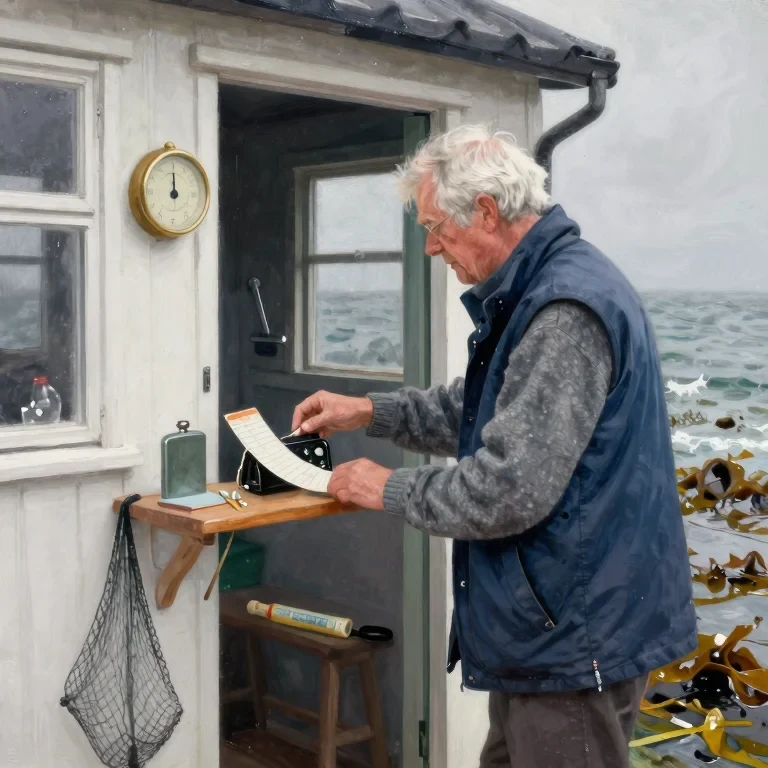
The series was in the back of the book on the pages he had ruled himself. Nineteen ninety-four, one thousand and seventy one. Nineteen ninety-nine, one thousand and forty four. Two thousand and four, one thousand and fifty one. Two thousand and nine, one thousand and thirty three. Two thousand and fourteen, one thousand and thirty five. Two thousand and sixteen, one thousand and twenty eight. Two thousand and eighteen, one thousand and forty nine. Two thousand and nineteen, one thousand and forty two. It did not fall. It went up and down by thirty birds for twenty-five years, which on a thousand is nothing, which on a colony of three hundred thousand is less than a hundredth of it, and everybody agreed that this was a healthy colony on stable ground.

In the August of 2021 Miri Mahuru was in her first season and she was standing at the top of Plot C looking down the slope, and there was bare grey rock where the lower band of the plot had been and the two lower posts were lying on their sides forty metres downslope in the spoil with their guy wires snapped off at the head. She wrote it in the field book and she drew it, and the expedition leader then wrote two lines in the report. The lines said the plot boundary had been lost to erosion on the seaward side, that no birds appeared to have been lost, and that the plot should be re-established at the next opportunity.
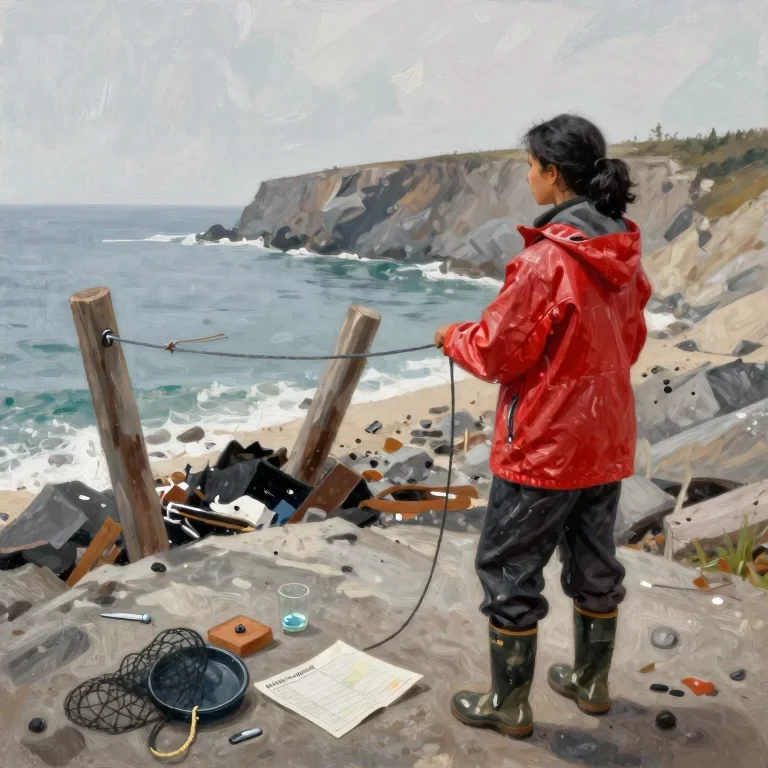
Nobody re-established it. The plot kept its name and its corner posts, and the lower band was simply not there any more, and in the season after the slip Miri Mahuru counted five hundred and twenty two burrows in what was left of it and wrote the number on the sheet, and the number was half of what it had been, and the two lines in the report were the last time anybody wrote down the words no birds appeared to have been lost.

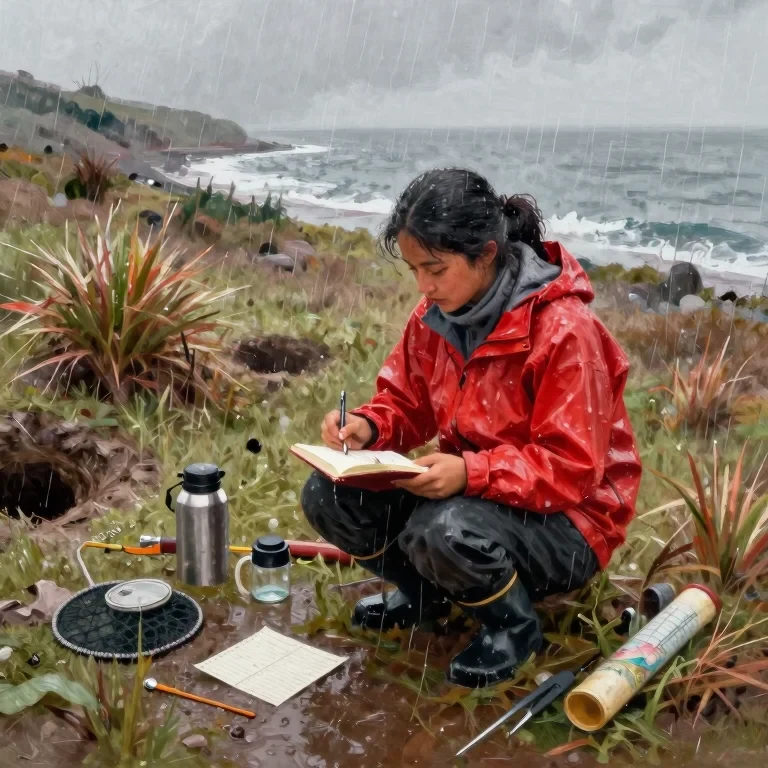
In January 2026 she counted four hundred and thirty one burrows in six hundred and sixty square metres of ground, and the number on the sheet is the number the graph got, and the number on the sheet is the number that has been used ever since. She did not think it was wrong for three weeks. She thought it was hard, because she was counting alone and a plot that took two people takes one and a half and she had nine days of it in nine days of rain, and it took her three weeks after she got home to work out what her own feet knew.

The lower band is the crowded band. That was in the 1994 setup notes too, in his writing, that the seaward hundred metres is the best ground on the slope because the peat is deepest there and the birds can dig, and the numbers in the back of the book say so, because in 1994 the lower band held six hundred and forty burrows in five hundred square metres and the upper band held four hundred and thirty one in five hundred square metres, and there was nothing wrong with the upper band. It was half as good. When the lower band went off the slope it took six hundred and forty burrows with it.

So there are three numbers and they are all true and only one of them is about birds. The plot was a thousand square metres and it is now six hundred and sixty. That is a third of the ground gone. The count was one thousand and seventy one and it is now four hundred and thirty one. That is a bit under half. The density was one and a bit burrows to the square metre and it is now zero point six five five. That is a bit under half as well, and it is the only one of the three that can be laid side by side with any of the years before 2021, and it is a number made out of a slope that is still moving. She got the six hundred and sixty from the 2019 aerial photograph, because the new boundary could not be walked, because walking it means going down onto ground that is not there. What the number is for is a meeting in October.
The island's seabirds are on a list, and every five years the list is put through a classification that decides what the colony is, whether it is stable or declining or at risk, and the classification takes the seabird series off the shelf and uses it as the one hard number in the paperwork. A colony that has lost a third of its birds in ten years is a colony that justifies spending, and a colony that has gone up and down by thirty birds on a thousand for thirty years is a colony that does not need the money spent on it that would otherwise be spent on the main island, where the mice are, and where a rodenticide operation has been designed, costed and argued over for four years and is waiting on the classification to close it out.
The operation takes a helicopter, a ship, a team of thirty, and about eleven tonnes of poison, and it is designed on the argument that the colony cannot absorb the disturbance of having every burrow on the island looked into at once. If the colony is down half in five years, the operation is urgent and it goes ahead and nobody asks what caused the fall. If the colony is steady, the cost of not doing it goes up every year. There is no version of this where a nineteen year old counter with a mirror on a pole decides it. What she writes on the sheet in the lounge on the Friday is what it rests on until somebody has the time and the money to look again.

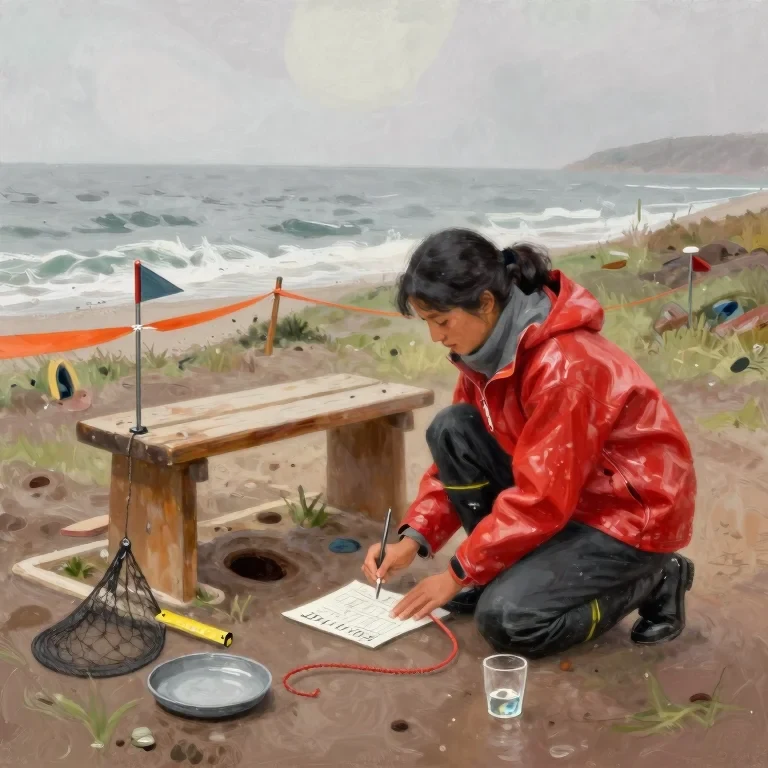
The plot cannot be fixed by counting a different piece of ground and calling it the same, but it can be linked to one, and this is what they did, and it is the ordinary way of doing it and it does not work the way people expect. On the fourteenth of January, on the same tide, in the same three hours of the same morning, she and Te Ariki Ngatai counted two plots five metres apart on the same slope. Plot C was the six hundred and sixty square metres that was left. Plot C2 was five hundred square metres of the bench above it, marked out on the Friday with pins and flagging, on ground that had not moved in living memory. Plot C gave four hundred and thirty one. Plot C2 gave two hundred and sixteen.
That is the ratio, zero point six six, and if you trust it you can put the whole series on the new ground and the 1994 burrows become three hundred and fifty three and 2026 is two hundred and sixteen, and the graph still falls, still by nearly half, and the graph is still wrong, because the ratio was measured once on one morning and the process it is supposed to correct for is a slope that is moving.

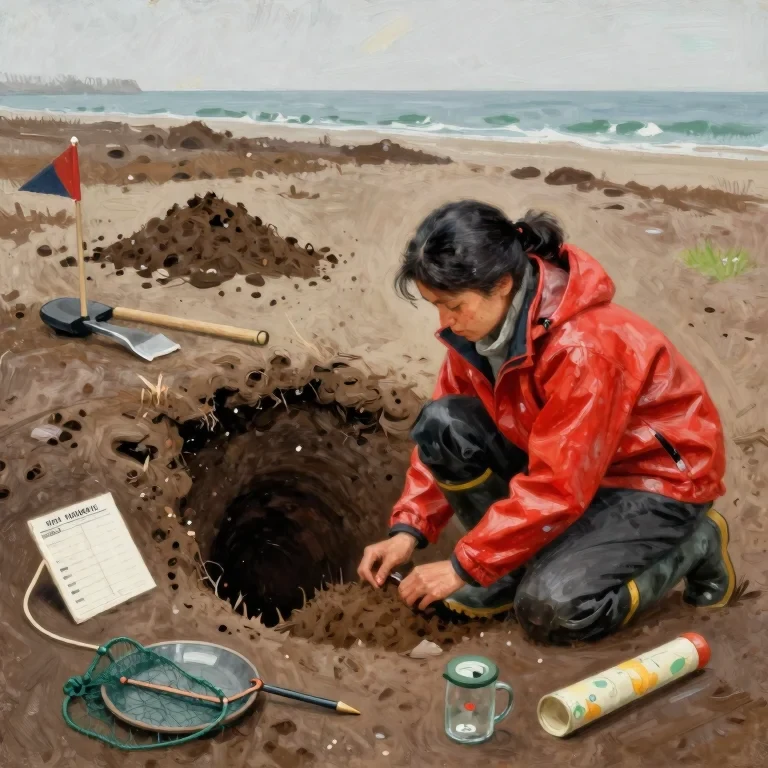
There was one more thing she found on the fourteenth and it was the reason she could not sleep on the flight and not for the reason anybody would guess. Sixty five of the four hundred and thirty one were pairs. She found them because she was checking a burrow she had counted in the first week and could not find in the second, and she went back down the slope with a spade and a marker flag and dug nine of them, and in six of the nine there was a wall standing across the middle with a chamber on each side of it, and the egg was behind the left chamber and the right chamber had been scraped out in wet weather because scraping is easier than digging.
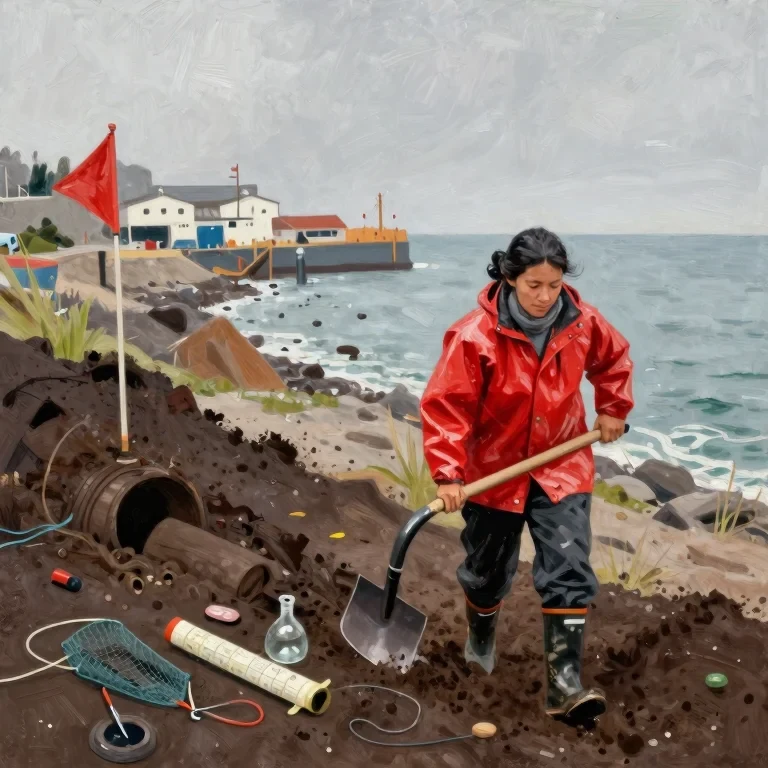
She could not be certain of all of them. Digging up a breeding burrow in the second week of January means taking an egg out of it, and nobody does that on a plot that is going to be read again next January, so she dug nine and wrote down that she dug nine, which is the kind of sentence that carries a number a long way and then stops working at the first person who wants to argue with it. The rest she called from shape alone, an old bird digging a wide single bowl with one entrance and a young bird in new spoil digging a shallow wide scatter with the old wall showing in the floor of it, and three quarters of the pairs on Plot C had the wall showing. Under the rules that is one bird. Under a counter working quickly in the rain with two hands and a mirror, that is two. Four hundred and ninety six entrances. Three hundred and sixty six burrows. Six hundred and sixty square metres. Zero point five five to the square metre. Nobody has ever counted the entrances on Plot C before, and nobody has ever counted the burrows on Plot C in the year after a slip, and the rule that says one burrow is one bird has been true for thirty-one years because the ground was not doing this.
She signed the return sheet on the Friday because the ship sails on the Saturday and the sheet has to be signed by the counter and the ecologist, and Keri Nathan read it and said the number was down and Miri said yes and Keri Nathan said that is the third year running it has been down and Miri said yes. “You know that is not the birds,” said Miri. “It is the plot,” said Keri Nathan. “It is the plot and it is the birds and the sheet is one column and I have written four hundred and thirty one in the one column because that is what the method gives you when the method is run the way we ran it.” She was right and it made no difference, because the sheet has one column and there is a season of paperwork between the ship and the spreadsheet and the classification meeting in October, and the classification is made off the series as it comes, and the series is a line with an arrow on it. She did not get the season after that. Keri Nathan wrote the reference and Miri Mahuru is studying in Dunedin and is still the only person alive who has counted Plot C on its own.

In the January of 2027 she was back on the island for four days on a boat charter with a film crew that wanted the colony, and she went up the slope on the second morning with the field book and a spade and by the time she was forty minutes up it she had found one post. The upper post. The upper left post, the one that had been the uphill corner since 1994. The other three are gone, one of them went off the slope in 2021 and the other two went somewhere in the last four years, and the ground where they stood is a shallow channel of grey clay that goes down to the sea. So the six hundred and sixty square metres is not a measurement. It is a shape drawn on the 2019 photograph by somebody who was not on the ground, and the shape has a corner on it that no longer exists, and the count of four hundred and thirty one was taken inside a line that cannot now be walked by anybody at all. The film crew got their shot from the same spot at the same hour with a long lens, and the colony behind them went over the top of the ridge into the dark at nine o'clock, thousands of them, every January, from a place where nobody has ever been able to say how many.