The office of the Harrogate Waterworks Company kept a fire bucket, a barometer, and a wall map of the catchment above the reservoir at Birstwith, and on the second of July in the year 1921 Winifred Pike was sent to the map and told to find out why the town was short of water. There had been no rain worth the name on the catchment since the middle of May. The becks were down to their gravel. The reservoir at Birstwith had twenty-two feet of water in it in the third week of June and nineteen feet in the first week of July, and a foot a week after that, and nineteen feet is nothing at all. “It is not the reservoir,” said Mr Dunhill, the engineer. “The reservoir is the reservoir. What the Commissioners want is the figure for the average rainfall of the catchment, and they want it over a long period, and there is one figure in this office for that and it is Mr Halloway’s.” “And if it is wrong?”
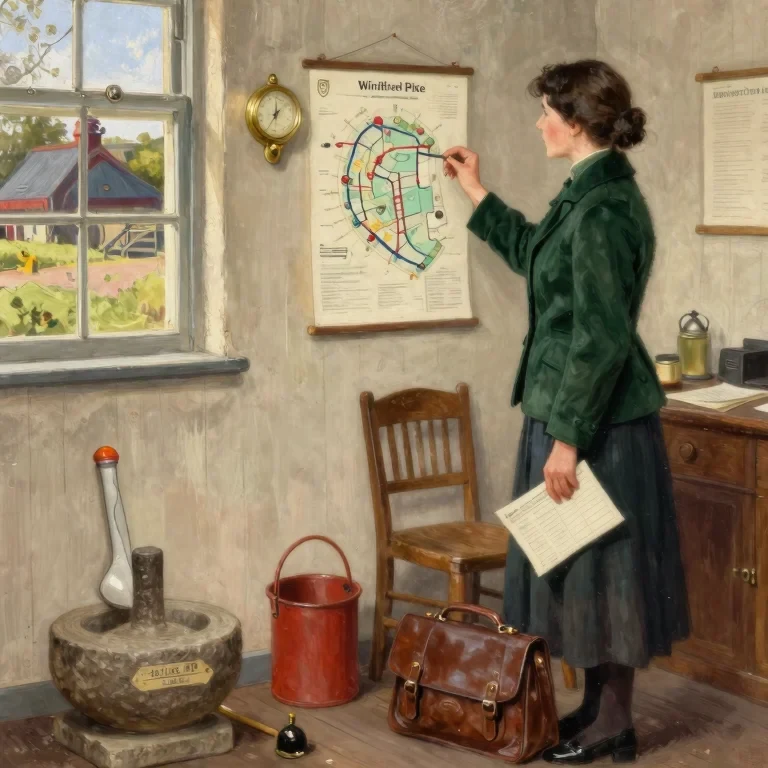
“Then somebody else’s figure is on the return, and somebody else’s engineer has to stand behind it,” said Mr Dunhill, “and the order we asked for in May does not come. We are drinking what we have and we are apologising for it in public.” Mr Tattersall, the committee clerk, put it more plainly, which was his office. “They will grant the order on the figure or they will not, Winifred, and the whole return turns on one line of it, and the line says the mean annual rainfall of the catchment above Birstwith reservoir is twenty-six point nine five inches. Mr Halloway wrote that in 1919 and it has been copied ever since. Before you write anything else, go and see whether it is true.”
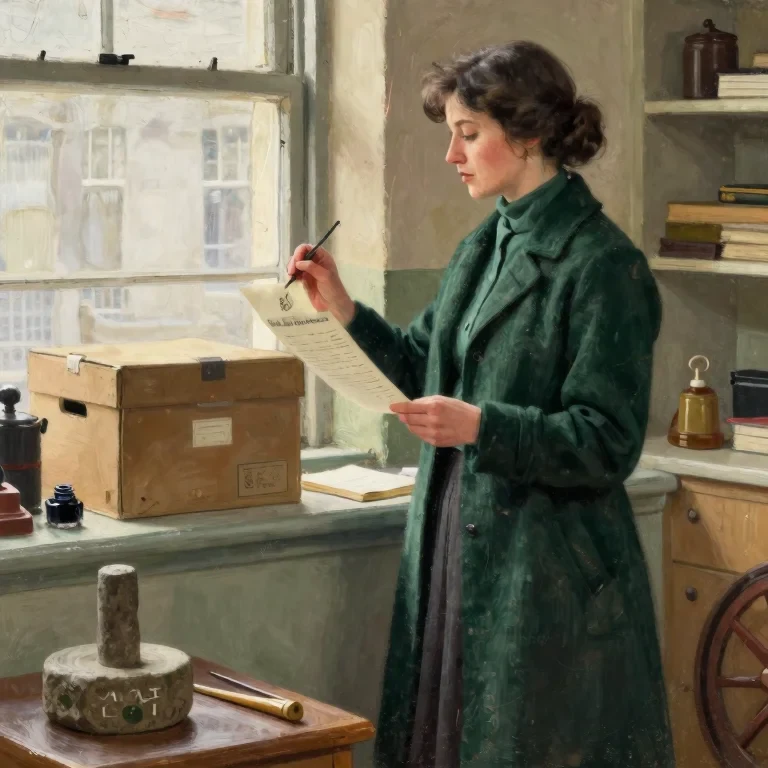
The field notes were in a deal box under the window and there were forty-one of them, one for each year from 1881, and every one of them was the same size and made by the same stationer of Pateley Bridge. The gauge was a copper funnel five inches across on a lead flange let into a block of concrete, with a collecting bottle under it and a brass rule to measure the water in the bottle with. The funnel and the bottle were the same width across, so a depth of one inch in the bottle is one inch of rain on the ground, and the whole instrument is that: a funnel, a bottle, a rule, and a man at nine o’clock in the morning who empties the bottle and writes down how deep the water was and not how much fell. That last part is the first thing that stops you, and it is written on the inside cover of the 1881 book in a hand that is not her father’s.

The figures in this column are the depth standing in the bottle at nine o’clock this morning. They are not falls of rain. The fall is today less yesterday. A book of depths is no more a record of rain than the height of a cup in a cupboard is a record of tea. Anyone who adds this column has added nothing. Winifred’s father had written under it, in pencil, the rule he kept for forty years. Never alter a figure. If it is wrong, rule one line through it, write the true one above it, and put the reason underneath. Never rule through the reason. He kept the moor gauge from 1897, the year they moved it, until 1914, when his chest went and he read it on a Sunday and then not at all. Joe Braithwaite, the platelayer, took it on, and he reads it on his round, and he is a better man than most and the worst of keepers in one particular way, which is that he reads it on the five days he is out and copies the day before on the sixth.
So in every book since 1915 the Saturday figure is the Friday figure written out again. Not a nil day. A second copy of Thursday’s weather. And on the Sunday the bottle has been standing full for two days, so the Sunday figure is two days in one, and the total for the week is right and the week has one lump in it instead of seven. The seven-day total is unaffected, so the annual total is unaffected, and there are eight years of weather in this box where nobody knows which of two days it rained on. “There’s worse than that,” she said. “There is.”
The winter of 1902 had gone into the books through a leak in the box. Two leaves of the 1903 book were brown and soft, and the ink on them had spread until the figures under it were guesses. The rainfall for four days in December 1902 is not to be had. It is not zero either, because the year is a year and four days of it are somewhere. The only honest thing to write is a bound, and the bound is that the four days together were less than a quarter of an inch, because the standing depth before the stain and the standing depth after it are both legible, and the difference between them is what fell in all four days together.
They moved the gauge in September 1897 and that is where the trouble starts, because a rainfall record is only a record of one place. It fell in the paddock below the reservoir from 1881, and a farmer ploughed it and a hedge went round it, and from 1897 it fell on Clayton Moor, and the two are not the same amount of rain by a small margin that anybody has ever been able to guess at. The good news, and it is the only good news in the box, is that for eight years somebody read both. The paddock gauge stayed in its socket and was read every morning until 1904, the year Mr Halloway called it in, because by then the moor gauge had eight years of its own and the two could be set side by side and compared. Eight years of overlap is the hinge the whole record turns on, and the company threw away the half that mattered. Winifred did it in a week, in the evenings, at the kitchen table, with the sum worked out four times.
Over the eight years from 1897 to 1904 the paddock gauge averaged twenty-seven point eight six inches. The moor gauge over the same eight years averaged twenty-six point four one. So the paddock reads one point four five inches more in a year than the moor does, and if you divide the one figure by the other you get nought point nine four eight, and that is the number the whole business turns on. The moor reads nought point nine four eight inches for every inch the paddock reads, and you can multiply every year from 1881 to 1896 by nought point nine four eight and bring them all onto the moor’s footing. For the forty years from 1881 to 1920 the unadjusted mean comes out at twenty-six point nine five inches, which is Mr Halloway’s figure exactly, because Mr Halloway had not adjusted anything. He had taken sixteen years at the paddock mean of twenty-eight point five three, and twenty-four years at the moor mean of twenty-five point nine zero, and added them together and divided by forty, which is the correct way to add up rainfall and the wrong way to make a series out of two places.
Run it properly, with nought point nine four eight applied, and the same forty years come to twenty-six point three six. Six tenths of an inch. It looks like nothing on the page. Put it into Mr Dunhill’s return and it is not nothing, because the yield of the catchment is calculated from the mean annual rainfall over the catchment above the reservoir, and if the rainfall figure is six tenths high then so is every gallon that falls out of it, and the Commissioners were being asked to accept that the company could take more out of the Nidd than the Nidd was being given.
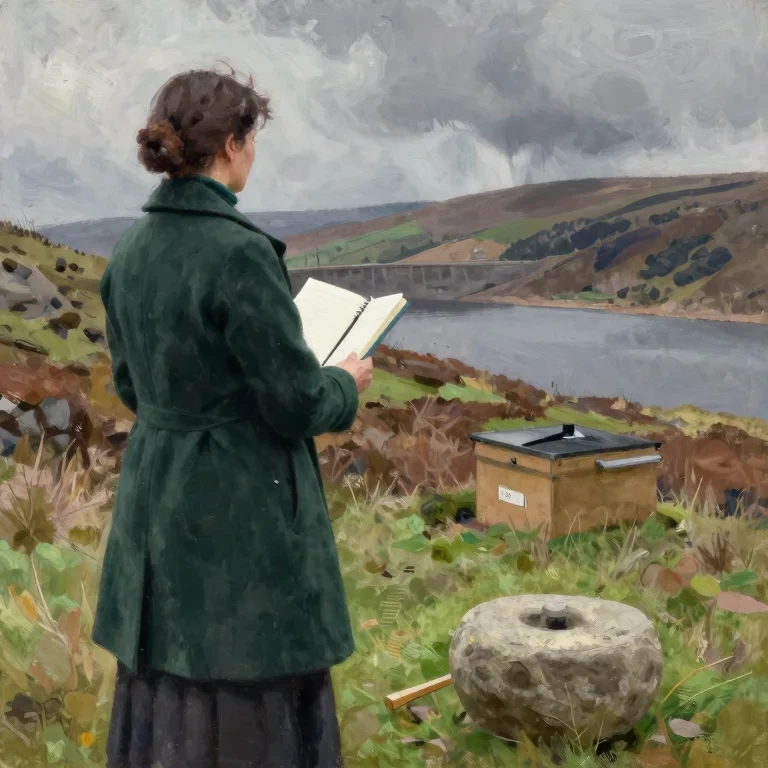
She walked up to Clayton Moor on the ninth of July with a hundred-foot tape in her bag, because a number taken out of a book is only as good as the place the book was written, and she had never once been to the moor site and had no business writing a report about it from an office chair. The site itself is good. It is a hundred yards from the beck and a hundred and sixty from the reservoir wall, on short cropped grass on a shoulder of the moor with the ground falling away to the north, and from where she stood she could see the weather come over the hill in a straight line, which is what you want to see. The rule for a rain gauge is four hundred yards from any building or tree over twenty feet high, because a drop that falls on a roof instead of the grass is a drop the bottle never gets and a drop that falls on a tree drips off it afterwards and arrives late. Four hundred yards is the rule and Clayton Moor keeps it.
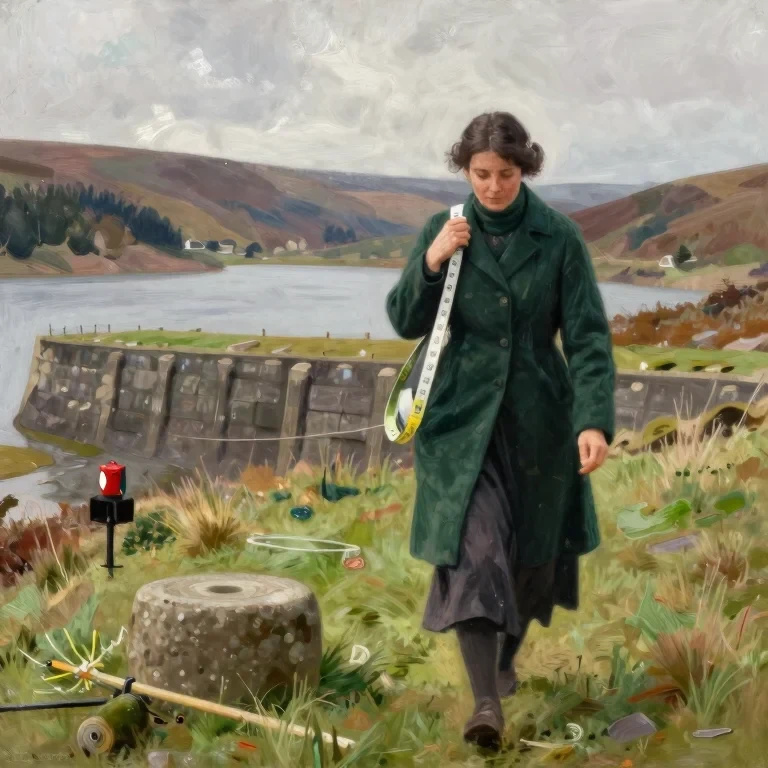
It kept it in 1897. It does not keep it now. Along the western boundary somebody has planted a row of larches and planted them well, and there are thirty-one of them and the oldest have been in the ground eight years, which puts them there in the spring of 1913. She paced the distance to the nearest one twice because it matters. Two hundred and ten yards. Not four hundred. The larches are thirty feet high and going higher and the gauge is under their drip in a westerly wind, which is the wind that brings the rain in. The gauge itself was the other thing. She had the front-page rule in her head and she had a steel rule in her hand, and she knelt on the wet grass and laid the steel rule across the rim of the funnel and read where the surface of the turf came up the underside of it.
The rim should stand one inch above the grass. The rule says so in the first line of the 1881 book, because that is where the rule belongs, and the reason is in the second line, and the reason is that a rim below the grass catches what the grass throws at it. Its rim was three-quarters of an inch below the surface of the turf. It should have been one inch above it, so the whole instrument had settled one and three-quarter inches since the last check, and the last check was in the spring of 1919 and it was Joe Braithwaite’s predecessor who did it, and there was no check for 1920 because there is nothing in the book that asks anybody to check it once a year, and now there is.
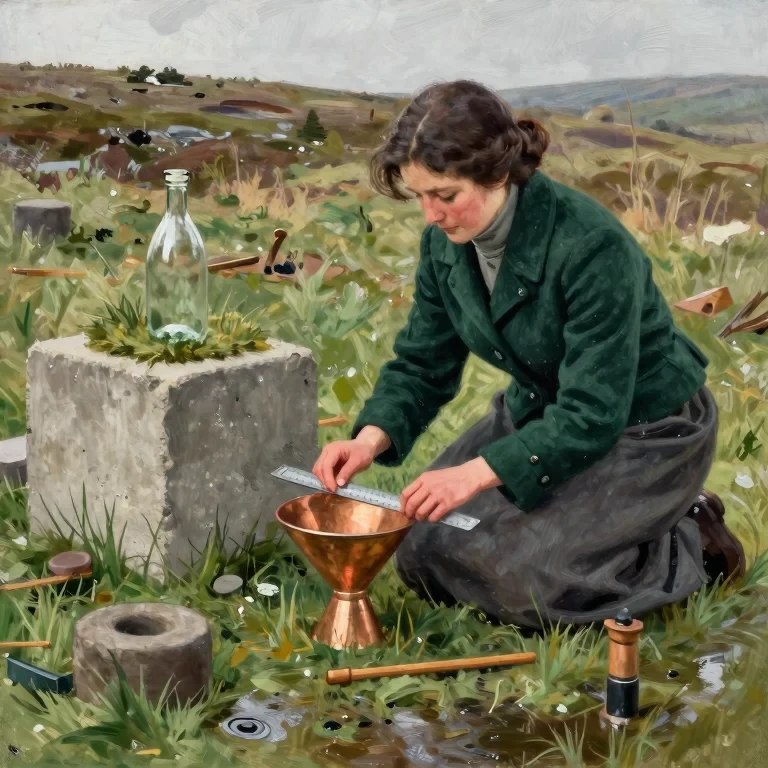
A gauge whose rim has gone down reads too much, and it reads too much by more in a dry month than in a wet one, because in a dry month the only rain there is to catch is the rain that hits the grass near the funnel and bounces. The 1921 figures are high by an unknown amount and Winifred was not going to put a number on the unknown amount, because a guess dressed as a measurement is the one thing the book is for preventing. Then she went down to the paddock, which took an hour because the field had been ploughed out and grubbed and put into market garden, and found the socket by walking the line of it. It is a lead flange set in a concrete block three feet across, and the block is still under the hedge where nobody ploughs. Forty-nine yards off, under the eastern hedge, there was a sycamore.
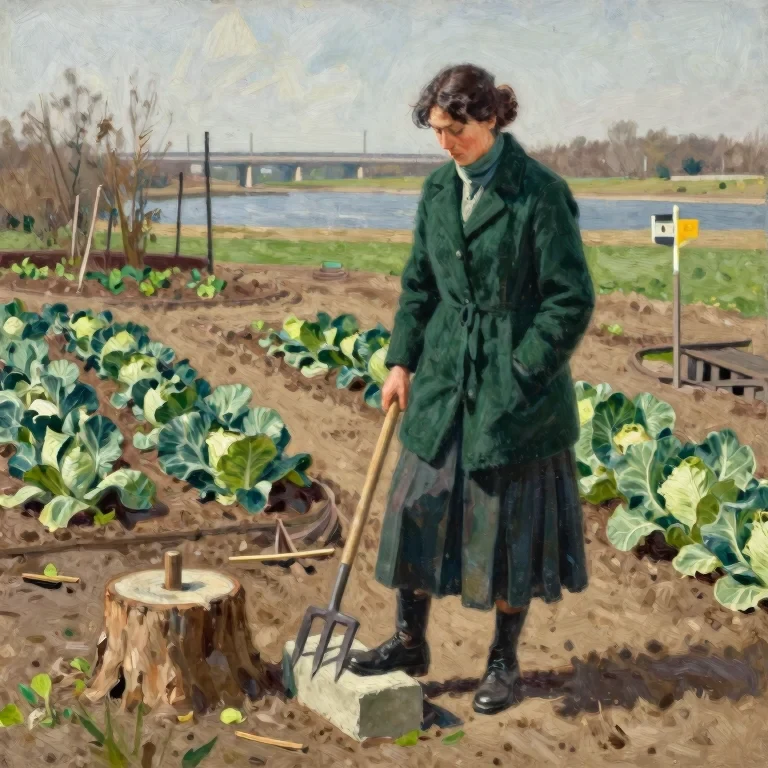
A sycamore is not a tree. A sycamore is a machine for making a roof over forty yards of ground, and the drip of its branches reaches out well past its trunk, and by 1921 there was nothing left of it but a ringed and dead stump which somebody had left in the field on purpose. So the paddock gauge stood forty-nine yards under the edge of that drip from the day it was put there in 1881 until the sycamore was felled in the autumn of 1887.
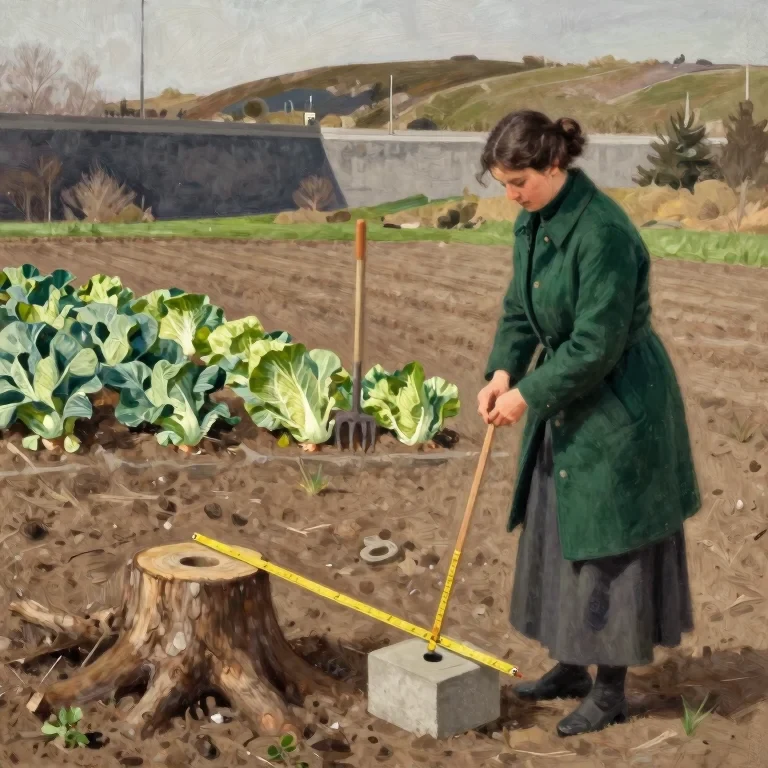
Seven years of the record were taken in the wet shade of a tree. Rain gauge and rainfall do not simply come to the same thing under a sycamore, because the drip is not rain, it is rain that has fallen once already and fallen through a lot of leaf on the way, and it comes down in a handful of heavy drops in the hour after the worst of the shower while the bottle is standing there catching every drop. Seven years of the record cannot be corrected, because the only thing in the box that would tell you how much a sycamore adds is a comparison between a gauge under a sycamore and a gauge not under a sycamore, and there is no second paddock gauge anywhere in Yorkshire.
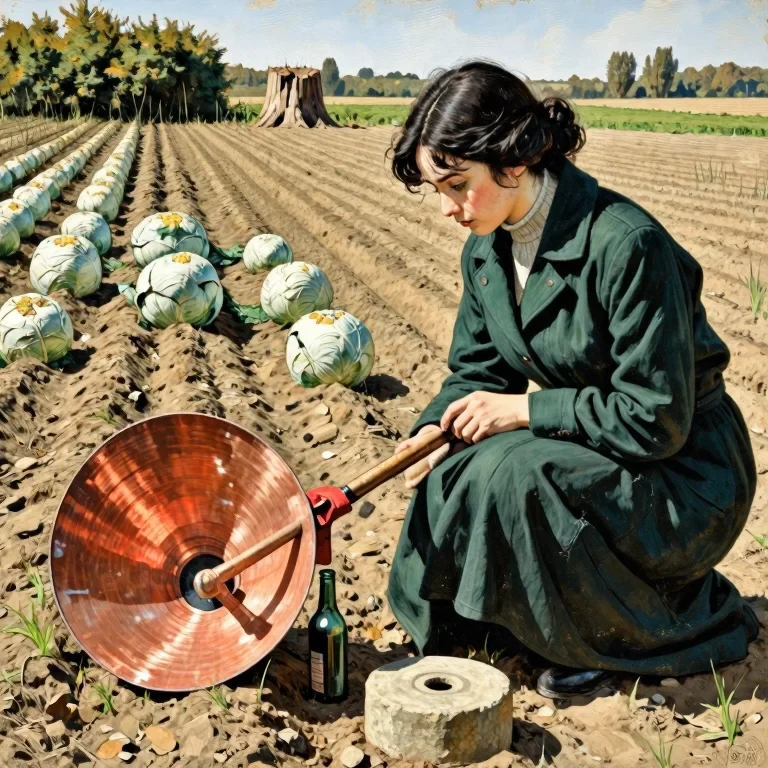
She went to the committee on the twenty-first of July with a return of nineteen pages and did not sleep much the night before. The first page gave the figure and the second page said what it rested on. The thirty-three years from 1888 to 1920, the eight years of overlap, the one point four five inches of difference in a year, nought point nine four eight applied back to 1888. The mean annual rainfall of the catchment above Birstwith reservoir is twenty-six point six inches over thirty-three years. Mr Halloway’s figure was twenty-six point nine five over forty. The difference is not one line of arithmetic. It is seven years of a sycamore’s drip and a stitch where two places were sewn together. The catchment above the reservoir is two thousand one hundred acres, and a difference of nine-tenths of an inch of rain over two thousand one hundred acres is a little over fifty million gallons in a year, and Mr Dunhill worked that out in front of the room and did it twice and would not look at her while he said it.
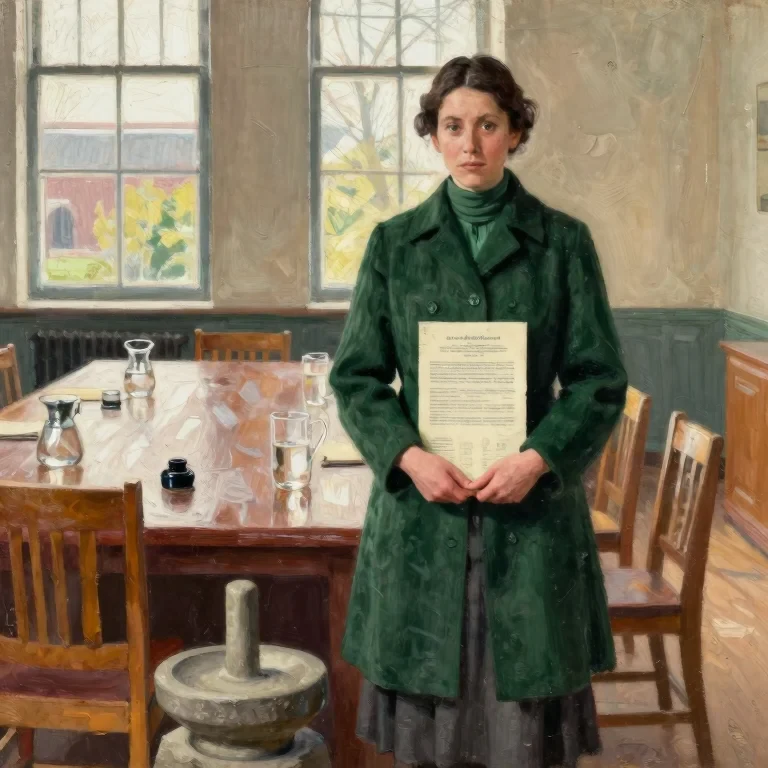
Page nine was the part she had not wanted to write. It said that a rainfall figure can be carried across a change of site and a flowering date cannot. In the second column of every book since 1897 her father had also written, without being asked, the first day of snow on the moor and the first primrose below the wall and the first wheatear, because he could not help himself. Those dates are in the same books and they are the only part of the record that nobody in the waterworks office ever uses. There is no dividing a date by nought point nine four eight. The series has a hole in it at 1897 and the hole stays a hole, and on top of that the primrose under a sycamore came out later than the primrose without one by a number of days that nobody has ever measured, so the 1881 to 1887 dates are not only unadjusted, they are about a thing that is not rain. Alderman Ferriman read page nine twice and then asked her whether she was asking the committee to believe that her father’s thirty years of watching the primrose were worth nothing.
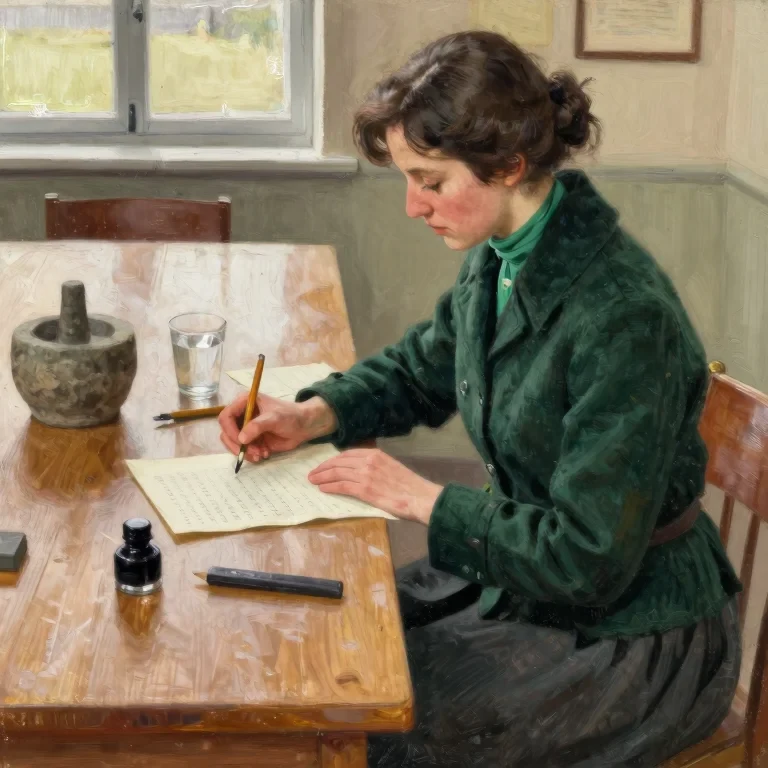
“No,” said Winifred. “I am asking the committee to believe that it is worth something, and that it is worth something we cannot put on the same sheet as the rainfall, and that the correct place for it is a column of its own with a note on it, and not a line through the middle of a table.” “Does it change the order?” “No,” said Mr Dunhill. “It changes what we are, on the day somebody in ten years asks whether the water in the beck was ever anybody’s fault.” They granted the order on the eleventh of August, on her figure, and the town had standpipes in the market place from the fourteenth, and by the end of September the reservoir was down to nine feet and nobody came near nine feet again that year.
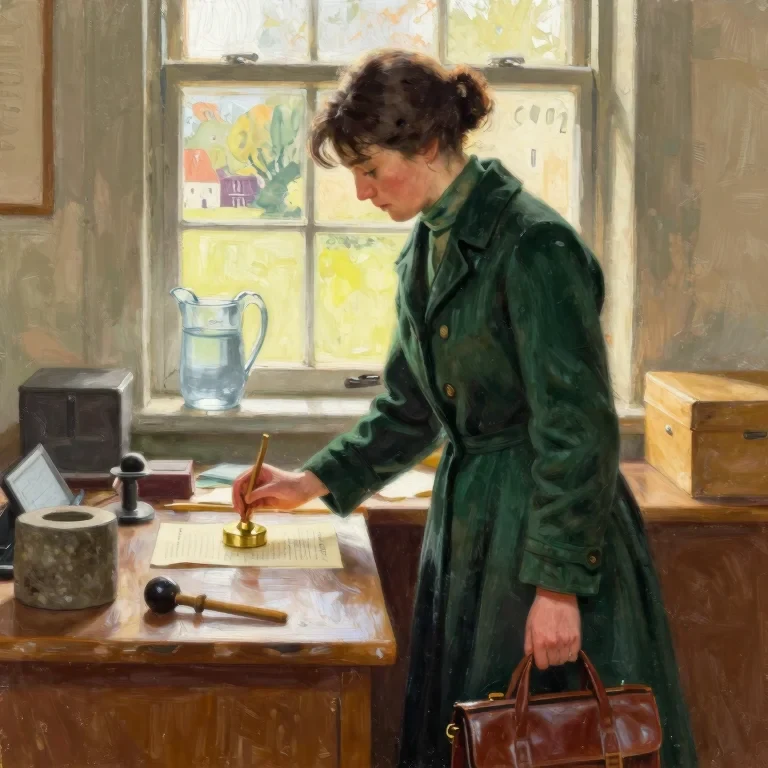
She re-sited the gauge herself on the twenty-eighth of August, with the tape and a spade and two men from the waterworks department, four hundred yards back along the shoulder from the new larches, and well clear of the beck and the reservoir wall, and the socket set so that the rim stands an inch above the grass. Mr Tattersall sent for a carpenter and had a proper box put round it with a lid, and she wrote the whole of it in the front of the 1921 book, where it will be found before anybody starts. Site: four hundred and two yards from the larches, one hundred and forty from the beck, thirty-one feet from the nearest hedge, level ground falling away to the north. Rim one inch above short grass, checked the twelfth of September. All earlier entries in this book were taken at Clayton Moor in the old position and are not strictly comparable with anything written after this date.
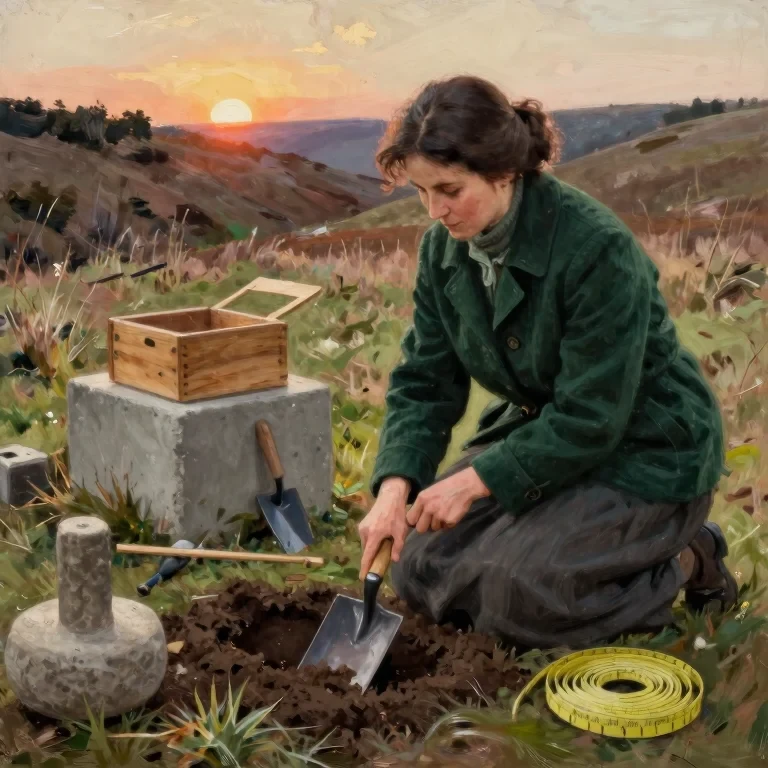
And then, because her father would have done it, the daily rule again. It is the first thing to write on the front page of a new site, and it is the thing that everybody forgets. The figures are the depth in the bottle. The fall is today less yesterday. A blank is not a nil day. A figure written twice is not two dry days. Then she wrote the line at the foot of page nine, which is the one that has been sitting in her head since the fourteenth of July, when her father’s pencil had told her that he had spent six years failing to find out why the two gauges did not read the same.
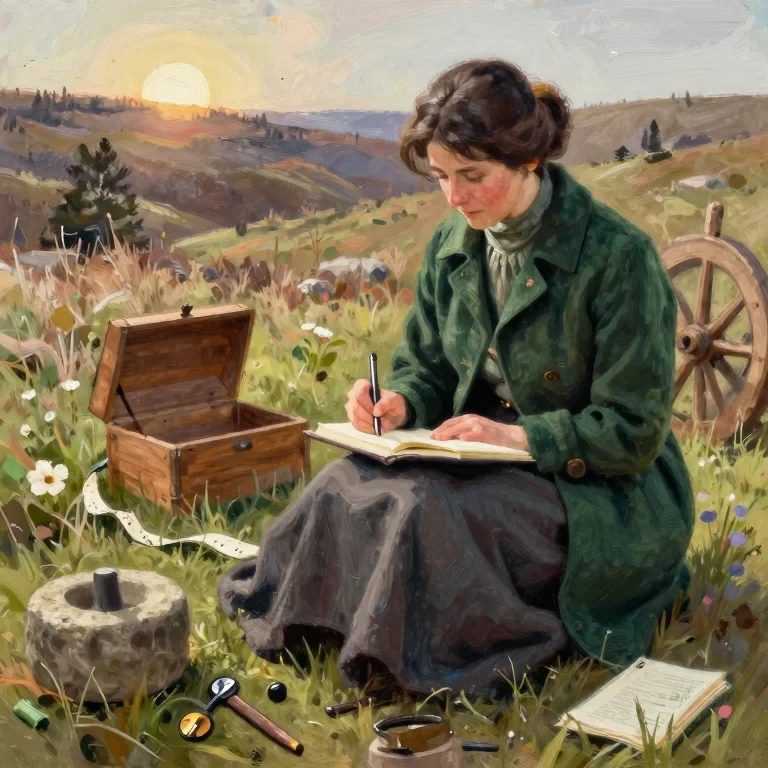
The two sites do not read the same by the same amount in every month. The moor reads nearest the paddock in the driest weather, because the difference between them is mostly a tree, and a tree only drips when it has rained. Nought point nine four eight is an average of a difference that changes, and it changes most in exactly the year we have just had. The mean rainfall of the catchment is twenty-six point six inches and it is not twenty-six point six inches, and I have said on this page which way I believe it is wrong.