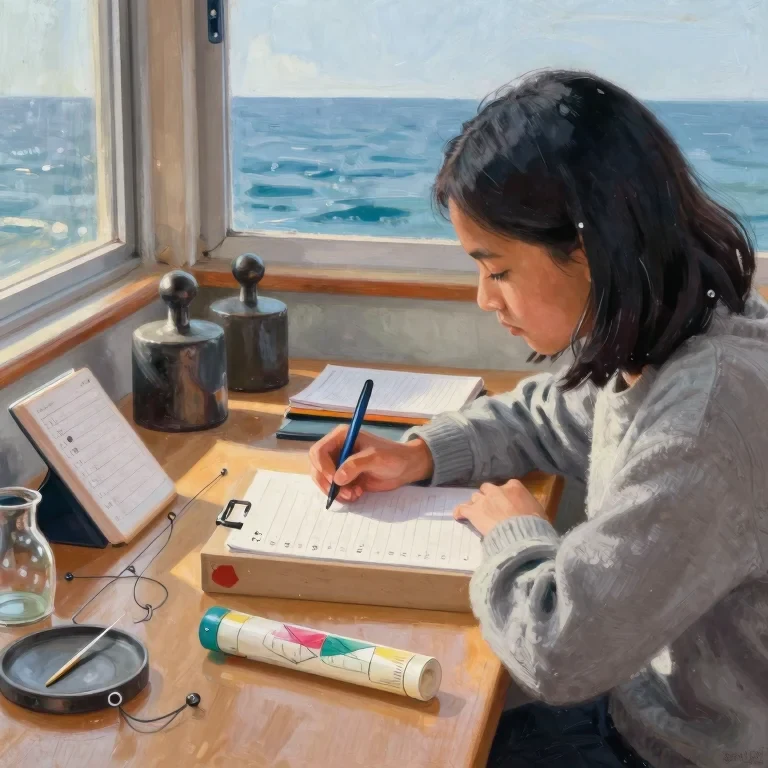
Marama Tipene was sixteen, and she had the only desk in the Tukukawa fish market with a straight edge on it. The desk stood in the corner by the office window, and on it stood the ledger, and the ledger was hers. Her uncle Boyd Tipene had kept it for nine years before he handed it over. Before he handed it over he wrote one line in the back of the old book. He wrote that the ledger was not a record of what happened in the hall. It was where you found out what had happened.

A box of fish begins on the wharf. The truck backs onto the weighbridge, cold and dripping after the run down the coast. The weighbridge man writes the landed weight on the docket and calls it out to the skipper, because the skipper signs for it. Then the truck goes up the ramp and the boxes come into the hall, and that is where Marama's part starts.
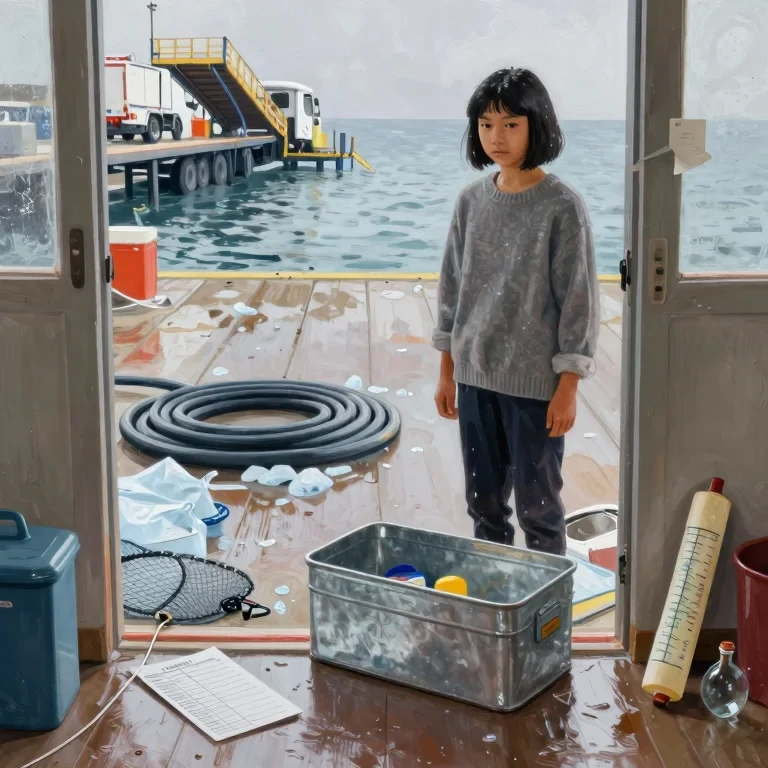
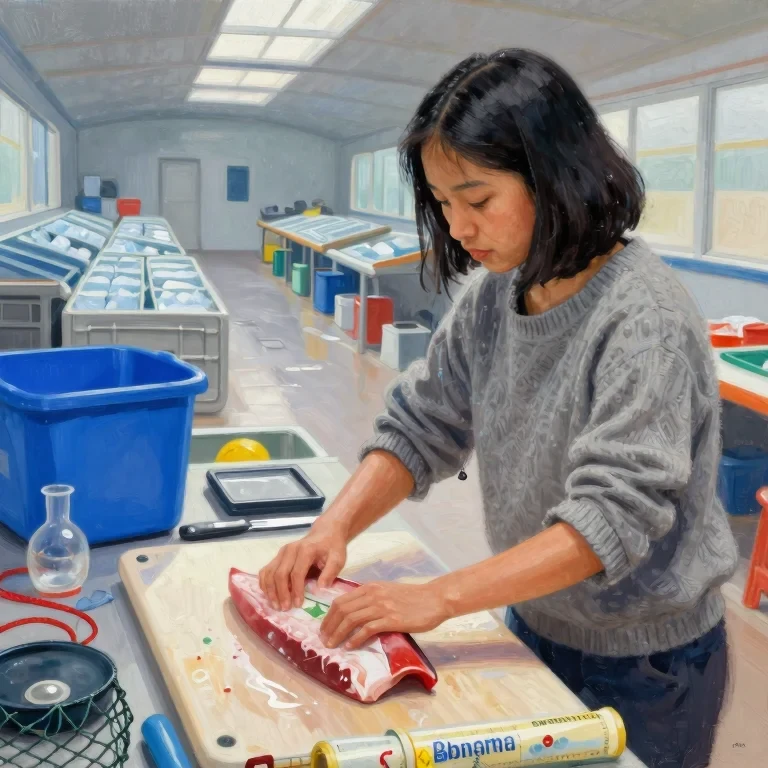
Every tray is gutted on the bench before it is weighed for sale. The guts and the heads go into a blue bin. The bin goes out to the auction later and is weighed as a line of its own, sold cheap to whoever wants fish food for a farm. The fish is iced in the tray, and the tray goes on the platform scale in the middle of the floor.
The platform scale is a hundred year old balance on three legs, with a round black dial and a needle that swings half a division and then settles. It reads to a tenth of a kilo. Every tray gets a ticket with a number, a species and a weight, and Marama copies it into the ledger. On a good day there are two hundred and forty of them.
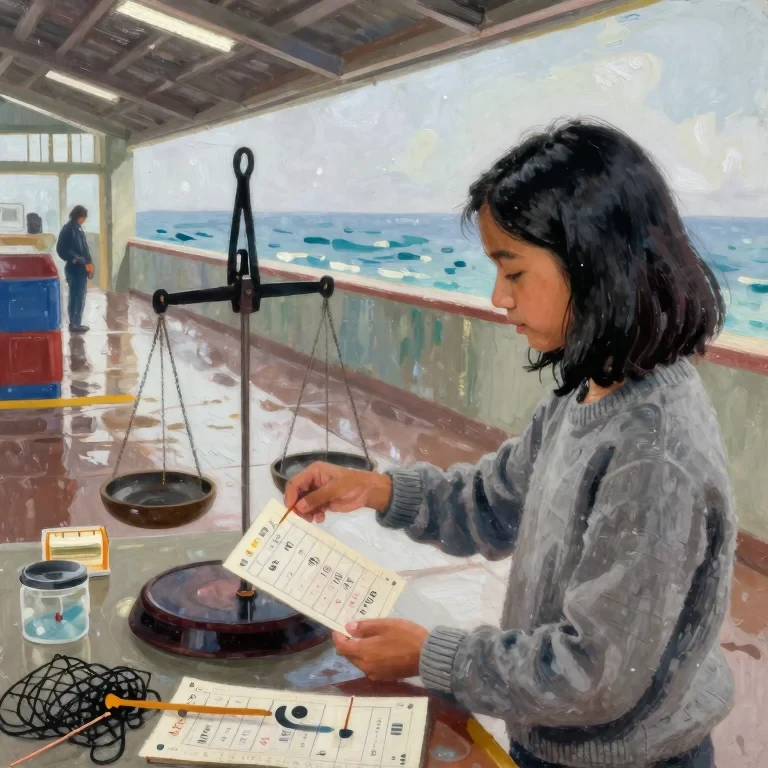
Her page has four columns and the four columns have to agree. Landed weight. Fish sold. Heads and guts sold. And whatever is left over, which she calls melt. Melt is the water that runs out of the ice while the ice does its work, and the water that drips off the trays onto the floor. Melt had always run about three in the hundred of landed weight. The gutting takes something out of every fish and that goes in the bin and the bin gets weighed, so whatever will not add up has to be ice and floor water.

She checked it at half past five, when the hall was empty and the floor was wet. She summed the four columns and wrote the totals on a card, and she kept the card. Nobody had ever asked her for it. One wet Thursday in July, Tui Raukawa came in and stood at the desk with her cap in both hands. She was nineteen and she worked on the Kotare. She wanted to know why her trip share was smaller than it had been. Marama liked the question. A number smaller than it should be is a number somebody can put a finger on.

They did the sum on the back of a weighbridge docket. The Kotare had landed eight thousand two hundred and forty kilos over four trips. The crew rate was a fixed amount a kilo on what was left after melt, split three ways between Tui, her brother, and their father Hemi, who ran the boat. Marama wrote down the landed weight, then the melt column for those four trips, then the share as it stood. Then she wrote the share it would have come to if melt had been three in the hundred, the way it was in her first year.
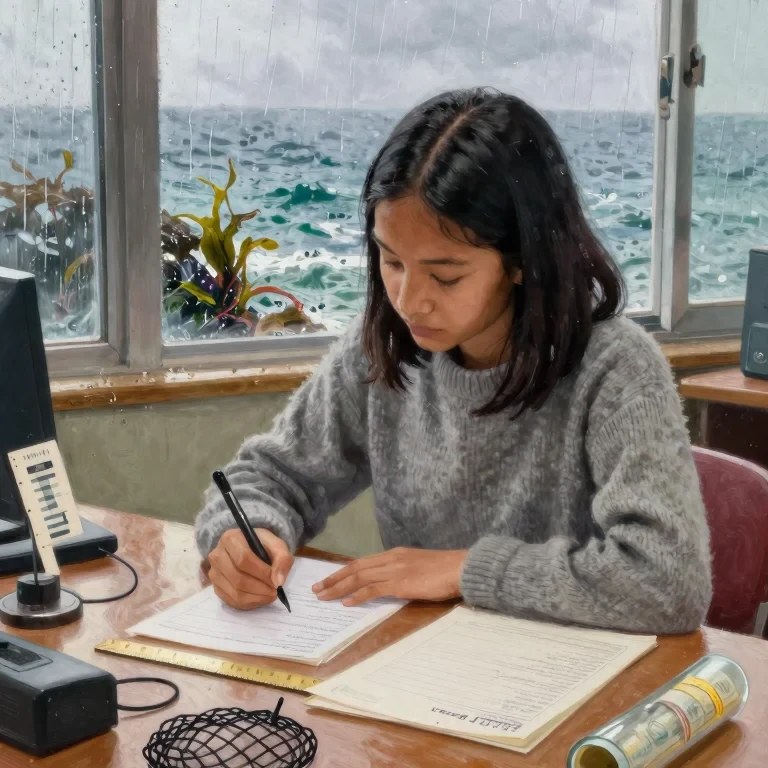
The difference was thirty five kilos. Tui read it twice. Thirty five kilos is a bucket and a bit, and it is every trip, and a trip is a season, and seasons go on for years. Tui was quiet for a while. Then she said her share last season had been small as well, and the season before that, and that everyone at the wharf had said the fish were not what they used to be.

Marama started a column of her own in the back of the ledger. She wrote the melt figure for each week of the season. The first week it was two point eight in the hundred. The second, two point nine. The third, three point one. The fourth, three point four. The sixth, four point zero. In the last week of July it was five point nine.

She did not trust a number that moved on its own, so she went looking for an explanation, because explanations can be tested. She asked Hemi whether the trays had got heavier through the season, since a heavier tray holds more ice. Hemi said the market had gone over to the big snapper trays in the spring, and the average tray had gone up from nineteen kilos to about twenty six. Bigger trays hold more ice, so melt could rise. It could not rise from two point eight to five point nine. When the trays got bigger the fish got bigger, and the guts got bigger, and the guts went in the bin and the bin got weighed.
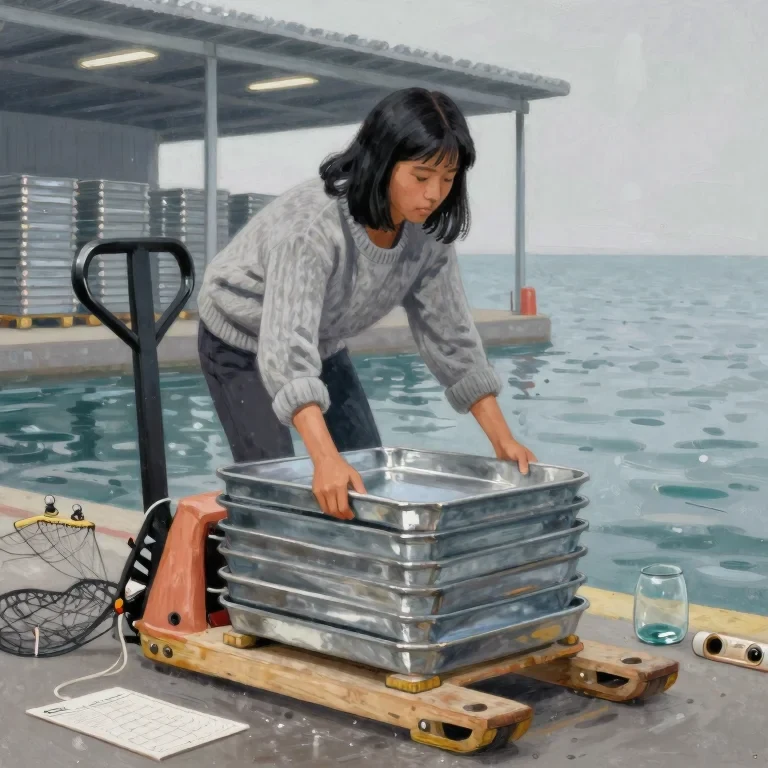
So she went looking for the test weights. Every scale used for trade is checked against known weights, and the weights live in the same room as the scale. The twenty kilo one was a squat steel cylinder with a handle, on a shelf under the window. The market was shut on Sunday. Marama unlocked the hall, got the trolley, walked the twenty kilo weight out across the wet floor and set it in the middle of the platform. She let the needle swing and watched it settle. It settled on nineteen point six. Then she put the weight back and went home and told nobody, because a girl of sixteen with a number like that is a girl who has made a mistake.

For nine days she weighed it twice a day, morning and afternoon, and wrote both numbers in a book of her own. The two readings were the same every time. Nineteen point six. Then she found the calibration certificate, in a plastic sleeve on the wall by the door under a magnet. It was dated eleven months earlier. The officer had written nineteen point nine on the line for twenty kilos. The next check was in three weeks.

That was the part she could not get past. The scale was right. It was inside the limit, and it would be inside the limit on the day the officer came back, because four tenths of a kilo in a year is not much. Nobody at Tukukawa was cheating anybody. The market was a machine wearing out inside the rules, and the rules allowed it.

On the last Friday of the month the crews came into the office with their sheets, because the season had to be reconciled and everybody wanted their numbers in front of them. Corin Fale had run the market for eleven years. He stood at the board with the ledger open and said the numbers were the numbers, the season closed on the twelfth, and nobody was reopening two hundred and forty tickets a day on the last Friday of the month. Then he looked at Marama and said the scale had been checked eleven months ago, and to put the page away.

Marama did not argue with him about the scale. She turned the ledger round so the crews could see it. She ruled a line under the melt column and wrote the weeks of the season underneath in a row, two point eight, two point nine, three point one, three point four, four point zero, five point nine. Then she put her finger under the last one.

She said she did not know anything about scales. She said she knew about ice. She said that ice did not do that, and that somewhere between the weighbridge and the auction bench something was going missing that was not water out of ice, and it was small every day, and it was coming out of the crew shares, because the melt column was what the shares came from. Corin Fale was not angry. He was the sort of man who waits to hear whether you have said the rest of it. When she had finished he went to the window and looked at the rain coming across the yard.

He said the weights were in the cupboard and she could have them out any Saturday the hall was shut, and could put a tray on the platform in front of anybody she liked. He said he would ring the calibrator on Monday and the man would come Thursday. He said that between now and Thursday the market had eleven crews in it and two hundred and forty tickets a day, and he was not stopping an auction for four tenths.

On Saturday the hall was empty and the floor was hosed and the water was still standing in the cracks. Corin stood by the platform with his hands in his pockets. Tui came on her day off, because Hemi had told her to. They put the twenty kilo weight on the platform and the needle swung and stopped at nineteen point six. Corin said to keep going. Then Marama asked for trays. They weighed a small tray of gurnard and it read eleven point six. They weighed a big tray of snapper and it read thirty point six. Twelve kilos, short by four tenths. Thirty kilos, short by four tenths.

She said it out loud for Tui, slowly. It was not two in the hundred of anything. It was four tenths off every tray in the hall, whatever the tray held, because a scale that hangs low by a fixed weight hangs low by that weight all day and every day.

The calibrator came on Thursday. He put the weights on and took them off, then got a spirit level and a screwdriver and took the counterweight arm off its pivot. Under one of the two knife edges there was salt and scale and dried fish packed hard as a shell, put there by three hundred washes a week and never once cleaned out. That was the entire fault. He dug it out, dressed the edges, set the arm back, and the needle went to twenty exactly. He stamped the certificate and said the machine would do another year.

Marama asked him what the four tenths had cost since the last check. He said that was not his job, he was here to check the scale and not to count the fish. Corin said the season closed on the twelfth, the ledger was signed, and the money had gone out to the crews on the Friday before.

Marama copied the new column into the ledger for the rest of the season. It ran two point seven, then two point eight, then two point eight again, the way it was supposed to. She laid the old column beside the new one on a card and gave it to Tui. Tui did the sum on the tailgate of her father's ute, in the rain, with a pencil. She had eleven hundred and ninety trays in the season's sale column, but not the weight of each one, only the average, so she worked it out as four tenths on every tray in the hall and got ninety seven kilos. Then she stopped, because that was not right either.

Four tenths on every tray was true. Four tenths on the average tray was not the same as four tenths on the trays they had actually weighed, because the trays did not all hold the same amount and nobody had written down how much each one held. So she wrote ninety seven and put a question mark after it, and Marama copied the question mark into the margin of the ledger beside the old melt column, with the date.
On the Monday Corin gave her a printed card for the weekly melt check and a two kilo weight to go with it, and said the whole thing was hers now. She wrote the date at the top of the card and put it in her box under the desk. She is the one who has to do it. Nobody signs it.