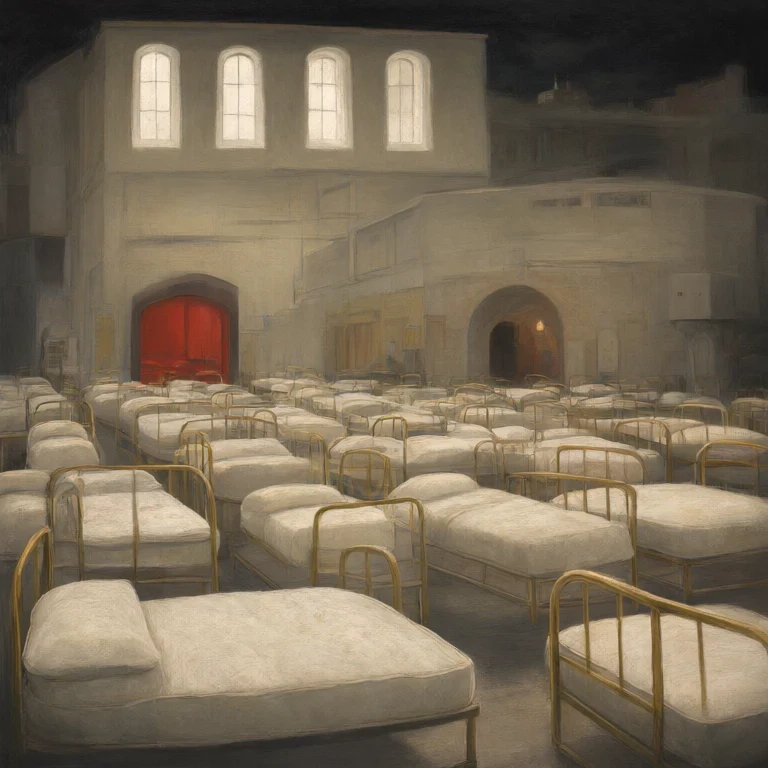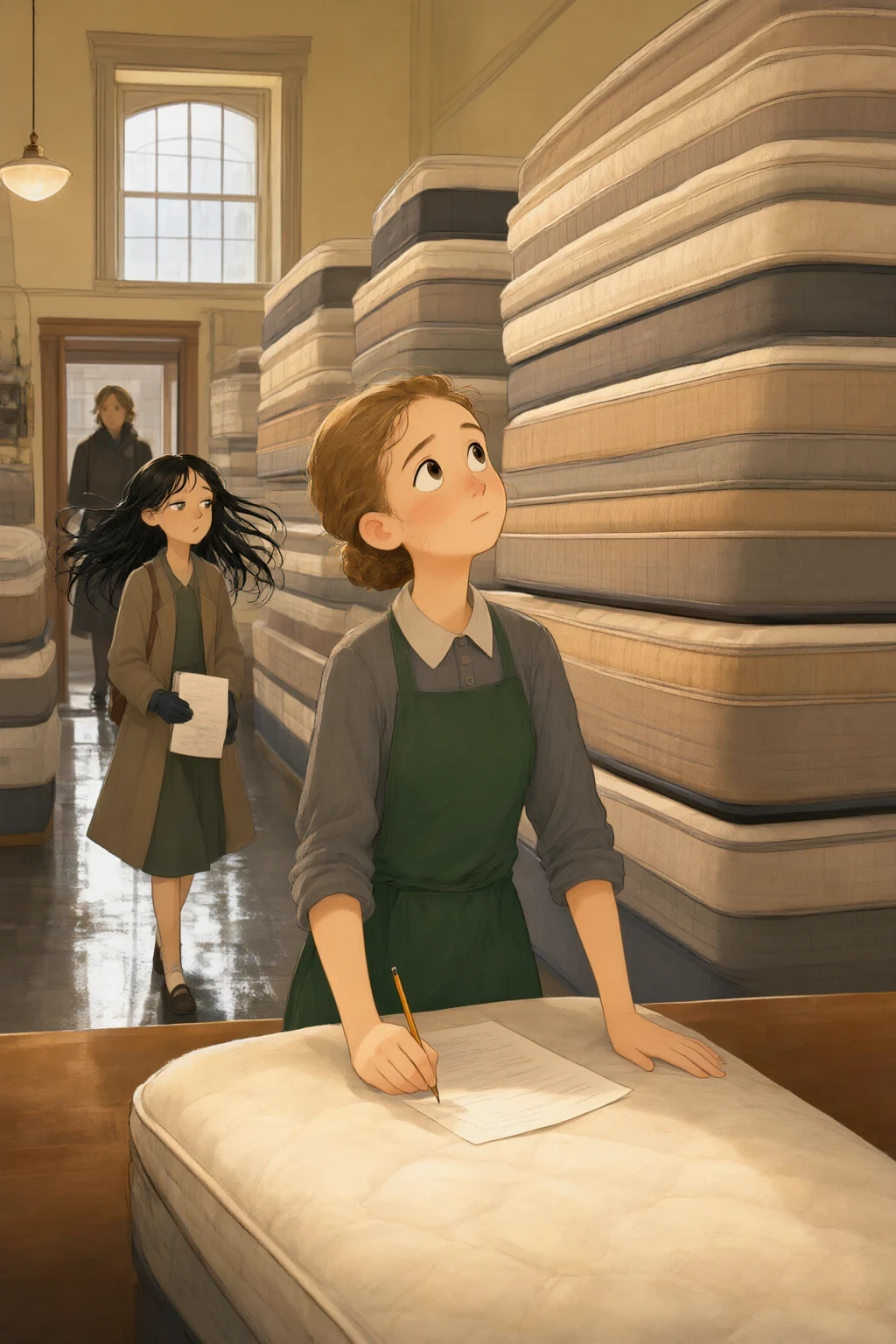
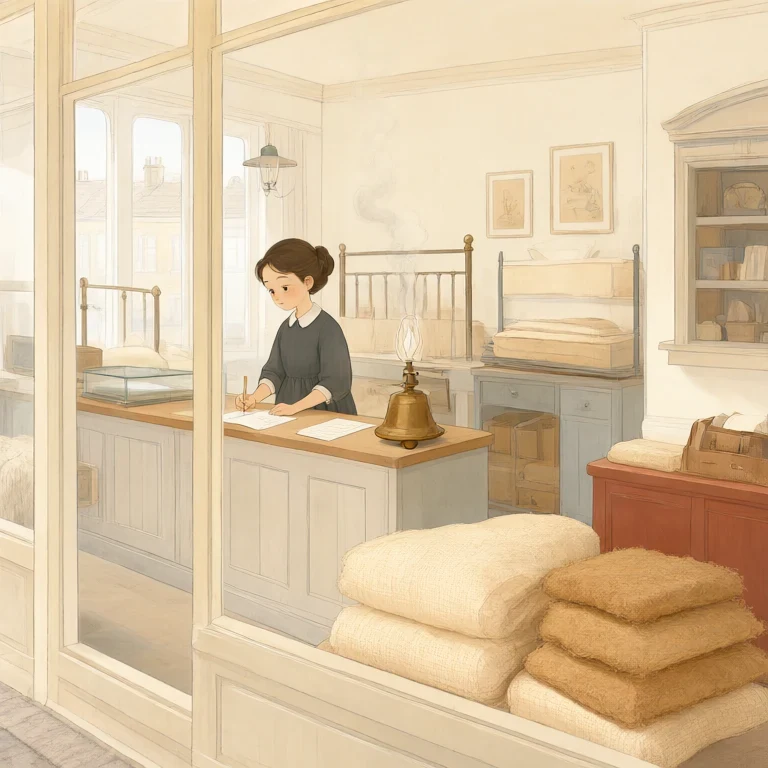
Featherstone sold beds the way other towns sold bread. A person came in and said how much they had, and went out with something with a figure written on it. Wren Polley had been behind the counter of the shop on the high street for two years and one month, and writing the figure was her job, because the shop employed nobody senior to her.
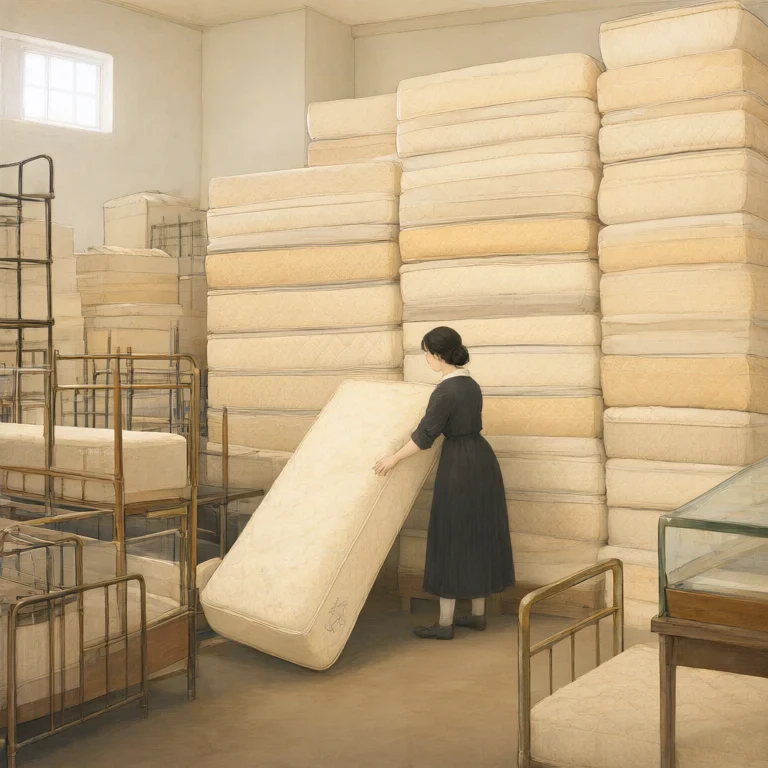
A tolerance was a promise about how wrong a thing might be. It was given in hundredths of an ounce and written in pencil on the foot of the bed, in one hand, all the way to the corner, and it was never rubbed out. Whoever slept there next could read it, which is why it was put there. The back room held ninety mattresses, six high, in ticking, the last of the winter’s stock.
The oldest joke in Featherstone was a girl, a pea, and a whole government out of the incident. The shop told it all day, by men unloading carts. At twenty past three the carriage stopped and four people got down into the wet.
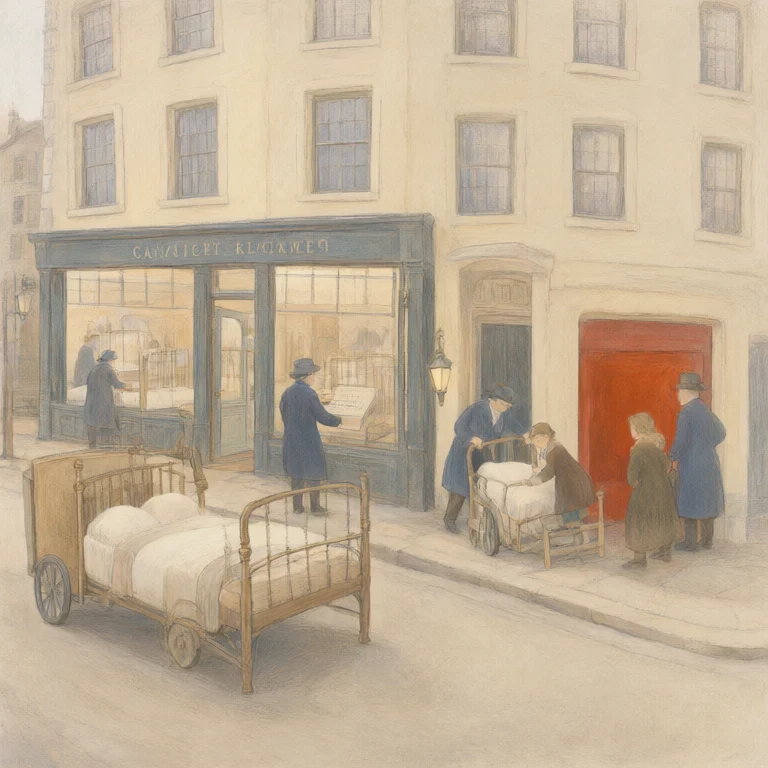
One of them was a secretary with a list. Wren had seen the same list three times in three shops, because Featherstone supplied four counties and every great house came up the hill for anything that mattered. The list was houses and their figures. Corrow, three-tenths. Vantry, two-tenths. The Ossick house, one-tenth, and nothing under that in the county, because a twentieth of an ounce is a figure you read in a book and not in a bed.
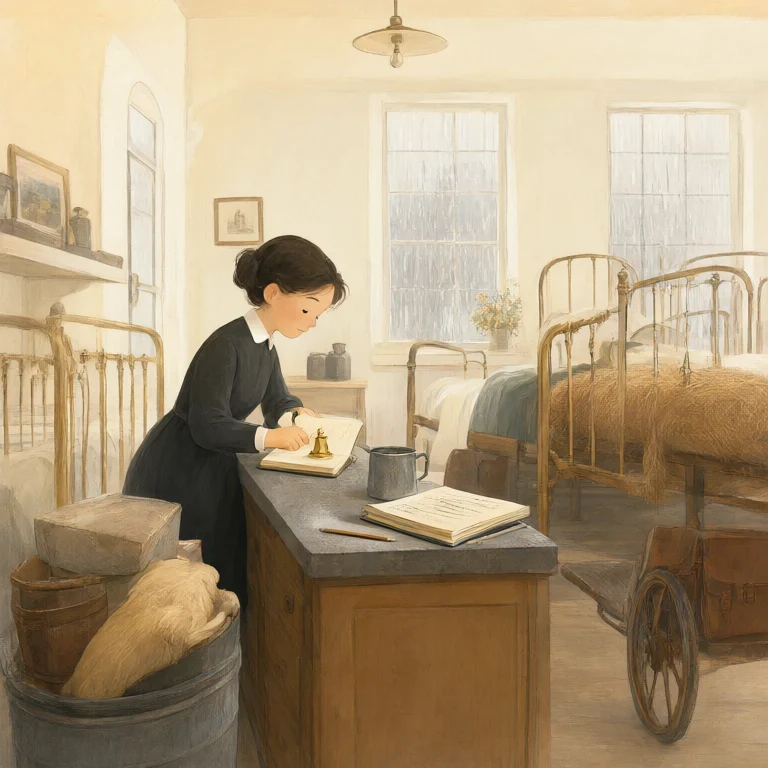
The royal entry was blank, and had been for as long as anybody could remember, and Wren found she could explain it to a stranger in a shop.
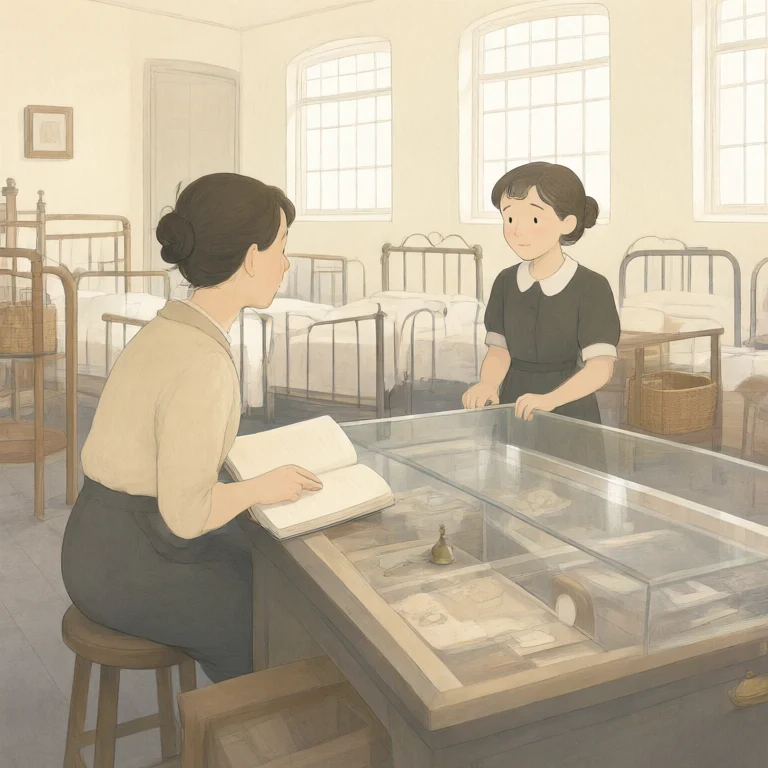
The pea is in a drawer in the cellar at the top of this hill, she said. Dried. In a glass case, on a card with a date on it. Nobody has touched it in two hundred years, and that is the whole of the law. A standard is not used. It is kept, and things are brought to it, and all the rest of Featherstone exists because nobody ever laid a queen on a bed to find out what she could feel. So the list had no figure for the royal house.
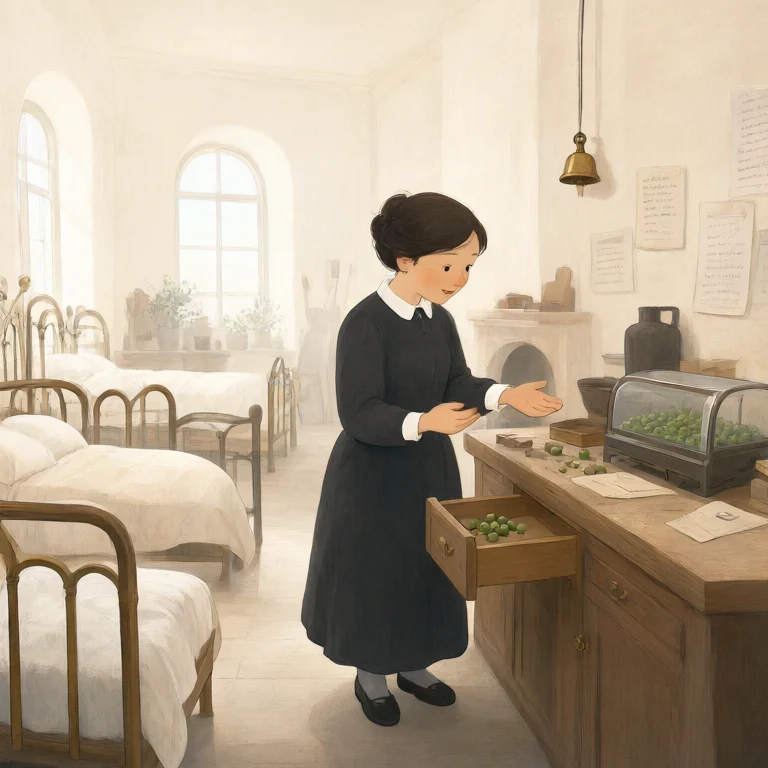
The Queen was in the carriage with the window up, having sent her secretary, because a Queen who came into a shop in Featherstone would be asked about the pea. What the Queen wanted was a bed. Not for herself. For a house on the coast, given away four years ago, to a person she had met twice, and Wren wrote nothing on the docket about the name.
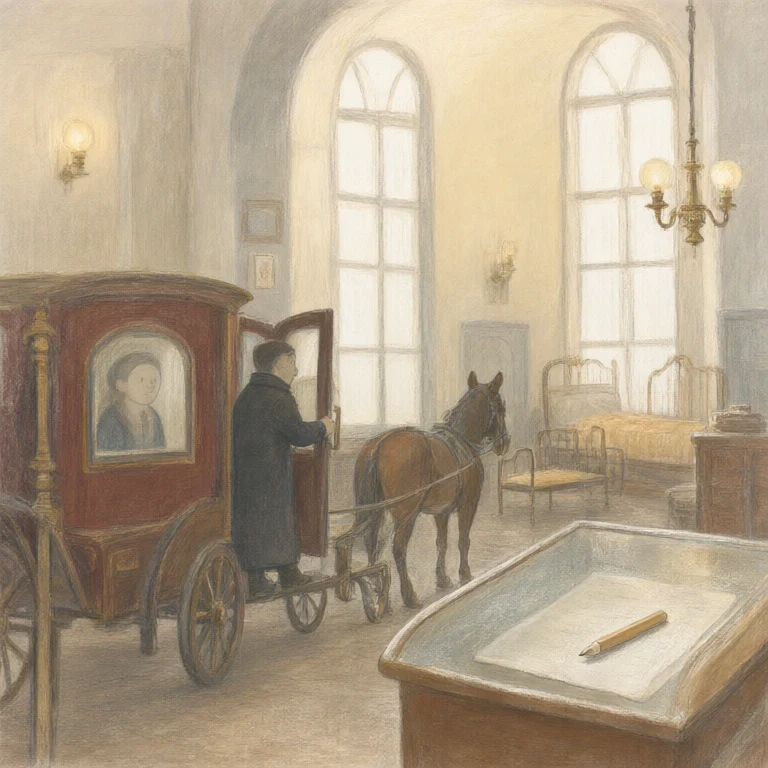
The secretary asked what figures the shop sold. Wren said the shop sold any figure anybody asked for, and that this was the trouble.
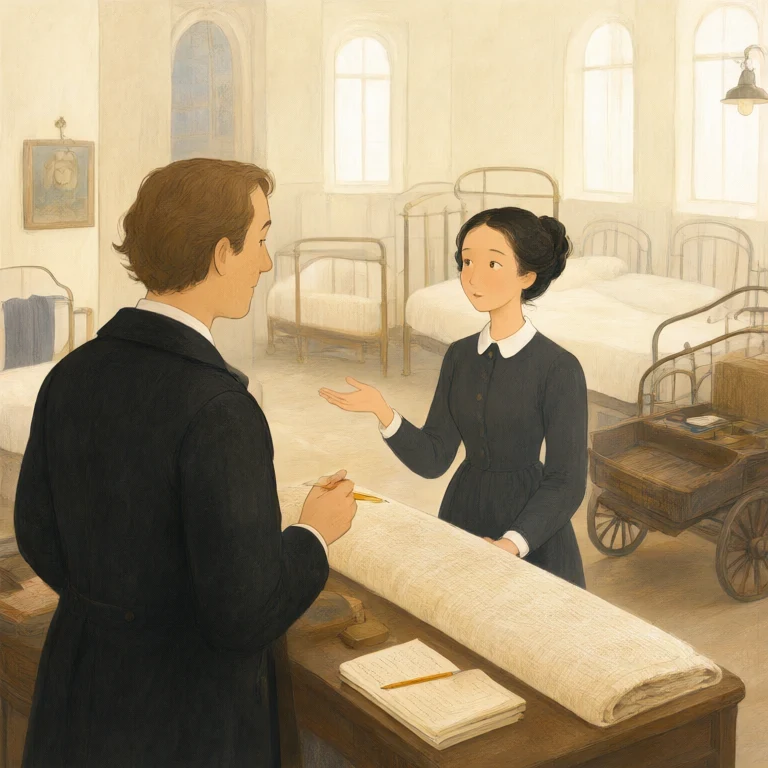
Four-tenths was a promise that the bed would be wrong by no more than a lump nobody would notice. Two-tenths was a lump somebody would notice once. A tenth was a lump that would keep you awake. A bed is allowed to be wrong by its figure. A bed that is worse than that comes back to the shop, and gets opened, and emptied, and burnt, and stuffed again, and the shop pays for all of it. And a queen, said Wren, would keep every bed she had ever been given. The secretary stopped writing.
There were four figures on the docket by a quarter to four and no way to tell which was true, and Wren stood at the counter with the pencil in her hand.
The figure was not a description of the bed. It was a promise about a sleeper, and it bound, and arguing about the truth of it afterwards would not move it by a hundredth, because the promise was the thing that was sold. A fifth of an ounce, because a queen ought to have the best, and the bed comes back inside a year out of a town that does not know her, and is opened and burnt in a yard she has never visited.
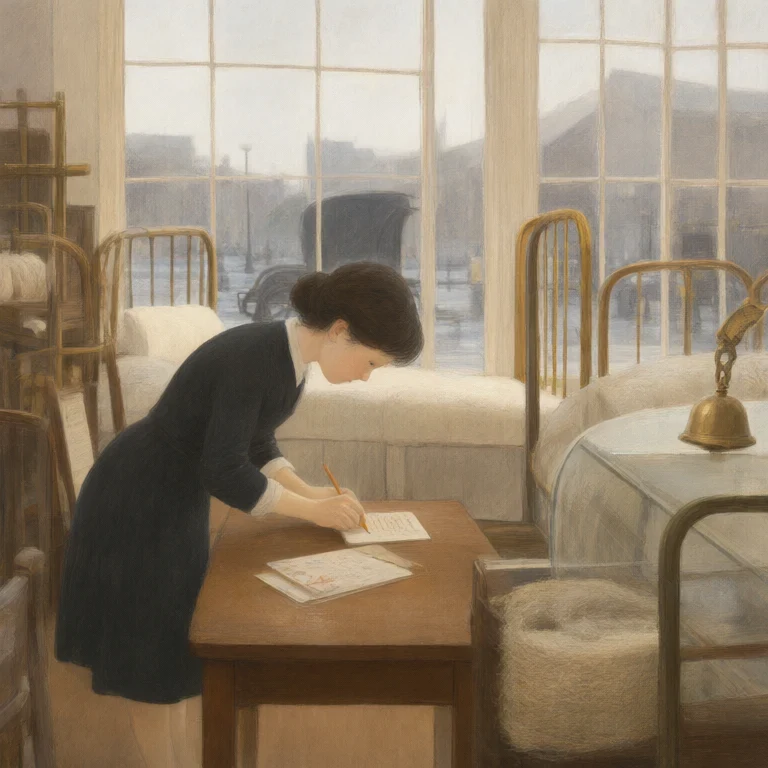
Four-tenths, and the finest bed on the coast is a promise nobody ever tests, and the only person who ever learns there is a lump in the middle of it is the person lying on it at three in the morning. The carriage was due at six.
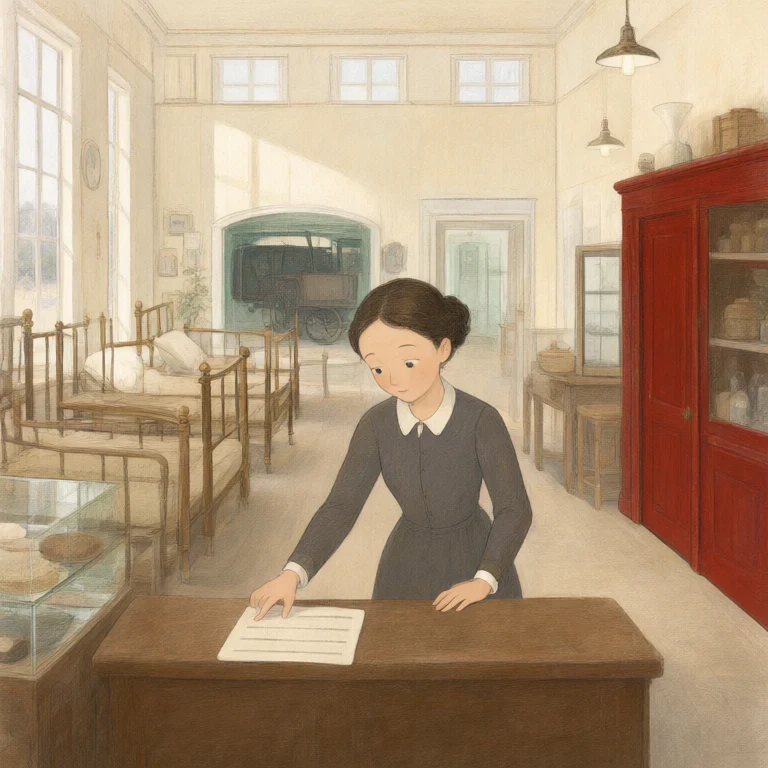
At ten past four a girl of fifteen came in off the wet pavement with her hair streaming and gave the secretary the figures, one after another, unprompted and in order, the way other people give the time. Four-tenths in the terrace houses. Two-tenths in a great house. One-tenth at the Ossicks, and their last one is eight years old. The secretary said, thank you, Miss. The shop that sold it is on the corner, said Marguerite Fenn, and it is not very good, and I am not saying that to be unkind.
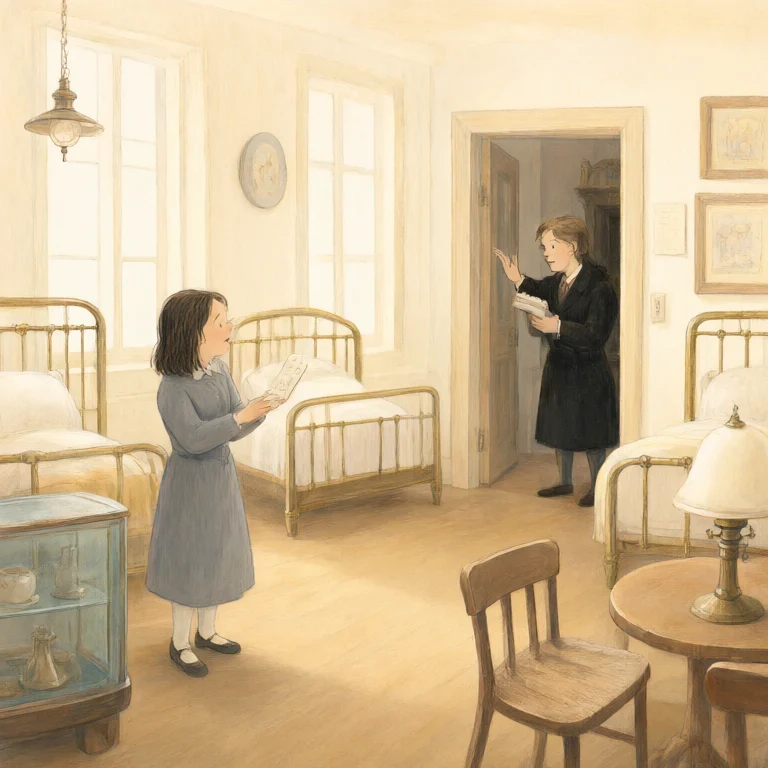
And she was gone into the rain again. Wren wrote a fifth of an ounce on the docket, and put a line through it, and wrote two-tenths, and put a line through that, because both were true about a person and neither was true about a bed.
The stuffer was four minutes down the towpath, in a shed hot enough to lose your temper in, and the smell of it was flax and horsehair and tar, which was the smell of the town. Nell Crumm was sitting on one end of a bench with her hip out to one side, the way she had sat since 1979, narrating the stuffing of a mattress in the third person to nobody.
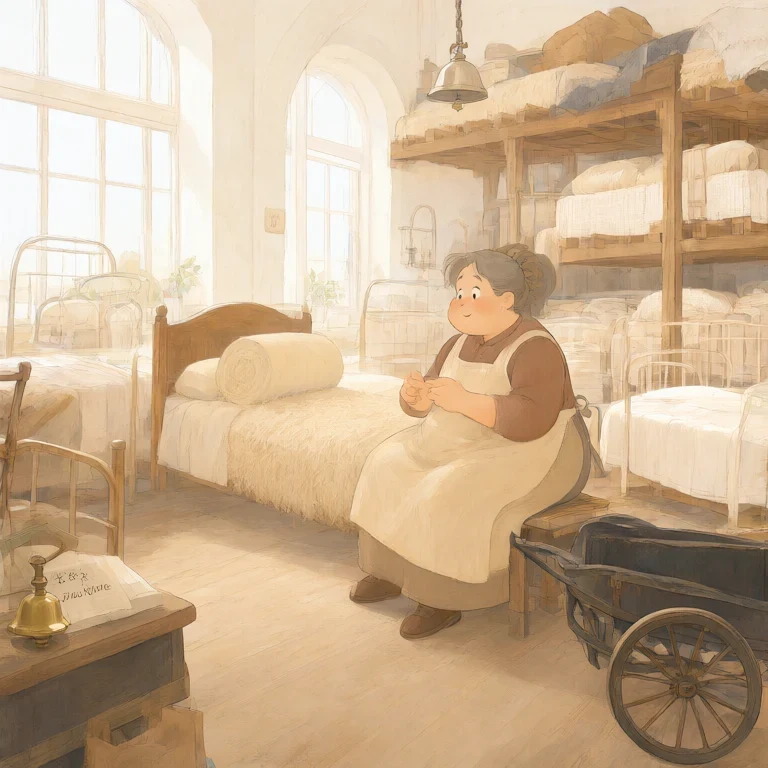
He put it in at a fifth, she said. And he got a third. And that is the whole of what happened, and there are four hundred of those in the yard behind me. Wren asked her what figure the Queen should have. Nell Crumm said that was not a question she could answer, and then that it was the wrong question anyway, and asked who the bed was for. A house on the coast, Wren said. A person nobody has asked.
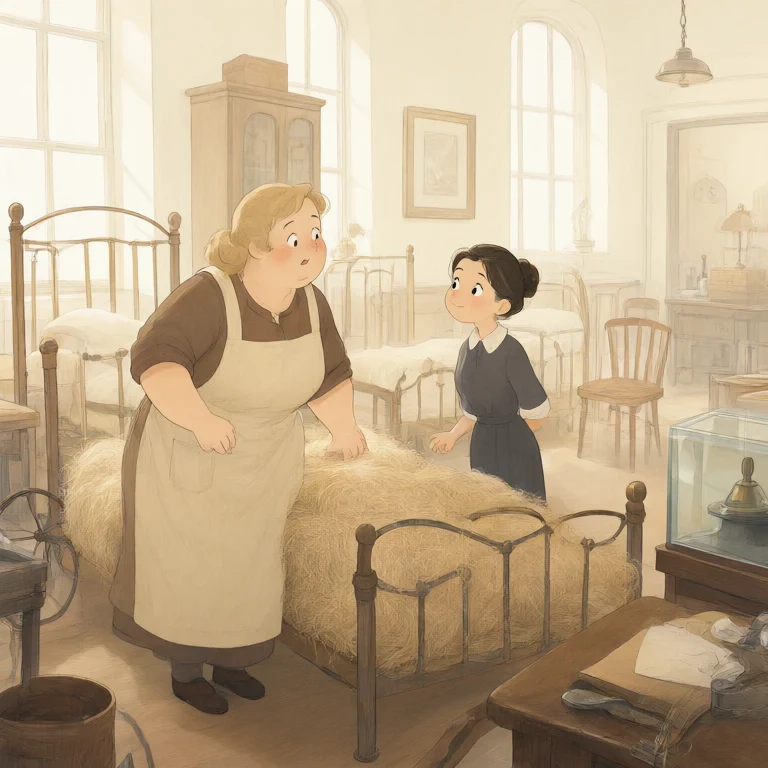
Then it is a bed, said Nell Crumm, and reached under the bench, and brought out a ticket with the day’s date and a figure on it in her own hand. Two-tenths. That is what he got and not what he was told, and I write what I get, because I have stuffed to a figure forty years and ruined eleven beds and paid for every one.
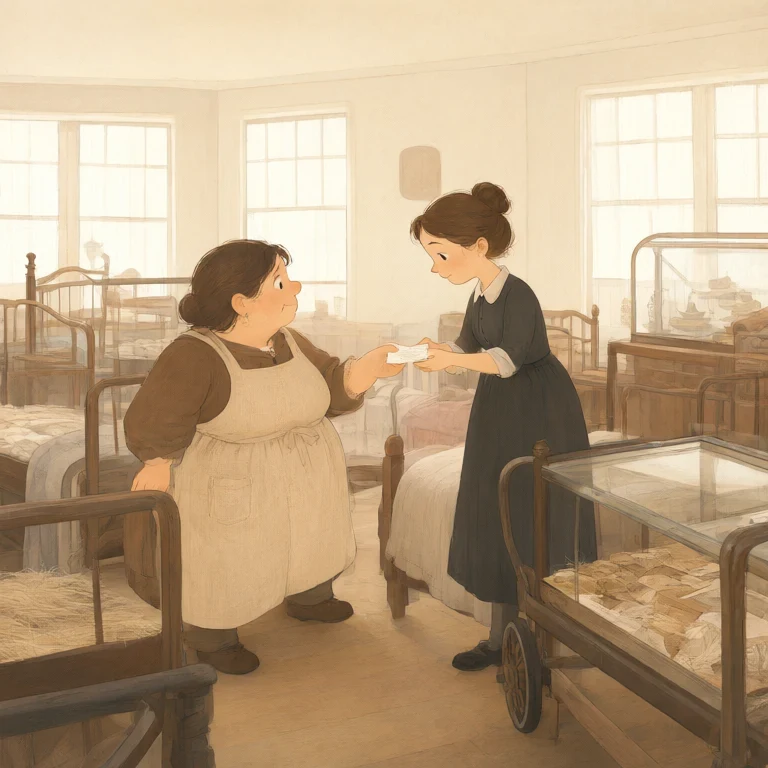
She tore the ticket off and gave it over, and said that if the shop wanted it stuffed to a feeling she would over-stuff it, so the shop could keep the figure on the ticket and off the bed, and go and find somebody else to be wrong.
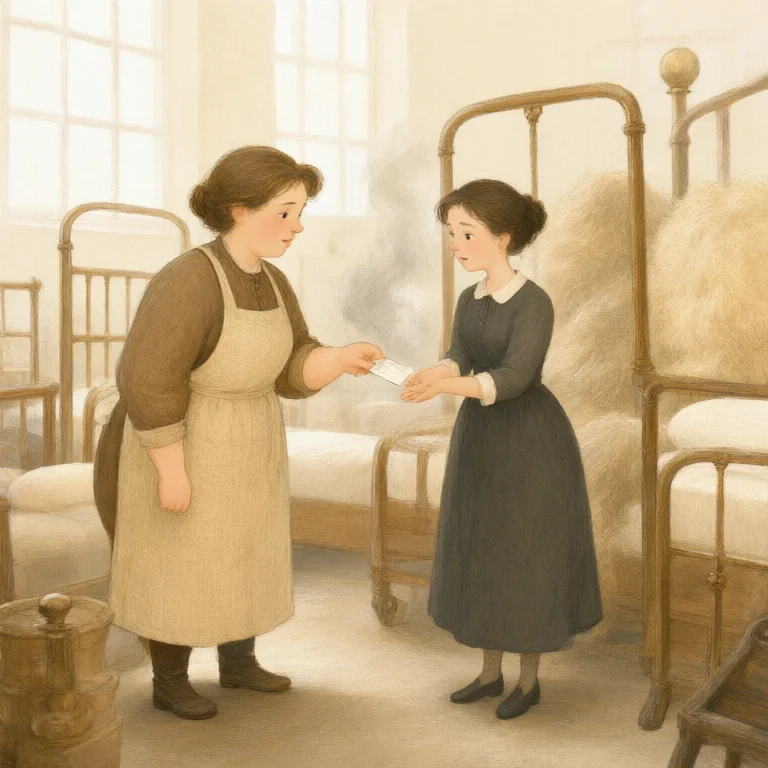
The Queen came in at ten to six and stood among ninety mattresses and looked at the last one, on its side with the ticking stripped back and a pencil figure on the foot of it. She read the figure twice. Two-tenths, she said. That is not the number I expected.
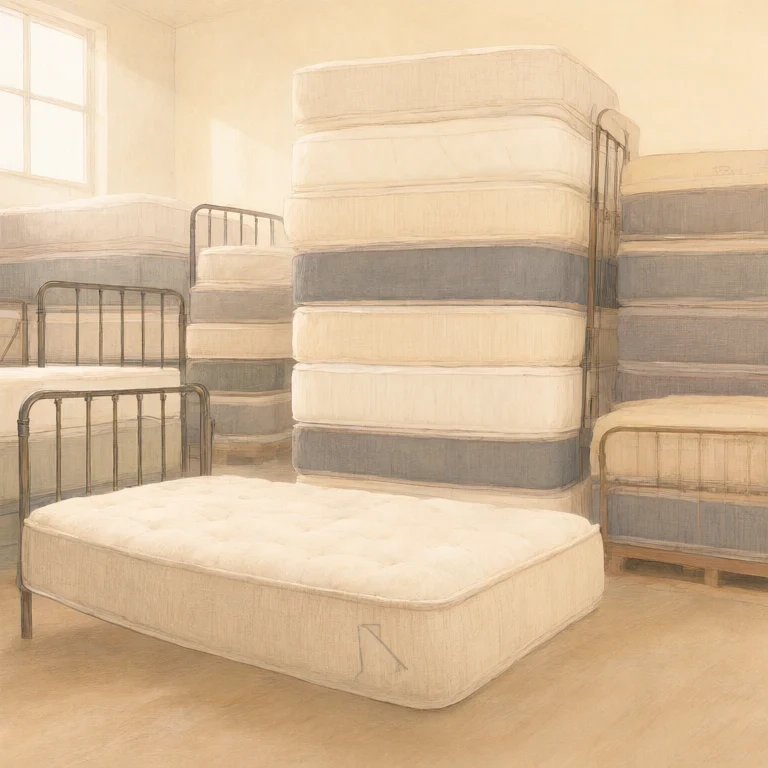
No, said Wren. It is the number the bed is. It is what the stuffer achieved, and the only one of the four I can put on a foot without somebody being disappointed later, and if it is worse than that in your house it comes back here and the shop pays. I have had one bed sent back in my life, she said. I did not send it back. A cousin did, and she was extremely pleased with herself, and she is still asleep in the second one.
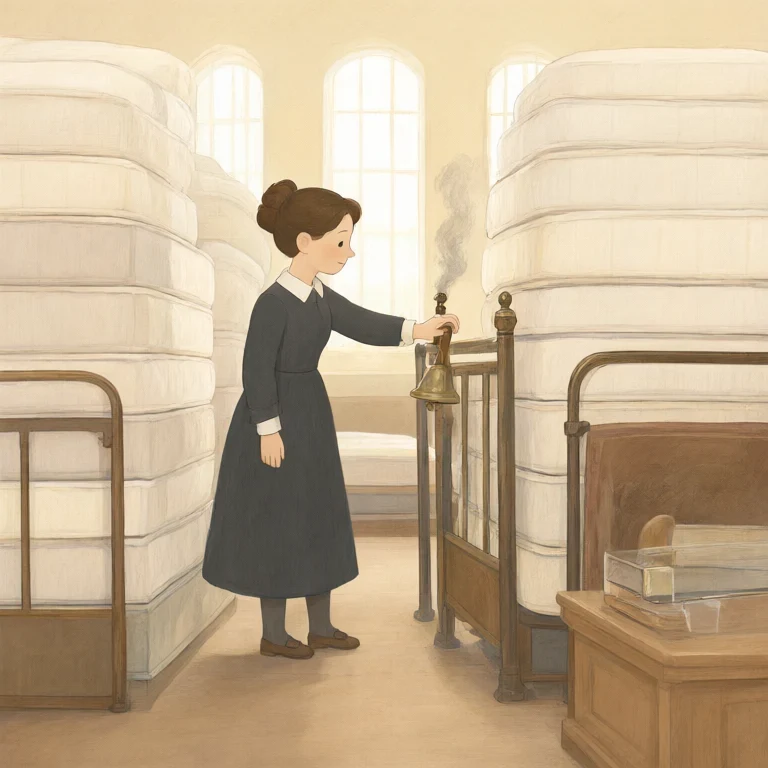
Then she turned the ticket over and read the figure on the back as well, because she checked both sides of things, and Wren understood then that the shop had been selling her the same figure twice.
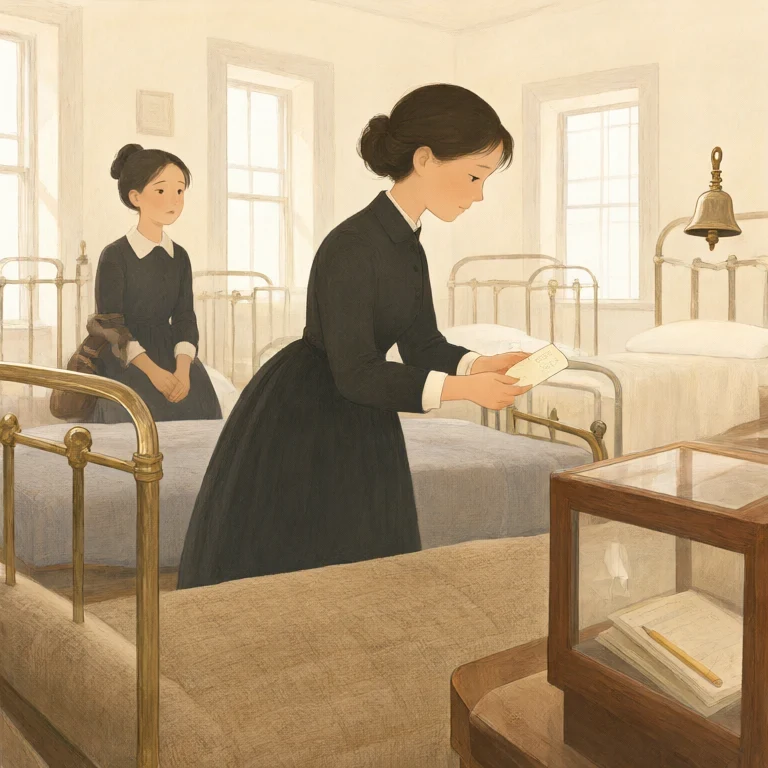
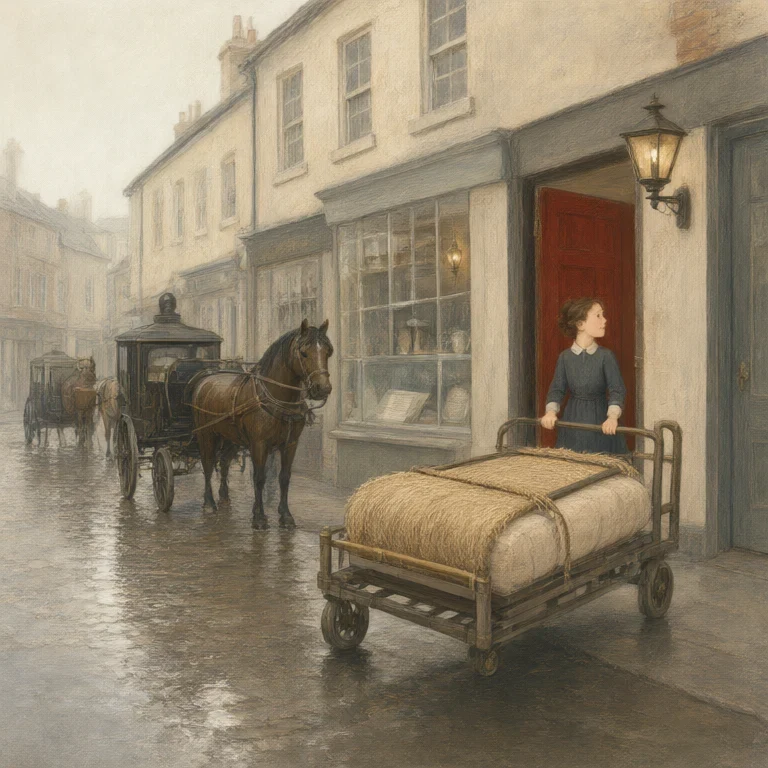
The carriage went at six with the bed on a handcart in front of it, because a mattress would not go inside a carriage. Wren put the pencil back in the drawer, with three pencils and a stub worn down to a nail, and put the ruler on the shelf, and turned the shop lamp down to a bead.
Up at the top of the town the Bureau’s north windows were still lit, and on the test floor inside them a man with an enormous careful hand was walking the length of ninety-one beds for the last time that day, and would do it again in the morning, having trained nobody in eleven years to walk it for him. In the dark the figure on the foot of the bed could not be read at all.