The Provident Savings Bank of Hawksbridge kept a counting house over the market door, and in the counting house there were two sets of books, and the bank’s affairs were sound, and one of the two sets of books was the one a registrar would read. Thomas Blatchford was sixteen. His hair was cut short and he wore his father’s coat, taken in at the shoulders and let out nowhere, and he had been a copying clerk for fourteen months at eightpence an hour and his dinner. He was not a ledger clerk. A ledger clerk entered the money. Thomas entered the money that had already been entered, a second time, in a better hand, and the second time was the one that was trusted.

Everything in the bank was entered twice. A man brought eleven pounds to the counter on a Tuesday and the paying-in slip was numbered and the teller wrote the amount into the day book, and by evening it stood in the ledger twice over. Once on the man’s own account, which made his balance a pound higher than it was. Once on the bank’s own account, which made the bank’s a pound lower. That is what the two is for. If a sum stands on one side and not on the other, the whole book is a lie, and the only thing that proves otherwise is that at the end of the year the two sides cast to the same figure.

Why there was a second set at all was the reason the registrar’s man came in January. The ledger was the working book, written in a bad hand in a bad light with two pens and a scratchy nib, and it got corrected, and a man may correct his working book. A fair copy may not be corrected. Once a figure is in the fair copy it stays, because an altered copy is a copy nobody can rely on, and a bank that cannot show its books is a bank that cannot be trusted with a widow’s fourteen pounds. So the whole of the year’s posting was written out again, clean, in a hand chosen for the purpose, into four new volumes of three hundred leaves. Hawksbridge had eleven hundred and eighty accounts and about four thousand four hundred entries, and the new volumes filled the shelves behind the door and the shelf in the passage.
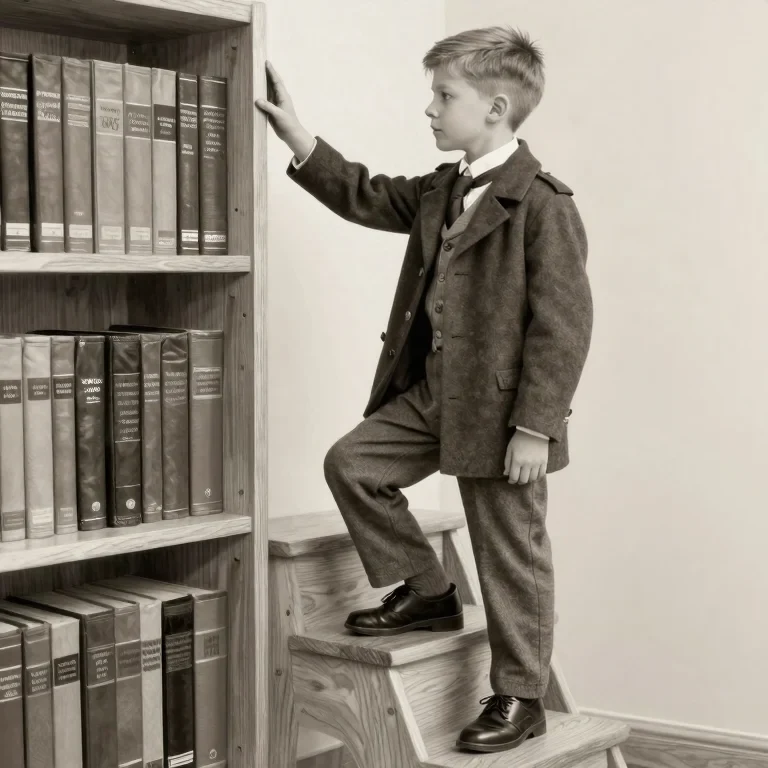
The rules of the copying were four, and Thomas had them by his second week. Copy the figure. Do not work it out. If the figure in the ledger looked wrong it was still the figure, and the looking wrong was somebody else’s business. Carry the leaf. Every entry carried the number of the leaf it came from, and the copy carried the same number, so that a man checking the copy could go straight to the leaf and see the same thing standing there. Bring the balance down. The balance at the foot of a page was written again at the head of the next, and it was never added to, only carried, because an addition can be wrong and a copy of a figure cannot. Cast the column. Every page was added down, and then again from the bottom up, and if the two answers did not agree the page was wrong. Casting pounds, shillings and pence means turning the whole column into pence first, and there are two hundred and forty pence in the pound, and a column of pence is a column of figures with noughts in.

The four volumes were ruled before he wrote a single figure. A sheet is ruled in a hundred and twenty places at once by a machine in the counting house, which is a plate of looking glass with lines cut into it, and you lay the sheet on the plate and lift it and the lines are all there, black, straight and even. He ruled the head lines heavier and wrote the column headings in a copperplate hand, and the first heading he wrote in each volume was the one nobody ever looked at. It said: BRING DOWN.

On the ninth of January he had done one volume and a bit and his hand had begun to be a problem. It was not pain. It was that the figures came out of him with a tremor in them, the way a note comes out of a flute when the player is tired, and a three began to look like an eight about four times in a hundred. The chief clerk, Mr. Meak, came round the shelves on the Friday. He was fifty-four and had been in the bank since he was seventeen, and he did not look at Thomas’s work. He looked at Thomas. “You are writing the figures too fast,” he said. “The figure is the whole of the trade. A number a man cannot read is a number he has not written down.” Thomas said he had eleven weeks to go and about four thousand entries behind him.

“You have eleven weeks and four thousand entries,” said Mr. Meak, “and if your hand goes at Christmas you have nothing and I have to do it, and I am fifty-four.” And he went away, and that was the whole of the conversation, and Thomas wrote the next four hundred entries at the speed of a man reading a newspaper.

On the second of February he finished the fourth volume. It had taken twenty-six days. He carried the last balance down, ruled the line under it, and then, because it was his job and not his pleasure, he cast the four volumes. He cast the first twice and it agreed. He cast the second twice and it agreed. He cast the third, down the page, and came to forty-one thousand one hundred and eighty-two pounds six shillings and ninepence. He cast it again from the bottom, because that is what you do, and came to forty-one thousand one hundred and forty-six pounds six shillings and ninepence. The first was right. The second was right. They were the same figures, added in the same order, twice, and they came to different money. The difference was thirty-six pounds.
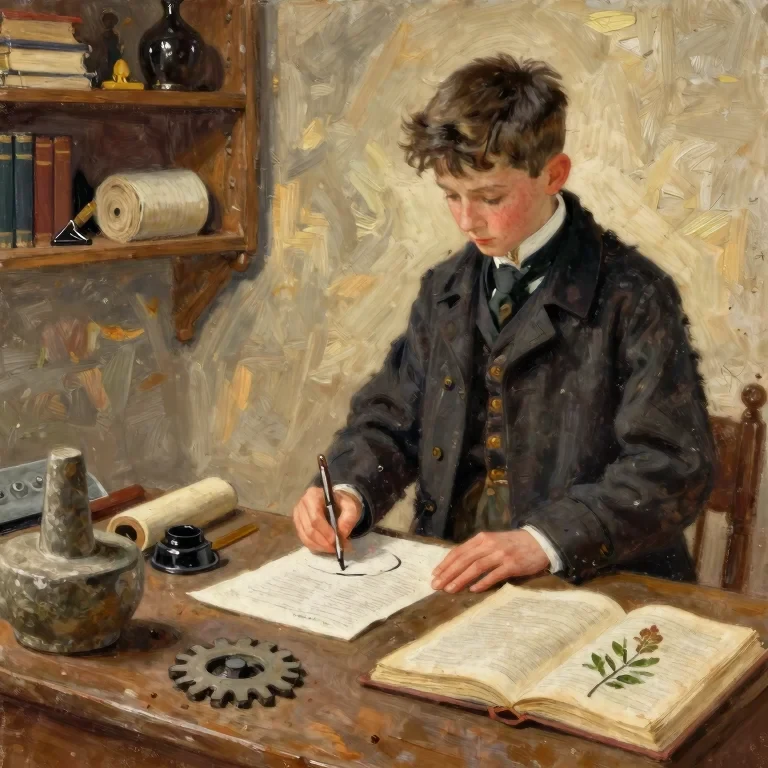
Thomas had a piece of paper with sums on it that he had copied out of a book about figures when he was eleven. One of the sums said that when two figures are got wrong by putting two of their digits in the wrong places, the difference between the two sums is always nine times the difference between the two digits. Sixteen and sixty-one are the same figures and differ by forty-five, which is nine times five. Thirty-six was nine times four. He wrote it on the back of the casting paper and looked at it for a while. So two digits had gone into each other’s places, and the two digits were four apart. He wrote the pairs out, because there were only eight of them. Zero and four. One and five. Two and six. Three and seven. Four and eight. Five and nine. Four thousand four hundred entries, and the mistake was somewhere in them, in a column, in one of the eight pairs.
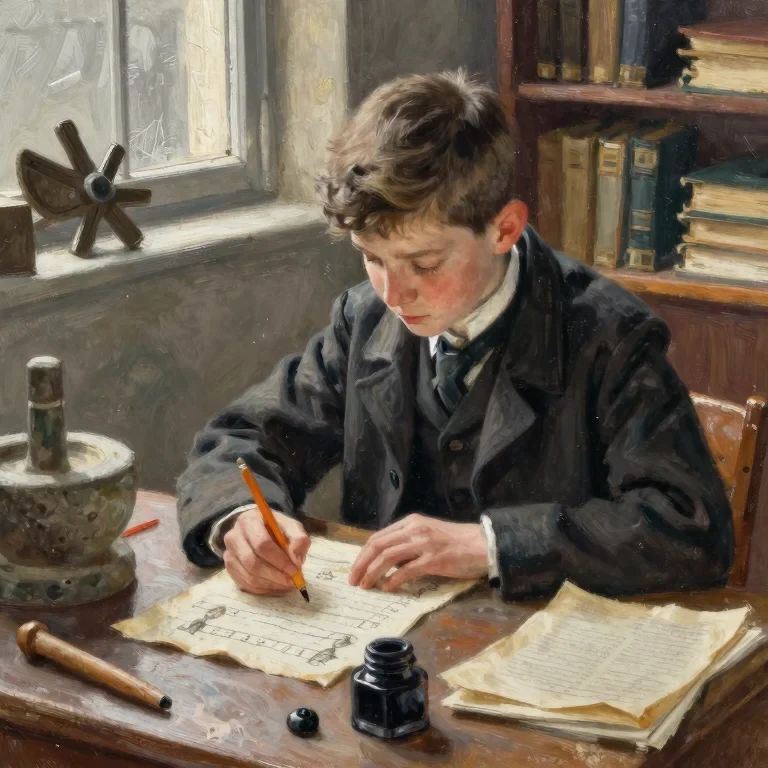
He began with the pounds, because the pounds are the widest column and the only one where two figures stand side by side and can be swapped whole. He went down the third volume with a card over the line he was on, and when he came to a two-figure sum whose digits were four apart he stopped and turned to the ledger and read the same line. It took him a day and a night to get to the end of the third volume. He did the first and second in a day between them. The fourth took a day and a half, because by then he was reading the pounds without reading anything else, which is the whole of the trick and which no clerk can do in his first month. He came back to the third volume on the evening of the seventh and read it upward from the bottom, and on leaf two hundred and eighteen, in the account of a carpenter called Ninn, he found it.

Ledger: the thirty-first of May, By cash, sixty-two pounds. Fair copy: the thirty-first of May, By cash, twenty-six pounds. Two and six, four apart, nine times four is thirty-six. There it was in a book of four thousand four hundred entries that nobody had looked at since it was written. Thomas did not shout. He went and got the counterfoil book, which is the book of numbered slips the tellers tear off and hand to the depositor, and the counterfoil for that payment said sixty-two pounds. Three copies of one figure and the fair copy was the wrong one, which was what everybody had always said and which he had now proved on a page he could put his finger on. He wrote it up on the casting paper, four lines. The volume. The leaf. The account. The three figures. He signed it and took it to Mr. Meak at half past five.
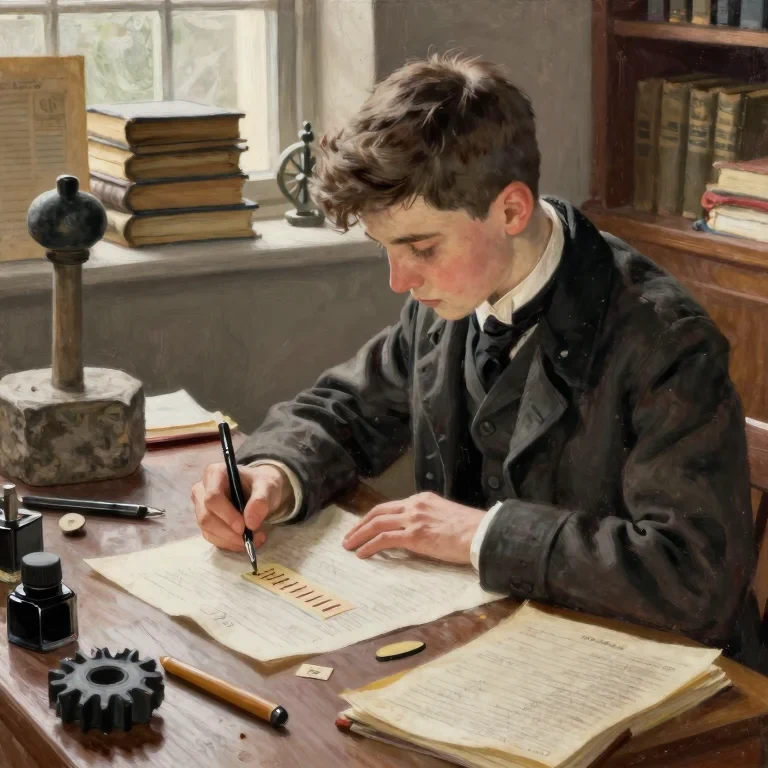
Mr. Meak read it standing up and then sat down, which Thomas had not seen him do before. “You have cast it,” he said. “Twice, down and up, and it did not agree the first time.” “You have looked in the copy and found it in the copy, and the copy was the wrong one. If you had been a ledger clerk you would never have looked at all.” He turned the paper round. “Now, the balance. Where is it?” “Carried down at the head of the next leaf, and never added, as the rules say.” “Then put the right figure in and cast again, and if it agrees you have had a bad week.”
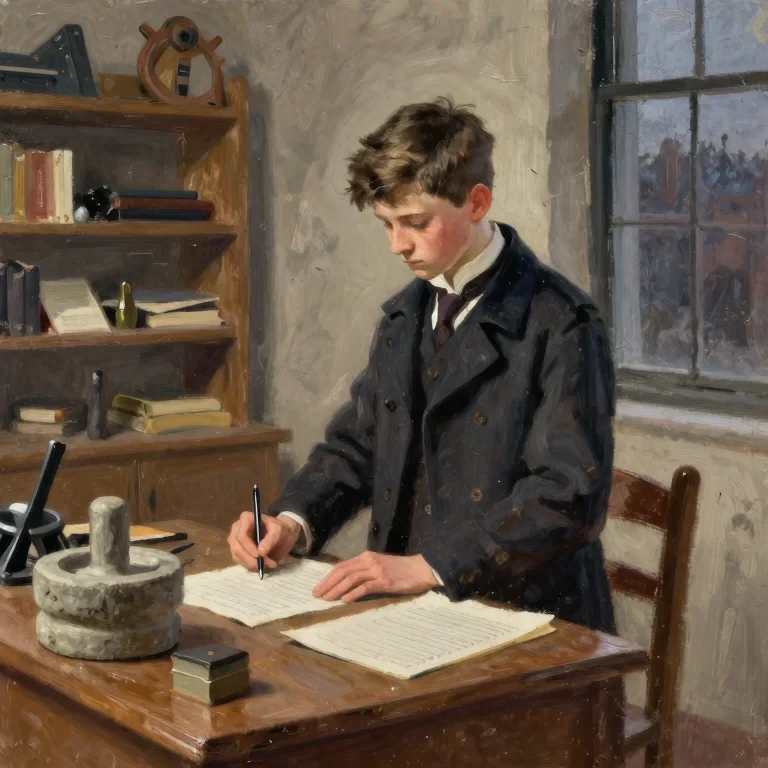
He wrote twenty-six as sixty-two in the fair copy, in the same ink, and because a corrected figure is a figure with a line through it, and a line through a figure in a fair copy is a thing that has not happened and cannot be un-happened, he did it properly. He took the leaf out with a knife, which is what a fair copy is for, and wrote the account out again from the ledger on a fresh leaf, and numbered the new leaf two hundred and eighteen, and tied the old one up with the others he had taken out, and wrote on the tie what the leaf had been and why. Then he cast the four volumes again, down and up. Both sides came to forty-one thousand one hundred and eighty-two pounds six shillings and ninepence. The book balanced. He wrote the two figures on the proof sheet and the word AGREED, and ruled a line under them, and signed it. Then he read the fourth rule again.

A fair copy is only the ledger if the ledger is the whole of the business. The bank sent a summary to the registrar every January, and the summary was not copied out of the ledger. It was made up from the abstracts, which were the monthly sheets on which a clerk wrote what the week’s business had come to, so that the directors could see a month in one page. Nine a year, made by three clerks, and the January one was made by a man who left the bank in April and could be asked nothing about it. The summary had to agree with the fair copy. That was written on the inside of the cover of the day book and not on the card of the four rules, and Thomas had read the four rules a hundred times without ever once reading the inside of the cover. He cast the summary. The payments side came to forty-one thousand one hundred and eighty-two pounds six shillings and ninepence, which was the figure he had in the fair copy and had just proved. The receipts side came to forty-one thousand one hundred and sixty-four pounds six shillings and ninepence. Eighteen pounds short.

He did the sum again on the back of the casting paper, because the first time of anything is the time to be wrong about. Eighteen pounds. And the thing that came to him, looking at the two figures for a long time, was not a number. The payments side was right. He had proved it an hour ago with a carpenter’s account and a counterfoil, and he had proved it by taking a leaf out with a knife, and a thing proved at that cost is not proved twice. So the error was in the receipts, and it was in the summary, and the summary was made up from the abstracts, and so the error was in one of the nine abstracts. He had the abstracts in a tin on the shelf. He took them out and laid them on the table in order and read the second week of March first, because a mistake of eighteen pounds in a summary that runs to forty-one thousand does not come from an ordinary Tuesday. It comes from the week of the audit.
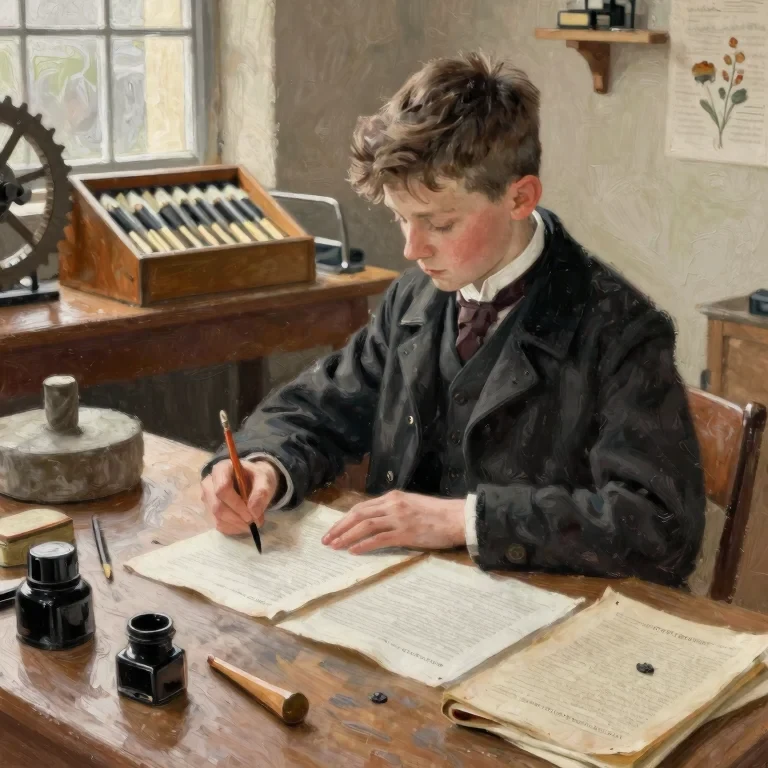
The abstract of the second week of March had two sides like every other, and the two sides did not agree. They were eighteen pounds out. Somebody had taken a payment of eighteen pounds off the receipts and put it into the abstract, in his own hand, in a hand that was not any of the three clerks’, at the foot of the page, in the middle of the week. To cash. Eighteen pounds, no pence. Thomas sat with the abstract in front of him for a quarter of an hour. A man does not put a false entry into a summary because he has made an error. He puts it in because the two sides will not agree without it, and then they do agree, and the false entry is the only reason the page balances, and the number it covers up is the number nobody can find. If the eighteen pounds came out, the second week of March would be eighteen pounds wrong in the other direction, and the figure it ought to be was not written anywhere in the building.

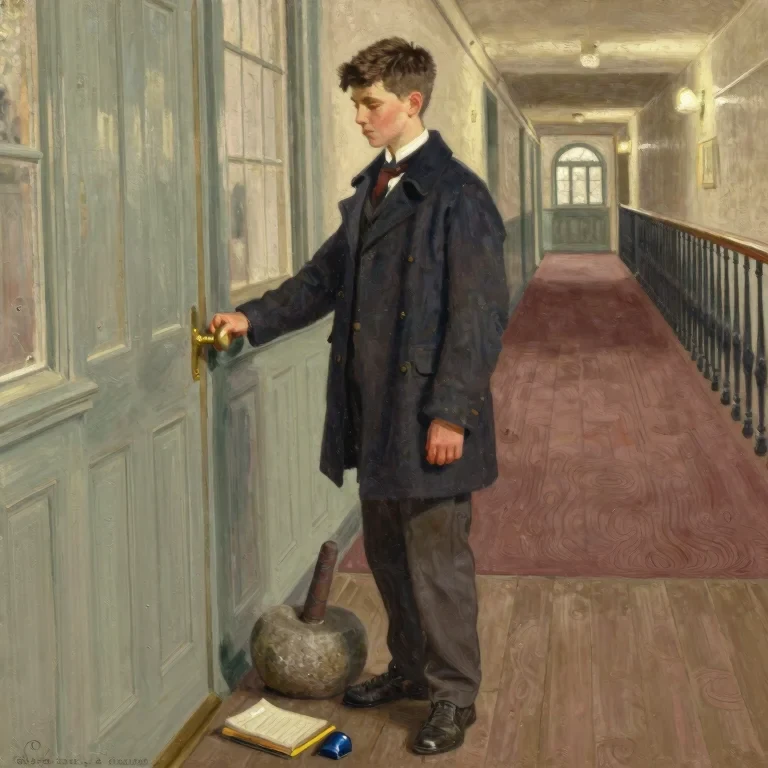
He went up the stairs and knocked on the door of the private office, and Mr. Pole was at his table with the September list in front of him, and he was sixty-eight and had been a corn factor for forty years and a trustee of the bank since the year it opened. “Mr. Pole,” said Thomas. “Will you look at the second week of March in the abstract.” The old man read it, and then he read it again, and he did not ask who had sent him and he did not ask how a boy of sixteen had come to be holding it. That was how Thomas knew. “I made an error in March,” he said, “on a day when I was doing two things. I took eighteen pounds off the receipts. I saw it the same evening and I had it struck out in the day book, and the striking out was right, and then I balanced the page, because a page that does not balance is a page anybody can see.” “Then the page balances and the year does not.” “Yes.” “And the fair copy has it in, because the fair copy has the ledger in it, and the summary has it in, because the summary has your page in it.” “Yes,” said Mr. Pole, “and the registrar’s return goes out on Friday.”
“What am I to do with it?” said Thomas. He had an answer ready and it had nothing to do with being brave. “Nothing,” he said. “The copy is the ledger and the ledger is the book, and the figure in the ledger is the figure, and I do not work it out. So the fair copy stands, and the summary stands, and the two of them are eighteen pounds apart, and I write that on the proof sheet, which is the paper the registrar looks at before anybody else does. If I am not allowed to say how much the difference is then I cannot say there is one, and a book that is wrong and does not know it is worse than a book that is wrong.” Mr. Pole looked at him for a while. “You are sixteen.” “Yes, sir.” “On Friday, then, with the difference on the face of it, and in your own hand.”
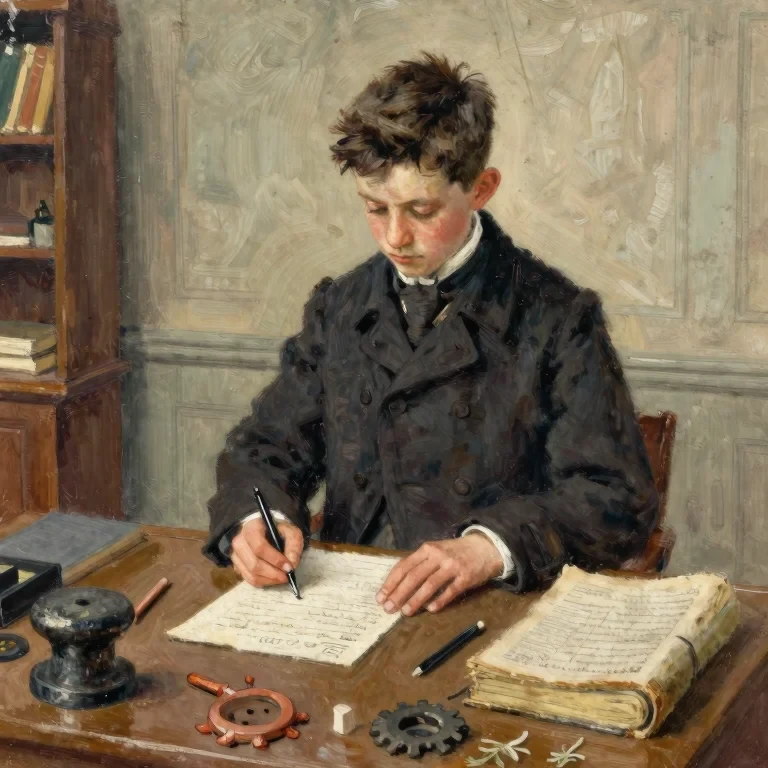
They took it to the trustees on the Thursday, all seven of them, in the back room, and Mr. Meak read the proof sheet out first, the two figures of the fair copy, the two figures of the summary, and the eighteen pounds between them. Then Mr. Pole stood up and told them himself, in eleven words, and sat down. The trustees did the only thing open to them. They agreed the difference should be shown and not concealed, and that it should stand on the face of the return for the year. They agreed that Mr. Pole should make it good out of his own money in the meantime, and the clerk’s minute said so, and Thomas copied the minute out fair afterwards, word for word, with the same figure on the same line.
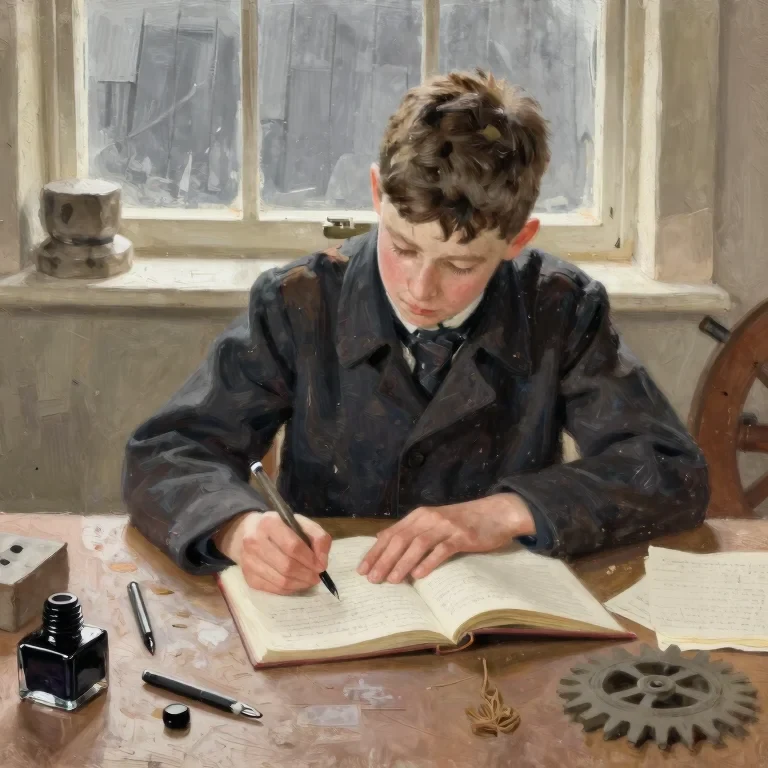
The minute also said that the abstract of the second week of March be left standing, and not be corrected, since the true figure was not known and was not recoverable. That was the part that stayed in the book. An entry known to be false, kept in a book a registrar would read, because the false figure was eighteen pounds and the true figure was nobody’s to say.
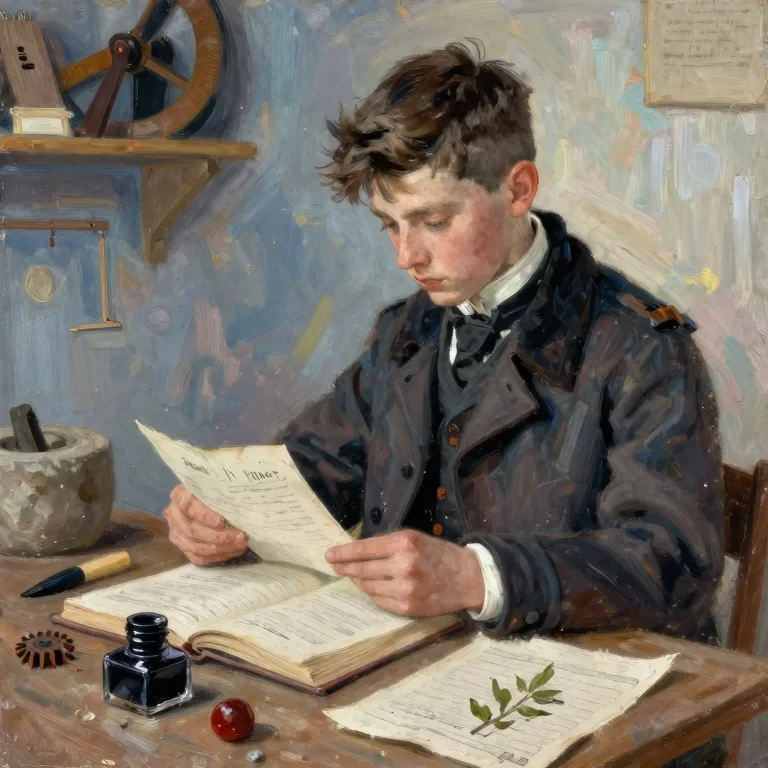
At twenty-five minutes past seven on the Friday evening the two of them sat in the counting house and cast the four volumes of the fair copy for 1870, all eight sides, down and up, and both figures were forty-one thousand one hundred and eighty-two pounds six shillings and ninepence. They agreed. Thomas wrote them on the proof sheet and wrote AGREED under them, and ruled a line, and signed it and gave it to Mr. Meak to sign under him. Lower down, in the same hand and the same ink, he wrote the difference that was proved, and where it was, and which side of it was short. Eighteen pounds, no pence. Receipts, short. Abstract of March, second week. Carried to the account of 1871. Mr. Meak signed that too, having read it in March. Then Thomas Blatchford, sixteen years old, a copying clerk at eightpence an hour, put the pen down and closed the four volumes of the fair copy for the year 1870, and wrote 1870 on the spine in his best hand, and shelved them, because the bank was shut and that was the last of it.