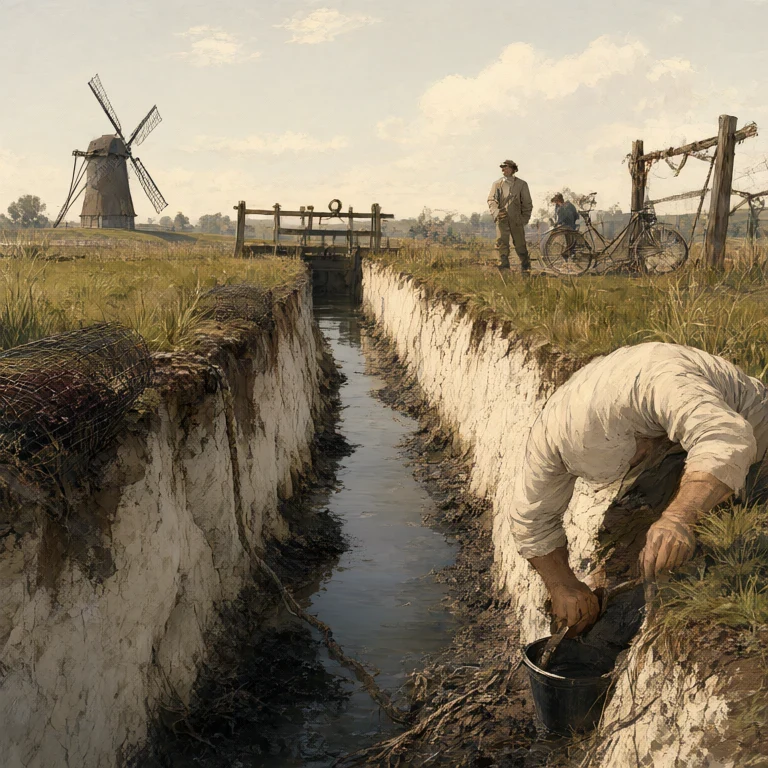
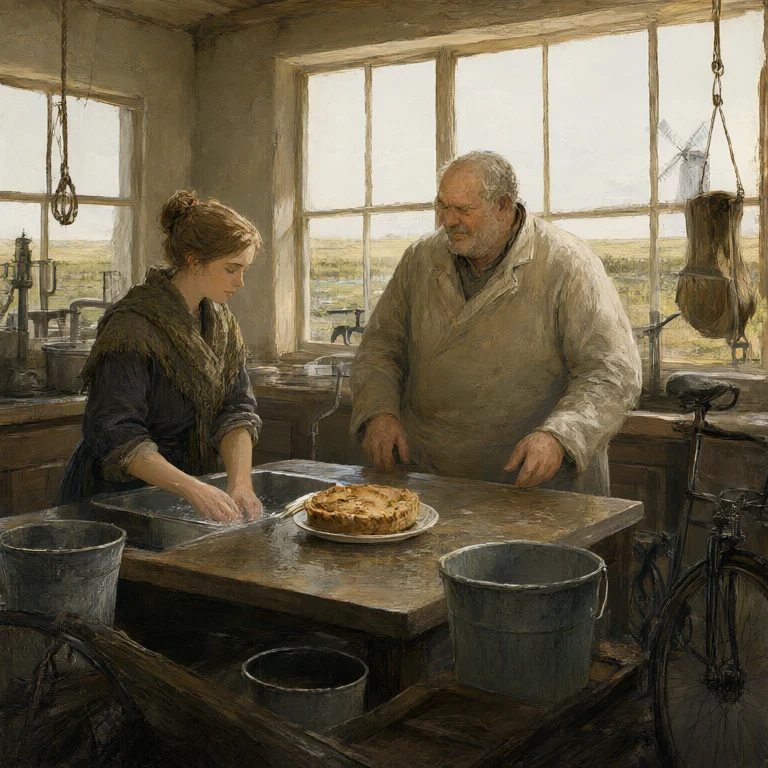
Teb Furroway has kept the lower Colm ground alive for nineteen years, and he has never been paid for it in anything that anybody in Coldwick-under-Fen can put in a book, and in the third week of September he was sitting in Hester Colm’s kitchen eating an eel pie off a plate with the fish pattern on it, waiting for her to finish washing her hands, which she does before she sits down and after she stands up, and which were clean both times. Hester Colm is thirty-eight. The ground is hers. Her mother had it before her, and her mother is nine years dead, and in the year before that the ground had been under water every autumn since anybody could remember and had grown one crop in seven years, which was enough to keep a family alive and not enough to do anything else with, and the family had been a family of seven on it, and in the bad summer of nineteen years back Hester Colm was nineteen and knew exactly what she wanted and did not know how to ask for it.
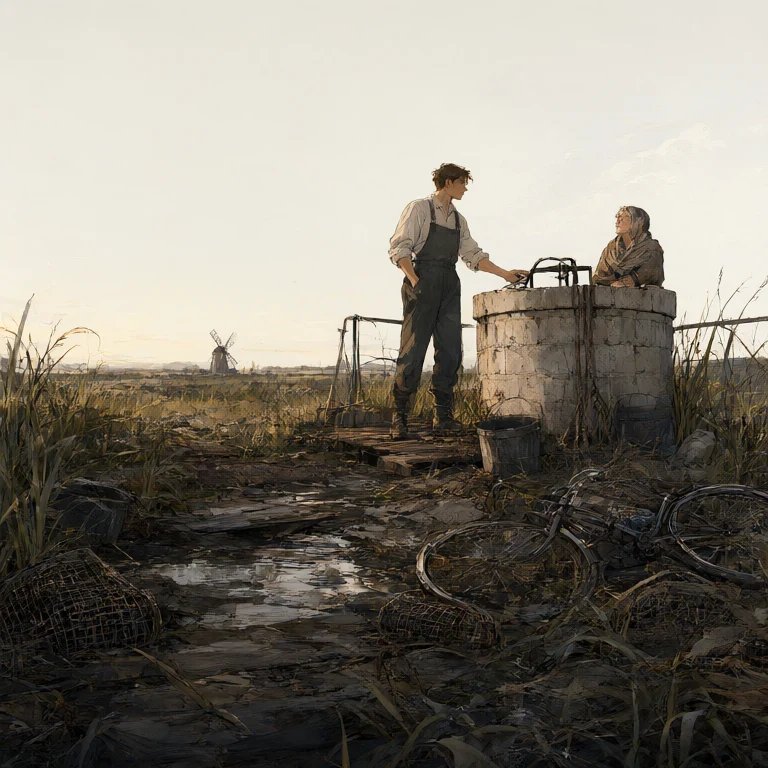
She had asked Teb Furroway, who was twenty-five and had dug and lined two wells in this parish and was about to dig and line eleven. He had come about a job. She asked him what the Colm ground wanted, and he put his thumb into the joint of the trough behind her and turned it, and said that ground did not want anything, that ground wanted its water let off it. “And if it cannot be let off?” “Then it wants somebody else’s water on it,” said Teb Furroway, “and there is only one water in this parish worth putting on that ground, and that is the Bent, and the Bent belongs to the well.” So on a Thursday in the first week of September, nineteen years ago, at the collar of the Bent well, with Hester Colm and her mother standing behind her, Teb Furroway said the words. He said them in the ordinary way, because there is no other way, and a man says them once. He said: I will owe you. The purpose he named was the lower Colm ground, and the water off that well, applied to it, and nobody has ever improved on that wording, and the clerk entered it exactly as he said it and could not improve it either.
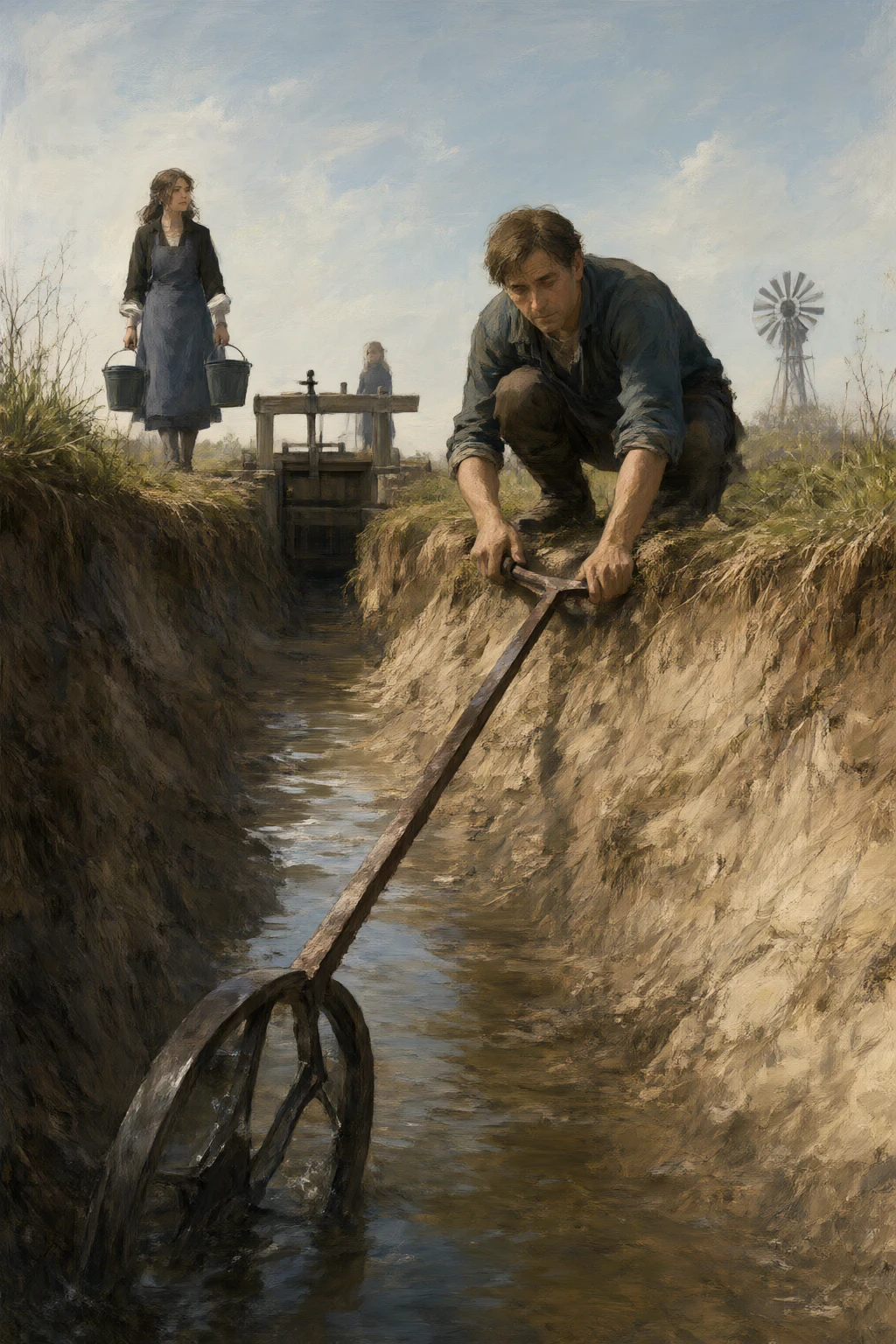
What happened after that was the thing nobody had a name for at the time and everybody has a name for now. He drew at the Bent in the evening, after his own work, and carried it up in a barrow, and put it on the ground, and he did it in April, and in May, and in June, and in July, and in August, and again in September, and he did it for nineteen years, and the ground grew. The ground grew fenland celery that went to Sallow in crates with the Colm name stencilled on the side, and cow parsley that a man came for twice a year, and in the years when the water came up early it did not drown, because that water came off the Bent, and the Bent is nine hundred yards north on ground that gives, and cold water on that ground in an April flood holds it together like a hand laid flat on a bed.
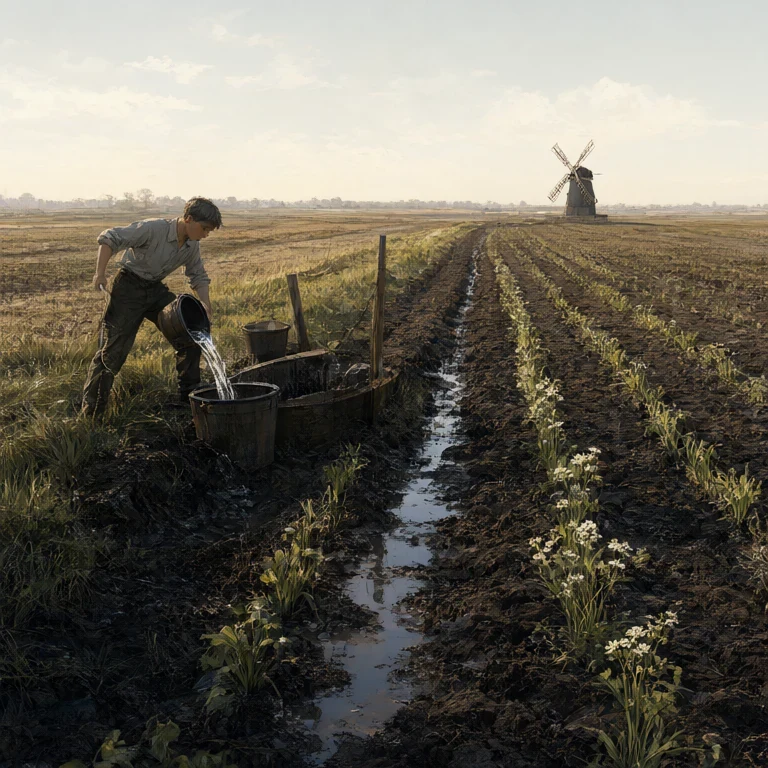
Nineteen years. And the family paid him in what there was. An eel pie most weeks of the winter. A coat in the first year, off a man at the sluice who was going out of trade. Six hens in the third. A bicycle in the eighth, a black one, too big, which the family used for four years and Hester Colm would not sell. That is the whole of what the ground paid its bonded man in nineteen years, and it is a better list than most, and it is not payment, and everybody in that kitchen knew it. “Right,” said Hester Colm. “Then let us do it properly, and say what we owe, since we are all sitting here and the man is the one being owed.” “You are not going to say what we owe him,” said Teb Furroway. “You are going to say what the well has, and the well has what I put on the ground, and that is the only account in this business, and it is nineteen years old and it is kept at the Bent, and you have not got a page for it and neither have I.” “Eleven feet a day,” said Hester Colm. “That is what I cut.”
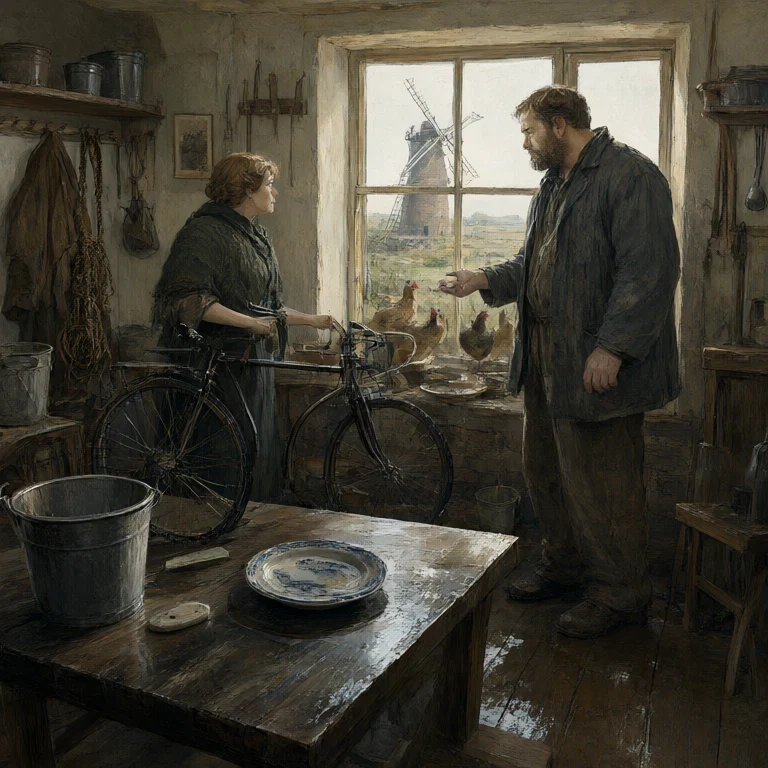
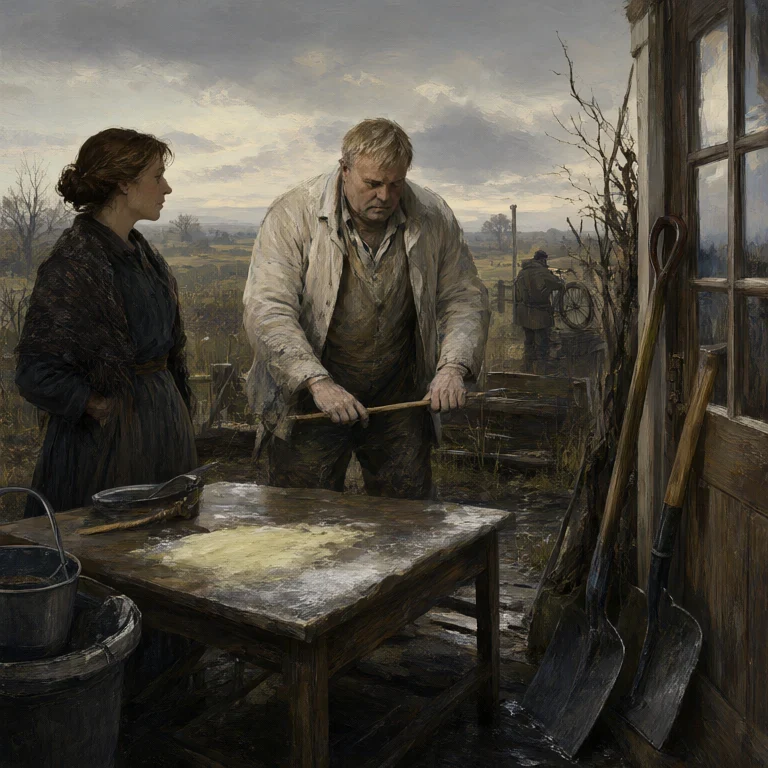
“Eleven feet a day of ditch, in this ground, two feet wide at the top and taken to the marl at the bottom, re-cut every autumn since you were twenty-five because it silts up in eleven months on this ground. So. Nineteen years of ditch. A day is eleven feet. A year is a hundred and ninety-nine days of cutting, if you count only the cutting days, which you do, because you are not a man who counts the days you do not cut. Which is a number that is not a number, is it not. There is no year that is a hundred and ninety-nine years long.” “There is no year that is anything long,” said Teb Furroway. “That is what I am saying. So you cannot be paid. And I have been trying to work out how to pay a man who has done nineteen years of work in a wet October, and the only things I have are a pie and a list, and you are sitting in my kitchen eating the pie.”
Bess Brack came in at four with a rail, because Bess Brack comes in at four with a rail and stands the rail in the yard and washes her hands in whatever is nearest, which that day was a butt by the step, and then came in and stood in the doorway with her head tilted at the water on the flags by the third board, which had been there since the rain stopped on the Sunday and had not gone off in three days, which is not a thing water does. “That is a man in there,” she said. “That is a step.” “That is a man in there and he has been in there a long time, and he is the whole of him, that is, and he is not getting shallower.” She turned her head and looked at the second board. “And that is you.” “That is me.”
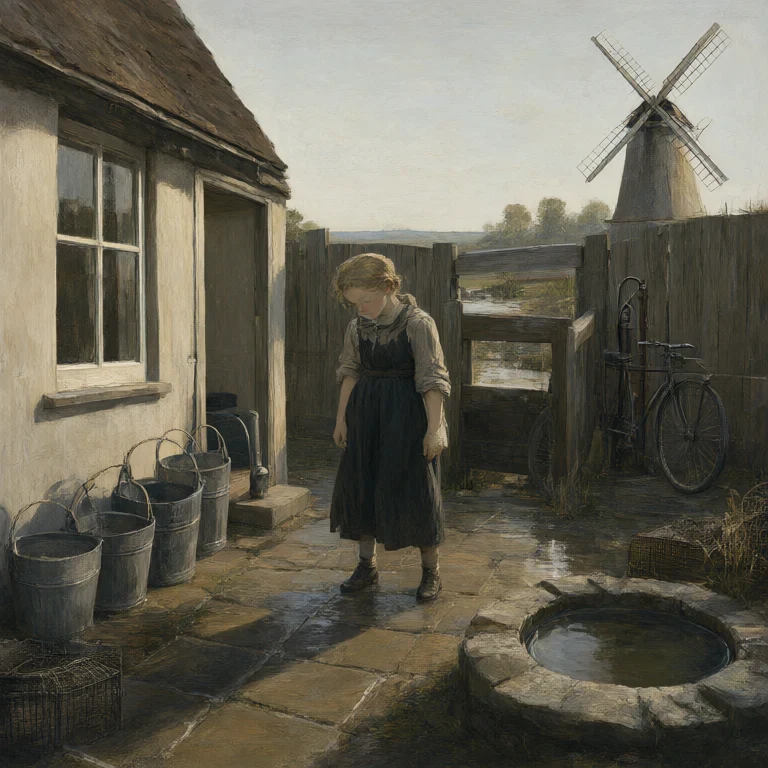
“You are lighter,” said Bess Brack, “but you are not lighter than you were in the summer, which I do not think is possible, and I have looked at this step since I was thirteen and I have never seen you the same twice.” Hester Colm washed her hands, and pushed her sleeves down over the chalk-white line at the wrist, and said that a girl of sixteen ought to have more to do with an afternoon than read other people’s houses off a doorstep, and Bess Brack said, that is a thing you can say to a woman of forty and she will not hear it, and went out to her pails.
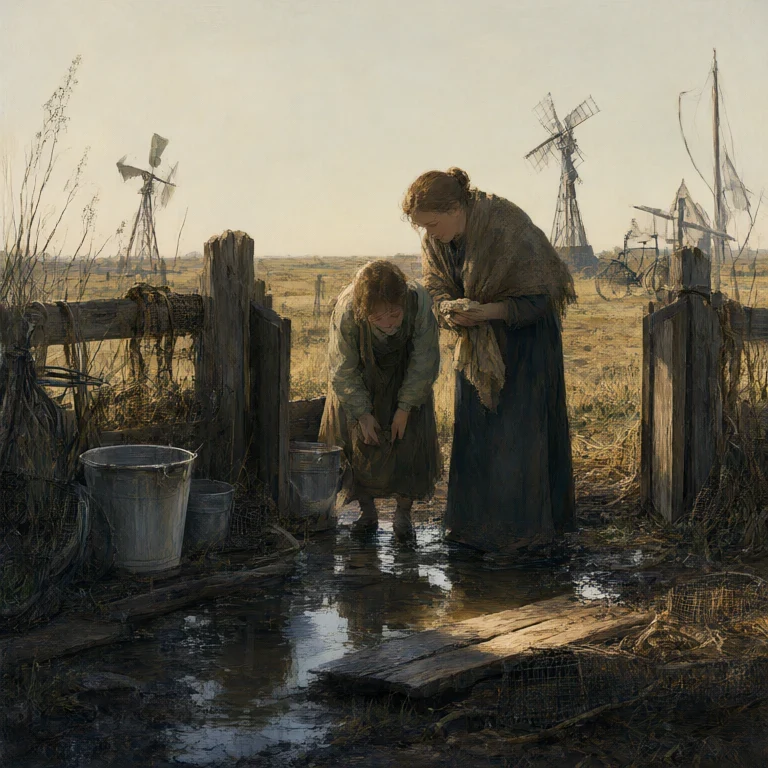
October came, and it came the way it came, and it did not stop. The fen had had a wet August and a wetter September, and by the second week of October the drainage was running full on the top side of the Cart Cut and the sluice could not take it, because there had been rain on the upper fen for nine days. The lower Colm ground went under on the eleventh of October, with two inches in the night, and by the fourteenth it was under a foot, and by the end of the month under two, and the water on it was black and warm at the top and cold at the bottom, which nobody in Coldwick finds interesting except a girl who reads the difference.
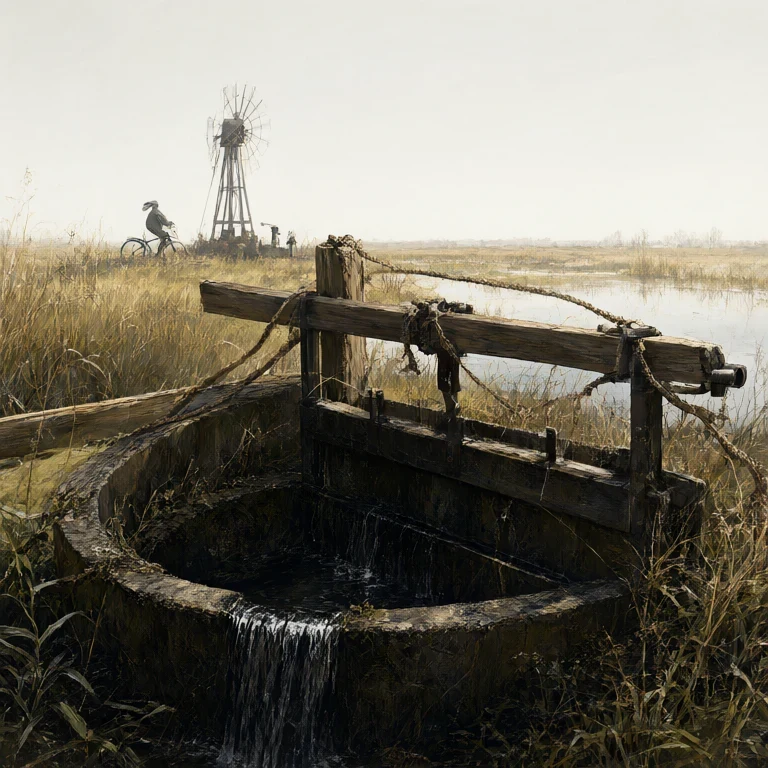
The crop was not lost yet. That is the part that cannot be explained afterwards. It was not lost until the middle of November, and until the middle of November there was a reasonable case that it would stand, because the ground had the Bent’s water under it, and the Bent’s water is cold, and the ground has never in nineteen years gone under two feet in October and come back. What was lost in October was the use. That is what Hester Colm said to Nell Drury on the first Thursday of November, at the trough outside the tithe barn, with the rain coming sideways off the drain, and it is the sentence the whole of the winter turned on.
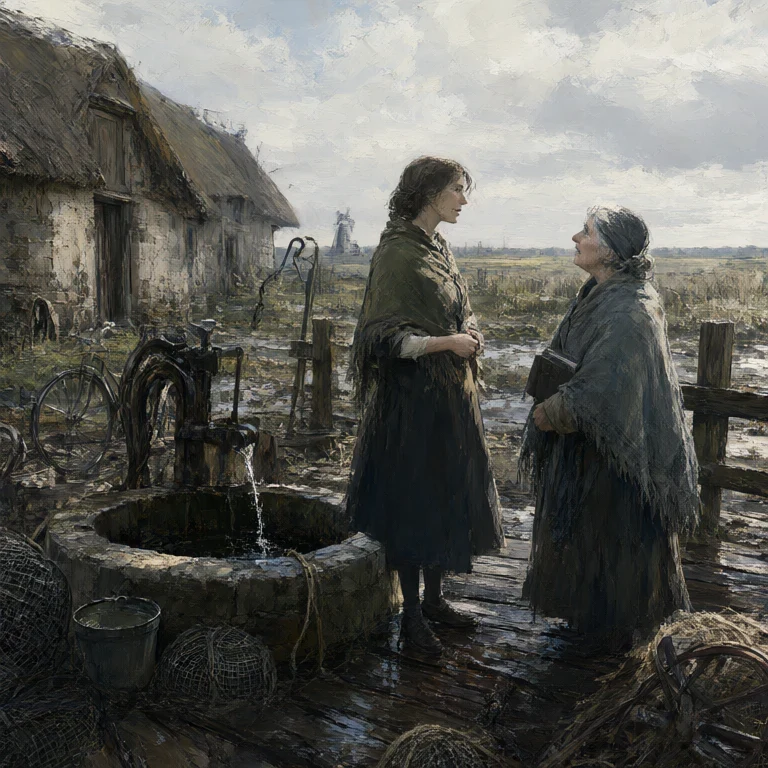
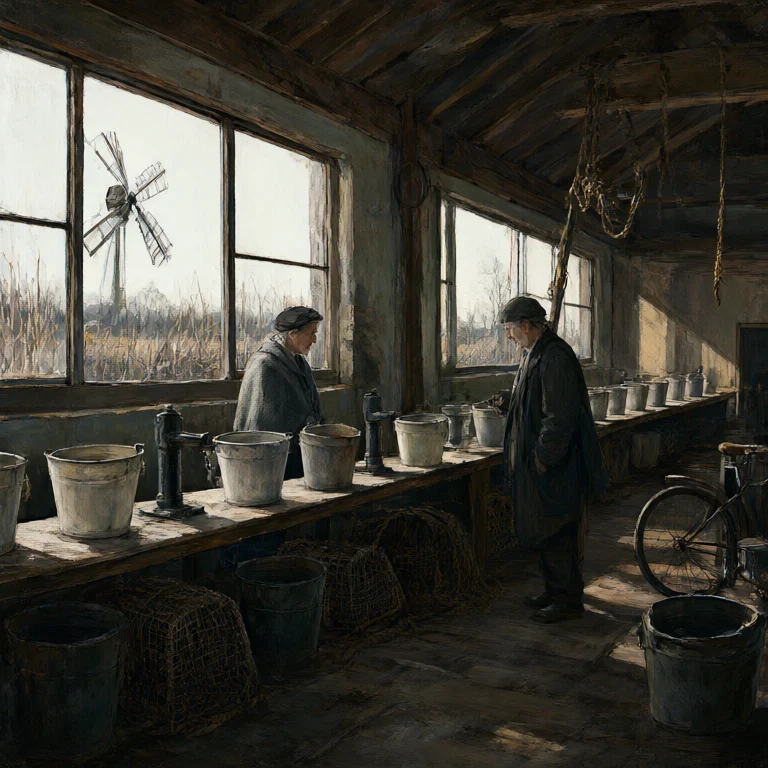
“He cannot do it,” she said. “There is nothing to put it on. It is not a bad year, it is not a wet year, it is a year with nothing in it. He has been putting that water on that ground every day for nineteen years and there is no work. There is no crop, there is no crop yet, and there may be no crop in April, and if there is no crop in April then he has not paid the Bent a penny of it and the Bent knows that before we do, because the Bent always knows that before we do.” They tried water first, because water is what this country has, and because it is what you offer when you have nothing else and have been raised not to talk about what you have nothing else for. Hester Colm took two carts of pails up to the barn on the second Thursday and filled them at the Bent in the afternoon, in front of witnesses, and set them in the row along the north wall, and the row was eleven pails long, and the two carts held thirty-one, and she filled eleven of them and stopped because her hands had gone blue at the nails, which they do, permanently, and which are no use at a collar.
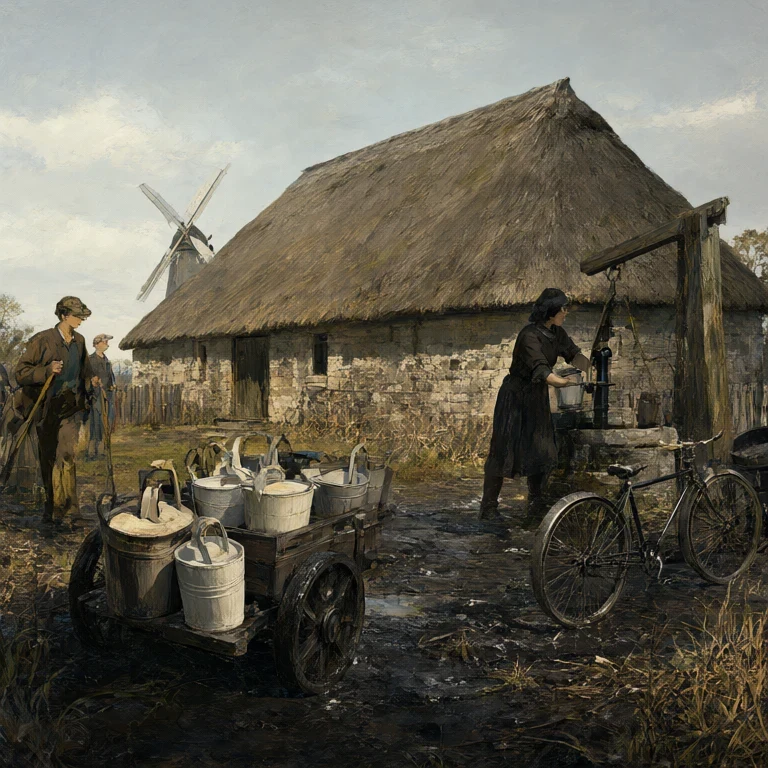
On the Thursday the Well Court met, and Gideon Sparre, who had been in Coldwick five weeks and had stopped saying strictly by the end of the fourth, asked whether the water in the north wall was an exhibit, and Hester Colm said it was a gift, and the clerk asked whether a gift was entered, and Hester Colm said it was not, because you cannot enter a gift. “Then it discharges nothing,” said Gideon Sparre. “It discharges nothing,” said Hester Colm. “Then it is water in a barn,” he said, and looked at it for a moment, and then said, “strictly, it is eleven pails of the Bent’s water standing in a building that has a stove in it, and if anybody in this room thinks that a well cannot read that, I should like to be told, because the whole of my trade is that it can.” He was right, and it was the only thing he said that week that the parish took notice of, and what it meant was that the pails were evidence, and that the pails came from nine villages, and that a thing taken off a bonded well under a quarrel goes into the Thursday whether the giver meant it or not. The Court let the pails go, one by one, to the nine houses that wanted them, and nobody asked for a receipt, and Hester Colm did not sleep that night.
The money argument took a Thursday by itself, in the back kitchen of the Sluice House, where Gideon Sparre kept his hat and his writ and the sluice house’s copies of the rate book, and where the fire is small because a small fire in a small room is a fire a man can get through. “Money comes in at the sluice in the August lock and goes out by the March. That is not a rule of this parish, it is a rule of water. In a wet year the money is not a wage, it is a repair fund, and it has been spent on the pump at the Long and on eleven hundred yards of duckboard since the August, and there will be nothing in it until the sluice opens again, and between now and then a man is paid out of his own ground or he is not paid.”
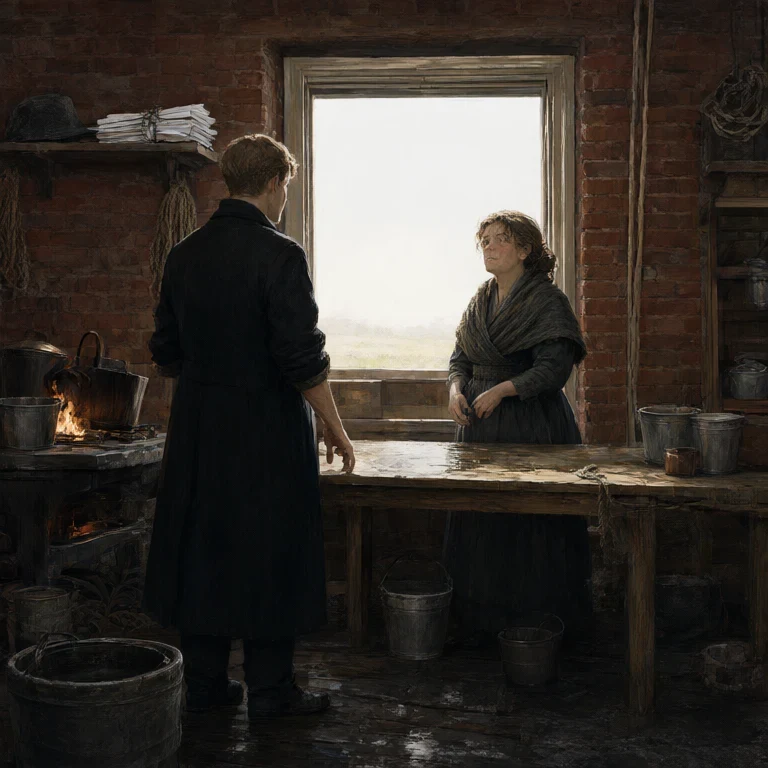
“He has been paid out of our ground for nineteen years,” said Hester Colm. “That is the whole difficulty. The last of the water off the Bent went on to my ground on Friday and the men were there at seven in the morning and they did it because they are the men who work that ground, and they are not paid for it either, and if I stand at my own gate in January and say that the men are not paid, then I am a person saying a thing about herself in a kitchen where people can hear.” “That is the correct observation,” said Gideon Sparre, “and it is the reason I have come to the end of what I know how to do with. I have a book at the sluice that says what a well is owed and a book that says what a man is owed and they do not talk to each other, and there is no third book, and I have looked for the third book in nine counties.” “There is no third book,” said Hester Colm. “There is the use. The use is the third book, and it has no pages, and the only copy is in the man’s legs.”
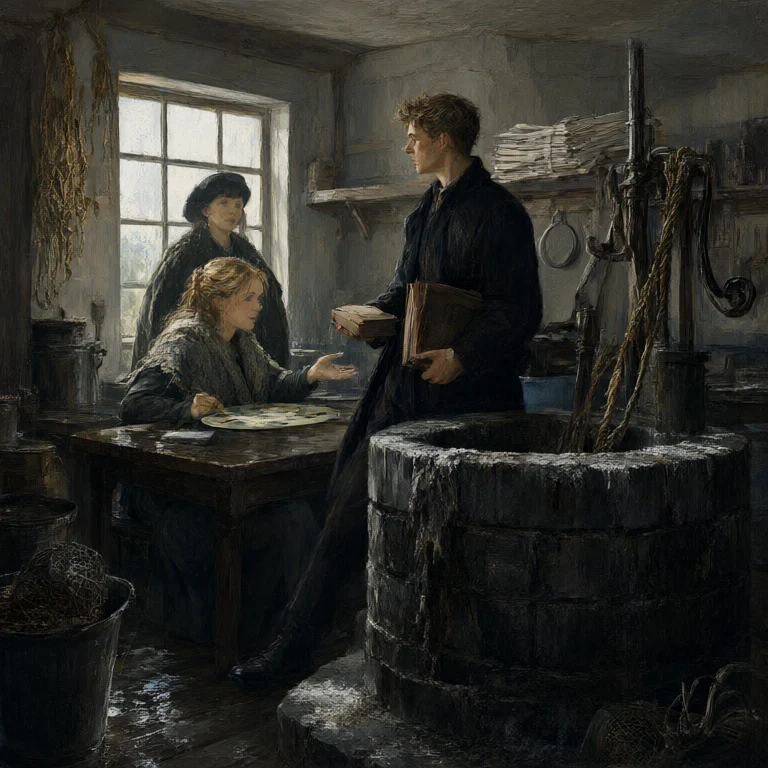
Nell Drury came out to the lower row on the evening of the ninth of November with the parish book under her arm, because the clerk does not do anything at a kitchen table that she could do in the barn, and because you cannot argue about what a bond says until somebody has said what it says. She read it out in the kitchen, standing up, with the book open against the wall because it is too heavy to hold open and read at: “Bond given at the Bent, this parish, by Teb Furroway, wright, of this parish. Witness two: Micken Vaunt, and the goodwife Colm senior. Purpose: the lower Colm ground, and the water off this well, applied to it. Account: kept at the well.” “Read the last line again.”
“Account: kept at the well,” said Nell Drury. “I have read it four thousand times. That is the oldest form in the book and it means that the account is not written down, it is carried, and it is the man who carries it, and that has been the practice since before 1841 and it is why the 1841 clerk started the second book and why the second book is a list of purposes and not a list of amounts.” “Then there is no way to say what he is owed.” “There is a way to say what the well is owed, and no way at all to say what he is owed, and I have been clerk of this parish forty years and have never entered a wage, because a wage is not a thing this parish has, and because the moment you enter a wage you have entered a second kind of debt, and then a third, and the pails come in with both of them and I cannot keep the book open long enough.”
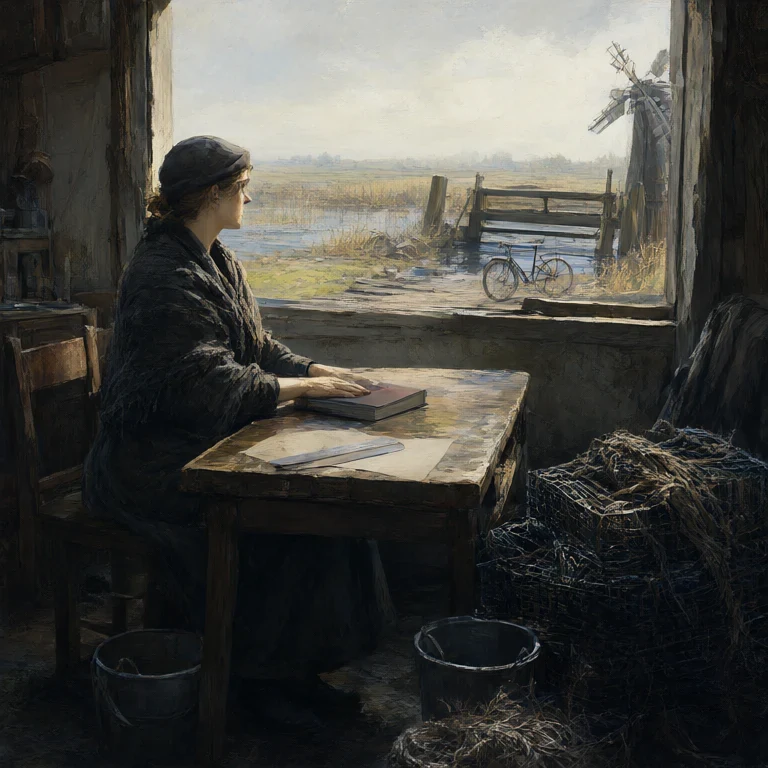
And then she told them the thing about the fine, which she had been carrying down the row in her head since the Tuesday and had come to say because somebody was going to stand at the Bent’s collar in the next four days and say a thing out loud, and people who say things out loud at collars in a wet year need to know what it costs. “Anybody who stands at a collar and names the thing owed, out loud, and is right about it, ends the account,” said Nell Drury. “Anybody who does it and is wrong about it does not end anything. The well takes a false discharge and takes the fine instead, and the fine is the whole amount twice over, in water, in one night. All of it. Whatever is on the account, doubled, delivered before dawn.” The fire was out by then, because Nell Drury does not stay in a cold room and Hester Colm had not lit it again.
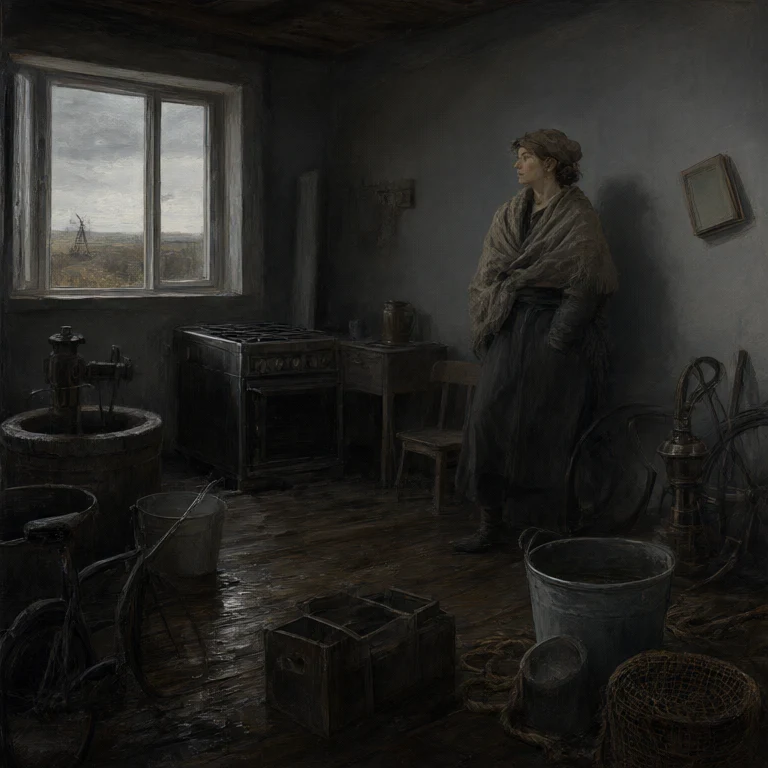
“How much is the whole amount?” “That,” said the clerk, “is what has just spent three evenings on your ground.” “And if he does not say anything at all?” “Then the account stands, and grows, and the ground goes under in April, and the well has not been paid and the well knows. I have entered eleven bonds in my time where the purpose failed. It is not a punishment. It is what happens when a person cannot do the thing they said they would do, and it is the only time in this business that a well ever gets the better of a person, and it gets the better of them because they said so out loud at a hole in the ground in front of witnesses.”

On the Thursday of the fourteenth of November, at four in the afternoon, at the collar of the Bent, with the light coming up out of the fen and the rain stopped for the first time in a fortnight, a woman of thirty-eight tried for forty minutes to get a man of forty-four to say one sentence out loud. She had it worked out. She had had it worked out since the ninth, on the back of a laundry list, in the units available, and if he said it at the collar the well would take it and the account at the Bent would be closed, and there would be no more of this in any of their lives.
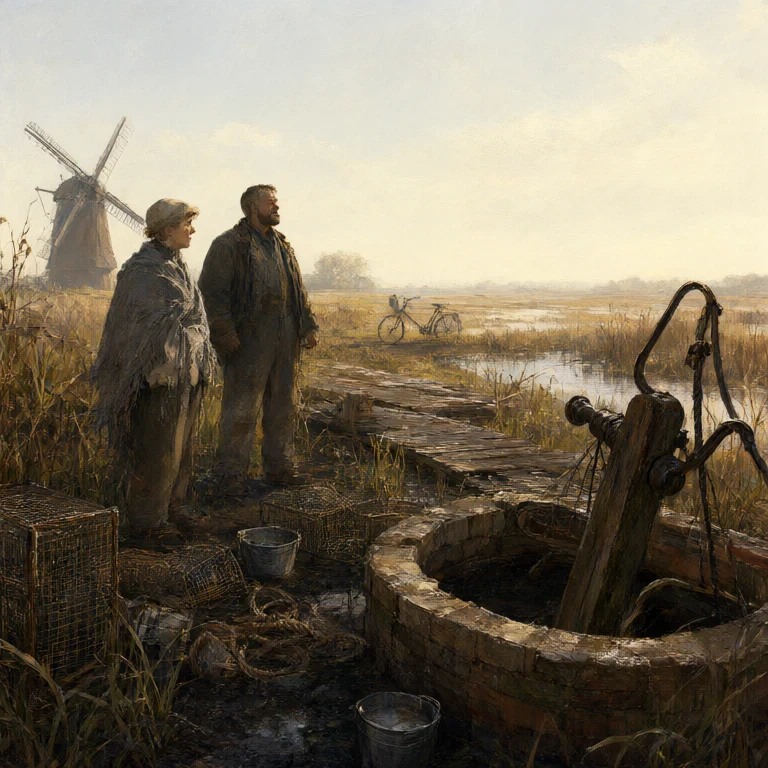
He would not say it. He stood with his hands hanging and let her get through it twice, and when she had got through it twice he said, “That is your sentence and not mine, and if I say it the well takes a thing you have worked out, and if I have got it wrong the well takes it off me, and you are asking a man to put his name on arithmetic he did not do.” “Then say yours.” “Mine is nineteen years of water on a piece of ground that is under two feet of water,” said Teb Furroway, “and there is no way to say that at a collar, and you know there is not, and you have known it since the ninth and you have been at me for five days.” “Then say that there is nothing owing on this ground. Say it plainly, and I will have Nell write it, and it will be in the book, and then you can stop.”

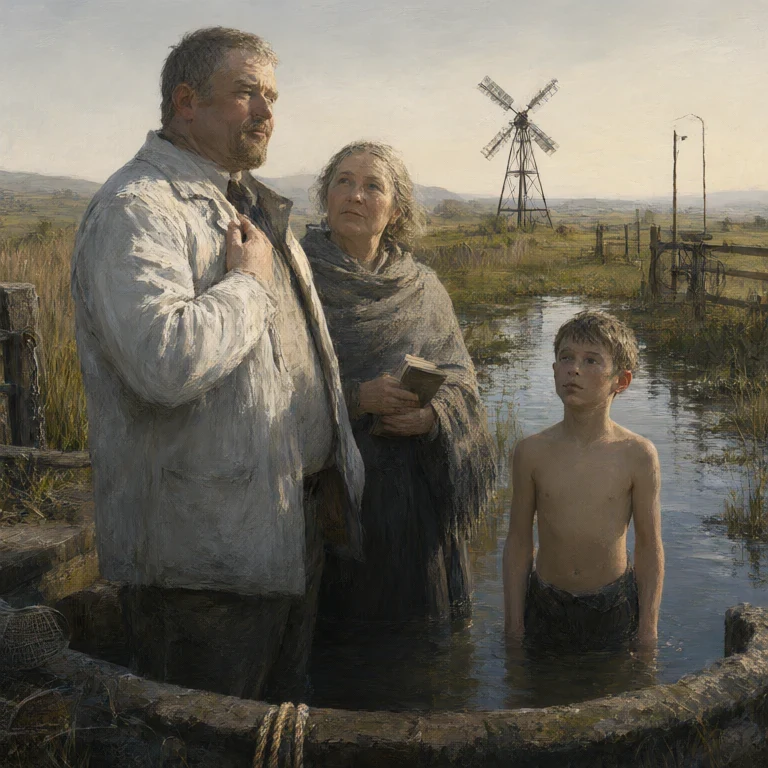
He said it because she had asked him four times and because he was tired and because it was the fifth of six in the afternoon and a man says the thing he is asked for when he has been asked for it six times. He said, at the collar of the Bent, with the clerk standing at his shoulder and a boy from the third well in the water at the foot of it: The ground owes me nothing. Nell Drury said, “Mr Furroway. I am going to ask you to say that again more slowly, and I am going to ask you because I have to write down what you said, and I would like to write down what you said.”
The amount was not known to anybody in Coldwick-under-Fen and was not needed, which is the part nobody found comfort in. A fine is the whole amount twice over, in water, in one night. That is the whole of the law and it is older than the book. So there was no figure to work to and none to beat and no moment at which the parish could say it was finished, and the parish had until dawn, and the parish is four hundred people in a wet year, and the fine was on the Bent, and the Bent is the coldest water in the fen and there is one pump and a hundred and forty yards of duckboard between the Bent and the lower row.
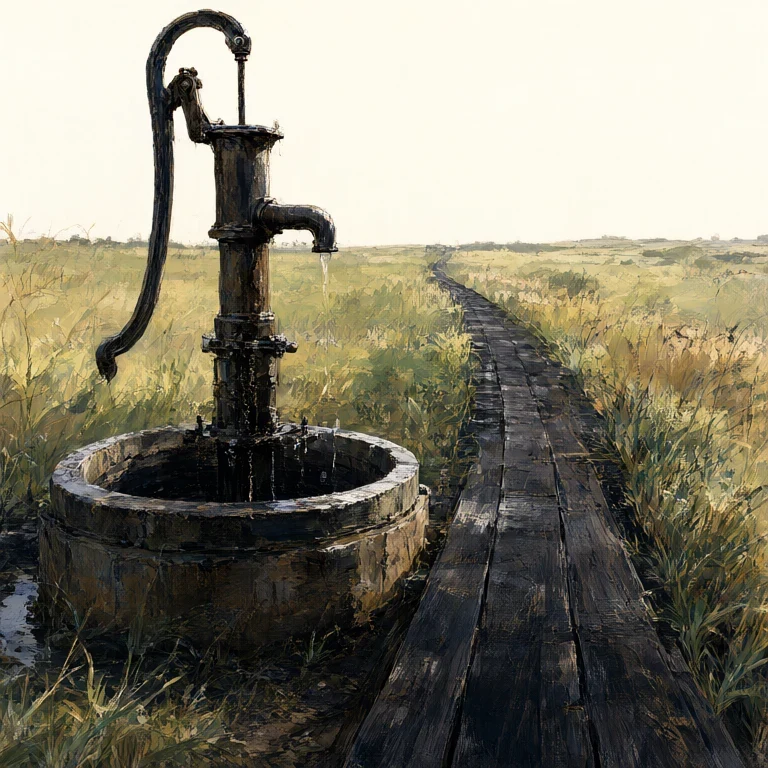
They began at five, the same as everybody in this country begins anything. Hester Colm said, at the yard gate, in a voice that carried about nine feet and no further, that she would not ask anybody to do anything, and that anybody who wanted to fill a pail could take a pail, and that the well was on the right of the road and the ground at the end of it, and then she went inside and shut the door and washed her hands and did not come out again until the light was up. What the parish did that night was carry water to a field that was drowning. That is the sentence, and it is not a figure of speech. The Bent was pumped from half past five and the pails went down and came up and went down, and the women carried and the men drew and the boys ran, and it went up the lane on shoulders and out across the lower ground to the Colm ground, and it was put on the lower Colm ground, where there was already two feet of it, and the ground took it the way ground takes water, which is at once and without comment.
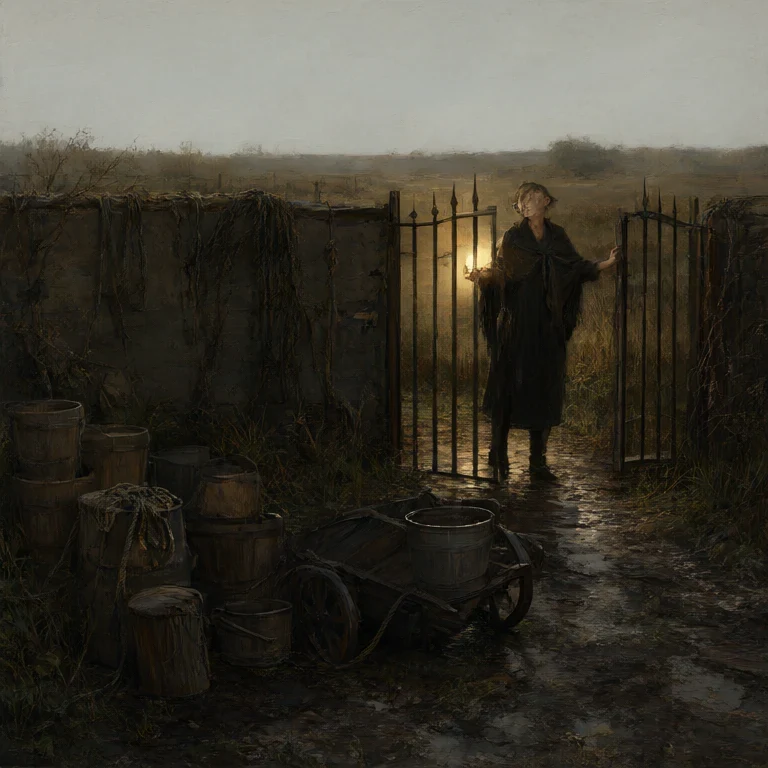
Micken Vaunt slept in the water of the Bent from about eight and drew with the others between times, and had no coat on, and nobody made him have a coat. The duckboard at the lane end had four boards out all night and the mud came up to the axles and came in again. The pails from the Cold One were brought up to help, because a man there said the parish did not have to do it all off the Bent, and Hester Colm came out and said that it did have to be off the Bent, because the fine was on the Bent and the Cold One was not in it, and the man said, strictly, that a man would take anything, and she said that was true, and that it was also the reason they were all standing on the lower row at midnight instead of going home.
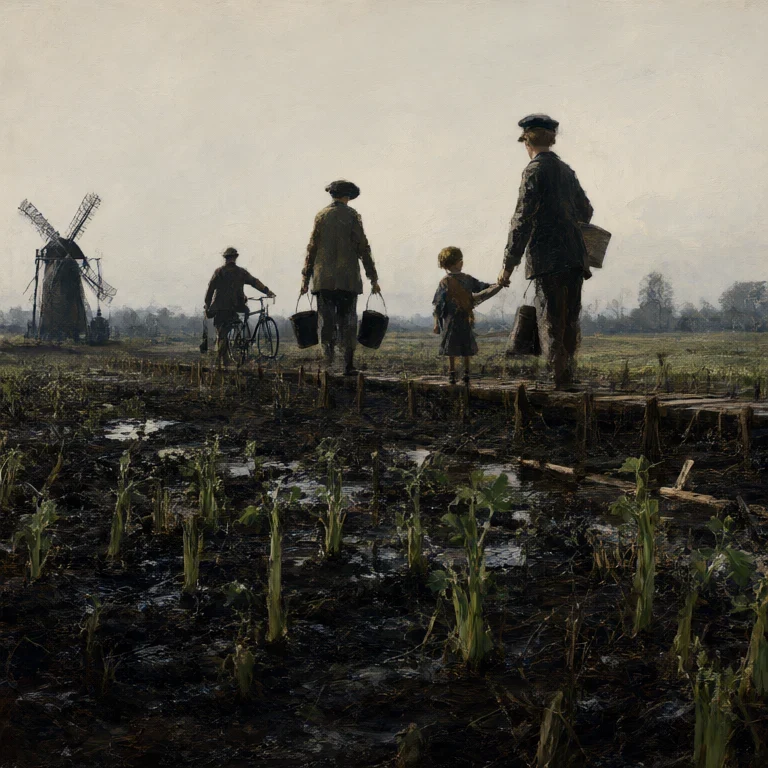
Nobody could say when it was done. That is what a fine is. There was no figure, so there was no point at which four hundred people in the dark could look at each other and agree, and so they went on until the going stopped being possible, and the going stopped being possible at about half past four, because the light comes up out of the fen in November at twenty-five past six and at half past four it had begun to be the colour of a wet slate, and a man can see his boots in it. And the well took the fine in the morning, and the water on the lower Colm ground was four inches deeper than it had been at dusk, and nobody in Coldwick-under-Fen knows to this day whether that was the whole amount twice over, and the book does not say, because the book cannot say, and the clerk wrote one line on the twelfth of December, and the clerk read it back to the room afterwards exactly as written. What the parish did about the rest of it was decided in a barn on the first Thursday of December by about sixty people, and it took an hour and ten minutes, and the reason it took so long was that nobody would say the word wage for the first twenty minutes.
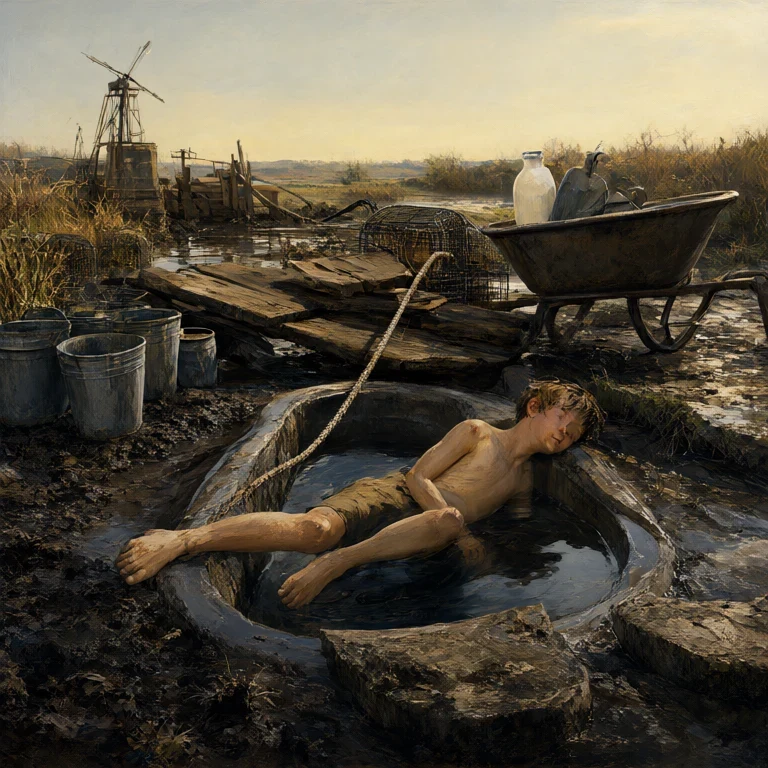
The position, when somebody finally got it down, was this. A bond is spoken at a wellhead by the person who draws, and it binds that person’s own draw, and it is paid by drawing and applying. It does not run from a man to a man. It does not run from a family to a man. It does not run from a parish to a man. There is nothing in Coldwick-under-Fen, or in nine counties, or in the sluice house, that runs from a man to a man, and a person who is owed work by people who are not bonded to him is owed a thing that the country has no word for and no clerk and no page. So the barn did the only thing it knew how to do, and it did it to itself.
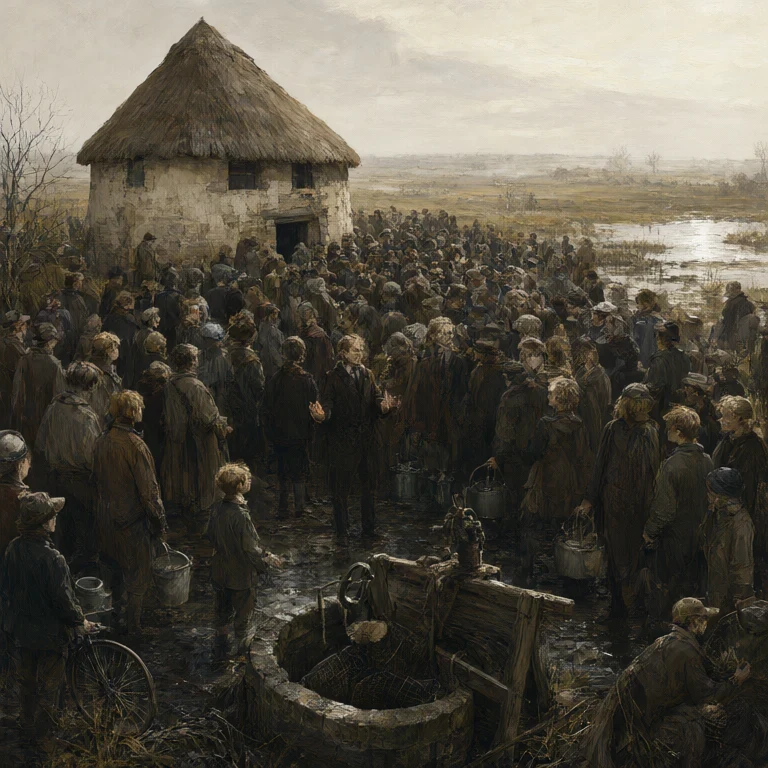
On the morning of the ninth of December, at nine wells, at the same hour, thirty-one householders of Coldwick-under-Fen spoke a bond each at the collar of their own well, and each of them named the same use, which was the main from the sluice lever to the school fence, two feet of fall, cut and kept for a year. Nine men and twenty-two women. The witness at every collar was a boy of eleven from the third well, who had walked the four miles and back twice in the dark to do it, and who had been asked, twice, what name he wished to be entered under, and who gave eleven answers, and whose name Nell Drury entered as the one he gave twice.
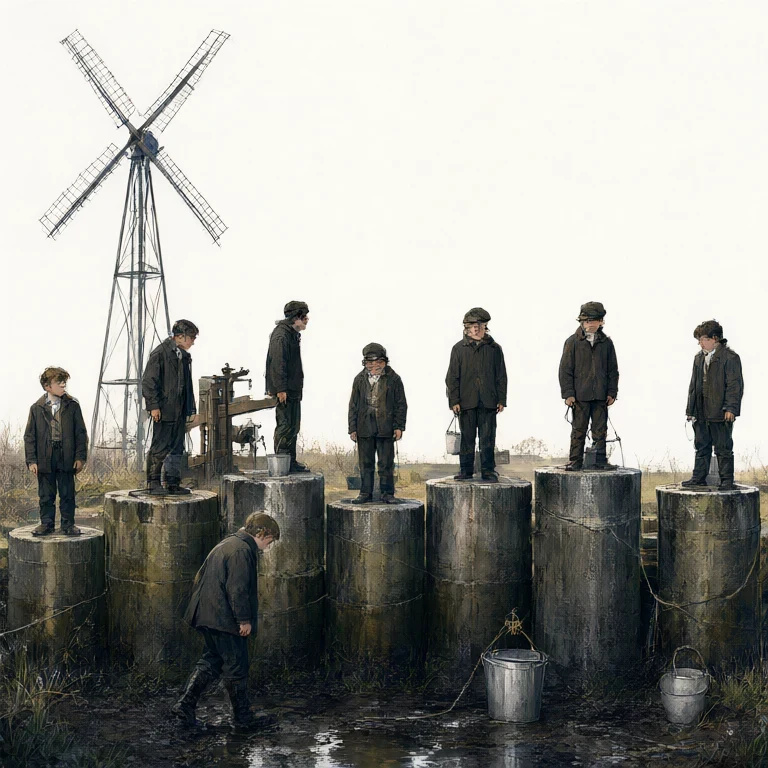
It was not a payment. It was said out loud in the barn, twice, by two different men, that it was not a payment, and that it discharged nothing, and that the parish had not found a way of paying a wage and had instead found a way of doing the winter’s work. And then a man of forty-four stood up in the back of a tithe barn and said what the use was, for his account, and everybody stopped, because they had all been waiting nine days for him to say a number. “The drainage of the lower Colm ground,” said Teb Furroway. “I do not know that it discharges me and I am not going to stand at a hole and pretend it does, and I would rather this parish knew that.” He put his thumb into the joint of the bench and turned it. “But it is work. And if the parish is going to cut a ditch it can cut that one, and I will do the part under the Bent, because the ground under the Bent gives, and the rest of you will be in the ditch a fortnight before I am and up to the knee in February.”
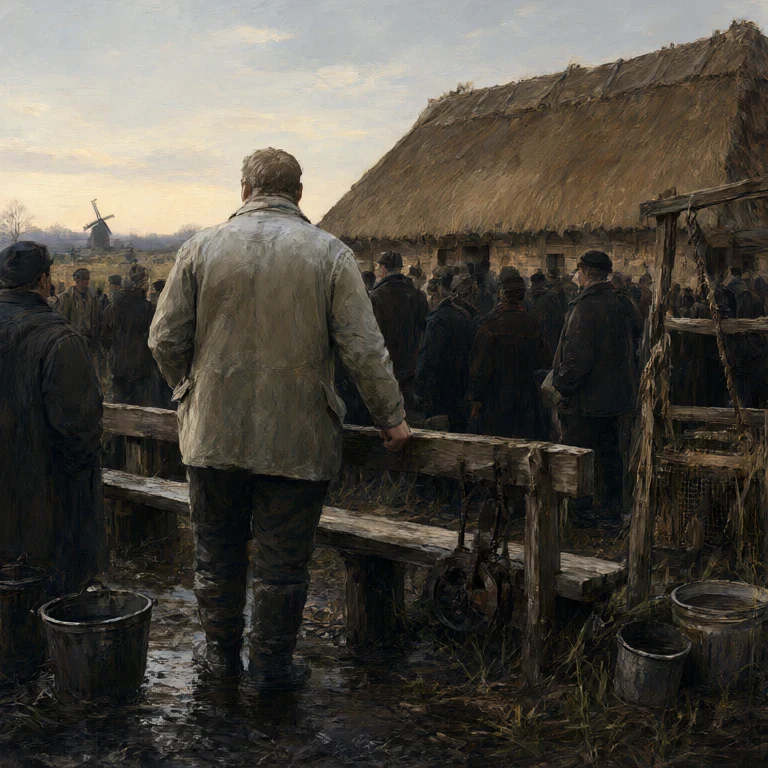
Hester Colm bonded herself to the Bent on the fourteenth of December, and she did it alone, and she did it because the other thirty-one were households and a household is not a person and the well is the judge of what a person has, and the only person who had the lower Colm ground was her. She named the drainage. She said the words once. Nell Drury was there because the clerk is always there, and the witness was a boy who had by then been entered under four names in three weeks and who said, when he was asked, that Micken was as good as any, and who went into the water afterwards and stayed in it, because, he said, it was only wet on the surface where they had been carrying.
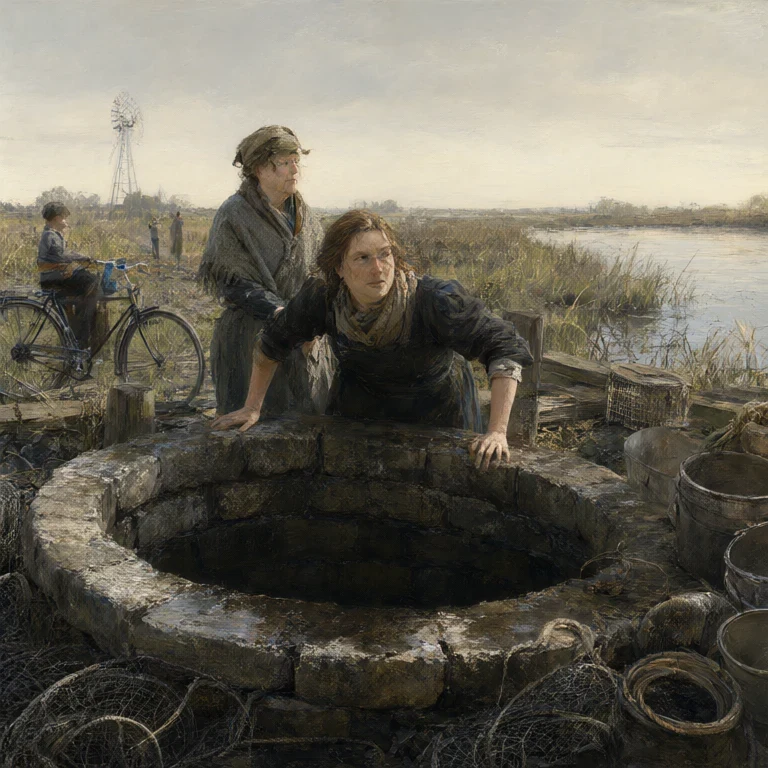
She told him in the second week of January, on the bank at the east end, because there was nobody else to tell, and because she had been carrying it for nineteen years. “Your first lining came out in one night,” she said. “The second year of it. You were paid to take it out.” He went on with the joint, and looked at what came off it, and did that three times before he answered. “It came out in one night,” he said. “It came out in one night and the Bent was dry most of a day, and I was nineteen and on that ground with an empty barrow. My mother sent for you at eleven and you came at four, and I know what you were doing at eleven, because I saw you at eleven.” She did not raise her voice, because the ditch is four feet down and the men at the far end can hear everything. “And a man who stands at a collar in front of four hundred people and tells the truth about a number is a man who can be told a thing.” Teb Furroway looked into the ditch for a while.
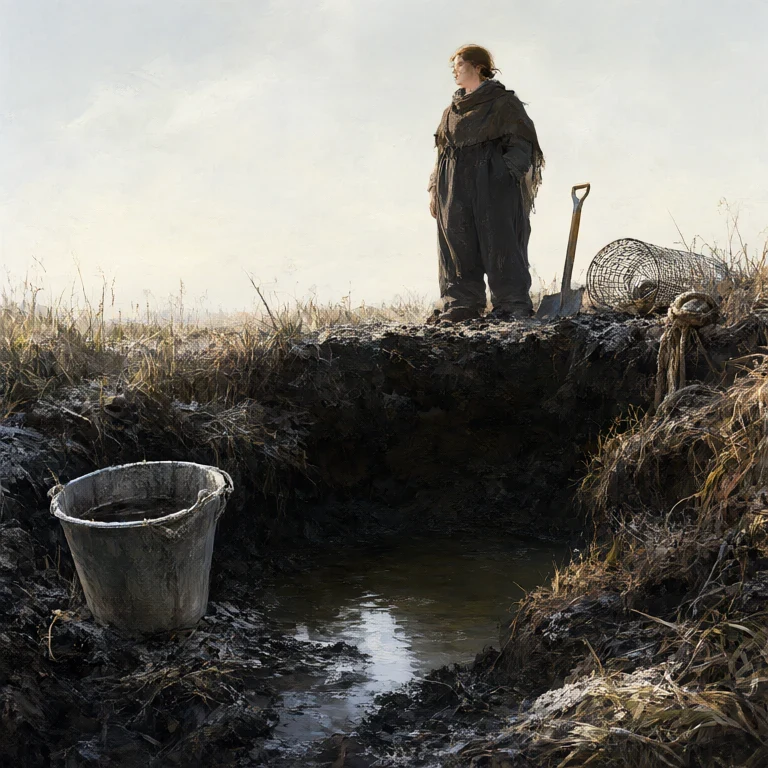
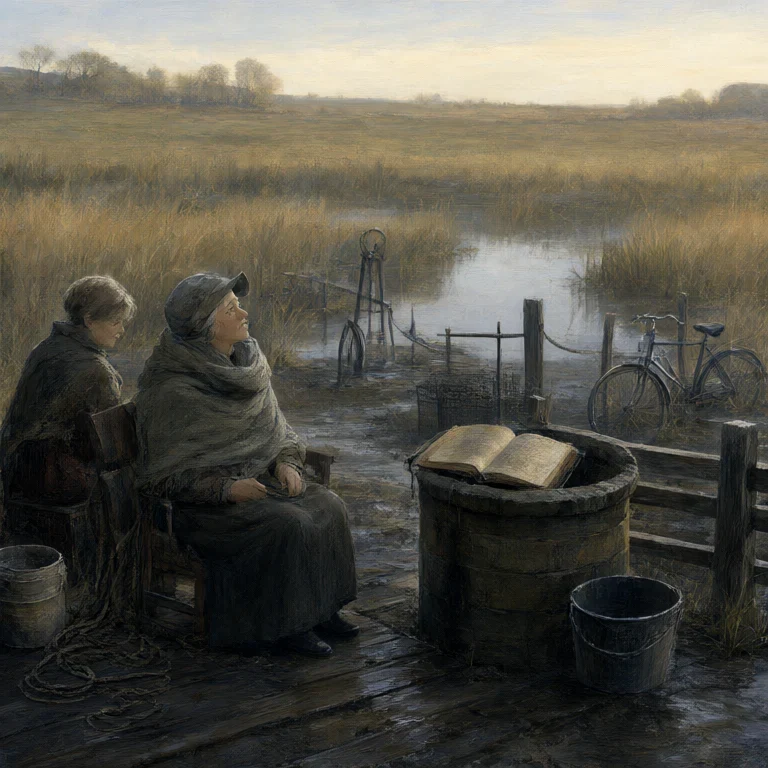
“It is down to the marl,” he said. “Both of them are down to the marl, and there is forty-one feet of water over the top of it on a wet Tuesday, and there is a thing I have never said, and I am not saying it here, because a man says a thing at a collar or he does not say it.” That is the whole of it. It is in nobody’s book. The Bent has drawn every day since without one day of the account being wrong. And in the spring, the ditch from the sluice lever to the school fence was cut to two feet of fall and kept, because thirty-one bonds and one bond had to be discharged, and the lower Colm ground was the first ground in the parish to stand out of the water, and it stood out by the middle of April, and the eels that had not been in the Cart Cut for four years were in the Cart Cut by the end of the month. Teb Furroway was at the east end of that ditch on the second Thursday in April with his thumb in a joint of it, testing a seal that did not need testing, on a bank of chalk that had been under two feet of water in November and was firm enough to stand a barrow on.