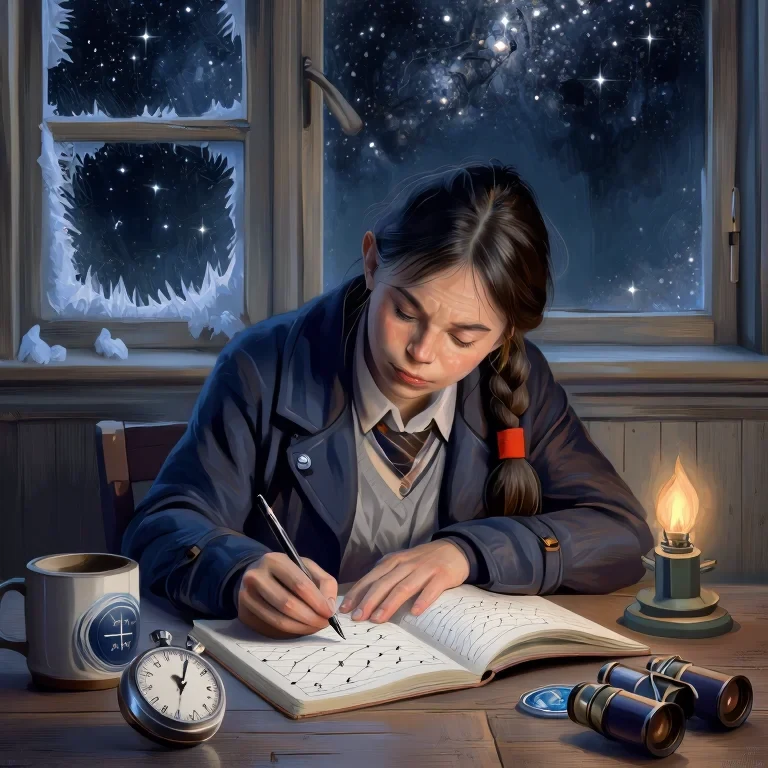
A school astronomy club gets one night a term, and Mr Hori spent the first week of August making sure the club's night was the right one, and the right one turned out to be a night when the Moon was three days old.
Then he gave them the rest of it. On the sixth of August the Moon would cross the face of the star called Spica, and Spica is about two hundred and fifty light years off and is the brightest star in the constellation of Virgo, at magnitude one, which meant it would be the only star in that part of the sky bright enough to be worth arguing about. Nobody would ever see the Moon touch it. You would see a brightness, and then you would not. “It is a graze,” Mr Hori said. “That is the interesting part. If the Moon went straight across the middle of it we would learn nothing at all.”
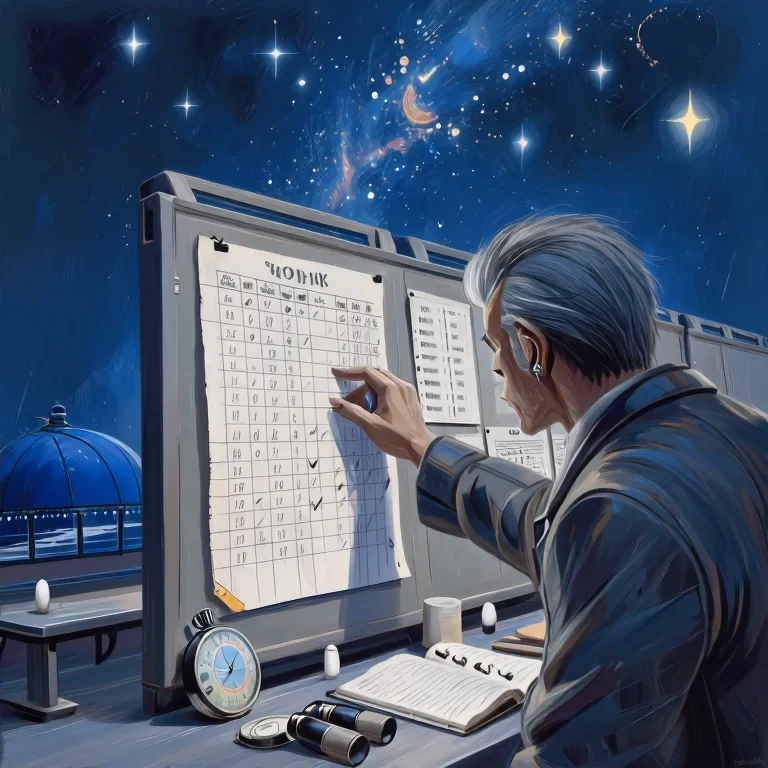
The Moon keeps to the road the Sun keeps to, within about five degrees of it, which is why it can only ever touch a star that lies near that road. It removes most of the sky, and what is left is a thin list, and the list is worked out years in advance by people in offices. Mr Hori had the list on the wall of the lab with the club's night already ticked.
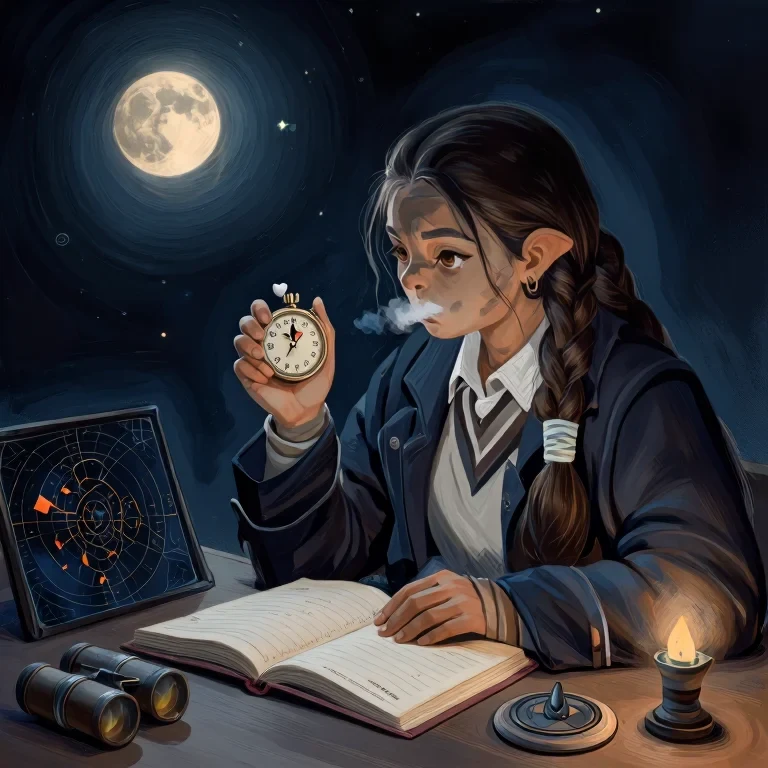
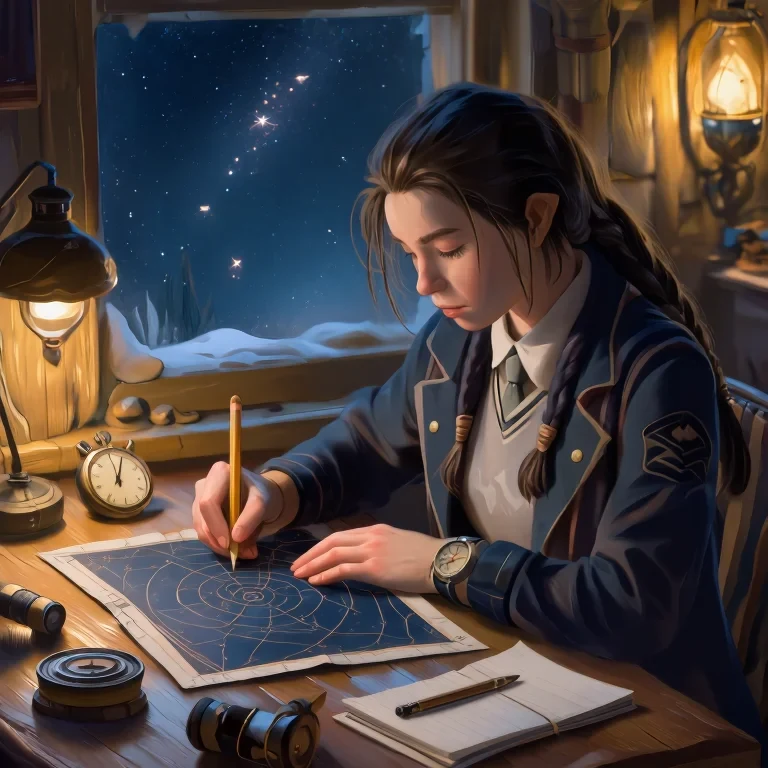
Mere Tipu had a chrome stopwatch with a white dial and a black second hand. Mr Hori had given it to her in Term One for turning the dome, so it was hers the way a borrowed raincoat is yours. She had practised on the second hand of the college clock for a fortnight. She could start and stop it with a bad of the thumb without looking at her own hands.
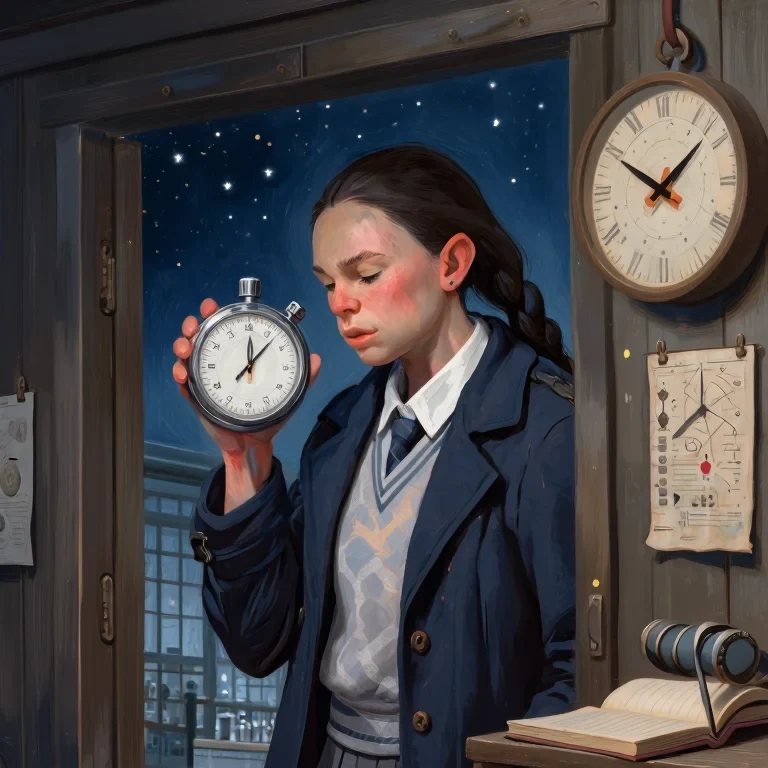
The arithmetic came first, which is the part nobody thinks of. The almanac on the shelf said Spica would be covered at twenty-six minutes to eight by the clock on the wall, and the almanac did not mean that. It printed the time as though the whole of New Zealand stood in the middle of the Earth, because tables are printed that way for everybody on purpose. The school field is three hundred and twenty kilometres off the middle of the Earth, and the Moon is close enough that being that far off the middle shifts it across the sky by most of a degree. The Moon walks a degree in a hundred and nine minutes.
The correction came to four minutes and a half, and it went onto the card in Mr Hori's writing. Then one and a quarter seconds came off again, because the light that had told her the star was gone had left the Moon one and a quarter seconds earlier and had spent that second and a quarter crossing the empty on its way to her. She copied the whole sum into her notebook twice, because she liked a thing she could check twice.

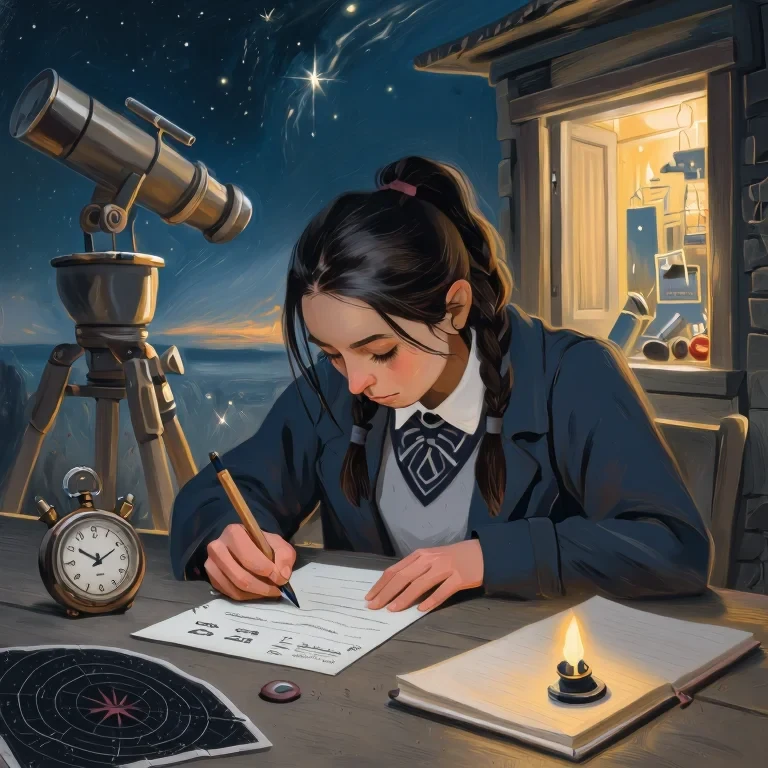
The college clock was a railway clock and it kept railway time, which is the time of the hundred and eightieth meridian, and the school lies nine and a half degrees west of that meridian, so noon by the wall clock is thirty-eight minutes after noon by the sun over the field. That did not matter tonight, because everybody standing on the field was using the same clock. It would only matter if anybody ever wanted the number for a different place on the Earth. Mrs Reid was up on the terrace with her own telescope, a hundred and fifty millimetre reflector she has owned since before Mere was born. She had been timing things for eleven years. She brought a stool and a thermos and a piece of chalk. “Watch the Moon,” she said. “Not the star.” “I can see the star.” “You can see the star. You cannot see anything else in the sky at all, and in ten minutes you will not be able to see that either.”
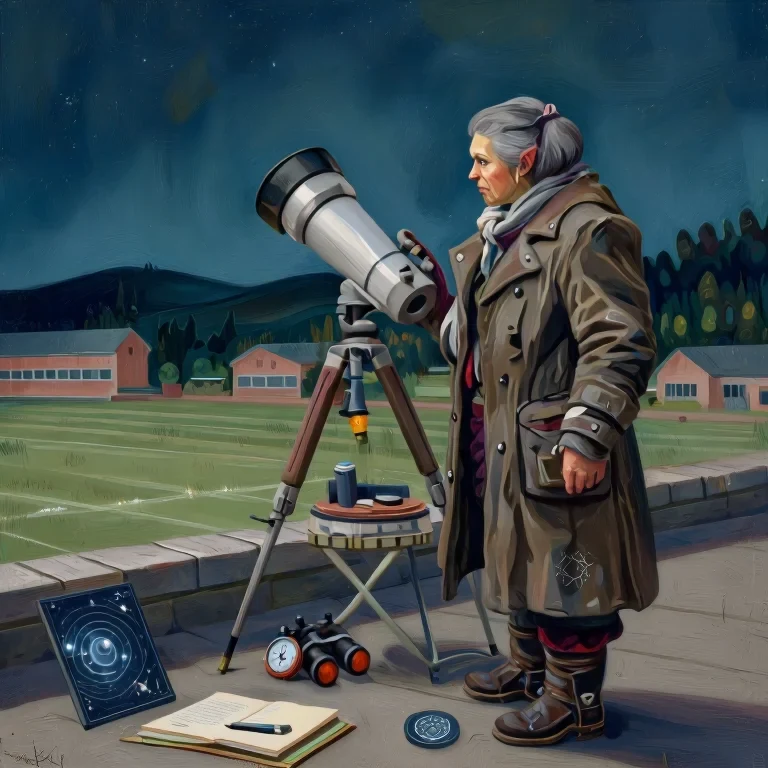
They put a black card over the front of the telescope with a five-cent coin hole in the middle of it, because the crescent was bright and Spica was faint, and the Moon's light on the lens would drown a star of magnitude one before it ever got down the tube. Only a small piece of the lens lets the star through. It makes the star fainter and it makes the sky darker, and it makes the last of the light take longer, and all three of those are the price.

The sun went at twenty past five. It stayed light a long time, the way it does at forty-four degrees south, and the stars came out grudgingly while the western sky held a brown colour. The Moon came up over the north range and climbed in front of them, a crooked yellow crescent with a bright point on its upper horn, and the horn aimed at Spica. At twenty-six minutes to eight Mr Hori read out the number and Mere put her thumb on the stopwatch.
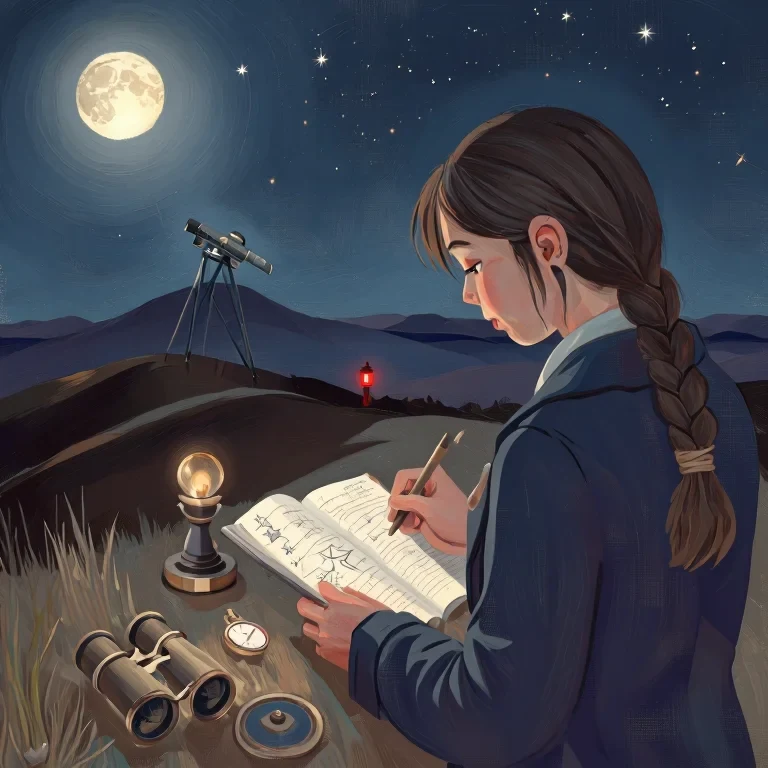
The crescent moved across the star at just over half an arcsecond a second. There was no moment. The star went down through brightness in about a second and a half, thinning like a light behind frosted glass, and Mere started the stopwatch when the thinning began and stopped it when there was nothing, because the beginning and the end of a thing with no sharp edge are the only edges there are. Then nothing at all for four and a half minutes, and then Spica again, and she started and stopped. “Twenty-six minutes to eight,” she called, and gave the seconds, and Mrs Reid called hers from the terrace, and Mr Hori wrote both on the card under the printed prediction.
The two numbers were four tenths of a second apart. That much was good. The prediction was three and a half seconds wrong too, and wrong in the early direction, which is the part that mattered. Whatever was wrong was wrong in the same place for two people with two different watches, so it could not be the watches. It could not be the clock on the wall, because both of them were reading the same clock.
That is the thing nobody puts in an almanac. The Moon is not a ball. It has mountains on it and craters and shelves of rock standing out where nothing should be, and its edge is not an edge so much as a torn paper edge. A cliff two kilometres proud of the sphere, which is a fair height for a cliff, stands one arcsecond outside the smooth ball at that distance. Two arcseconds is close to four kilometres of real rock, and two arcseconds of the Moon's face takes three and a half seconds of the Moon's own travelling.
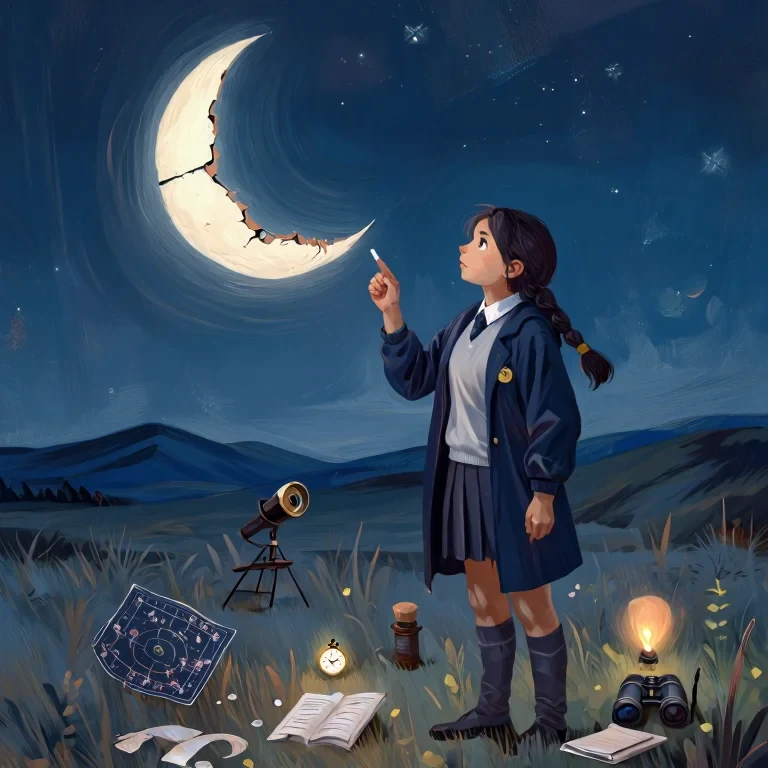
The Moon had taken four and a half minutes to cross the face of the star. At just over half an arcsecond a second that is a hundred and forty-five arcseconds, and the whole width of the Moon is about eighteen hundred and ninety, so they had measured a strip of edge about eight parts in the hundred of the way across. Half of that strip was seventy-two arcseconds, which puts the star's centre three arcseconds inside the Moon's edge. Three arcseconds is the whole margin. Anything standing out from the limb by more than that would have taken it or let it go entirely. “So the Moon's edge is out,” Mere said. “Two arcseconds of it. Three and a half seconds early. That is the same number twice.” “It is two numbers that agree,” said Mrs Reid. “Agreeing numbers are not the same number. Find out what else it was.”
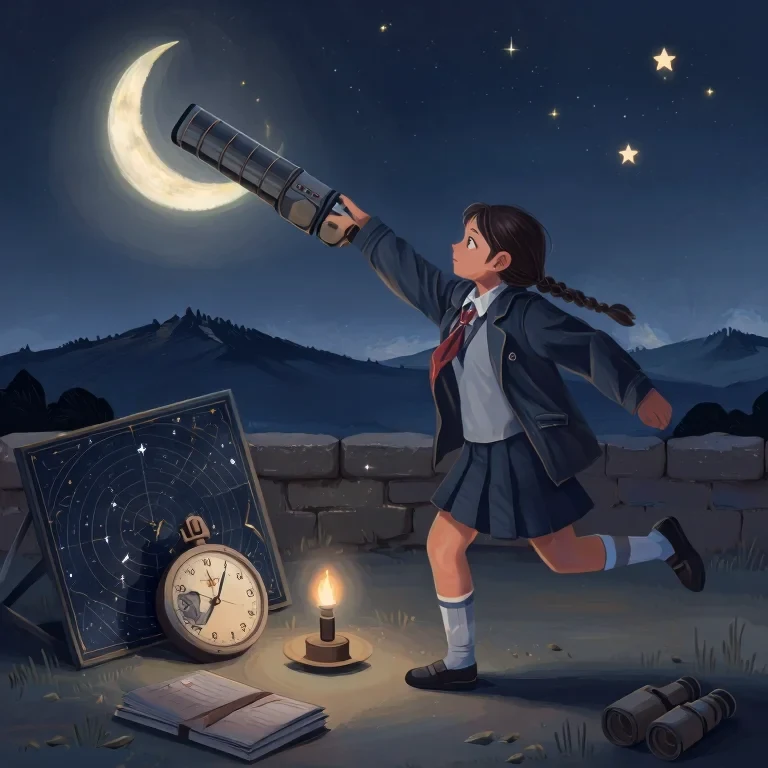
So they found out what else it was, in the warm room, with the atlas open on the table. “Was it the clock?” Mere said. “How do we know it was not the clock?” “Your watch against mine,” said Mrs Reid. “Four tenths on both, and I checked mine against the college clock on Friday and it loses a fifth of a second a day, which is why I take it off the mantle in the morning and put it back at midnight.” “Then it is not the clock.” “It is not the clock,” said Mrs Reid. “The clock is the only thing here that everybody agreed on, and everybody was three and a half seconds out.”
“And the time we wrote down was off the same clock all the way through, so if the clock was right then the prediction was wrong.” “The prediction is not wrong,” said Mr Hori. “The prediction has the Moon where the Moon is. Go and see that.” She went and saw that. She used the Moon itself, because the Moon is the one object in the sky whose position is known properly, and she timed where the Moon's own centre sat among the stars around it, over and over, for an hour, with the chalk marks down the side of the tube. The Moon was where the tables said the Moon was, to well inside a second of time. The centre was right. Only the edge was out.

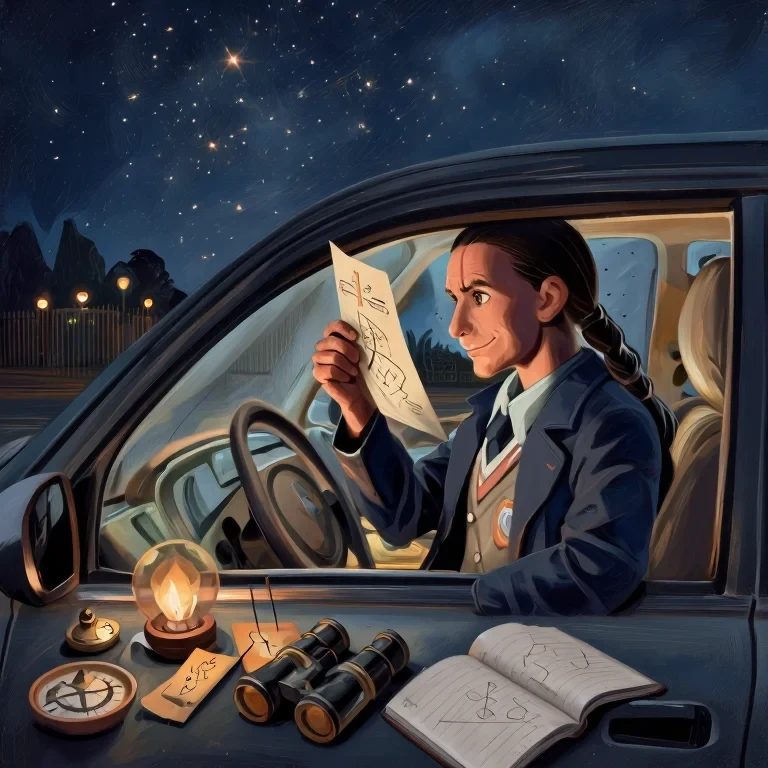
Mr Hori wrote the number for the college newsletter, because there was a space in it that week and the editor was a man who had never let a gap go in forty years. He gave her the card before he got into his car. She read it in the head of the car. Spica. Timed 7:33:56.6. Duration 4 m 22.6 s. B. T. K. and G. R. Elementary.
Four and a half minutes had gone into the sky and four and a half minutes had come out of it, and between those two moments the light had been crossing three hundred and eighty-four thousand kilometres of nothing at three hundred and eighty-four thousand kilometres a second, and no watch on that field had any business at all knowing about that. The number 7:33:56.6 was the time the edge of the Moon was against the middle of Spica, and there was no way on that field to know that, so the decimal places after it were a thing Mr Hori had invented on the drive home. “Mr Hori,” she said, in the cold, with the card in her hand. “Is one of those right?”
“No,” he said. “That is why we put the decimal on.” Then he got into the car and shut the door, and she stood at the school gate with the frost coming through her socks and the card going soft in her hand.
She walked home the long way, past the concrete posts with the sky pouring out over them, and she did the sum again on the back of her hand, which was the only paper she had left. Three hundred and eighty-four thousand kilometres off, the Moon went on travelling at just over half an arcsecond a second, and its edge went on being torn. In twenty-seven days and eight hours the same edge would come back to the same place and cross the same star, and the crossing would take a different time, because the Moon is nearer in one part of its month than in another, and when it is nearer its face is nearly a seventh wider.
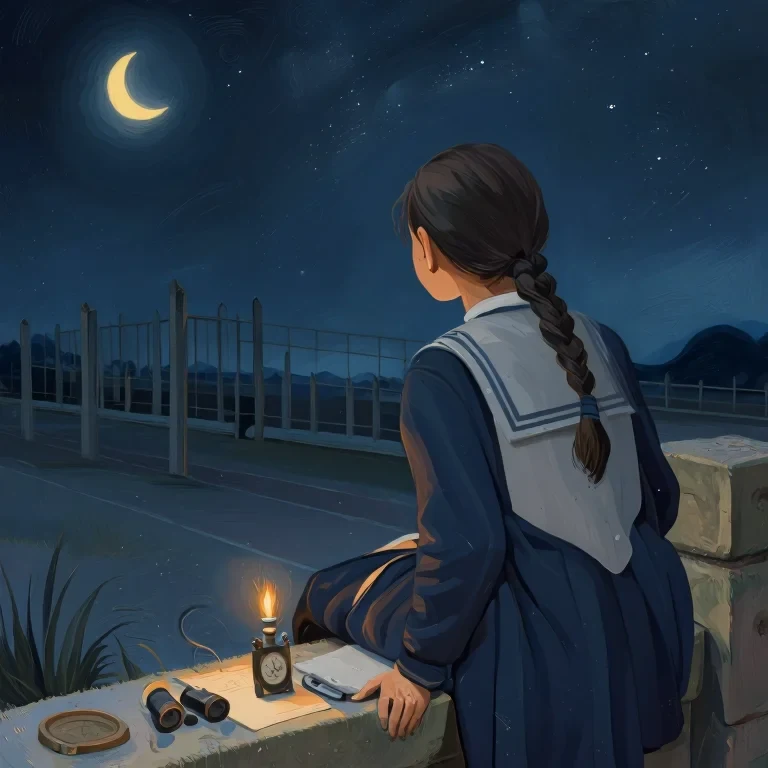
A seventh of eighteen hundred and ninety arcseconds is two hundred and forty arcseconds, and two hundred and forty arcseconds is seven more minutes of the Moon's own travelling, and seven more minutes is the difference between the Moon touching Spica and the Moon missing it. She wrote all three numbers in her notebook that night, the one that went in, the one that came out, and the two in between, and beside the last of them she wrote the width of the band they sat in, which was a second and a half, which was the width of the whole of her being wrong.