Wiremu Waitoa is fourteen and he has a piece of paper with a line drawn on it and a box drawn around the line, and the box is the path of a total solar eclipse, and the line is the middle of that path, and the whole thing is for the thirteenth of July in two and a half years, which is a Monday, and which is the next time the Moon's shadow comes down onto New Zealand. He drew the box at the kitchen table last October, with a ruler, from a page he photocopied at the public library in Timaru. The box is about a hundred and forty kilometres wide where it crosses the North Island. The line runs down the middle of it from the west coast near Nukuhakari, through the country above Lake Taupō, and out past Napier. That is the width the library page gave. That is the width the map will still be, this year and the next, because the width is fixed by the size of the Moon's shadow on the ground and not by anything about this country.
Wiremu is not on the line. He lives at Waitoa, which is south-west of Te Awamutu, and he has worked out with the same ruler that Waitoa is about thirty kilometres inside the western edge of the box. He has also worked out from the library page that totality at Waitoa, being well off the middle line, is a little over a minute and a half, where the line itself is a little over two minutes. He thinks about a minute and a half for most of the afternoon. Then he goes and does his chores.
The thing he has to get right is not where to stand. It is the number of seconds. Every prediction of every eclipse ever printed gives four numbers for any place: when the eclipse starts, when totality starts, when totality ends, and when the eclipse ends. Those four numbers come out of a calculation that knows exactly where the Moon is and exactly where the Sun is and exactly where the Earth is turning. Everything in that calculation is measured to a great many decimal places by people who spend their lives on it. The part it does not know exactly is the shape of the edge of the Moon.
Wiremu found this out in the second week of term last year, from a page about lunar limb profiles that is nine years old and was not written for him. The edge of the Moon as far as the calculation is concerned is a smooth ball. The actual edge of the Moon is not a smooth ball. There are mountains on the Moon up to five kilometres high and there are valleys, and where the Sun is being covered the last sliver of Sun goes through a valley and the first sliver comes through a mountain, and the calculation does not know which one, because it has treated the whole limb as a sphere.
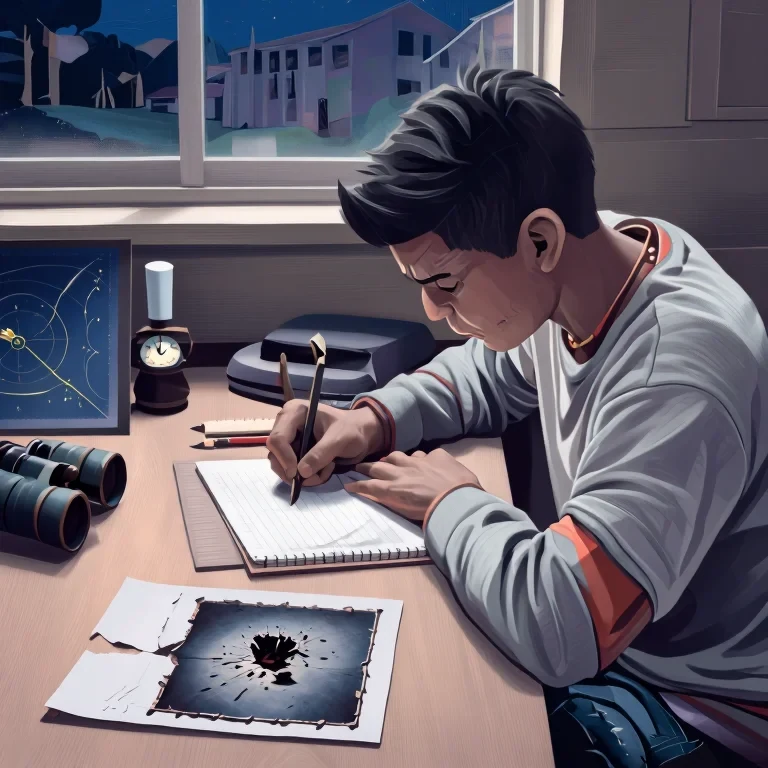
The effect is measured in seconds. The Moon's edge is treated as if it might be up to about three arcseconds further out than it really is in one place and about three arcseconds further in in another, and the Sun crosses the Moon's edge at about half an arcsecond a second, so three arcseconds is about six seconds of time. People used to correct for this by photographing the Moon's edge in profile, and there is a set of charts from 1963 that let you do it and get your answer to about half a second. Since then a spacecraft has flown over the Moon and measured the shape of it properly, and with those measurements the answer comes out to about a fifth of a second. Six seconds is not very much, until you notice what six seconds is worth.

The shadow is moving at eleven thousand kilometres an hour. That is three kilometres every second. Six seconds is eighteen kilometres. That is where the Moon's dent or the Moon's mountain put the actual edge of the shadow, compared to where the smooth ball says the edge is. A boy standing eighteen kilometres on the wrong side of the true edge gets nothing, and a boy standing eighteen kilometres on the good side gets totality when the map says he misses.
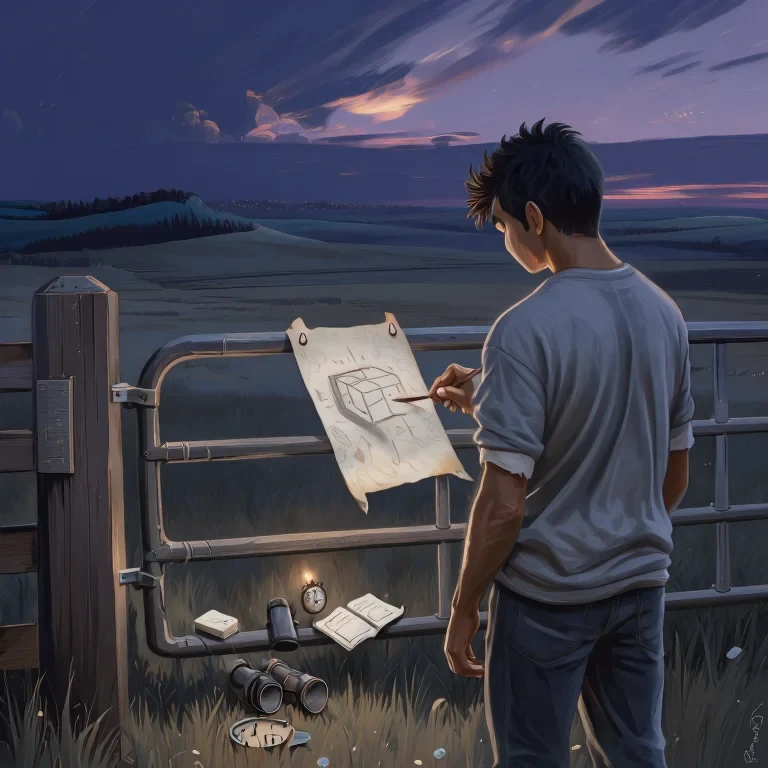
He builds the instrument in the eight months before, in the shearing shed at Waitoa, with a plywood base, a length of drainpipe, a sheet of perspex and two door handles bought in a packet from the hardware shop in Te Awamutu. The base is a board with a hole cut in it, and the board sits flat on a table. Through the hole goes the light, and what comes out the other side of the board is a disc, and the perspex catches that disc and throws a circle of light on the wall. For most of the eclipse the circle has a bite out of it, and the bite grows from the west side across the disc, and when totality happens the disc goes all the way out, and for about two minutes there is no circle on the wall at all. Two door handles are glued into the board, far apart, and they hold the board clear of the table so the room light does not fill it in. That is the whole instrument. There is nothing in it that costs money except the perspex.
The problem is that a hole in a board is not a pinhole. It is a hole, and a hole has a size, and the size of the hole decides how sharp the edges of the disc are. Make the hole too big and the circle is fuzzy and the moment the last of the light goes is a smear rather than an instant. Make the hole too small and not enough light gets through to see the circle at all, because the Sun is only twelve degrees up on the day and the light is coming through a lot of air. He solves the second problem first, because the second problem is easier. He puts the board on a post at the west end of the shed at the height of his own eyes, and he waits for the Sun to move behind the shed wall, and he looks at the wall. What he gets is a disc about four centimetres across. He does this every clear evening for a month, in October and November and December, because he has to be sure of the hole before he can be sure of anything. Then he cuts the hole down over January, a piece at a time, testing each one the same evening, and in February he has a hole about a millimetre across and the disc on the wall is a clean disc with an edge he can see the raggedness in.
The test he cares about is this week, on Friday, on the ninth of March, when the Moon goes across the Sun in a ring. It was in the almanac in the year before, and it is the last eclipse of any kind he gets before the one he is building for. It is an annular eclipse, and the difference between an annular eclipse and the one in July is the whole difference between the thing he has and the thing he needs. The Moon is a little too far away and a little too small, and it cannot quite cover the Sun, and what it leaves is a ring. The almanac gives forty-eight seconds of ring on the centre line, which is a quarter of what he will get in July, and at Waitoa, well off the line, the ring is a hairline that he has to lean sideways to see.
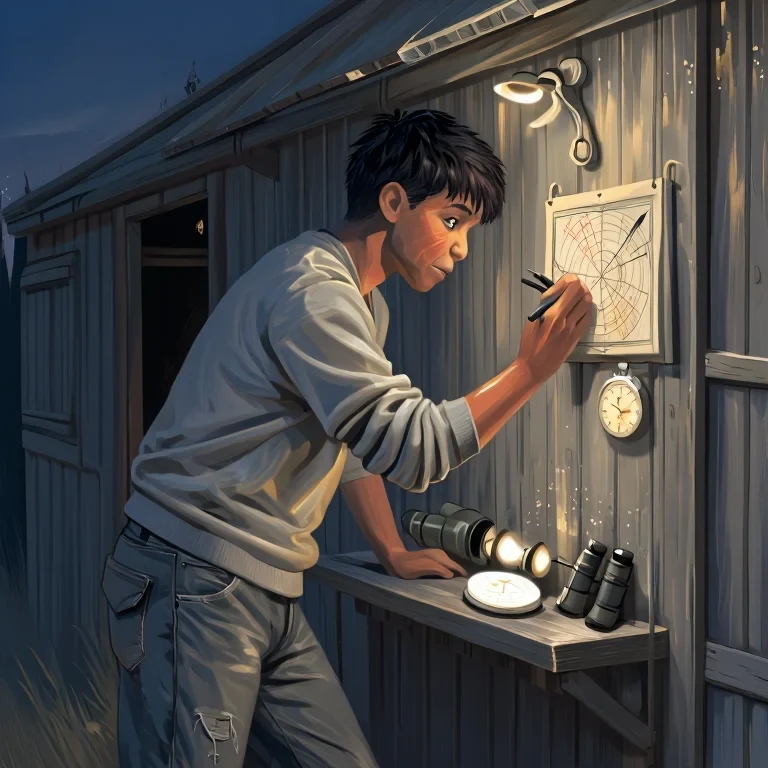
His father has the shed from eleven because the shed needs doing and because Wiremu asked, and Wiremu has not explained why, and his father has not asked twice. He sets the board up at eleven when the Sun first clears the shed roof and he gets a clean disc, and he marks the centre of it on the wall with a pencil, and he marks the edge of the board, because the edge of the board is where the disc has to come back to for the eclipse to be over. He watches the disc from eleven until half past four. He writes the time on the wall in pencil when the ring is thinnest, which is at about half past two, and again when the ring is thickest, which is at about three. Nothing else. That is the instrument's own record of what it did while nobody was helping it. At half past four he puts his sleeve through the disc to put it out, wipes the smudge off the wall, and stands for a minute in the shed looking at the place on the wall where the light had been.
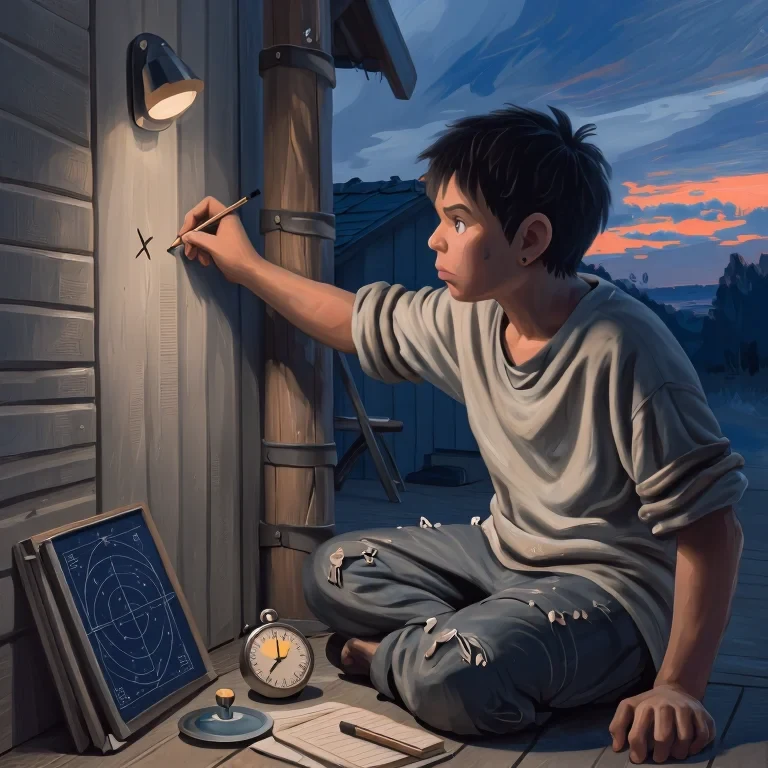
What he learns from the March ring is that his disc is good and his eye is not. He can find the moment the ring starts and he can find the moment it ends, but he cannot find either of them to better than a second or two, because a ring of light a hairline wide in a dim room at the edge of his vision is a much harder thing to call than a filled disc is, and because he will not admit to himself, on Friday, that the thing he is going to have to call in July is a filled disc in a room going dark. He thinks he has made an instrument good to a tenth of a second. He is wrong, and he is wrong about the instrument, which is the part that takes him four months to understand, and it comes in an email.
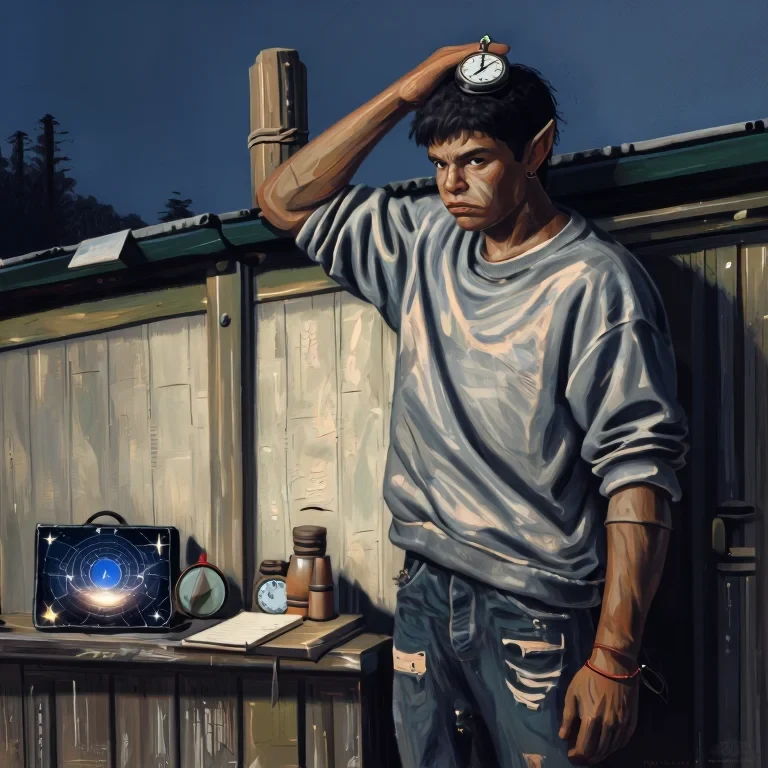
On the thirteenth of July the eclipse starts at about half past two in the afternoon and totality is due at about ten to four and lasts a minute and about forty seconds at Waitoa, and the sky at Te Awamutu on the thirteenth of July in an ordinary year is about sixty-five per cent cloud. The cloud comes in at twenty to four and it is the ordinary kind, low and broken and moving in from the west, and it is over the range at about the time the Sun goes behind the first piece of it, and it thins away again at about the time the last piece goes past, and the whole business takes about half an hour. That half an hour is the whole of the eclipse. First contact at half past two, second contact at ten to four, third contact a minute and about forty seconds later, last contact about a quarter to five. The cloud sits across all three of the numbers that matter and not one of the numbers that do not.
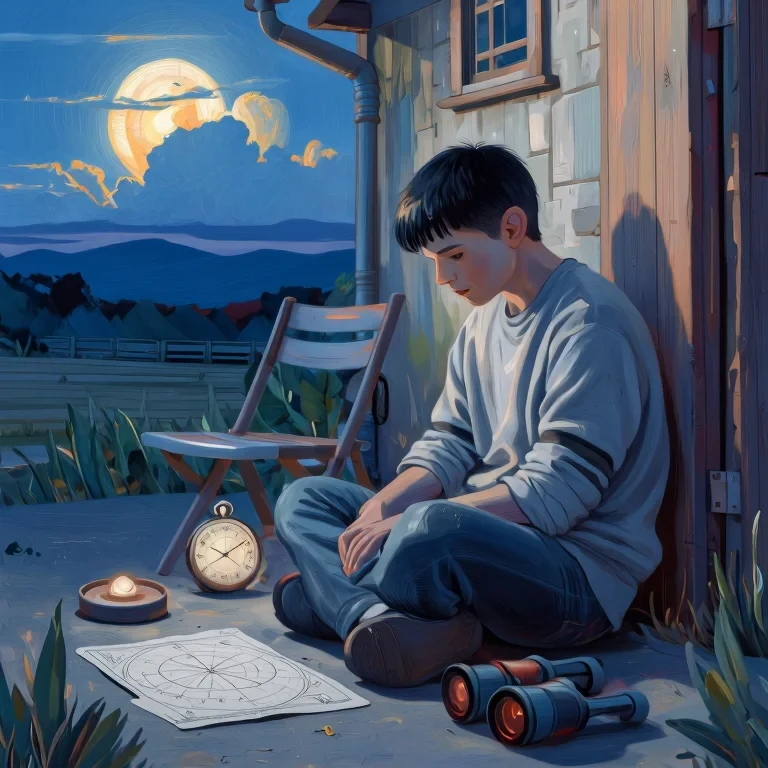
It does not eclipse the eclipse. Through the thickest piece of it he can still see a good half of the Sun, and the disc on the wall is dimmer and softer and still there. It just makes the light ordinary, and then makes it ordinary again, and he stands in the shed doorway with the board on the post and his eye to the wall and he sees the bite come across the disc and he knows it is right, and then the cloud is over the Sun and the bite is gone and he is standing in a paddock in the middle of the afternoon with nothing happening. Then the cloud thins and the bite is there again, and it has crossed most of the disc in the time it took to walk around the shearing shed twice, and there is a sliver on the east side of it now, and the sliver is thinner than he has ever seen anything be.
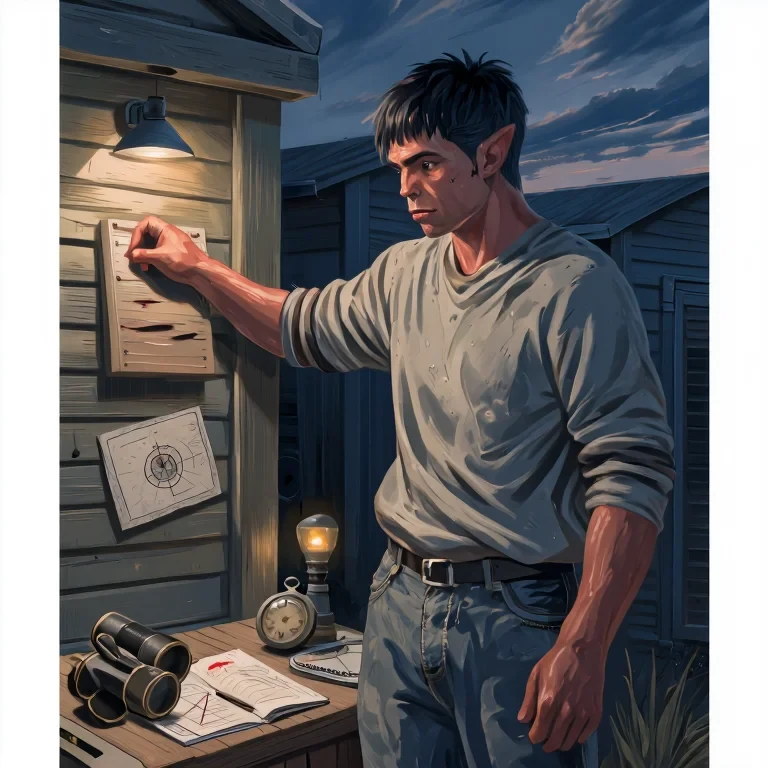
He does not hear the birds stop. He notices that the wall is not lit by the sun and he has to work out why, and what has happened is that the room has gone dim enough that he can see the pencil marks he made in March, which he could not see in the afternoon, and that is the first thing he takes in, and after that he takes in nothing at all for a minute and about forty seconds. Afterwards he does the part of the instrument's job he can do. He writes the times down, in order, as the stopwatch showed them. Second contact. Third contact. The two are a minute and forty-four seconds apart. The map says a minute and thirty-five. He is nine seconds out. Nine seconds is not a stopwatch error. He has checked the stopwatch against the radio.

The email comes in July, on the Monday, from a woman at a university in the north of England who has spent eleven minutes on his measurements and then told him she has read everything he sent twice. She is not unkind. She is worse than unkind, because she agrees with him about the instrument and not with him about the eclipse. The instrument, she says, is fine. Pinhole, a metre and a half from the wall, a hole cut down over five months and tested every clear evening, a board on a post out of the wind, one person alone doing everything, no tripod, no mount, no tracking, nobody else in the shed. Nobody in this business does better than that and the reason nobody does better is that nobody gets more out of it. A few seconds between two of her own measurements made the same way is about what she gets herself in a shed. The eclipse, she says, is where he has gone wrong, and she gives him the reason, and it is the reason he already knows, because he found it in the second week of term last year.

He did not correct his timing for the edge of the Moon. Nobody tells you to do this. The predicted times in every almanac on his desk, and in every map he has drawn, and in the box he drew with the ruler, are times for a smooth Moon. The real Moon that afternoon had a valley on its limb at the place where the Sun went in, and a shoulder further round, and both of them were in the wrong direction from smooth, and both of them were not in the calculation at all. Here is the part that undoes him. The limb does not move totality along, it changes how much of it there is. It moved both his contacts and it moved them by different amounts, and what it left behind was a duration the almanac does not predict, and the direction it goes is the direction nobody likes. On a total eclipse the correction almost always makes the totality shorter than the smooth Moon said it would be. His is longer.
He writes back and asks the question she has been waiting for him to ask, which is how do you correct for it, and she writes back that for 2037 you use the Watts charts, which are photographs of the Moon's edge taken in 1963 by a man at the Royal Greenwich Observatory for exactly this reason, and that the correction is a matter of finding which feature of the limb is at the position angle of the contact and reading off how far out or in it stands from the mean edge, and then converting that into seconds with the Sun's rate of motion across the Moon. She does not offer to do it for him. She has given him the method and the data source and the fact that the arithmetic is two lines, and the two lines are his, because nobody is going to hold his hand in December 2038 when he does it himself in a shed at the other end of the country.
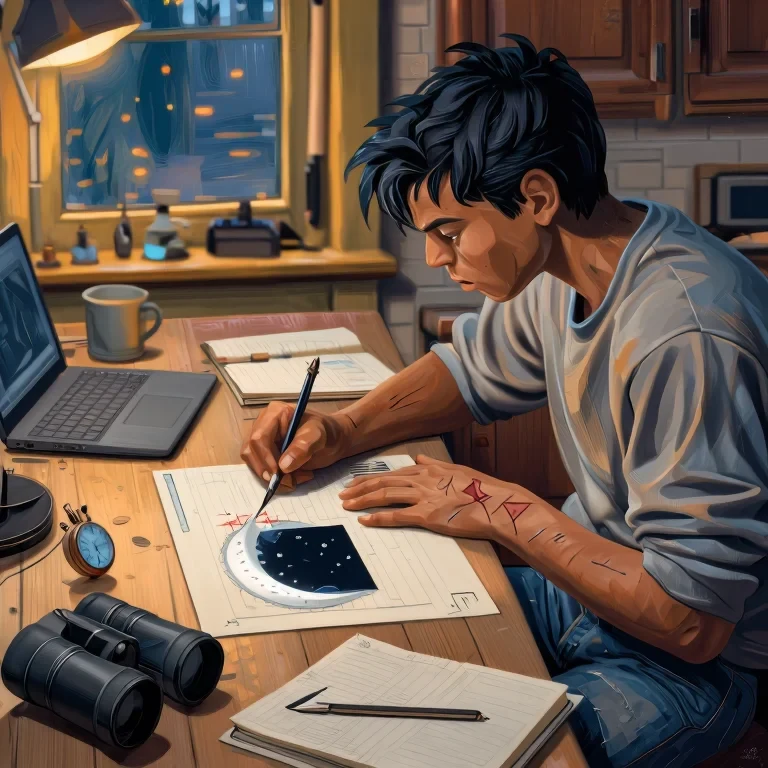
The next one is on the twenty-sixth of December in 2038. Totality goes from Cape Farewell, over the top of the South Island, and comes down the west side of the North Island and off at Otaki and Kapiti, and the box is ninety-five kilometres wide, which is two thirds of the width of the 2037 box, and the line is about two minutes and eight seconds where it crosses the country, and Wiremu is going to be south of Levin and is not going to be anywhere near the line. He has not decided to go. He has decided that if he does he will be on the line, and being on the line means being within a couple of hundred metres of it, and the line on the 2038 map will have an edge to it as well, and the edge is where the Watts charts come in again.
His father asks him what he is doing with the plywood. Wiremu says it is for watching things with, and his father says there are better ways of watching things, and offers him the sky on the roof of the house at Christmas, which is what they usually do, and Wiremu says yes, and does the Watts charts at the table with the box beside him, and gets the 2037 correction to about a second on the second evening, because he has done it once now and the second time is not the first time. He still has the 2037 numbers and they do not agree. His own totality was a minute and forty-four seconds. The corrected prediction for Waitoa, with the charts applied and the position angle worked out from his own date and time and latitude, is a minute and thirty-one seconds. There are thirteen seconds in that gap, and thirteen seconds is twice what the charts say the limb is worth on that afternoon.

So one of the two numbers is wrong and he does not know which. He has checked the position angle twice. He has checked which of the two contacts is which. He has checked the airmass, which he did not know mattered in March and does now. And thirteen seconds does not come out of anything. The limb is worth about six seconds. His eye on a filled disc in a dark room is worth about four. Six and four is ten, and he has thirteen, and the three seconds on top have no name he can find in either the Watts charts or the stopwatch or the notebook, and he has looked. He writes both numbers on the board on the back of the door in the shearing shed, in the space left over after the dog and the water and the date of the next shearing, and he writes the date of the next one across the top, and he does not cross either of them out.