
The Sheet Office keeps its drawings on the top floor of a stone building beside the canal, because a north light is the only window a drawing can be judged in. The office drew the county in sheets. There are one hundred and nine of them, five miles by four, and the whole set fits on a wall. Sheet 41 is the Hallethorpe sheet. It covers the middle of the county, the river Caut and the ridge above it, and it has about nine hundred words on it, because that is what a sheet is. Thali Oren had drawn sheet 41 for thirty-one years. He was sixty-one, he came in as a junior in 1962, and nobody else in the building had seen the ground.

Corin Oren was twenty-four and had been given a commission of his own in the January. It was the resurvey of the north third of sheet 41 for the new edition, three years of work if it is done properly, and Corin had been told to plan two. He did the field work. He was a field surveyor and not a draughtsman, and his father had said, when he was eighteen, “You can go and measure a thing or you can go and draw a thing, and do not think you can do both.” The first thing he found was that the top field was not the top field.

The top field is reached by a road that leaves the Caut at Norbridge, goes north-west for two miles, turns north at a crossroads, and goes to a hamlet called Rill. On the ground the road does the same thing the whole way, with a kerb at Norbridge and a cattle grid at the top of the hill. Past the cattle grid it goes on for four hundred yards and then it ends. It does not end at a farm and it does not end at a gate. It ends in a hedge, with a turning head cut in it, and the tarmac runs into the head and stops, and the council's list still carries it as a made road. Corin stood in the turning head with the plane table on his shoulder and could not make the number come out right.

The country west of the end of that road is not on sheet 41, and it is not on any other sheet. It is a valley, a mile and a half long, with the Caut coming down it, and walls and pasture and a scatter of houses, and on the sheet the ground east of the road is drawn and the ground west of the road is drawn, and between them there is nothing. Not a hill, not a hachure, not a name. The road comes up to the end of it and nothing joins it to the contour of the ridge four hundred yards west. That is not how a mistake looks. A mistake is a wrong line, or a line in the wrong place, or a house on the wrong side of a beck. This is a gap, and it is the shape of the thing that is missing, and somebody has drawn its edges on purpose.

The comparator is on a bench by the north window with two glass plates and a lamp under the middle of them. You put a drawing on the glass and another over it and slide them against the light, and the lines either lie on top of each other or they do not. Corin used it in the last week of February. He put the fourth edition under the glass and the first over it and moved them until the registration marks came up true, and then until the river came together, and Norbridge. The first edition had Cautley Bottom in it. Not the whole of it. Four houses and a church and the word CAUTLEY, in the county's own lettering, with a road going into the valley and coming out of it and joining the road that ends in the hedge.

It was on the second edition and the third. On the fourth there was no valley, and no church, and no road, and no word, and the fourth edition was published in 1962. In the top right corner, under the imprint, where the edition's date and the officer's initials go, there is a line that reads E4 1962 TH, and beside the initials a small figure that means line withdrawn at the officer's discretion.

The office marks a line withdrawn when the ground does not do what the old sheet says it does, and the mark goes in the margin, and nobody reads the margins. Thali Oren came in that year as a junior. He was twenty-nine, and the mark in the corner of sheet 41 is his. He was sixty-one years old and he was sitting eight feet away at a board with a ruling pen in his hand and did not look up, and Corin stood at the glass for a minute and a half and then went out.

The file is in the basement and the basement is cold. It is N/1919/CB, a quarter of an inch thick, and it is a boundary award made in 1919 between the parish of Sandbeck and the liberty of Hallethorpe, after eleven years of dispute. The award divided the ground between the two of them. What the award did not do was describe the last strip. Read the schedule of parcels and then read the boundary, and the boundary is a line that comes off the ridge on the east side of the Caut, goes down the water, turns, and goes back up the west side. The strip in the middle is not in the schedule. Not because it was given to both. Because the commission wrote it one way and the other side read it the other way, and instead of the case going back for four more years they agreed in a room in Norbridge to leave it. There are two words at the foot of the boundary schedule. They are unassigned, and after them there is a full stop.

The strip is a mile and a half long and four hundred yards wide at the top and two hundred at the bottom, and Corin measured it off the 1919 six-inch field sheets and got three hundred and eighty-six acres. The road that ends in the hedge is in the strip. The four houses and the church and the yew are in the strip. The county boundary runs down the middle of the Caut in the four inches of the award where the two descriptions fail to meet.

The register is kept by Petra Loe, and it is a book with a column for a name and a column for a district and a column for the date the name went in. There is no column for a strip and no district for a strip. In the register the ground between the two boundaries is blank, and it has been blank since 1919, and it is not a mistake in the book, because a mistake in the book is a name with a district. Corin counted on two afternoons, going down the lane at Cautley and up it again. There are nine houses and forty-one people. Thirty-eight of them are in the register. Three are not, and the three are over the age at which the register is compulsory.

A name cannot go into that book without a district, and the two districts that border the strip have both refused, in writing, in 1954 and again in 1988. Being outside a district is not a condition. It is the absence of everything a district is. No rate. The schools run on the roll, and on the roll there is no school place, and the nearest school is four miles away in a village that took forty-one children and no more for sixty years. No district nurse. No water main, because a main is laid by a district and the rate is nil. No bus, because a route is a contract. There is a church and a churchyard and a well.

The Office's own reason is in the file with the award, in a minute of 1963, and the minute is two paragraphs and it is very clear. Land that is unassigned is land that no authority is answerable for. Assign it and the county has bought a liability, and a liability of that kind is a school and a water main and a bus and a district nurse, and the estimate came to more than that year's whole budget for Hallethorpe. The minute does not say the strip should stay as it is. The minute says that the question of Cautley Bottom shall be kept under review. It has been kept under review every March since 1963. There are sixty-two files in the binder, each of them two paragraphs, and the binder is in the same cupboard as the award.

Corin did the summer. He did the plane table first, because a plane table gives you the shape and the shape is what is missing. He set the table on the high field east of the road and took a round of rays to the church tower, which is the only thing in the strip a theodolite can see from nine miles round, and it came up where the tower has always been. Then he did the levelling, up the lane from Norbridge bridge to the church, flying levels, a hundred and ten chains and a book for each, and the closure at the churchyard gate came back within a fifth of a foot over four miles. The bottom of the strip is bog on the west side. Not marsh. Bog, with a skin of water on it in the wet months and a foot of it under the heather, and a heel goes down until something stops it.

He lost four days to it in the second week of July and two days in August, and he dug six trial pits by hand, and he put a staff in every one of them and read them the following spring and again in the autumn, and the two readings were eleven millimetres apart across two hundred yards, more than anything else on the sheet. Nobody had ever measured it. There are pins on the ridge and in the fields and at the churchyard, and the bottom of the strip is a mile from the nearest one.

His father came out on the fourteenth of August and they walked the whole of it in two days without talking about it. Thali Oren at sixty-one walks badly on a wet ground and well on a dry one, and he had a folding rule in his pocket and used it on every wall, and twice he made Corin go back and count a course of stone again. At the turning head of the road at the top they stood for a while, with the road coming down the hill behind them and stopping, and the valley under them. “You have it,” said Thali Oren. “I have it.” “Not as a survey.” “As a survey.” “No,” said his father. “You have a plane table and a chain and a summer. It will take two, and in the second year there will be a man from the district on it, and that is the year it stops being yours.”

The third week of October Corin went to the district and sat with two men from the county and a man from Sandbeck who had been the clerk of that parish for twenty-two years. He had the strip, the forty-one names, the shape and the height, and three things in the writing he had put in front of them. The first was to complete the survey and submit it, the boundary of the strip to be described in words the way the other boundaries are described, and the whole thing to go to the Office as a change to the fourth edition. The second was that the strip be assigned to Hallethorpe, on the footing that it is inside the liberty by the four inches of the 1919 award. They took the second one and he could not get them to take the first for six weeks.

A map can be changed, and the Office does it eleven times a year, and it costs nothing, and a sheet with a valley on it is a sheet. But a boundary that has been drawn once cannot be picked up in one place and not another, and the only instrument that can move an awarded line is a fresh award. So the first thing he had written took two to four years, and it needed the second year of a survey nobody could fund, and the district had no budget and had not had one since the quarry.

The third thing was the boundary amendment procedure, and it was the county's own proposal, and it came in on the last afternoon in a folder with a crest on it. The amendment is for small cases. It takes an awarded line and moves it to where the parties have since agreed it should go, on a form, with both signatures, and it goes out as a printed correction with a note in the margin. It is quick, it is cheap, and it is used eleven times a year. Applied to Cautley Bottom it would have put the strip, the road, the four houses, the church, the yew and forty-one people into the parish of Sandbeck in eleven weeks, on a form.

Corin read the Sandbeck file while they waited for the water to be brought in. The parish built a school in 1889 and closed it in 1931 and has fought three attempts to reopen it since. The minute of 1931 is four lines long, and the fourth says the school is to remain closed for the reason given in the preceding minute, and the reason is that the rating of the parish cannot carry it. The parish of Sandbeck, with forty-one people added to it, has a rateable value of about eleven thousand a year more than it has now. Hollis Bray, who was the clerk and who had brought the folder, said, when Corin asked what the parish thought of the amendment, that the parish had no view and would not be asked for one. Then he said, “It is a form,” and squared the folder on the table, and said that the parish had not had the advantage of the question and would take the benefit of it, and that the school was a matter for the ward meeting.

Corin drove back up the hill that night and did not switch the lights on. The amendment would be the right thing done the wrong way round. It would take a thing made a mistake in 1919 and make it a decision in that year, and it would be signed, and it would be printed, and there would be a note in the margin of a published sheet in every library, and the forty-one would be found. Found by Sandbeck. On Sandbeck's roll, under Sandbeck's school board, in Sandbeck's district, at the rate Sandbeck's rate is, in April or not in April.

In November he took the folder back and told them the first thing, which was that the second thing was not on the table and never had been, and that he had put it in the first list because he had not read far enough into 1919, and that it should be struck out, and that he was the one who had put it in. Then they took up the first thing again, and this time they were all talking about money.

The money is not in the Office. The Office is a drawing establishment. It draws what it is given and has no money and no power to make anybody do anything, and the reason the second paragraph of a 1963 minute is still in a basement is that nobody who could do anything has ever been made to. The money was in the district, and the district's officer was a woman called Yasmin Rohr who had the school rolls and the water mains and the bus contracts, and she came up in the January and read the strip in a chair by the north window and asked how many children were under eleven. “Eleven,” said Corin. “Eleven,” said Yasmin Rohr, “is a class.”
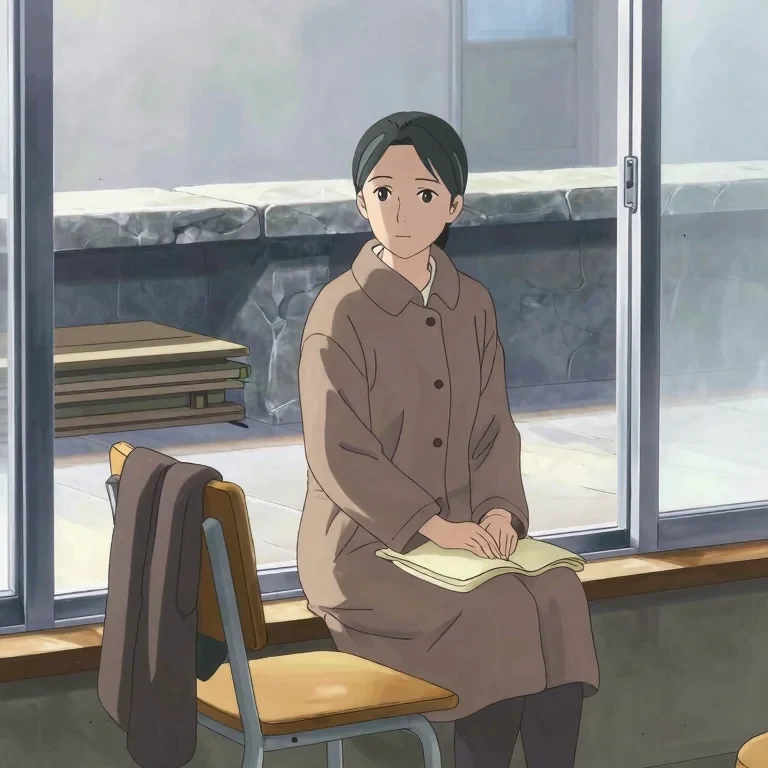
Thali Oren was sixty-two in the March and he was going to be asked to draw the sheet, because there is one officer in this office who has sheet 41 in his head, and the officer is the man whose initials are in the corner of the fourth edition. He did it in eleven weeks, on a board of his own, alone, on Sundays and on two evenings a week, with the ruling pen and the ink he had used since 1962. A change of boundary on that sheet is not a line. It is a withdrawal of nine square inches of brown and hachure, and a reinsertion of the same ground at a larger scale so that the forty-one can be drawn as houses instead of blocks, and every other feature in the valley has to be checked against the ground or the month will be gone. He checked it. He went out twice more in the March and took his own staff and did not tell his son he was going, and he put three things on the sheet that were not on the ground, and took them off again.

The sign-off is at the bottom of the drawing sheet, in a box, and there are three lines in it. The first is the surveyor, and it is Corin Oren, and under it is the date of the last observation in the field, which is the fourteenth of September. The second is the district officer, and it is Yasmin Rohr, and under it is the district, and the district is Hallethorpe. The third is the officer responsible for the sheet, and for thirty-one years it was TH, and in that March it was TH with a stroke through it and then CO, because a sheet has one officer responsible for it, and Thali Oren signed the change and handed the sheet over the same morning.

The new edition went to press in the November, and sheet 41 of that year has a valley in it. It has forty-one houses on it, and a school, in outline, marked in the office's own way for a building that is proposed and not yet built, and it has the road, and the church and the yew, and the boundary of the strip drawn as two lines with the parish names on either side and a note in the margin that reads Boundary amended, H/S, 2023. It is the only sheet in the set where the note in the margin is the whole of the change.
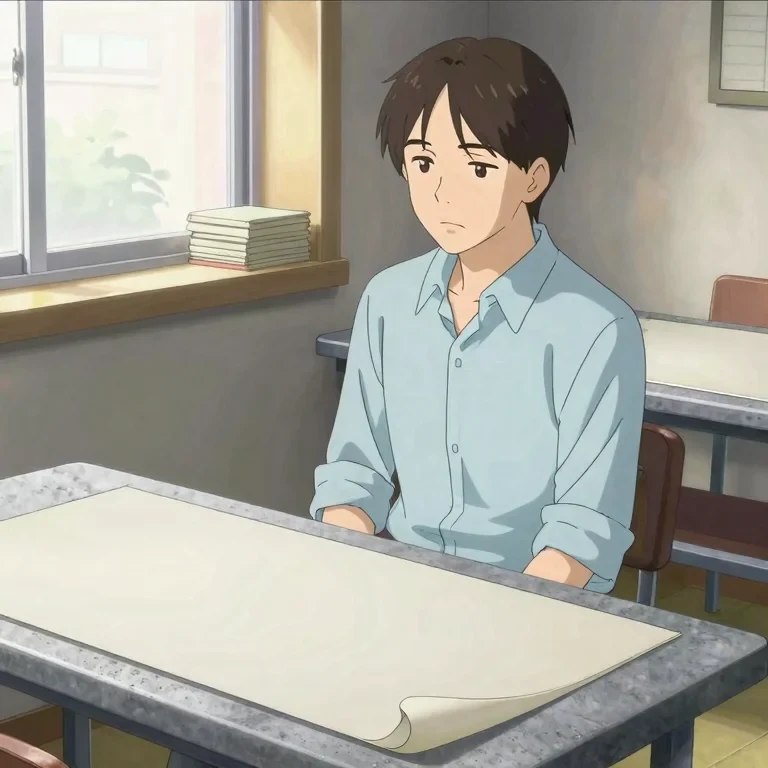
Thali Oren was still at his board on the day it came up from the presses, because the sheets come up to the floor to be looked at before they go down to the library, and there is a table by the north window where a man can put his hand on a thing he has drawn. He put his hand flat on the valley and did not say anything for some time, and Corin stood on the other side of the table and let him. Then his father took his hand off the paper, looked at the ink on it, and wiped it on his thumb and looked at the thumb. “A map is a claim about what exists,” he said. “And the people who pay for that are never in the room when it is drawn.” Corin Oren put the sheets in a rack forty-one at a time, the way he was taught, and took them down to the library himself, and the north light went across the table as the afternoon came off the canal.