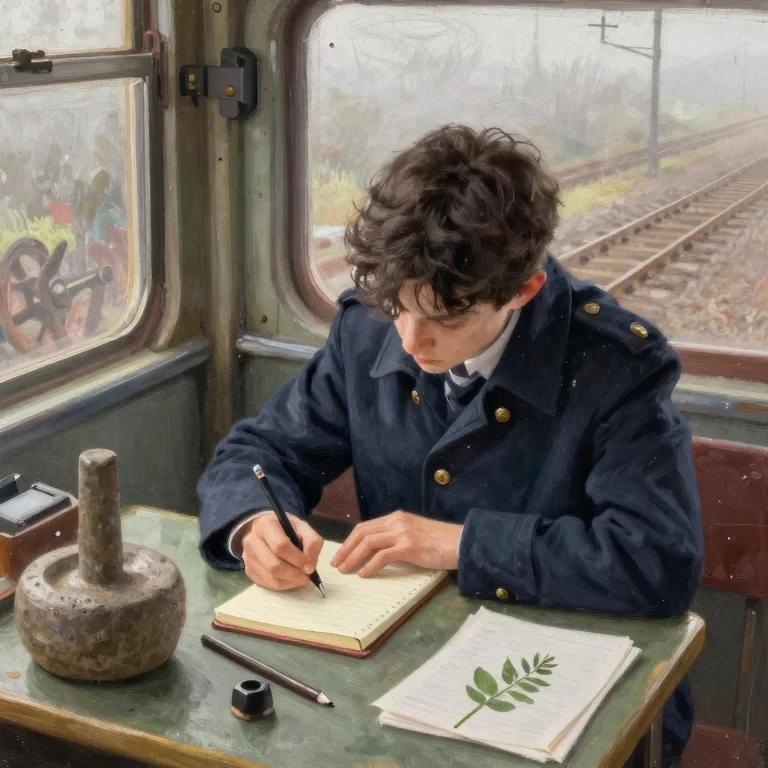
Wilf Anderton was sixteen, and on the eleventh of February 1883 he had the box at Grosmont on the Esk Valley line from two o'clock in the afternoon until the relief came at eight, because Samuel Peart was in bed with influenza and there was nobody else on the list to send. The fog came up off the North Sea that evening and lay along the valley and did not lift. Wilf had been in the box once before, for a morning, with Peart standing behind him saying nothing at all. This was the first time the box was his.
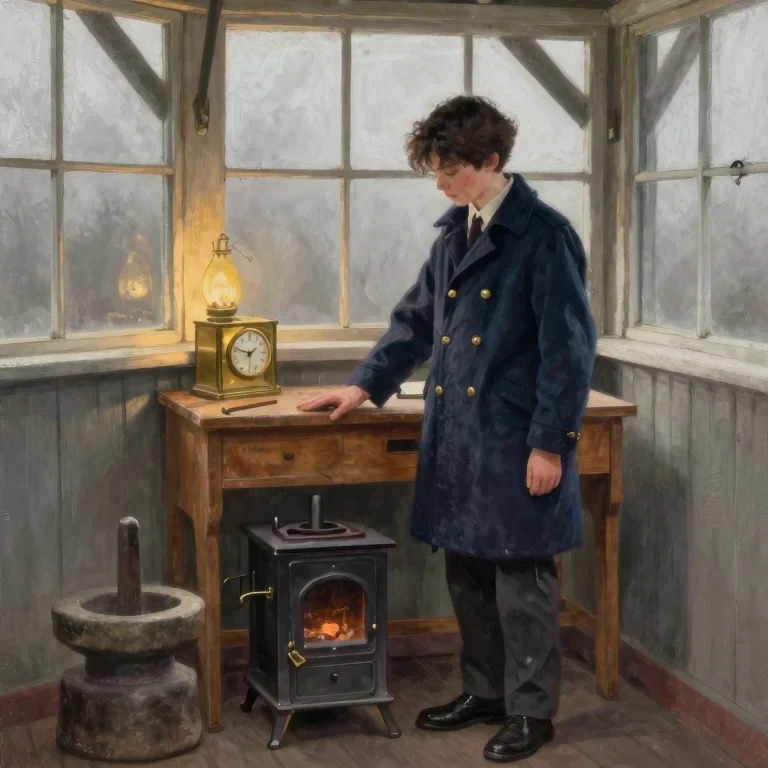
The line in front of him was two single lines and a loop. West from the box to Goathland was two miles and fourteen chains of single line. East from the box to Ruswarp was two miles and two chains of single line. Between them stood the loop, two roads off the main with the points at each end, and the loop had standing room for twenty-five vehicles clear of the fouling points. Twenty-five was chalked on a card nailed to the frame in Peart's writing, and beneath the number, in pencil, in a hand much older than Peart's, somebody had written two lines: 25 = engine, van, 23. Mind the dray.
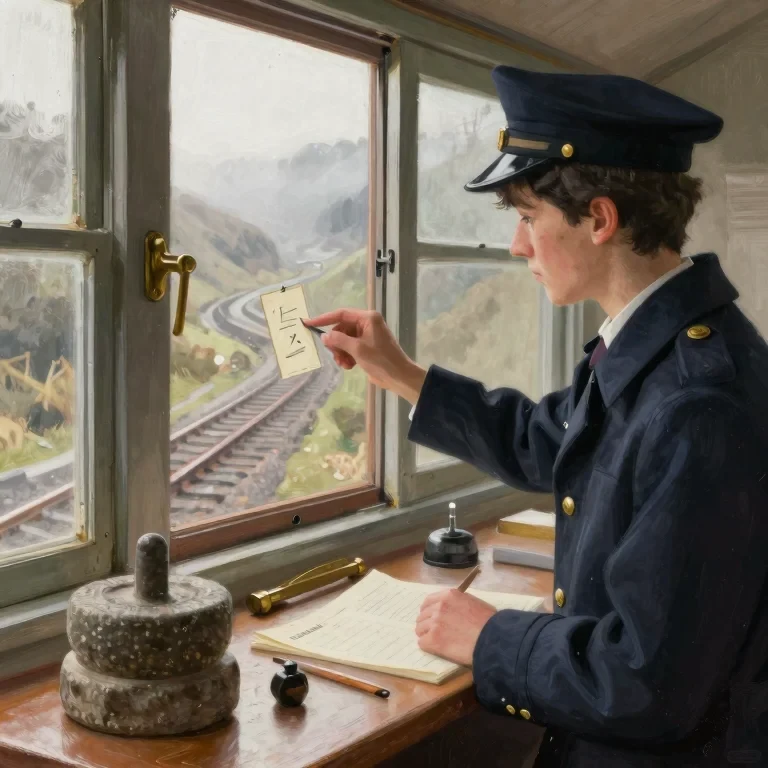
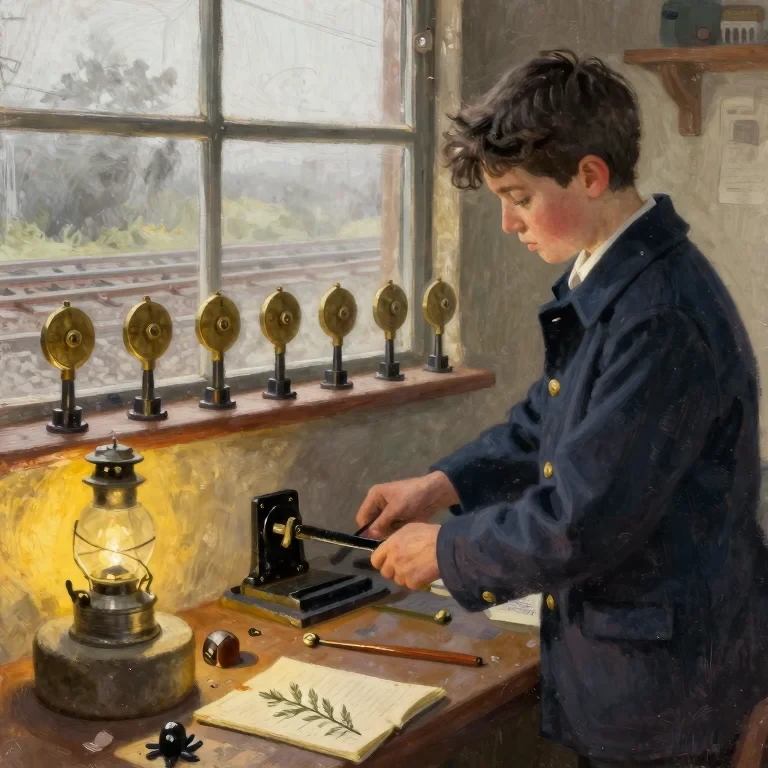
Wilf read it four times. He did not know what a dray was, and there was nobody to ask, and he decided that it could wait until eight o'clock. The rule of the whole job was the token. Each single line was worked by a token, and a token was a round block of oak the width of a saucer with a brass ring through it, stamped with the name of the section, GROSMONT AND GOATHLAND, GROSMONT AND RUSWARP. A train that had the token had the right to be on the single line. A train without it had none, and there was no case in the world in which it was allowed in.
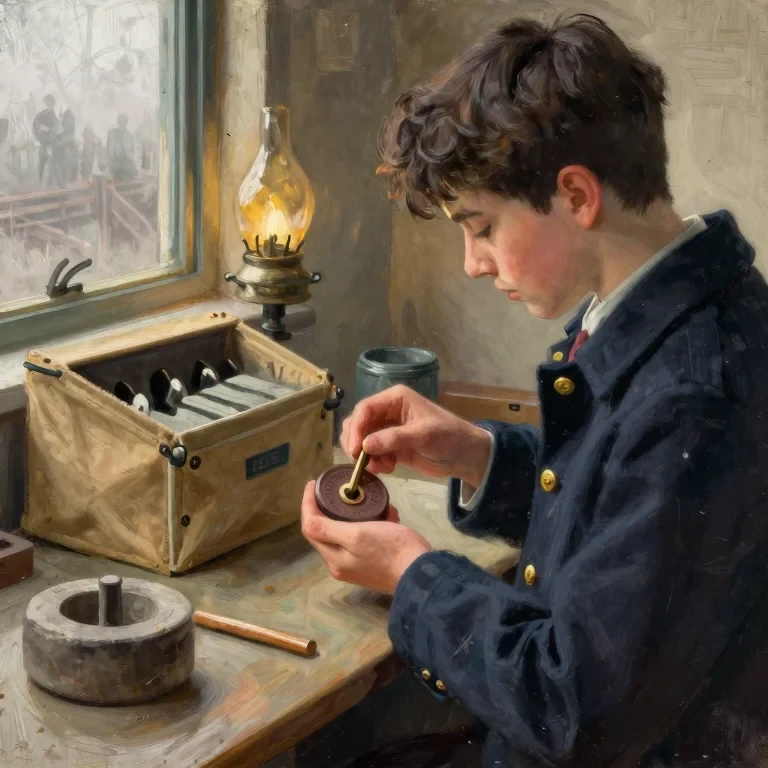
When the goods came in from the west Wilf would take the west token from the guard and put it in the pouch, and when the passenger came in from the east he would take the east token, and when one train went out he would hand the token to the man on the footplate and watch him put it in his pocket. Hand over hand, in sight, and never left lying on a platform or a window ledge for a minute. That was the whole of the rule, and Wilf could have said it back to anybody who asked him.
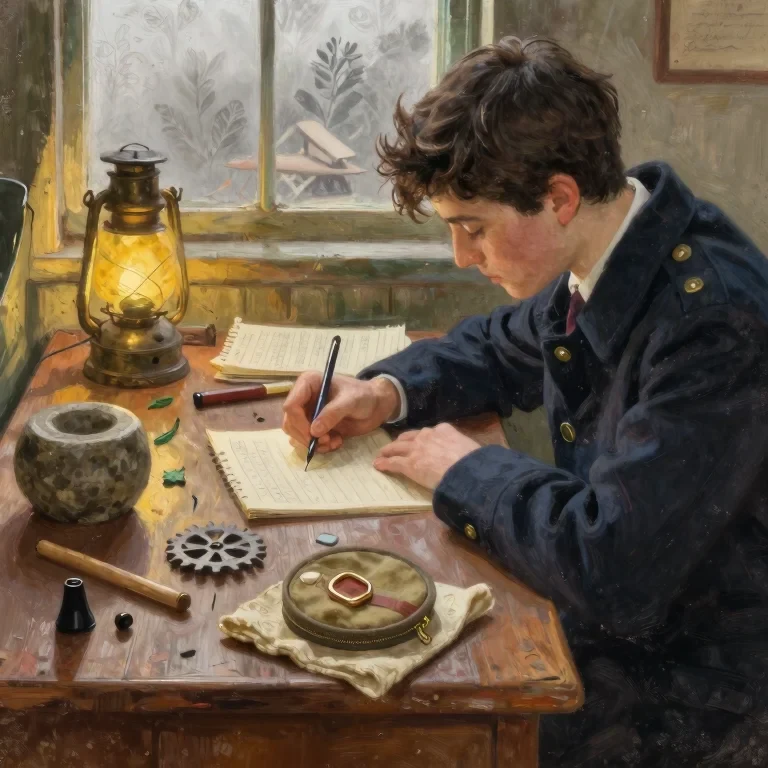
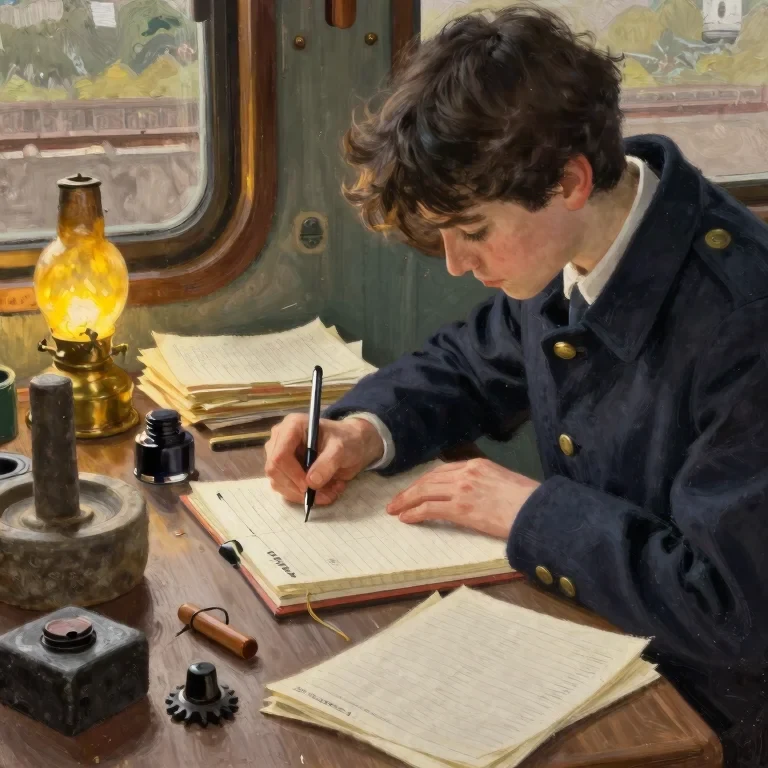
The other thing was the train register, a ledger on the desk with columns ruled down the page for the time, the direction, and a description of the train in the driver's own words. A driver handed the sheet in as the train came to a stand at the box, or he shouted the description through the open door. Wilf wrote down what he had been given and the time and nothing else, because Peart had told him once, in the spring before, that a register is not a place for opinions.
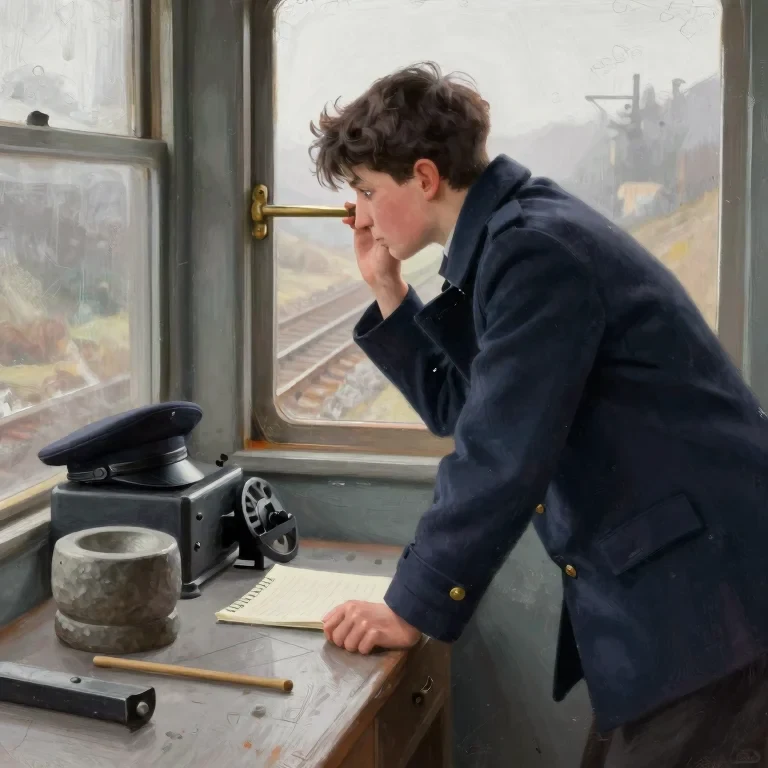
The goods was due at Grosmont at twenty minutes past six, running east from Goathland towards Whitby, and at ten minutes past six Wilf heard it before he saw anything, a low beat out in the grey that got nearer and did not get bigger, and he knew from the sound that it was running well and that it was going to be early.
The goods was a train of coal for the coast. It should have been put in the loop and left there, so that the loop was empty and clear for the passenger from Whitby, which was due at Grosmont at twenty-five past six and which carried the fish and the mail. That was the ordinary crossing. Wilf put the points to the loop road and hung the loop home signal off to clear the line for it. Then the train came into the box, close enough that the box shook, and he could not see the end of it.
The goods was not a fast train. It came in at the speed of a man walking, and by the time the engine went past the box window the wagons were still going past, and Wilf counted them out loud with his lips moving and nothing coming out, because a fog will take the side of a wagon away from you as completely as it takes the whole train.
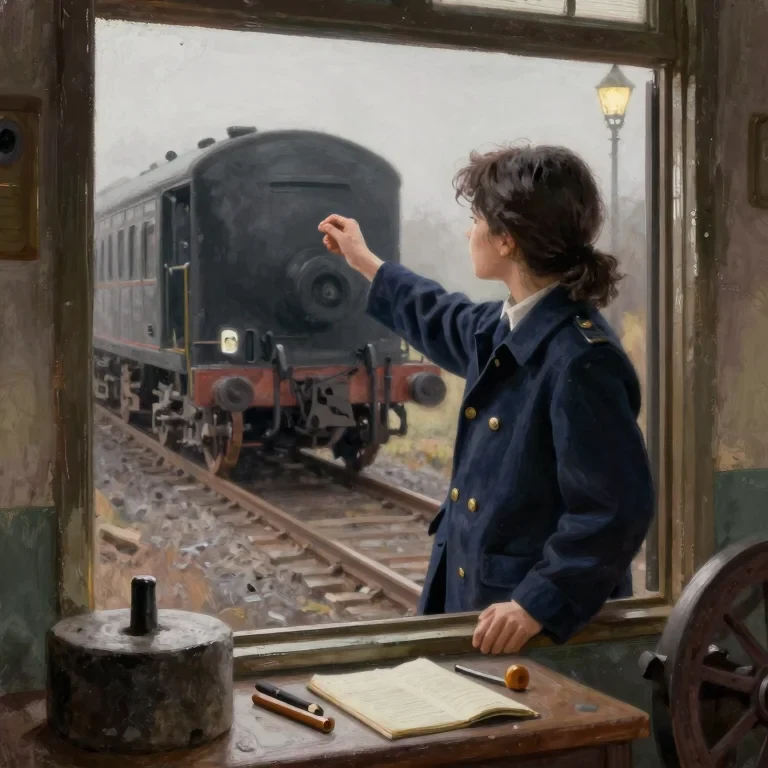
He had done what he had been taught to do, which was to get out and look. He put on his coat, took the hand lamp off its hook, and went out along the loop road with the lamp held low, so that the light lay on the rails and not in his face, and he walked backwards down the length of the train, reading the numbers painted on the solebars as he touched the buffer beams, because that is the only way a goods wagon ever tells you what it is.
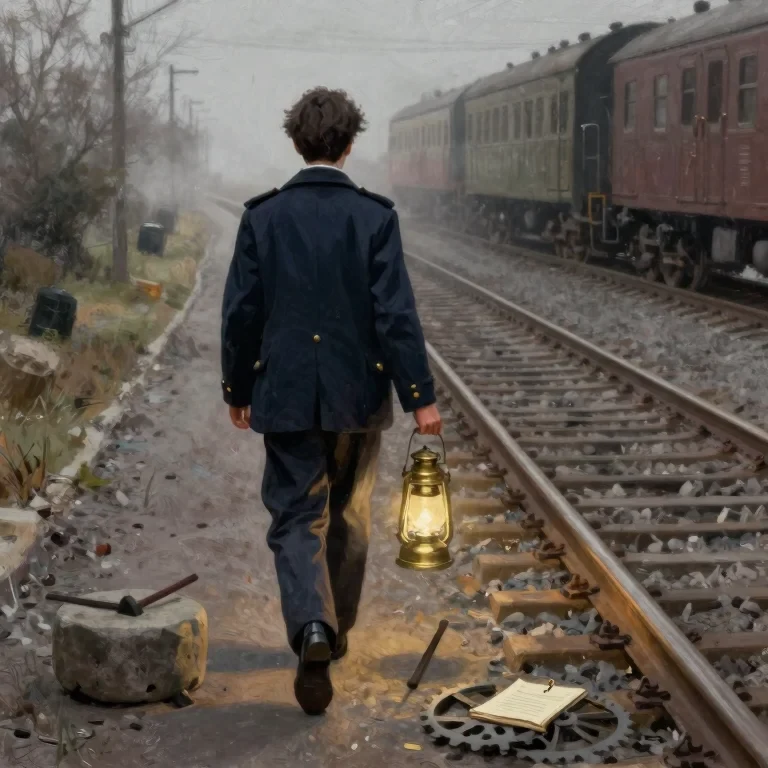
He read out four thousand one hundred and seventeen, and then eighteen, and nineteen, and twenty, and he kept saying them into the cold so that he would not lose the run of them, and the wagons went past his hand in the dark, and somewhere along the train he lost a whole number and did not notice, and the last one he read was four thousand one hundred and forty. Twenty-three numbers, and an engine at one end and a brake van at the other end. Twenty-three wagons and two others is twenty-five vehicles, and twenty-five was the number on the card, and the loop takes twenty-five.
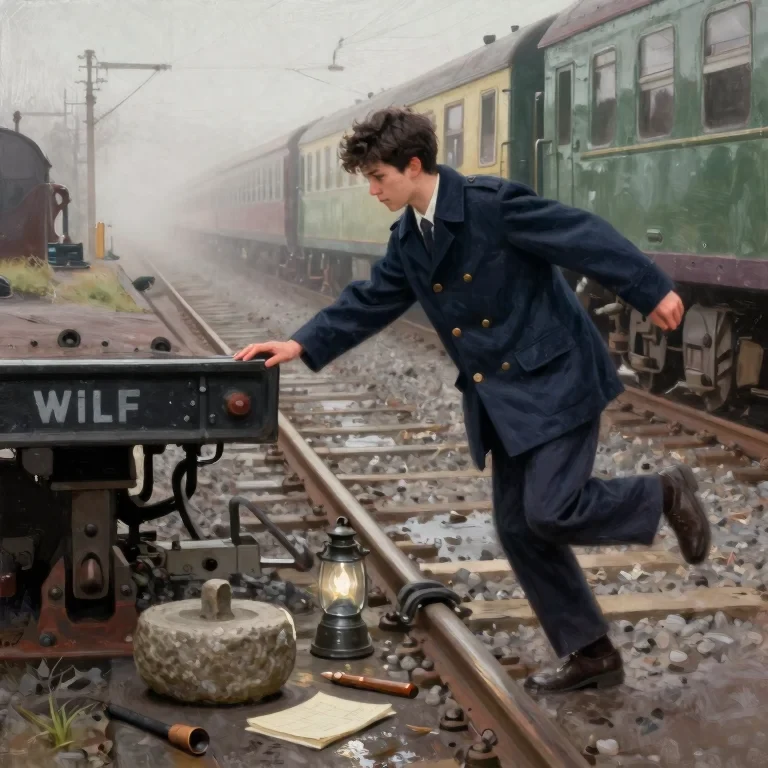
He went back into the box and wrote it in the register, twenty-three vans, and he did not write down what he had not been able to see, and he pulled the points and sat down with the token in his hand.
The passenger came in at twenty-five past six, on time, out of the east, and it came up to the loop home signal and stopped, and Wilf could hear the brake cylinder let go. The loop road was full. The goods was standing in it with its head past the far end of the road.
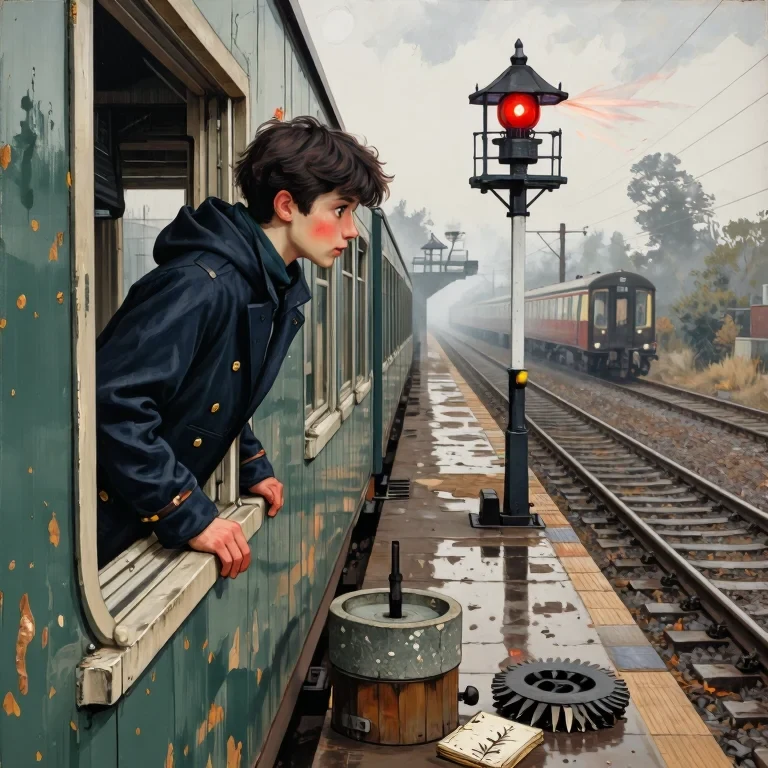
He knew what that meant before he had his boots off. The goods had come in at the west points, so its rear fouled the west points, which is nothing at all, because a train in a loop is always fouling the points it came in by. But if its head is past the east fouling mark then the road is not clear, and no train can come in at the east points to cross it. The passenger stands where it stands, on the single line east, with the whole east section behind it, and everything that comes out of Ruswarp behind the passenger stands behind the passenger.
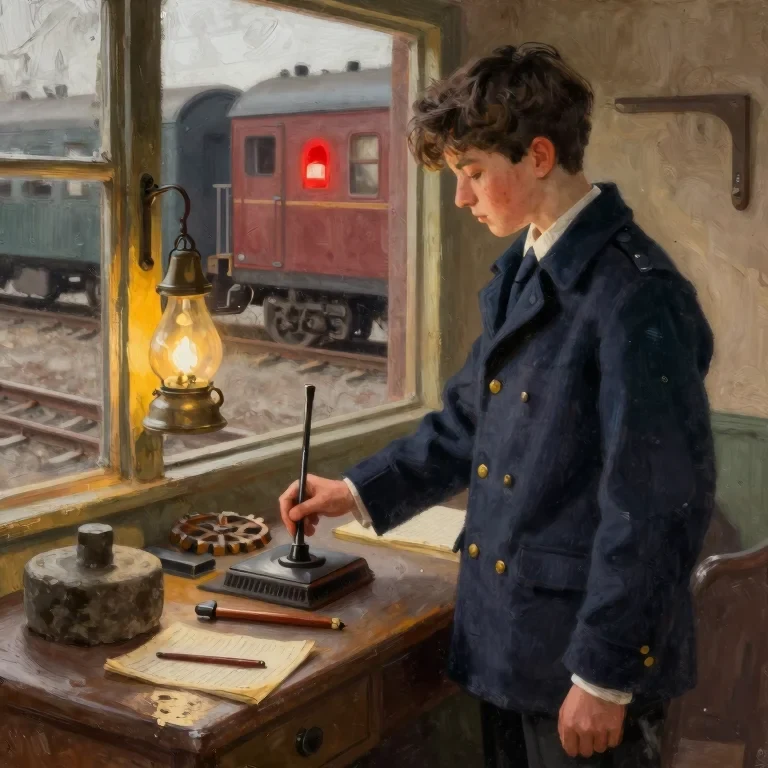
Wilf put his head out of the box and looked at the nose of the goods, and the nose of the goods was in the dark somewhere past the check rail, and there was a lantern burning low down under the far end of it that he could see and could not account for, and he thought about it for a second and then let it go, because there was a train standing at his home signal with the fish in it and the mail.
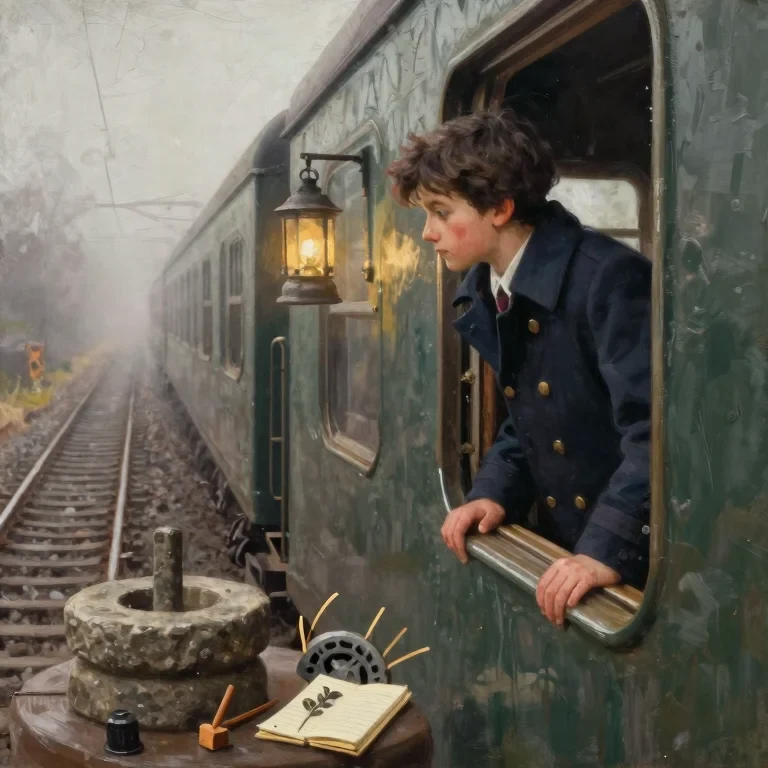
He telephoned Ruswarp on the wire that ran up the side of the box, and Ruswarp read him the passenger's register sheet, the number of the fish vans and the guard's name and the time it left Whitby, and then Wilf asked Ruswarp whether they could take the passenger back again.
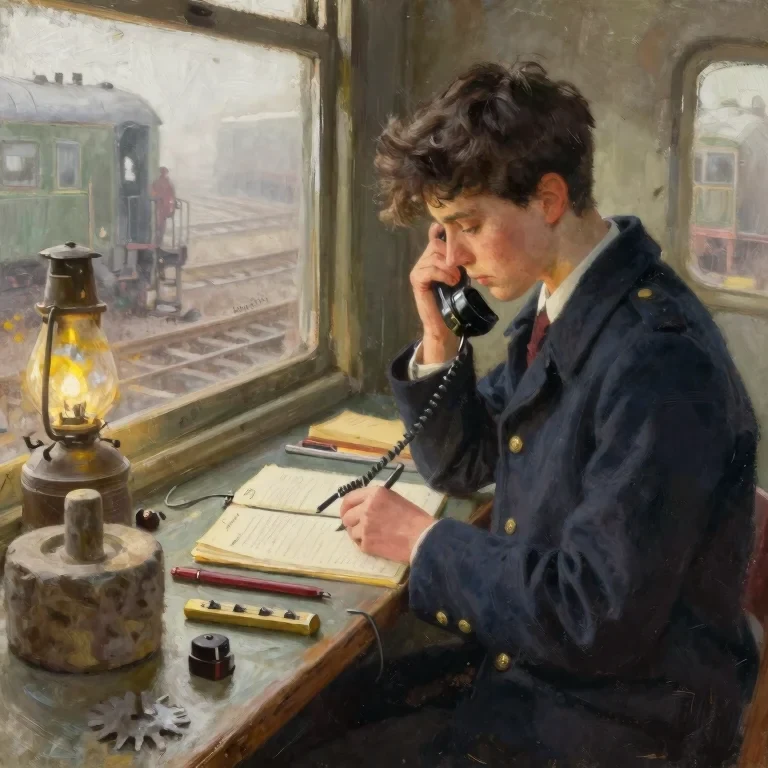
That is the part he would think about afterwards. The only thing that could be done with a train standing on his single line facing the wrong way on the wrong road was to put it back where it came from, two miles and two chains, and to take the tail lamp off and hang it on the last vehicle instead of the first, and to have the guard walk back past the points with the lamp. Ruswarp said they would want a pilot. Ruswarp said twenty minutes.
Wilf wrote the time in the register, 6.27, and under it, train propelled back to Ruswarp, and he read it once over, and it was the first thing he had ever entered in a train register that was not true when he wrote it, because the train had not been propelled yet.
It was propelled. Ruswarp sent a pilot engine out at ten to seven and the passenger came back very slowly, because the road was wet and the guard had the lamp out walking behind, and it stood at Ruswarp for nine minutes while the tail lamp was changed and the pilot engine went away again, and it came back on at 6.51 and stopped at the box home signal for the second time. In those twenty-four minutes the goods went east. The east section was clear the moment the passenger was inside Ruswarp's points, and the goods went off towards Whitby with its tail lamp burning and one vehicle in it more than the loop had ever held.
At ten past seven the passenger came through the loop and went off west with the west token in the driver's pocket, and it was twenty-nine minutes late at Grosmont and it went on to Middlesbrough and arrived at ten o'clock with the mail four hours after the mail had left Whitby. The fish came off at the box, because the van had gone two miles east and then two miles and two chains back west with it inside, and the rest of the way went in a hired cart under a tarpaulin, and the cart cost three and six and the company entered it against the traffic and would not hear of paying for it.
And at Ruswarp a train came out of the west at twenty-five to seven with eleven first class passengers in it and it could not get on, because the passenger from Whitby was standing on the east section with the fish in it, and the whole thing sat there from twenty-five to seven until the passenger came back, and that is the thing that a mistake at a box costs. Not the box. Everything behind the box.
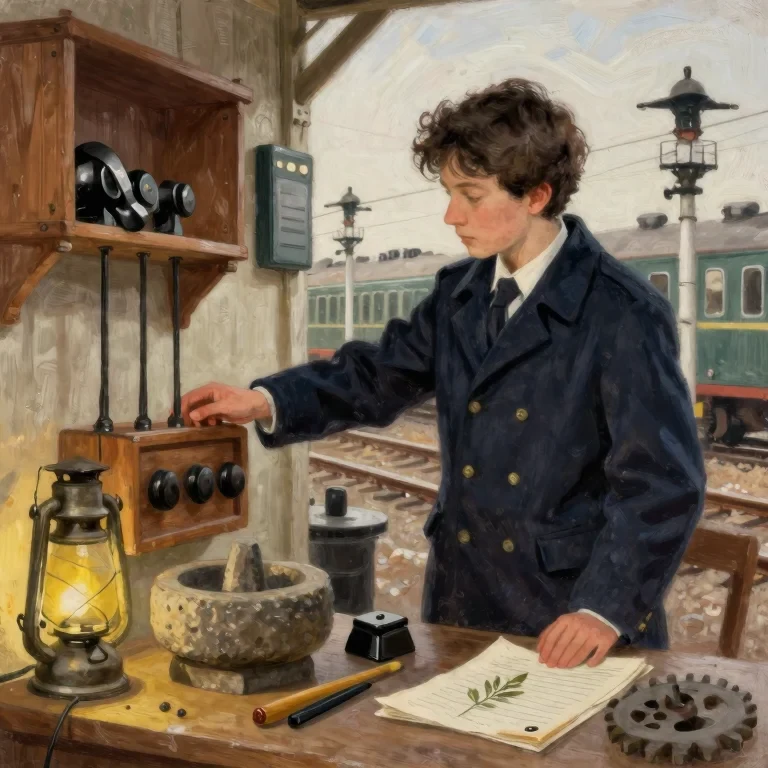
The relief came at eight and asked him how the crossing was, and Wilf told him, and the relief said nothing about it, and neither did Wilf, and then he sat down with Peart's own book on the desk, because Peart's book was the book of the box, and it was a thick book with the entries going back years in a small neat hand. He turned back through February 1881 and he found, in a hand that was not Peart's either: 12.2.81. Fog. Goods put in loop, cleared at 7.40, passenger stood 51 min. And in the same hand, in the same week, two lines in pencil under an entry about the loop: 25 = engine, van, 23. Mind the dray.
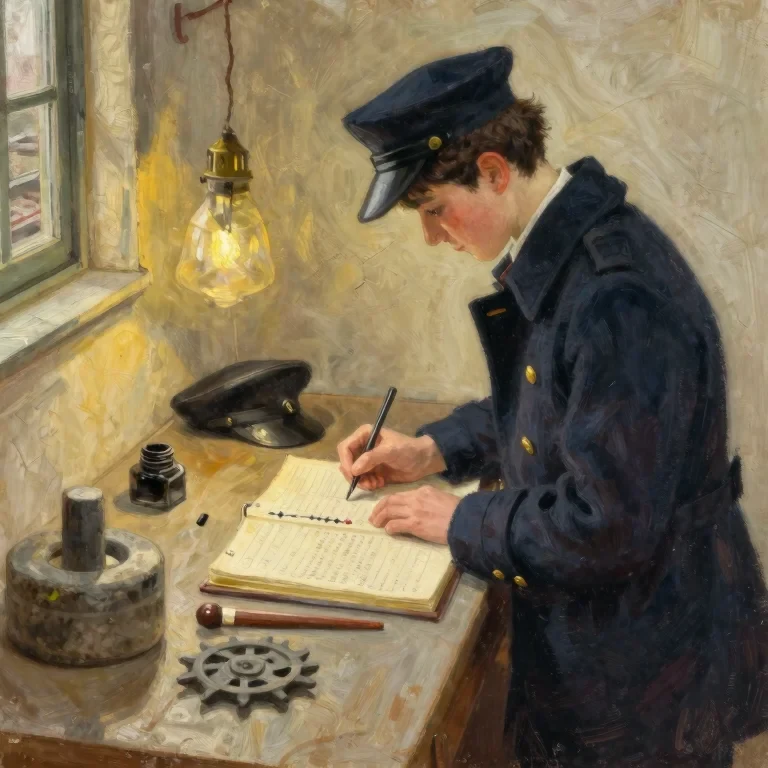
The fog had done it in 1881 as well. The number on the card was the right number. The dray had been in that train in 1881 as well, somewhere in the middle of it, low and dark with no number on the solebar and the shafts standing out to the side, and it was in his train, and he had walked the length of it in the fog with a lamp in his hand and his lips moving and he had not touched it.
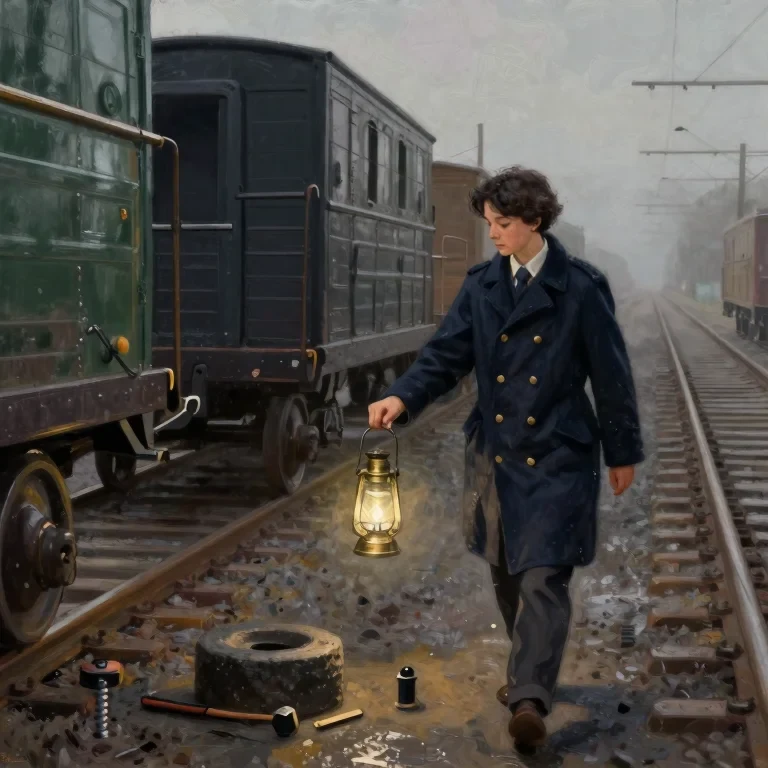
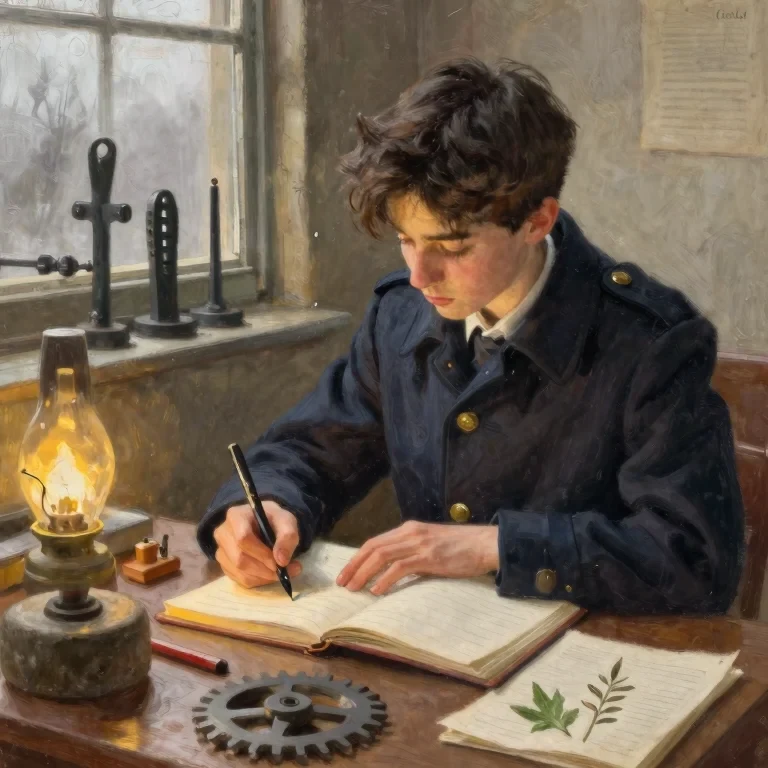
He got his own notebook, the one he had started in September with the standing room of every loop between Middlesbrough and Whitby written out clean, and he turned to the page for Grosmont and wrote under his own figures: 25 = engine, van, 23. Mind the dray. Then he wrote it out again with the twenty-fourth wagon in it, 4,133, the one whose number was under the shafts of a two-wheeled dray, and he left a space for the dray itself, and he did not know what that space was, and the sum would not come right until somebody told him, and nobody was going to tell him, because the man who had written it in pencil had put it there and gone home.