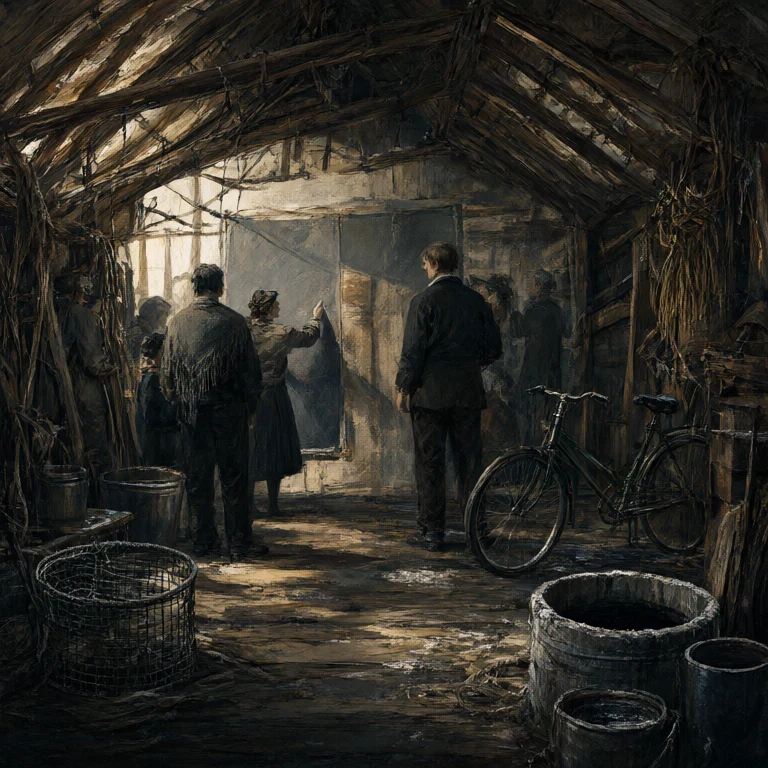
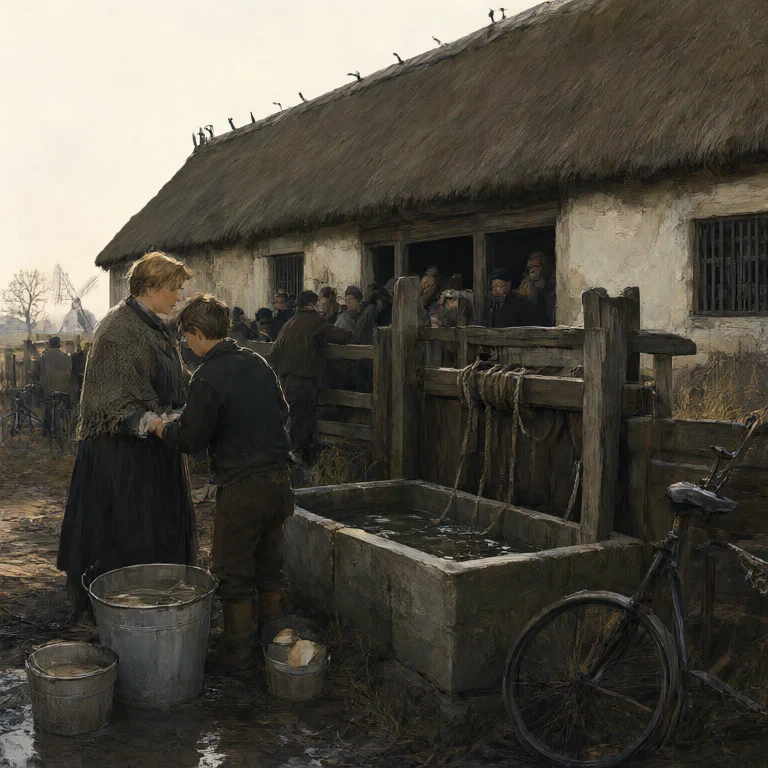
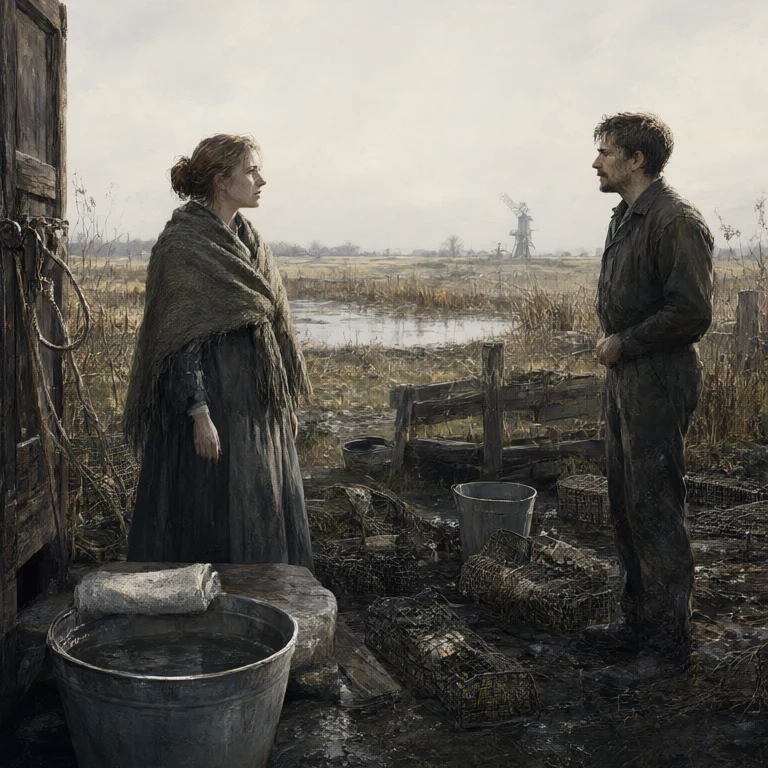
Hester Colm washed her hands in the trough outside the tithe barn before she went in, though they were clean, and she did it the way she had done it every Thursday, which is to say quickly, and without looking at the water. She was thirty-eight. There was a chalk-white line at the wrist where the water had been, and it did not wash off, and she had stopped trying to explain it to people who had not asked. Nell Drury read the entry out of the parish book exactly as it was written, including the spelling, and read it twice, because the first reading is the clerk establishing that she has the right page and the second reading is for the room. The room had sixty people in it, because it was the first Thursday and the stove was lit. “Bond given at the Cold One, this parish, by Hester Colm, of the lower row. Witness two. Purpose: the keeping of other ground, named in the account.”
“Read the account,” said Hester Colm. Mrs Drury turned the page. “The account is on the leaf behind. It is thirty years of it. I have read it four times this morning and I will read it again before the quarter closes, and I will not summarise it, because a summary of that leaf would be a lie and I have not got time to be a liar before eleven o’clock.” “Nell.”
“I have not finished. The offer stands before the Court, and it is the first this parish has had in my time. You may be discharged. You must go to the collar of the Cold One and name the thing owed, out loud, and be right about it. Your own name goes in the entry, at the collar, in your own mouth, and not written out for you in a barn. You have a fortnight, because the entry has to be made before the quarter closes, and because I will not enter a thing at eleven o’clock at night on a day of my own choosing.” “And if I get it wrong?”
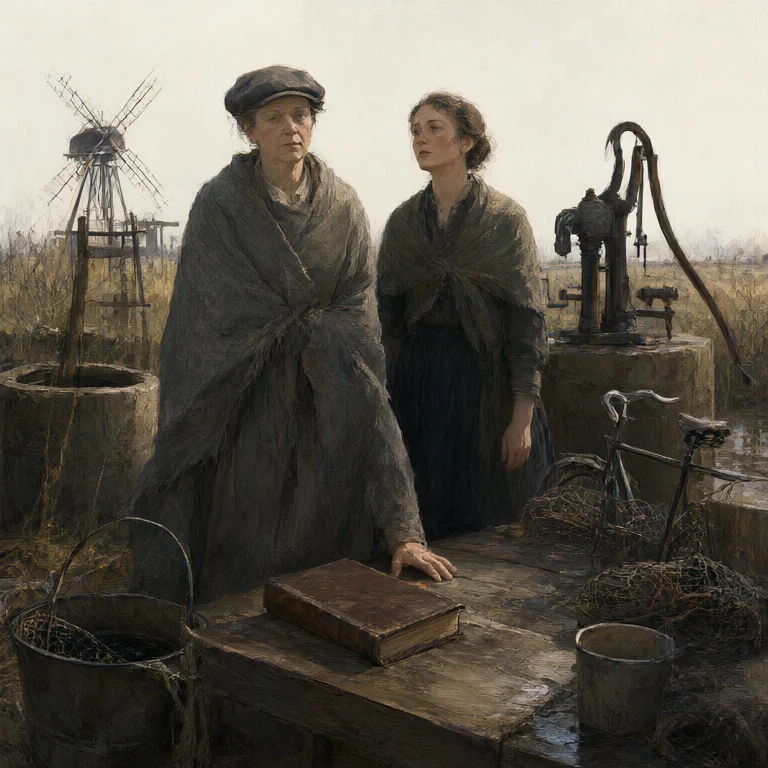
“Then the well takes the fine instead, and the fine is the whole amount twice over, in water, in one night. That is not a scolding, Hester. It is the whole of what you have carried for thirty years, doubled, delivered to nine houses before dawn.” Mrs Drury shut the book, which is the way she writes. “That is all. I have said it out loud and you may have it or leave it.” And Hester Colm said, “I will have it,” before anybody in the barn had finished shifting their feet, and she heard herself say it, and she heard how fast she had said it, and she washed her hands again in the trough outside while the stove door was opened and shut and the coats moved.
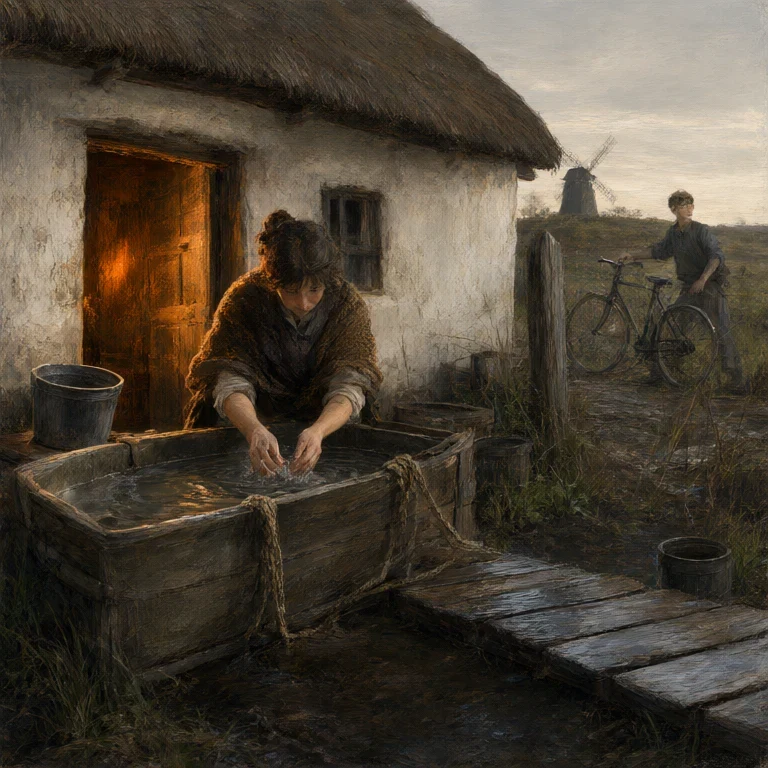
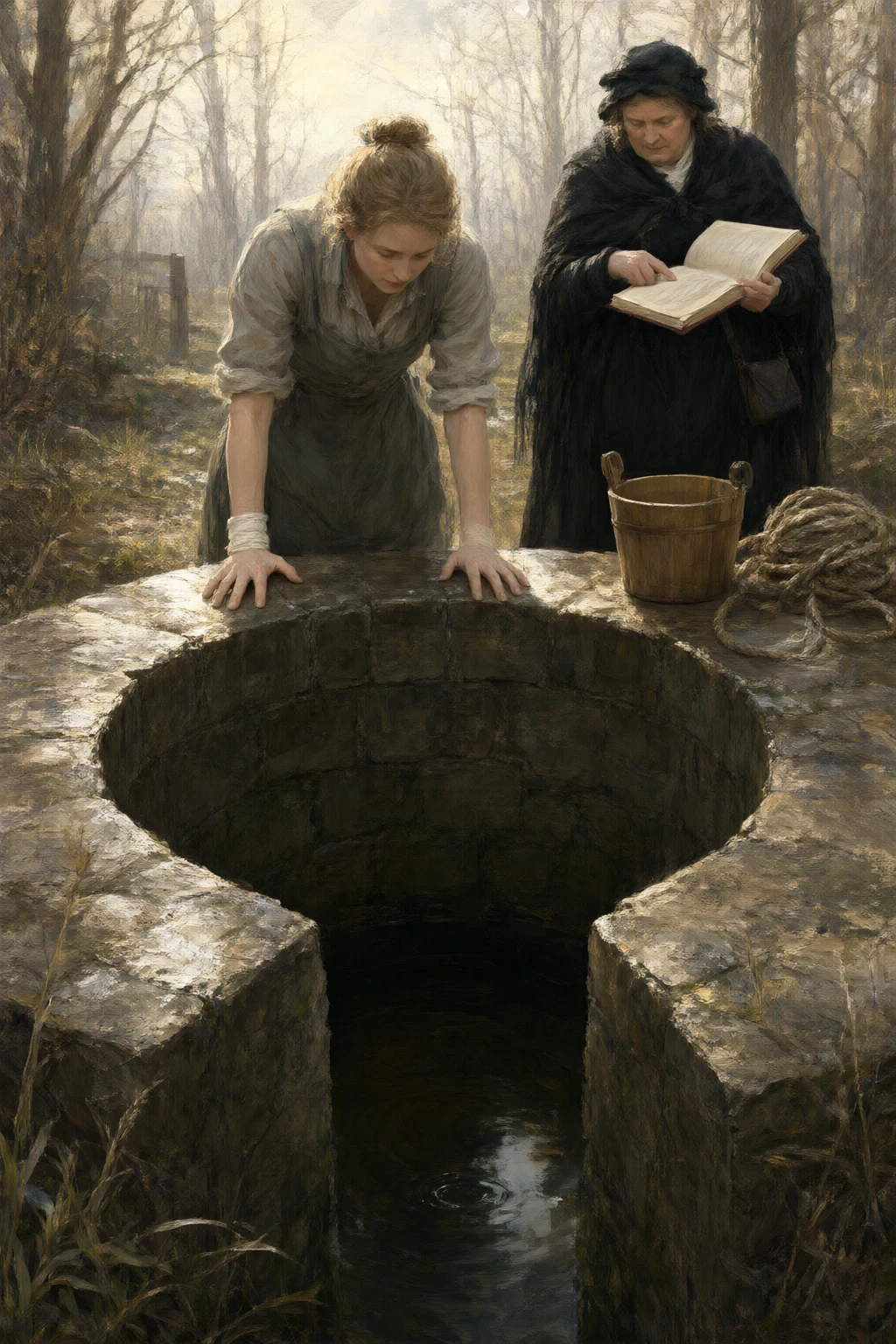
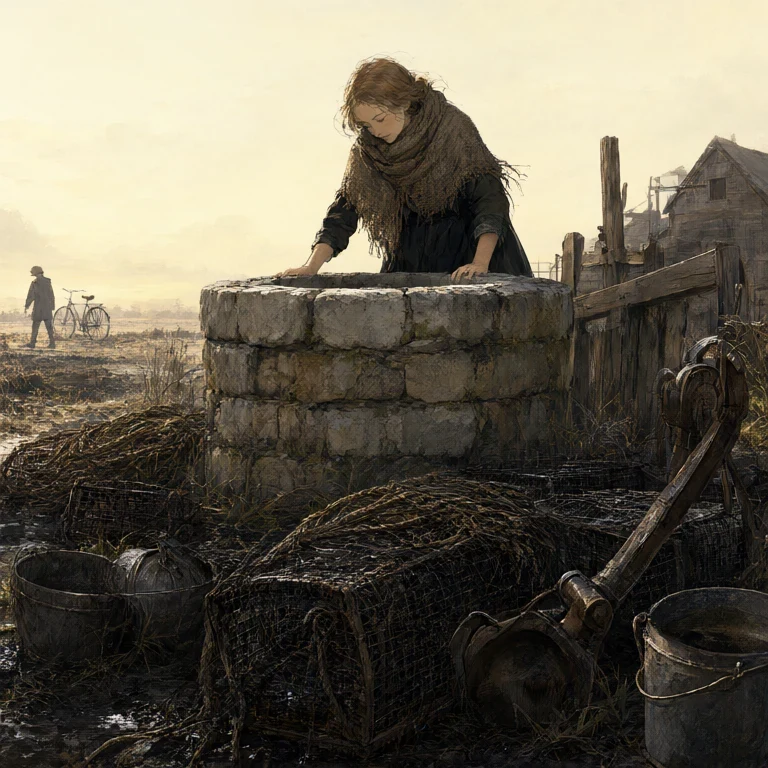
She went out to the Cold One the same afternoon, and the Cold One is nine hundred yards from the barn and on the high side of the drain, and its collar is the coldest stone in the parish to put a hand on, and she put both hands on it and stood there a while without saying anything, because the point of a collar is that it hears you, and she had spent thirty years saying nothing at it. What she owed, and she knew it the way you know the length of your own arm, was not water.
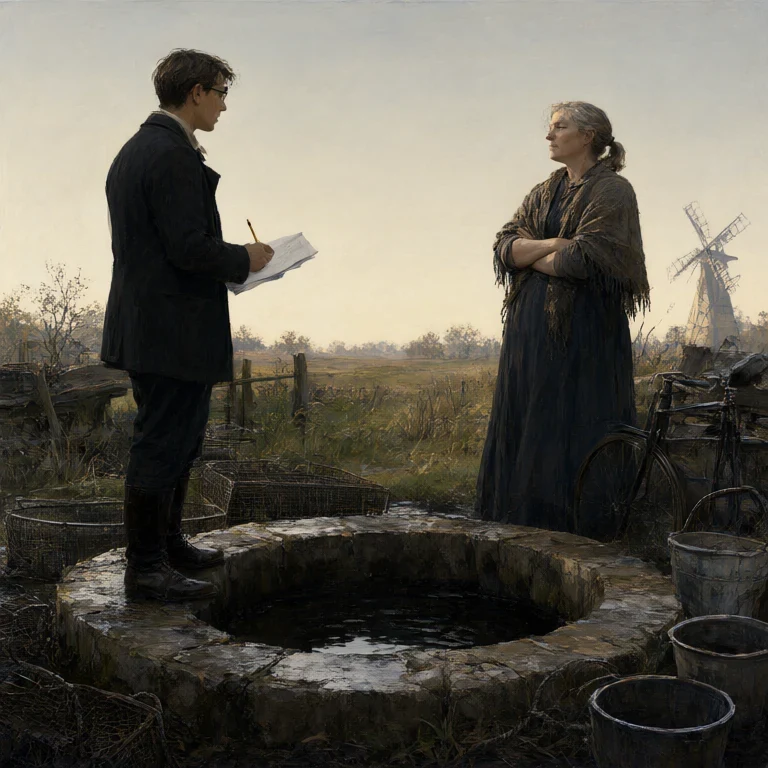
That was the difficulty, and it turned out over the fortnight to be the whole of the difficulty. A man from the sluice put it to her at the end of the trough on the Tuesday evening. If you owe water you can say gallons, he said, strictly, and I can write gallons. If you owe a fortnight you can say a fortnight. What do you owe, Mrs Colm, in a unit. “Nineteen acres and some,” said Hester Colm. He wrote it down, and looked at it, and put his pencil away, and said that he had been at the sluice six years and had never entered a thing in those words and was not going to start.
The leaf behind the page was the account, and it was in her own hand, because a person pays in use and use is not the clerk’s to write down. It ran from the first Thursday of one August to the first Thursday of this November in a column, in the order she had done the work, and the entries were short. The Fell ground, east side, water twice a week in a dry month. The Cow Parsley at the Blind, four acres, cut twice. The west row drain, cleared in October. The eel ground at the lower end, kept drained, and the keeping of it has to be done every week of the year or the eels go. Four hundred and eleven entries, and the clerk had checked them all against the leaf behind with a rule, because the clerk checks everything, and the two of them agreed on every line, which nobody in the barn had expected. “You have kept the account perfectly,” she said. “It is the only thing I have ever been asked to do,” said Hester Colm. “Then you will have no difficulty naming it, and I do not understand why the room is frightened.”
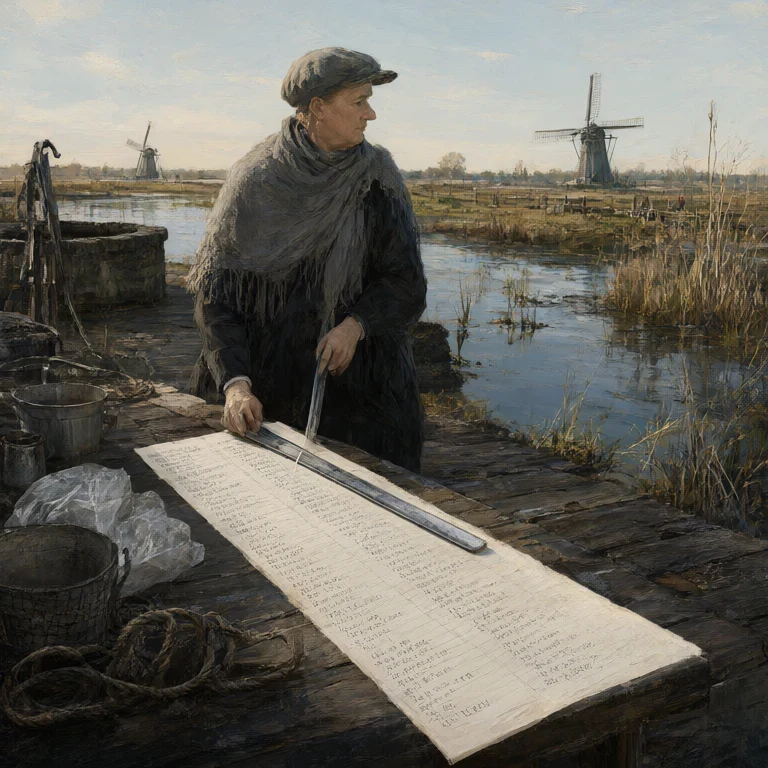
On the Tuesday of the second week Nell Drury came out to the lower row at eight in the morning with the leaf behind the page under her arm and a rule in her hand, because the clerk checks everything twice, and she got to the two hundred and sixth entry and stopped. “This one,” she said. “The eleventh of March, of the year before the drainage was cut. It is in your hand. I have compared it with nine others on the same page. And I cannot tell you whether you did it.” Hester Colm looked at it for a while. “It is the Bent ground,” she said. “Two hours in the afternoon, water off the Bent, the ditch side of it, because the ditch side floods in a March that is not cold.” “Can you remember doing it?” “No.”
“Then you have a week to remember it, and I would begin now, because if you stand at that collar and name four hundred and eleven things and are wrong about the four hundred and eleventh, the well does not take the one out of the account. The well takes the whole of it. Twice over. In water. In one night.” Mrs Drury shut the book, which is the way she writes. “I have read that entry back four times and the clerk before me read it back twice, and neither of us can improve it, and neither of us can say that you did it. You are the only person in this parish who could.” “Do you think I did not?” “I think you have kept four hundred and eleven entries in a head that has also had to hold nine winters of drain,” said the clerk, “and I have no opinion whatever, and I will not have one before eleven o’clock.”
And Hester Colm stood in her own yard for most of an hour with a leaf of paper in her hand, working backwards through her own life in the only units she had ever used. The eleventh of March, nineteen years back, was a Thursday, and she had been on the Bent ground alone with a barrow and a pail and the water coming up, and she had walked home four miles in wet boots and said nothing about it to anybody, including the man she was living with at the time, who has been dead eleven years. That is the shape of a use. Nobody sees it, and the person doing it sets it down nowhere except the place where the account is kept, and that is the one thing in this business nobody else can check. “I did it,” she said, at the gate, at noon, to the clerk. “I remember the boots. Put it back the way it was.”
The room was not frightened, and the room was not what happened next. What happened next was that the parish found out, and a parish of four hundred people on a fen with nine wells and one road finds out in a day. On the Wednesday morning a woman at the Long asked her to take a pail up to a house where there was a fever, and then said, before Hester Colm had answered, that she would see to it herself, and that was the first of about forty of them. On the Thursday a man asked her to look at a boundary in the water between his ground and his brother’s, and then said he would wait until the quarter closed and ask her properly, when she was a person and not a post. On the Friday, two households at the Cold One asked whether she would keep the Cow Parsley at the Blind for the winter, both of them in the same hour, neither of them knowing about the other.
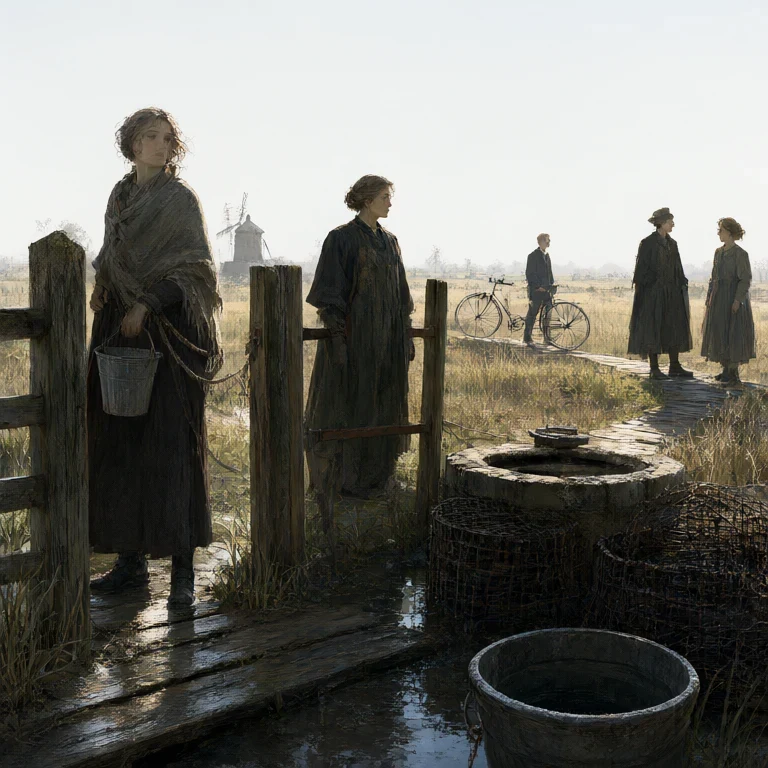
Nobody was cruel. That was the part she could not have borne if it had been cruelty. They had simply discovered that they had been using her, and that there was a piece of paper in the barn that said when the using was to stop, and that the piece of paper was dated the third week of November. “They will find somebody,” she said to nobody, on the Friday evening, at the trough. “They will find a boy with a rail.”
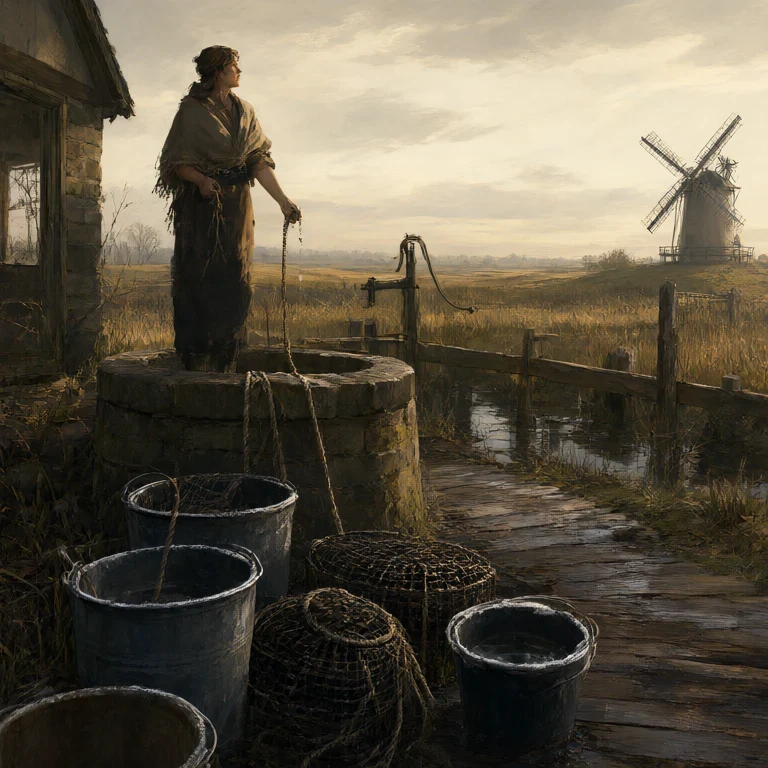
The second week, the parish came to her. That is the shape of a thing nobody in Coldwick had any word for. In a country where the only currency is water, a person who has been paying in use for thirty years and is about to stop is a person the fen cannot do anything about at all, because the fen has exactly one instrument, and the instrument is a bond, and a bond is spoken at a wellhead and binds the speaker’s own draw, and there is no form of it that runs from a well to a person.
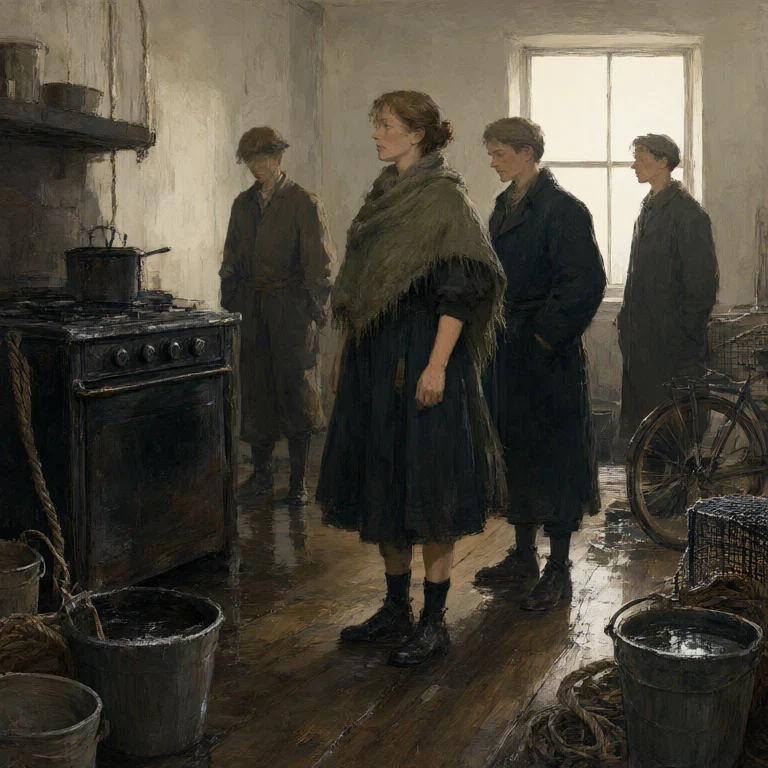
A man from the west row sat in her kitchen for two hours on the Sunday with a boundary dispute he had carried since the spring, and he had brought it to the Well Court twice and been told twice that the Court does not decide water. A woman from the school end came about a girl who would not go into the water at night and had not since her mother died. Two brothers came about a boundary, and on the Tuesday morning four people were on her step before seven, two of them having walked the four miles from the Long in the dark. They all stood in her kitchen and they all said the same first three words, and the three words were: is it true that you are to be let go. “It is not a letting go,” said Hester Colm. “I am going to be discharged.” “It is the same thing with a longer word.” “It is not, and I will show you the difference in about a week, and then you can decide what it is.” She washed her hands, though they were clean. “Now sit down. Tell me the water.”
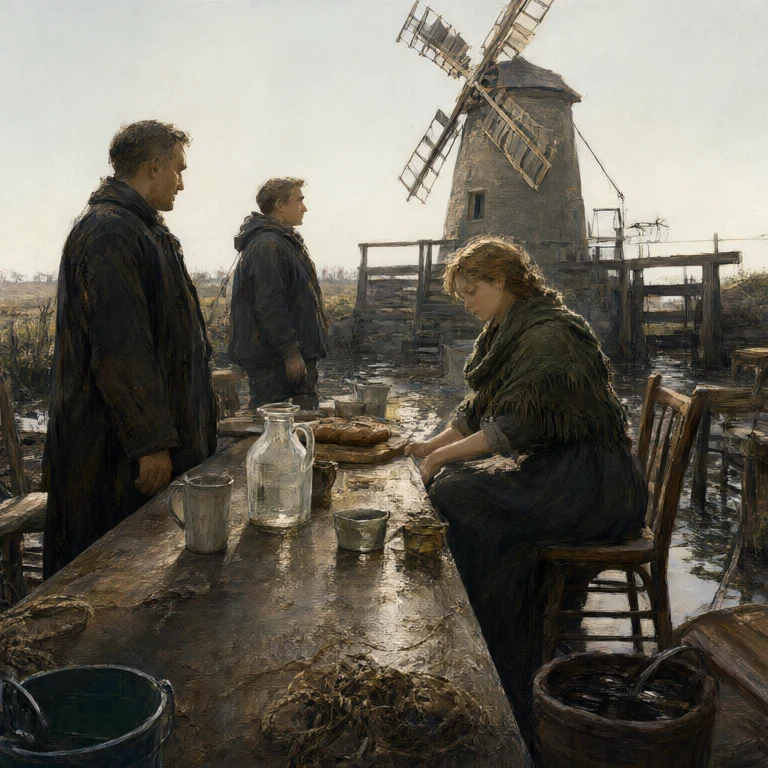
Teb Furroway came on the Wednesday with a canvas roll under his arm. He did not sit down for the first ten minutes, and when he did he put his thumb into the joint of the chair leg and turned it. “The Cold One,” he said. “I am going to say a thing and I am going to say it once. I have been in the ground thirty-one years and nobody has ever asked me for this, and I would like it understood that it is not a small thing to be asked for.” “All right.”
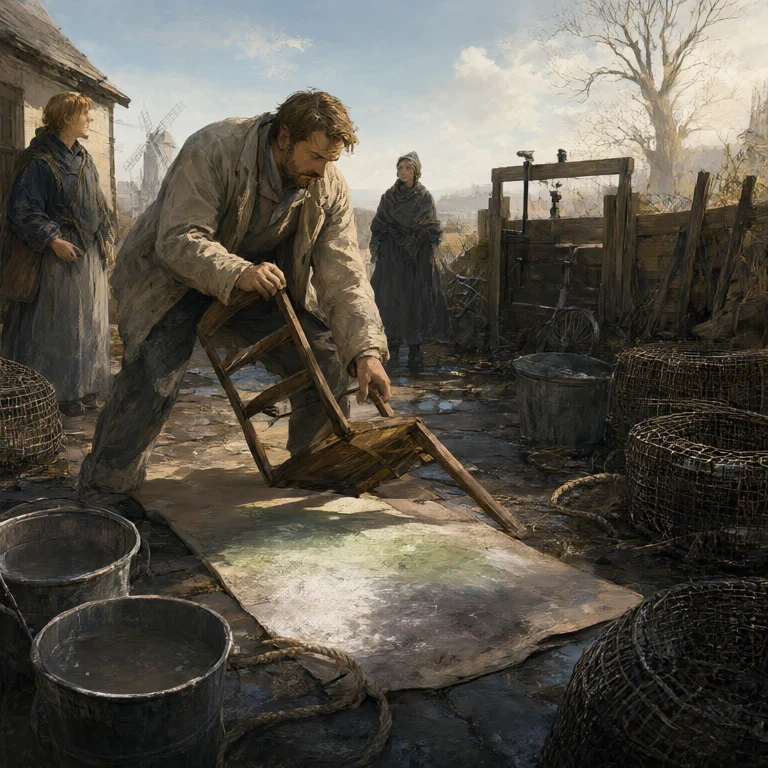
“If you are discharged, nobody is holding the Cold One. A well cannot be shut. That is the whole of it. To shut a well you must find a person to hold it in their own name for good, and the person that holds it draws from it and the well holds them, and that is the arrangement for ever. I have had two men ask me to hold the Blind and I said no to both. I am asking you because you are the only person in this parish a well has never asked anything of, and because you would be the only one who has said no out loud this week.” “You have never asked me for anything.” “No,” said Teb Furroway, “and that is the whole of the reason I am here. I would have thought of a better one by now if you had asked me a question, and you have not, so it has been eleven minutes.” “No,” said Hester Colm.
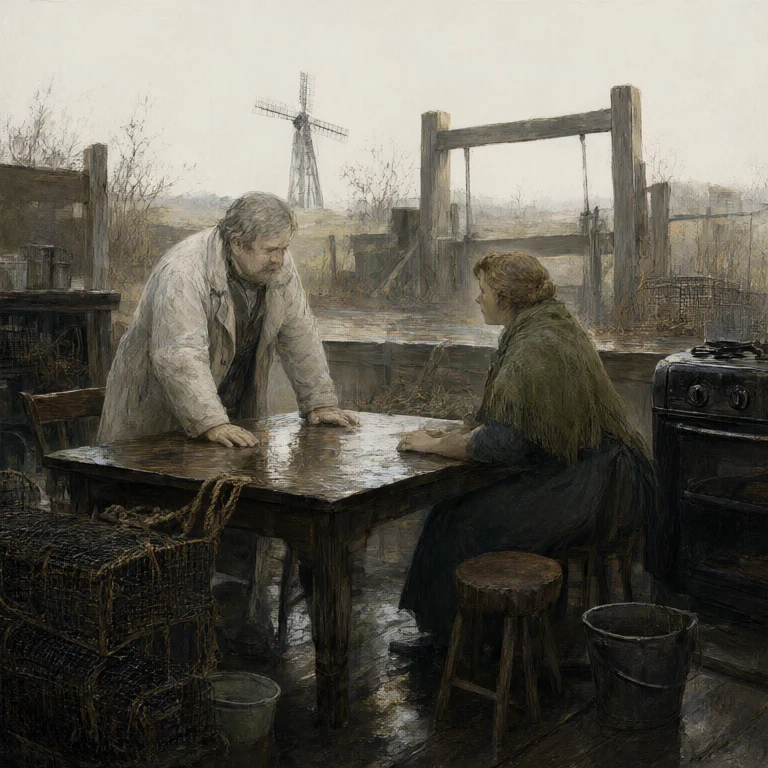
“That is a no I can put in a book.” “It is a no I said in the barn, and a no I said in your kitchen, and a no I am saying here, and you may put the day on it.” She washed her hands, though they were clean. “You have lined that well twice. If it ever wants holding again you will have to find somebody who has not said no this week, and there are three hundred of them, and one of them will be under twenty-five.” “Yes,” said the well-wright. “I have thought of that.”
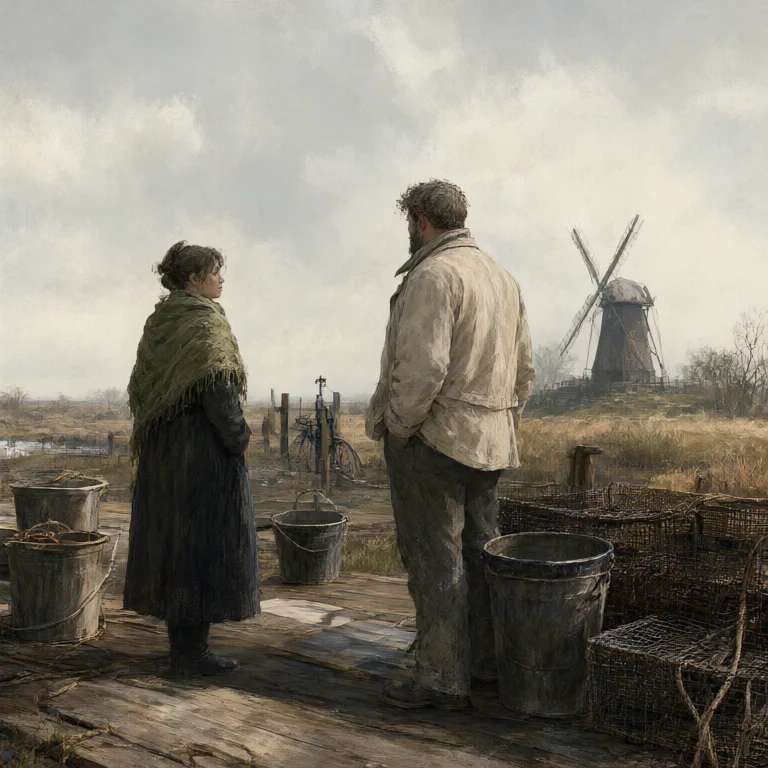
On the Thursday of the second week, the boundary man’s brother was in her yard when she came out, and he had his hands on the Cold One’s collar. It was not a long thing and it was not a dramatic one and it would have taken four seconds. A bond goes where the bonded person sends it, freely, to somebody who has both hands on the collar, and a widow of the west row had wanted for eleven years to be shut of an account her husband had carried, and she had heard on the Sunday that the parish was looking for somebody to hold a thing that was not a well. Hester Colm was in the washhouse door with her sleeves up to the elbow and both hands in the basin.
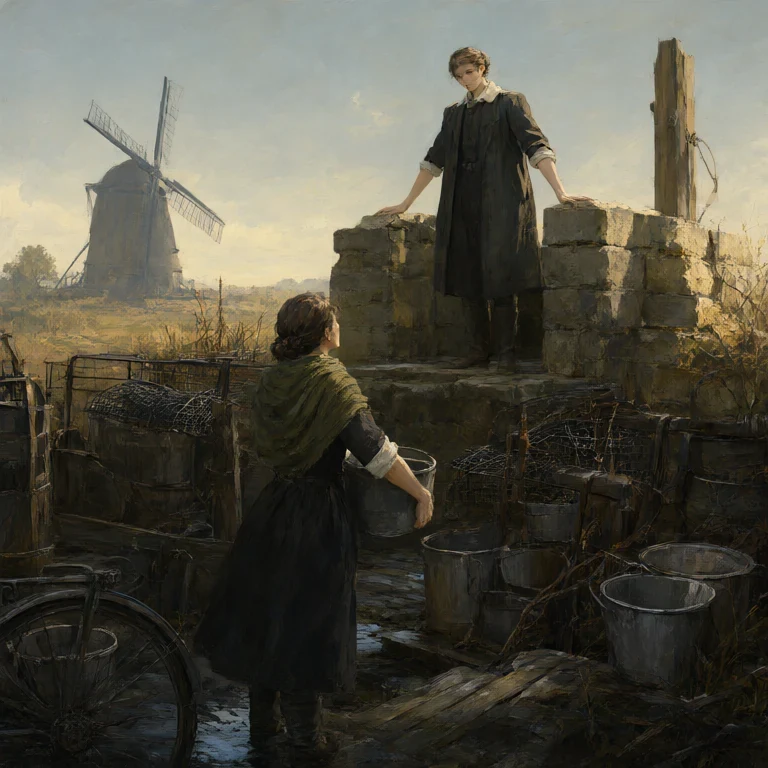
“No,” she said, before the widow had got the sentence out. “I said no in the barn on the first Thursday and Nell wrote it down, and I am saying it now, and I said it on the Sunday to your own house, and you heard me.” “You do not know what you are refusing.” “I know exactly what I am refusing,” said Hester Colm. “It cannot go to me. I have not got a well. I have got a pair of hands and a leaf of paper, and your husband’s account goes on the Cold One and stays on the Cold One, and it will be somebody under twenty-five that gets it, and that will be the wrong somebody.” She dried her hands. “And you should know why you cannot hand it to me even if I said yes, and Nell will tell you, because Nell tells it properly and I tell it badly.”
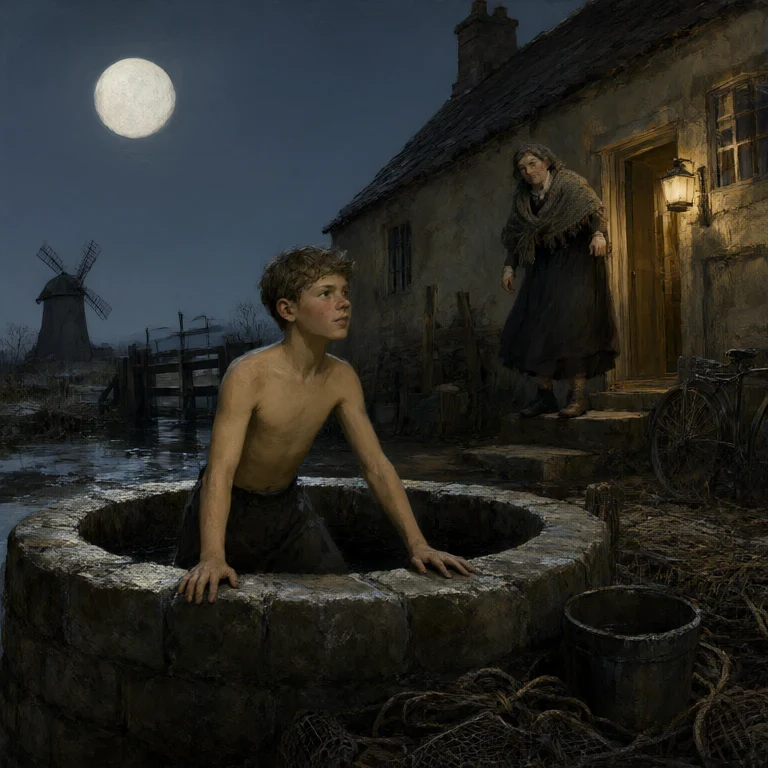
Micken Vaunt came on the Monday night, which was a night with a moon in it and no wind, and he put both hands on the Cold One’s collar the way he puts both hands on everything, and he said a name, and the name was hers, and he said he would hand it on. She was on the step with the door open behind her and the lamp behind her, and she did not come down to the collar, and she said, “No. I said it out loud in the barn and I have said it every day this fortnight and I will say it tomorrow, and you may write down the day I said it if you want the date.” “Yes,” said Micken Vaunt.
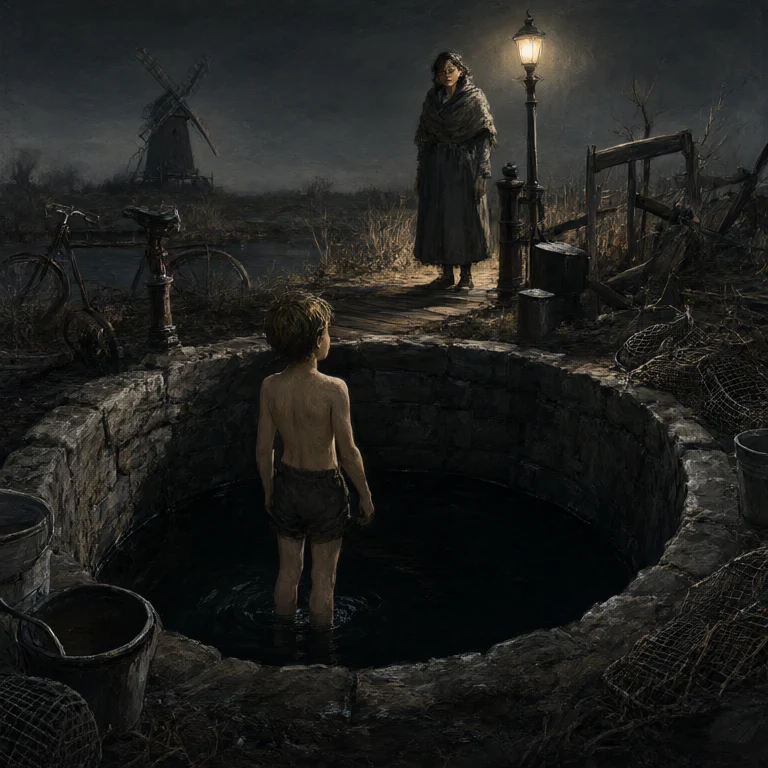
That was the whole of it. He said yes the way he said yes to everything, immediately and without any objection to it, and then he gave her the eleven names he went by, in order, and she told him eleven was too many to be any use to a person, and he said that was the number he had, and he went into the water of the third well, and she watched him go. On the last morning she went out to the Cold One with Nell Drury, because the entry had to be made and the clerk was the clerk, and because a person saying a thing out loud at a collar with no witness is a person who will be asked afterwards what she said. She washed her hands first. Nell Drury watched her do it and said, “They are clean.” “They are clean,” said Hester Colm. “You do not have to.” “I know I do not have to,” she said, and pushed her sleeves down, and went out.
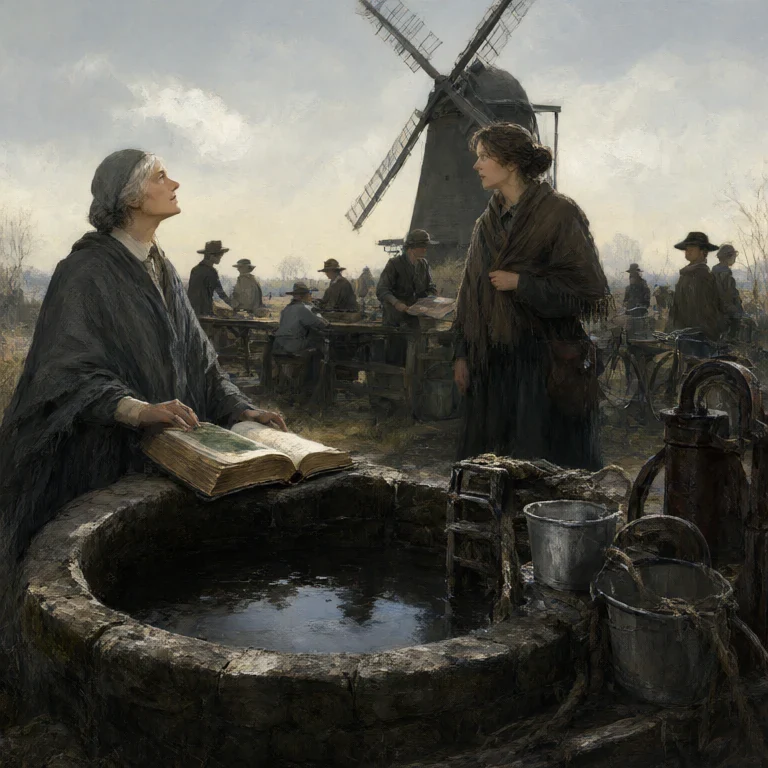
The collar of the Cold One is the coldest stone in the parish, and at ten in the morning in the last week of November there was a light on it that came up out of the fen rather than down out of the sky, and the horseshoe in the dressed blocks where four hundred years of hands had gone down was white and dry and beginning to take a frost at the outside of it. She put her two hands on it. “Nell,” she said. “Read it as far as you have to, and then stop, because after this it is mine.” Mrs Drury opened the book, holding it in one hand against her hip, and read the entry back exactly as written, including the spelling, and stopped. And Hester Colm named the thing owed.
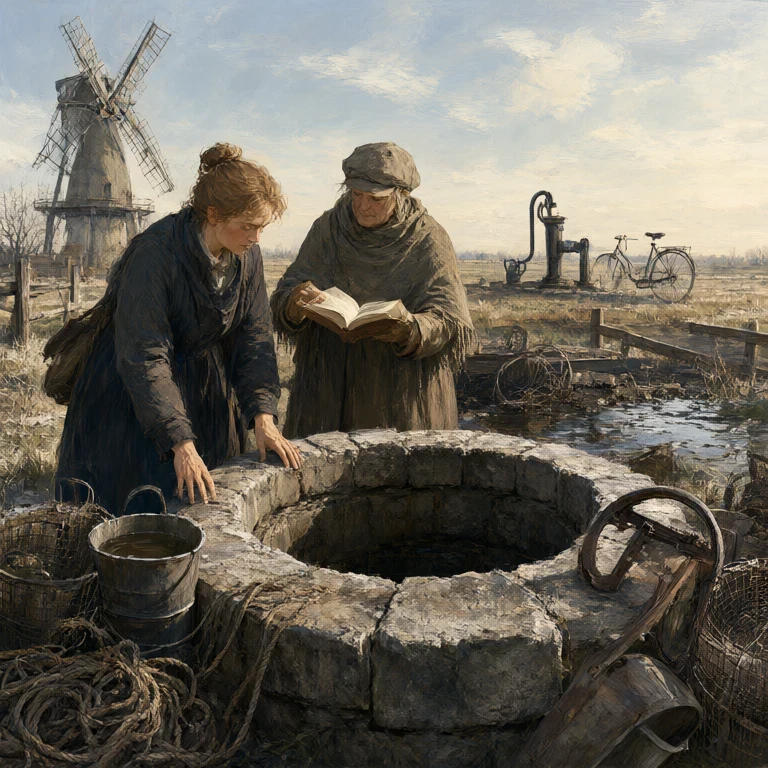
She did not do it in one sentence and she was not going to be hurried. She named the ground. She said the Fell ground, east side, and the water on it twice a week in a dry month, and she named the year and the month, and the next one, and the next one, and after the fortieth entry Mrs Drury stopped keeping the place and simply stood and listened, and after the two hundredth she had to sit down on the coping with the book shut on her knees, which is not a thing clerks do. She went the whole way to four hundred and eleven, and the last one was the Bent ground, the only ground on this side that will take it, with the water off the Bent, in the third week of October. And then she said her own name, out loud, at the collar, into the hole, because that is where the words go, and the hole is sixty feet down and there is nothing at the bottom of it but cold.
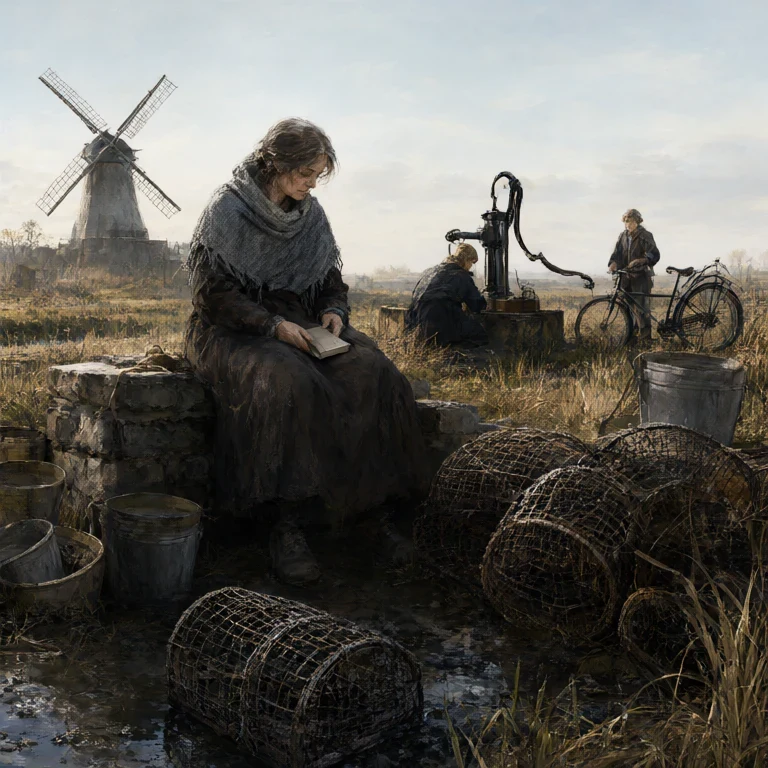
Nobody who was in the barn that day could afterwards have told you what it looked like, because nobody was watching the well. They were watching the water they had brought in with them, in the trough by the door, in the pails against the wall, in the water that comes in over the flags and finds the low place by the third bench and stands four inches deep in it all winter. In that trough, that Thursday morning, in front of a woman from the Long and a boy and about nine other people, the flat dull ring of a thing owed by somebody came up out of the water and lay on the surface of it, and stayed there, and did not go away when the trough was stirred, and went back when it settled. Nobody in Coldwick needed to be told what that was. Children in Coldwick read it without being taught.
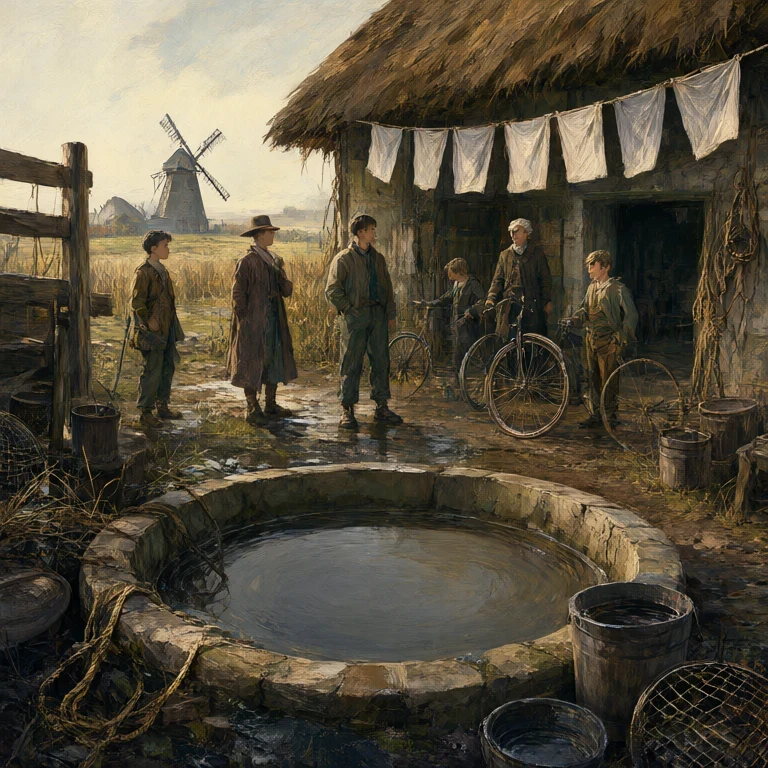
Bess Brack found it out on the Friday and did not need to be told what she was looking at. She came up the lower row at four with a rail and put it down in the yard and tilted her head at the standing water by the step, which was an inch deep and had been there since the rain stopped, and she looked at it longer than is polite. “That is not the fever water,” she said. “It is rain.” “It is rain off your own roof and it is not carrying anything for anybody else.” She straightened up. “That one is a person. That is thirty years, that is. It is the coldest thing on your step and I have not seen one that size since the eel ground.” “You will not say that in front of my mother.” “Mrs Colm, there is no mother.”
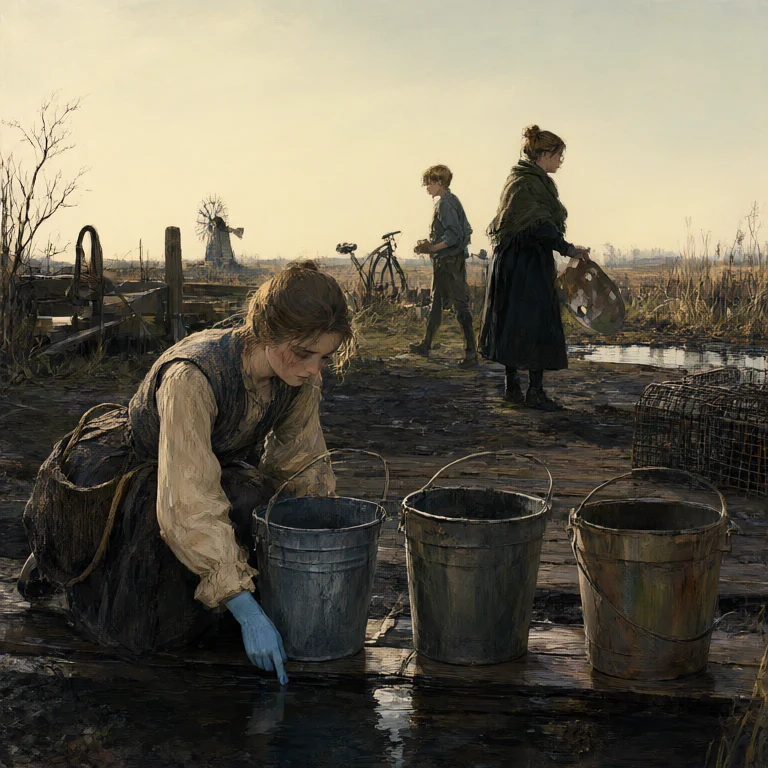
“There is no mother,” she agreed. “That is not a reason. I have said a debt out loud in front of a stranger in a coat twice in my life and both times it cost me a week of carrying for somebody I did not like. I am telling you now, and nobody is standing there, and if somebody comes round the side of the house I shall say it is about the fever water, and that will be a lie, and I do not know how to do better than that at sixteen.” Then she said, more quietly, that the trough at the Long had it too, and the standing water in the school yard had it, and the Cold One itself had it, which nobody had believed until she had put her hand in the Cold One and had a man stand and watch her do it. The Cold One is nine hundred yards from that step and has not moved an inch in thirty years.
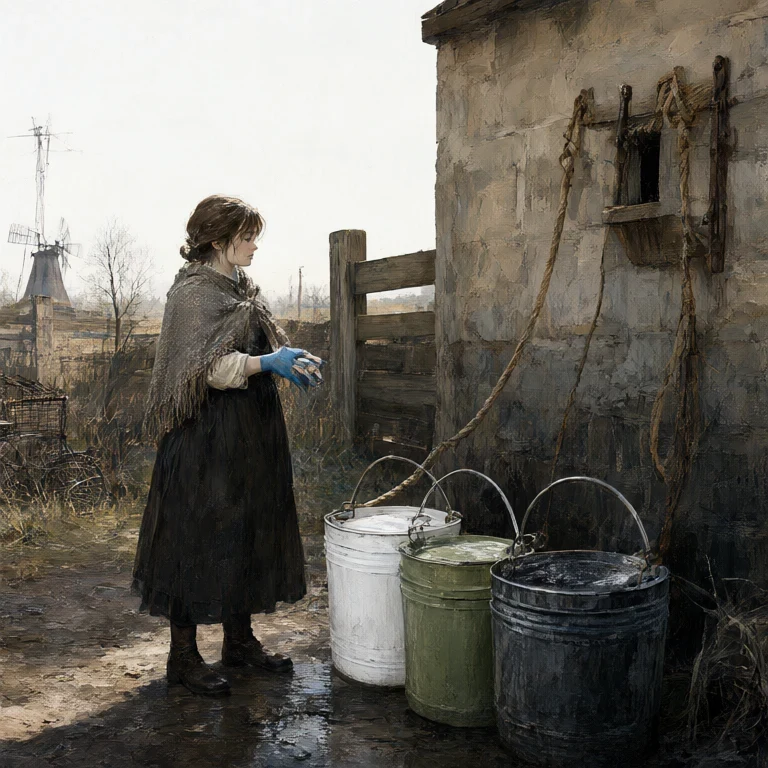
“Do not tell the parish yet,” said Hester Colm. “I have told you,” said Bess Brack. “You are the parish, and I have been walking up this row four times a day since I was thirteen, and if it is going to be in every trough in Coldwick I would rather you had it from me than off a bucket.” It took the parish most of a winter to understand what had happened, and by the time it had, Hester Colm had stopped being surprised by it and had started answering questions from the step, in a cold voice, with her sleeves pushed down, about the following matters.
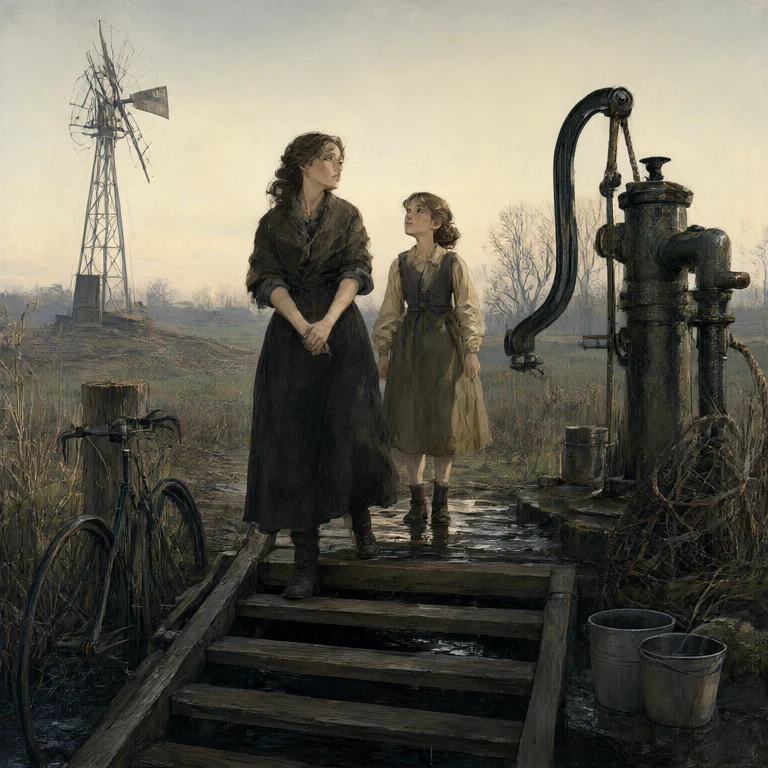
That a discharged person cannot be given a bond, because a bond is spoken at a wellhead by the person who owes, and a person who owes nothing cannot owe, and so the fen had no way of putting a claim on her and no way of taking one off her, and that in four hundred years of Thursdays no such person had ever stood in the barn. That the fen owed her, because the water she had drawn and applied to other people’s ground for thirty years was the fen’s, and now there was a person at the end of it with the account in her own hand. That this debt could not be bonded, could not be sealed, could not be entered, and could not be sold, and that it was therefore the only obligation in Coldwick-under-Fen that had to be paid honestly or not at all, because there was no machinery to do it for them. And that she was not going to be asked what to do about it, because she had been asked what to do about it every Thursday for thirty years and had always said that it was not mine to say.
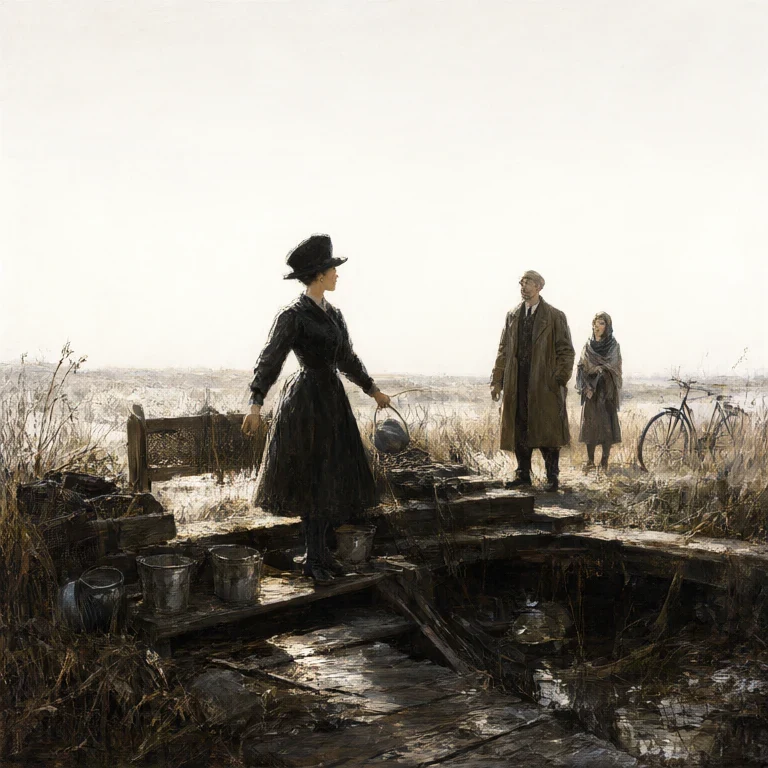
They began on a Monday in December, and it was not a bond and it was not witnessed and it was not entered, because there is no column in the parish book for work done for a person. The first thing was the duckboard at the Long, which had been loose since the August, and which four men took out and re-laid on the first Monday because Hester Colm said it would take two and they took four. The second was the west row drain, and the third was the Cow Parsley at the Blind, and by the middle of January there were eleven households keeping a day of the account between them, on named days, in a list that hung in the tithe barn on a nail and was not a document and had no heading.
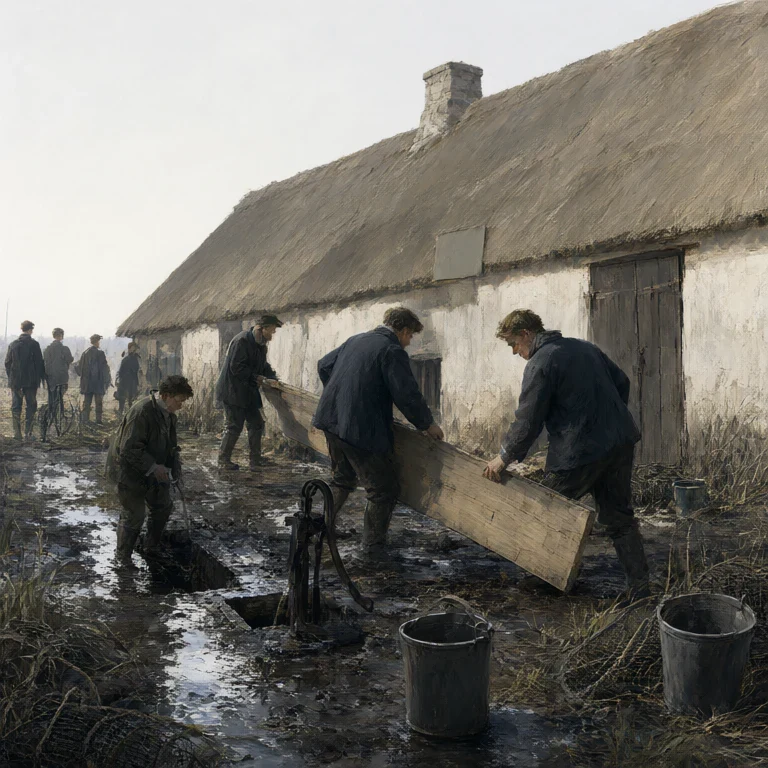
The argument about it lasted until the second Thursday, and then it stopped, and nobody can say exactly what stopped it, and the best version is that a man at the Long said in the barn that Hester Colm had never once in thirty years told anybody in this parish that she was owed anything, and that if she had, they would have got on with it years ago. Hester Colm, who was at the back and not sitting down, said that that was not mine to say, and then said it. The slate on the nail in the tithe barn did not have a heading for a month, and then in February a woman from the school end came in with a bit of chalk and wrote one on it, and the heading is the only thing in Coldwick-under-Fen that has ever been a joke in writing, and it is still up there. ASK HER.