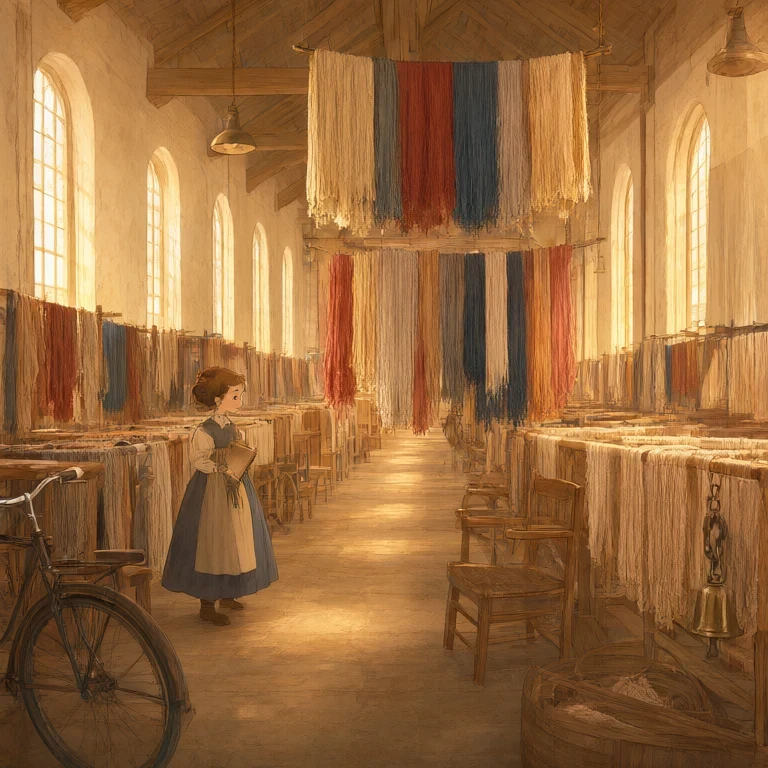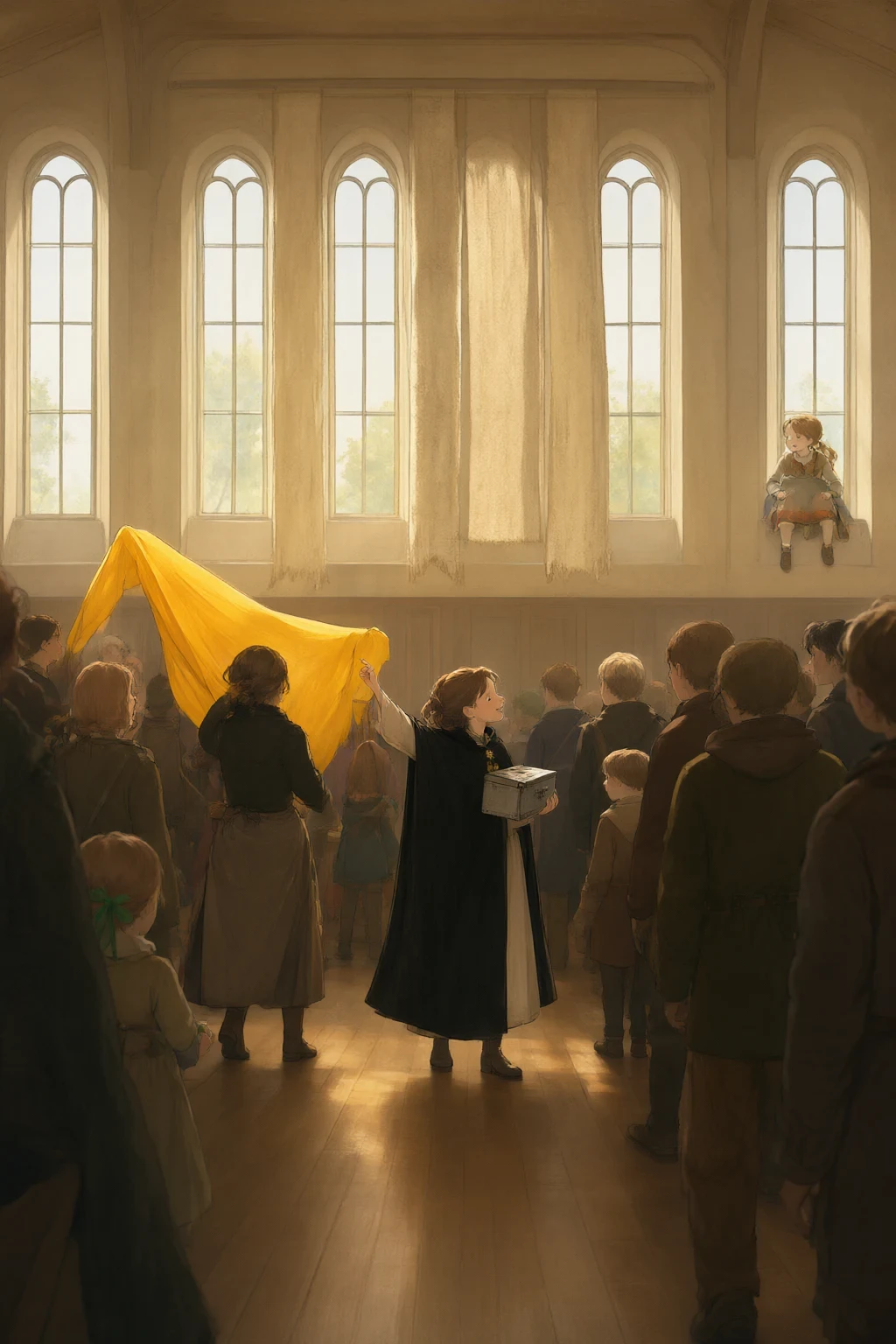
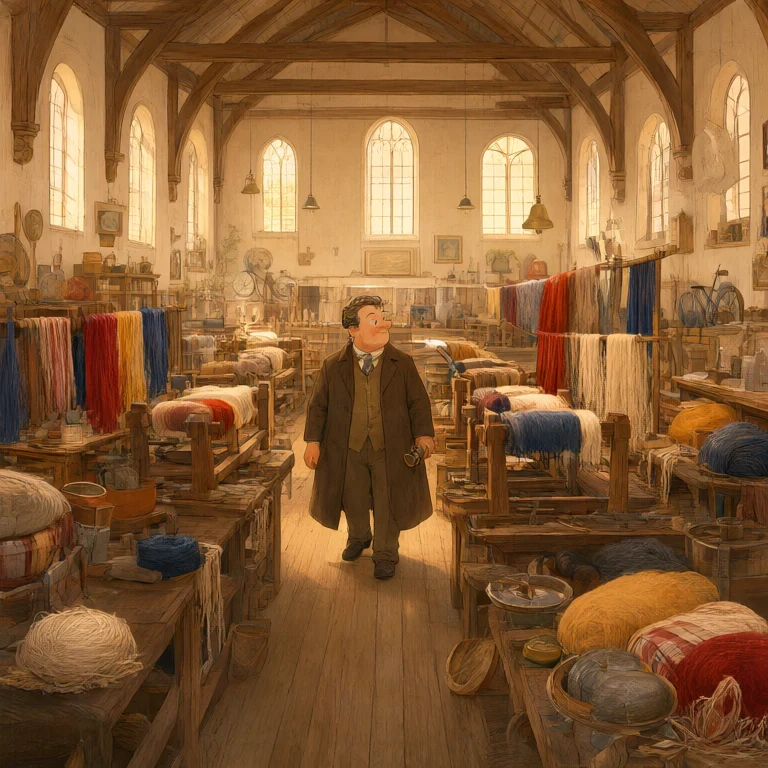
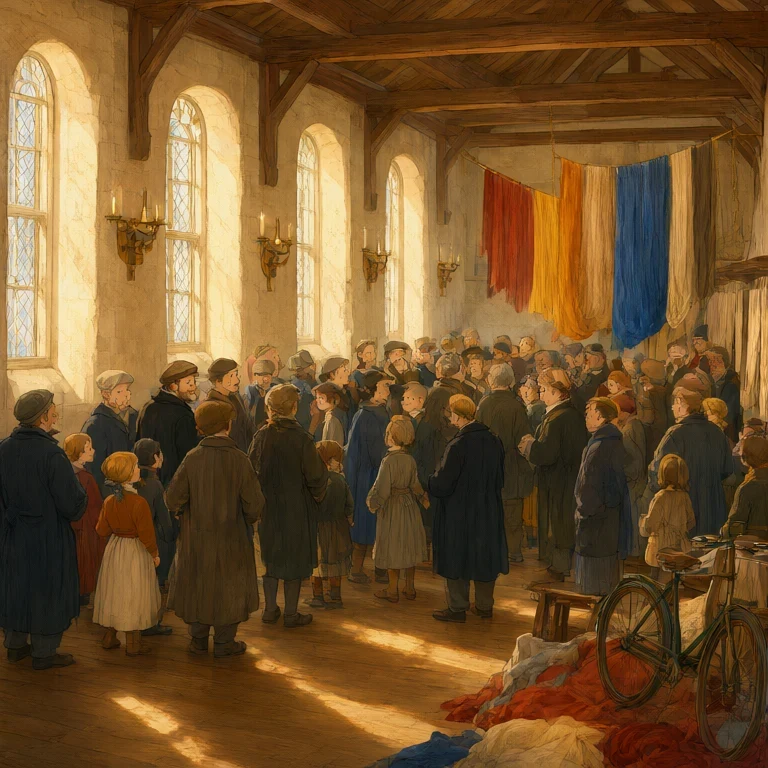
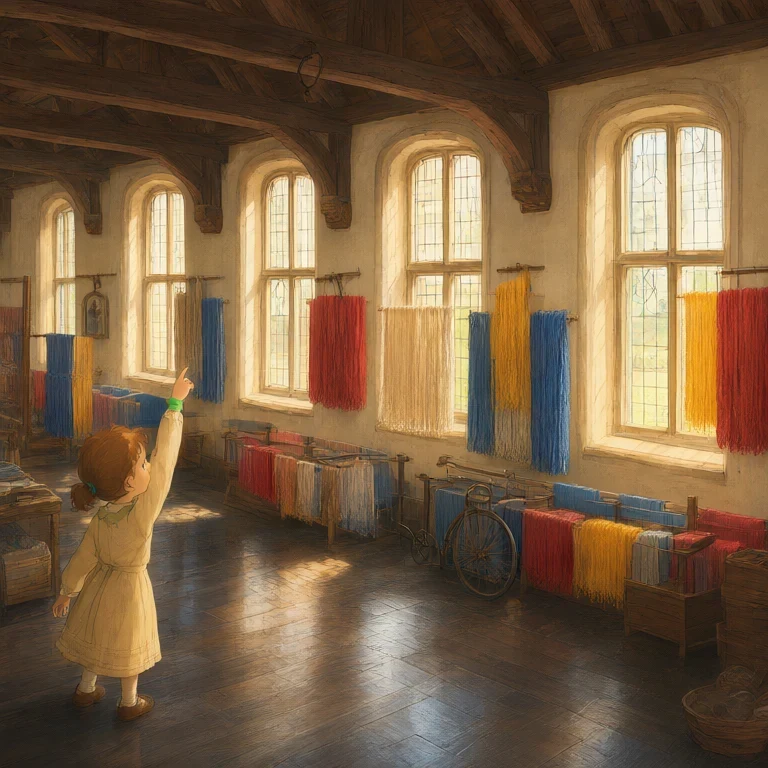
The Great Hall has eight tall north windows and nothing else to light it, and in February that is the whole of its character. The cloths hang on the north wall in order, five yards by three yards six inches apiece, and the ninth place, between the fifth and the sixth, is taken by a length of unhemmed raw warp with a small brass label on a nail that gives a date and nothing else: 1691. The floor is waxed. The doors are single and heavy and they are propped for the crowd, and the wind comes in at floor level, goes along the length of the hall, and moves all eight of the cloths at once. Nine hundred people were expected. They had been coming since eleven.
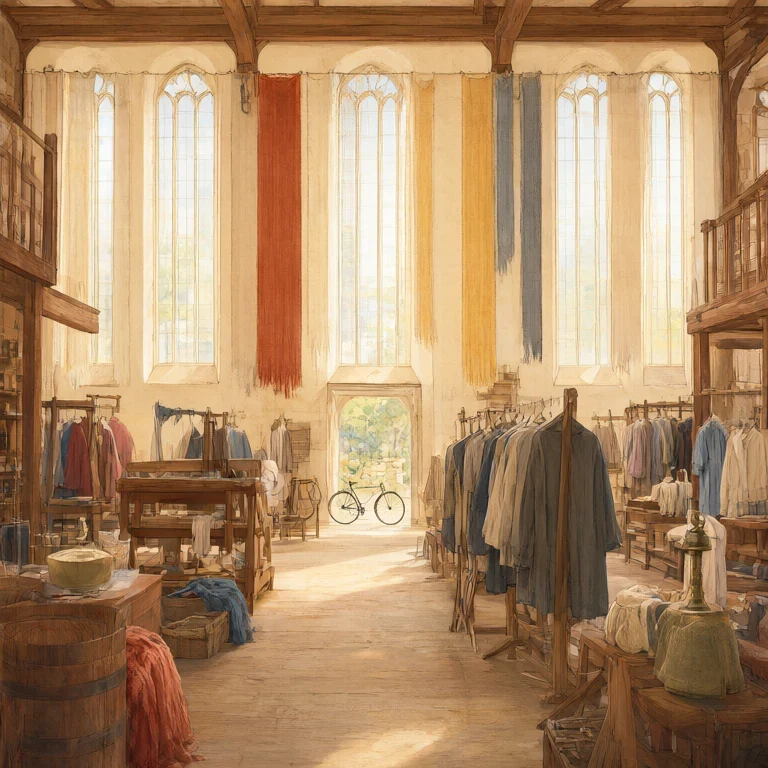
A cloth that cannot be described cannot be shown either. So the one new commission of the year is carried in folded, at the head of the procession, and it is hung in front of nine hundred people, and it is not pointed at, and after that everybody sits down and the broth comes in and the whole business takes an hour and ten minutes. The procession is a lid. It has been a lid for two hundred years, and nobody has ever had to explain it to anybody, because explaining it would have required describing something.
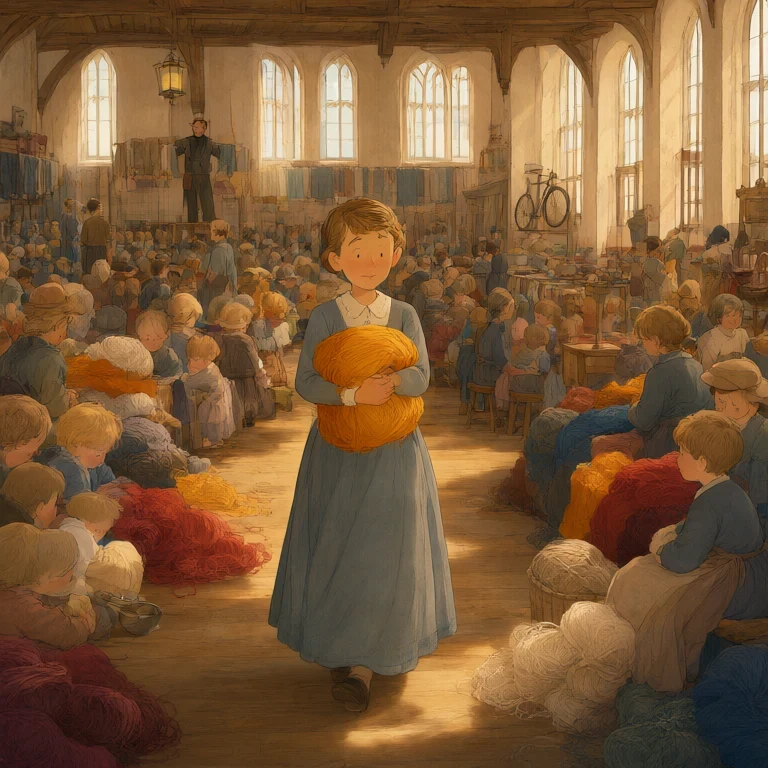
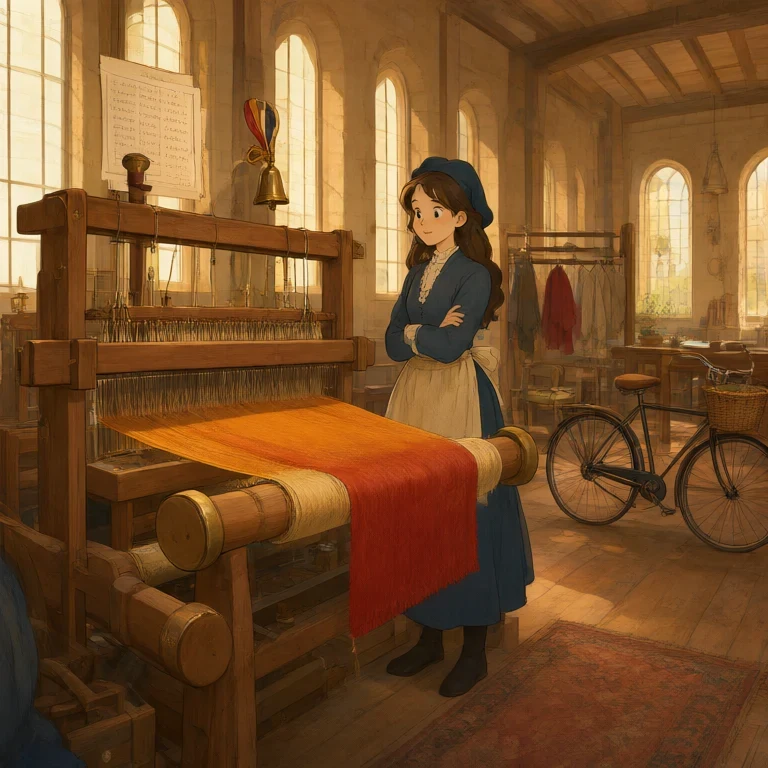
This year the commission was on the second loom at the Warp House, and Lysa Ferrant had woven it in a fortnight, which was quick for her, and the paper nailed to the frame said, in the negative, all the way down: no second selvedge, no name in the corner, no border, no colour but saffron, and nothing anybody could put a hand on.
The commoner who runs the opening is not named in the programme. That is not modesty. It is the form. The programme gives the cloths in order and the date and the hour of the broth, and where the commoner’s name would go there is a space, and the space has been there every year since anybody can remember, and nobody at the table could tell you why, because the reason would have been a description. Vaughn Ostry asked the older clerk about it twice on the Tuesday. “The form does not require it,” said the older clerk.

And Vaughn Ostry said, “I take it,” and went away, and did not ask a third time, because a commissioner who asks is a commissioner who is told, and he is fond of his position. He is forty-six and he is large and warm and unhurried, and he has run the Great Hall commission for eleven years, and he has never been given a cloth he could describe. His collar has been altered four times by four different tailors, none of whom asked why. He walks at the head of the procession, as he has every year, because that is the job, and because nobody has ever told him otherwise.
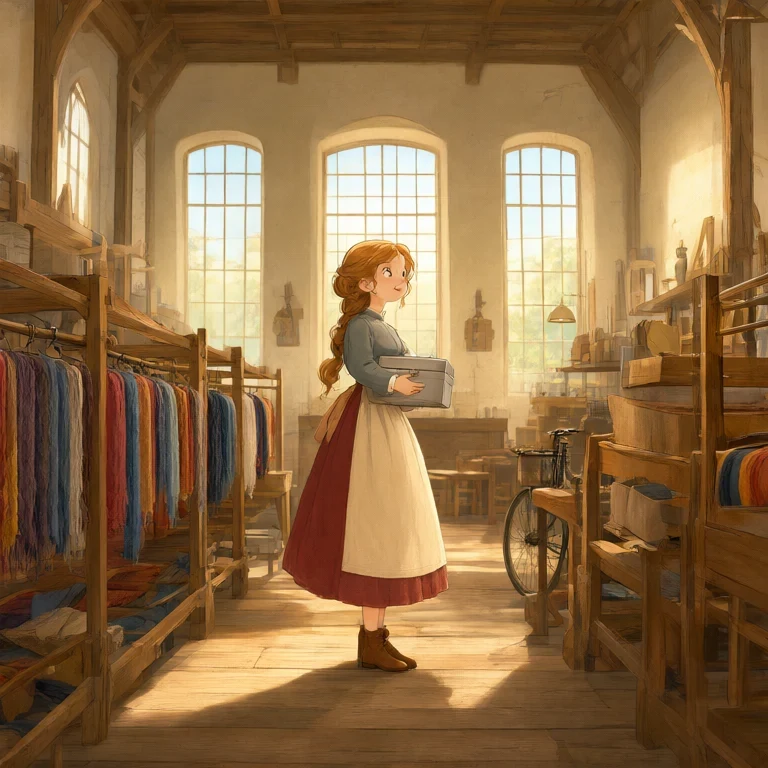
At twenty to two the hand bell went, which is the signal for the doors, and Lysa Ferrant was not in the hall. She was in the assay room at the far end of the guildhall with the programme and the guild’s seal in a tin box, because somebody had said fetch the programme and somebody had said fetch the seal, and the two errands had been given to two people an hour apart, and one of them had gone home.
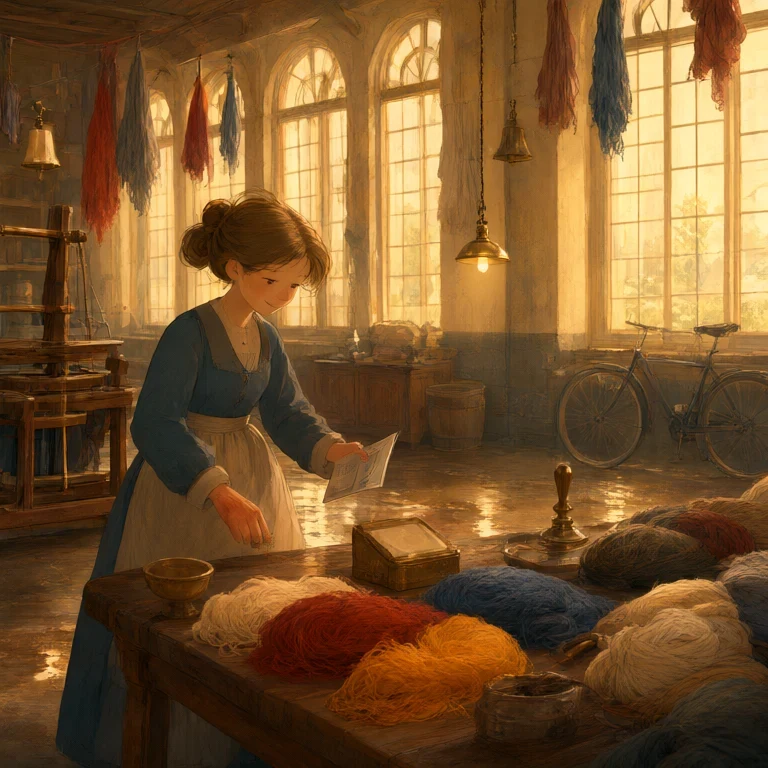
The hand bell is set for four minutes’ time, and the men at the doors set the doors at the same figure, and everybody in Sparable has trusted that figure since before Lysa Ferrant was born. She ran the whole length of the guildhall corridor and up the two steps into the hall with the tin box under her arm, and the doors were already open behind her when she got in, and the wind came in after her along the floor and went and lifted the bottom hem of the eighth cloth and let it go. Four minutes.

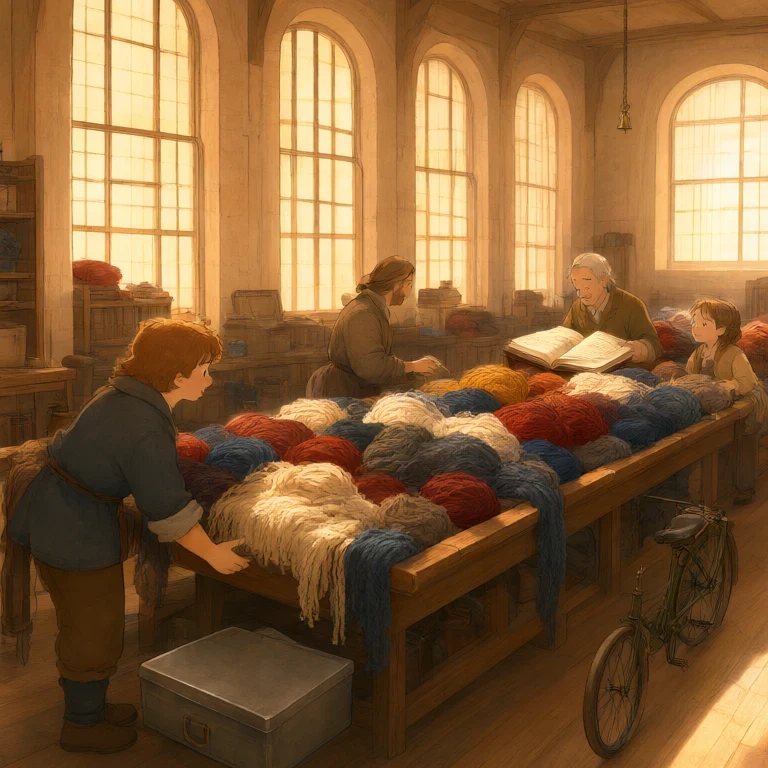
She put the tin box under the bench and went along the wall to find Corin Slee, because he was the only man in the building who had ever written down a thing that happened in a room like this one, and because she had four minutes and he would want them. He was at the assay end with his back to the wall and the register open on a chair. “Can it go on,” she said. “Eleven hundred and sixty-three,” said Corin Slee, without looking up. “That is the number through those doors since eleven. Tolerance, four minutes. Recommendation—”
He stopped, which was the answer, because it was the only one of the three that had ever failed him in nine years. “If you want it stopped, say stopped. Not like a question. They will hear a question and they will answer it, and then it is a thing that was asked at an opening.” “And if I do not say it?” “Then it goes on,” said Corin Slee, “and it is nine hundred and four people, and every one of them was taught what to leave out by somebody who was standing in this room at the time.”
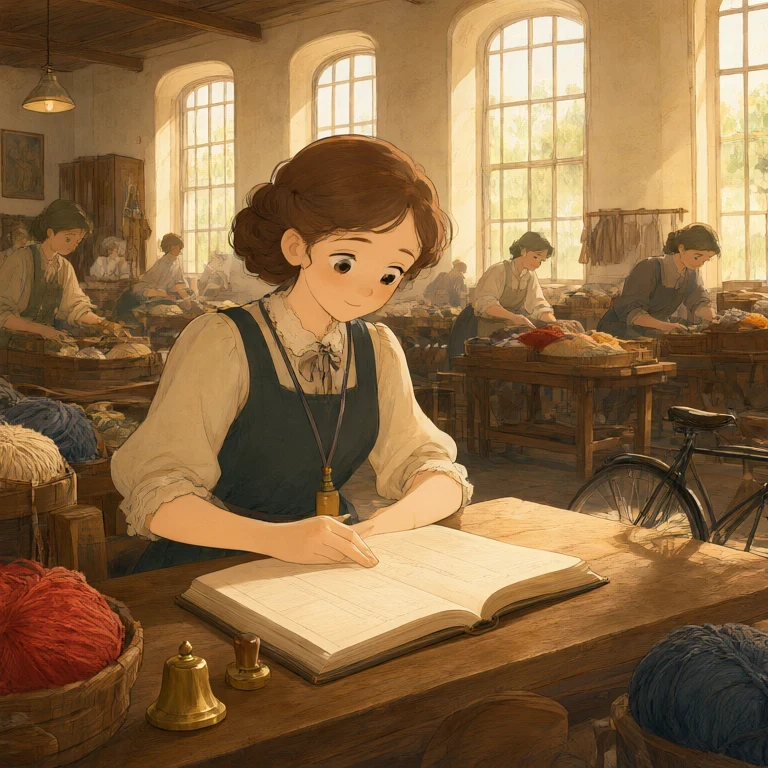
The hall does not lie and the hall is not warm, and nine hundred people in February coats make a noise like the sea, and what goes on in a town on the first Thursday of February is the most ordinary thing in Sparable.
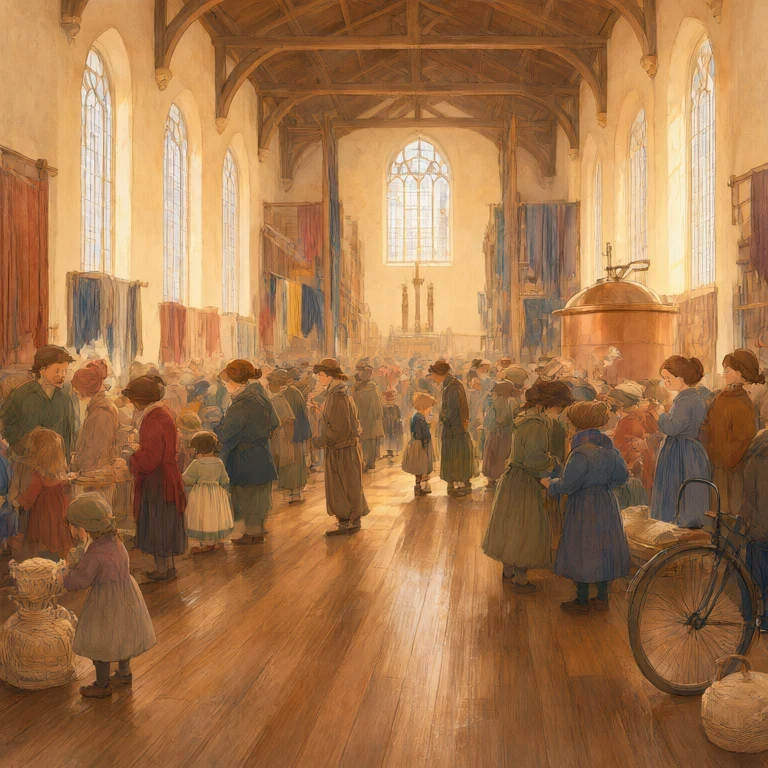
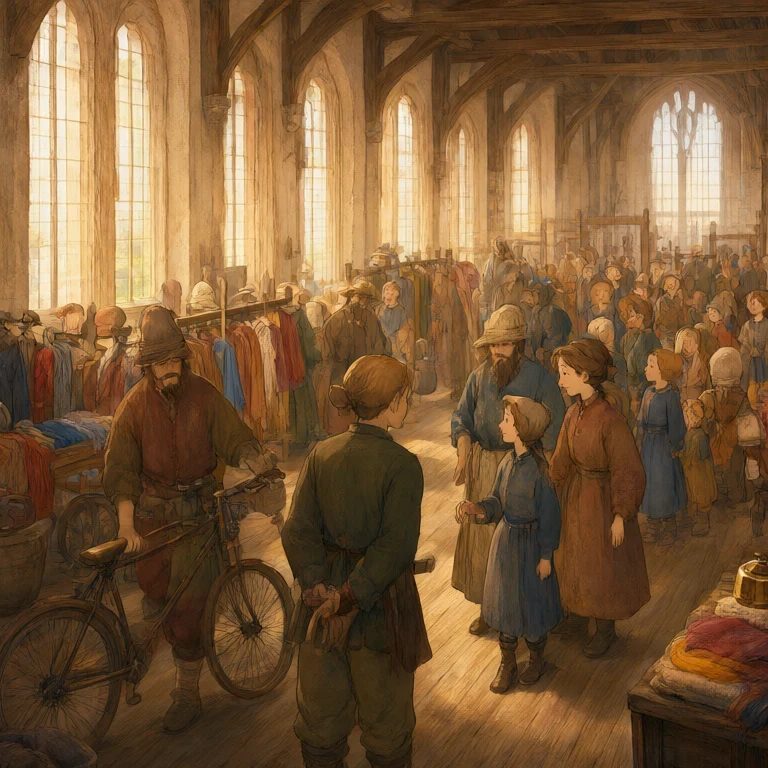
The widows sit at the front because they always sit at the front. The bench sits behind them. There is no schoolroom, because the guild does not have children in the Great Hall on the opening day, on account of the draught, the coats, and nine hundred people. The broth is at the far end in copper, and the smell of it is in the room already. “Keep the box under the bench,” somebody said. And then the procession came in. It came in the way it comes in, which is the way a thing comes in that nobody is looking at.
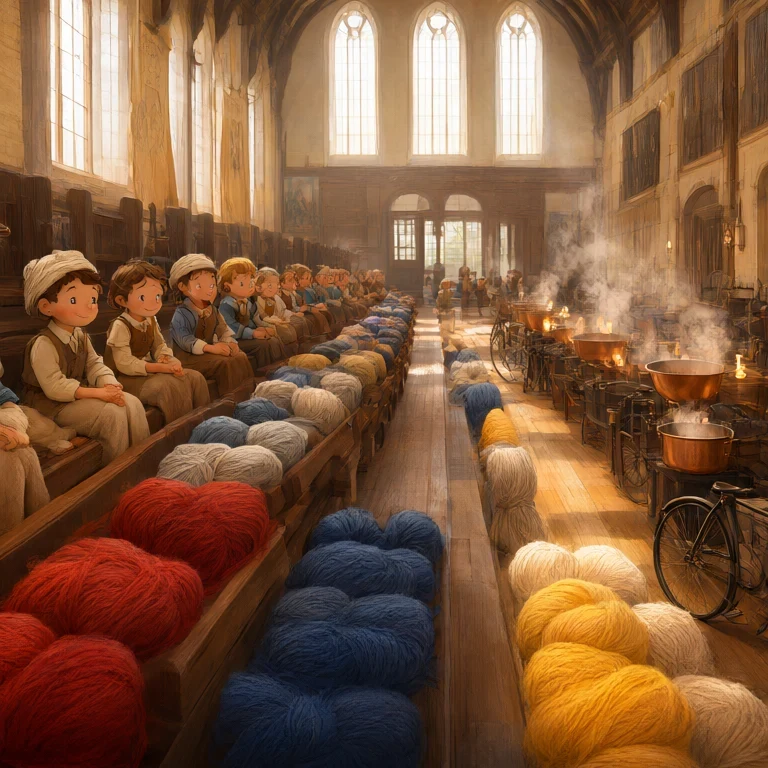
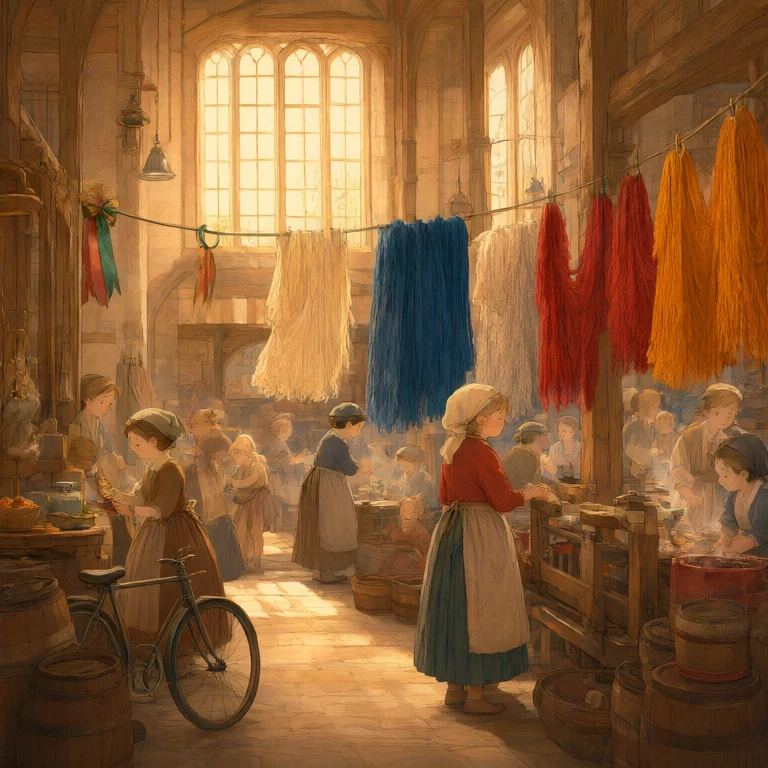
Wenna Pike walked second, because the saffron bolt goes in as close to the head of it as a bolt can go, and saffron is the one colour in Sparable that burns, and in February the sun comes up over the shoulder behind the dye yard at about a quarter to three and hits the four drying frames at the exact angle that makes them blaze, and she had the bolt over her shoulder and both arms in the dye up to the second joint and she was the only person in the procession not wearing black.
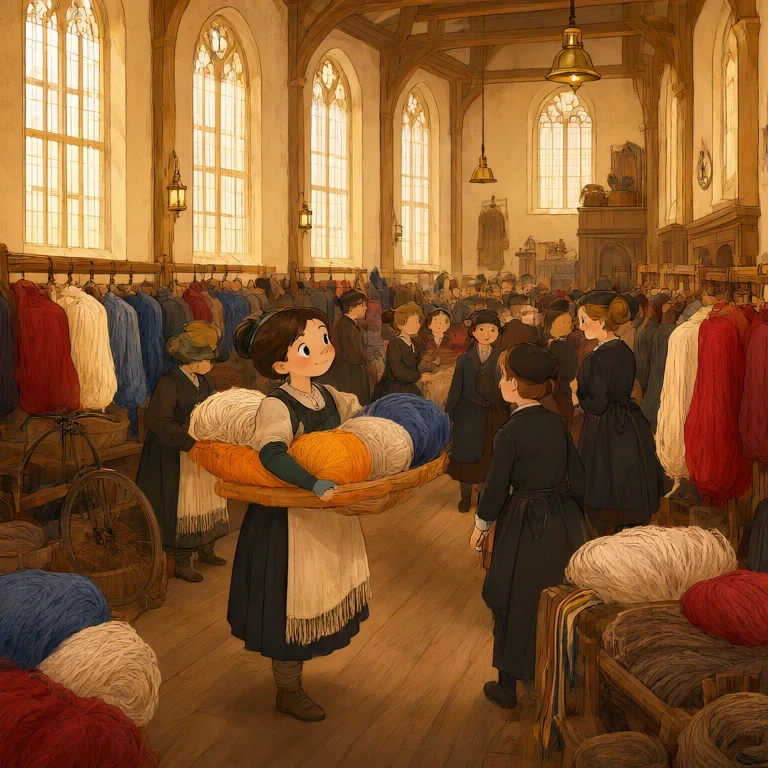
The commoner walked first, on his own, at the head of it, where a man of his size has room, and then the assay bench, and then the menders. Nine hundred people behaved normally. That is the part nobody writes down. They shifted to let the procession past. Somebody at the back of the hall said mind your feet, and nobody did. The man by the door took his hat off to the saffron and put it on again.
Between the fifth and the sixth the raw warp moved in the draught like water, the length of it, unstitched at both ends, with a small brass label on a nail that gives a date and nothing else, and nine hundred people looked at it the way they have looked at it every February for two hundred years, which is to say that they did not. Nobody pointed at the head of the procession. Lysa Ferrant saw that, and it was the last quiet thing that happened to her all afternoon. A man near her, with a catalogue and a waxed coat from the market town, said to the man beside him, “Who is at the front there?” “He is there,” said the man beside him.
But that was not a mistake. She had heard it four or five times by the time the saffron was on the wall, always with the same answer, always without any embarrassment at all in the voice, and once she turned her head to look at it herself, she understood what she was looking at, and it was a hole in a hall with nine hundred people standing round it.
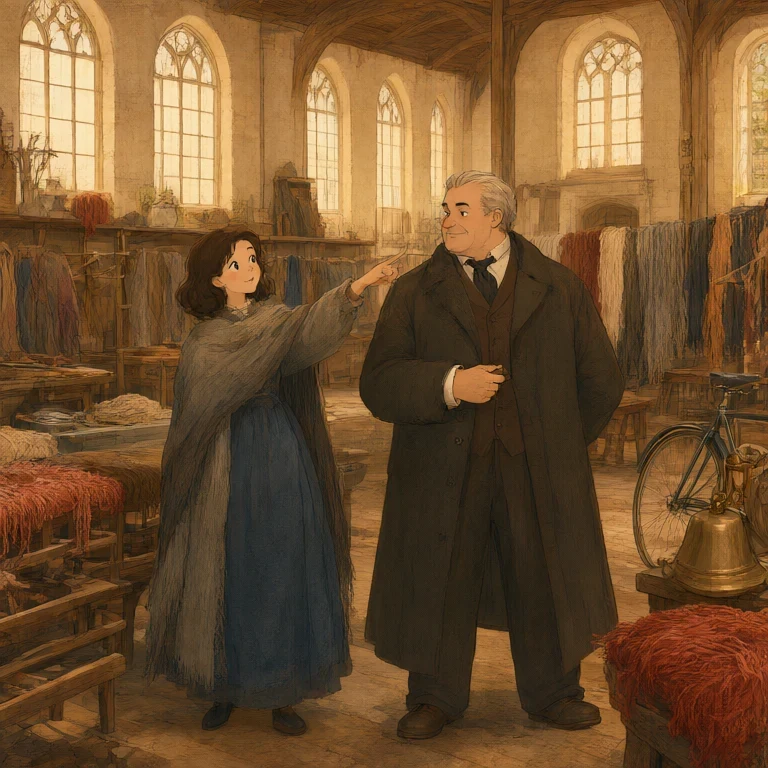
A person who is unmentioned is not naked. A person who is unmentioned is legally present and cannot be pointed at, and the city goes on exactly as it is, and a man will tell you that somebody is there. She put her arm out and pointed at the place where Vaughn Ostry was standing, and nine hundred pairs of eyes went on past her arm to the cloth behind him.
She had three minutes and a half. The guild does not have children in the Great Hall on the opening day, and that rule is the only reason the danger was a danger at all, because the nine hundred people in that room are adults and every one of them has been taught what to leave out, and not one of them can see a whole cloth if they try.
The eighth has hung on that wall since before the oldest woman in the widows’ row was born, and the wind is on it today, and a draught along a north wall in February shows a cloth better than any light there is. The one person in Sparable who could see the whole of it was nine years old, had a green ribbon on her wrist, and was in the hall.
She found her in the second window bay with her back against the stone and her feet not reaching the floor. Somebody kind had let her in. There were a great many people who would have done it and no rule in Sparable that forbade it, and a nine-year-old with a guild ribbon is not a difficult thing to smuggle past a man who has been standing at a door since eleven o’clock.
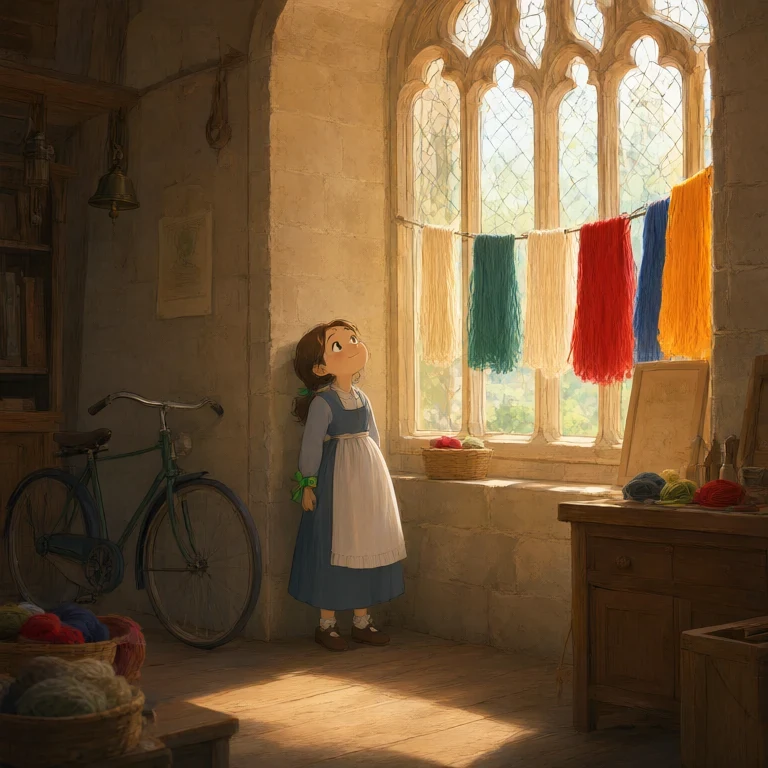
The green ribbon said that she was an authorised inspector of the guild of Sparable, which meant that at any inspection in the town she was not a guest and could not be asked to leave and had never once been asked to leave. The opening of the Great Hall is not an inspection. That was the whole width of the door she had come in by, and somebody kind had simply not shut it. Ilse Barrowe was describing the hall.
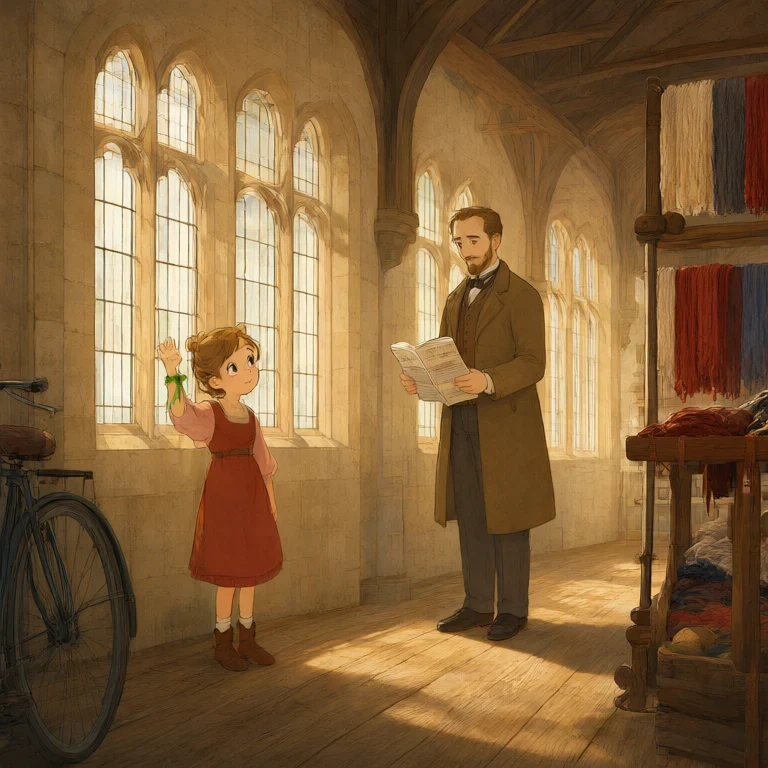
She had got as far as the ceiling. There were seven ribs in the ceiling and she had described all seven, and the iron ring that the old rope used to come through, and the size of it, and the way the wax on the floor had gone grey where the west door stands and stays black where the sun came in the summer before the frames went up. “I am not doing the cloths yet,” she said, before Lysa Ferrant had said anything. “I am doing them last. I am doing them last because I decided that in the yard and I have not told anybody that I decided it in the yard.” Lysa Ferrant had two minutes and a half.
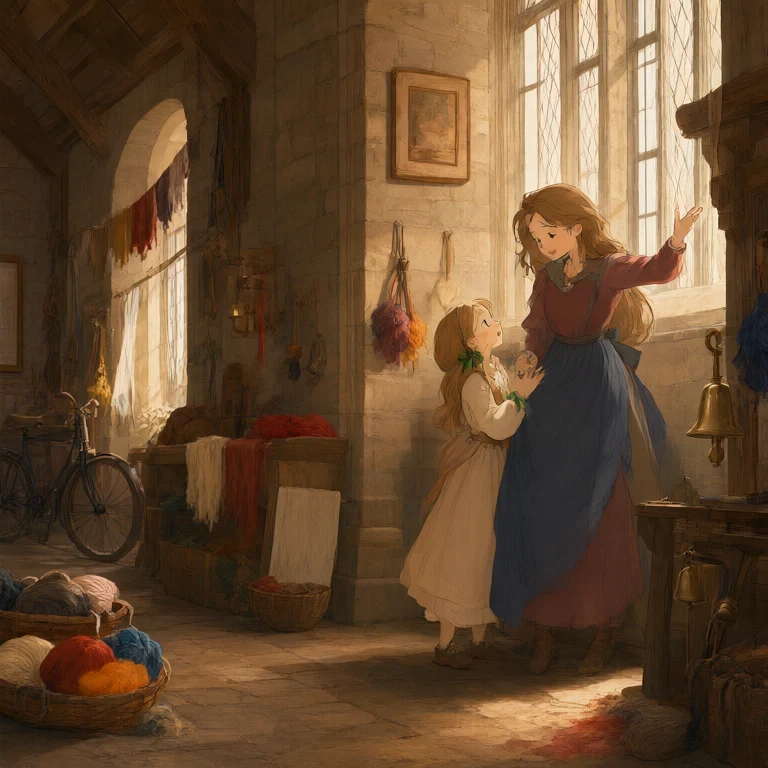
She could not send the child out. She could not put her out in that draught in February among nine hundred coats and have the woman who let her in find out about it tomorrow. She could not put a hand over a girl’s mouth in front of the widows’ row, and she could not explain, because explaining would have meant saying the word, and saying the word in that hall would have killed the eighth cloth and the saffron one and the other six as well, probably. “You have got to do it the other way round,” she said.

Ilse Barrowe looked up. “Say what is there. All of it. Every one of them, one after another, out loud, at the back, and do not stop for the one that is not there, and do not say and.” “There is always an and.” “Not this time.” “— and the third rib is shorter than the second, and the fourth has a nail in it that is not holding anything, and the ring is —” “No. Later. Wait for the bell.” Ilse Barrowe shut her mouth. It was not a quiet she often managed. “Is the parade a good idea?” she said. “I do not know yet,” said Lysa Ferrant. “That is the honest answer and I have got two minutes to find out.”
And a man in a waxed coat from the market town came down the aisle towards them with a catalogue open in one hand and a pencil in the other and an expression of enormous patience, and he said that he had come four days for the saffron, and that his firm could not enter it in the book without a description, and that a description of the commission in the weaver’s own words would be worth any price the weaver liked to name.

It was the plainest question anybody has ever asked Lysa Ferrant, and she has been asked almost nothing else in her life. She could not do it. She stood in the aisle with a tin box under her arm and the wind going past her ankles and found that she could not describe her own cloth, not a word of it, not in any order, not even badly, and that the not being able to do it was not the horror she had expected. It was a room she had lived in all along.
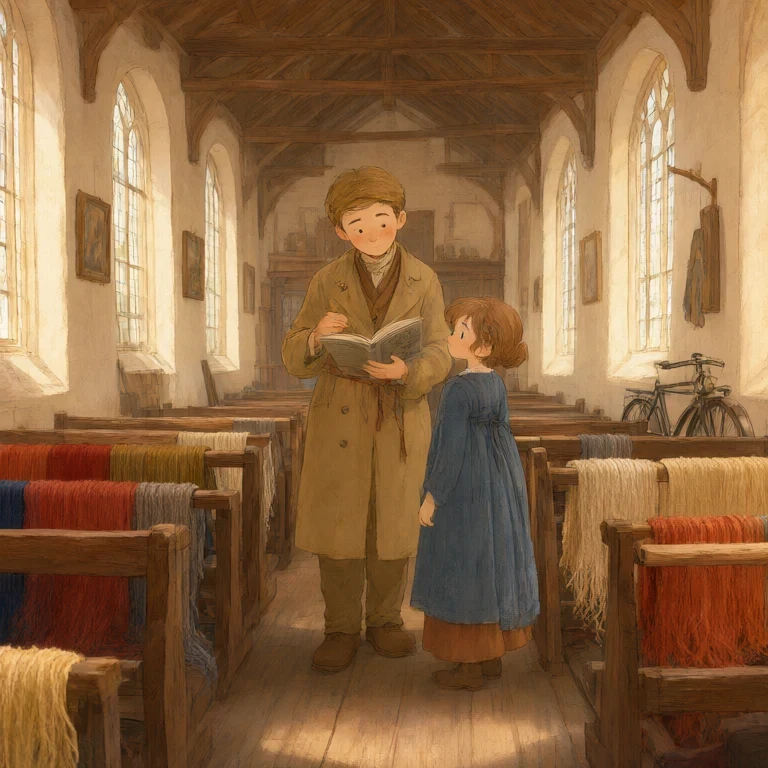
“It names all that it withholds,” she said. “You may have the contract.” The buyer wrote it down. All five lines, in order, in his own catalogue hand, and the entry went: Commission of the second loom, Sparable, February. Withholds second selvedge, name in corner, border, all colour but saffron, and anything a hand could rest on. “It is not much of a description,” he said. “No,” said Lysa Ferrant. “It is the only kind this town gives.” They put her at the back, on a chair, between the widows and a woman from the tanneries who had lost her sister in the flood year and was asking after her in every room in the building. “The saffron one,” said Ilse Barrowe, to the woman.
“There is saffron on it and there is undyed wool and there is iron grey, and the saffron is at the top and the wool is at the bottom, and the grey is a band across the middle, and the band is two inches, and it is a little bit uneven on the left, and the undyed is the only other thing in the whole bolt, and the selvedge is there, and the corner is there, and the border is not there, and the name is not there, and there is nothing on it anybody could put a hand on.”
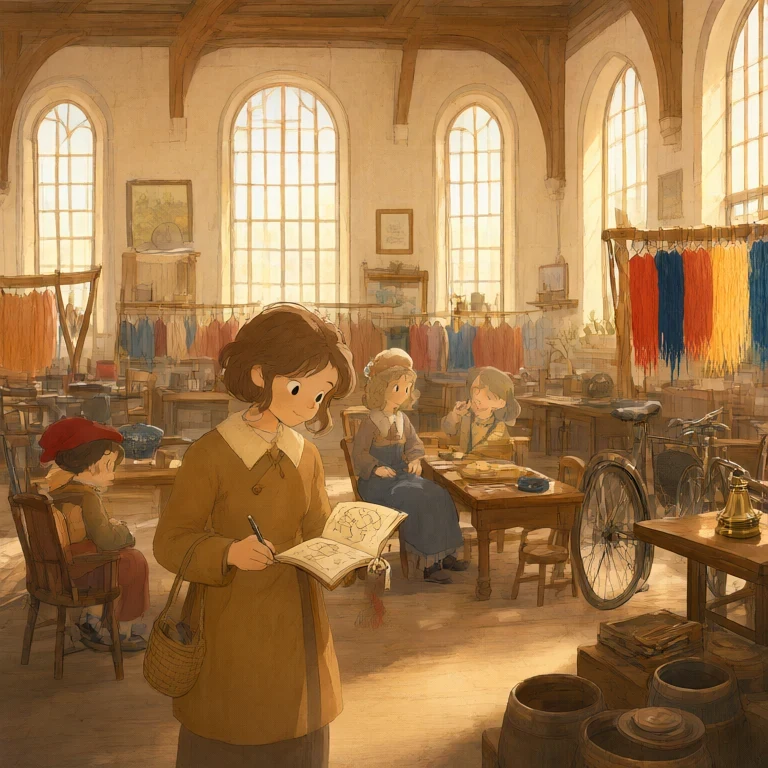
The woman from the tanneries said, thank you, that is very kind, and did not hear one word of it, because she was looking for her sister, and Ilse Barrowe had said the whole of the negative out loud in a cold hall with nine hundred people in it and had not said a single thing that was not there. The procession went at ten past two, and the doors were shut at four, and the wind dropped when the doors were shut and the hall got warmer by about a degree and a half, and the cloths stopped moving and hung still on the north wall with the light going off them in long grey bands. Nobody pointed at the head of the procession once in three hours, which is what an unmentioned man is for.
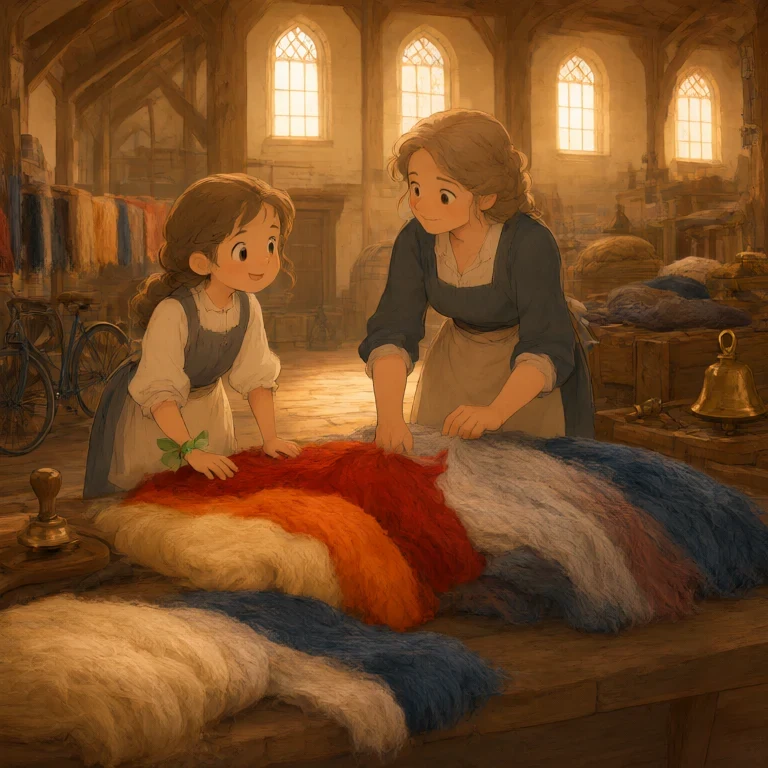
At the end, in the assay book, on the line for the Thursday, in the flat hand that four hundred stamps a year come out of, the clerk wrote: Guests, nine hundred and four. Panels hung, eight. Cloths carried, one. Cloths described, none. And underneath, on the next line, because the form has a box on that line for the length of the wait between the bell and the doors, and because nobody had ever put anything in it before: Four minutes.

The brass label on the nail between the fifth and the sixth gives a date and nothing else, and the reading of it is not on the programme, and nobody has read it out at an opening in two hundred years, including the man who put the four minutes in the box. Corin Slee has never been asked what the four minutes was for.