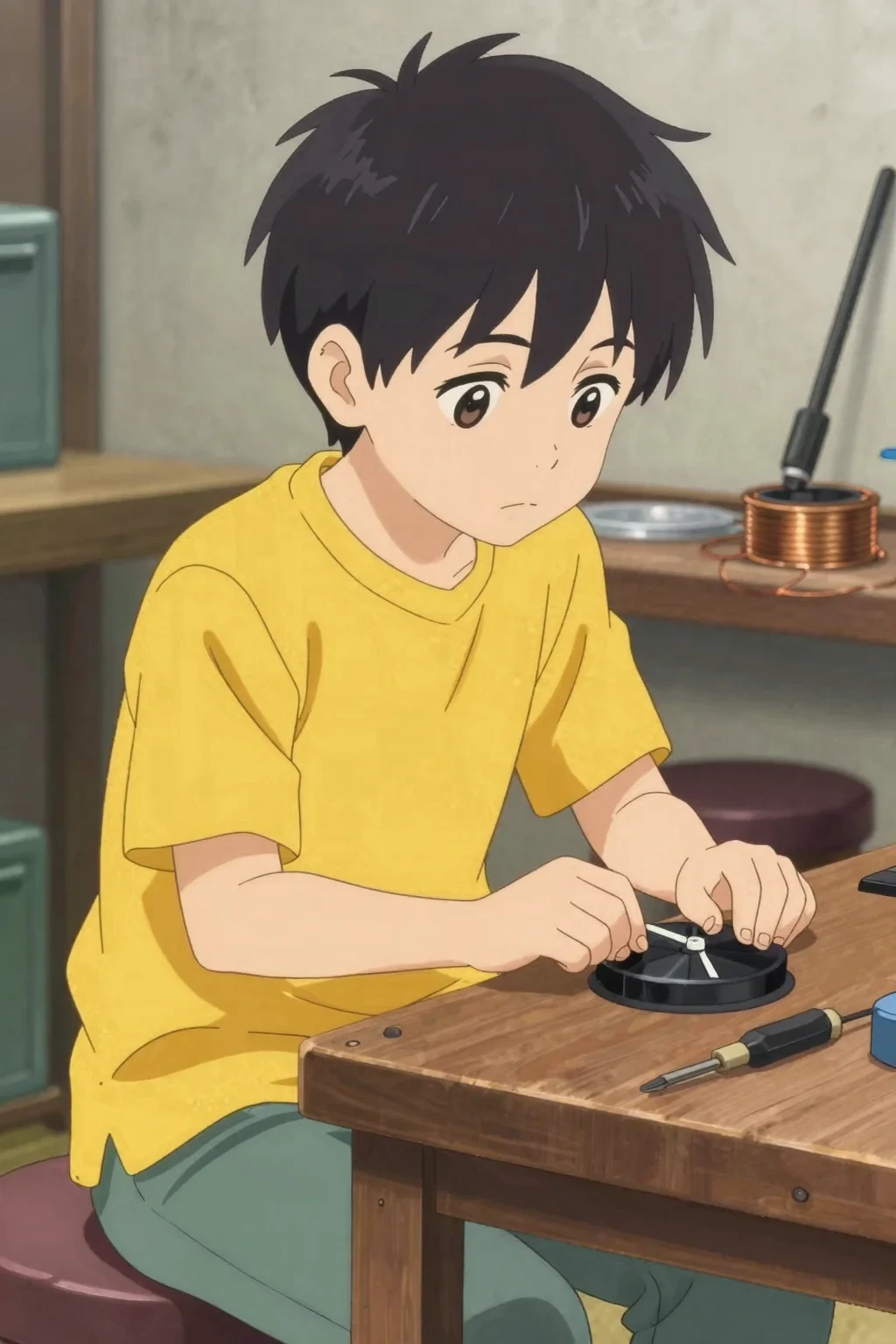
Bram Vik was ten years old and small for it, with black hair cut square at the back, and he wore a yellow jersey with the sleeves turned back. His father's boat, the Vinge, was four days out past the point where the chart stopped naming things. The shortwave set in Brinlow stood on a bench in a room behind the net shed, and the woman who kept it had kept it eleven years.
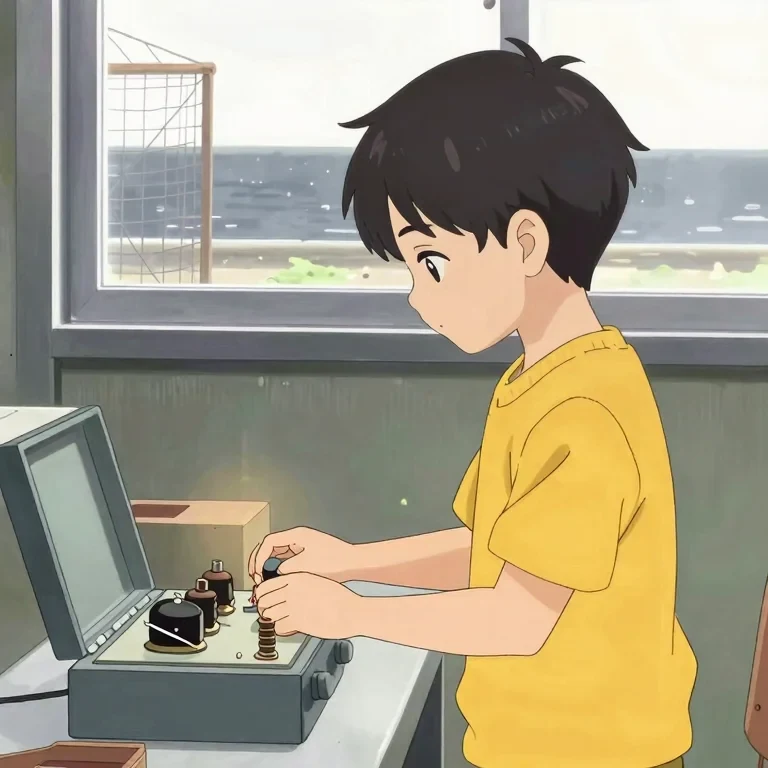
Her name was Senn. She was forty-nine, her hair was grey and plaited down her back, and she wore a red knitted vest in all weathers. She kept the set the way other people keep a boat, with the lid off every morning and dust never allowed on the valves.

Bram came to the net shed every afternoon after two o'clock, because the set was there, and because Senn had stopped telling him to go home. The first thing she gave him was the dial. She made him turn it slowly from one end of the band to the other and say what he heard, out loud. “That is where the sun comes up on a June night,” she said. “Everything up there is a machine complaining. Learn the complaint and you know what to fetch.”
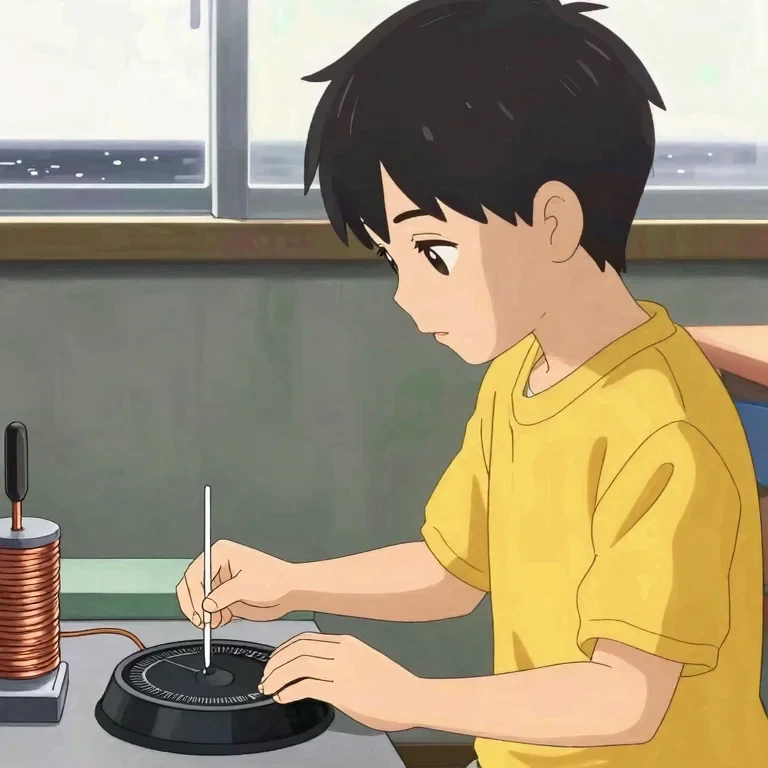
He learned the coil after that, and then the aerial, which was a wire he and Senn ran up the mast together on a windy afternoon in the second month. By the spring he was better at it than anybody in Brinlow except Senn, and Senn said so out loud, once, and then gave him the broom.

The Vinge belonged to Torvald Vik, and on the sixth evening the set said nothing at all about her. “That is not weather,” said Bram. “Sindre told me she has a working set.” “Sindre has a set with a wire in the wrong place,” said Senn.

In the dark, Senn would not turn the set on. Bram asked her every evening for a week. He stood by the bench and asked, and she swept the floor with her back to him and said no. Then he asked her why, and she set the brush down, which she only did when she was going to say the whole of it.

“At dusk the set listens,” she said. “Not me. The set. And listening is a job, and a job done badly is worse than no job at all.” “What is there to do badly?” “One thing to watch instead of the dial. A door. A child in the room.” She picked the brush up again. “That is all of it.”

Eleven years before there had been a boat called the Sker with four men on her, and at two in the morning Senn's set picked up a voice on the coast band that kept stopping in the middle of a word. Senn read the coast schedule off her own set, every vessel and every hour of them, and wrote it out in pencil, and carried it the two miles to the coast station and stood in the rain at the door until the man there had read it.

Then she walked home and sat at her own set with the switch where it was and the volume at nothing, and listened all night without speaking on the air once. “They wanted a broadcast,” Bram said. “They wanted a broadcast,” said Senn. “If I had used this set to talk, the station could not have gone quiet and listened for the Sker. Four men are alive because of a thing I did not do with this machine, and eleven years I have not switched it on after dark.”

On the seventh morning the harbourmaster took the Vinge off the board, an office and not a judgement, and Bram's mother made him go to school. After that Bram did the book. The coast schedule came on a printed sheet and went into Senn's ledger, and from the eighth day of the eleventh year the copying was Bram's, in pencil, in a hand not steady yet and getting steadier. The set had been put to two uses, and only one of them had ever been spoken about in Brinlow.

A thing kept for one purpose is not kept for that purpose only. Senn had kept a machine for eleven years that the village thought was for talking, and it was for listening, and a boy of ten learned both off the same dial. That evening the light over the net shed went on at six, and the boy sat at the bench with the pencil and the ledger, and the needle rested on the dead part of the band where it had rested every night for eleven years.