The Kotuku came alongside the ramp at six in the evening, and the net came out smelling of cold water. Anahera met it on the shingle with two net needles in her coat pocket. She had been mending her father's net since she was six. Her father was Hori. He laid the headline along the pebbles so the net lay straight. Then he walked it, one hand under the headline and one under the footrope.

“You can tell a good net by the light in it,” he said. “And a bad one by where the light stops.” He was halfway along when he put one finger into the mesh and looked at her. “Feel that.” She put her fingers in after his. The mesh drew open under them, wider than a hand. “Bars,” she said. “How many.” “Count them.”
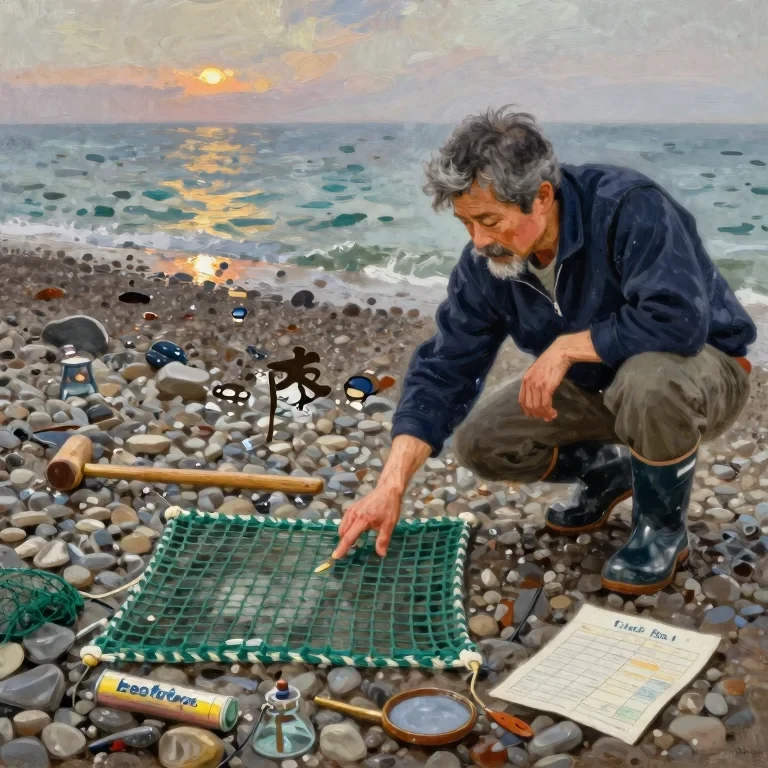
The way to mend a net is to count first. You cut the loose ends back, count the bars in the broken edge, then put the needle through once for every bar you cut. She counted eleven bars along the bottom of the tear, eleven more above them, and six at the top. Twenty-eight half-meshes out of a net one inch mesh and thirty-four half-meshes deep. Hori looked west, at the light coming off the water. “Five o'clock,” he said. “Be finished by four.”
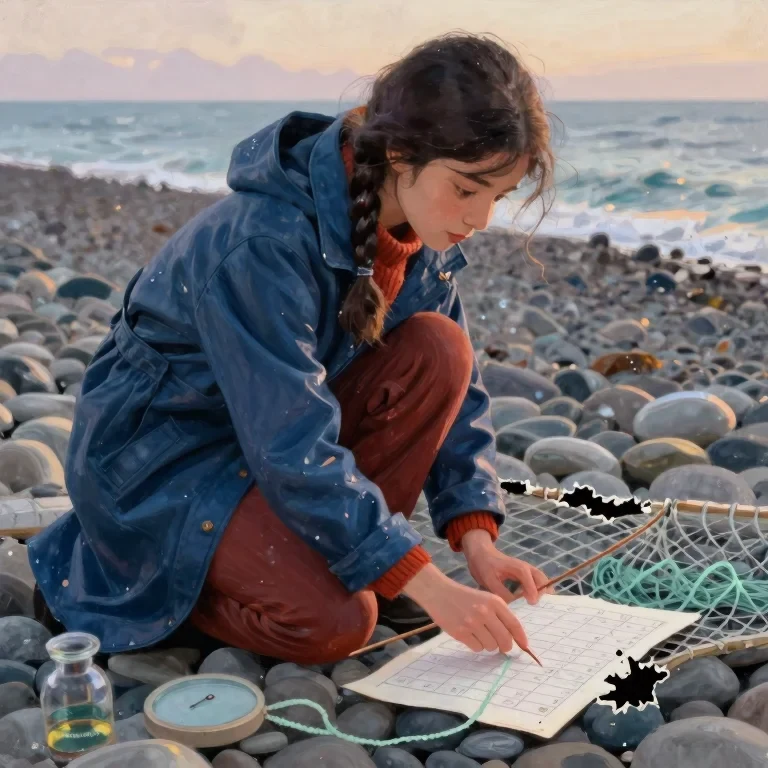
The grooved side of the needle takes the grooved bars. The flat side takes the plain ones. Two needles, one in each hand, so the twine never twists on itself. One loop. Pull. One loop. Pull. She lost her count at nineteen and went back to one. Her father had told her once that a mend counted wrong is a mend made wrong. Twenty-eight.

When the hole was shut she ran her thumb along it, and then along the mesh on either side of it. The mend was flat. It was as good as the net. Then she took out the mesh gauge. It is a flat brass bar, one inch wide, with a hole in the top for her finger. You push it edgeways along a row of meshes, all the way down the net. If it slides, the mesh is too big. It slid.
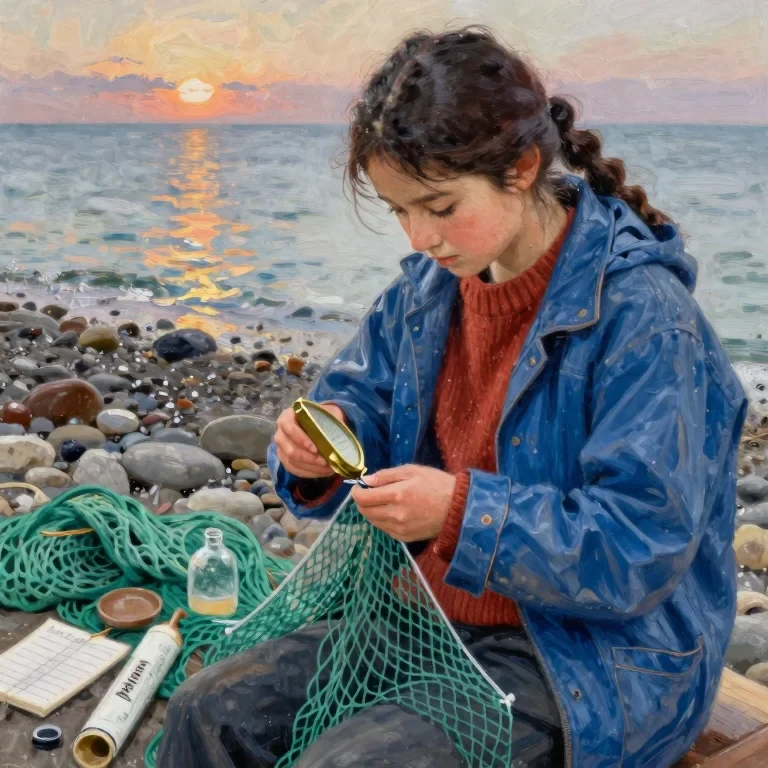
Not at the mend. At the mend it stopped. She had to go further up, two paces and a hand, to a place where nothing had ever torn and nothing had ever caught. She held the net up and looked at the light coming through it. The mesh there had drawn open like the neck of a jar. “That is not a hole,” she said. “That is a run.” Hori came and looked. “How long.” She laid the net along the ground and measured it with her handspan, twice. “Fourteen inches.”

A hole you mend. A run you cut out. There is no way to mend a run, because nothing is missing. The mesh is all still there, only wider, and wider mesh is a door the fish walk through. Hori took out his knife and cut. Fourteen inches went into the bucket. The panel would have to be built by hand, and the boat would sail when it was built. “You will not count it as well as the old one,” he said. “Nobody counts a net as well twice.”

So she set the panel on a frame of two wire hoops. She tied a length of cord marked off in inches onto the hoop. She counted against the cord and not against the net. Inch by inch and row by row, thirty-four half-meshes into the bottom of the panel and thirty-four half-meshes out of the top. The light went off the water while she worked. Hori hung the deck lamp over her shoulder, and moths came to it. They sailed at twenty past six instead of five.

The tide they wanted was half gone by the time they reached the fishing ground. They landed one hundred and eighty kilos. The book said four hundred for the same week last season. Hori put his thumb under the splice twice and said nothing at all, which is how he says a thing is good.
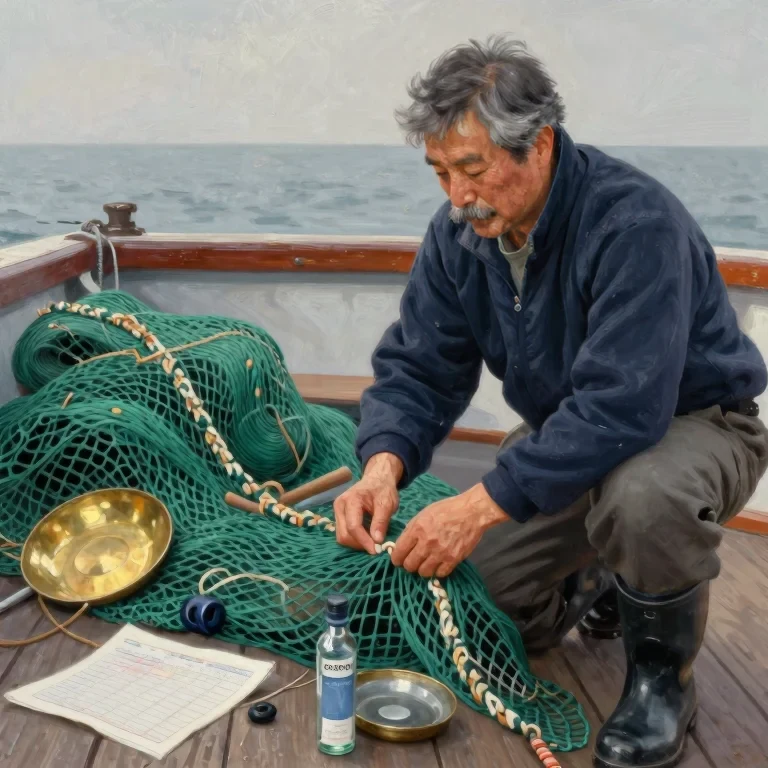
In the evening she counted the new panel one last time. She laid the needle flat on the mesh and walked it along, one half-mesh at a time. She did it the way she had done it against the cord. Thirty-five. The old panel was thirty-four. Her panel was half a mesh deeper than the net it was spliced into. The footrope hung half an inch lower at that one join. She had checked it twice. Nobody on that boat would ever find that out.

She wrote 35 in the back of her father's net book, under the 34, in pencil, in her own small hand. Tomorrow she would count it again and it would be thirty-five again. That is the number she still cannot make right.