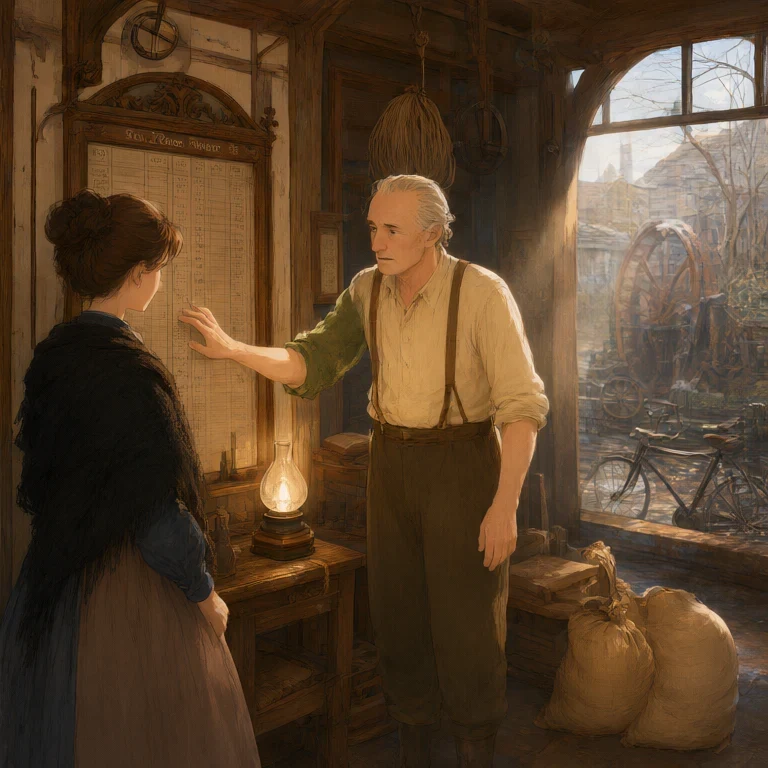
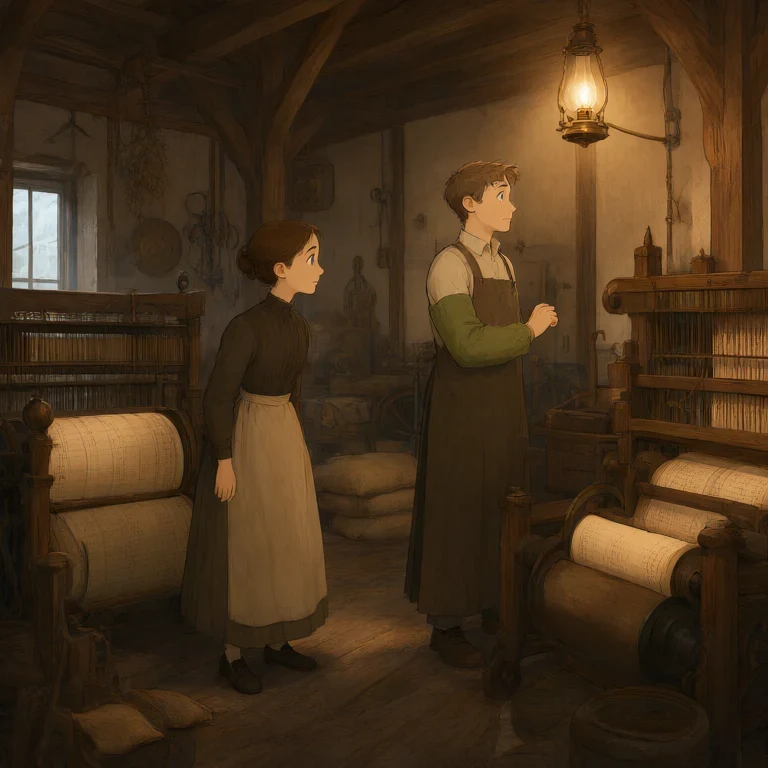
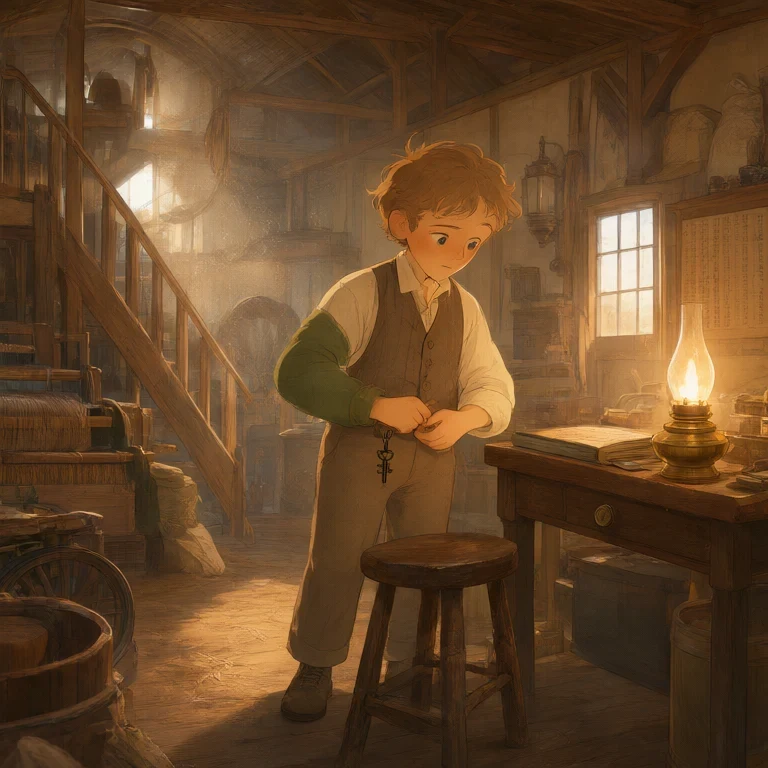
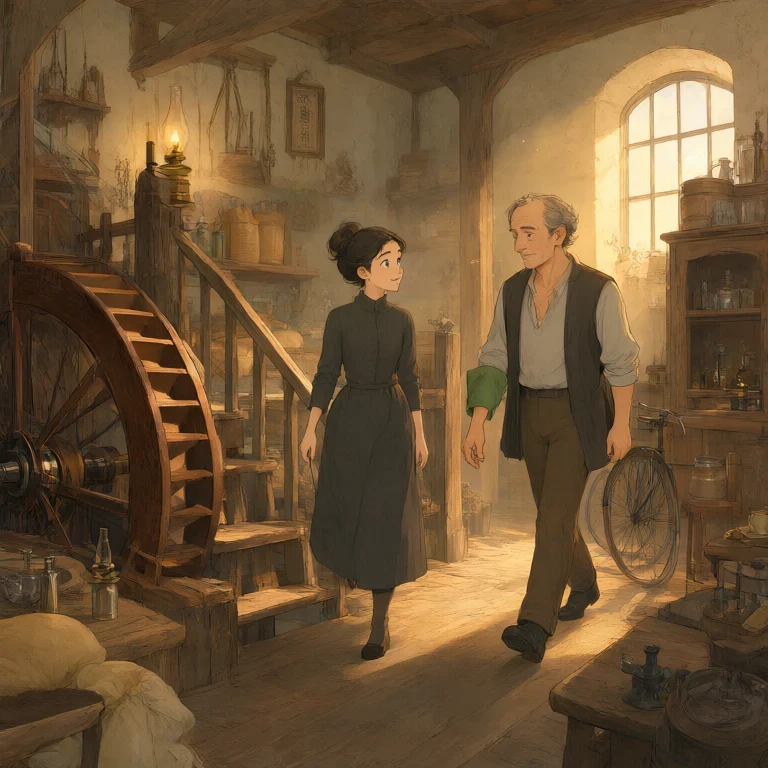
The clock in the counting house said six, and Corve Merrick put his right hand flat on the iron tally-board before he answered his daughter at all, and then they went up the stair. It was the twenty-first of November. The wheel was in and forty looms were going and the whole building worked like a vessel with a sea under it. Aldis followed him up and counted the steps, because she counted when she was worried. There were ninety-one. The little man was waiting at the top.
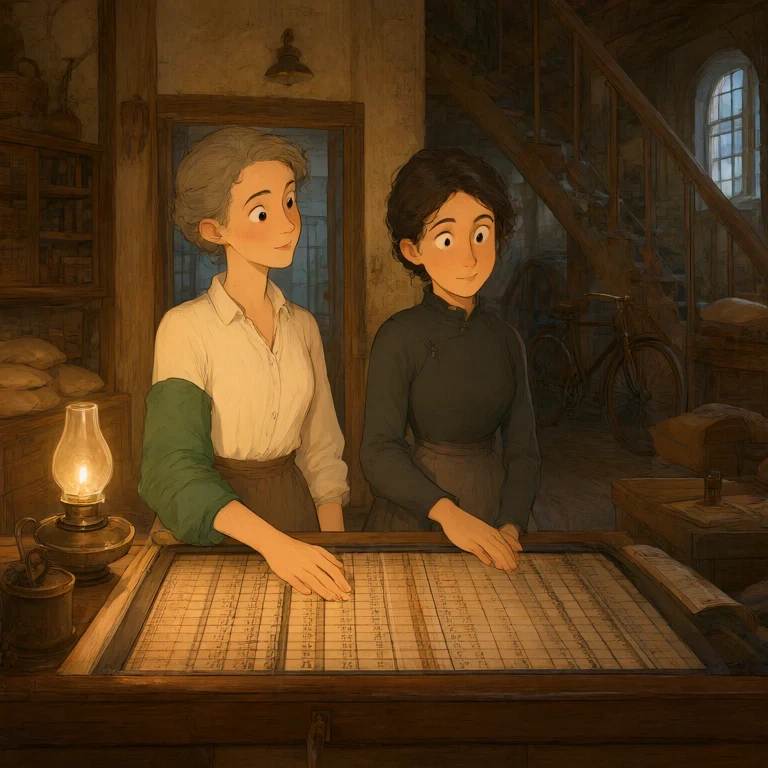
He was very small, and very old, or something else than old, in a clean coat cut the way the coats in her grandmother’s album were cut, and he got off the stool when they came in. “Mistress Prowse,” he said. “Nobody has to stand up for this.” “I will sit down,” said Aldis.
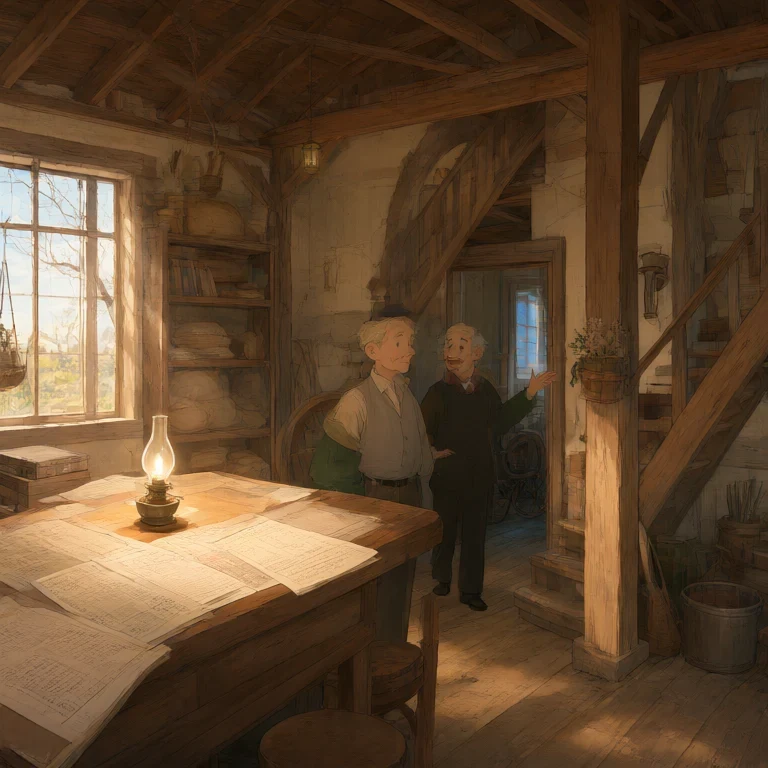
The mill had been in Bristol’s debt since the fourth of November. The letter said three hundred and forty pounds short, and said it in the merchant’s own hand, and it lay in the mill’s file in the third pigeonhole, and Aldis had read it twice on Sunday and once more on Monday. “My father has agreed to three nights of spinning,” she said.
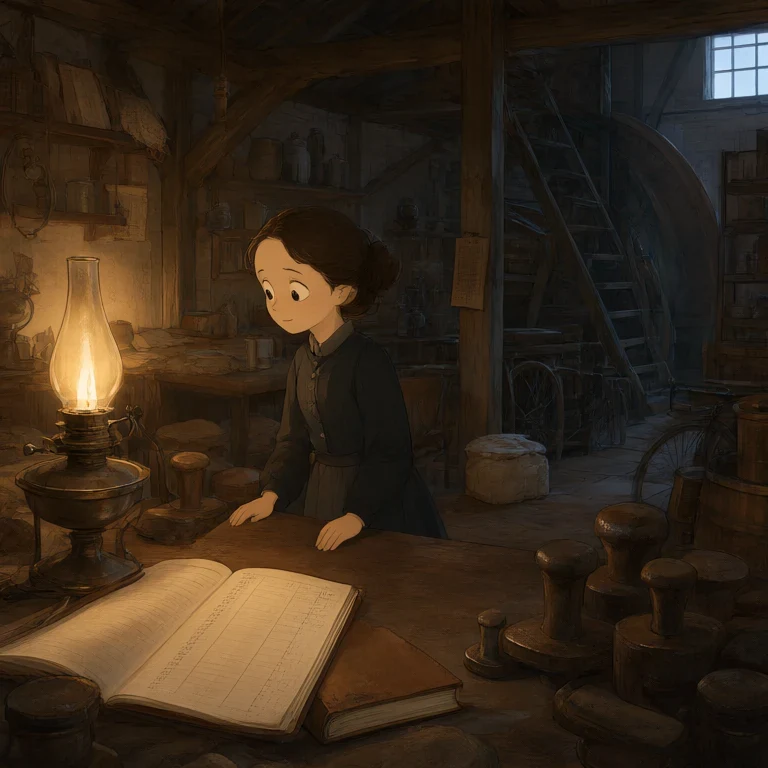
“Your father has agreed to three nights of spinning,” said the little man. “That is the term. I spin, you keep, and at dawn on the third the account is either closed or it stands, and afterwards there is nothing at all. There is no fourth night. A fourth night offered to a borrower is a fraud, and a fraud is proved on the roll, and the roll is the only court this valley has ever obeyed.”
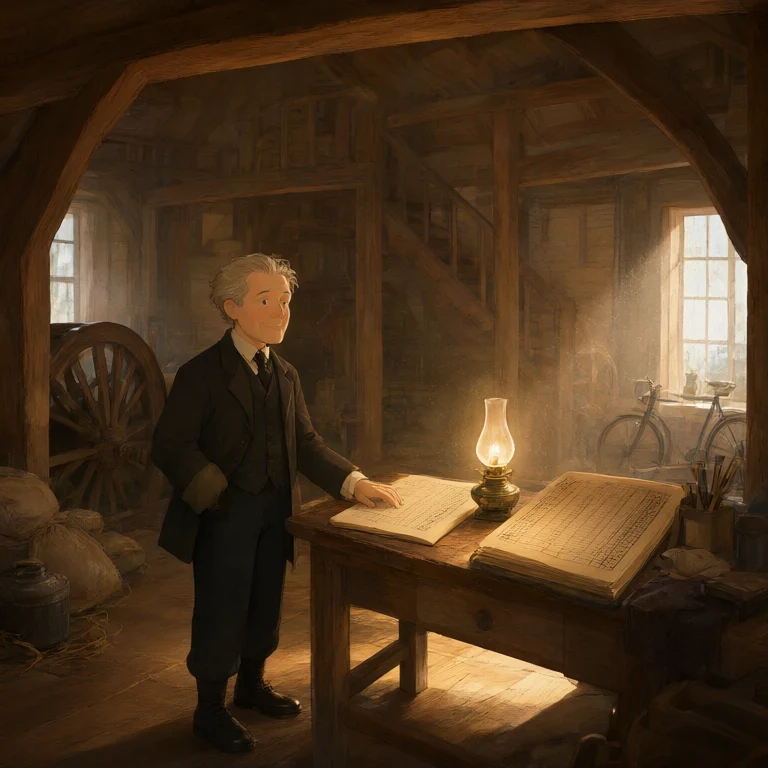
Aldis wrote that on the back of her left hand later, in pencil, and then rubbed it out again because she could not think what it was for. “How do we pay?” “Find out what the gold is worth tonight. Then find the rest of it.” “And if we cannot find the rest?” “Then you will not have closed it,” said the little man, “which is the ordinary way a man ends a bargain, and you will not be the first, and I do not expect to be impressed.” Aldis liked him a good deal better after that.

The wheel went. She watched it for a long time before she believed what she was watching, because she had been looking all evening for a belt, or a treadle, or a crank, or a dog, or anything at all to explain it, and there was nothing whatever to explain it with. The wheel simply turned. The spindle turned with it. And a thread came off the spindle that was yellow, and then it was not a thread.
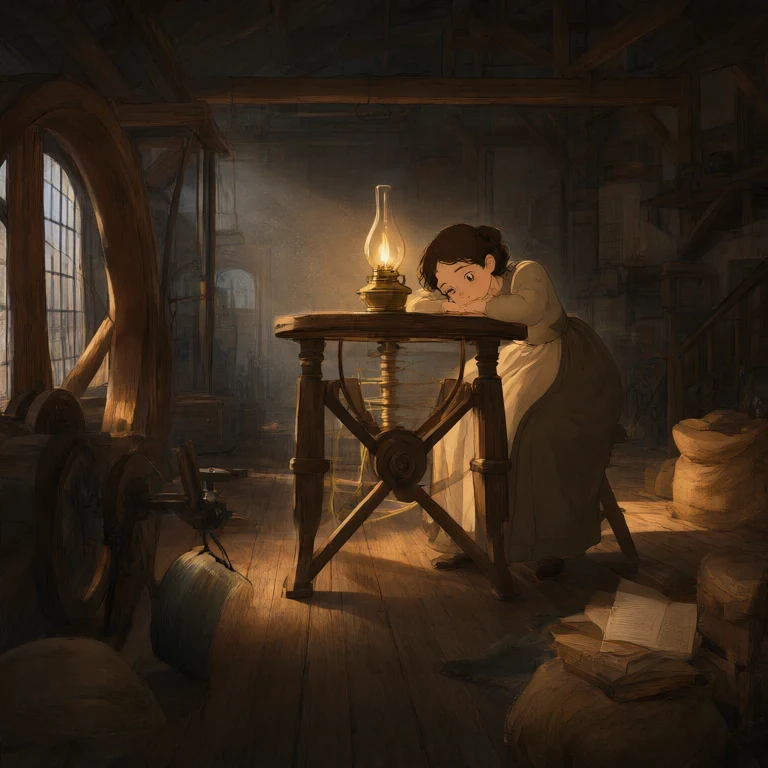
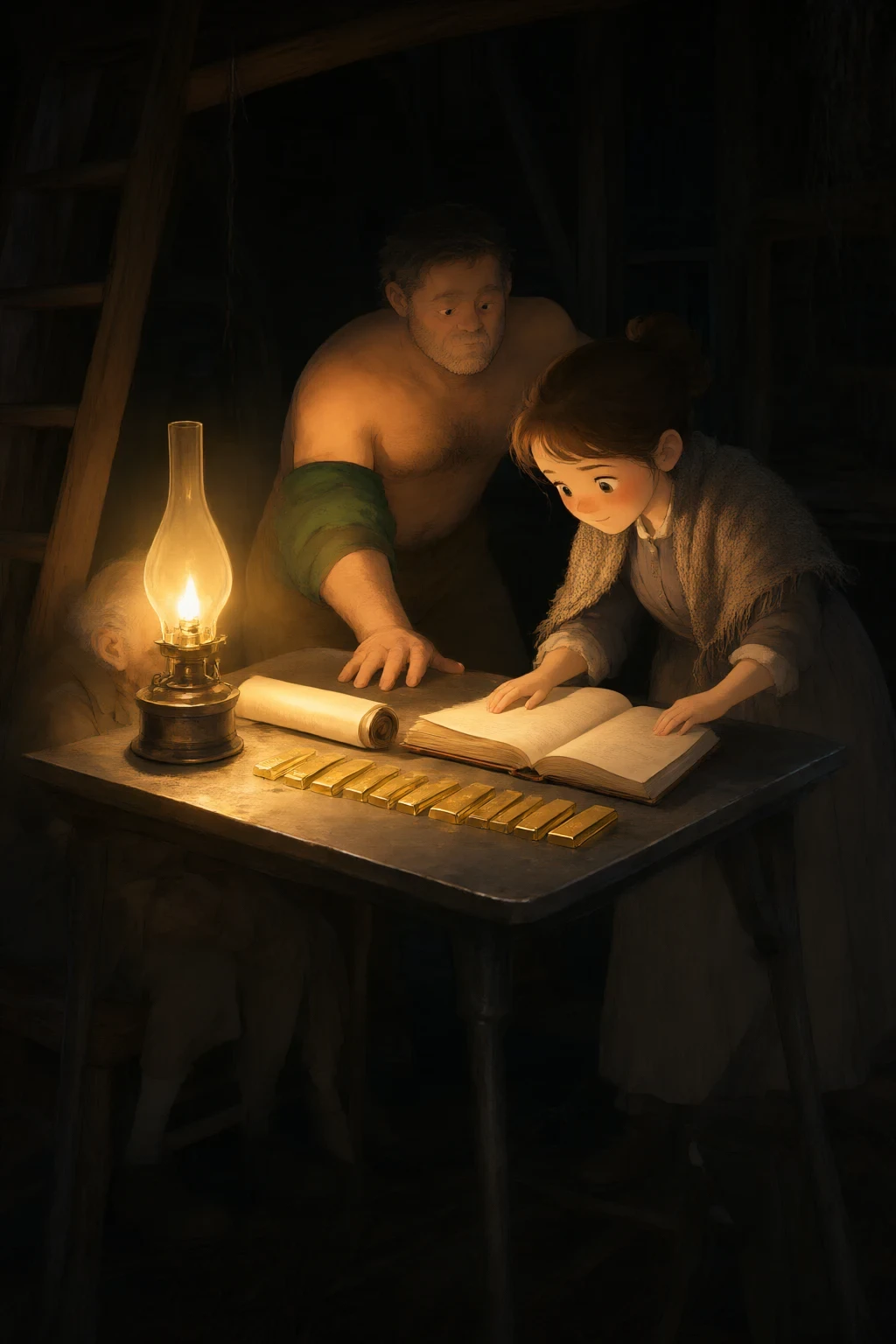
Gold. It came off in bars the length of a thumb and dropped into a pan, and the little man pushed the pan along the table to her and said, “Weigh that.” She weighed them. Her father’s little balance had come up in its leather case, carried ninety-one steps by two men for a purpose exactly like that. Thirty-one bars. The total came to forty-six ounces and two pennyweights, and she said the figure out loud twice, because she was afraid of numbers she had not written down. Her father touched his cuff, where the tally-board was not.
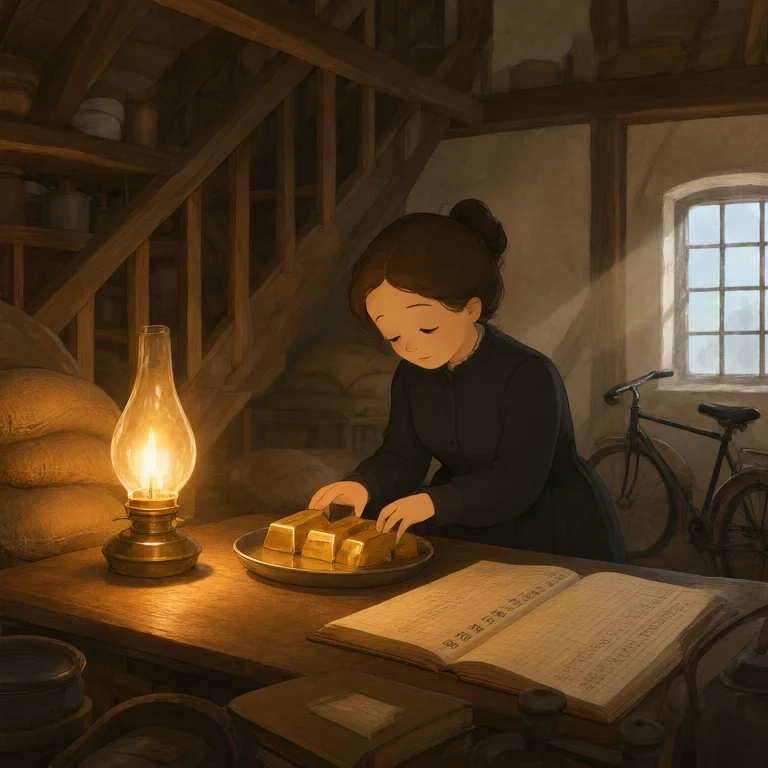
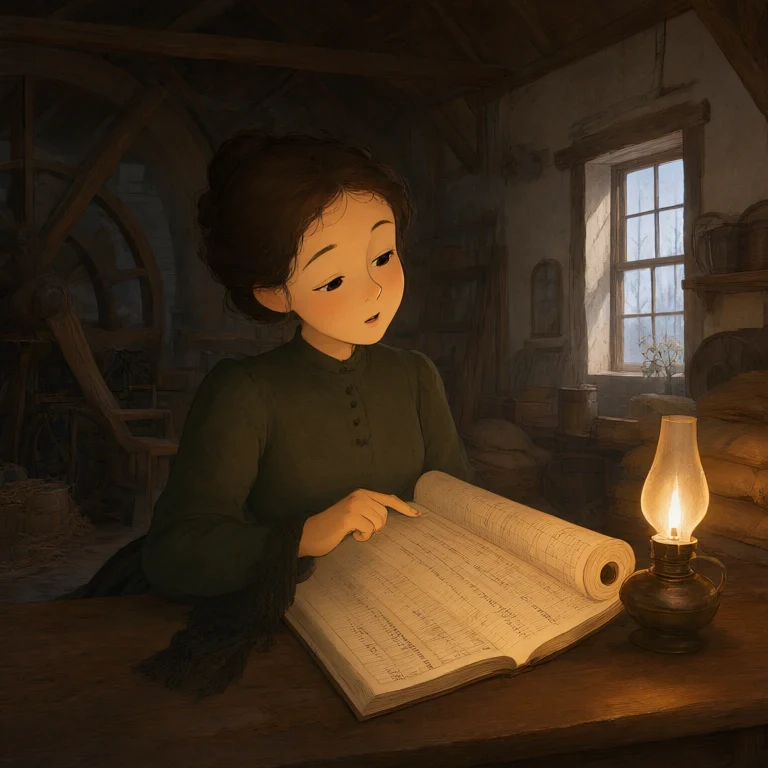
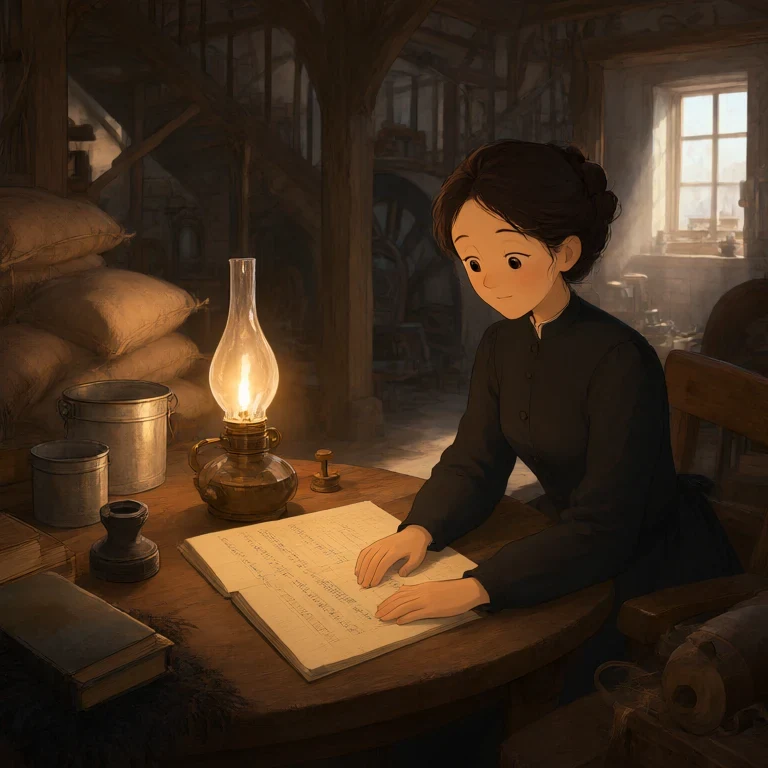
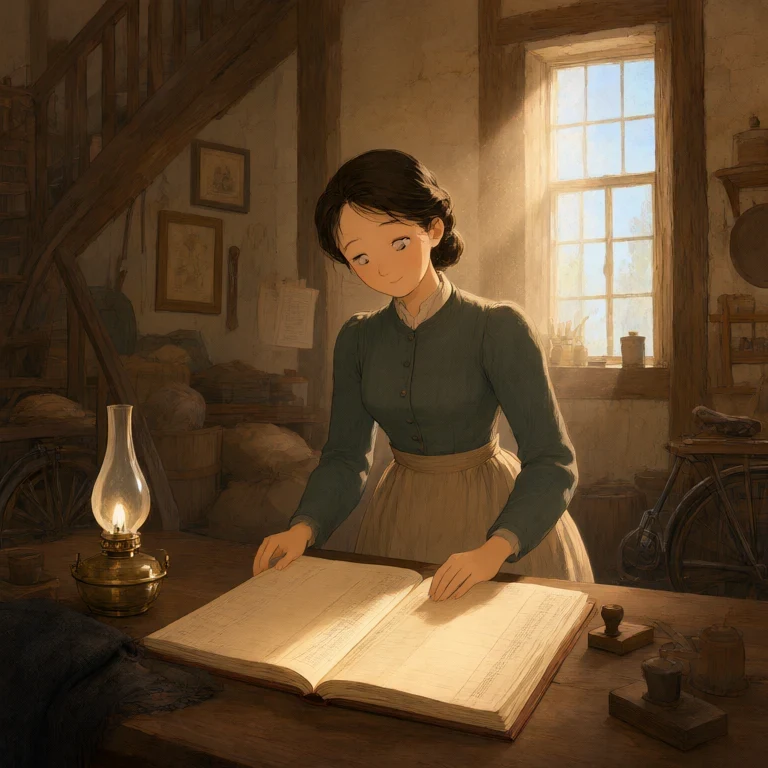
Then the little man opened the tin and took out the roll. It was a book a thousand pages thick with a strap round it, and he turned it over and laid it down flat, and it lay open of its own accord at a page near the end. Aldis read it. She could not help it. She had been reading ledgers since she was six years old.
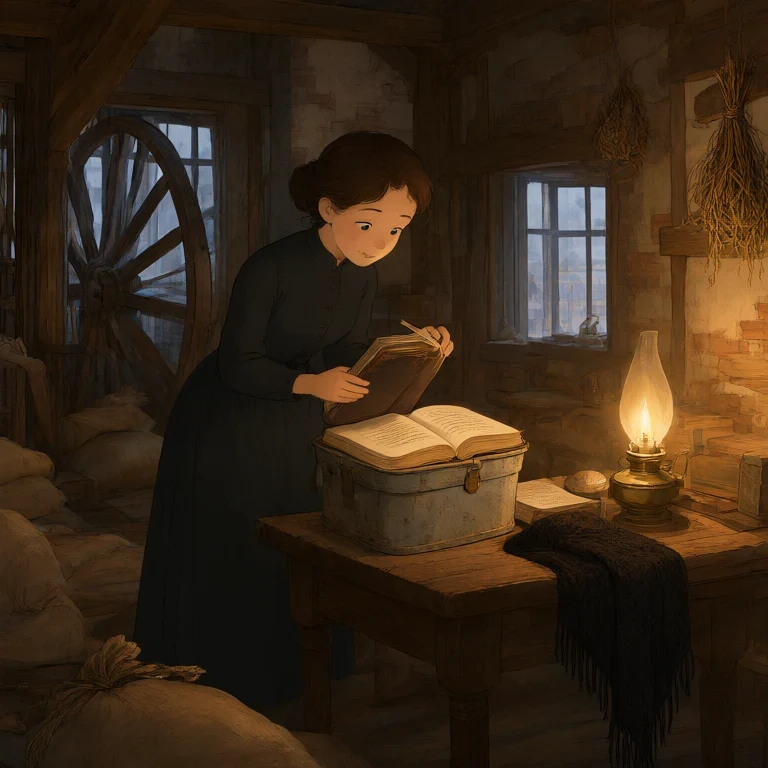
“Twenty-first of November,” she said. “Lent, given freely, at the mill’s own asking. Three nights, ending at dawn on the fifth of December. One call only, in the form I call, at my own good time, without notice. Gold, forty-six ounces and two pennyweights, entered as security. And the name —” She got as far as the third column before she knew there was anything in it. The little man shut the book down on her finger, gently, and did not hurry. “That was the week before Michaelmas,” said her father. “Whose name is it?” said Aldis.
“That,” said her father, “is not a question that is asked at this table.”
“The question was asked at this table,” said the little man. “Your daughter asked it, and she will find out, so I will tell her what I can. It is a name that was given freely and out loud by the person it belongs to. It is not yours and it is not hers, and I will not repeat it in a room with a lamp in it. A name is not a word. It is an instrument. You do not say instruments aloud in a warm room.” “So the price is not the gold,” said Aldis.
“The gold is what I point at,” said the little man. “The gold is mine. It stands against the account. You may not spend it, you may not melt it, and you may not put it in a bag and take it home. You will live beside it for a fortnight, and I am sorry for that, because people find living beside it harder than they expect. The name is the price. The name is what I hold.” “And what does it cost you to hold it?”
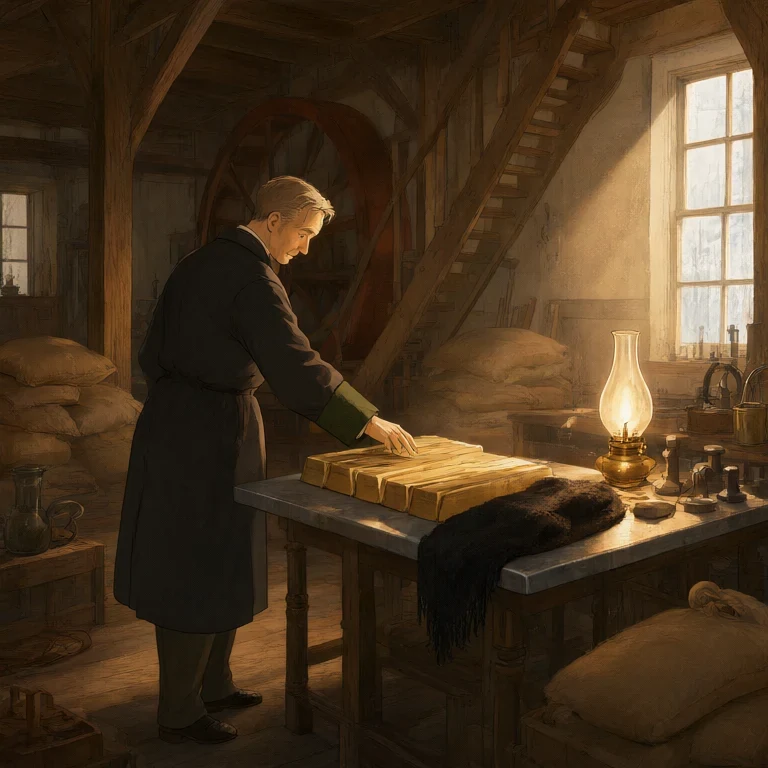
“Nothing,” said the little man, “that concerns you. While I hold it, everything done in this town under that name is mine to answer for, and at the roll I answer for it. That is the price of a cheap loan and I do not apologise for it.”
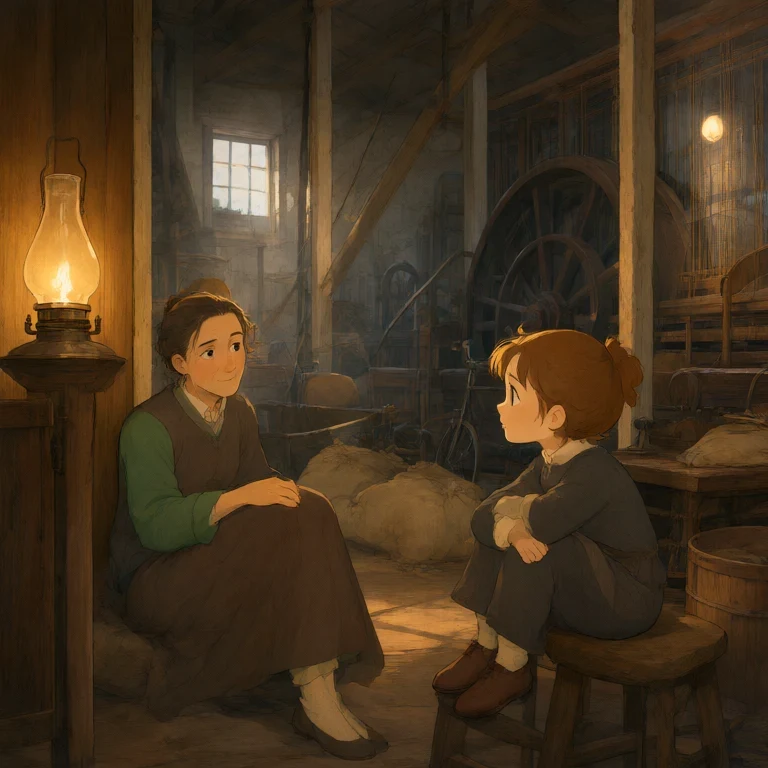
At ten the mill changed watch, and the noise of boots came up through the floor boards and went away again. At one the loom beams began to knock, which they did when the weavers were chasing the wet cloth and did not want the shed to know it. At three her father asked her to go down and sleep, and she said she would sit in the counting house, and he said the counting house was where the pay board was, and she said she knew, and he said that as well.
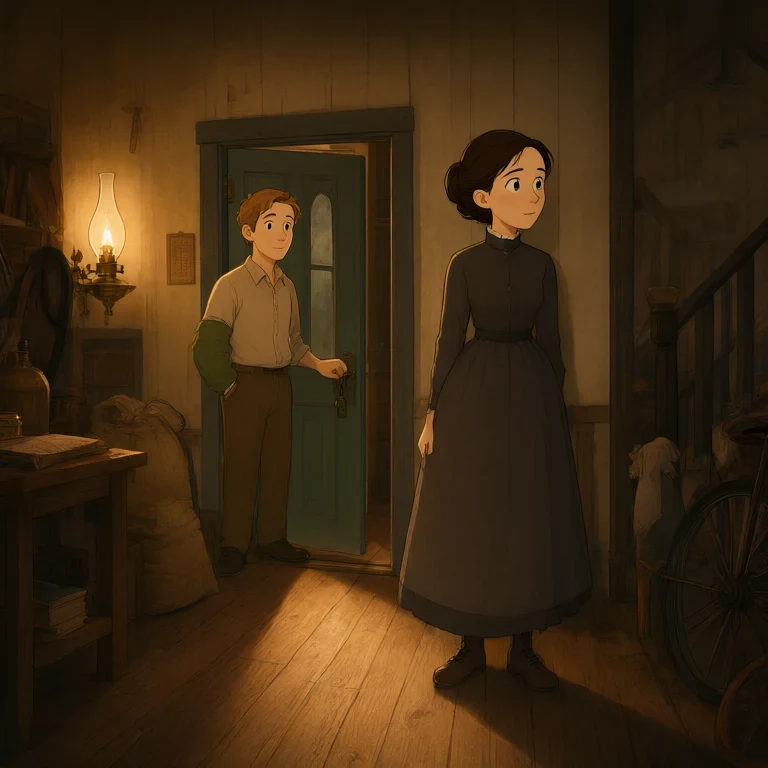
At five the lamp had burned down until the tin table was the brightest thing in the room. The little man turned it up. He did it with two fingers and he did not lean over it. “Where does the gold go?” said Aldis. “Down in the morning, in your father’s weighing, entered in his book, into the seed room under the counting house. And locked.” “Is there anybody in that room?”
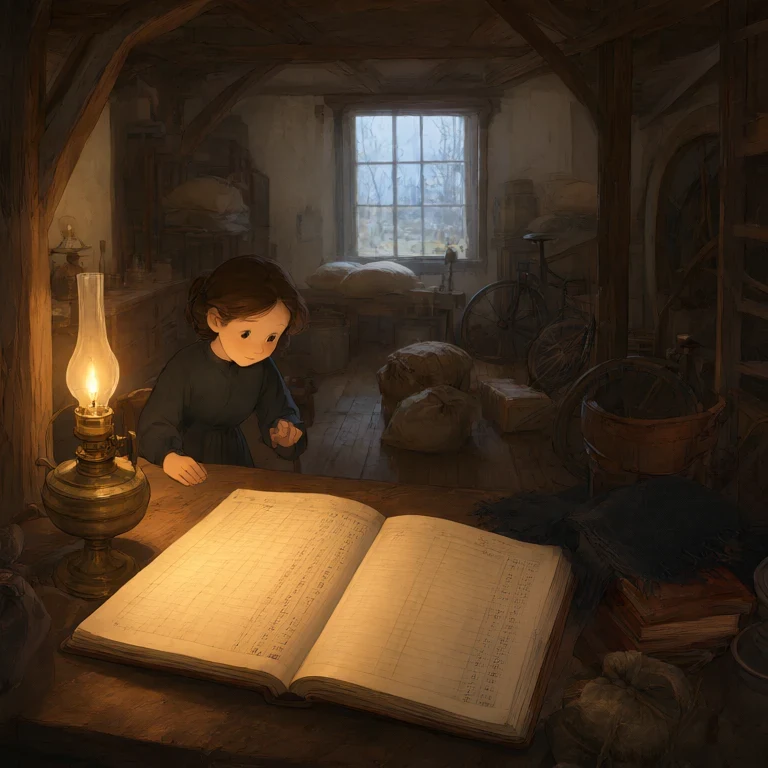
“There is an iron door and a key,” said the little man, “and your book says there are two keys, and one of them is yours, and I do not carry one. The room is exactly as I found it and it will be exactly as I leave it.” “Does my father know that?” “Your father,” said the little man, “has been in service in this room and knows it very well.”
She understood it on Sunday. Not on the stair, and not in the counting house, and not at the top of the mill. On Sunday, walking up the road in the order that everybody walks, behind her stepfather, with the whole valley in front of her and the mill wheel going round on her left. She put the three nights side by side with the shape of the entry, the way you put two columns of a ledger against each other, and she saw the thing she had not seen.
The third night was not the end of the bargain. The third night was the end of the borrowing. The gold would still be the lender’s. The name would still be lent. The call was once only, and at his good time, and with no notice of any kind, and it could be any morning in any year, in any house in this valley, and it would be four words long, and the four words had a form, and after the four words there was only answering.
And she thought about her father saying that it was the week before Michaelmas — a man dodging forward in time on a cold stair at six in the evening, about his own wife’s name, and dodging so well that a hundred years of Sundays had not taught him to do it any other way. She did not ask him again. At the counting-house door he put his hand on the iron tally-board, which hangs outside for anybody passing, before he answered her about the porridge. She watched him do it, and said nothing, and the wheel went round.