The great wheel at Chopwell Colliery stood sixteen feet above the floor of the winding engine house, and if you stood on the stool against the wall you could lay a hand on its rim. It was cast iron, twelve curved spokes and a rim two feet six inches wide, and it was the plainest-looking thing in County Durham. It turned a drum. The drum lifted cages out of a shaft a thousand and forty-three feet deep, and Hester Fenn, who was twenty-one, knew exactly how much the wheel turned for and how many times a day it had to be turned, and had known both since she was eleven years old and tall enough to reach the reverser.
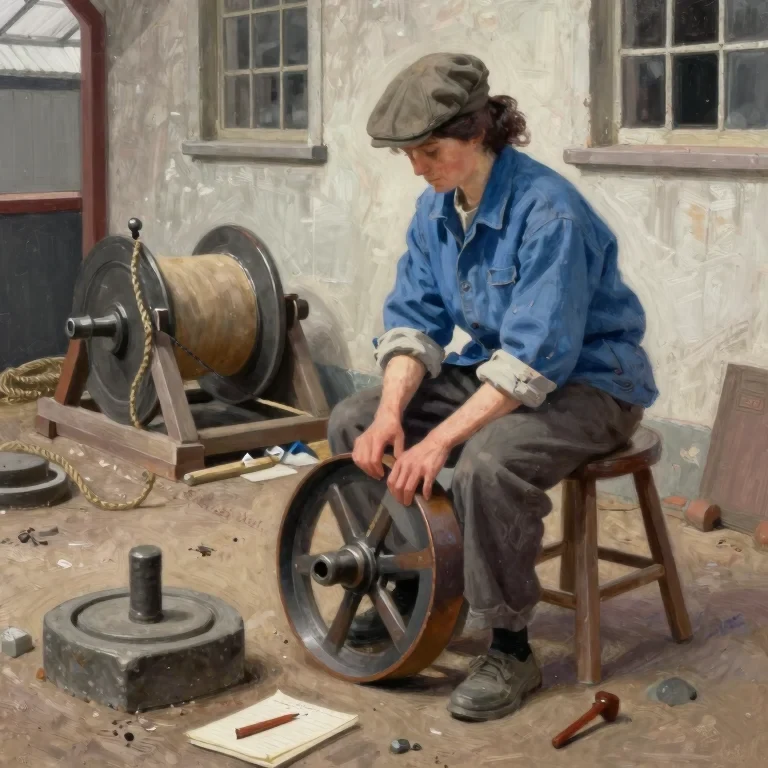
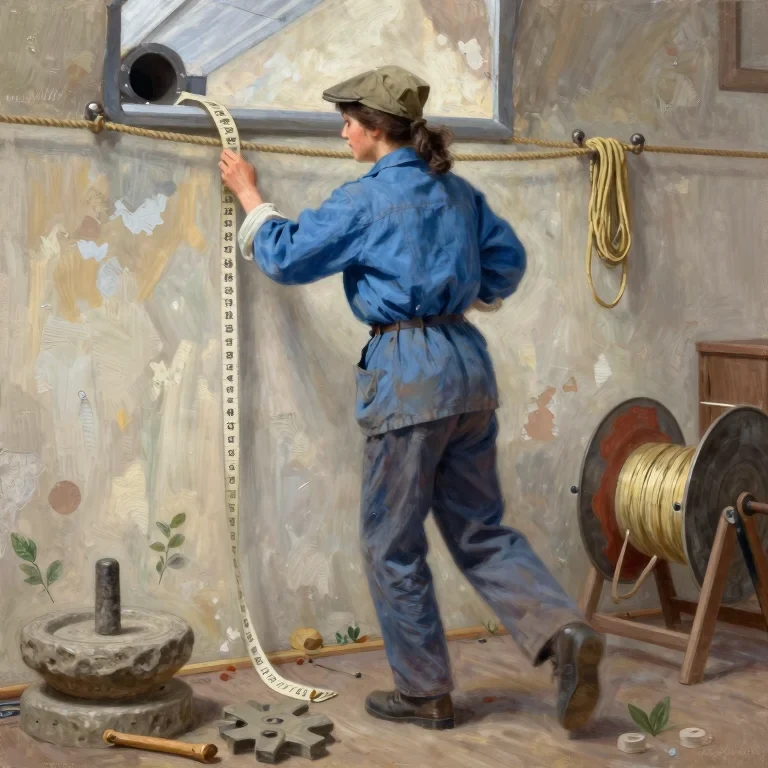
One turn of that wheel paid out fifty feet and three inches of rope. Sixteen feet is the diameter, and the circumference of a sixteen-foot circle is fifty feet and three inches, and anybody who says otherwise can be shown on the floor with a piece of string. The rope from the wheel down to the stool where the cage stood at the pit bottom was one thousand and forty-three feet long. Hester had measured it herself on a Sunday afternoon, with a hundred-foot tape, in two runs, with the cage drawn up out of the way and a banksman standing at the head of the shaft counting the passes out loud. Divide one thousand and forty-three by fifty feet and three inches and you have twenty and three-quarters. Twenty turns and three-quarters of a turn, at every winding, from the day the shaft was sunk to the day they found the water. That last three-quarters of a turn was the reason the rope never lay in the groove it started in, and the reason there was a man in the engine house whose entire business was to know where the rope was.
The engine that turned the wheel was a single cylinder, twenty inches across, with a flywheel five feet four inches over and a crank pin at its rim. The connecting rod went up over her head to the wheel. There was a reverser and a go lever on a quadrant, and there was a steam brake, and when the winder wanted the wheel stopped he put the engine on the brake and held it there, because a drum with a cage hanging on the end of four hundred feet of rope will not stop by itself. In front of him on a stand four feet above the floor was the dial, a brass ring divided in feet and numbered downwards from zero, with one long steel pointer driven off the drum through a train of gears. When the pointer said one thousand and forty-three the cage was at the bottom, if the dial was true. Every boy in the engine house learned that the dial was true before he learned to oil anything.

The dial had been true when it was cut, in 1861. Hester had the drawing and the arithmetic in a school exercise book she kept in her coat pocket along with a pencil stub and a tin of feeler wedges, and she had a copy of the rule that her father Simeon Fenn had held for thirty-one winters as winder of the night shift, which was that a number you have never checked is not a number, it is a habit.

The ropes came off the drum in the second week of November, on a Monday, in the middle of the change of shift, and it took three seconds. Five ropes of an inch and an eighth hung on an eight-foot drum, each in its own groove, and the second rope from the inboard side had been lying over the outboard flange of the drum for six weeks. Hester had watched it do it and had said so. The flange had a cut in it five-eighths of an inch deep, not from the new ropes but from an old one, cut years before by a rope that had once lain over that same edge, and a rope that runs over an edge instead of into a groove is being cut slowly by the edge all the time it works. That Monday morning the rope went into the cut instead of coming off it, and the strands went one after another, and the drum was turning with the cage in the pit bottom, and two hundred feet of rope came off in the time a man can draw a breath.
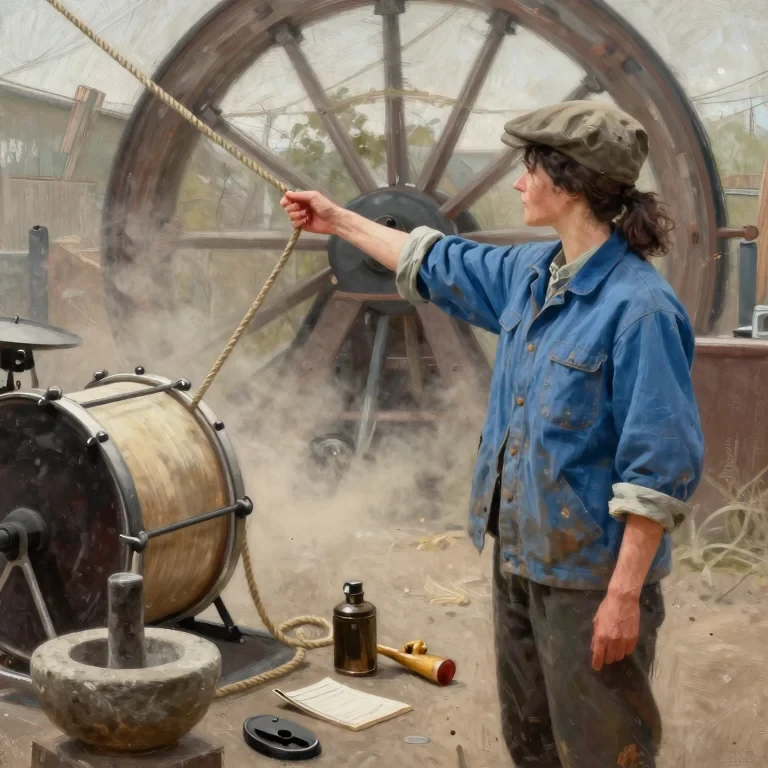
The cage fell nine feet and was caught by the detaching bars, which is what the bars are for, and the bars bent, and the pump rod was smashed in three places, and water came into the sump. On the drum side the loose end of the rope went round with the drum once and struck Elias Priest, a fitter of nineteen, square across the face where he was standing at the drum end with an oil cup in his hand. He lived. He did not see with that eye again. The water in the pit bottom stood eleven feet deep on the Tuesday and forty feet by the following week, and the faces beyond it were drowned, and the winding was stopped, and four hundred men were on short time through the winter. The company paid two thousand four hundred pounds in pumping and timber and stoppage, and the colliery manager, Mr Prothero, wrote in his report that the ropes were improperly marked, which meant that somebody had been paying attention to the ropes and not to the drum.

The order that came down was for new ropes. Five ropes, a thousand one hundred feet each of an inch and an eighth, delivered in ten days. The wheel was not in the order. To bush the wheel meant to take the weight off the shaft, and taking the weight off the shaft meant stopping the winding engine, and stopping the winding engine for six weeks in the middle of a winter when the seam was already lost was not a thing that could be written in a sentence and signed. Hester put the argument in writing. It is in the book, in her hand, on the ninth page, and it is four lines long, and it was answered on the twelfth in a sentence ending with the word sufficient.

The new ropes went on in the first week of January and cost the company eleven days.
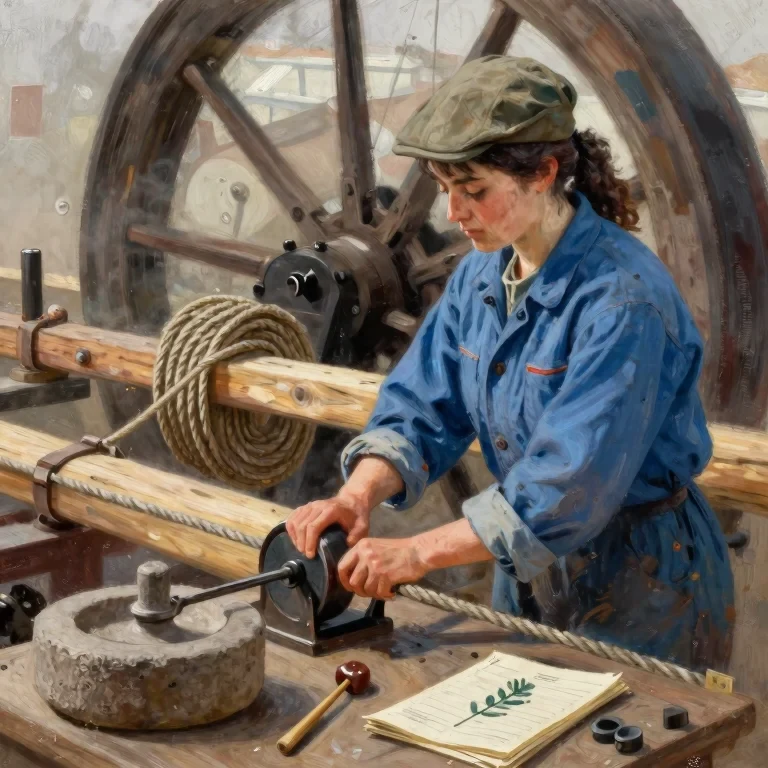
Hester kept the book through the winter. It was not a book anybody had asked her to keep. It was ruled paper, four columns a page: the day, the turns of the wheel, the reading of the dial, and what the dial said against what she could see. On the eleventh of January the rope was running in the second groove of the wheel, which was the groove it had run in since her father's time, and the groove had been used for a very long while. The rim of the wheel is seven inches thick at the root, and the rope is an inch and an eighth, and when a rope has run in a groove for years it does not sit on the bottom of the groove. It sits on the two shoulders, because the bottom has worn round and the shoulders are the only hard places left, and then it stands proud of the rim by the depth of the hollow it is lying in. She put a straight edge across the rim and a wedge under it and measured the hollow at three-eighths of an inch.

A rope standing three-eighths of an inch proud of the rim, going round at twenty-two turns a minute, is not a rope in a groove. It is a rope being dropped into a hollow and lifted out of it, and while the rope is in the hollow it is slack, because the rope is not going anywhere for the length of the hollow. Nobody can hear it over the engine. You can only see it, and only if you are standing where she stood, which was on the step by the wall with her hand on the rim and her eye on the place where the rope went into the groove.

On the ninth of February she saw the cage come up with a hitch in it, twice in a shift, and the banksman at the pit top reported that the cage was swinging to the north. On the eleventh the score on the guide plate at the head of the shaft was four feet long, and she went and looked at it with a lamp. On the nineteenth the ropes came off the drum again, and this time they came off in a heap, all five, and the cage went fourteen feet because the detaching bars were already bent, and it went into the water at the sump. There was nobody on the drum side, because the fitters had been moved to the far end of the house in the autumn after Priest, and nobody was hurt, and the pit was stopped for two months, and the face that had been opened in the first week of February was under nine feet of water before the pumps had been coupled.

Mr Prothero stopped being able to write short sentences. The company sent a man from the office who did not give a name and read Hester's exercise book in the engine house, all forty pages of it, standing up, in the cold, without sitting down. When he got to the page where she had worked out that the groove was worn three-eighths of an inch deep and that the rope was therefore standing proud of the rim by three-eighths of an inch, he stopped and read it twice. Then he went out and stood under the wheel. “What do you want done?” he said. “Bush it,” said Hester. “Both. They have been in since 1861 and they are oval, and that is why the wheel is out of level and that is why the rope went over the flange. I want it true, and I want the rope led into a groove that has not been used, and I want somebody to write all three of those things in a book that is kept where the fitters work, and not in a book that goes into an office in Newcastle.” “How long?” “Six weeks, sir.”

“If I give you six weeks, what do I say to the men?” “Say the winding engine is stopped for six weeks,” said Hester, “and then say it again the following week, and the week after that, and the week after that, and that there are five ropes to lead and two bushes to fit and one wheel to hang, and that if you stop it for six weeks it will not stop again for as many years as the engine has been running.” He gave her the six weeks. He also gave her four men and a boy, and a screw jack, a straight edge eight feet long, a set of feeler wedges, a scraper, and a supply of white lead.

You do not get a bush out of a wheel with the wheel loaded. That is the whole of it, and everything else on the job is detail. The ropes were slacked, the wheel was chocked at the head of the shaft with two baulks of timber and a wedge driven behind, and the cap of the outboard bearing was unbolted. Then the jack was set under the shaft and the screw was turned until the shaft came up off the inboard cap and the wheel's whole weight was hanging on the screw, which is a thing that makes a noise you feel in your teeth through the handle.
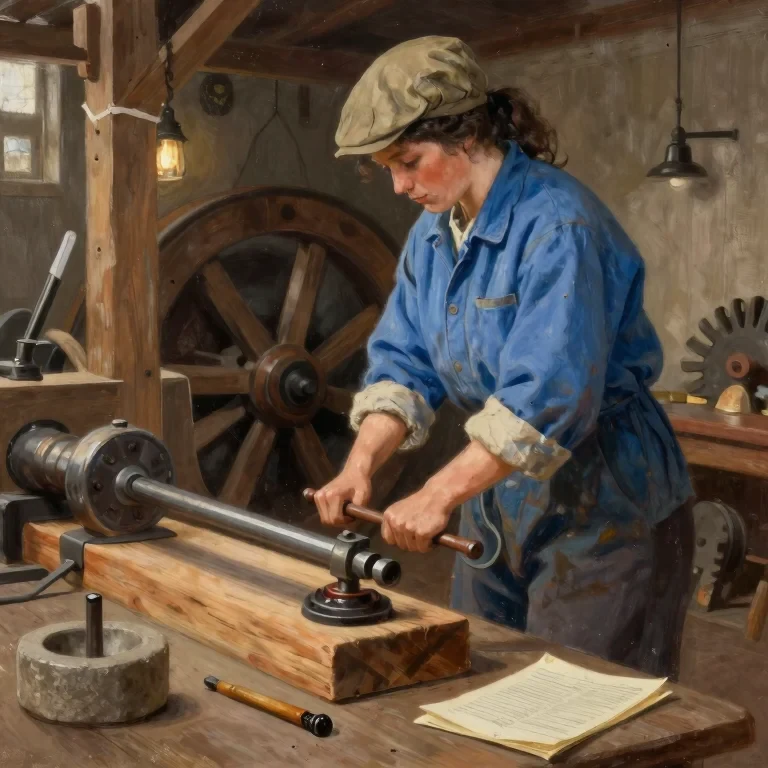
With the weight off, the old bush came out. It was one piece, not split, and it had been in the boss since the pit was opened, and it came out as a brass tube with a shine down one side of the bore and a hollow along the other. Hester measured it before she put it on the bench. It was three-eighths of an inch out of round in the plane the rope travels in, which is the plane that matters, and an eighth of an inch out of round across it, which is the plane that does not. A bush goes out of round in one direction only, always the direction the load is coming, every time, and if you want to know which way the load came you only have to look at the bush.

The boss was scraped clean and the new gunmetal bush was set in it, and then the shaft's two journals were scraped by hand until the blue showed and a line of white lead came up bright over the whole length of each. Simeon Fenn did the outboard one and Hester did the inboard one and he watched her do it and said nothing at all about it, which was the most he had ever said about anything. Then the wheel came down out of level by a quarter of an inch, and they argued about it for two days. It came down out of level because the bushes had worn and the shaft had settled, and with a quarter inch of shim under the inboard cap it went back. The shims went in at the back, not the front, and the cap screw was a set screw with a jam nut, and the point of a set screw is not to hold the bearing down but to hold the bearing where you have put it.

The rope was led into the third groove. The rim carries four grooves, cut four inches apart across its width, and the rope had been in the first when her father came, and had been led into the second in 1887, and had been in the second for thirty-one years, and the second was worn out. The third was new. So the rope went into the third groove and the first two grooves were filled with oak blocks cut to fit and driven in, and the oak will rot in a year and the iron will be in the way of any wheel that ever hangs there again, and Hester wrote that in the book so that whoever took the wheel out in twenty years would know that the first two grooves are filled with wood and not with iron.

The last work was paint. She painted the high place of the rim white, the low place white, and a Roman numeral against each groove, in letters two inches tall, so that a man standing on the floor with a lamp could read it. The white paint is the first thing anybody looks at and it is not a decoration, it is the only record anybody will keep of what she did. Then she measured the finished wheel, the same way she had measured it before, with the straight edge across the rim and the wedge under it, at the four quarters of the rim and at the middle of each half. Before the work the worst place was one and three-quarter inches out of round. After the work the worst place was a quarter of an inch.

The pit wound on a Thursday in March and Hester rode down in the cage with the bankman's lamp, because a fitter who will not go down the shaft in a cage she has just rebuilt cannot ask anybody else to. The rope came off the drum, went over the rim in the third groove, and came down a thousand and forty-three feet in twenty and three-quarters turns of the wheel, and she counted them.

A quarter of an inch out of round is not true. Out of round means the rope drops that quarter of an inch into the low place on every single turn of the wheel, and the path it has to cover is that much shorter, and rope cannot get shorter, so a quarter of an inch of it goes soft against its own length before it is picked up again. There are twenty and three-quarters turns in a winding and it happens twice in a turn, and so there are forty-one times in every descent at which the rope is loose and the cage is hanging on nothing. That is the number Hester would not let anybody argue away. Before the work it was the same forty-one moments, with three-eighths of an inch going soft at each of them, and on the low place of the rim a foot and three-quarter inches of it going soft at once, which is what dropped the cage nine feet in November and put it into the water in February. A slack rope in a shaft is how cages get marked and how detaching bars get bent and how water gets in.

The boy on the drum side was sixteen and he had been there a fortnight and he wanted to know what the white marks were for. “They are where the wheel is high and where it is low,” Hester told him. “When it is at the white mark going down it is going the right way. When it goes past and comes up to the white mark it has dropped, and the rope has gone soft for a second, and if you are standing on the drum when it happens you will find the rope has gone slack and you did not do it.” He looked up at the rim for a while. “It’s not very straight,” he said. “It is a quarter of an inch out,” said Hester Fenn. “It was three-eighths before and one and three-quarter inches before that. It will never be better than that with a hand scraper and a straight edge, and nobody in this house is to say to anybody else that it is true, and if anybody does say it you tell them to come and read page sixty.”

She wrote the last entry in the book before she went home. She wrote the date, and the depth, and the four other ropes on the drum, and the number twenty and three-quarters, and the number forty-one, and the quarter of an inch. Then she wrote the last line, which is the only sentence in forty pages that is not a measurement. The wheel is true to a quarter of an inch. Do not let anybody tell you it is true.