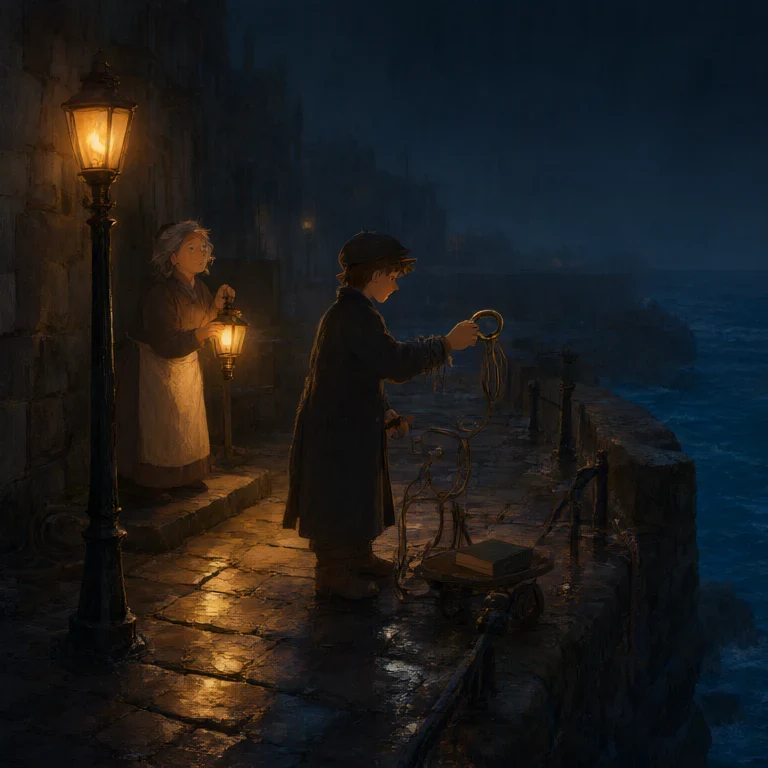
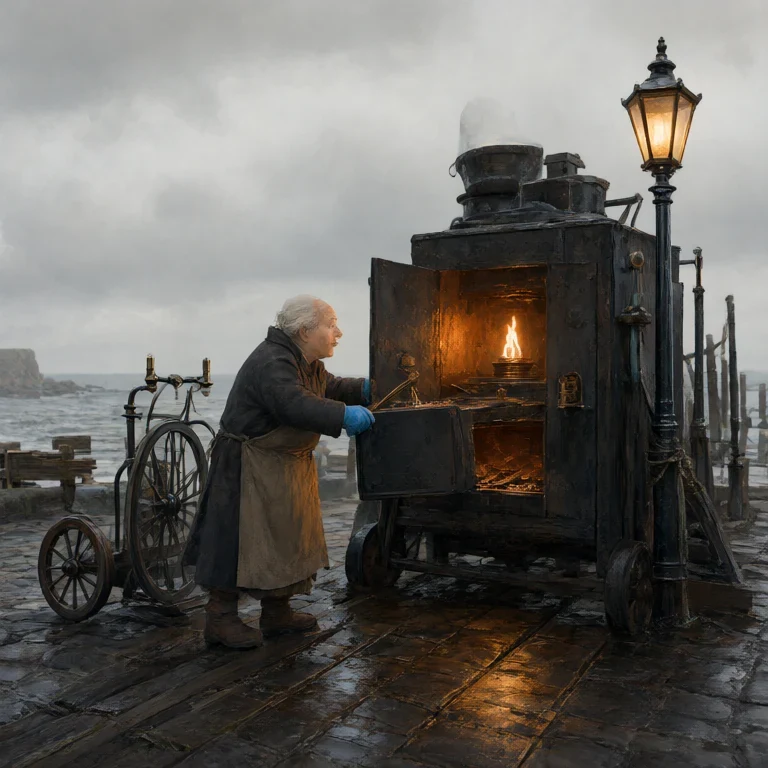
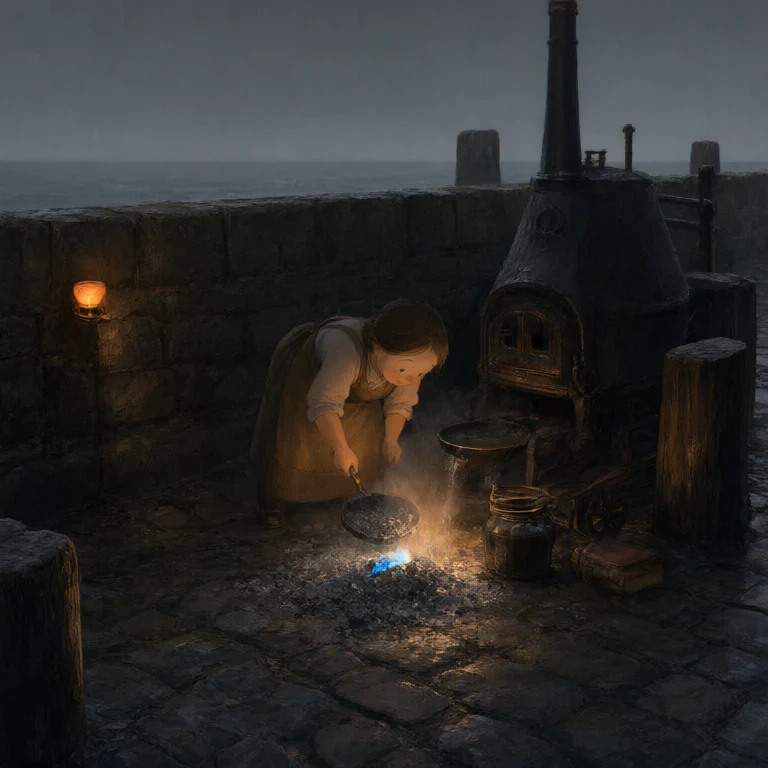
A fish stove is heavier than it looks, and a good one weighs as much as a man. Wren Alsop had the office handcart outside number four Salt Row when the Skells began, and the stove in the scullery was the last big thing in the house. Marget Skell had it out on the flags by ten with the door swung and the grate pulled, and the sea was running up under the wall in a long grey push, and the row smelled of cold ash and old fish. “You will want Tam,” said Marget Skell. “He is idle.”
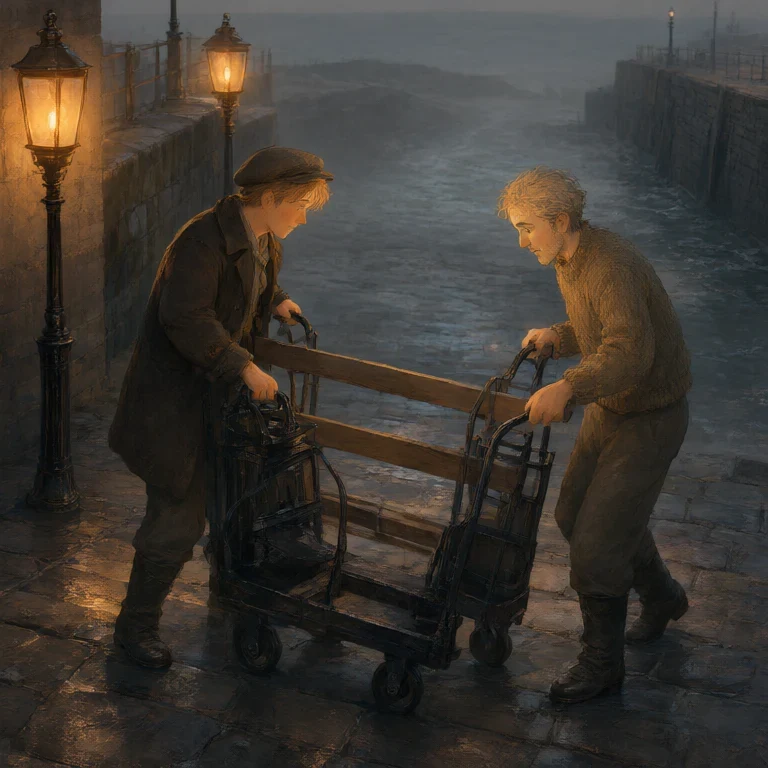
Tam Lark came out of the net-loft across the way and the two of them got the stove up onto the handcart, one at each end, and it went in at the footboard and made the cart spring. It is four hundred yards to the tide cart on the quay, they did it in twenty minutes, and it weighs a hundred and forty pounds, and Wren’s left thumb had been white in the middle since he was eleven. They stood it against the sea wall in the lee of the bollards to be taken at six in the morning.
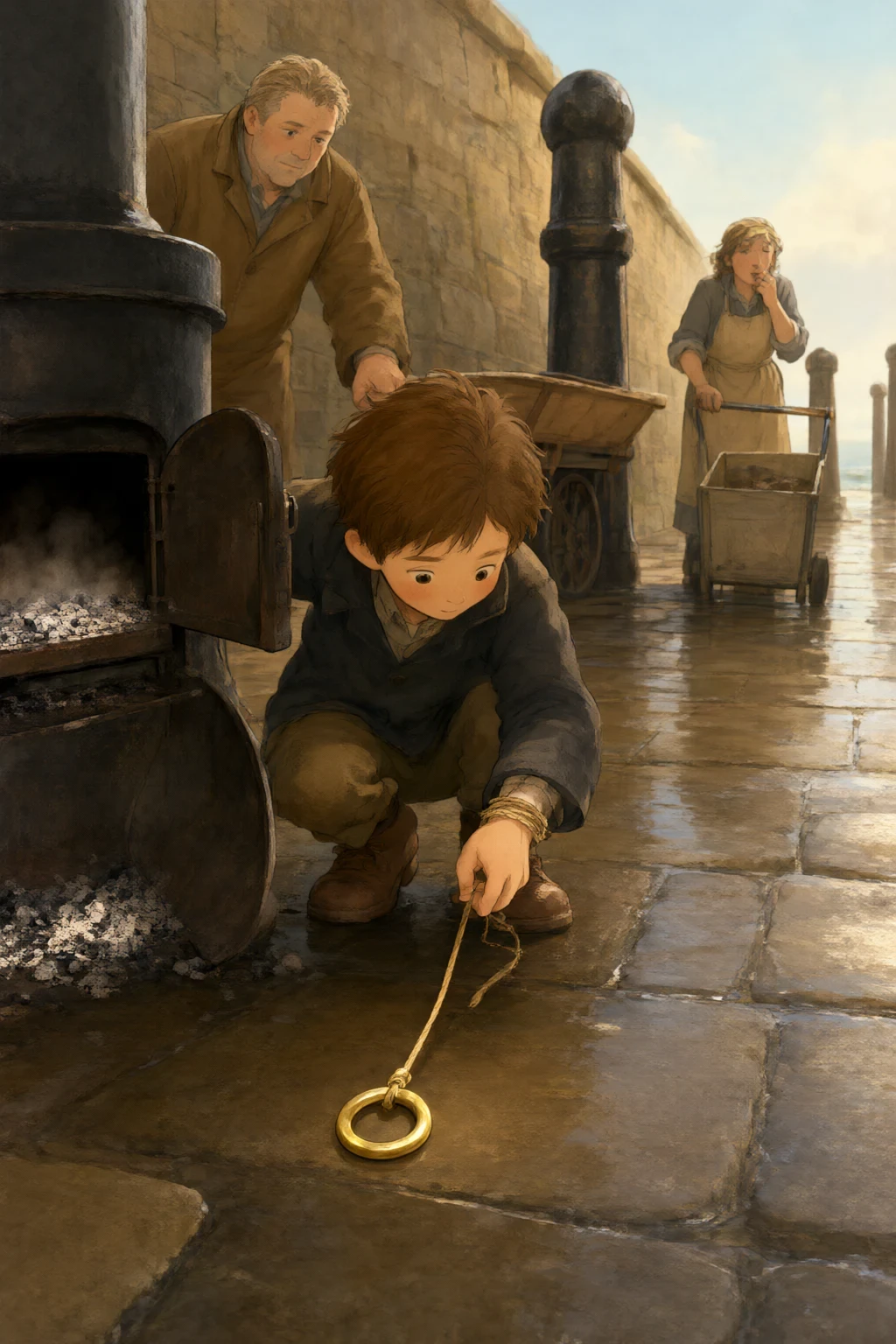
Then Marget Skell came out with the ash pan in both hands to tip it on the stones, and the cinders went out in a grey heap and steamed in the wet air, and out of the middle of the heap, where the fire had been banked, a thing came out with them and lay on the wet stone and shone.
Brass. The size of a two-penny piece and heavier than it looked, and dished on one side into a shallow hollow the exact shape of a hand, and worn bright all round the hollow, and dull and black on the other side except for one band across it that shone like a coin. Nobody said anything. “That is not a stove ring,” said Tam Lark.

The Skell woman said it came out of her stove, so it was hers. The woman in the row behind, Ivy Stannard, came out in her apron having heard the noise, and said her husband had worn a ring like that and had lost it, and here it was in a pan of ash on the quay.

The brass man came by at noon. His name was Oben Tregell and he bought old metal at the yard behind the gas works, and he took the ring out of Marget Skell’s hand, which she should not have allowed, and turned it over. “That is a lamp ring,” he said. “That is off a standard. That is brass, that, and it is worth elevenpence to me, and you have all been sitting here letting the tide come at it.”
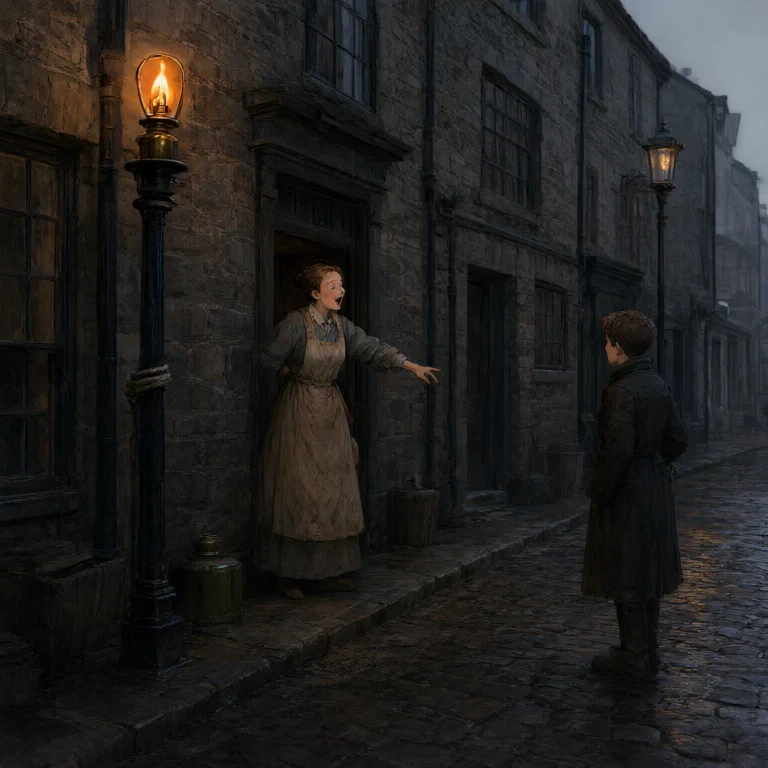
And the fish buyer, Hake Sowerby, who had his shed at the other end of the quay and had been in the trade forty years, said it was the door ring of the stove, that every stove of that pattern had one, and that it came out with the pan if you rattled it. By four o’clock in the afternoon there were four households claiming one brass ring on a quay in Ninehook, and the ring itself was in the pocket of the boy who had carried the stove.
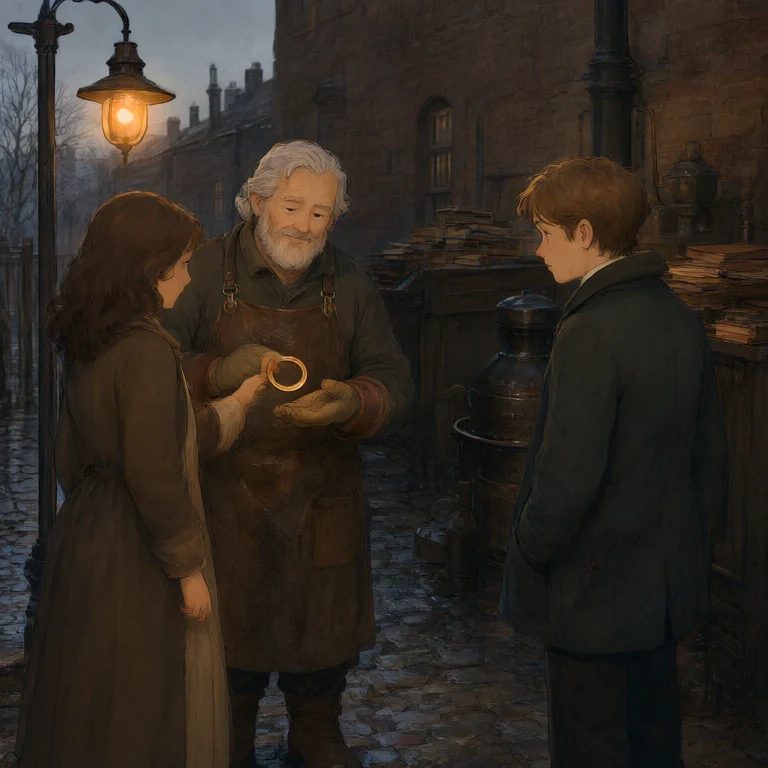
He could not put it down. That was the part he had not expected. He put it on the quay stones and Oben Tregell was nearly on it before his hand was off it. He put it in his coat and the woman in the row behind argued about which pocket. He put it back in his hand and stood in the wind holding it.

The office does not keep rings. He knew that already, in the way he knew the entries, standing at a press in a warm room. The only door of the office a person carrying a ring was ever to go through, and the sentence cut into the lintel said so. He went in by the back door off the quay at half four, under the slate, with the chalk in his hand and forty years of other people’s chalk under it, and the rain coming sideways into the passage.
Hettie Rowntree was at the second desk with her right hand blue to the second knuckle. She held the pen above the line and did not write for a beat too long, and then she wrote a date. “Twenty-second, four bells past,” she said. “Say what you have.” “There is a ring,” said Wren. “Out of a fish stove on Salt Row. Four households claim it. I carried the stove out.”

“Then you found it. The office does not keep rings. It does not find rings. It reads lamps.” She put the pen down. “A ring off a standard is worth nothing in this room until somebody puts it on the standard it came off, and until the holder has read the entry, the ring does not one single thing in that hand.” “Then what do I do with it.” “You take it round the town and you try it.” “Four hundred and eleven lamps.”

“Three hundred and something standards with a dish in them this side of the point.” She put her hand flat on the desk. “And you will not put it down. Not once. Not for a minute. If you put it down on a step, four houses will be at the step before you are at the bottom of it, and then it is a fight, and then it is a report, and I have to write the report.”
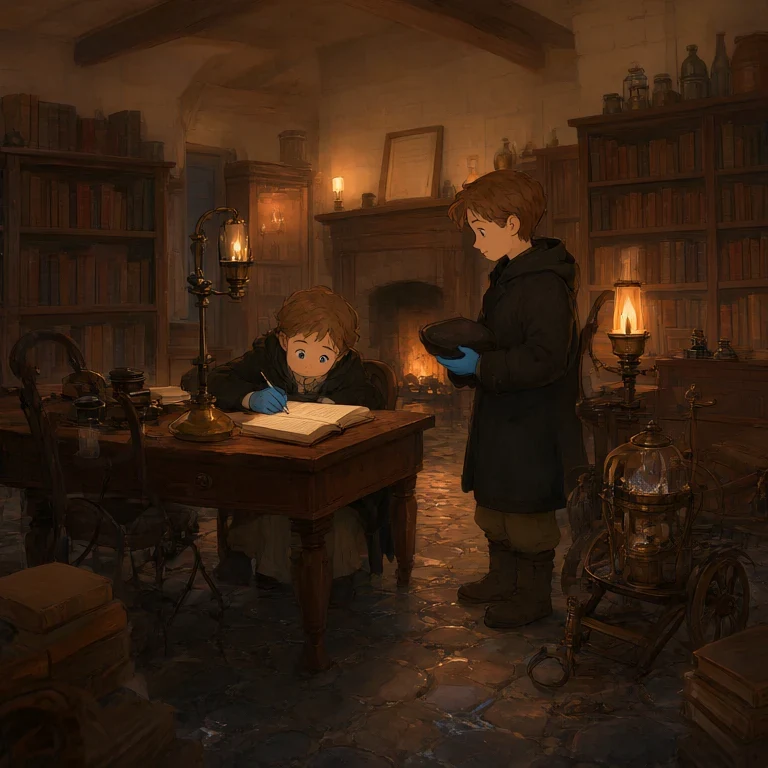
It took the winter. The boy’s job was the boy who had the ring: carry it, try it, put the ward and the number first when a door came open. He went with Constable Iven Pyle on the second evening, because a constable was the correct escort for a brass ring, and because Pyle turned up with a lamp that was not one the town issues and would not say where he had got it.

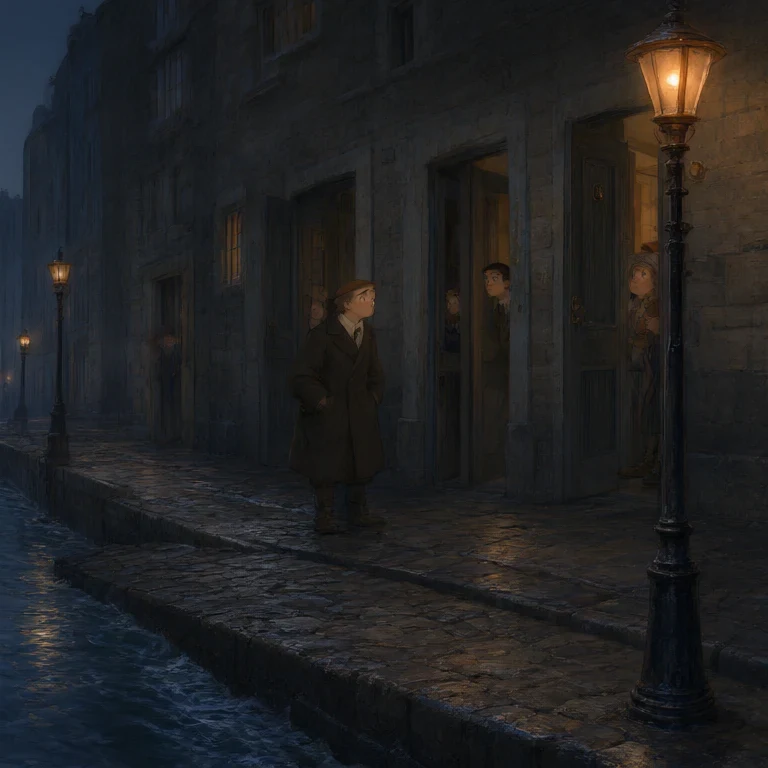
They started at the Old Milestone and worked up. Wren held the ring to every dish on the quays, the four streets and the first mile of the wall, and of three hundred and forty-odd standards exactly eleven had a hollow that took it, and the rest were wrong by a hair, and a hair is the whole of a case in the office.

He tied it to his left wrist with a length of tarred twine from the office store. After the first week the twine had cut a groove in the skin, and after the second it had cut a groove in the wrist itself, and after that he stopped feeling it at all.

It knocked the match box. Every time he brought the taper up he had to hold the box between his knees, and the box has to be held high and behind the flame, and with a brass ring on the wrist the arm does not go where it is told. He put the scald on the flat of his left forearm twice.
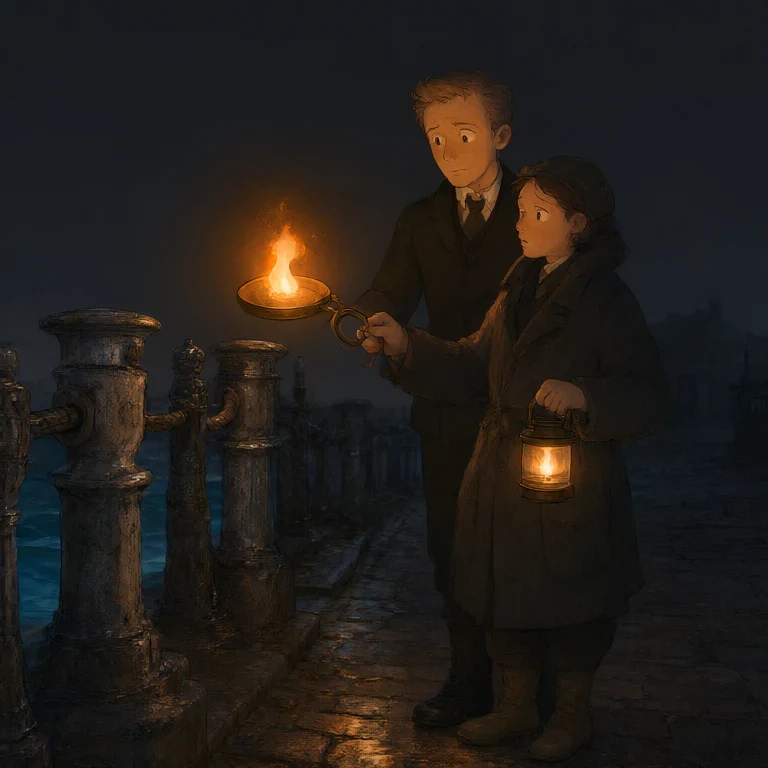
The office wrote four notices on four doorsteps, which took an afternoon, and the notices said the entry would be read in the office and could not be sooner than a fortnight. The reason was written at the foot of it in Hettie Rowntree’s hand: the office has one clerk who can read the older hands, and the harbour wall is four miles of iron standards in the dark, and a woman of forty-one does not walk it in February.
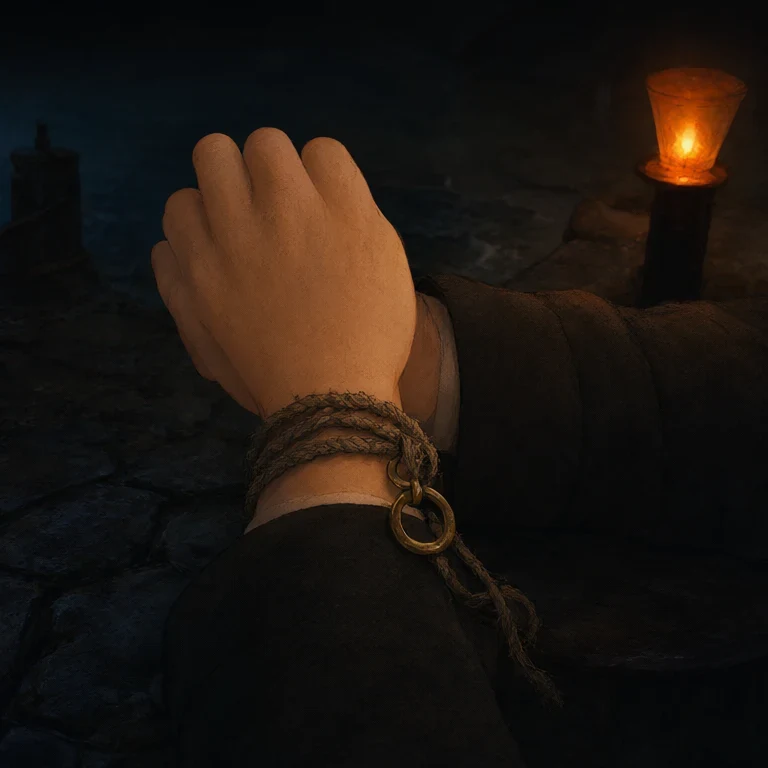
It was on the sixty-first of the wall that the ring went into the hollow and sat, and the boy took it straight off again and put the twine back on his wrist, because that was the arrangement. The sixty-first is the top of the wall steps, where the wall takes the weather. It had lost its glass to the wind twice and been reglazed, and its ring had the finest dish of any in Ninehook, because everybody on that wall has put a thumb into it since 1889.

The second of March, at six bells, in a wind that came over the top of the wall and went down its face. “Listen,” said Hettie Rowntree, standing under the lamp with the volume open in a handcart and a lamp-shade screwed over her other wrist. “Stand where you can read it. You are not signing anything yet.” And she read it as it stood, including the crossed-out parts, because she always did.
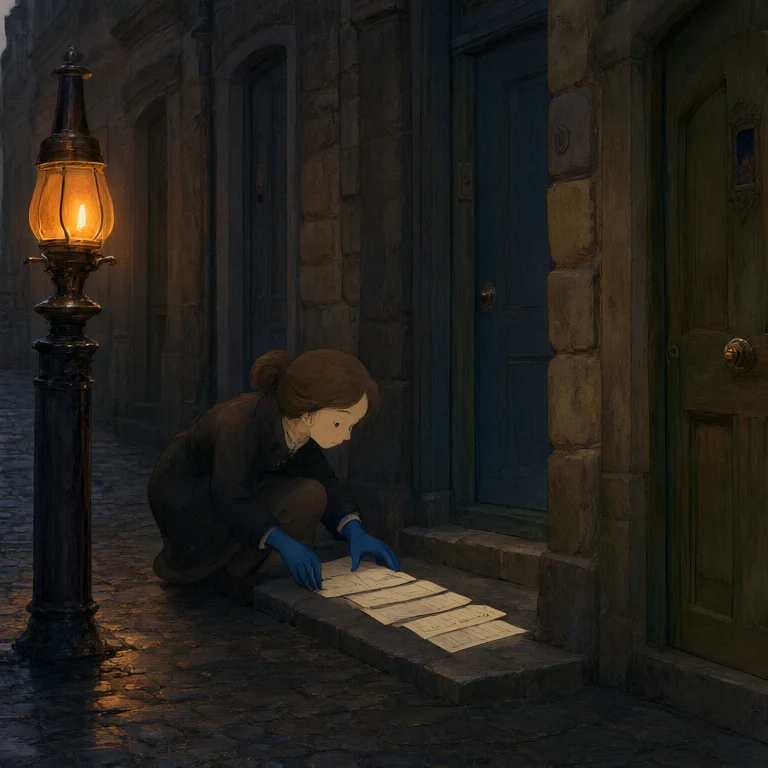
“Lamp sixty-one, harbour wall. Let to Abel Nye, of the wall, coal, the third of September, eighteen eighty-nine, for the term of his life, and after him to his household. Witnessed, the clerk being Samuel Harrow. Amended at the margin, and the amendment is not struck out, it says the ring to be kept by the holder and by no other. Sixth of June, eighteen ninety-one. Holder deceased. Lease not extinguished.” Nobody said anything. “Then the ring is nobody’s,” said Tam Lark, who had not been asked to come and had come.

“It is the ring of a dead man’s lease,” said Hettie Rowntree, “which is the same as a living man’s lease, and it is the office’s business and not yours, and I am going to do what I have to do. First you are going to read it.” “Do you want it on tonight,” she said. “I cannot answer that for you. On, and the wall has a light and the entry goes on performing. Off, and the steps are dark until the household is found.” He read it twice himself, with his finger on the line. “Put it on.” “You have not signed for it. I am not asking you to. I am asking whether you know what the lamp is.” “I do,” said Wren Alsop. “Put it on.”

What the office had to do first was the household. Hettie Rowntree went back and had press four opened, and the ward book for eighteen eighty-nine came out of it. Household returns were taken at the time of every lease, because a lease wants a witness, and the ward book said that Abel Nye, coal, of the wall, kept with Bess Nye, sister, at number four on the wall.

Number four on the wall was a house with a washboard and a line, and a woman of sixty-eight in it who took in washing from the wall and had taken it in since she was thirteen. She had been lighting the sixty-first by taper for thirteen years, because the ring had been off the standard since 1901, and she had never once told anybody.

It was three weeks before the volume could be got out of the press and carted up there, because the entry is the entry and a copy of an entry is a copy, and the boy carried the ring the whole of the three weeks.

The fitting took four minutes, and it was done at six bells with the constable standing under the lamp he was writing about.
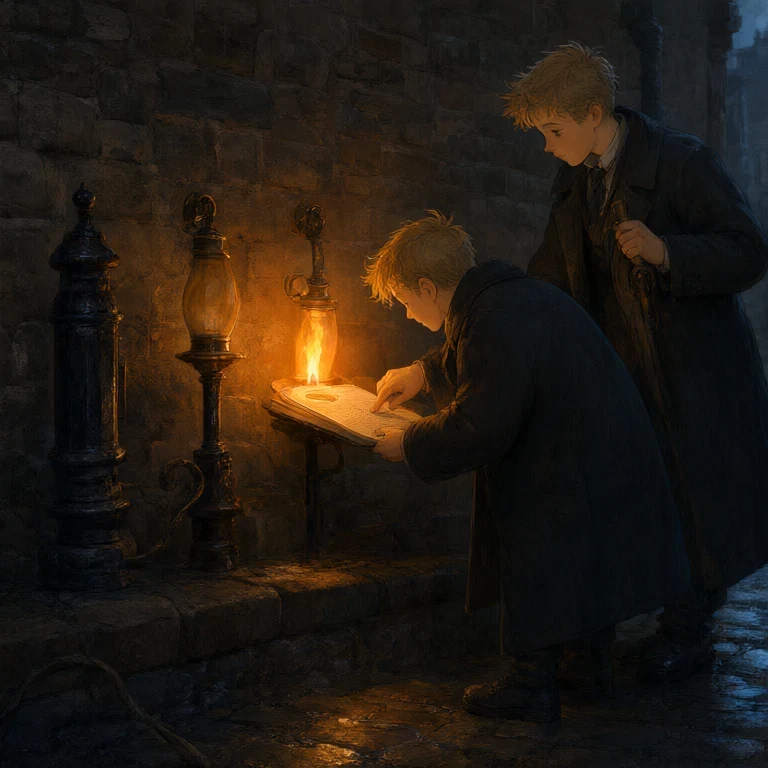
Wren took the twine off his left wrist and put the ring into the dish on the iron standard, and it went in the way a key goes into a lock it was cut for, and the light that came up off the wall was a very small light. Smaller than a taper. Because the light of a lamp is the light the lease allows, and the lease of a dead man of eighteen eighty-nine allows what a dead man of eighteen eighty-nine allowed. Bess Nye looked at it for a while.
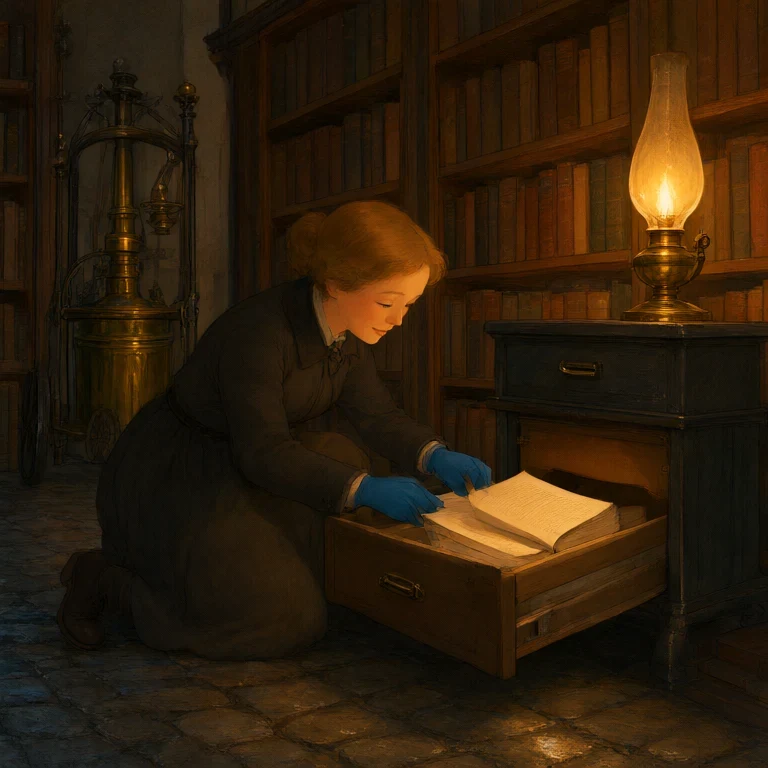
“It is the same,” she said. “It is the one I have been making with a taper. I did not know it was small. I have been making it bigger than it is.”

Nobody took it away from her. The register records and does not adjudicate, and the four households had all been told the entry, and Marget Skell said she did not want it, and Hake Sowerby said the door ring of that stove was in the pan, and Ivy Stannard said her husband had never owned a ring in his life, and Oben Tregell said a thing about elevenpence that nobody laughed at.

The stove was still against the sea wall on the quay at the end of March, because the tide cart had gone past it twice. The door of it stood open. The pan was full of rain and wet ash, and where the brass had lain against the iron for God knew how many years, the iron underneath was bright. A clean ring in the black pan, the width of a finger, as bright as a coin, and it would be there until somebody scraped the rust off the whole of the stove and got to it.