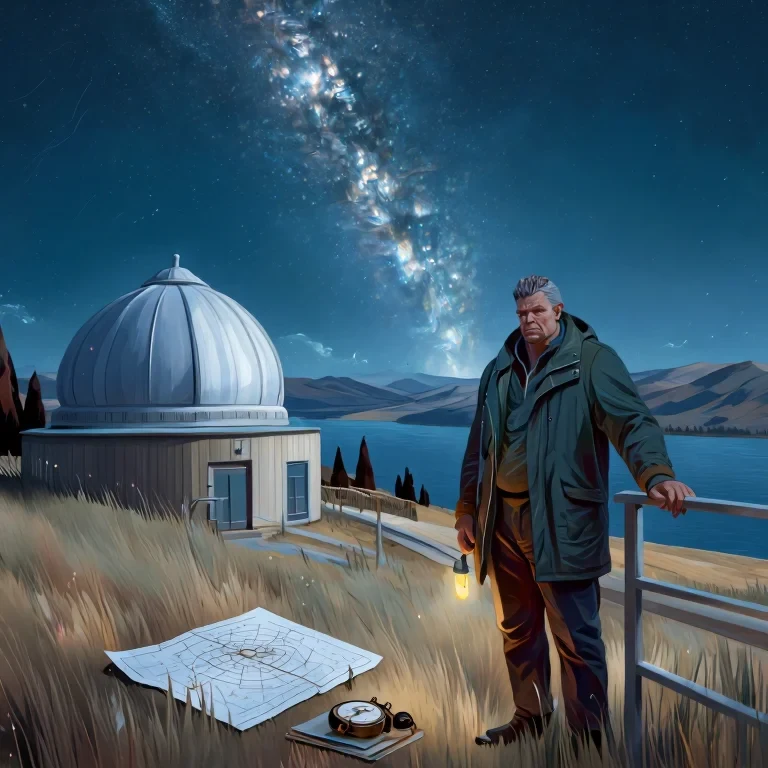
Mount John is a ridge of dry ground above Lake Tekapo, and the road up to it takes eleven minutes from the township. There is one metre of telescope on top of it, the telescope is automated, and the spectrograph on the back of it is run by a man called Hamish Prebble, who has been on that ridge since 2001. He is forty-seven. His hair is short and going grey at the temples. He wears a dark green weatherproof jacket zipped to the throat, because at four in the morning in October on that ridge it is two degrees, and there is nothing anybody can do about that except the jacket.
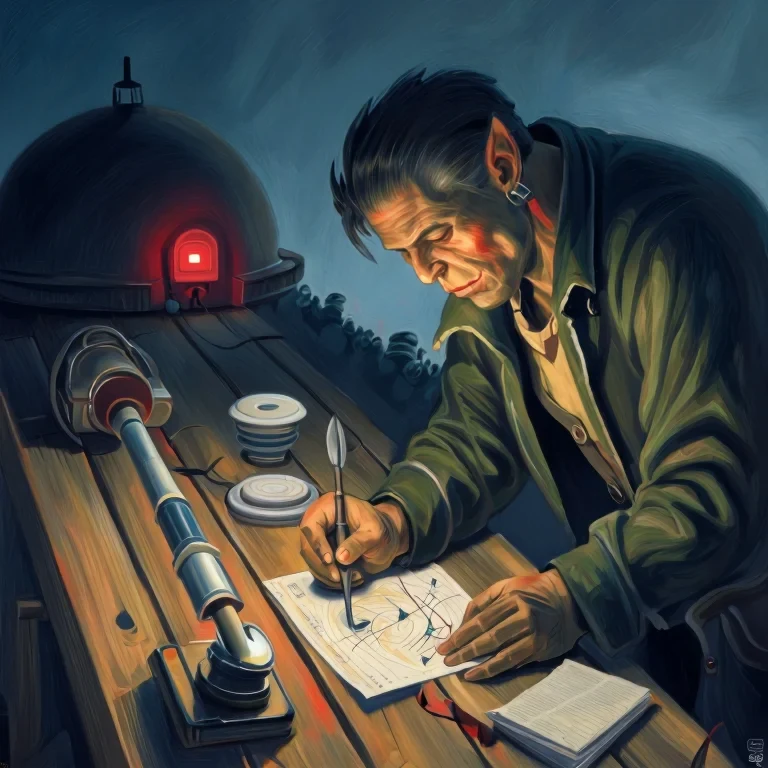
The spectrograph takes the light of one star, spreads it into a rainbow, and lays the rainbow out along a row of detectors in an evacuated tube. Between the star and the detectors the light goes through a sealed cell full of iodine vapour, and the iodine prints about five thousand narrow dark lines across the red end of the spectrum, spaced so that no two of them are alike. If the star were still, those lines would sit at fixed places on the detectors. If the star is moving towards us or away from us at one metre per second, every line in the pattern slides by three and a third parts per million, and half a metre per second slides them by a third of an arcsecond, which on that detector is a fifth of the width of the gap between two of the iodine lines. That is the entire trick. Everything else is bookkeeping.
Here is why the bookkeeping gave twenty-five and not two. A fifth magnitude star on an October night at that altitude sends down through the spectrograph a number of photons you could write down if somebody asked you, and it is not a very large number. One detector pixel across is worth a few kilometres a second of velocity in a spectrograph of that class. To claim a fraction of a metre per second you have to put a pattern of five thousand lines on the detector to better than a ten-thousandth of one pixel, and then you have to do it again tomorrow. So the answer is not bought with a bigger telescope. It is bought with time and exposure length and the sheer number of lines, and there is a square root running through all of it. Twice the light halves the uncertainty. It is the only place in the business where you get something for nothing, and there is not much of it.

The nights were all the same shape. You arrived in the afternoon, walked the last of the ridge in the cold, opened the roof by hand because the shutter motor had opinions, and then everything else was the software. The dome turned. The telescope tracked. The spectrograph took an exposure and then another and then a third, and at the end of the run it read out the pattern and turned the pattern into a velocity and an error on the velocity. Nobody saw a star. That was the part that took visitors longest. The youngest person on that mountain was a graduate student from Christchurch who came up for eleven nights one summer to learn the instrument, who worked out inside a week that the best night is not the night with the best seeing but the night with the most signal, and who then asked, quite reasonably, what the signal was for.
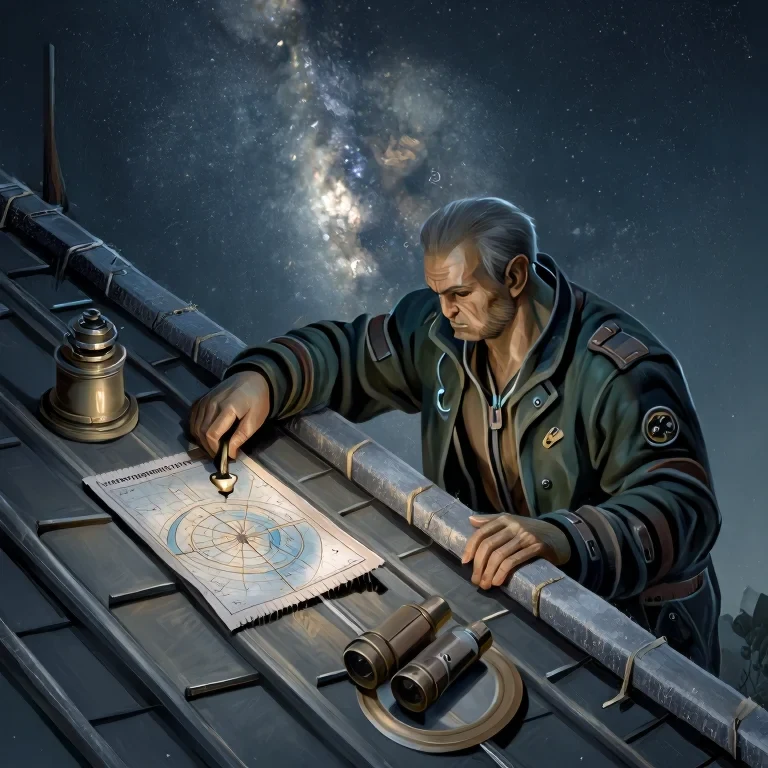
The survey was two hundred and fourteen stars, all of them like the Sun and none of them dimmer than the seventh magnitude, all of them to be watched for a wobble that a planet could make. There were no planets. Four years of nights went into that sentence. He had a photograph on the wall of the ridge taken from the car park at two in the morning in June, and it had two thousand stars in it, and nobody in that building had ever once said anything about the photograph. The survey found one star with a companion on a four hundred day orbit, which was not what the survey was for, and which turned out to be a low-mass star rather than a planet when the mass came out at twice Jupiter's.

A planet's grip on its star falls away faster than anything else in the trade. Halve the period and the grip goes up by about two and a half, because the orbit shrinks faster than the period shortens. That is why almost every large planet in every catalogue has a short period, why the hardest job in the business is a small planet on a long orbit, and why a survey of two hundred and fourteen stars had the whole sky in front of it and came back with nothing. It is also why half a metre per second on a three-day orbit was going to be the most interesting number in the whole of the subject, and why it was going to turn out to be impossible.
The other one came from the north. In October 2012 a group working at La Silla, in Chile, on a three-and-a-half metre telescope with a spectrograph called HARPS, announced a planet of a little over one Earth mass around Alpha Centauri B, which is the second closest star to the Sun, four and a third light years away, and which shines from the southern sky most of the night over that lake. They had four hundred and fifty-nine measurements of its speed, taken between February 2008 and July 2011, on a three-day cycle. Four hundred and fifty-nine measurements. The wobble was half a metre per second. The instrument's own long-term precision was eight tenths of a metre per second.

Prebble read the paper twice and then did the arithmetic, because that is what he did instead of reading it a third time. One Earth mass going round a star like the Sun once every three days moves that star at about four tenths of a metre per second. Half a metre per second is a bit more than one Earth mass. The paper had printed one point one three, which is the same number with that paper's own assumptions in it, and that paper was careful about the assumptions. The planet, if it was there, was six million kilometres out, which is fifteen times as far as the Moon, and it went round in three days and five hours. He looked up the survey result for that star in his own archive. Twenty-five metres per second a night, thirty-four nights of it, spread across three seasons. Twenty-five is fifty times too big.
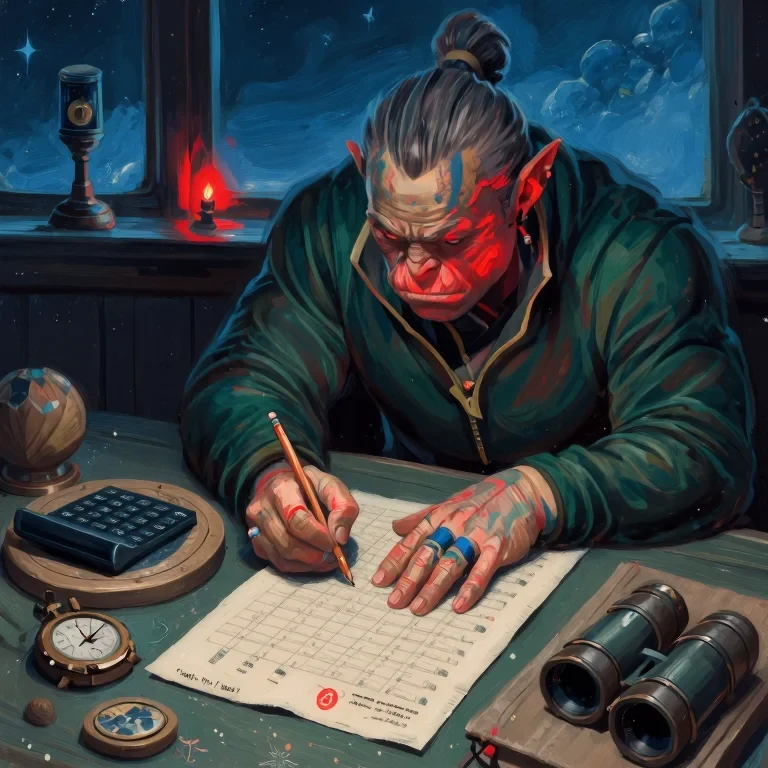
So he went and listened to somebody else's data, which is what most of the field was doing that year and none of it is what the mountain is for. The four hundred and fifty-nine velocities came as one table with three columns: the time, the speed, and the size of the error on the speed. He made a fifth column for the things that had come with them, the width of the lines, the brightness of the star in a particular colour, and the difference in height between the two points halfway up the left and right flanks of each line. That last one is called the bisector span, and it is why a spectroscopist keeps a second curve open in the plot window at all times.

Here is what a star's line of light looks like in theory. An even, shallow trough, one wavelength across it, dark at the bottom. Here is what it looks like on a star that is turning on its axis, which every star does. Gas in the atmosphere is streaming sideways, thousands of kilometres a second, into the spot on the star's face and away from it again, and that gas is moving towards us or away from us depending on which side of the star it is standing on. The red half of the line is drawn by a different part of the atmosphere from the blue half, at a different speed, and the trough is not symmetrical. When a spot group grows on one side of the star, the trough changes shape. The apparent centre of the line moves. The measured velocity moves with it. A planet moves the whole line, both halves together, and changes nothing about its shape. That is the whole of the difference, and it is written down as two curves on one plot. The speed, and the bisector span, against the same time axis.

The bump was there. Three days, five hours and thirty-nine minutes, at half a metre per second, sitting on the noise exactly where the paper said it would sit. It looked like a planet. The bisector spans, folded over that cycle, showed nothing. He did that eleven ways, because there is no one correct way to fold a curve over a cycle, and eleven out of eleven came out flat. Flat is not the same as proof. A real planet on a quiet star gives a flat curve too. The test works because a spot does not give a flat curve, and almost everything that is not a planet is a spot.
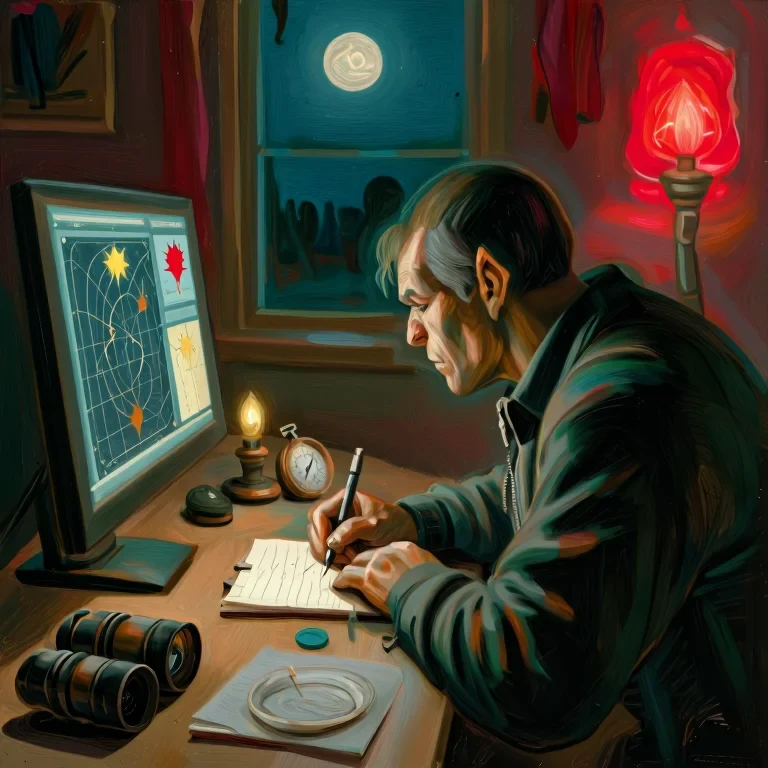
Then he looked at the times, which is the thing that saves people from doing this for a decade. Four hundred and fifty-nine velocities over three and a half years is not four hundred and fifty-nine times spread evenly across three and a half years. It is thirty-eight observing runs, each of them between four and eleven nights long, laid down in a stretch, and then nothing for weeks while the moon was bright or the cloud came in or the telescope was doing something else entirely. Thirty-eight runs of five nights, four and a half months apart in the middle of the year and two and a half months apart at the ends of it, is a pattern. A pattern in the times has a shape, and that shape is a time series, and it has peaks in it. Take the times themselves and find the cycles in them and there is a peak at three point two days.
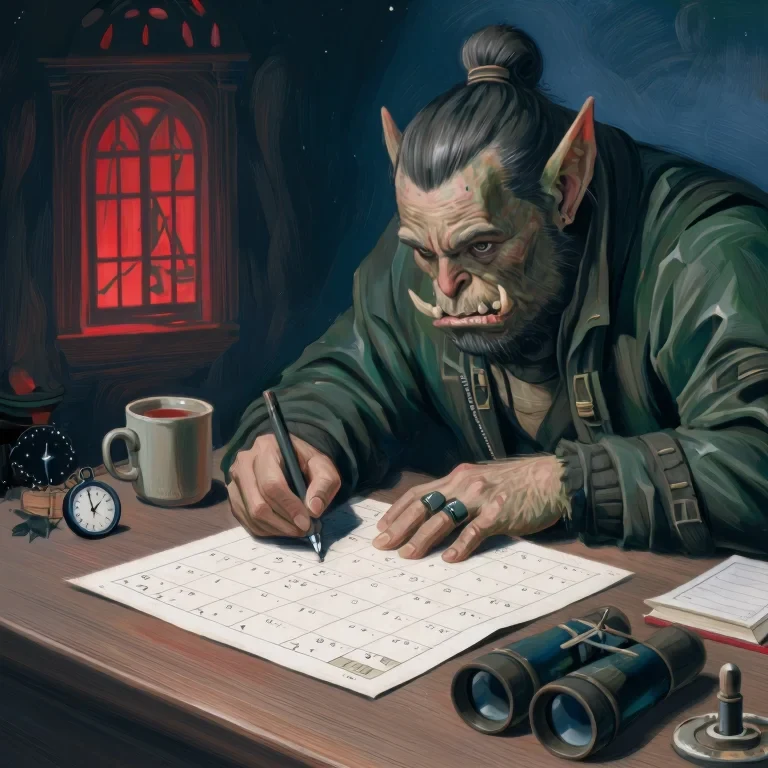
That was the whole of it. Not a planet, and not a fault in the spectrograph, and not a mistake in the arithmetic. A calendar. You cannot listen for a three-day signal in data taken in five-night blocks with two-month holes between them, because the holes put a rhythm into the data that has nothing to do with any star. Feed the model that was supposed to contain the planet a synthetic star with no planet on it, at exactly the same observing times, and it hands back a five-tenths-of-a-metre-per-second bump at three point two days, at about three times the noise. It looks convincing. It is the calendar, standing still. He tried it four times. It came back every time.
The fifth test was the one that finished it. He took the table, sorted it, deleted fifteen measurements at random, and redid the whole thing from the first line of code. The bump was still there, but shorter. He deleted twelve more. It was gone. He put the twenty-seven points back in their places and it came back at full height. A signal that can be switched off by removing six per cent of the data and switched on again by putting the same six per cent back has not survived a test of whether it is real. It has survived a test of whether the arithmetic is stable.
The director drove up on the Tuesday. He was not unkind about it. He asked what the number was now, and Prebble said the number was now zero, which was not true and which the director let go past, and then he asked what Prebble wanted to do with his forty nights. Prebble said he would put them on the brightest stars in the survey and bring the errors down. A survey whose velocities are good to twenty-five metres per second cannot say anything about a planet when the working number for a planet is half a metre per second, and that is a problem with the mountain and not with the planets. The director said that was the most expensive way anybody had ever spent a telescope, and then he approved it. The retraction came out in 2015 and it did not use his work. That was correct. His was one run of windows over one set of times, and the paper that got there first had three sets of windows and a better time series to spend them on.

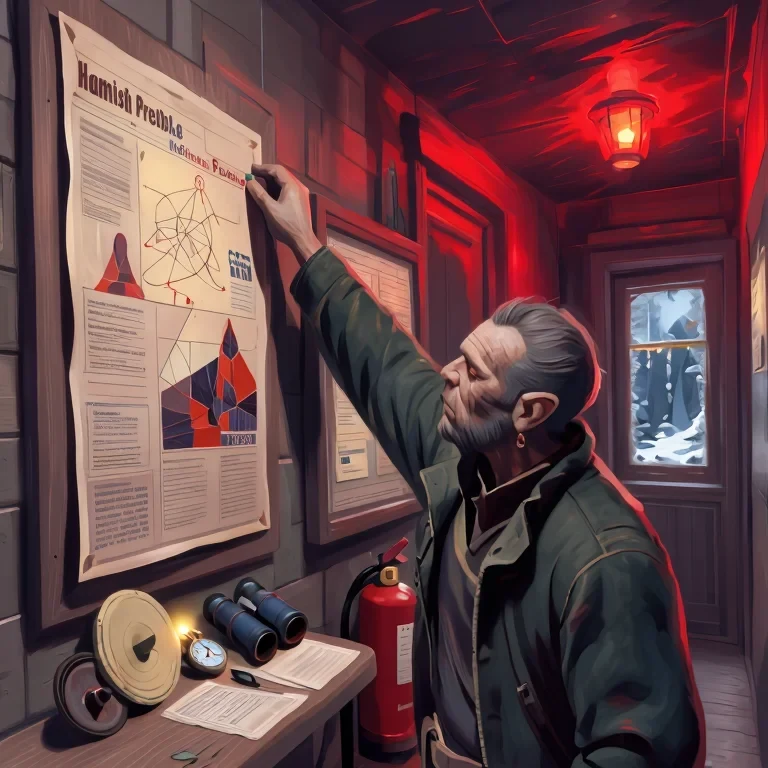
He read it standing up, in the control room, at four in the morning. Then he went out into the corridor and took down the poster. The poster had been up since October. It said a world had been found at our front door. The communications people had wanted a photograph of somebody local holding something, so his name was on it in small type, under a picture of him with the dome open behind him and his hands on the counter and the expression of a man waiting for a shutter. He had a slot booked for 2014. Forty nights on the one-metre, to sit on that three-day cycle at half a metre per second. He handed the nights back in October with a paragraph attached explaining why.
What he had instead was a number he could defend, and he has never been certain the trade was worth it. Out of his own thirty-four nights on that star he can say there is nothing around Alpha Centauri B heavy enough to pull the star by as much as twenty-five metres per second, which on an orbit of that period means nothing heavier than about sixty Earth masses. Sixty Earth masses is a fifth of Jupiter. It is not nothing. It is also fifty times too weak to be the answer anybody wanted.
And it is wrong in a way he can measure and not fix. The spectrograph is not bolted to the telescope. It is on a bench inside, and the light arrives down a fibre, and the end of that fibre sits on the focal plane where a hundredth of a degree of change in temperature changes its position. A fibre that moves tilts the angle of the spectrograph slightly, and a tilt multiplies every wavelength in the recording by the same very small fraction, so every line in the pattern slides a very little even though the star did not move. The iodine lines do not show this, because the cell is not going anywhere. The stellar lines do show it, and every velocity in the night carries the same part of it, and averaging a hundred nights does not average it away. How much of his twenty-five is that, he cannot separate out of his own data. It could be five metres per second. It could be fifteen. So the number in the abstract is sixty Earth masses, and it was the best number available, and it would move by a factor of more than two the day somebody put a second fibre on that instrument.
That star also turns on its axis once every thirty-seven days, or somewhere between thirty-six and forty depending on which season you ask in, because the surface it turns is not solid and the two hemispheres do not keep the same time. That is a number he needed and could not have. Every limit he has ever written down is written underneath a rotation period, and every rotation period is underneath a number that moves through the year. That is where the fine print lives, and the fine print is where the truth is.
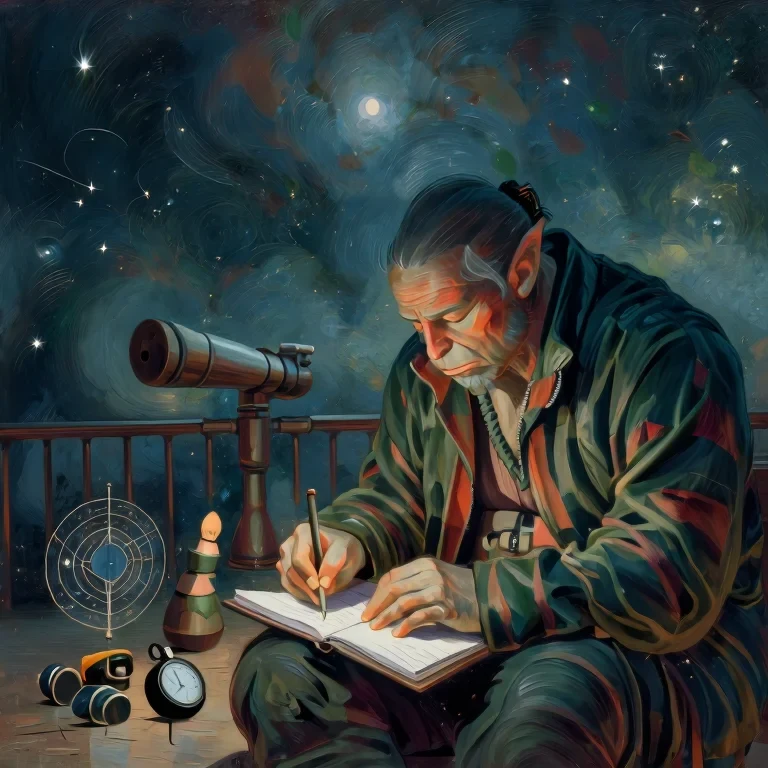
In the spring he went back to the survey, which was two hundred and fourteen stars and no planets and was still going to want four more years. The one-metre tracked Alpha Centauri B four nights a month, because it is bright, because it stands high in the south from that ridge, and because it was in the book and there was no reason to take it out. He worked the desk the way he always had. He read the dome off the handwheel, he ran the sequence, he watched the guide star on the screen, and at twenty past six, when the sky went the colour of an old coin, he shut the roof and wrote the night's numbers into the red log in metres per second, in a column of figures with a plus or a minus after each one. Twenty-five. Plus or minus twenty-five, night after night, on a star four and a third light years off. Eighteen months earlier, on the facing page, in the same hand, he had written half.