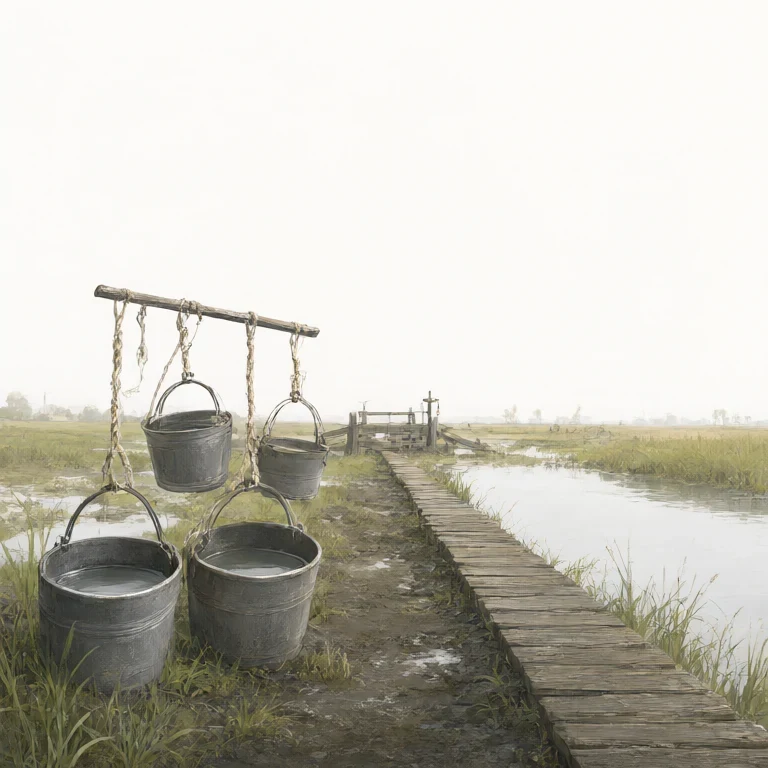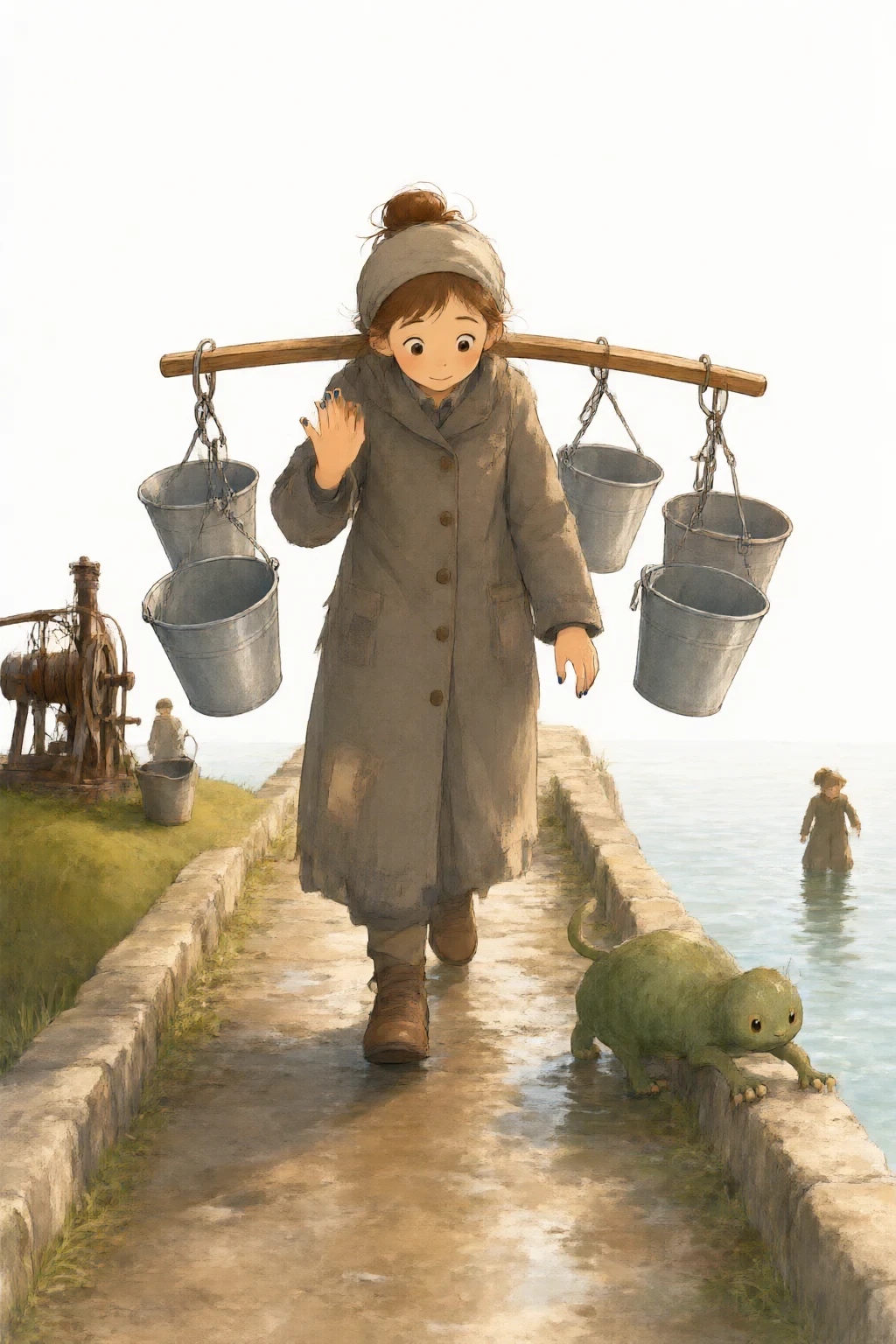
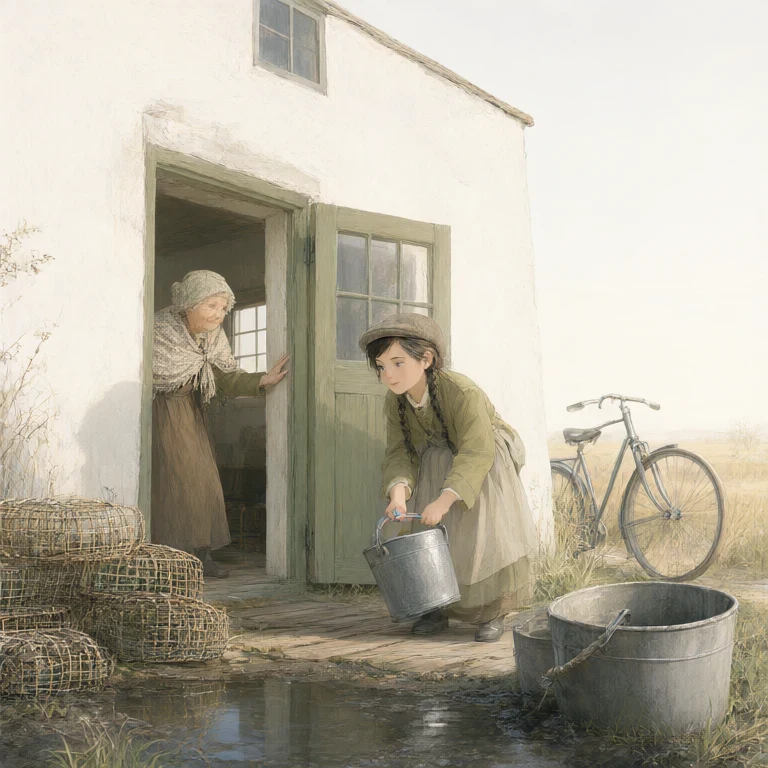
The Fen Track runs four miles of raised causeway from Coldwick to Sallow, and on an October afternoon there is nothing in that fen tall enough to stand in the way of the view. Bess Brack had four pails on the rail and was a third of the way up it when the man from the Blind well came off the second cottage and put a hand on the rail.
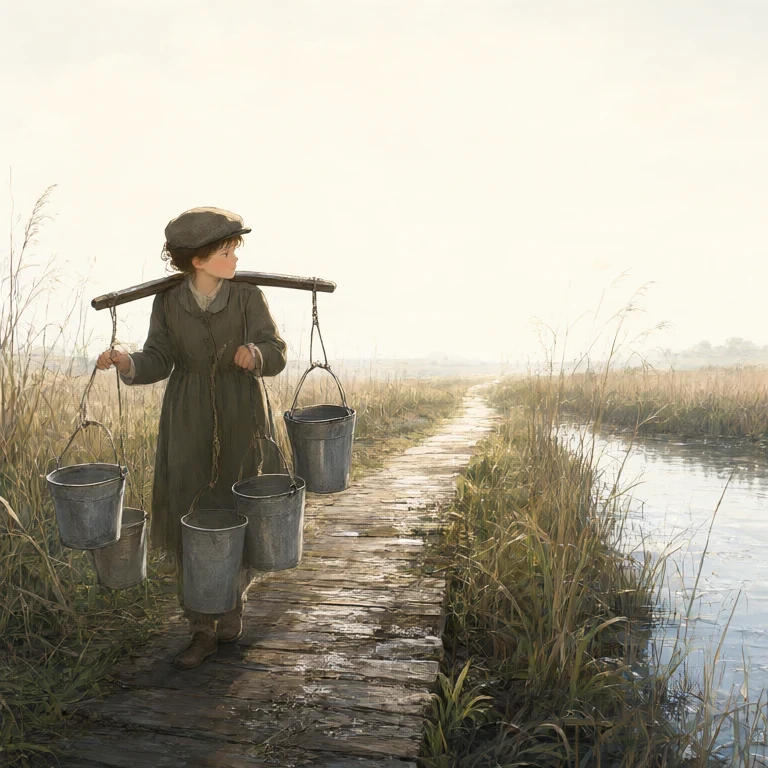
She tilted her head to look at the water in the near pail before she looked at him. Water in a pail is always telling you something. A face usually is not. “A word,” he said. “I have a round.”
“The parish wants the green thing at the third well brought up so the parish can look at it. It has been down there thirty-one years. The talk is what it costs us. It sits at the bottom of that well with a cough on it, and nobody in Coldwick-under-Fen can get a word out of it about what it wants.” “Carried up,” Bess said. “Aye. In a pail, or on a board off the pig-stye.” “What does it weigh?” He had not got that far. He said, “It can’t weigh a great deal, being what it is.”
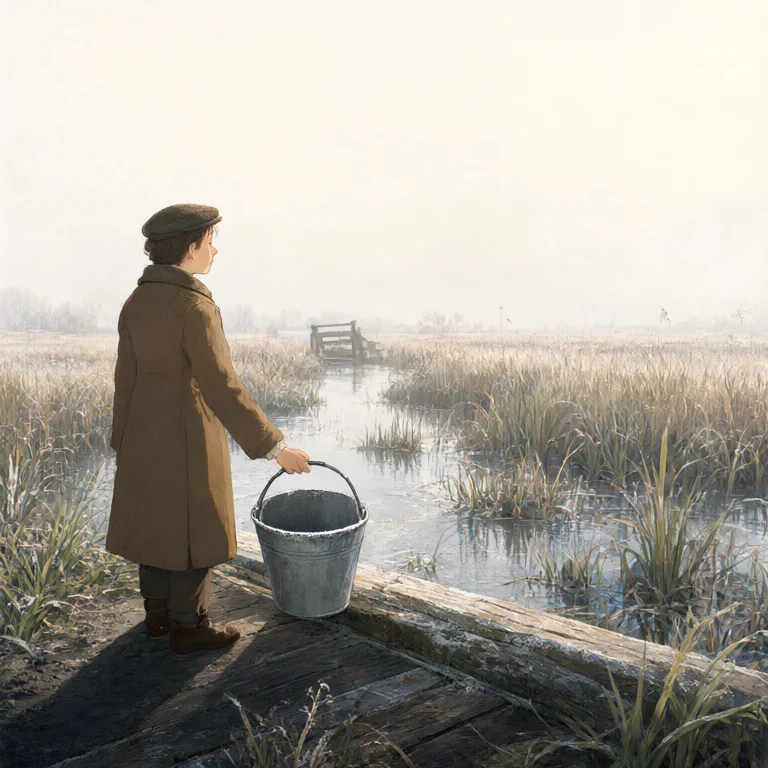
“It isn’t heavy,” she said. “That isn’t what the trouble is. A thing inside a bond is a person. You cannot carry a person up a rail and call it carrying, and you cannot set one in a pail for the parish to look at, because looking at it is not a thing anybody is owed.” He took his hand off the rail. “There’s a standing at Sallow,” he said. “For water sold by the pail. I’ve heard you’ve a place in it.” “That’s a long way to carry a lie four miles,” Bess said, and shouldered the rail and went on up the track.
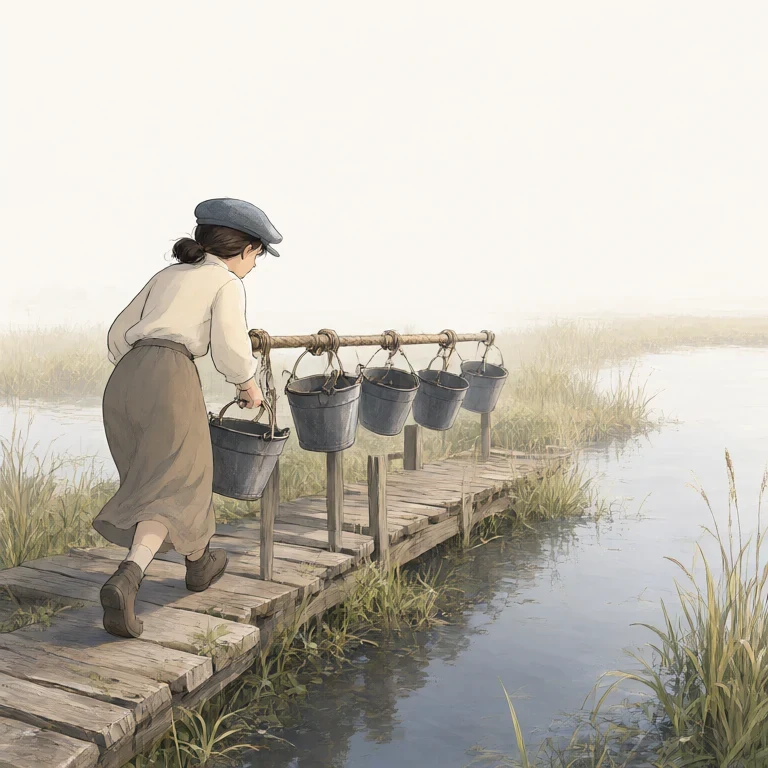
A carrier in Coldwick is paid in water and not in coin, because water is the only thing the parish can promise before the money comes in at the sluice in August. So when a carrier says no to a job, the parish does not hear a woman being careful. It hears a woman asking a great deal more. At the first house, the woman doing the washing said Bess wanted eight pails a day, not four, and was keeping the second lot for a house with no people in it.
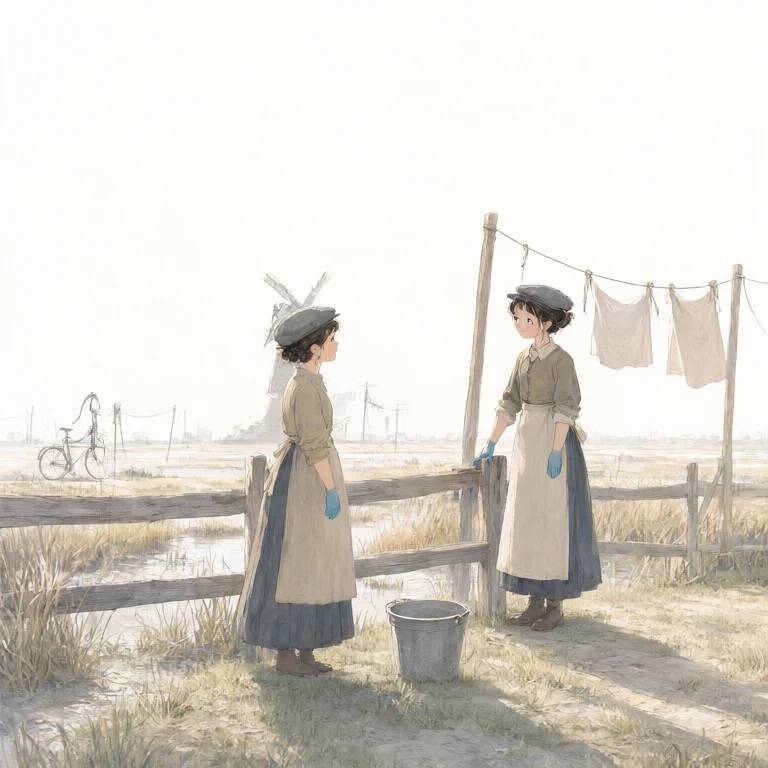
At the second house, the man at the gate said Bess had been to the Sluice House, and the Sluice House had its own cart now. At the third house, the old woman said nothing about it at all, set the pail down inside her door, and then said, as Bess was going, “I am ninety-one. I do not intend to be short.”
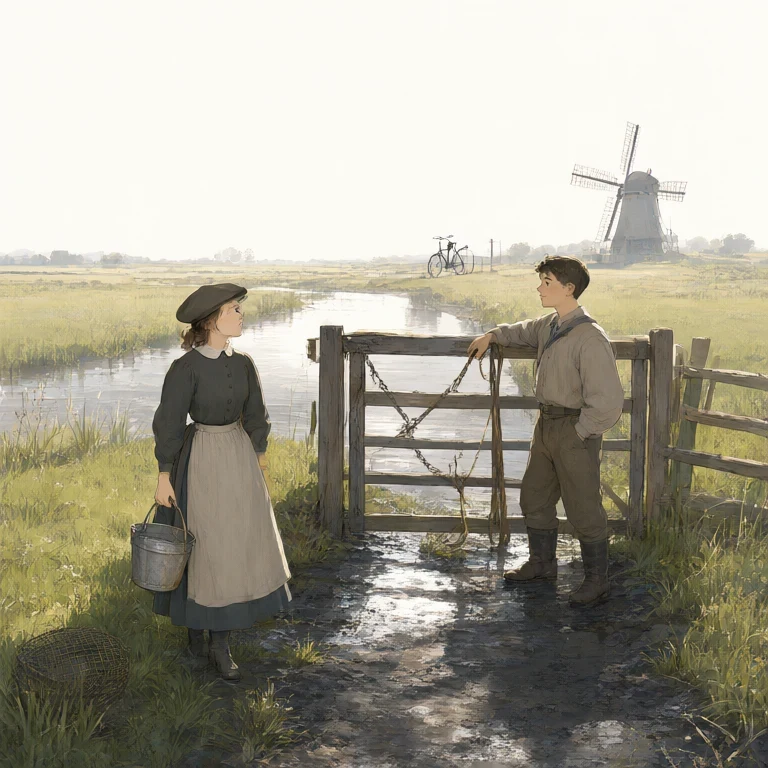
By the time Bess was back on the track, the story had gone up the causeway ahead of her, the way water goes down a drain. She was carrying for a market at Sallow. She had the last of the Thursday money. She had a standing with a man who did pails.
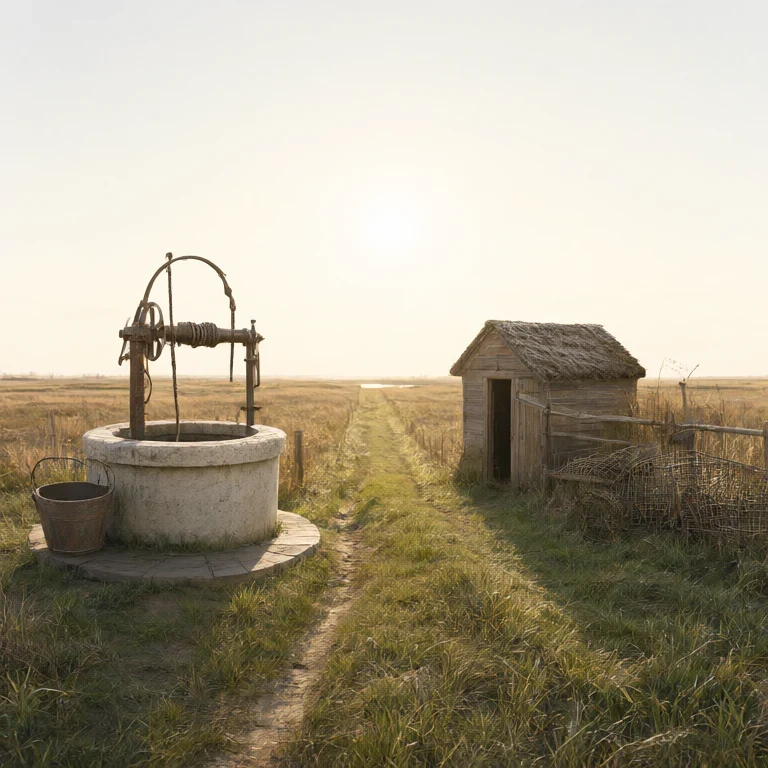
The third well stands a little off the track on a green hummock the fen has been pushing up at it for four hundred years. Its name board has weathered past reading, so that it says The Thred. The windlass has gone to rust. There is a bucket on a rope. Micken Vaunt lives in the wicket house by it and has done since he was found there, and the whole parish is agreed that he is not a boy, and he is eleven.
He was in the water up to his ribs, because the dry is too loud for him. “Marl,” he said. “Marl what?” “That is its name. You have never once asked.”

It said its own name out loud, once, from the water, and it did not sound pleased about it. That is how the three of them ended up in the wicket house with the door open, and how the parish got told by nine o’clock that the green thing had a name. It had a cough. It was wet through, and cold, and extremely awake.
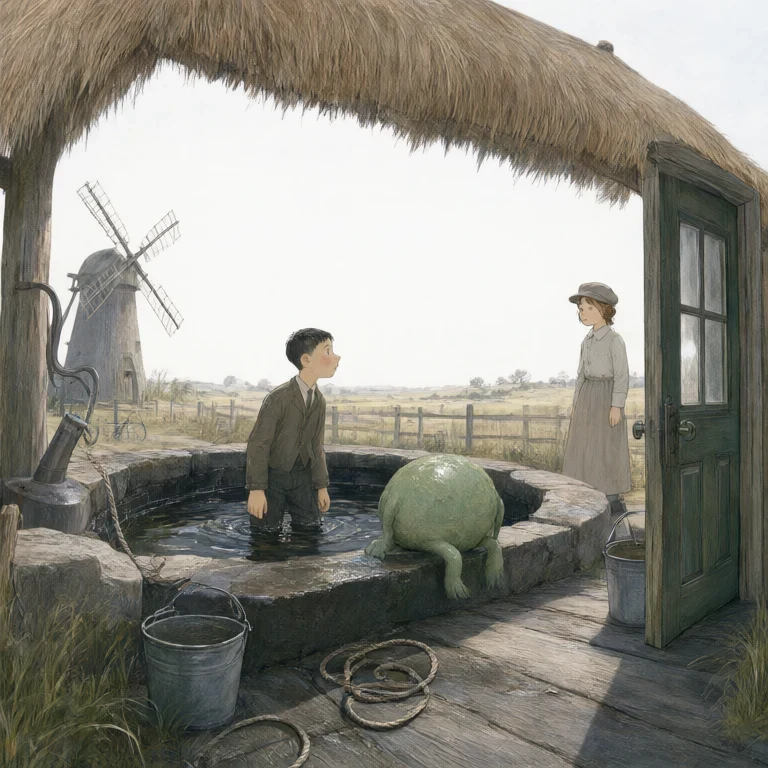
“Marl,” it said. “Not the frog. And you did not ask it. You told them I was in the way of the water. There is no such thing as carrying one of us up a rail. A bond does not sit in a pail. It sits in a person, and the collar is the only place it moves from.” “Who taught you that?” “The well, in 1980. I know every word said about me at this collar, and none of them by anybody who came down and asked.”

“They have never once asked what is owed,” it said. “They have asked what I am worth. Those are not the same question, and only one of them can be answered with a number. Say it before Thursday.”

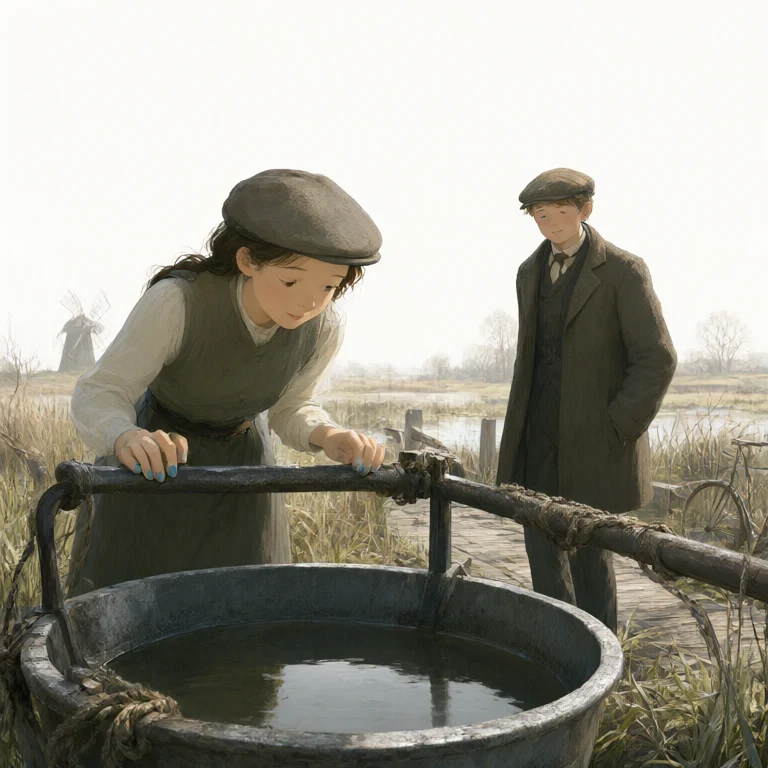
The pails were still standing on the grass where she had left them. The sky had gone that flat white it goes at four o’clock, and the frost had begun on the rims. Micken was in the water. He had not come out. He put both hands on the coping, looked down at the surface, tilted his head, and said nothing for a while. Bess did it too, because she could not help it, and she was doing it to the wrong thing. “It’s a collar,” Micken said. “What?”
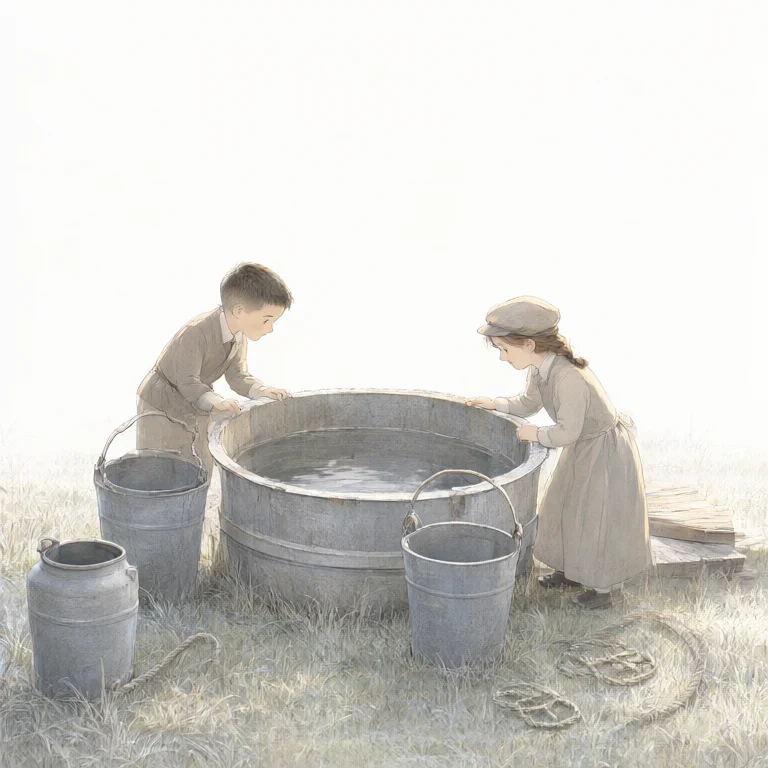
“The ring on it. It goes round and round the same as the one up here, and it is shut the same, and it is the width of two of my fingers and a bit over. And there is a gap in it.” “How big a gap?” “About a foot.” He looked up. “That is not a frog down there, Bess. That is a collar, and it is not finished, and the bit that is not finished is a foot of arc and a bit.” She got down on the grass and looked, and it was, and it was not.
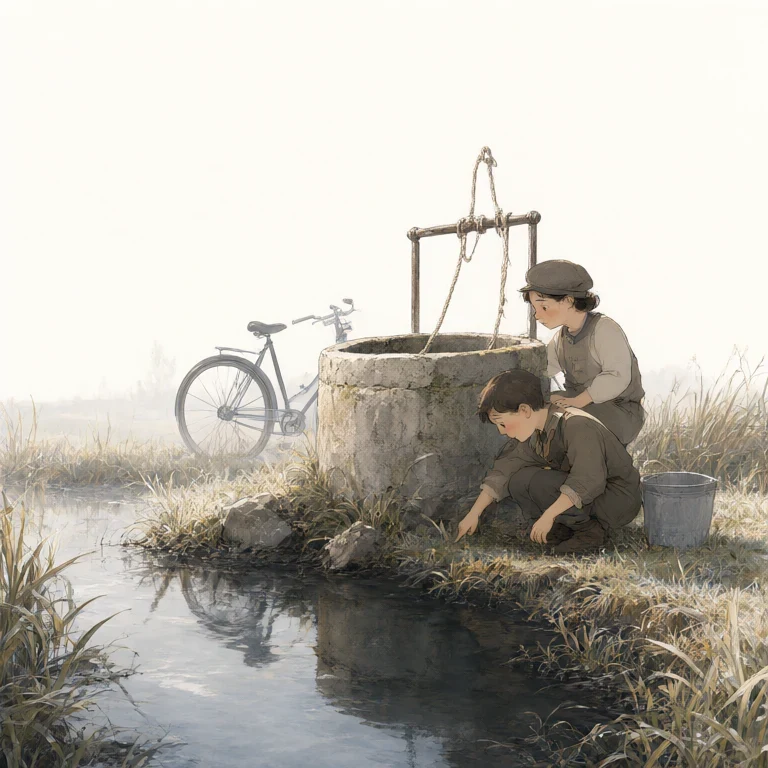
“How much is a foot of arc and a bit?” Micken did not hesitate. He had been counting since he was small. “Two gallons an hour,” he said. “I count it when I get up and I count it when I go down, and it is the same two gallons an hour it was before I could count.”

The fen lay round them, white to the edges, every cut full of flat water with a long cold highlight on it, and the only sounds were the pump at the Blind well, a quarter mile off, and Marl breathing in the dark.
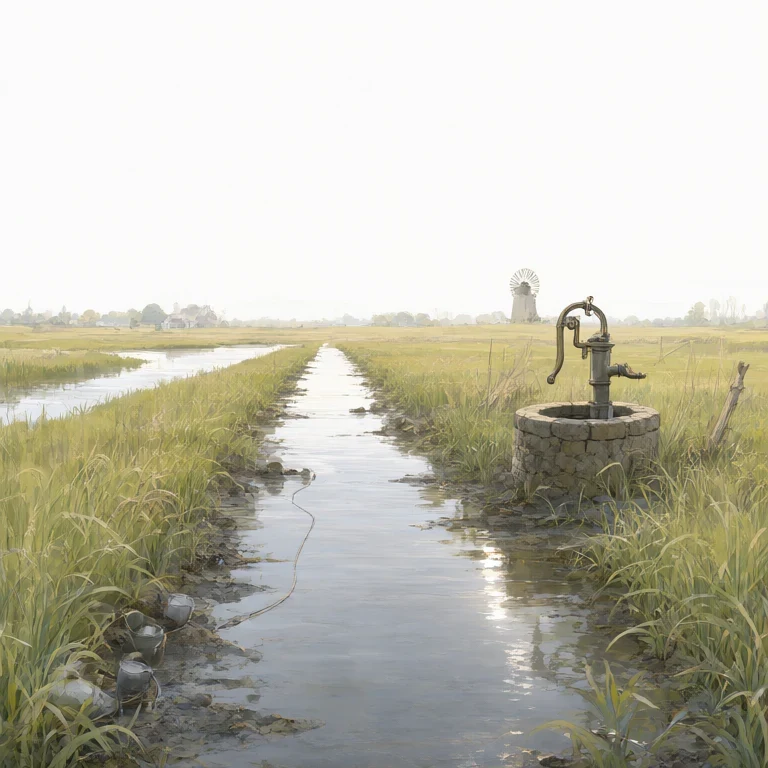
Nell Drury was at the low cottage with the ledger braced against her knee, too heavy to lift with one hand, writing with the book shut, which is her way. “I want a line in the book that says what the thing is owed,” Bess said, “and not what it is worth.” “That is a different entry.” “It is the entry.” “No,” said Nell. “If I write what it is worth, I can read it back. If I write what is owed, the wording is the person’s, and I do not have it.”
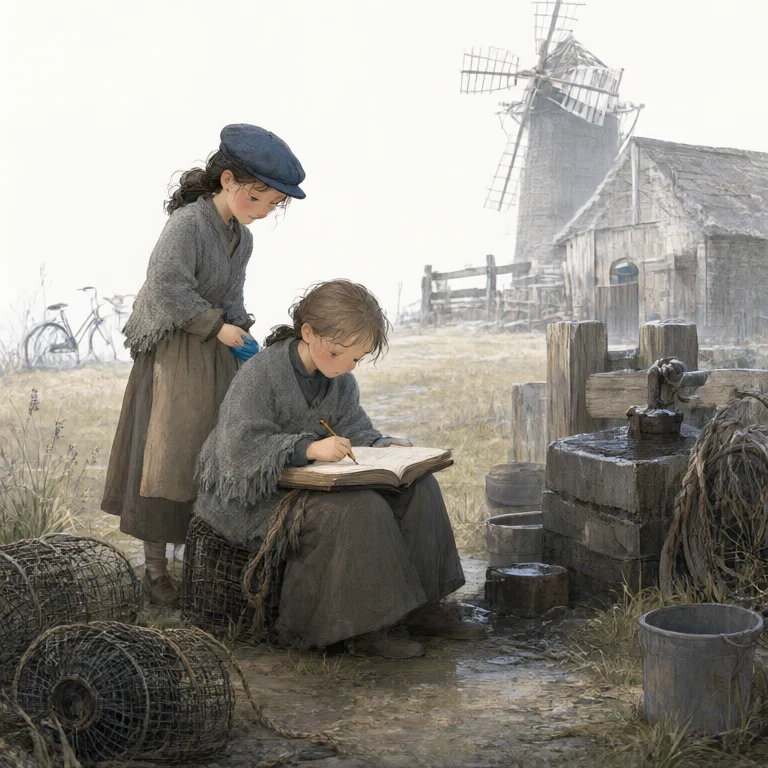
Bess stood in the cold and let that sit. “Then ask,” she said. “That is the whole of it. Ask.” Nell Drury, who has read out every bond entered in this parish since 1841 exactly as written, including the spelling, put her pen down and looked at the water a while. “And what shall the book call you,” she said, to the boy. Nobody had asked him. He had eleven names off eleven households and had begun giving them all, in order, to anybody who stood still. “Not one of those,” he said. “Write Marrow.” Bess wrote it on the back of her hand in pencil and said it once out loud, and Marl heard her and did not comment on it.
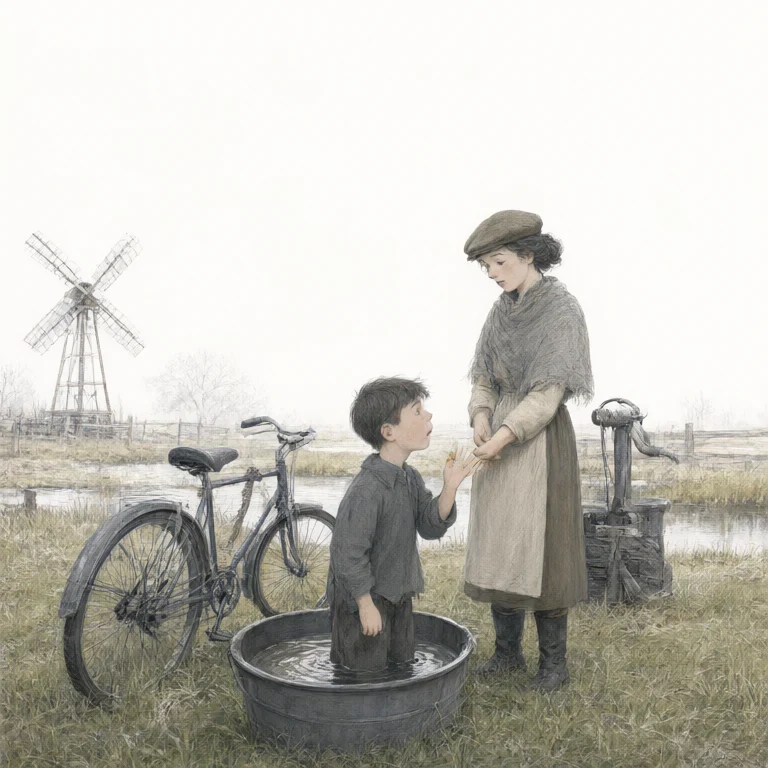
The parish got its answer before Thursday, and the answer was not a number. It was a rate. Two gallons an hour, out of a well, into pails, four times a day, to the third well, for as long as the collar stays open. Three pails of the four still went to houses. She was a third of the way up the track before it occurred to her that she had carried eight pails that day, and that four of them had not gone to a house.
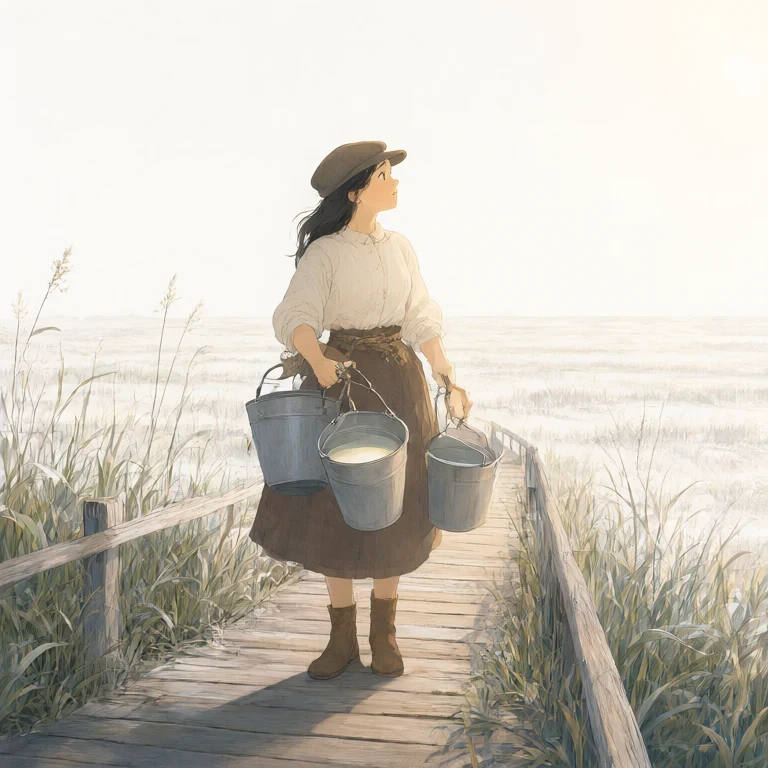
The track went on to Sallow with nobody on it, and the two pails that were not for anybody yet were exactly the colour of the inside of a shell.