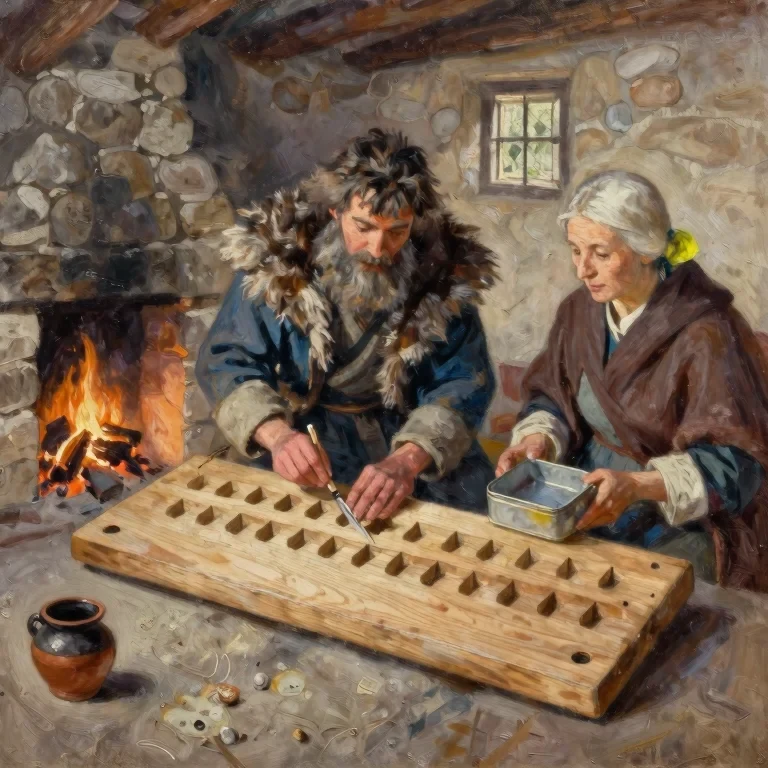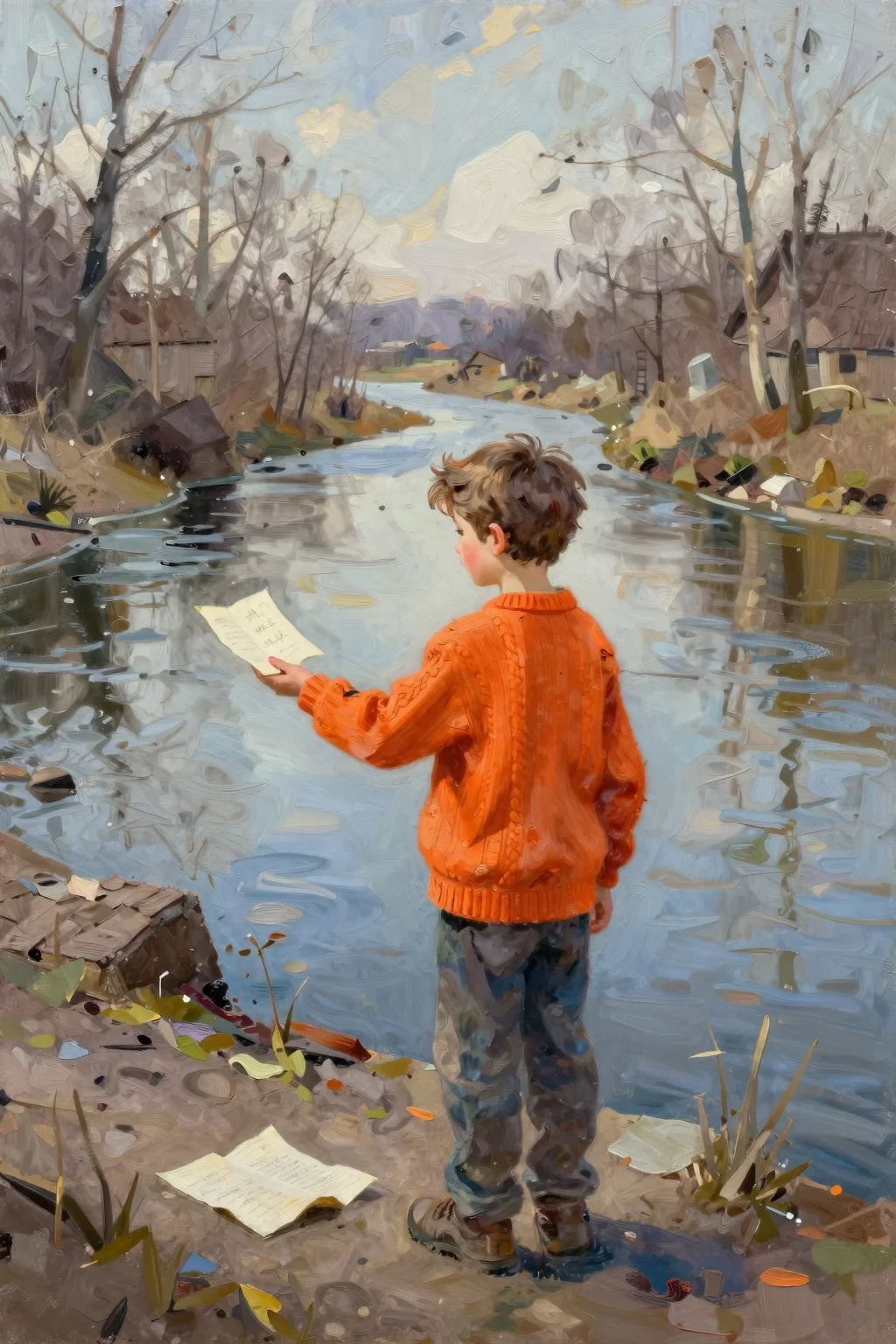
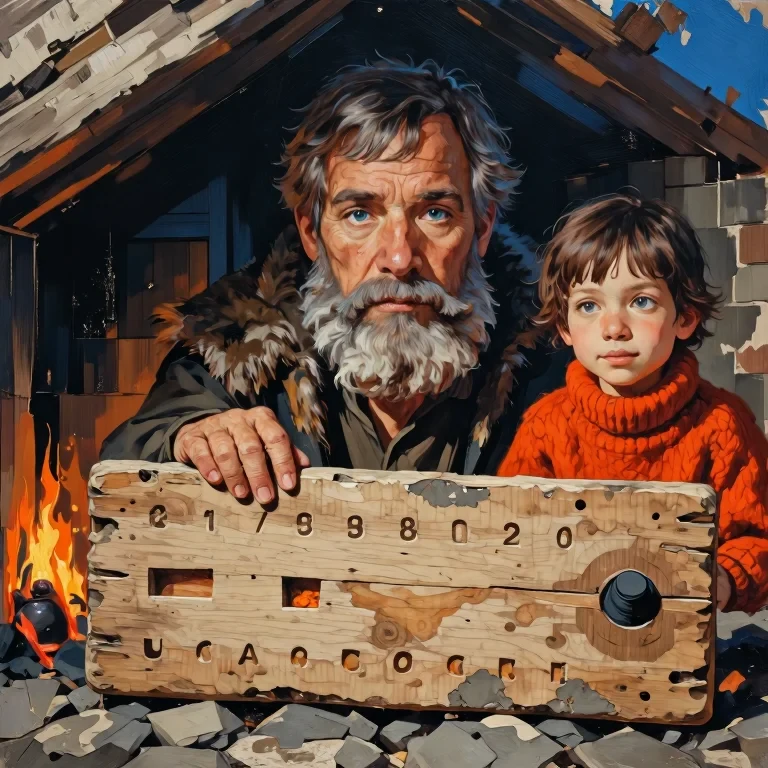
The River Venta takes one true name out of the village every hundred winters. It takes it. Nobody may offer one. On the turn of the hundredth winter the names come out on the bank. The village of Hallen had gone ninety-eight years without paying. Old Ketil kept the count on a board over the hearth: ninety-eight notches, and room for two more. Turi was eleven, and he looked under things.
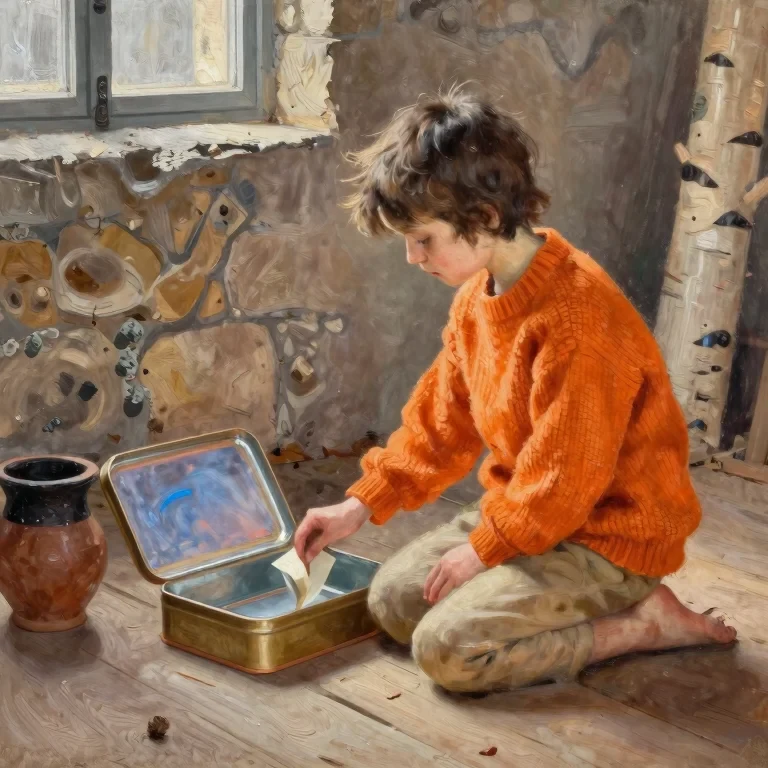
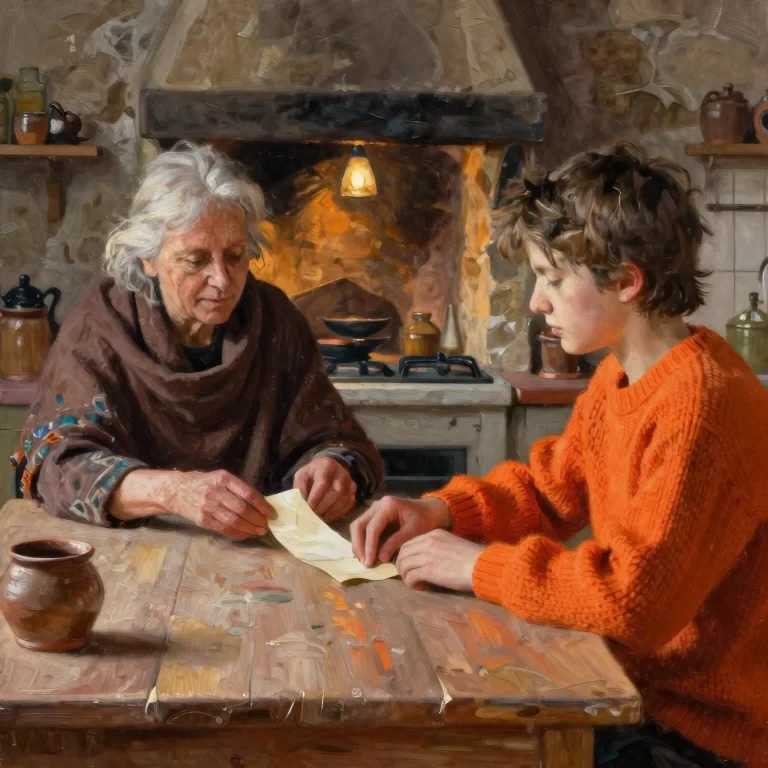
Under the back-room floor of his grandmother's house was a tin box with ships on the lid, and a strip of paper folded in four. The name on it was Sanna. It was written in his grandmother's hand, and under it, in the same hand: 87th winter. And then nothing.
Turi put it on the kitchen table, and Vesla read it, and read it again. “That is my mother's name.” “You wrote it.” “I wrote it the winter she went down to the water.” She turned the strip over with one finger. “I have kept it ninety-eight years, and I never decided what for.” “Are you on it?” “No.” And her shoulders came down off her ears, and Turi saw it happen and did not understand it. “Then why did you keep it?” “Because somebody had to,” said Vesla. “She gave it to me and went down the bank in the morning.”
The hundredth winter came in hard. The ice went out on the eleventh of January with a noise like a door dragged along, and the water stood against the bank in one long black line, with gravel under it. The whole village came out. Turi stood in front of his grandmother with the strip in his coat pocket. It smelled of iron, and the cold came up through the boots.
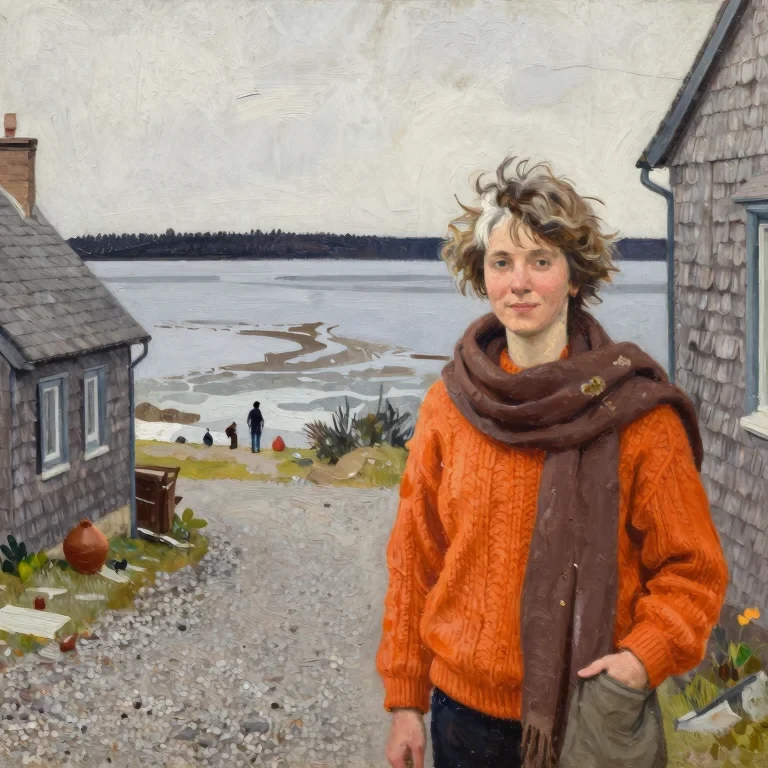
The waiting is the worst of it. You stand four hours in the wind, and the water does not move, and nobody says anything, until Ketil comes forward with his list. “The river takes a true name,” he said. “Not a borrowed one.” He read out a dog called Bramble, dead thirty years. The water did not move. He read out the winter of the lost sheep, and a boat that burned on the shingle. The water did not move. “It does not want a word,” said the water.
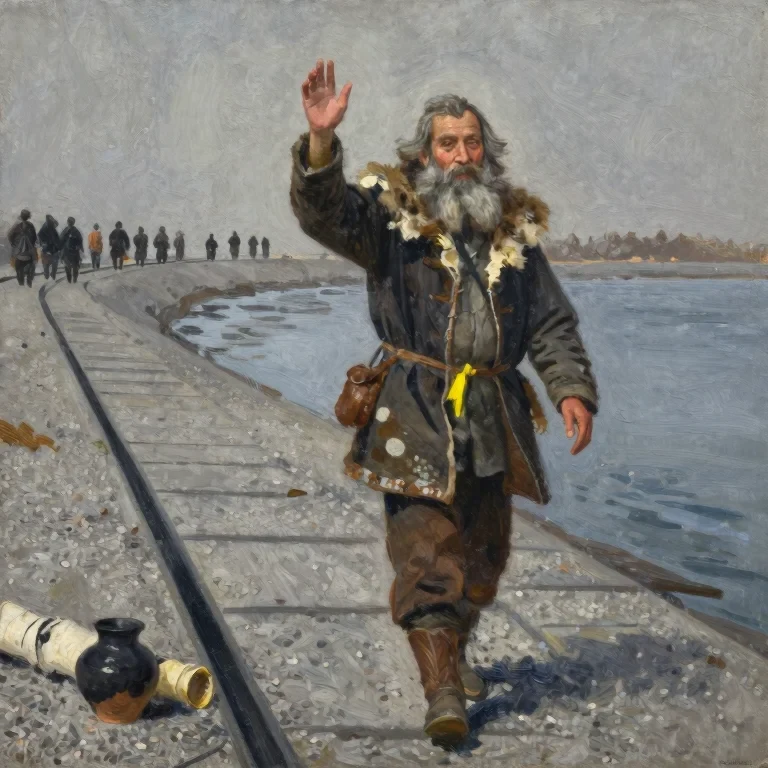
It was not loud. It was the level of the water on the gravel, and only there the second time you listened. “It wants the name of a person. It will not take a living one, and a name still called every day is not cold enough to sink.”
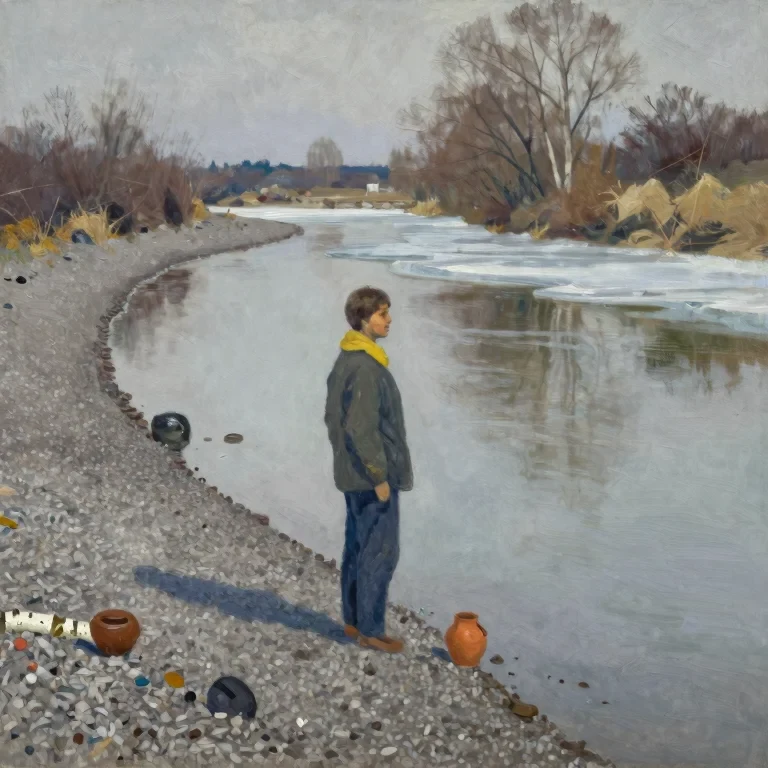
The elders looked at one another over their caps, and nobody was relieved. The river had not said the word good, and an honest count cannot be squared with a dog.
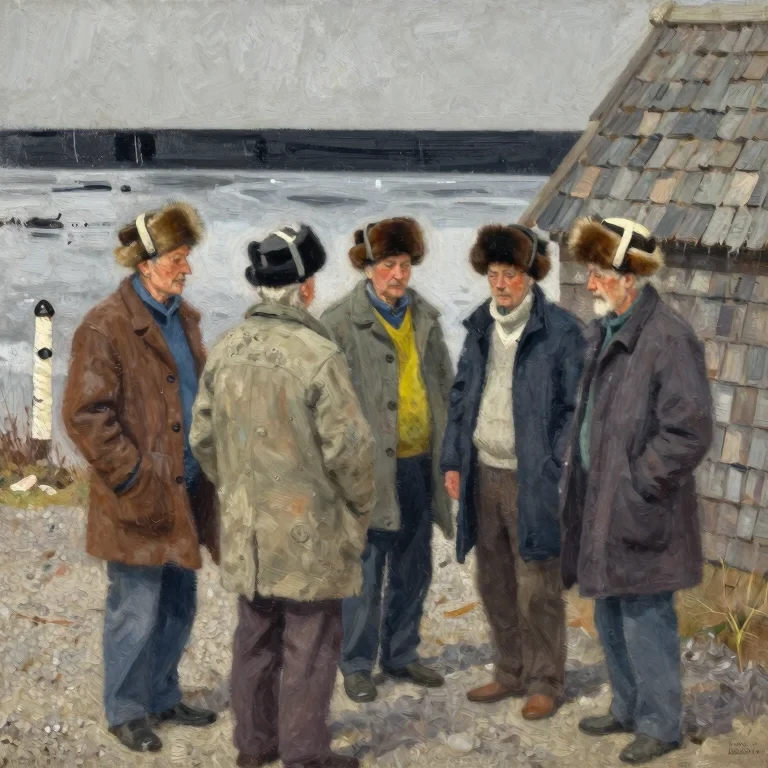
“That name is in my coat,” said Turi. Nobody moved, and the water lay along the bank and did not move either. Vesla took the strip out of his pocket. She did not hold it out. She read it the way you read a thing that is finished, and not the way you read a gift.
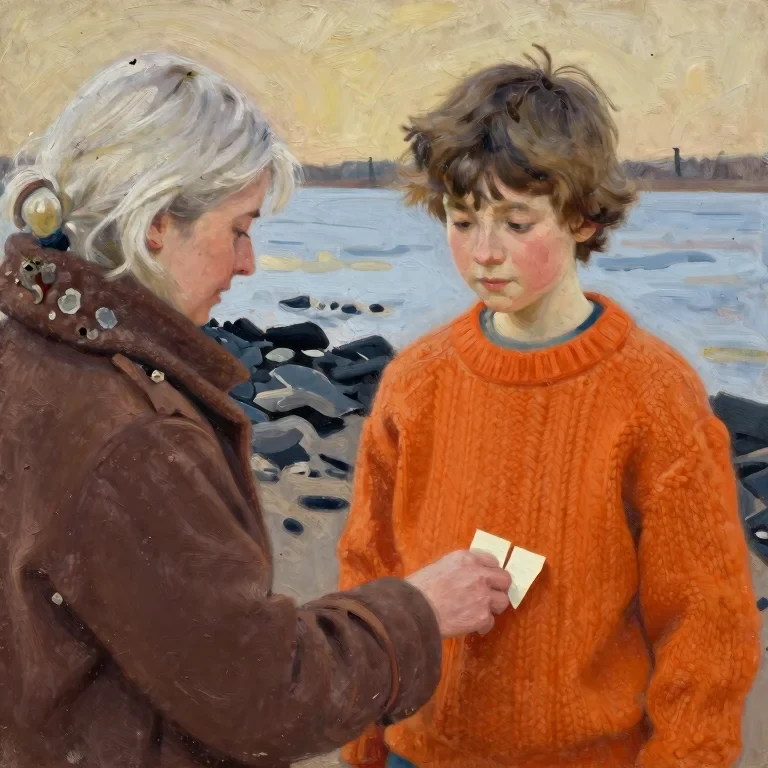
“Sanna,” she said. “Sanna Venta was the name, and she was my mother, and the river would not have her because she was alive. She gave it to me and told me to keep it.” The water went over her boots. It came up the shingle without a sound and took the paper out of her fingers flat and level, the way a hole takes a coin, and the gravel turned where she stood.
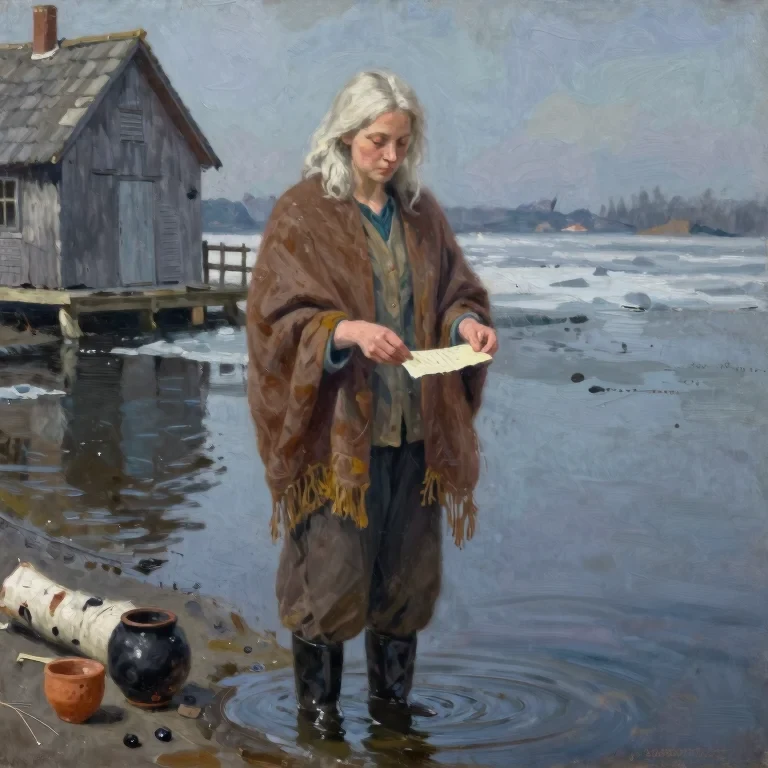
Ketil went home and cut the ninety-ninth notch in the board over the hearth, and there was room for one more after it. Vesla kept the box under the floor. It was empty, and the board above it got a little more worn every year, because she put her hand on it when she was thinking. What your family owed, you paid, said Ketil, to nobody, on the bank, after. And a name given away in fear was never worth giving.