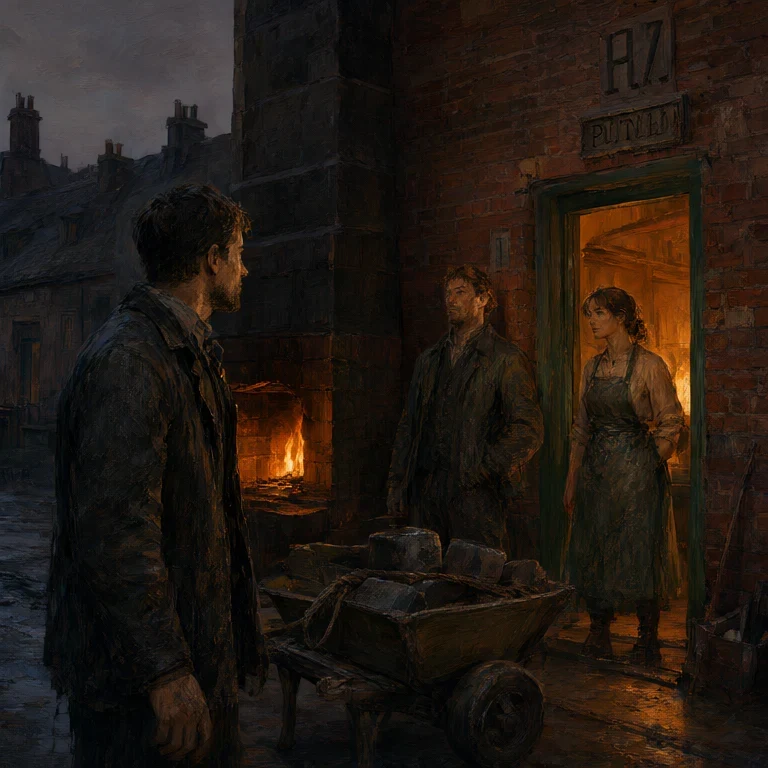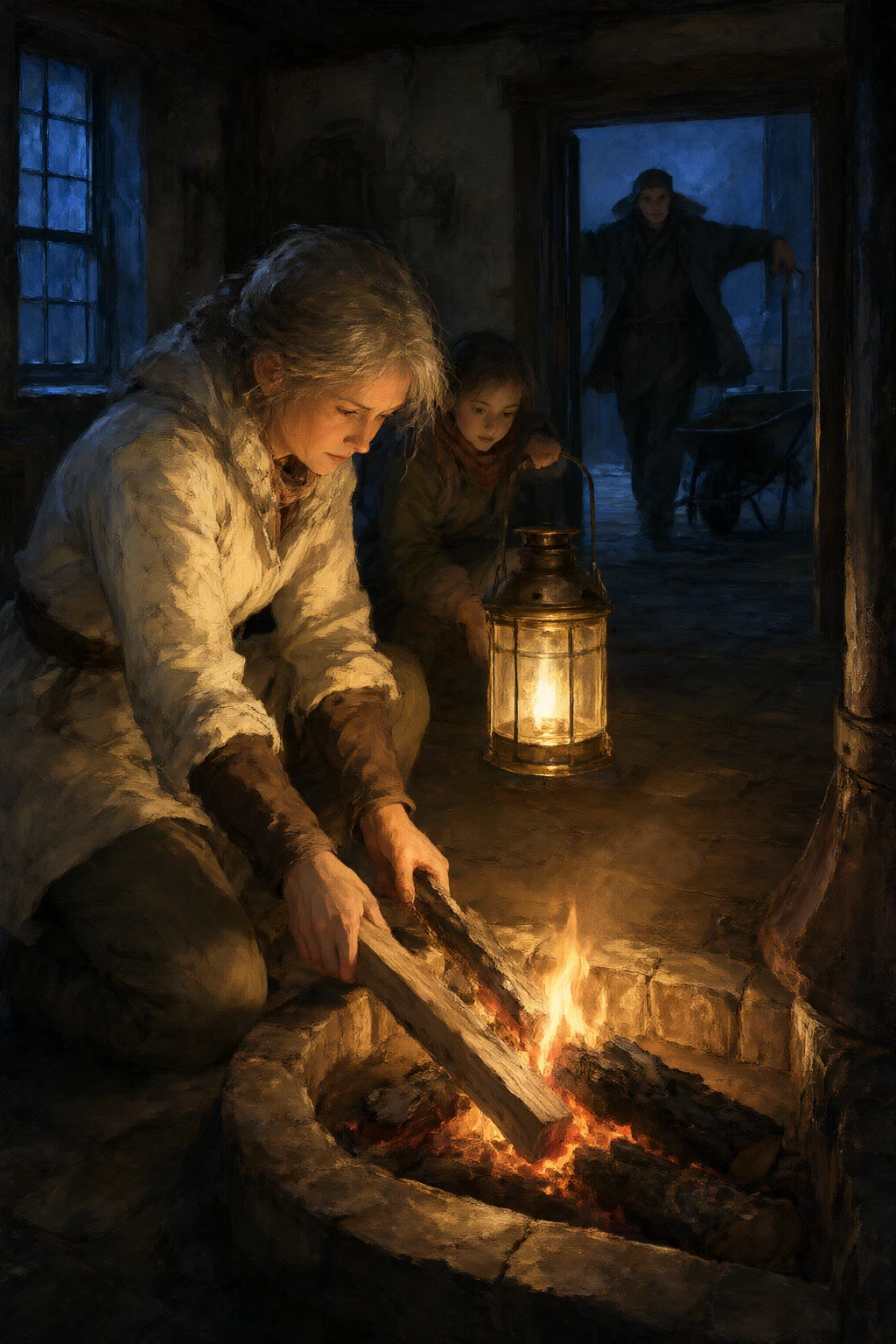
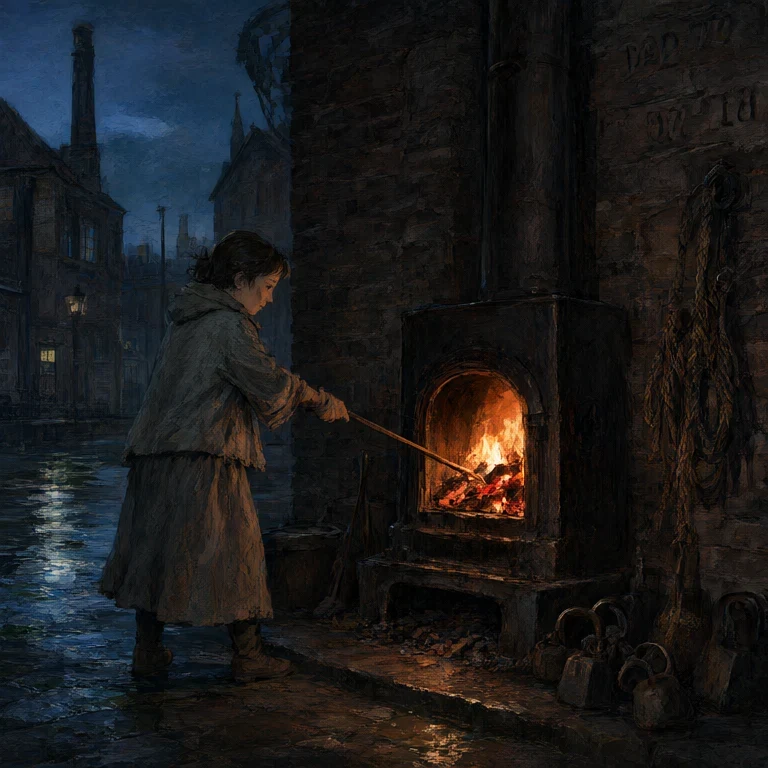
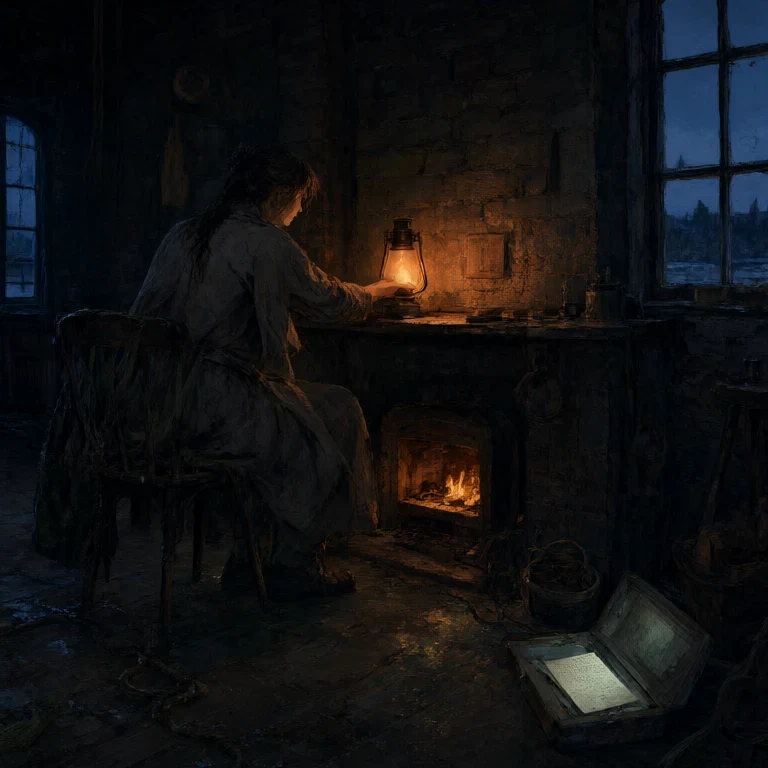
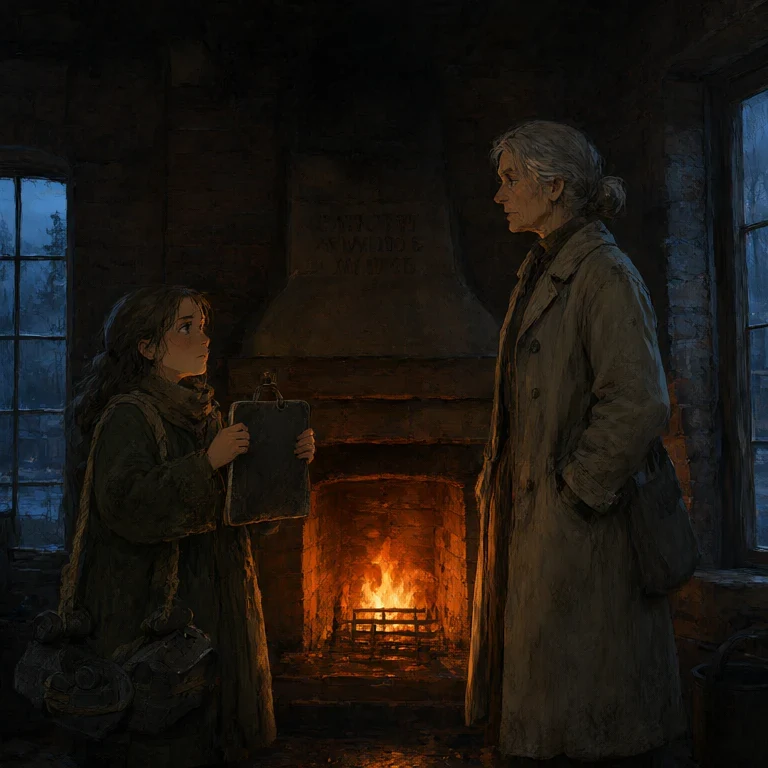
The fire went out at four o’clock in the afternoon, on purpose, under Mared Holt’s own hand, in the corner where the Rope Walk turns into the Coalquay and the last house with a yard is number one thousand four hundred and sixty-six. She had done it the way it is done. She had let the fire down in the morning by the width of a hand, and again at eleven, and again at two, and at ten to four she took the poker and opened the bed of it along its length so the air could get under, and stood up and watched, and the last of it was a ring of red the width of a wrist that took a long time and then was not there. The room went cold at a speed you could feel on your face.
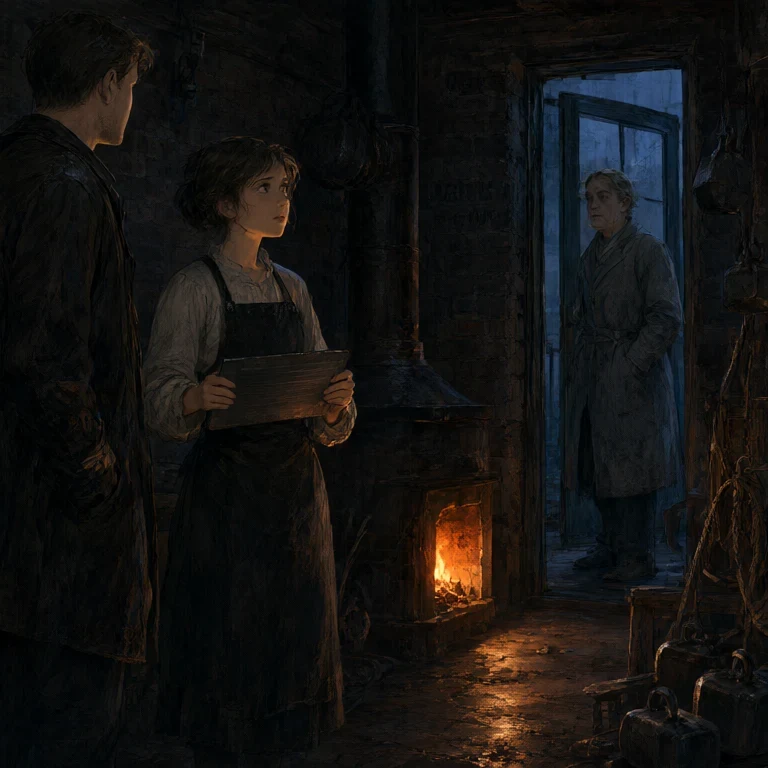
Her son Halden was on the Coalquay with the cart and came in at ten past five. Her daughter Sefa was at the glasshouse at Sallow Bridge and came in at six, wet to the elbow. Their lodger Teodor had been out of work since the Michaelmas and had watched the whole of it and had said nothing, which was the correct thing to do and cost him the evening. Nobody asked her why. That was the part that stayed in the room all night. Not the cold. Three people not asking a woman of sixty-one why she had put out the only fire in a house in the fourteenth of January, each of them arriving at a different reason for not asking. The cold settled in stages. First the window, then the middle of the room, then the hands. The last coke had gone in on the Monday and what was left in the bin was ash, and you do not burn ash. “There is fourpence,” said Teodor. “And a half-handful of small coal in the scullery that came off the boat.” “A half-handful is a quarter of an hour,” said Sefa. “It is a quarter of an hour.” “On Saturday, then.” “There is no Saturday. There is Friday, and Friday they bring the coke down to the Coalquay at seven, and it is three and six the half-hundredweight, and we have fourpence.” Mared said it without turning round. “So we do not have a fire.”
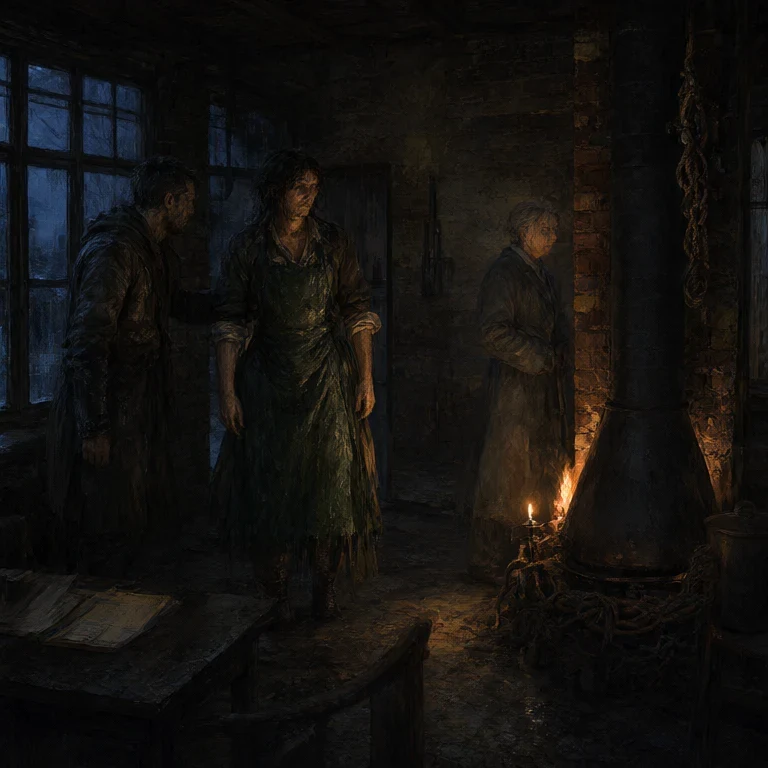
There was a paper in the box on the dresser and it had been in the box since the October, and the last line of it was a line she had read four hundred times. It said: AND THE HEARTH TO BE EXTINGUISHED BY ORDER UPON THE SAID DAY, THE NUMBER NOT TO APPEAR AGAIN UPON THE ROLL. She had written it herself and it was the correct line, and the Scale House had a form for it and the form wanted it in those words, and Mared Holt had gone down to the roll-room in the October with a slate and a stub pencil and asked for the form, and the clerk had given it to her and had not asked her one question, which she had thought about every night since. She was arranging, in her own longhand and in the correct form, to die in a house that was not in deficit. Twenty-nine years of a barrow and a tarpaulin, never once a night missed, never once late, the longest clean board on the Rope Walk, and a house that would be hers outright with no fire in it and nothing owing on it, and nobody in the queue behind her and nothing to testify against. Halden came in at seven and put his coat over the back of the chair and said, “It will be cold till Tuesday.” “It will be four o’clock,” said Mared. “What is at four o’clock?” “Nothing,” said Mared Holt.
The rule about a dormant fire is short, and the city knows it the way it knows the ash rules, from having it said at them. A fire that is put out is dormant, and not dead. It can be relit only by the person who put it out, and only at the hour it went out, and only if that person’s board is clean. And a relit fire that is owed a night is counted twice. Which means the night it missed and the night it is having are both entered. Which means the hearth owes two nights and has had one. “A night is four pound two,” said Sefa. She had the board in her hand and had not touched it. “Left column eleven pound six, right column four pound two, every night this fortnight. So two nights is eight pound four.” “Yes.” “And the stick.” “And the stick,” said Mared. “Where is the stick?” “That is what I am going out for.” She said it at ten past seven, and she was at the door before anybody had decided what to feel about it, and the three of them stood in the cold room and looked at the door she had gone out of.
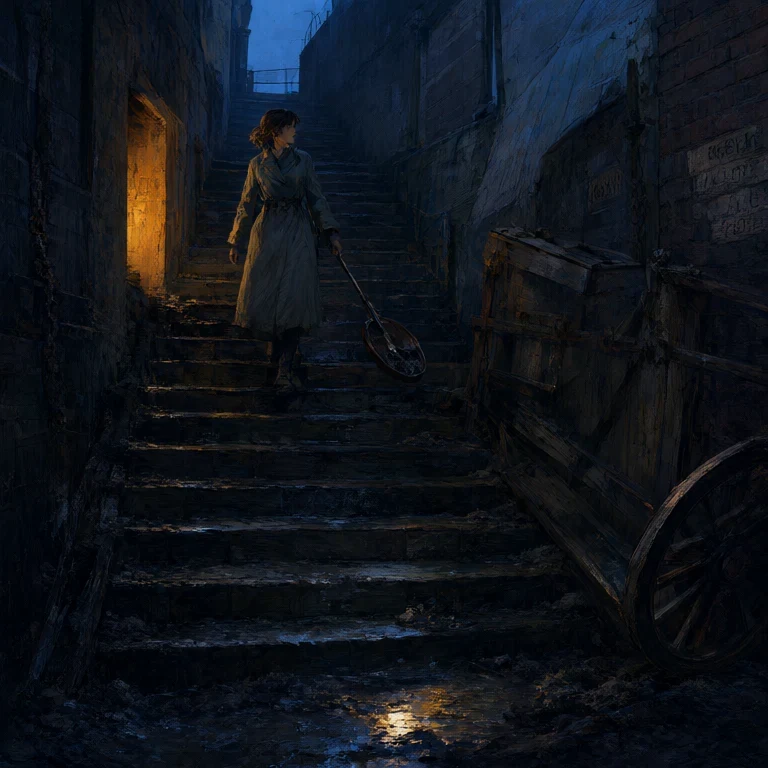
The Rope Walk goes down to the Coalquay in one long fall of about forty steps, and the Coalquay runs east for a quarter of a mile along the water, and the coke cart stands at the east end under a tin roof with a weighbridge under that and a lock on it the size of your fist. There was nothing under the tin roof at ten past seven. There is never anything under the tin roof until the cart is standing on it. She went past it anyway, because you look. The water stairs go down at the west end, in cut stone, wet, with a chain on one side and nothing at all on the other, and they go down to the low ground on the south side of the river where the city puts everything it cannot use.
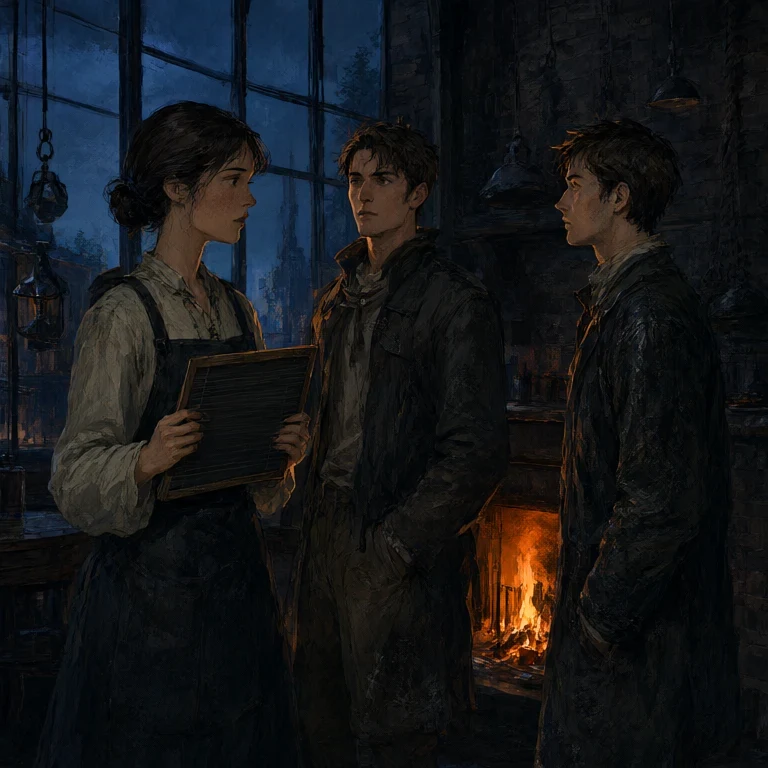
While she was on the water stairs the three of them had not sat down. “The board has to be clean,” said Sefa. “That is the second thing. If it is not clean she cannot relit it at all and there is no point in any of it.” “It is clean.” “It is clean since the ninth of December.” Sefa said it flatly. “Before that a woman from the Coalquay put a figure in a square that was not hers and it had to be scraped out, and Mother scraped it out with the back of a knife at the table. A scraped square is not a figure, so the board is clean, and it is clean because of a knife.” “That is clean,” said Teodor. “That is clean,” said Sefa. “I am not saying it is not. I am saying that if you had asked me in November whether our board was clean I would have said yes without hesitating, and now I have to think about it, and that is a different answer, and I have not got a word for the difference.”
The Slag Bank is not a bank. It is the low ground on the south side of the river, a mile and a half of black soft ground with half-buried ash-pits in it and tin and brick coming up through, and it smokes a little in the cold, all day, the way a compost heap smokes, and there is no fire on the Slag Bank at any hour of the year, and the people who work it are not on any roll. There were nine of them in the pit nearest the water stairs and they had lamps, and they were taking tin out of the old beds with a bar and a hook, and one of them knew her, because everybody on the Slag Bank knows an ash-runner. “Mared,” said the woman, “I am sorry. I am not going to let you have a lamp. You have a lamp at home.” “I have a fire at home,” said Mared. “No,” said the woman, “you have not.”
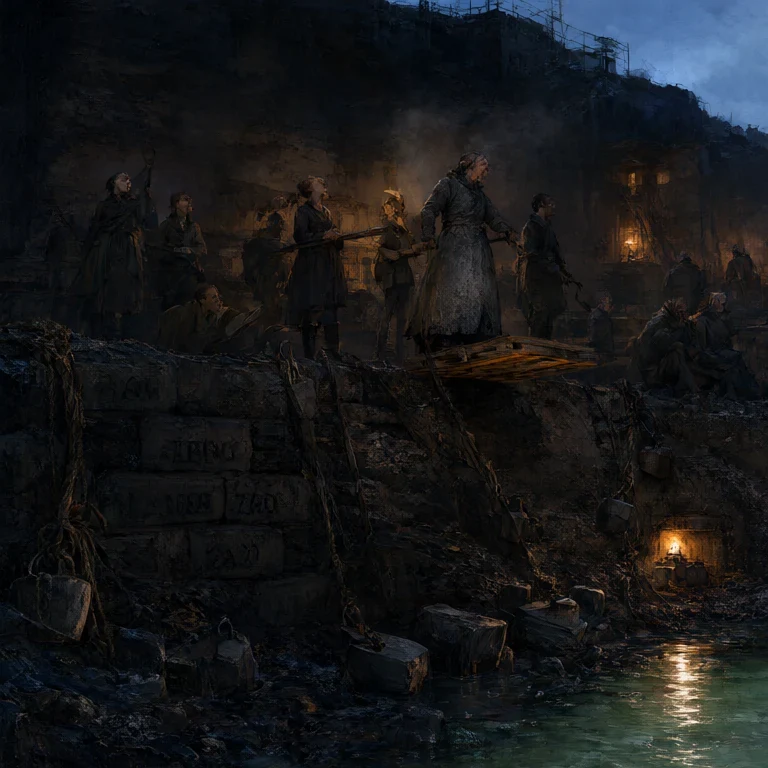
The fill is the part of the Slag Bank the city uses. Everything the city takes down goes south of the water and is not always burnt, and what is not burnt is stacked, and the stack is called the fill, and in fifty years the fill is the highest thing on the low ground and you can see the city from the top of it in the summer. The nearest stack was deal boards, four and a half feet, sawn square at the ends, off a building that came down on Cinder Row in the year the boy was born. Somebody had chalked a number on the end of the topmost board in nineteen forty-eight. Mared had walked past the stack two hundred times and had never once wanted a board off it. She wanted a board off it tonight.
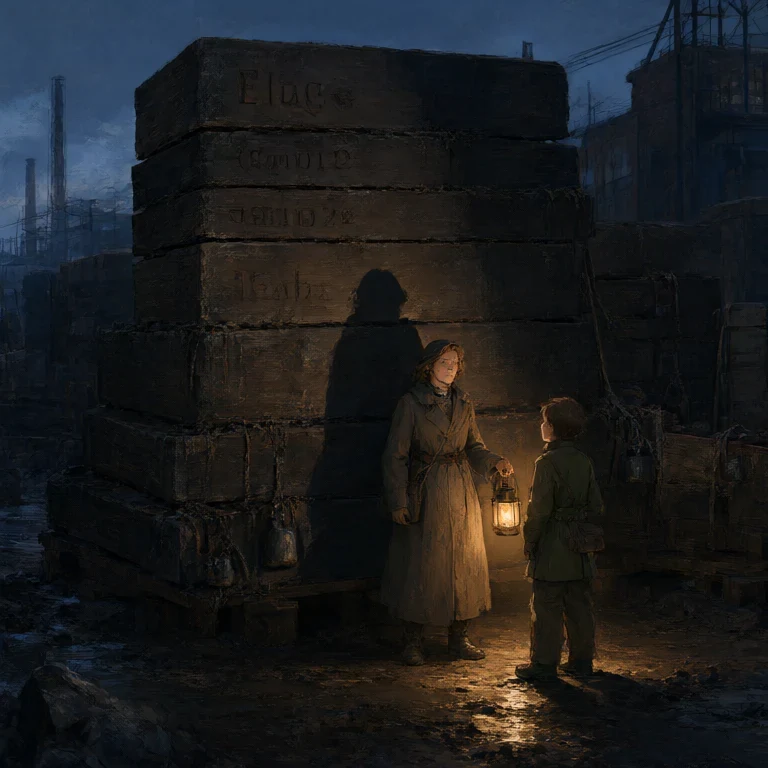
“You can have the pallet,” said the woman with the bar. “The pallet is nothing and it is the city’s and the city does not want it. But you do not touch the boards. Those boards are somebody’s house, and if you take a board off a stack of somebody’s house then the stack is a claim and a claim is read out, and I have been on this bank eleven years and I have seen a man lose a year of his hearing for a load of fence.” “I only want one.” “I am not having a one. There is no such thing as a one on the fill. A one is how the whole stack goes, one night, in a quarter of an hour, and then there is nothing to say, because there is no board to point at.”
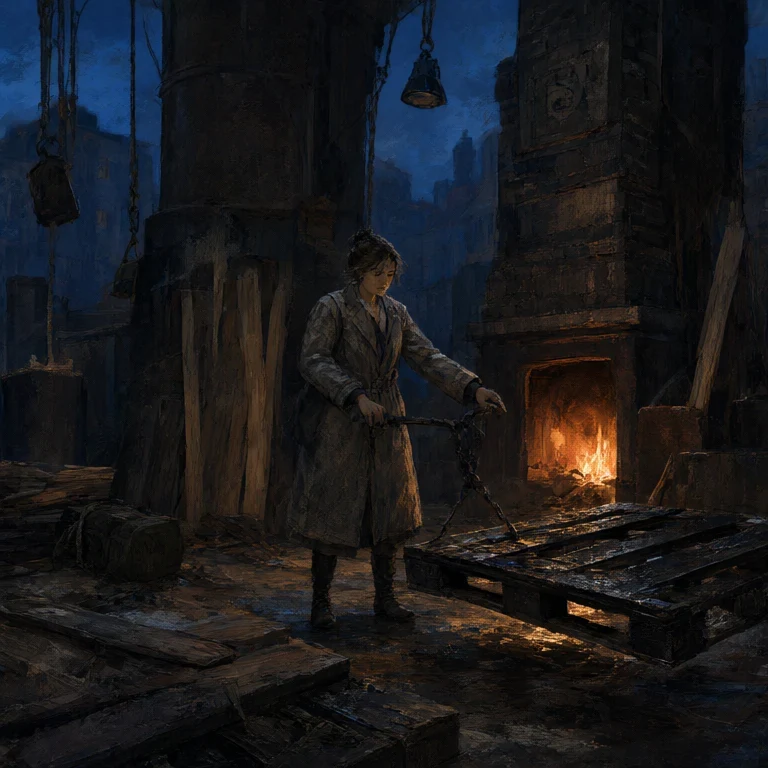
Mared Holt stood on the Slag Bank in the dark for about four minutes with a pallet in her left hand. The rule is not difficult. Burning a thing of a person’s is a claim against them, entered in the ledger the same night, at the value the board gives it, and a person whose things are burned may answer for the debt in kind. Nobody owns the fill. Nobody can be named. The city put it there and the city is not a person, and nobody has ever yet entered a claim against the parish for the parish’s fill, because the parish has no hearth and no board and no row and no column. But it goes in the disposed column, and the disposed column is a hole in the ground with a heading over it, and nobody in Emberwyke has ever been curious about the ground. She had a length of deal in her right hand and she had not decided to take it, and she took it, and the breaking noise went across the whole bank, and everybody stopped. “Mared,” said the woman. “Twenty-nine years,” said Mared.
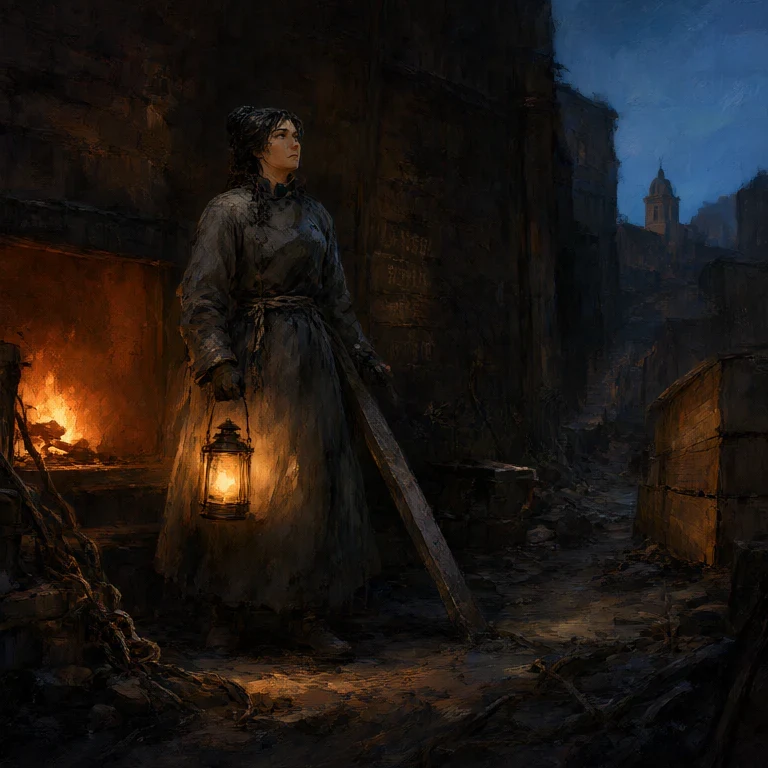
At half past ten Teodor said the thing that decided the argument, and he said it without any expression at all, because he was nineteen and had nothing to lose by being exact. “My mother’s hearth went out in ninety-six,” he said. “The eleventh of November, half past three, in a draught off the river, and my mother put it out herself with a bucket of water because my sister had the measles and the doctor had said no draught. It was relit the same afternoon at half past three, on a clean board, and it counted twice, and the house lost the lease in the March.” Nobody said anything. “It is not a story,” said Teodor. “I am telling you the number because you are about to do it for exactly the reason my mother did, which is that the house was cold, and the house being cold does not stop being true because of what the March is going to be.”
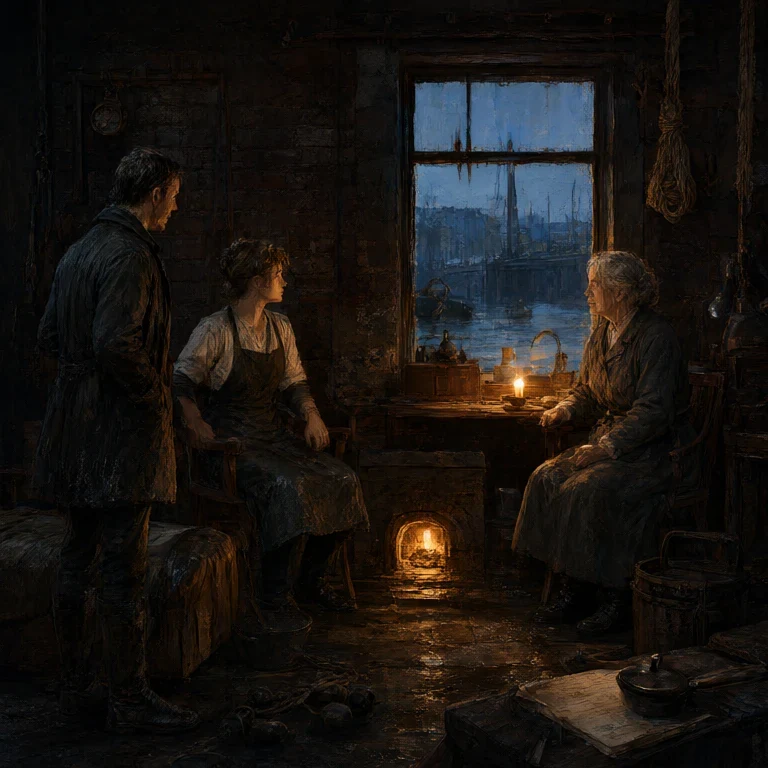
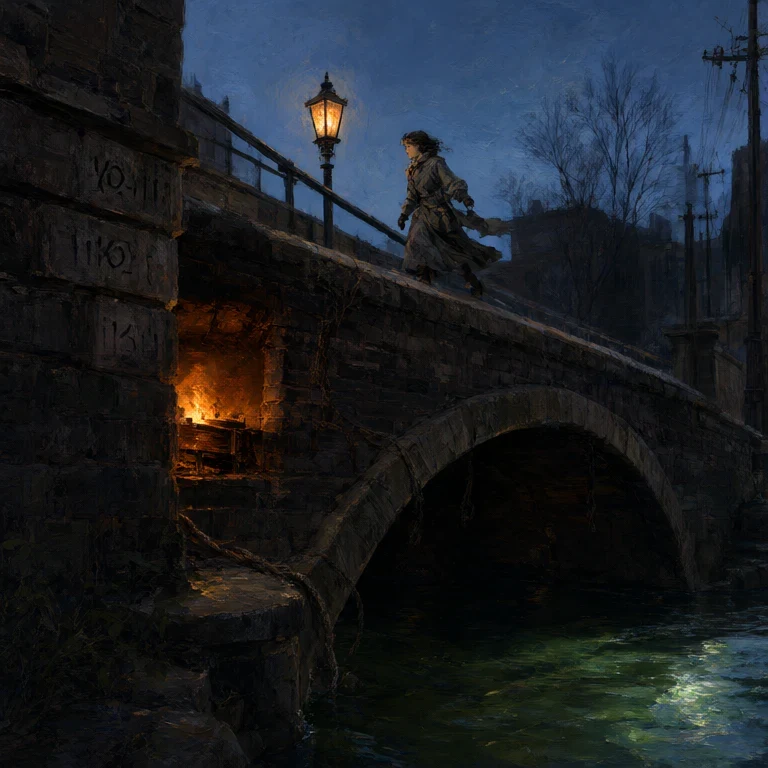
Sefa said, “Then there is nothing to be decided. If we do it, we lose the room in the spring. If we do not, we are cold until Friday and we have a fire on Friday like everybody on this street.” “That is right,” said Teodor. “Then what is the four o’clock?” “Four o’clock,” said Teodor, “is your mother deciding, and she has not told either of us, and that is not fair, and I live here and I pay four shillings a week and I have not voted on anything.” The going up from the Slag Bank to the Rope Walk is the whole of the return, and it is not the way down, because the way down is forty steps and the way up is a mile. The bridge at Sallow is stone, nine arches, with a kerb on both sides and a rail on the upstream side only, put up in 1871, and in December you go up it on the kerb, because the stone is wet and the other side has a wind off the water that takes the breath out of you at the third arch.
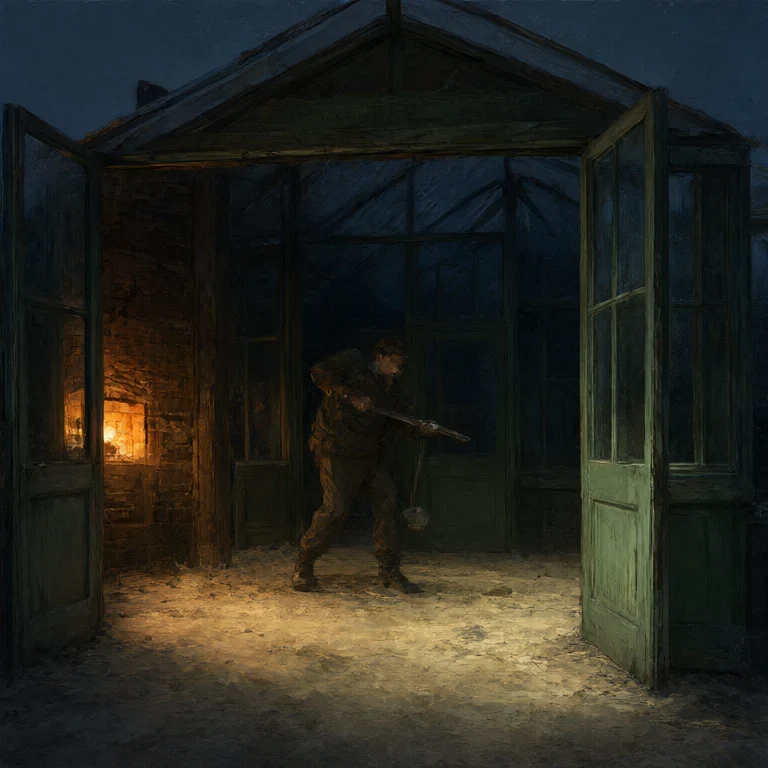
The glasshouse is a long shed on the north bank with a bottle furnace at the west end and a cooling floor of pale sand the whole length of it, and at eleven o’clock on a Thursday night the west end is the colour of a coal fire that has been left and the east end is the colour of weak tea, and the door is open at both ends, because Ivo Sarn has never in his life worked a shed with one door shut. He was on the cooling floor with a rail in his hand, doing the thing he does, which is to take a lump out of the sand, turn it, and put the back of his right hand against it before he has any opinion about it. There is a pale crescent across the heel of that hand, the width of a thumbnail, from a mould that leaked at a temperature he had already decided was right. “Mared,” he said, without looking up. “You are wet through and you are carrying a piece of timber and you have not come about glass, so you are going to ask me about wood.” “One length of deal,” said Mared. “Two feet nine by seven, off the fill, off a building that came down before the boy was born. I am going to burn it in an open hearth in a cold room at four o’clock in the morning.” He put the lump down in the sand and wiped his hand on his thigh.
“A hand-fire is about four hundred,” he said. “A bottle furnace is eleven hundred and holding. You will have a hundred and eighty in an open room with a draught in it, and by the time it has done the wall you will have nearer a hundred and forty, and the wall is where the room is. A hundred and forty will char a deal board and give you no flame at all after the first ten minutes.” “How long will it burn?” “Two hours. Perhaps two hours and ten minutes if you bank it, and I would not bank it, because banking is a thing you do to a fire you intend to keep, and you have told me in the way you have said it that you do not intend to keep it. Two hours and ten minutes, and then it is a hearth with a smell in it, and the board will get about six ounces, and I would not be surprised if you had five.”
“Then I have six.” “Then I have six and you have a hundred and forty,” he said, “and the difference between us is the wall.” He went along the cooling floor and came back with a thing under his arm and set it on the bench, upright in the sand. It was a shoe, and not a delicate one: heavy, a foot and a half from heel to toe, with the seam of the mould still on it and a flat spot on the sole where it had struck the lead, and it was still warm.
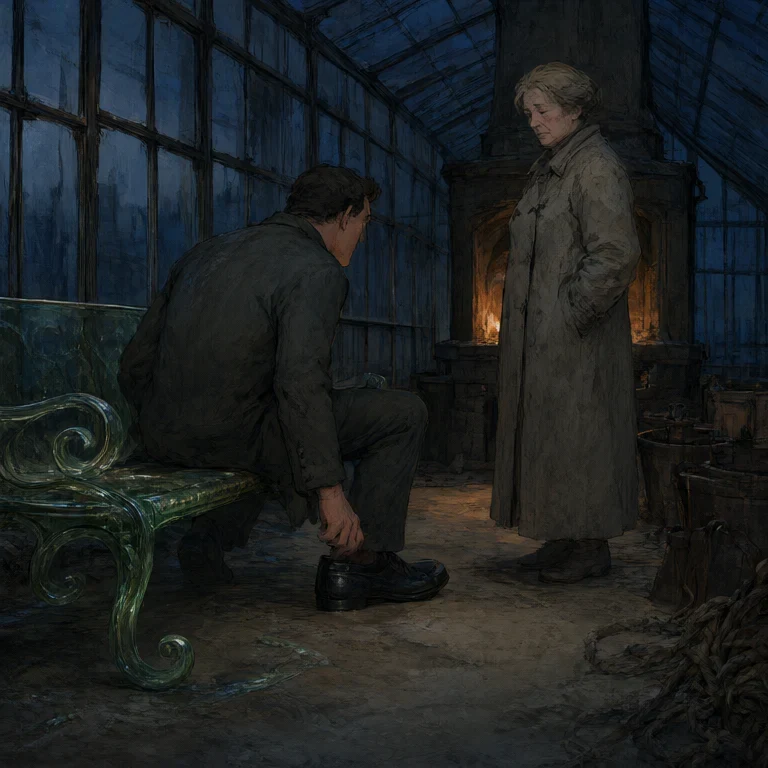
“Take that,” he said. “I have made four of those and three of them are broken and one of them is that, and it is a proof. It is not a pattern and it is not for anybody. It balances to a figure I struck when I closed the mould and I did not write the figure down, because a number on a record is a promise and I do not make promises. You can put a fire’s heat against it and it will not break, and you can sell it on the Coalquay for a shilling if you have to sell it.” “Who is it for?” said Mared. “That,” he said, “is the first time anybody has asked me that in thirty-one years. Take the shoe and think about the answer. It is for nobody. That is the answer, and that is why I have kept it four years on a sand floor, and if you take it there will be a person in this city with a glass shoe that nobody is owed anything for.” Mared Holt did not touch it.
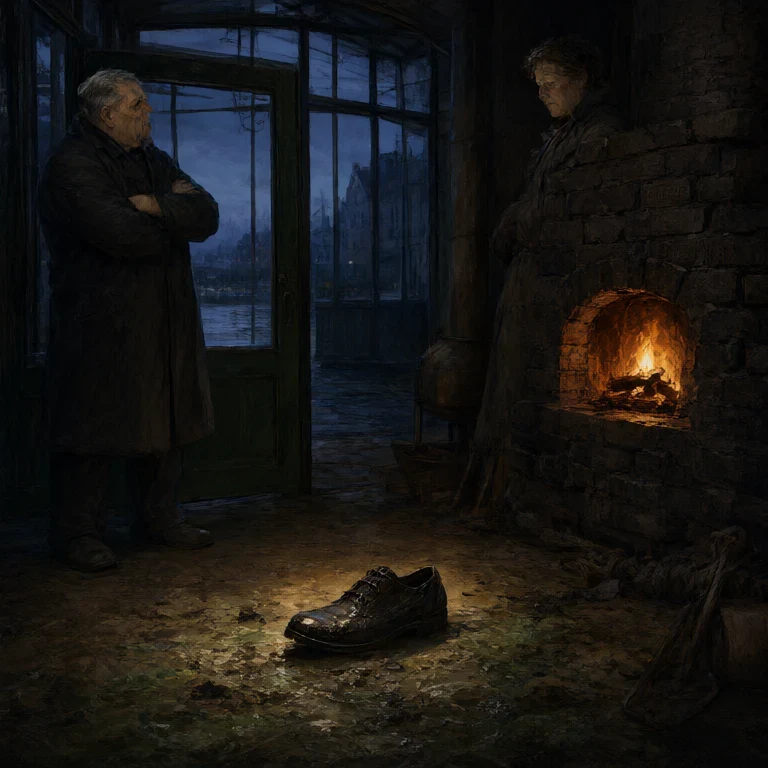
“No,” she said. “I will tell you why, and you will not like it. If I take that shoe and put it in that house, then in four years a child in that house will be standing in the middle of a debt they did not know they were in, the way a fire in a hearth is a debt, and they will find out at the worst possible hour, and there will be nobody to ask. And if I do not take it, then that shoe is a thing in your shed that nobody is owed, and it goes on being nothing, and nothing is the safest shape a thing can be.” “That is a very cold way to think about glass.” “Yes,” said Mared. She left the shoe standing in the sand, and went out into the wind off the river, and it was a quarter past eleven.
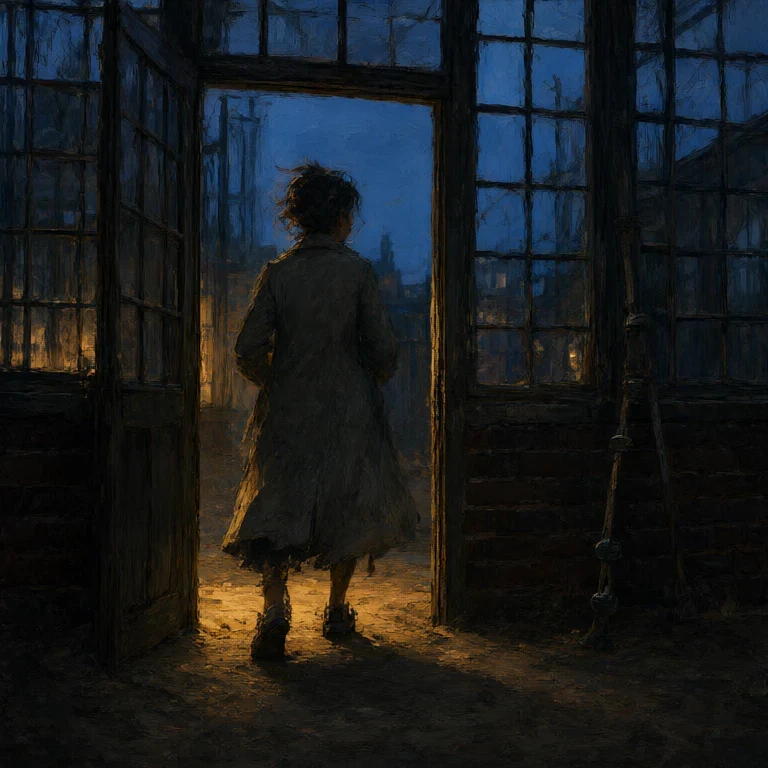
The Scale House is the only stone building in Emberwyke, and at a quarter to twelve at night it is a stone building with a dark door and a light in the two rooms over it, because there is a stove in the Cinder Ledger Room and it is the only legal fire in the building and it burns at a fixed figure chalked on the wall by the door every hour by whichever clerk is nearest. Mared stopped on the step and looked at the north window for a while, and then went on, because it was getting colder and the fire would have to be in at four.
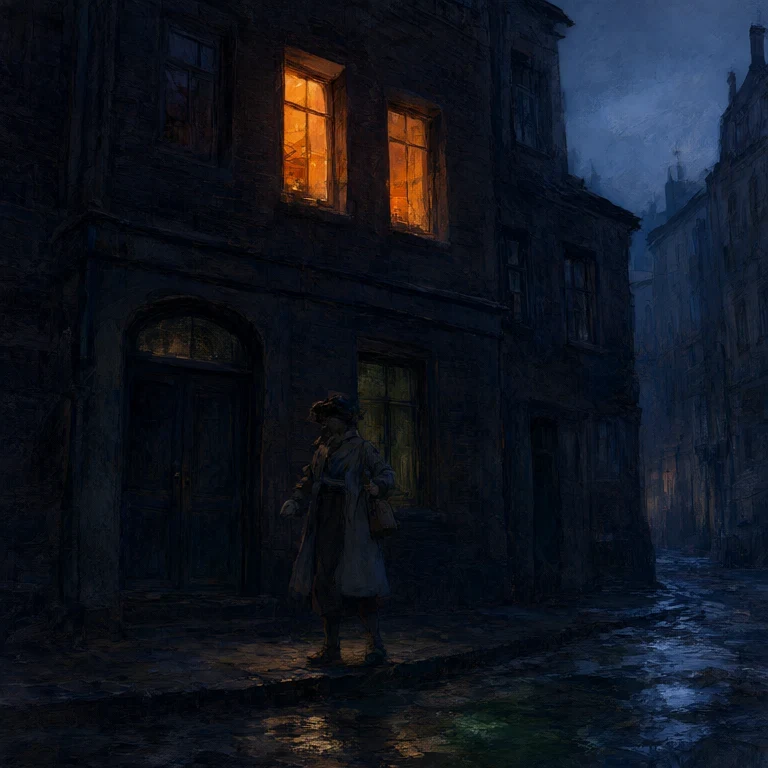
The Salt Hall is a hundred yards off the bridge and she went into it out of the wind, because it is a hall and a hall is a place you go into, and it has six tall windows and no fire in it and never has had one, and the floor is the coldest stone in the city, and the glass was running with water where the cold met the damp. She stood in the middle of it and shouted, once, to hear it come back. It came back flat and gave her nothing at all, which is what a room with no fire in it does. There is no rule that a lighting-up cannot be settled there, because the Hall’s charter comes before the licensing, and so no fire has ever been lit in it, and about four hundred people go there in December and come away again.
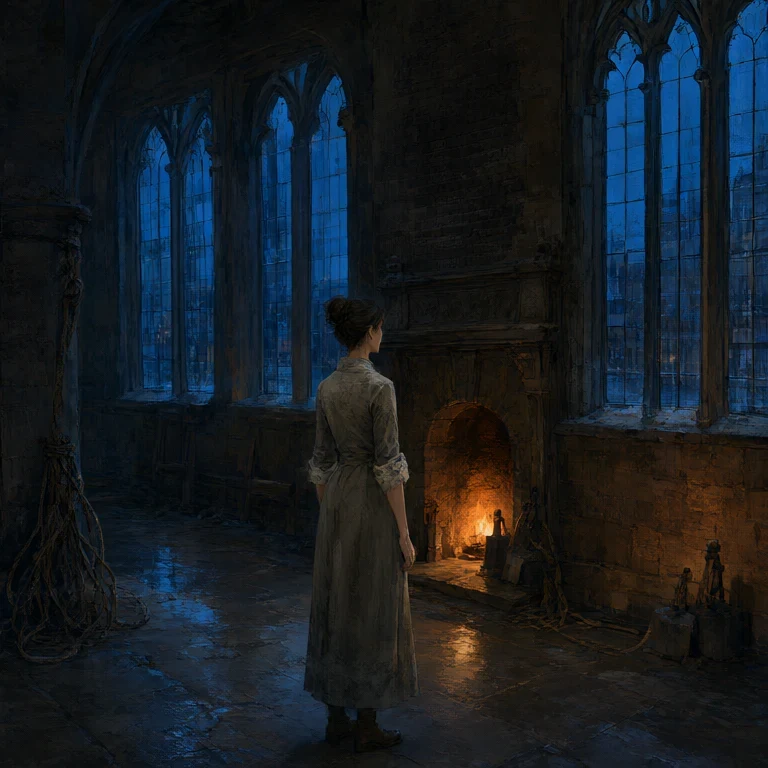
The Rope Walk is up past the Rope Gate and then straight for a quarter of a mile, and the last two hundred yards are the worst of it, because nothing stands between the river and that stretch but the flat, and the wind comes across eleven thousand hearths of flood plain with nothing to stop it, which is the reason for the fire in the first place and never once a help. Mared walked the last two hundred yards more slowly than the first, and stopped once, at the Rope Gate, and put her hand on the inside of her coat where the slate was, and did not take it out, because there was nothing on it that she had not already said out loud to three people in a cold room. Then she went up her own stairs, which are the outside ones, and the number one thousand four hundred and sixty-six is in the third course of the chimney at the top of them with the maker’s tick under it, and she came in at ten past two.
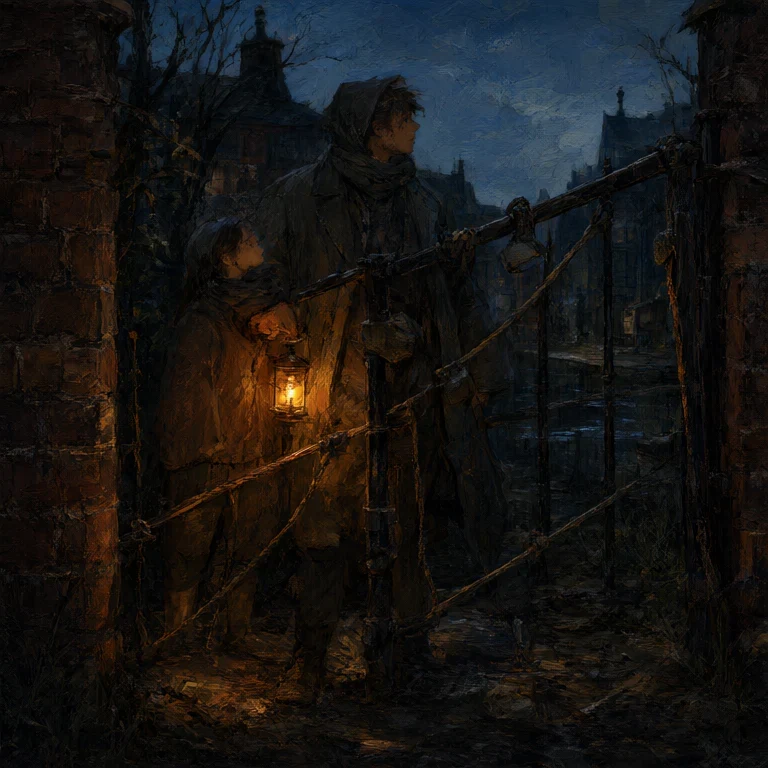
She put the length of deal down by the fire and stood with her hand flat on it, the way a woman does who has been carrying a thing for four and a half hours and has not once put it down. Her coat was white to the elbow with the dust off the fill, and there was grey in the seams of it, which is the surest sign of employment and of debt in this city and which no one ever remarks on. Nobody asked her where she had been, because a person who has been out in Emberwyke in December has been where the answer is. “Listen to the number,” said Mared. “Then all three of you can say what you think and I will not answer any of it.” And she gave them the number.
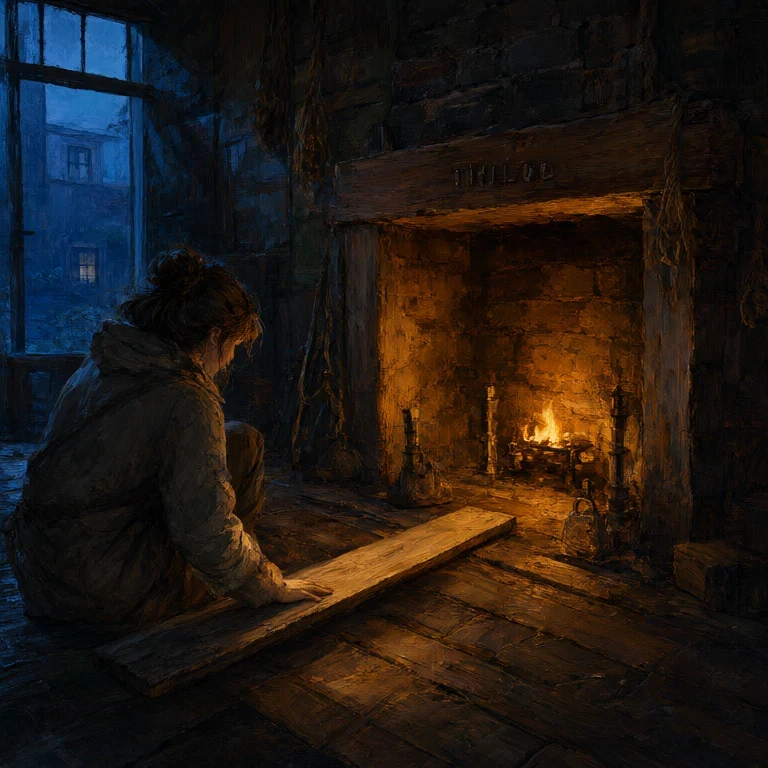
Eight pound four on the right-hand column for the night, because the night goes in twice and a night is four pound two. And the stick, which is one length of deal off the fill, a piece of wood about as big as a man’s forearm, which will give, burned whole, six ounces. Which leaves seven pound fourteen ounces short. “Which is a short,” said Sefa. “Which is a short,” said Mared. “And a short at dusk is a mark, and a mark is seven years. And a marked name cannot testify and cannot hold a lease and cannot be counted in a queue. And in the March this room is leased, and the lease is on my name, and after that it is on yours, Halden, and after that on Sefa’s.” “Then we cannot do it,” said Halden. “We can do it,” said Mared. “That is the whole of the trouble. Any of us can do it. There is no door.”
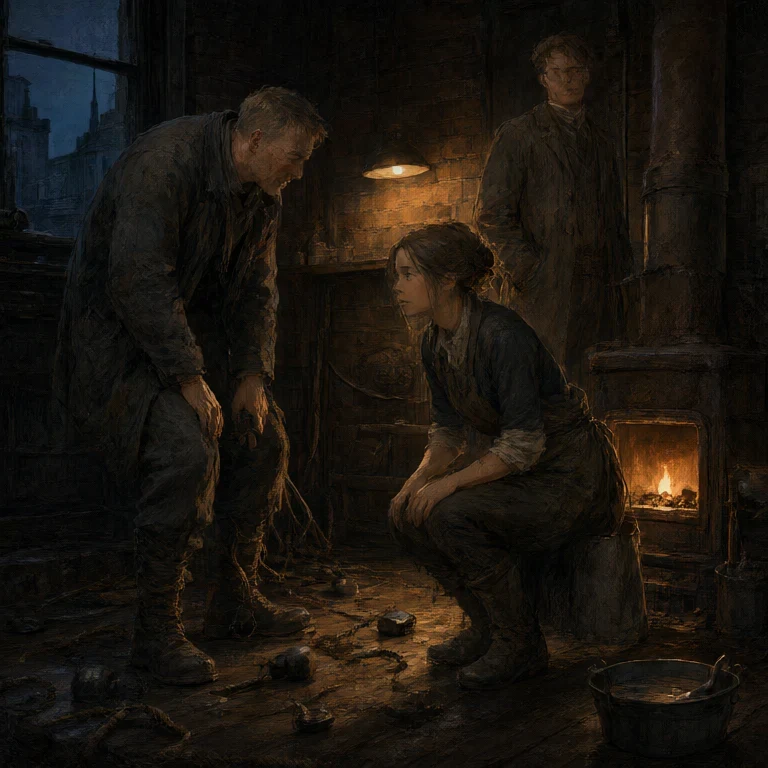
The three of them looked at the length of deal on the floor for a while, and the room was cold enough by then that Sefa’s breath had begun to be visible, and Teodor put his hands inside his sleeves. “He is right,” said Sefa. “That is what I have been trying to say for four hours. It is not a fair rule and it is not a bad rule. It is a rule that a fire is on, and a rule that a fire is off, and a rule that somebody has to be the one who says which.” “No,” said Mared. “Mother —”
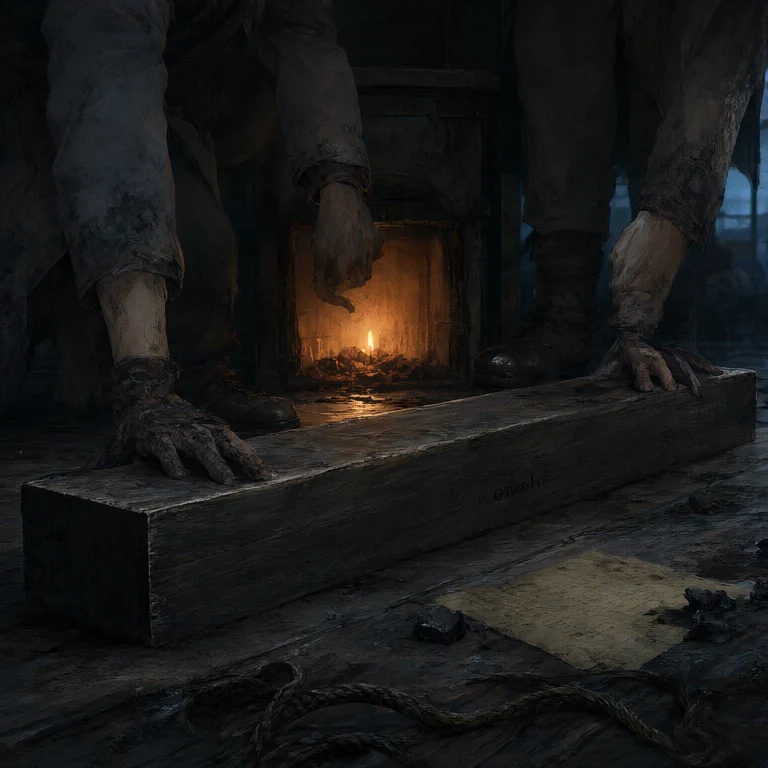
“No,” she said. “I am not going to do it on your arithmetic. The paper is in the box and the last line of it says the hearth is to be extinguished by order upon the said day, and the clerk gave me the form in October and did not ask me one question, and I have read that last line four hundred times, and I put the fire out at four o’clock this afternoon because I could not put that box down again.” She turned round. “I have not been brave about this house for eleven years. I have been tidy. And I am sixty-one, and in the March I am still sixty-one, and I am not going to be a woman in a dead house waiting to not be a debt. So the fire goes on at four o’clock, and I am the one who put it out, and I am the one who will put it in, and that is the whole of what I have to say, and it has nothing to do with you and it was not going to be all right.”
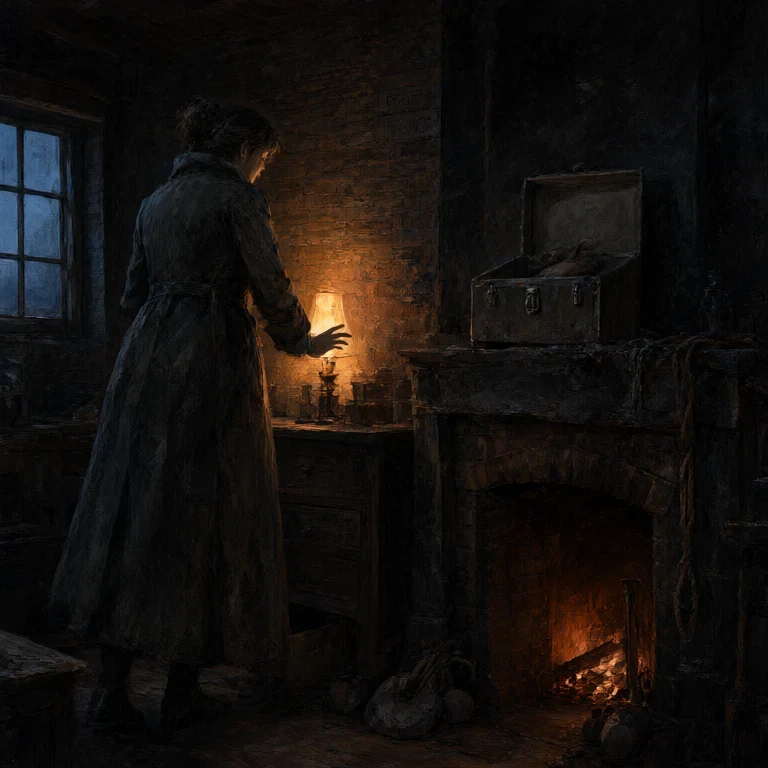
They let her relight it. Halden was not enthusiastic and he did not pretend to be. Sefa got the matches and held the lamp. Teodor went and stood in the doorway to keep the draught out of it, which is a thing a lodger does, and did it, and did it well. And at four o’clock in the morning Mared Holt put a piece of deal, one length, two feet nine by seven by an inch and a quarter, into a hearth that had been out for twelve hours, and the fire took. That is the rule of this city and there is no other rule about it and there is no hurrying it. A hearth whose number is not on the roll will take a match and hold it and go out, and a hearth that is out is not dead, and it can be relit only by the person who put it out, and only at the hour, and only on a clean board. And it took, at ten to four, and burned low and yellow and wrong-coloured, and by half past four it had a voice.
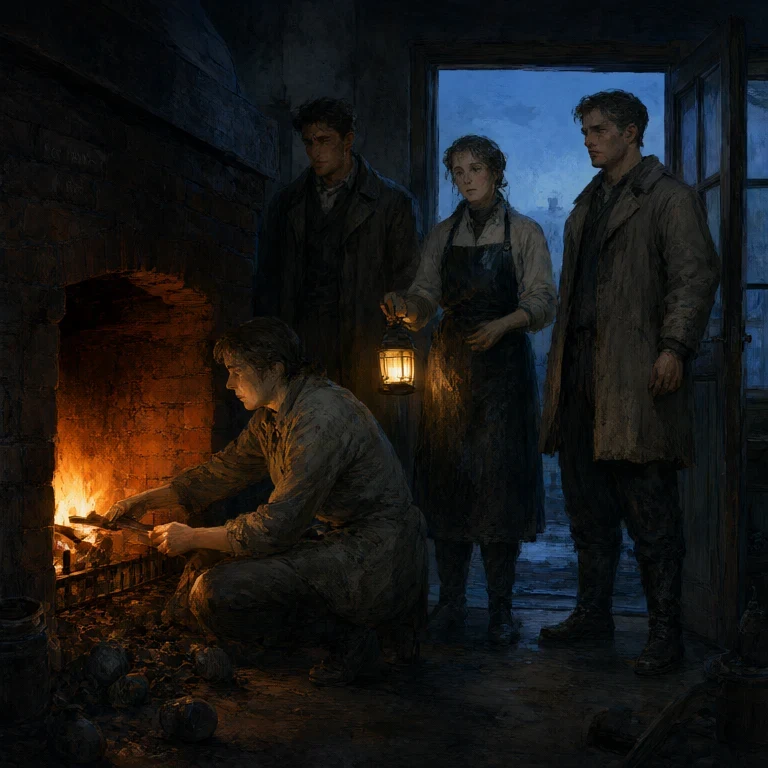
Nobody cheered. That is not a thing that happens in a house on the Rope Walk. What happened was that Sefa sat down on the floor with her back against the bed and put her hands out toward the hearth, one at a time, and the smell came into the room, which was the smell of a house in Emberwyke, hot dry dust off the hearth board and coal smoke and wet wool, and Halden said, “That is the smell of that,” as though he had been told a piece of news. It burned for two hours and ten minutes. Teodor said, at a quarter past six, “It is going,” and he was right, and it was.
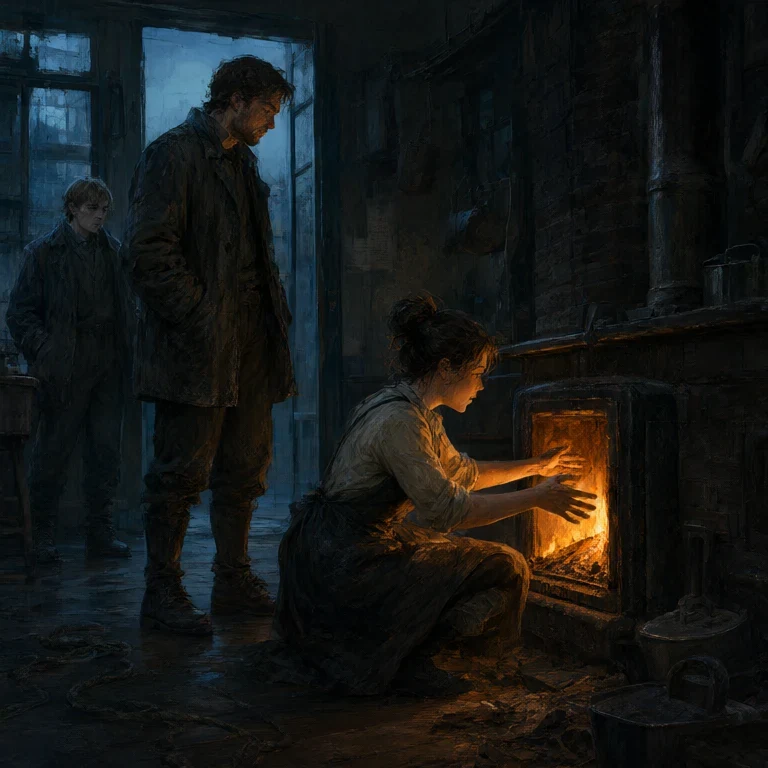
Bess Tallis came at six to rule the board, because the board is ruled before the ash goes off. Mared had been awake the whole of the night and would not be ruled by a girl of fourteen. “Two squares,” said Mared. “There is one night.” “There are two nights.” “There is one night,” said Bess Tallis. “And a board is ruled by nights. And I have ruled four hundred boards on this street and there is not one square on one of them that was not a night, and I am not going to rule you a square that is not a night.” “Mared,” said Halden. “Rule the two squares,” said Mared. So Bess Tallis ruled two squares, because she was told to, and she did not put it in the book, and it was not true.
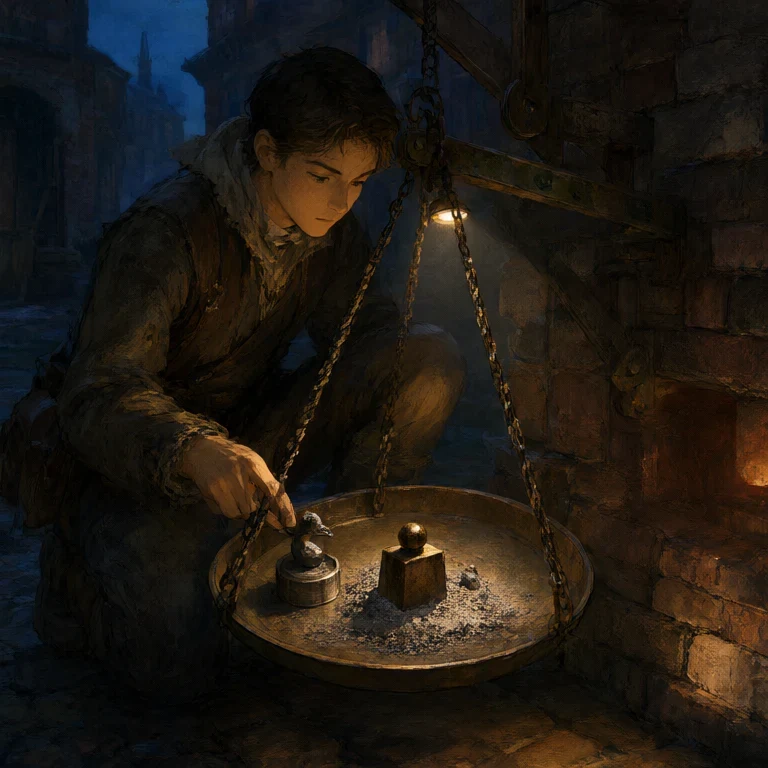
The barrow went down at half past four with the false bottom and the ballast and the tarpaulin, because you go with what there is. She checked the axle with her heel at the top of the forty steps, the way she has checked it at the top of those steps for twenty-nine years, and it was cold, and she went down. The six ounces went on it in a tin, and the tin went on the pan, and the beam-man put a duck-weight against it out of habit, and then took the duck-weight off again, because six ounces does not want a duck-weight, and the beam came down and rested. “Six ounces,” he said. “Six ounces,” said Mared. The clerk wrote it in the right-hand column of the second square. The first square stood empty in front of it with the two lines of the ruling and nothing at all between them, and the clerk looked at it, and then at Mared, and then at the number.
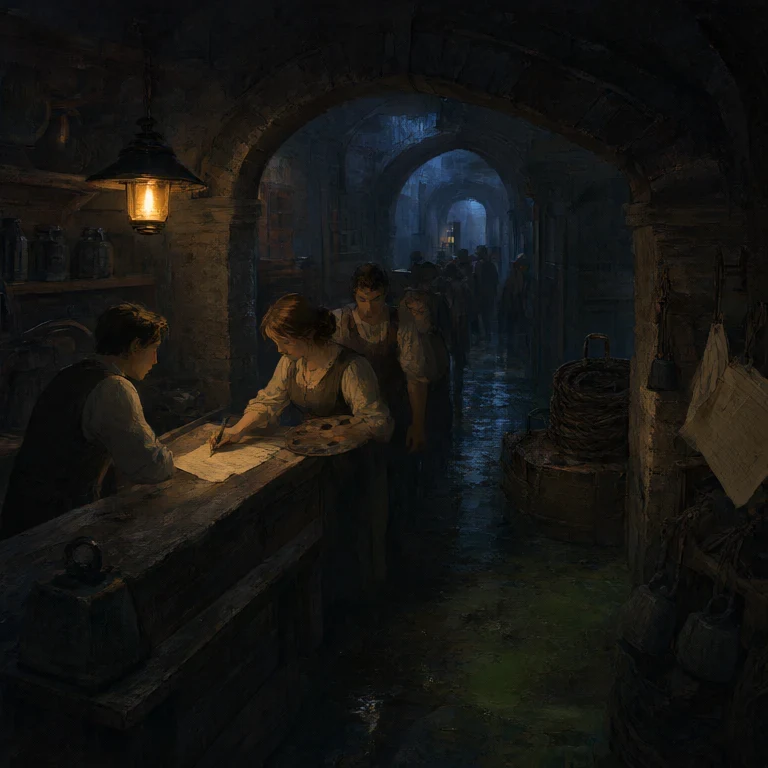
“Which is the two nights of the thirteenth and the fourteenth,” said Mared. “And I have brought you the one I have.” “There is a mark against this hearth tonight,” said the clerk. “You know that.” “I brought it in myself at twenty past five this morning and I have watched you put it on the pan,” said Mared. “Tell it to the man at the end of it.” The Scale House is the only stone building in the city and the sound of it is one voice at a time saying a number, and the beam-man said the number, and the clerk said it back to him, and the queue said it a third time, and there is no other way of doing it and there has not been for a hundred and forty years. Seven pound fourteen ounces short. Seven years.
Halden was waiting on the step with the barrow and did not ask, and Mared told him, standing, because the figures do not improve by being carried in the hand. He said, “Right,” and then he put the barrow down and stood in the Rope Walk in the grey at seven in the evening with the fires going up along the street, and looked at the number in the third course of the chimney, which is one thousand four hundred and sixty-six, with the maker’s tick under it. “It is a good chimney,” he said. “That is all I am saying about it. It is a good chimney and it has been in this street longer than either of us and it will be here after the March.” “And after the March after that,” said Sefa from the doorway. “And after the March after that,” said Halden. The fire had been out since a quarter past six. It would be out until four o’clock tomorrow, and the day after that, and the day after that, and on the Friday the coke cart would stand on the weighbridge at seven in the morning with three and six the half-hundredweight on it, and the Rope Walk would buy what it could buy, and the Scale House would do what it does, and the number in the book was the number in the book, and the beam does not know what a night was for.