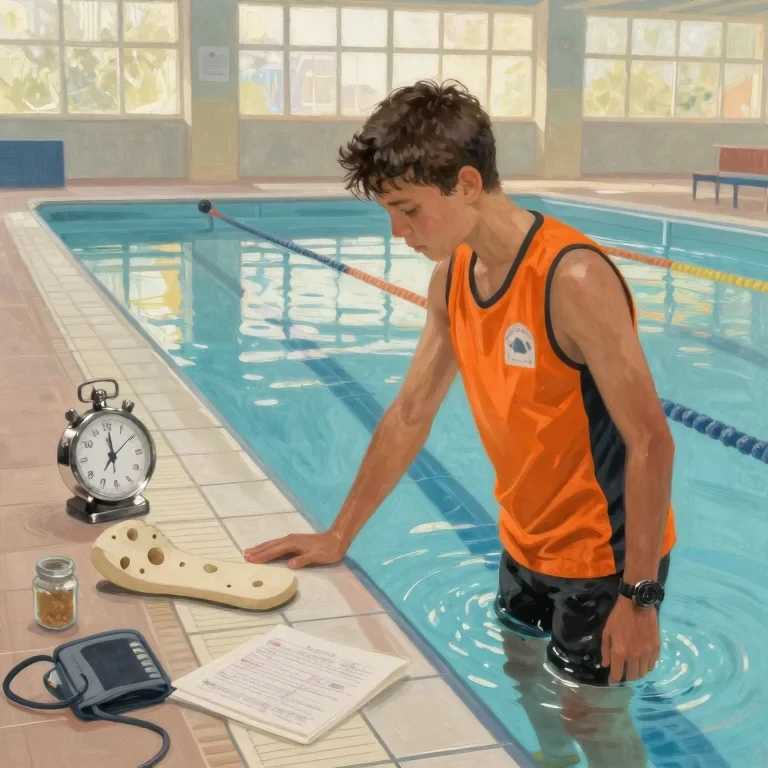
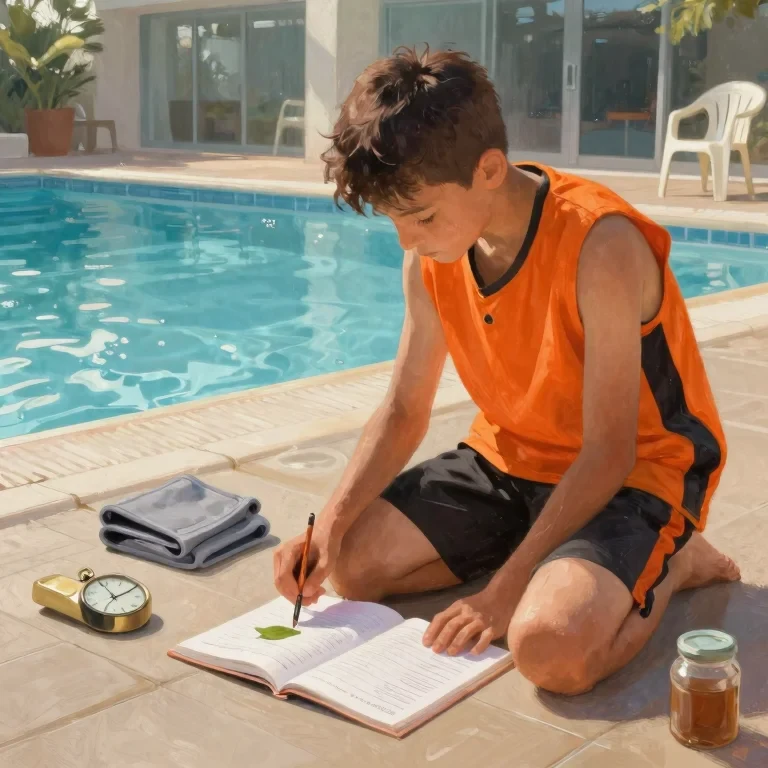
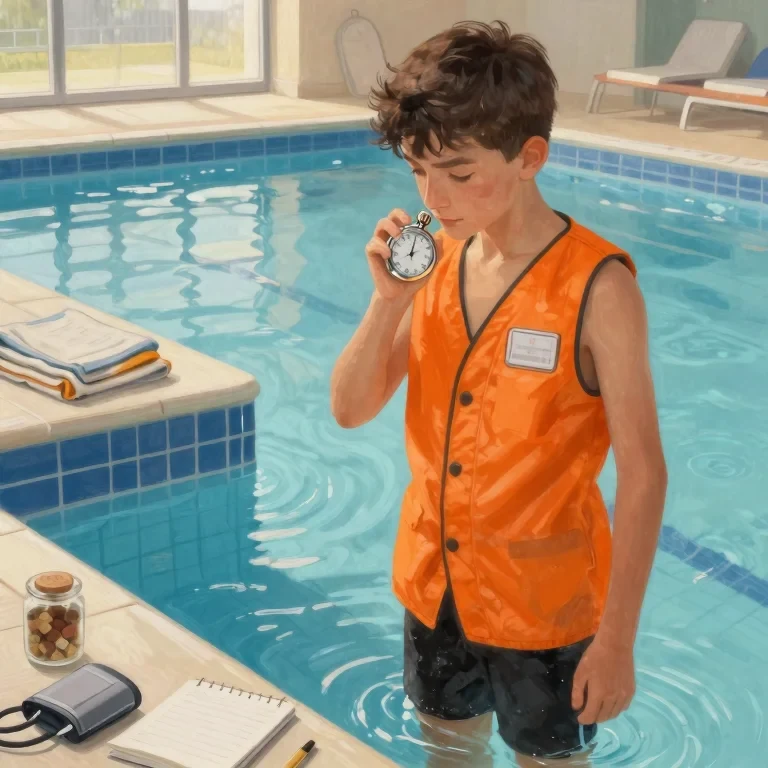
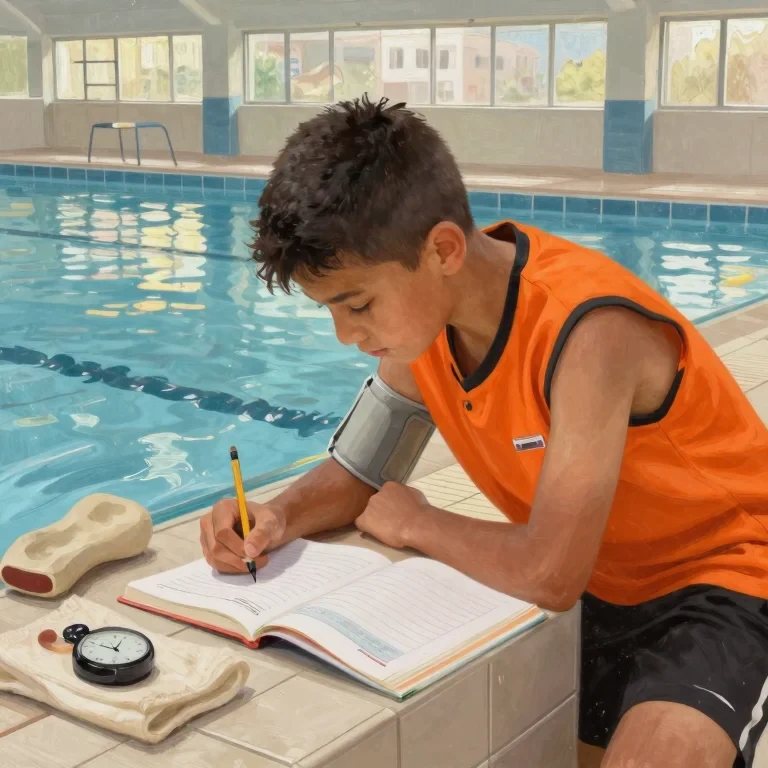
The Wellington Regional Aquatic Centre has a twenty-five metre pool, a learn to swim pool, a warm pool, and a café that sells a flat white for four dollars and a toasted sandwich for eleven, and on Saturday mornings the club squad has the big pool from seven until nine. Tane Mataira is sixteen. He has an orange rash vest with black trim down the sides and black board shorts, because his mother bought two of everything in October and he is still going through the first year of them. He is a hundred and sixty-two centimetres tall and sixty-one kilos and he swims the fifty free in under twenty-six seconds, and he can hold his breath for longer than anybody in his year except Hemi Arai, who is a year younger and smaller and has never once admitted losing. The numbers go in the back of a school exercise book. He has been filling it in since March. Two columns and a date. Column one is the time. Column two is the number of breaths before the hold, and there is no column three, and that is the whole problem.
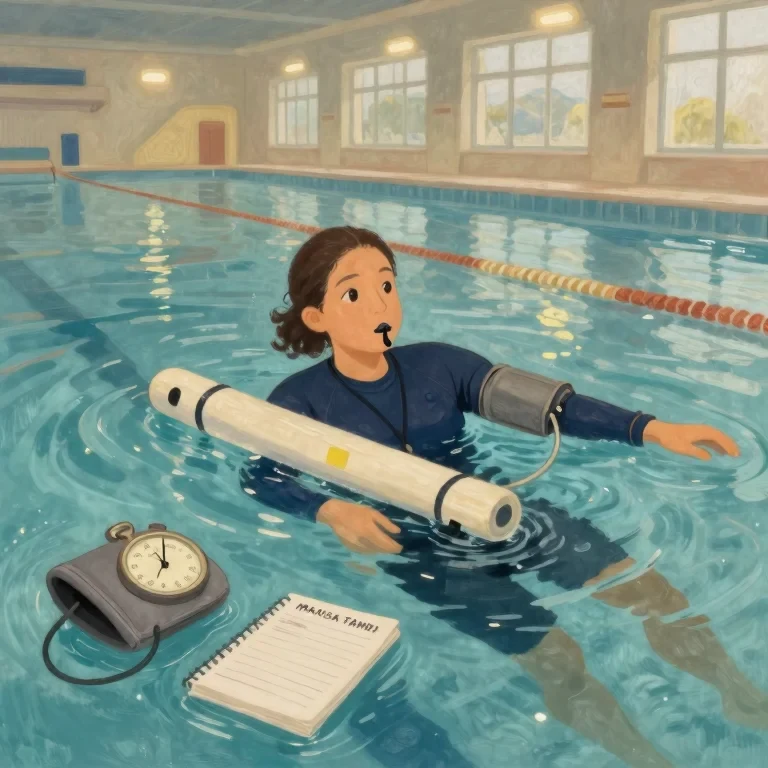
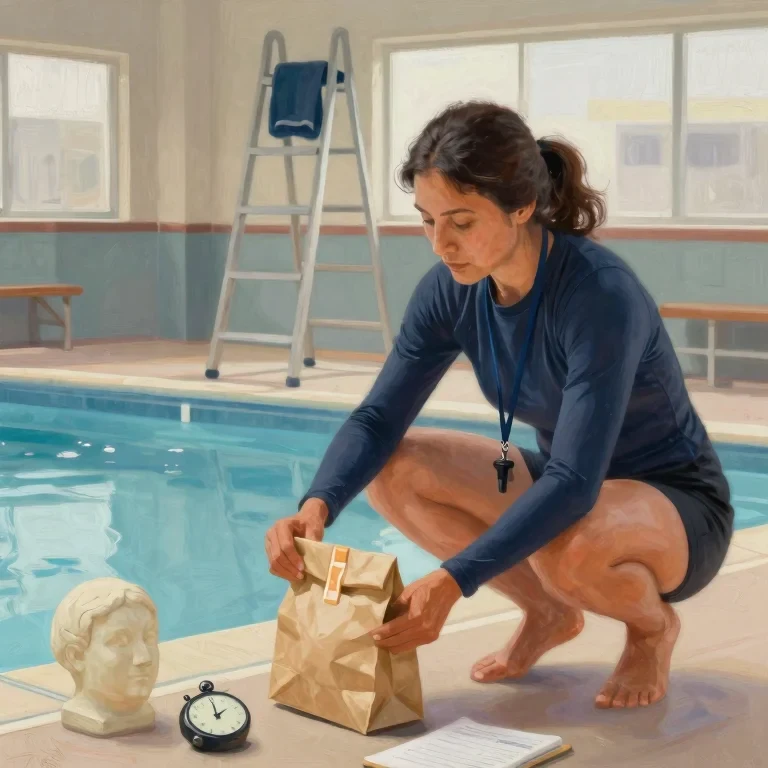
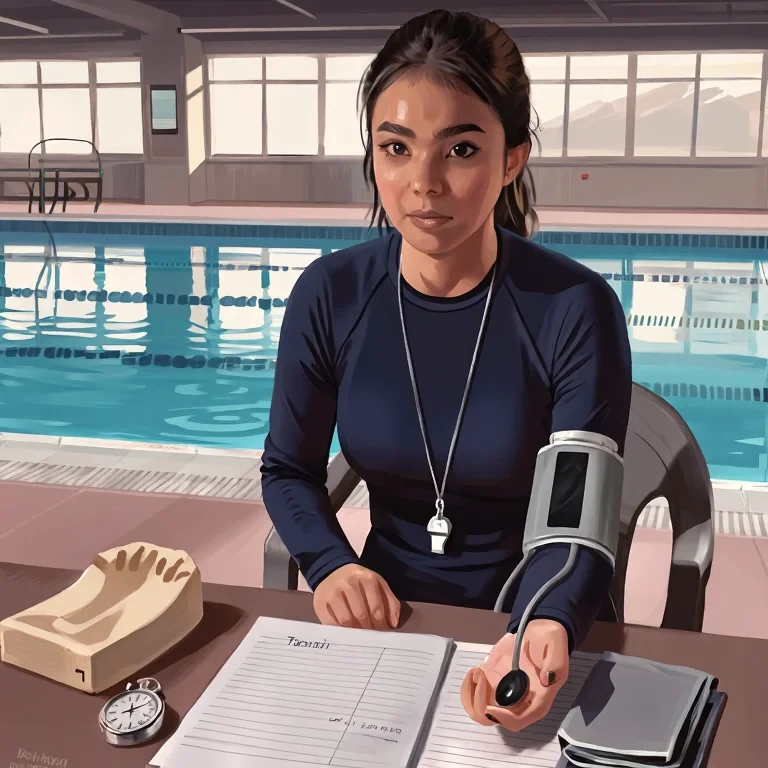
Marisa Tamati has been teaching breath holds for six years and she is thirty-four and she wears a navy long-sleeved rash top with a whistle on a lanyard and a rescue tube leaning against the wall of the pool wherever she is standing. She teaches it in three metres of water, lying on her back, because the three metres is the number that matters. Below it there is no danger from being unable to see, which is the danger everybody imagines and which is not the one. The first lesson has almost nothing in it. She gives each boy a stopwatch, and she tells them to float on their backs with their noses above the water, and to write down the time at which they wanted to breathe. She does not tell them to fight it. She tells them to note the second they reach for the air, and then to breathe. Tane came up at one minute and nine seconds and wrote it down and asked whether that was bad. “It is what you did,” she said. “How long did you have air?” He did not know. So they did it with arithmetic.
A boy his size breathes about half a litre of air each breath, and his lungs can take three litres at the top of a big inhale. Air is one fifth oxygen, so the biggest breath he can take puts about six hundred millilitres of oxygen into him. His body uses about five millilitres of oxygen a kilo a minute, which is three hundred millilitres a minute, and it uses it whether or not he is swimming. All of his oxygen, in all of his blood and all of his muscles and all of his lungs, comes to about a litre and a half, and at three hundred millilitres a minute that is five minutes of it. He had been holding for a minute and nine seconds and he was still carrying about two thirds of everything he would ever need. He was not running out of air. He was never going to run out of air, and every boy in the club would have told you the same. “So why do I have to breathe?” Tane said. “That,” Marisa said, “is the good question, and I am not going to answer it with a word. I am going to answer it with a number.”
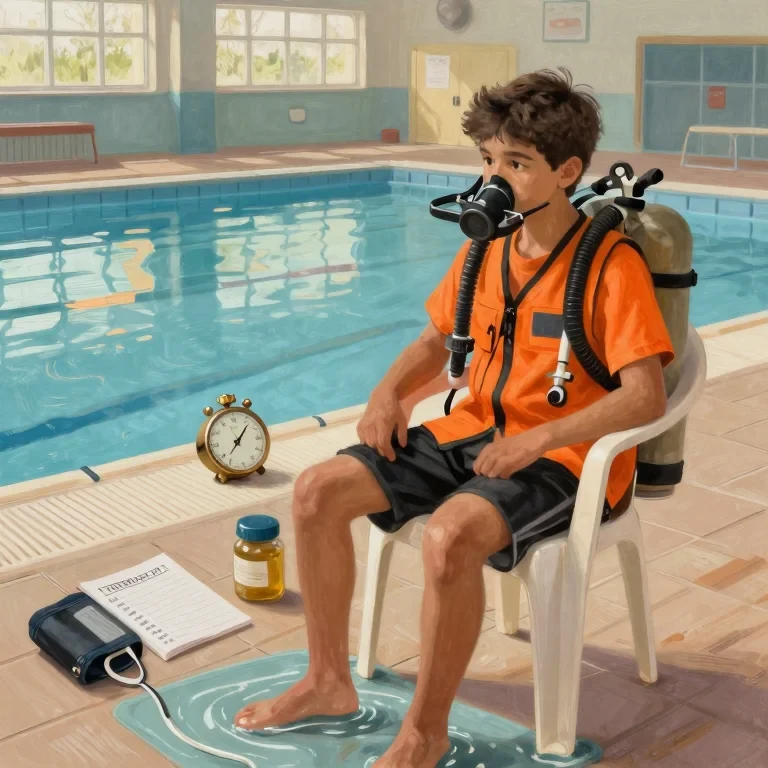
She had him hold it lying on his back with his face in a paper bag. It is a paper bag, folded and taped so that it seals over his mouth and nose, and inside the bag is the air he has just breathed out, and on the third breath the oxygen in the bag is the oxygen from three breaths ago, which is not much less than the oxygen in the room, and the carbon dioxide in it is going up every single time he breathes. That was the first afternoon. On the third afternoon she gave him a rebreather, which is a five litre bag on a tube over his mouth and nose, which does exactly the same job with better equipment and lets her put a sensor through it and read what was in the air he was breathing.
He sat in a plastic chair on the pool deck in the three metre pool with his feet in the water, which is where you do this, because you do it sitting down with somebody standing next to you and you do it in the shallow and you do not do it in the deep end with a rope round your waist. At forty seconds he said, “I can go a lot longer than that.” “By how much?” “Another minute. Easily.” “Then look at the number on the thing in my hand.” The capnograph reads the carbon dioxide coming out of his mouth in millimetres of mercury, and it was at fifty-two, and it had been at thirty-nine in the doorway, and it was going up five or six every minute while he sat still.
“You are not out of air,” Marisa said. “You have never been out of air in your life. You are out of something that runs out faster than air does, and your body knows exactly how much of it there is, and it tells you at about a minute. It also tells you at about a minute when you are under water. That is the whole danger and it takes one afternoon to demonstrate.”
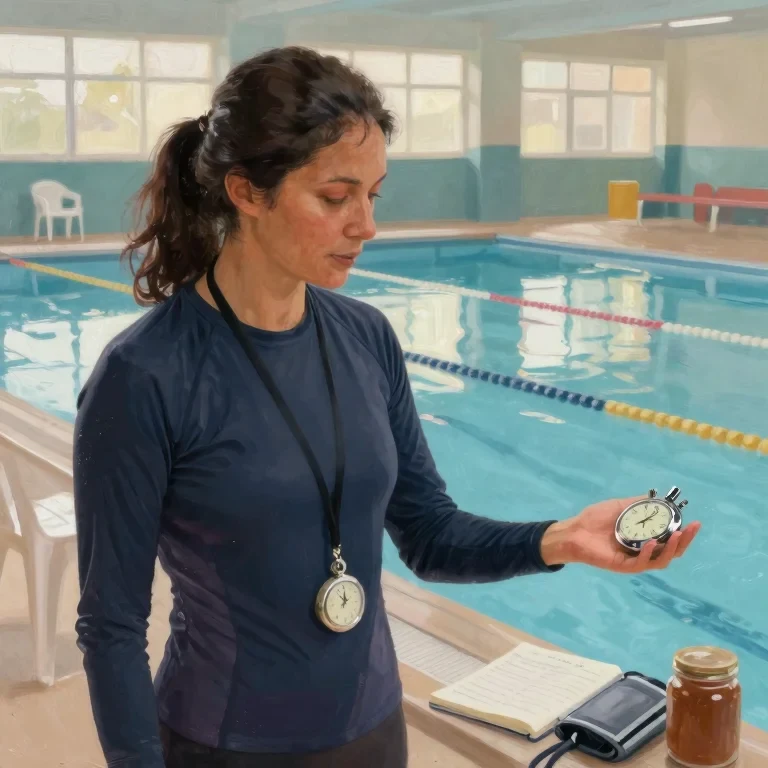
She gave him the seven things then, and made him write them in the front of his own exercise book because she was not writing them down again for free any more. Breathe normally before, never big. Take one breath and go. Do not hyperventilate, and when a boy tells you that three deep breaths give you more air, that is a boy who has not done the arithmetic. Do not do it alone, and do not think that a pool full of people is a person. Watch the eyes, because a boy who is running out of time stops sinking and his eyes go wide and his shoulders come up, and those are the things you look for from the deck. And the one that saved him: if he ever goes under and does not come back up in a second, do not wait, do not ask questions, do not go and get the lifeguard and come back. The rule is one named person, and the named person has one job, and the named person does not need to know anything about breathing at all.
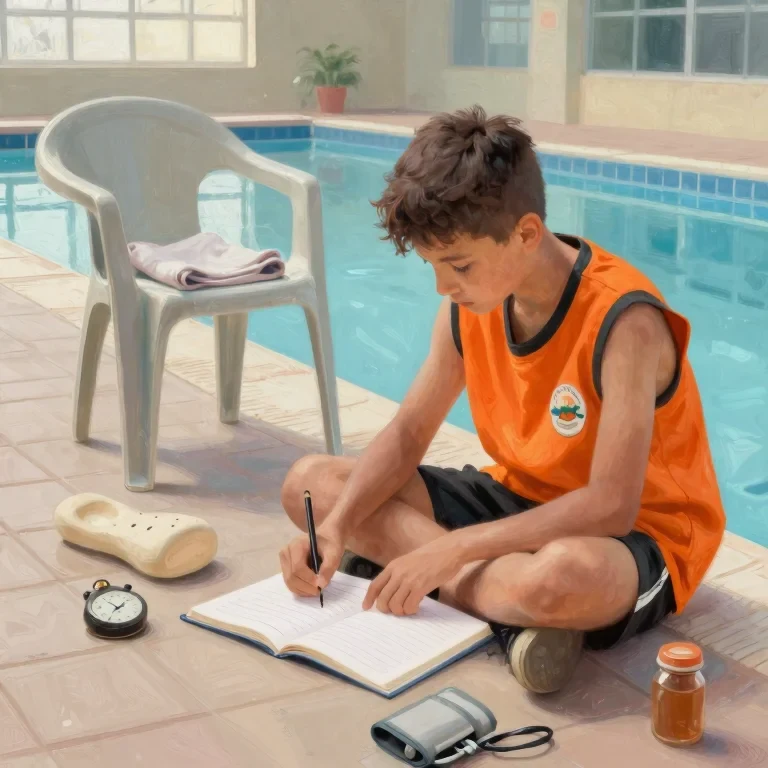
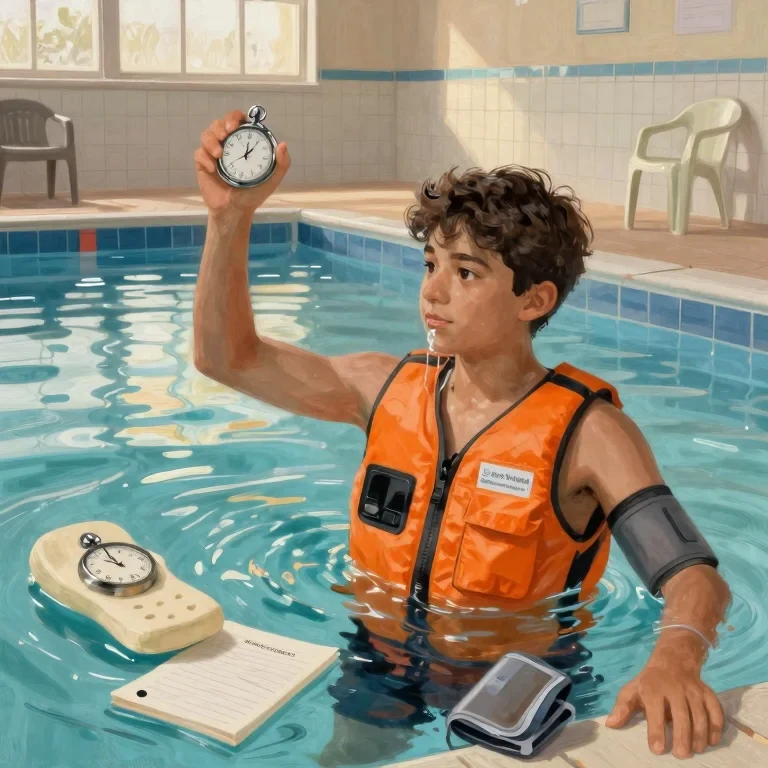
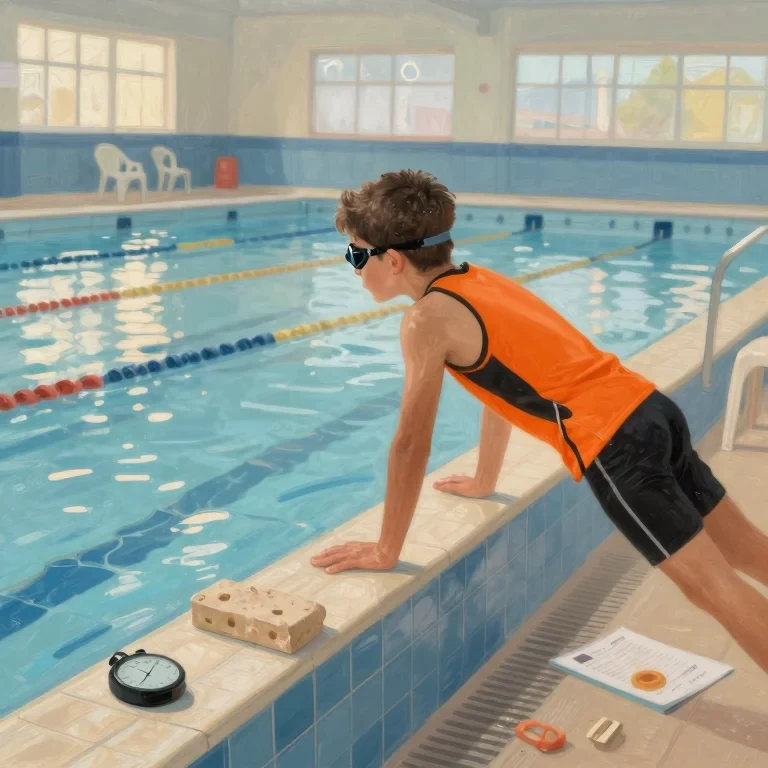
In May the club ran a breath-hold time trial in the shallow end of the big pool, chin out, and eleven boys from the squad lined up along the wall and each of them did a hold and the person behind wrote the time. Tane was second from the end. Hemi was last, because the youngest went last and the youngest always went last. Hemi did three big breaths before his turn, which everybody had seen him do a hundred times, and he got a minute and nineteen seconds, and it was the best time on the board that morning. Tane did the same three big breaths. He had a stopwatch in his hand and his finger on the button and he started at the moment Hemi's chin came down. He made one minute and twelve. That is his best time and it is circled in the book with a ring around it, and underneath it he has written 3 in the second column, which he does not think is interesting. Afterward Hemi said, “Your turn looked short.” “It was seventy-two seconds. It is the sheet. Read the sheet.” “It looked short,” Hemi said, and went to the showers, and meant something kind by it, probably.
The arithmetic on three breaths is this. Three big breaths move about a litre and a half of air in and out of him, and a litre and a half of air holds about three hundred millilitres of oxygen. His body is spending three hundred millilitres a minute, so the extra air is worth a little over a minute. That is what he bought. What he spent was not air. Breathing big empties the blood of carbon dioxide, and pushes it from forty down to about twenty-five, and the alarm that Tane thinks is his lungs is not his lungs. It is the carbon dioxide coming back up to where it started. The alarm is rigged to go off at forty. He had moved the start line to twenty-five.
So the rule in the front of his own exercise book, the one he had written down in a fair hand, says do not breathe big before a hold. And on the day that mattered most he took three big breaths because his friend took three big breaths and because a sixteen year old is not a machine for taking rules seriously when somebody he wants to beat from is not taking them.
On the first Saturday after the time trial, Hemi lost the board. He was last in the water. He did his hold and came up smiling at the wall and then he was not smiling and he was doing something with his arms that nobody on the deck could name, and the sound he made was not a scream and it was not a word. Then he was under. He had gone down and forward and he came up thirty centimetres under, and by the time his face was at the surface his eyes were open and wide and looking at the wall, and he was not holding his breath any more. Nobody who has seen this will ever use the word voluntary about what he was doing. Tane was the nearest person and the next nearest person was eleven metres away and there were sixty people on the deck.
Marisa was two metres from the wall, so she got there first, and then three other adults, and somebody ran for the oxygen and the defib. The thing about a breath-hold blackout is that the body does not stop. The blood keeps moving. The heart keeps going for a while. What has gone is the part of the person that was holding on, and everything that was underneath it takes over, and that is what the thrashing is. People who have never seen it call it a seizure and ring for an ambulance. It is not a seizure. It is the body emptying itself at the end, and it usually stops on its own in under a minute, and it does not stop by anybody doing anything to it. What does stop it is oxygen. She had her airway open and she was giving him air and somebody was holding his head back and the fight was going on underneath all of it, and at some point in there the fight stopped. They got a pulse. They got a rhythm. It was on the screen in about four minutes and it stayed on the screen. The ambulance came at nine minutes.
Two things went wrong for Hemi and they are not the same thing. The first is that he had taken three big breaths and the carbon dioxide alarm never went off, so his brain had been given no instruction to surface while the oxygen in his blood was falling past the point where it can be used. The second is that he was in one metre of water. The coroner does not say shallow water. The families all say it. Every year it is the same shape: a good swimmer, a short pool, a warm summer day, and people standing within arm's reach of the person who is drowning. Water is not deep enough for a drowning and the body does not know the difference, and a boy who has run out of oxygen has about ten seconds in which somebody has to get to him.
Hemi came back on the Monday and was discharged on the Wednesday and was cleared for swimming in April, six months, with a letter that says no unsupervised breath-hold training, and no contact sport, and he has read that letter about four times. His lung was bruised. The bruise turned into a patch of pneumonia in his left side and he was on antibiotics for six weeks. The consultant told him in plain words that his body had spent six weeks making something it can make again and had no intention of rushing, and that when it did it again he would have less left to make it out of. And Tane did not swim for eleven weeks. He did not swim because he was not allowed either, and he did not swim because he was fifteen and the thing he wanted from the water had turned into a thing he could not look at. He sat in the warm pool at the end of October with his knees up and did not put his face in.
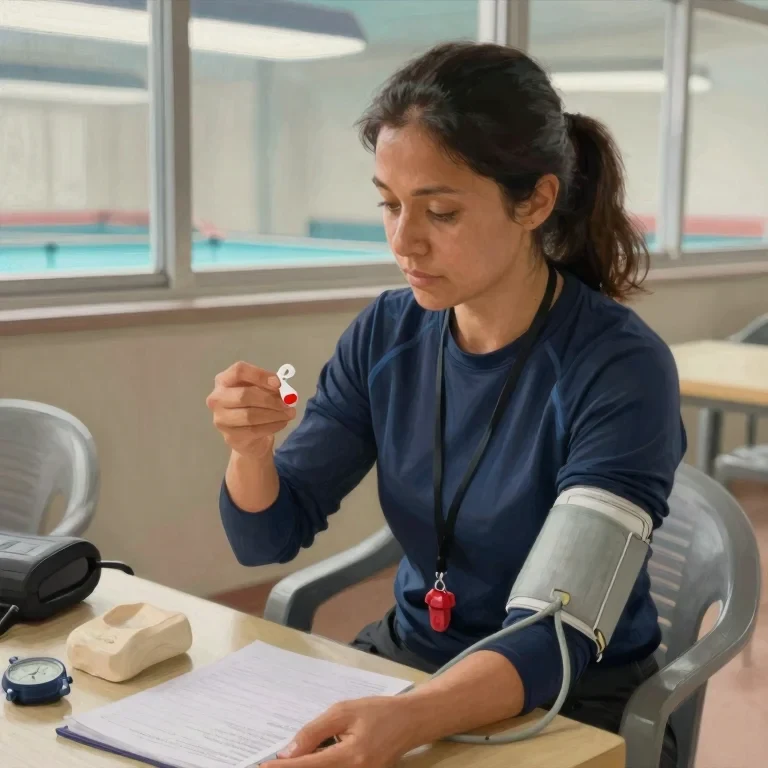
The rebreather is a five litre bag on a tube over your mouth and nose, and you breathe in and out of it and nowhere else, and it is the most dangerous piece of equipment in the building and it weighs about four hundred grams. On the ninth of November she put him on it at nine in the morning, sitting in the chair with his feet in the three metre pool. She also put a pulse oximeter on his finger, which is the small white clip with a red light in it, and which is on the shelf in every clinic and which is the only instrument anybody in this story had trusted. “Look at your finger,” she said, at one minute. It read ninety-eight per cent. He had been sitting still, holding his breath, for sixty seconds, with his heart rate falling and his face going round. “Ninety-eight,” he said.
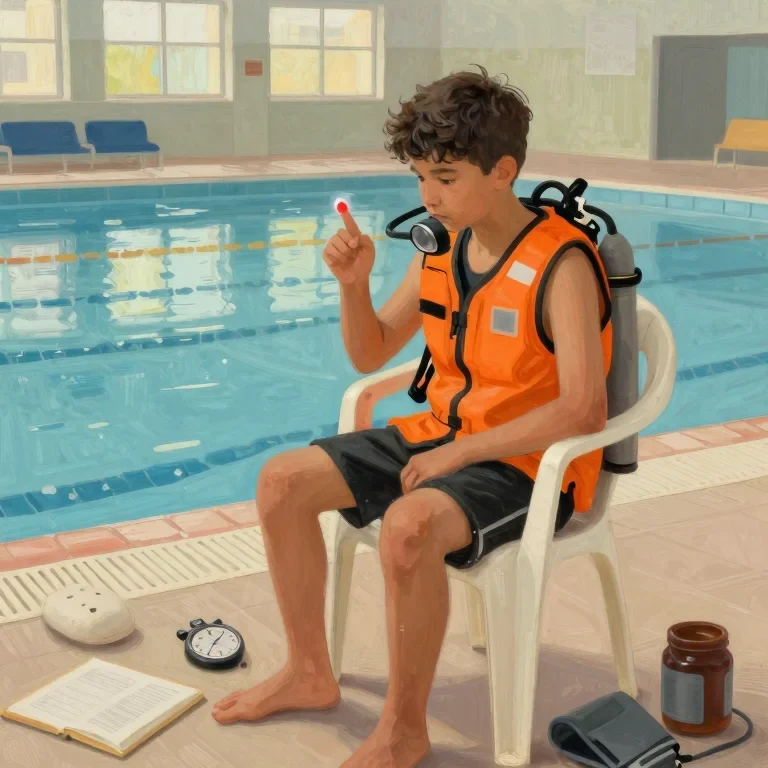
“Ninety-eight,” she agreed. “And it will say ninety-eight for another forty seconds, and then it will start to fall, and by the time it says ninety it will be far too late, because the reading has been on the end of his finger for eight seconds and the number it is reporting is how full his blood is with oxygen and not how much pressure is pushing it there.” She took the clip off. “That clip is not lying to you. It is answering a different question. It was never going to be the thing that counted the seconds.”
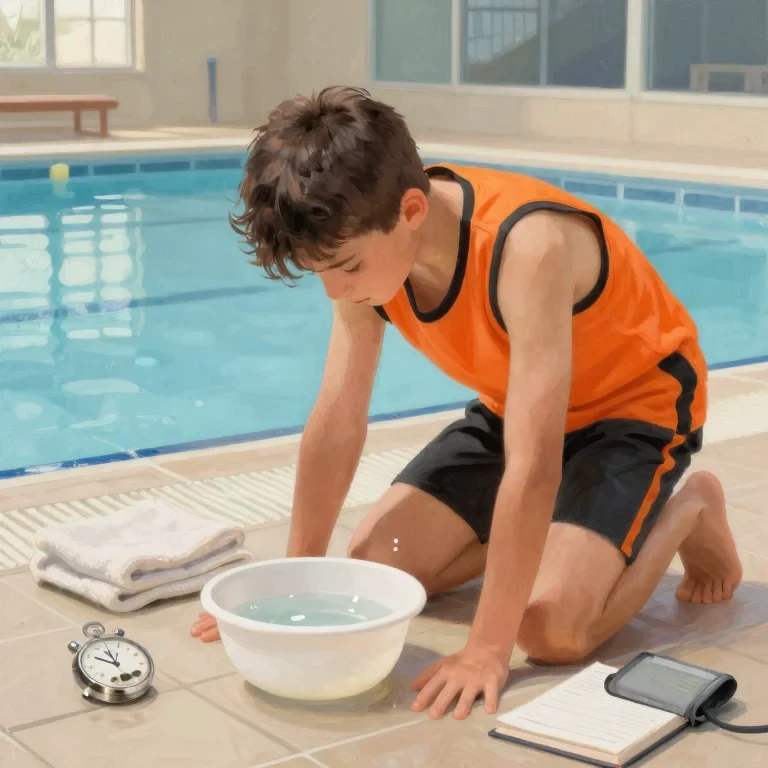
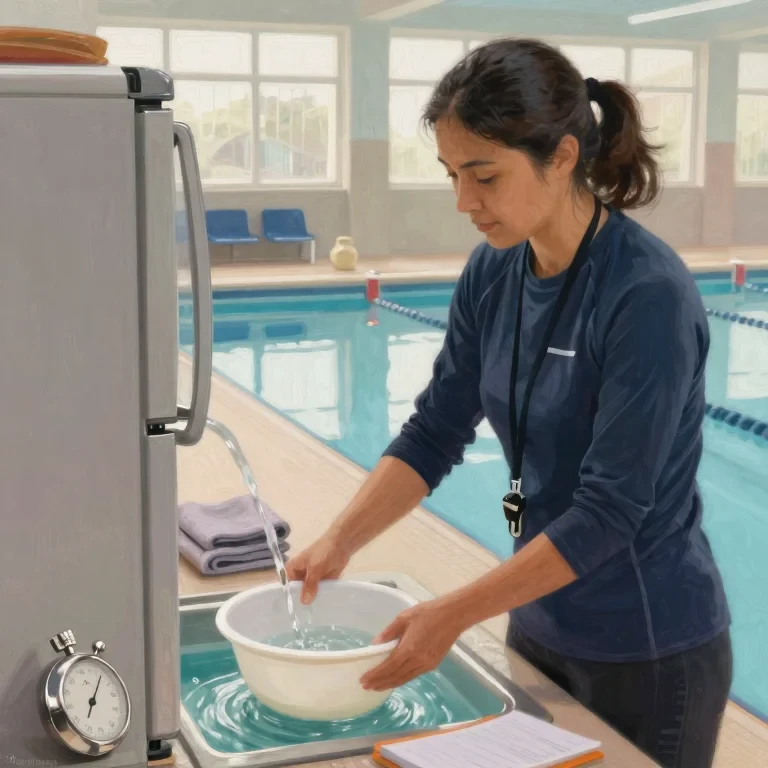
She also did the thing with the cold water and the heart rate, because she knew he had been doing it to himself in the pool, alone, at seven in the morning, with a stopwatch, and she would rather he stopped on the deck than in the water. She got a bowl of water from the tap in December and put it in the fridge until it was about twelve degrees and she had him put his face in it. His pulse went from seventy-four a minute to fifty-eight in about four seconds and stayed there, and his hands went cold and pale within a minute, and he said it felt incredible, and it did, and it is the single most dangerous thing a boy can find on his own.
A face in cold water and a body in water is the reflex that a mammal inherited from a mammal that used to go under to catch things and had to slow its heart before it did. The heart slows so that the blood goes to the head and hands and lungs and not to muscles. It is real, it is fast, it works, and in an animal it is a good way to survive a dive. In a boy it is a way to feel certain. Because the slow heart feels exactly like calm. There is no alarm in it at all. It is the body sounding exactly like a body that knows what it is doing, at the same moment as the oxygen in the blood is going past the point of no return, and those two things are not connected to each other at all and there is no reason on earth that they should feel different. Then she shut the cold water off and did not let him do it again for four months.
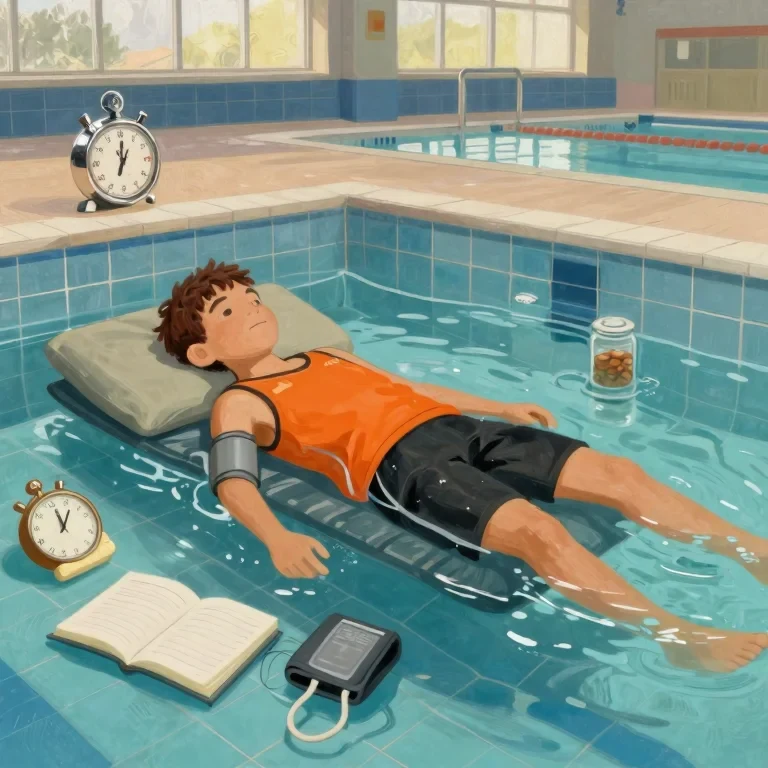
The re-education was the boring part. No hold at all. Not for three weeks. He lay on his back in the deep end with a cushion under his ears and he was not allowed to stop breathing, and she sat on the edge with a stopwatch and a spare and her whole job was to make him enjoy breathing, which is difficult, and which she does by having him say out loud what the water smelled like and how many people were in the room and what was happening on the deck, until the twenty seconds went past without him thinking about the number. Then it was the shallow end and one wall and his hands on the tile. Then, in February, it was a hold. A hold with his head out of the water, in the one metre, with his eyes open, with his hand on the wall. He got fifty-two seconds and it was the longest thing he had ever done and he could see his own watch the entire time.
In the front of the book, behind the seven rules, there is now a third column. Column one is the time. Column two is the number of breaths, and since the fifth of December it has been one on every single line. Column three is a name, and the name on every line is Elohi Mataira, who is thirteen, who can touch the bottom of the shallow end and do a somersault, and who has become, entirely without being asked, the most important part of a document about breathing. Tane does the hold and Elohi sits on the tile with his heels against the wall and his hand flat on his brother's back, and he is not watching the clock, because the clock is not the thing that has to be watched. The eyes are the thing that has to be watched. His best time on the page is one minute and twelve, taken in May, taken on three big breaths, taken while nobody on the deck knew the name of anybody in the water. On the last page there is a row for the fourth of March. Fifty-one seconds. One breath. One name. It is the slowest number in the book.