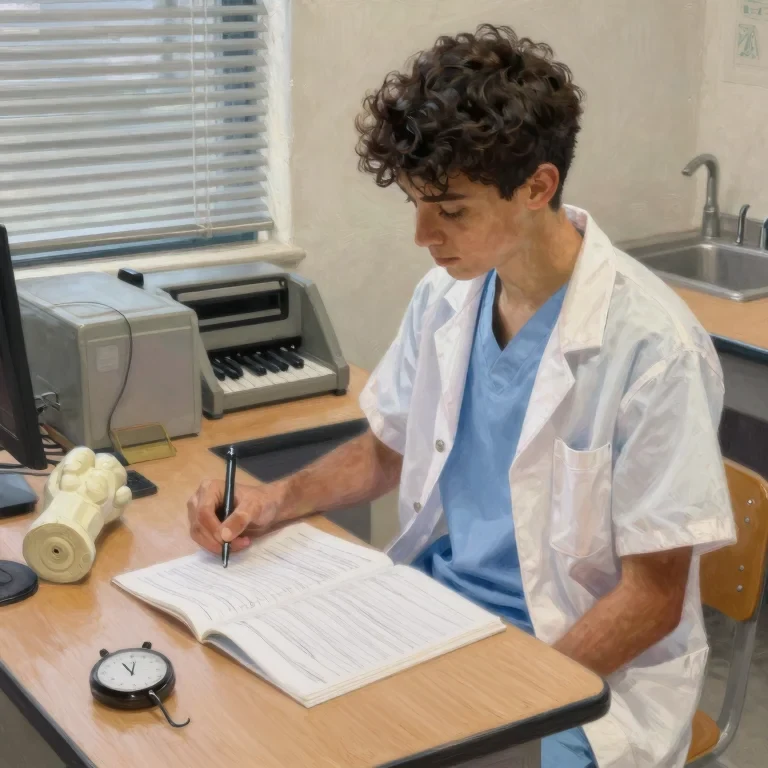
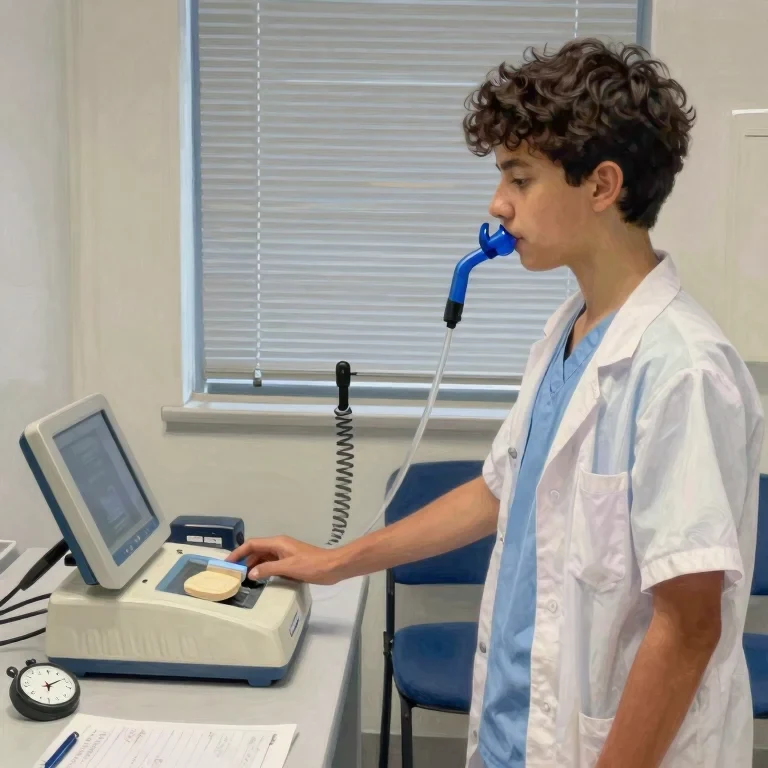
Elijah Sarkies is seventeen and he runs the spirometry room on a Thursday at Waikato Hospital, and he has run it since February, and the machine is a rolling cabinet with a screen and a flow head and a chair with a low back that he cannot raise because the raising screw is gone. The room is in the outpatient block, behind the respiratory clinic, and it is nine metres by four, and it has one window with an aluminium blind, a sink, a wall chart of the lung, and a box of masks on the top shelf that he is not allowed to move. The machine measures how fast you can push air out of your lungs and how much of it there is, and it does it by making you blow into a tube and measuring the speed of the air at both ends of the tube. It works because a small difference in pressure exists between the two ends of anything you blow through, and if you measure that difference often enough you can work out how much air went past and how quickly, and from that it can draw the shape of your breathing. The shape is the part that matters. That is the thing Elijah has learned and it has taken him four months, and it is not written down anywhere, and the training booklet says only that an acceptable effort is required.
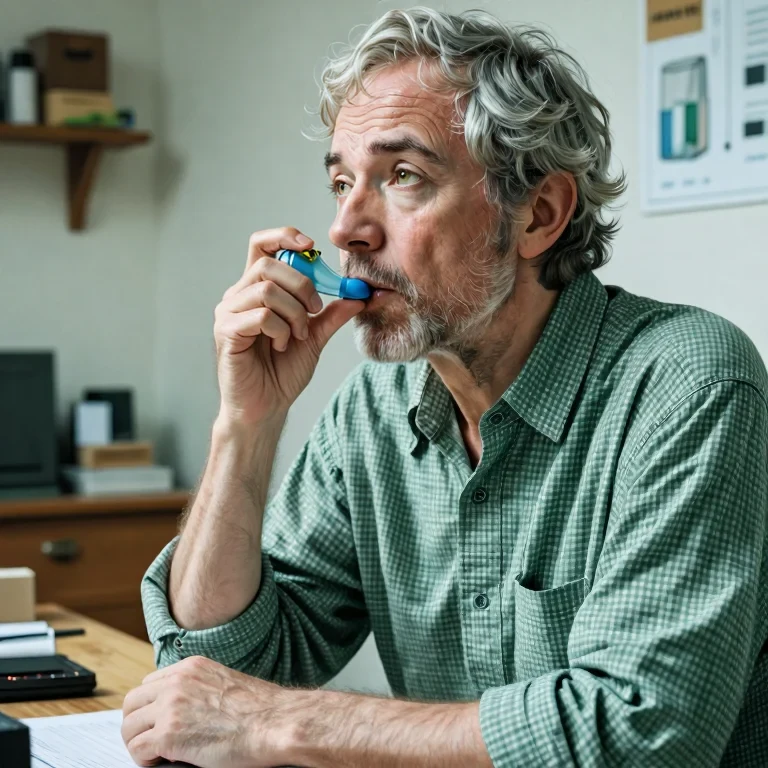
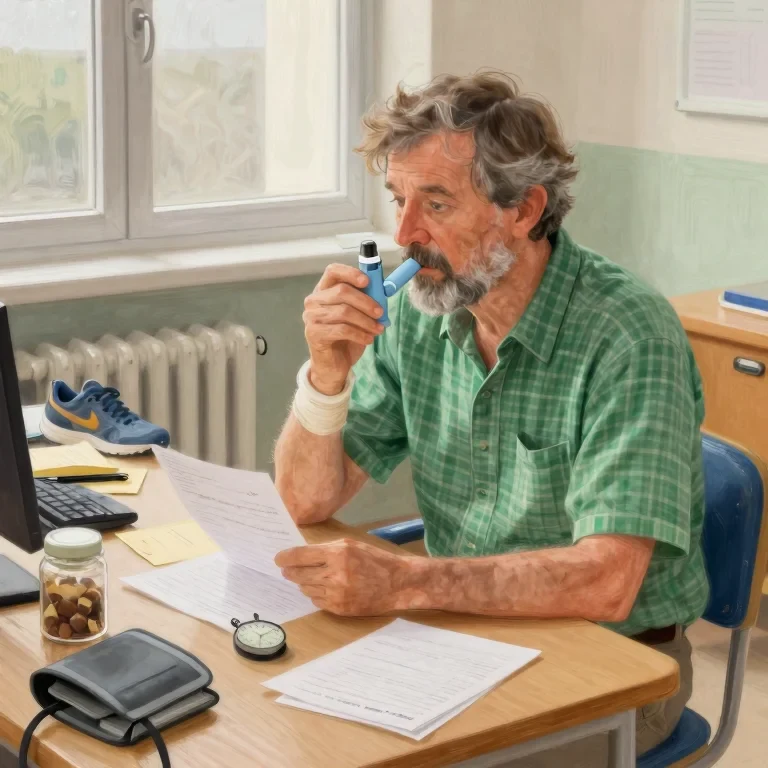
Colin Preece is sixty-eight and is on the list at half past nine on the Thursday, and the list says respiratory, and the note from his general practitioner says asthma, uncontrolled, consider adding. Colin Preece does not have asthma. He has smoked for forty-one years and he has a wheeze that his wife can hear from the other end of the house on a cold morning, and he has been to his general practitioner about nine times in two years for it, and he has been given a preventer inhaler and a long-acting inhaler and, in the November, a short course of oral steroids for a flare that settled in eleven days. He has never had his chest measured. Nobody has ever put a tube in his mouth. That is what happens, and it is not anybody's fault in particular. Asthma is diagnosed on a history and a response to treatment, and it works, and Colin Preece responded, and everybody in the system was pleased with him in November.
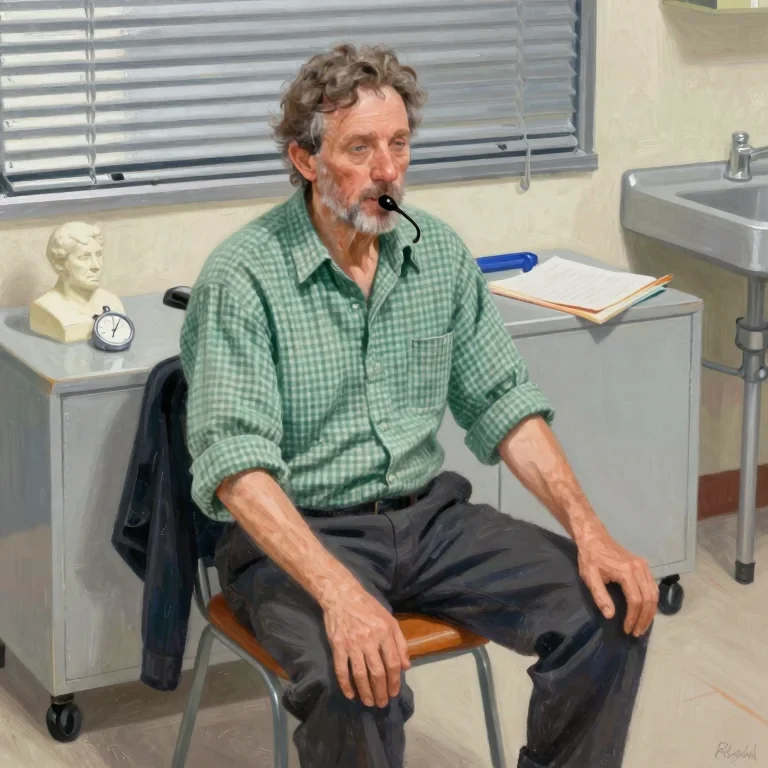
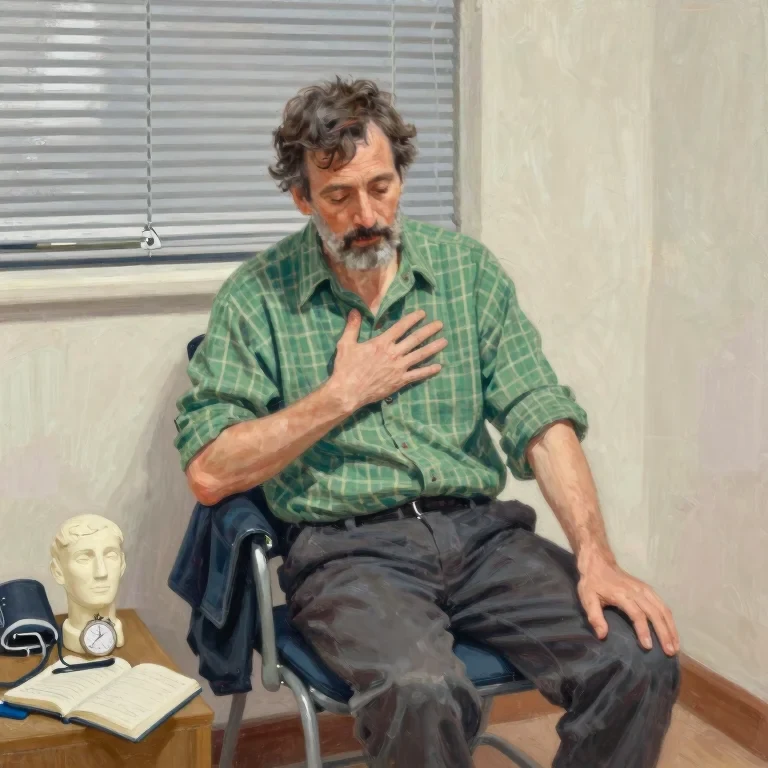
He is not pleased now. He has had four courses of oral steroids in two years and his general practitioner has started saying the word steroids, and the word steroids has a shape in it that Colin Preece did not expect when he was fifty-five and breathless on a hill. He is also fifty-one kilos heavier than the machine expects.
Here is how you do it. The patient sits upright in the chair with both feet on the floor and the head slightly above the chin. You measure the height on the stadiometer by the sink and you write it down, because everything the machine prints afterwards is a percentage of what somebody of that height ought to be able to do, and a centimetre is worth about a percent and the percent is worth a line in a letter. You give the instructions to a person who has not done it before in words they can act on. You demonstrate with a tube and a pen. You attach a nose clip. You ask them to breathe in as far as they can, and you say out loud, and again, out loud, as fast as they can, as far as they can, as long as they can. Then you take your hand off your knee.
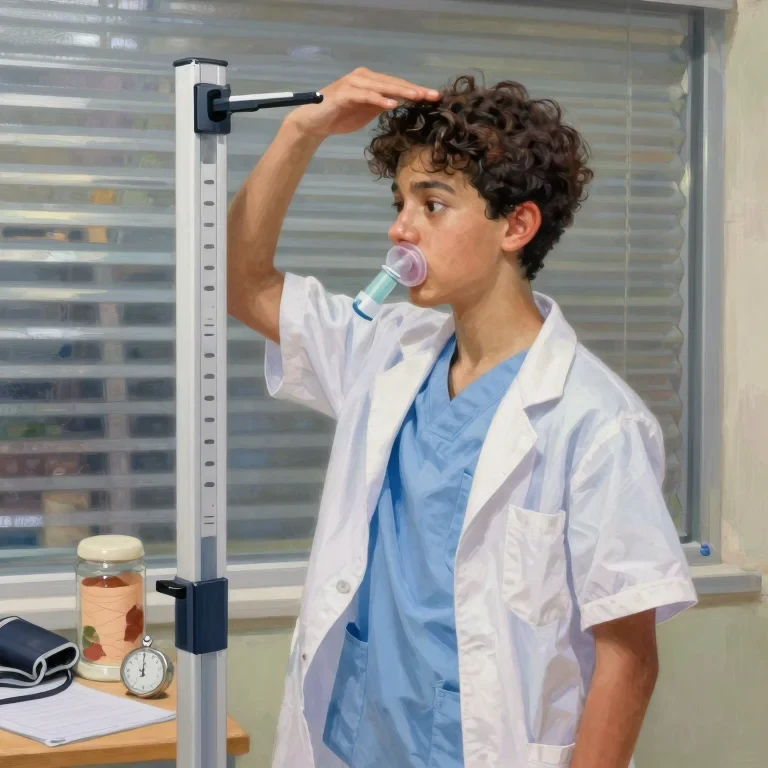
An acceptable effort needs the subject to reach at least sixty percent of their vital capacity on the flow curve. If they reach the first thirty percent in under a second and a half and then stop, the curve is a triangle with the point cut off, and everything after the cut is not in the record. Elijah runs three acceptable manoeuvres and the machine offers up to eight. On the third of the four that Thursday, Colin Preece produced 1.34 litres in one second and a vital capacity of 2.90 litres, and the ratio the machine printed was 0.46, and the machine did not print the word moderate beside it, or obstructive, or any word at all, because the machine does not have an opinion. It has a number and a predicted value and a ratio. Colin Preece said, "Is that bad?" "It's below what's expected," Elijah said. He had been told that before. Elijah sent the report. Then he read it, the way he reads every report, which is backwards, from the bottom, and the bottom is where the acceptance flag is. Grade C. Acceptable, but the curve has a cough in the first second.

Now here is the thing about Colin Preece's vital capacity of 2.90 litres that Elijah did not know and had to find out, and the finding is the whole story. A vital capacity is not a volume in the chest. It is the volume that can be pushed out of the lungs in one go after a full breath in, and it is only as big as the chest it is in and the effort the person can make, and the effort is the part that goes wrong. The predicted vital capacity for a man of 168 centimetres is 4.11 litres. The machine says Colin Preece can move 2.90 of it, and the machine is not saying his chest is small, it is saying he did not empty it. None of that is on the report. Elijah found that out on the Friday, at the second clinic, when a respiratory physician asked him for a second look at a patient from the week before because the number and the story did not sit together.

The trace on the screen in the spirometry software holds every manoeuvre the patient made, in order, with the time between each one. Six attempts on Colin Preece. Three of them he stopped early. The third of the four that got reported is the second of the six. The second of the six had the 1.34 and a vital capacity of 2.28. The fourth of the six had the 1.29 and the vital capacity of 2.90. The software reports the largest of the values in each column and does not tell you it has done that, because it is what the software does.
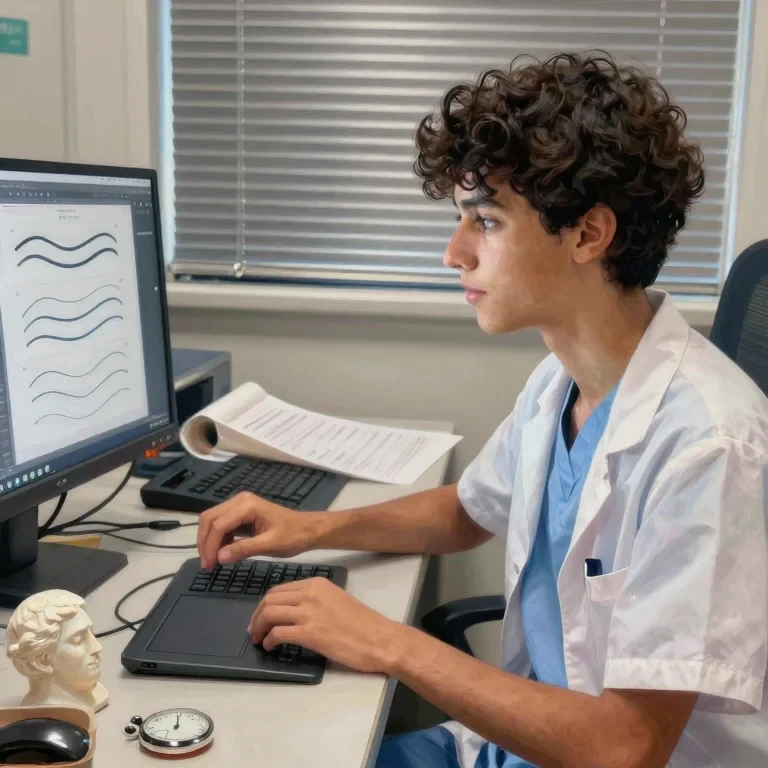
Here is what the rule says, and the rule is not Elijah's. A spirometry report is assembled from the best manoeuvres in the test. Not the best test. The best manoeuvres. If the largest one second value in the test came out of the second attempt and the largest vital capacity came out of the fourth attempt, then the report shows the largest one second value and the largest vital capacity, and it does not matter that they came from different breaths, because the test is not a snapshot of one breath, it is the best evidence the lungs can be made to give. Colin Preece's report shows 1.34 and 2.90 and a ratio of 0.46. His best attempt on his own was 1.29 and 2.28, and that ratio is 0.57. And the best-manoeuvre policy does not mean the ratio is wrong. It means the ratio is a number about the best air out and the most air out, on different occasions, and a person with an obstruction and a chest that is not very big can be pushed to that ratio by the two best breaths without either of the breaths being bad. Elijah read that section of the rule three times and then read the report again and then did the arithmetic on the back of a spare request form. If you divide one number by another and the answer changes when you move the decimal, you have not measured a pair of numbers. You have measured a sum.
He ran it again on the twenty-eighth of February, with Ngaire Fenton, who has been in that room for twenty-seven years and who does not correct people unless she has to sit down afterwards. He did it properly. He measured Colin Preece's height at 168 centimetres and he did not use the 165 on the referral, because the referral had been filled in by a practice nurse who estimated and wrote down a number she thought looked right, and a centimetre is worth about a percent. He talked Colin Preece through six attempts and did not hurry him and did not let him start before the room was quiet. On the fourth attempt Colin Preece produced 1.31 and 2.29. Both numbers, same breath. The ratio is 0.57. And the first second value came out of the sixth attempt, which was 1.31 as well, and the vital capacity from the sixth as well, and the sixth was the only one Colin Preece did not stop early.
The curve in that sixth attempt has no notch in the descending limb and it does not come back off the peak the way it did in the February. It goes up fast, turns over at the top, and comes down in a long, almost straight slope to the floor. The slope is the shape of the air going out when nothing is in the way. In a lung with narrowing in the small airways, the descending limb is not straight. It scoops inward and then falls away, because the airways close as the lung empties and the same effort gives less air. A curve that scoops is telling you about the airways. A curve that is straight and long is telling you that the lung emptied properly and the airways stayed open. Elijah had looked at four hundred curves before he looked at that one and read the shape of it.

The predicted one second value for a man of 168 centimetres is 2.84 litres and the predicted vital capacity is 4.11 litres and the predicted ratio that comes out of those two is about 0.69, and Colin Preece's ratio of 0.57 is below the lower limit the machine has calculated from his age and his height, which is one of the reasons the machine prints the word low under the number. He has obstruction. That part was never in doubt and it is in the correct place in the report, and the letter that goes to his general practitioner on the sixth of March says the same thing the November letter said, which is that Colin Preece has airflow obstruction consistent with a chronic airway disease. The change is in the number and in what was done to it.
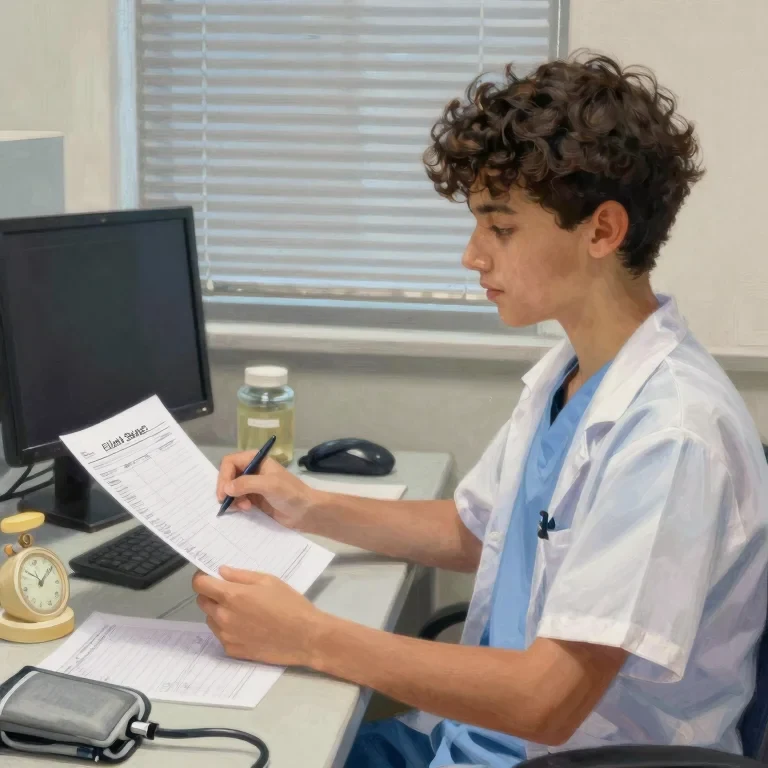
The label on the February report said asthma, treated, uncontrolled. That label came off a general practice management plan that had never had a curve in it. The label on the March report says obstruction, with a chronic airway disease pattern, and the numbers behind it are 1.31 and 2.29 and a ratio of 0.57. The ratio at 0.46 was not a bigger problem. It was a different problem, and it was sent out of this room as a fact about the patient when it was a fact about how he had breathed that morning. What is done to a person with obstruction and a long smoking history is a full assessment and, if it is the sort of obstruction that has cost the lung some of its volume, a chest scan and a referral to a clinic where somebody looks at whether the treatment should be about the airways or about the structure. What is done to a person with asthma is a preventer inhaler and a review at six weeks.
Colin Preece got the second one for two years on the strength of a history and a response to a drug. He was escalated four times and he had four courses of oral steroids. The inhaler he has now is not going to do anything for him and it was never going to do anything for him, and the cost of two years of that is not in the February report.
It is worth saying what the machine does not know, because it is a machine. It does not know that Colin Preece had a cigarette on the drive in. It does not know that he was frightened, and that fear is a raised heart rate and a tight chest wall, and a tight chest wall takes the volume out of the number. It does not know that he did not understand that the second four instructions meant the second four as fast as he could, and that a man of sixty-eight who is being asked to blow as hard as he can after six attempts has decided, somewhere around the fourth, that he has given enough. The machine knows the pressure difference across a tube. It knows nothing about the man in the chair, and it has no way of knowing, and the entire weight of the thing rests on a room with an aluminium blind and a person in it who has to work out which of the two they are looking at. Elijah is seventeen and he is the person in the room on a Thursday.

He was told it was out of scope. The request he made on the second of March, for a change to the report template so that the largest value in a column cannot be selected without the attempt it came from being named on the same line, went up to the person who owns the software, and it came back with a standard reply, and he was told that the reporting rule is the reporting rule and it is the reporting rule for a reason and it has been the reporting rule since before he was born. Ngaire Fenton said, "It is also the reporting rule because nobody ever asked." He did not accept that either. What he did on the fourth of March was write, on the back of the paper report, the letter F for February and M for March, and the four attempt numbers, and a line that said first attempt 1.31 and 2.29 same breath, and he stapled it to the top of the paper report and put a copy in the patient's notes, because the paper goes to the general practitioner and the copy stays in the room.

There are eleven of those stapled notes in the folder behind the desk, dated from the fourth of March to the ninth of June, and eleven letters went out with a piece of paper on them that the software will not print. He has started writing the height on the report too, in millimetres, in his own handwriting, because the machine's millimetres-to-centimetres conversion has no way of showing a decimal and because he has worked out that the number the machine used was the referral's estimate and not the wall.

Colin Preece came back on the twelfth of May for the reversibility test, which is what they call it when you make somebody breathe in a dose of something and blow again to see whether the numbers move. The dose is 400 micrograms of a bronchodilator. You make them sit quietly for fifteen minutes. Then you do it again, three acceptable manoeuvres, the same instructions, the same hand off the knee. His first second value went from 1.31 to 1.94 and his vital capacity went from 2.29 to 2.73 and his ratio went from 0.57 to 0.71, which is the number that would make a person believe the word asthma on the label. And a person who believes that word, on the fourth of May, in a room with an aluminium blind, is a person whose report is going to be read differently from the one that was stapled to in the March. Elijah gave the doctor the paper with the attempt numbers on it. The doctor read the numbers and then read the March ratio and then read the February ratio and then said the word twice, which is a thing doctors do.

So the numbers got better and the label survived anyway, because a number that moves when you ask it to is exactly what an asthma label wants, and it is also what a lung that has volume left in it will do. Elijah went and sat in the stairwell for a while, which is what Ngaire Fenant says is the correct response, and which is not advice about anything except the stairwell.

Colin Preece is on a preventer inhaler and a long-acting one and he has been told to come back in the March, and he has been told, in a sentence that took a long time to arrive at, that the two numbers from the February were about a different thing than the numbers from the March, and that he should know that, and that it was not his fault and not his chest's fault either. He did not lose anything in the exchange that anyone can put a value on. His inhalers are the same. He has had no courses of steroids since the February. He has a chronic airway disease and he will have it for the rest of his life, and the treatment for that is not a preventer inhaler. What the room has is a strip of paper that the software cannot print.
Elijah Sarkies turns nineteen in the August and has been offered a place in the second year of the respiratory science programme at Otago, which is four hours and eleven minutes from this room by train and which he has not yet accepted, and there is a form on the desk in the corner, and he has not filled it in, and the reason he has not filled it in is that the person who did the Thursday before him has a stapled-notes folder behind the desk with eleven sheets in it and has not taken it home once in four months, and Elijah has been watching the folder rather than the form.