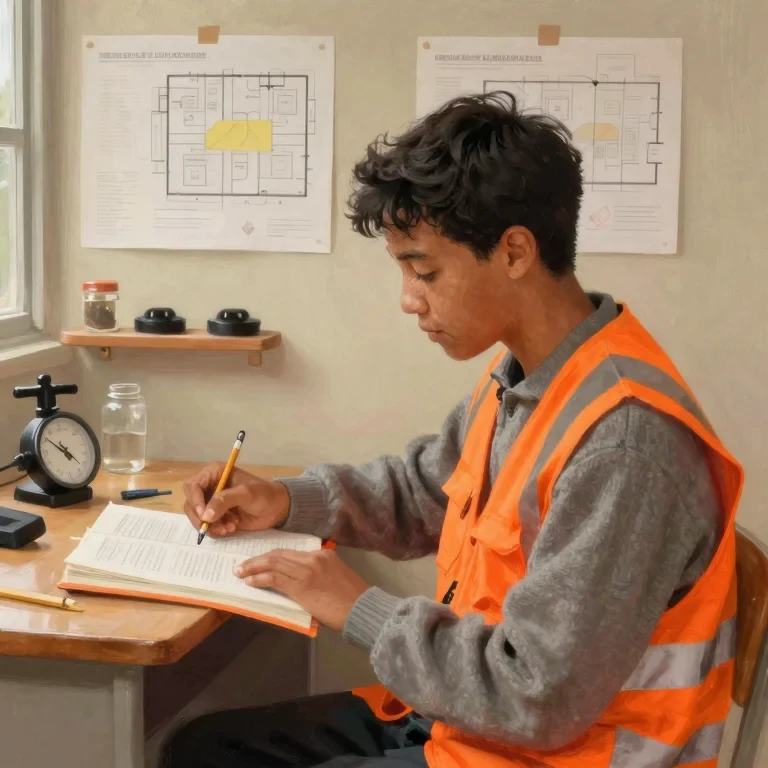
The quarry on the Kairuru road above the Takaka valley has been worked since 1911, and the company keeps two plans of it in the crib room, one on each wall, and they do not agree. The older is in brown ink on linen-backed paper, made by a man called Hobbs with a hundred-foot steel tape, signed Hobbs, surveyor, and dated the third of May 1911, and then a line in a worse hand, and then three words: drove to water. Hobbs got as far as he could in the old level, met the water and stopped, and that water has been standing there ever since.
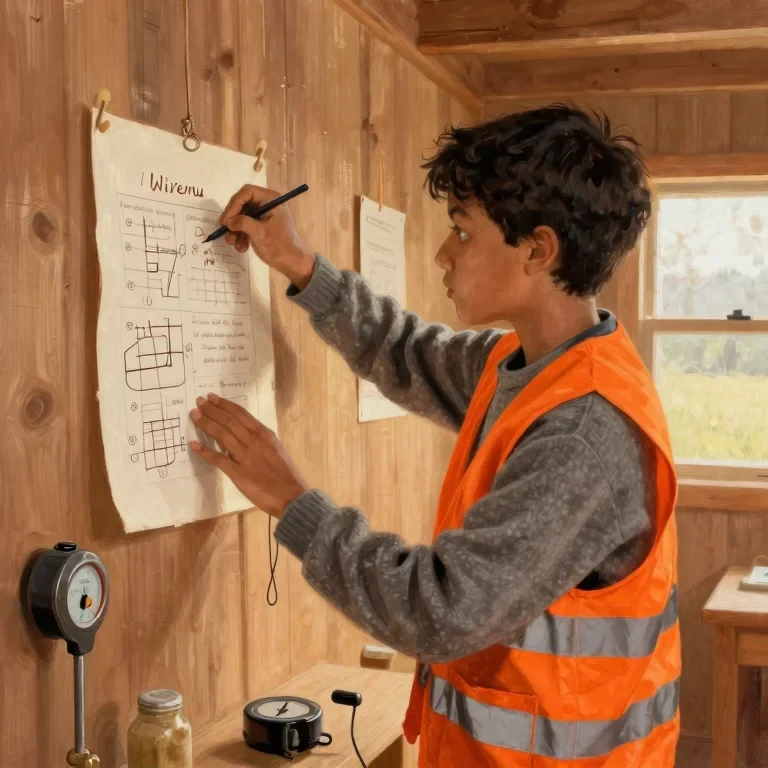
The other is a print from 1986 of the newer drives, made by a man called Pryce, who had a stroke behind the wheel and died in 1987. Wiremu Kere was fourteen and he was the tally boy, which meant he carried the steel, filled the tea thermos, counted the drill collars out and in, wrote the number of holes in the round on the tally sheet and the number that went off, and wrote the time. His father Hori Kere had been the driller here for twenty-two years, and the two of them had been in that crib room at five in the morning since Wiremu could walk. The first thing Hori taught him was not the tally. It was the plan.
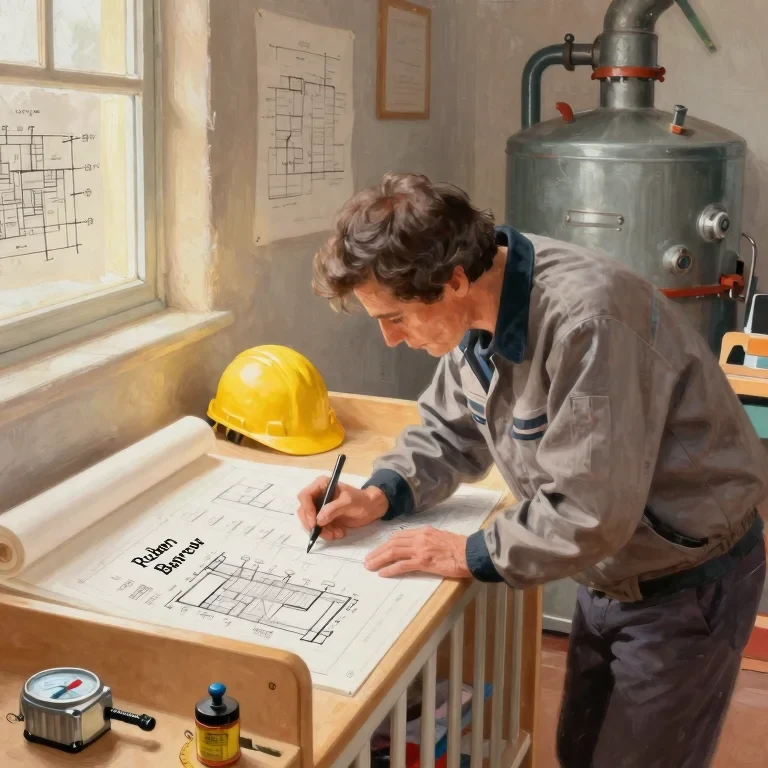
On the eleventh of August a man called Ruben Barrow came up the Kairuru road for the works at Mount Maunganui and read both plans. He asked Doss Webley, who had run the quarry since 1994, how the newer drives were set out, and Webley said they were on Pryce's plan and Pryce's plan was on the wall, and Barrow said the print put a station at fifty-two metres where he had measured forty-eight with a Disto, and that was three and a quarter per cent, and he would not sign it. He would pay for a resurvey, and he would pay for it on Friday, and if it was not done by Friday he would take the folder to the office in Blenheim instead.
Webley put his hat on the desk. “There is a boy here who counts the steel,” he said, and Barrow left the Disto on the bench, a grey machine the size of a billy can with a red window in the end of it, and Webley gave Wiremu until Friday.
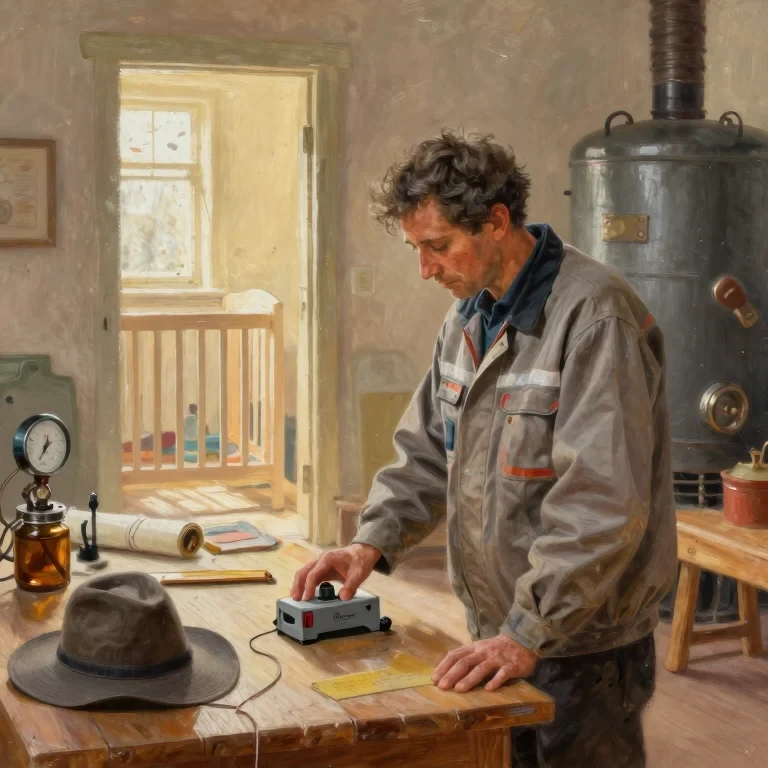
Pryce had measured the newer drives with a rubber-tyred wheel on a long handle, and Wiremu laid the twenty-metre tape along the main drive where the floor is flat and ran the wheel beside it five times. The wheel said twenty, twenty point eight, twenty point seven, twenty point six and twenty point seven. It was three and a half per cent long. Hori filled the thermos and said, “Go and find him something better than me,” and went down to the bench.
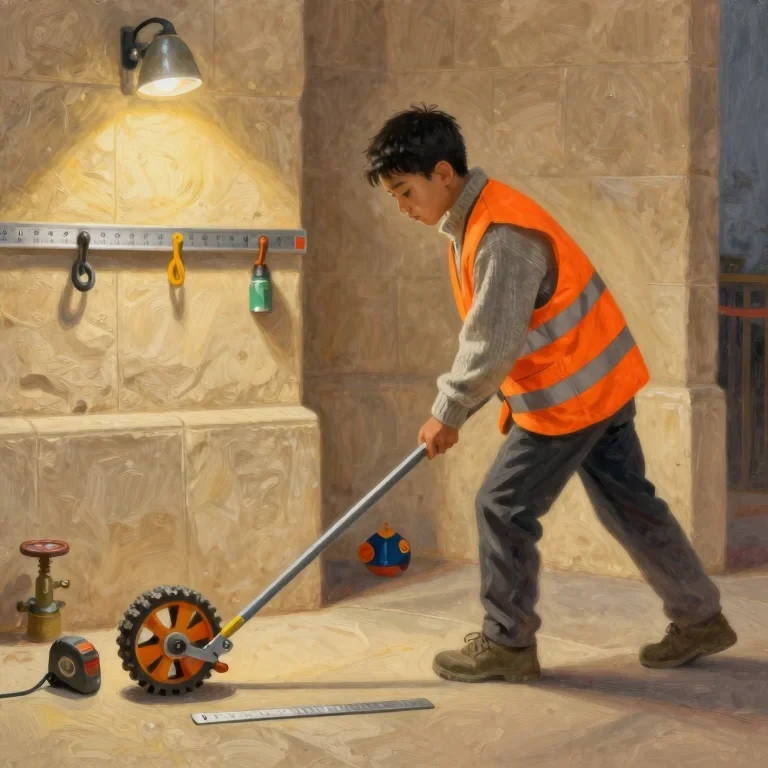
Wiremu chalked every twenty metres of the main drive on the rib of the wall and timed himself with a stopwatch on a lanyard, and at the end of it he knew eighty metres to two centimetres. Barrow took the Disto in his own hand and measured the same eighty metres, and it read eighty point zero, and the blue chalk went onto the new plan in Barrow's hand and not in his own. Then Barrow asked the question that was the whole of the job. “You cannot tape the face, because the face is the last thing anybody can tape and the first thing anybody will want.” And the boy said, “You shout at it.”
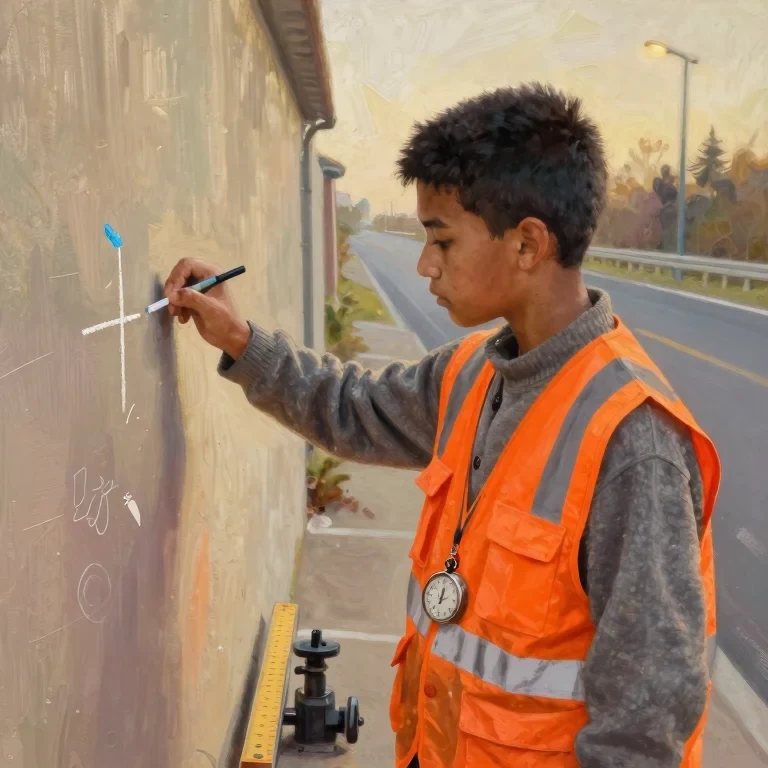
It works like this. A man shouts into the face and the shout comes back, and the distance is the time of the shout multiplied by three hundred and forty-three metres a second, divided by two, because the sound has to go and come. Half a second is a hundred and seventy-one and a half metres, and that is the number to learn. The first shout gave him one point nine seconds. He started the watch on the shout and stopped it on the echo, and then he walked the drive, which took him a hundred and eight seconds, and the face was a hundred and ten metres away, and the shout had told him three hundred and twenty-six.
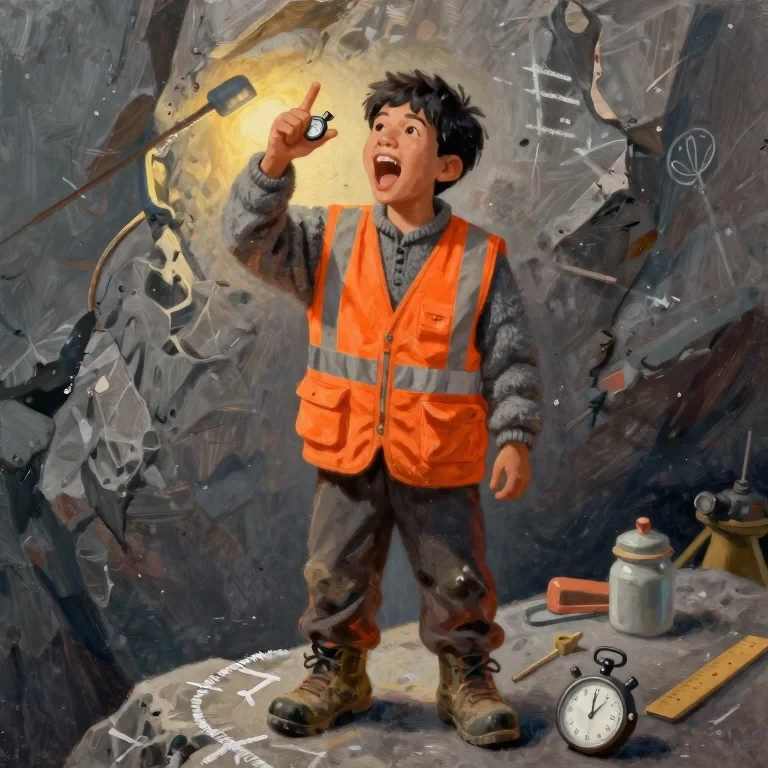
So he got a man to the far end of the twenty metres and shouted across it. Twenty out and twenty back is forty metres of travelling, and forty metres of sound takes a tenth and a seventh of a second, and the watch said three tenths. So he was a fifth of a second slow, and a fifth of a second is thirty-four metres, and he had told Webley the face was three hundred and twenty-six metres away when it was nearer than a hundred and twenty.
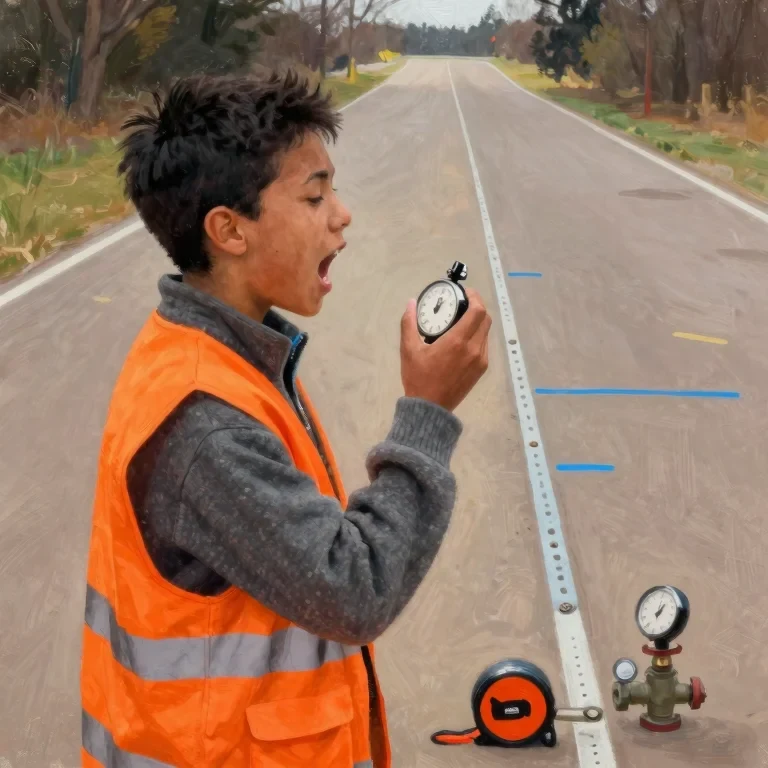
He did the control three times in the drive, standing where he could see the hammer head and not the man, because you start a watch on a hammer and you do not start it on a sound. He got two tenths, two tenths and a fifth, and he used two tenths, because two out of three.
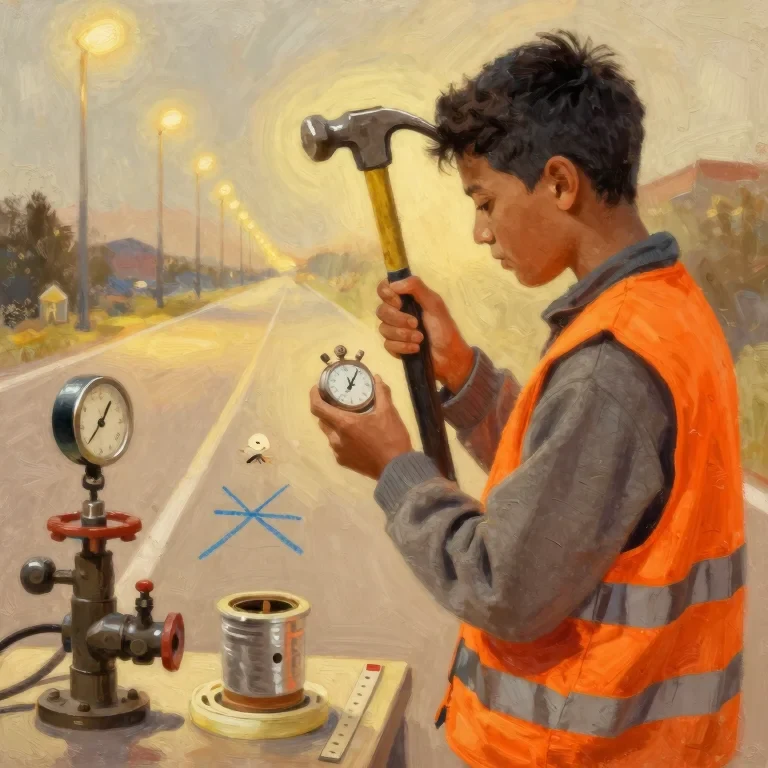
Then he shouted at the 110 face for the real answer. The watch stopped at seven tenths. Two tenths came off it, which left just over half a second of sound, and half a second is a hundred and seventy-one and a half metres, so the face is eighty-nine metres off him, and the print puts that face at ninety metres off the fourth station. The wheel is one per cent long on the rubble floor of the 110 and three and a half per cent long on the flat floor of the main drive, and it is the ground under the wheel that makes the difference, and Pryce did a hundred and forty stations on everything from flat floor to wet rubble.
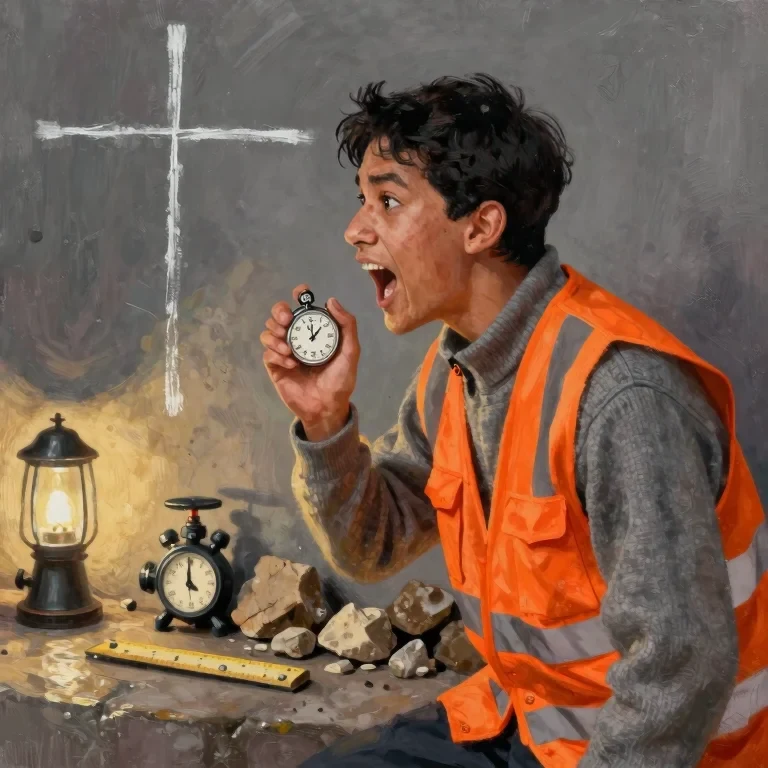
The third shout was different. The watch stopped at seven tenths and it went on for another three tenths before anything else arrived. Three tenths is fifty-one metres, and fifty-one metres is not a sound coming off a wall. It is a sound going into a room and coming back out of the room.
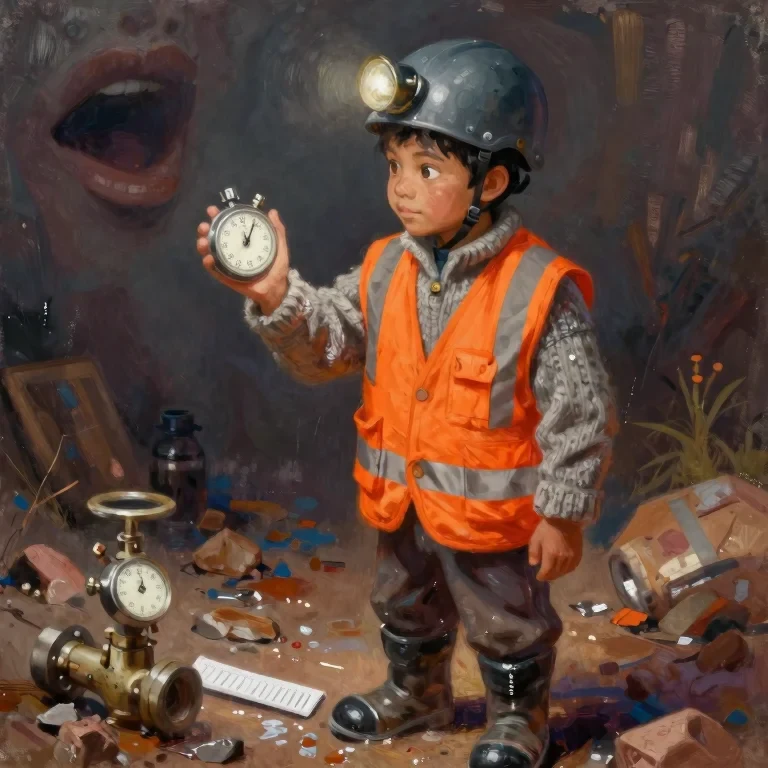
He put the heel of his hand on the face, and then he took the geology hammer out of his belt and hit the face once, low down, with the round end, and the rock answered with a note that is not the note solid limestone makes. It went on after the hammer had stopped. It sounded like the lid of a saucepan. Then he put his face close to the rock and felt air coming out of a crack above his head, cooler than the drive behind him. Hori's father had a brother called Rewi who went into the 1911 level, and the thing Rewi would not walk into was the Cold Room, where the roof was thin and the air came down on you.
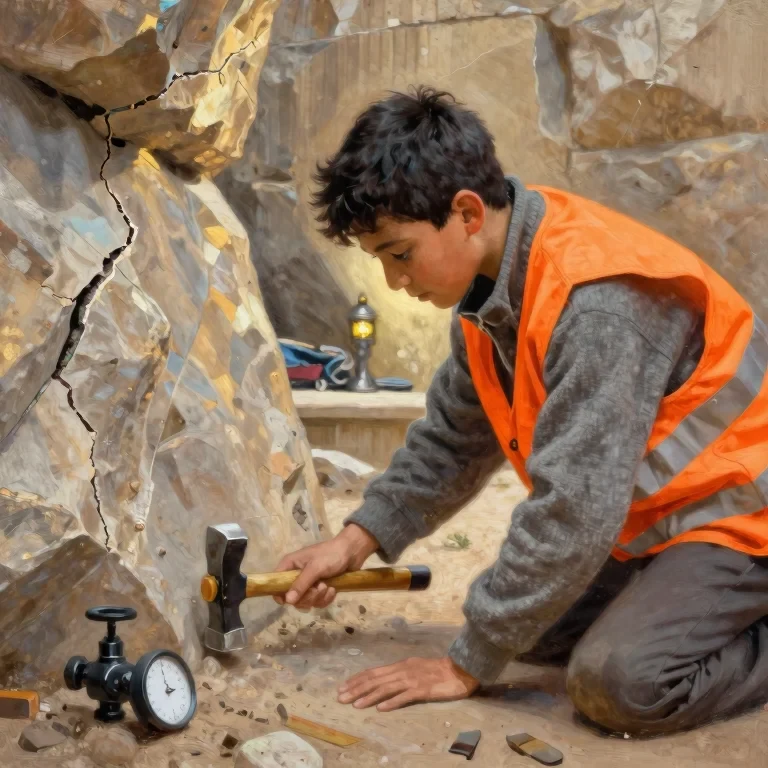
Webley was in the crib room when the boy came out with the tally sheet folded in his hand. “Eighty-nine metres and fifty-one metres behind it,” said Wiremu. “That face is not a face. It is the near wall of a hole.” And Webley said, “Fifty-one is not a number, that is a stopwatch with a tired boy behind it.” And Wiremu said, “Take the two tenths off and you get eighty-nine. Leave them off and you get a hundred and twenty-three. I can show you the two tenths on the back of this sheet.” And Webley wrote the numbers on the back of his hand and said there was one more night in the 110 before the trucks came on Friday. “You are a tally boy,” he said. “The holes go in at eight.”
The round was thirty-four holes and eleven of them were in the floor, drilled to six metres, and the print showed six metres of solid limestone under that floor because it showed a fifty-two metre pillar, and Pryce's forty-five had been copied out as fifty-two by a man in Blenheim. Six metres down, at eight in the morning, the face the boy had been shouting into was the roof of a hole fifty-one metres long, and the roof of a hole that big in a limestone hill is not a roof. It is a sheet.
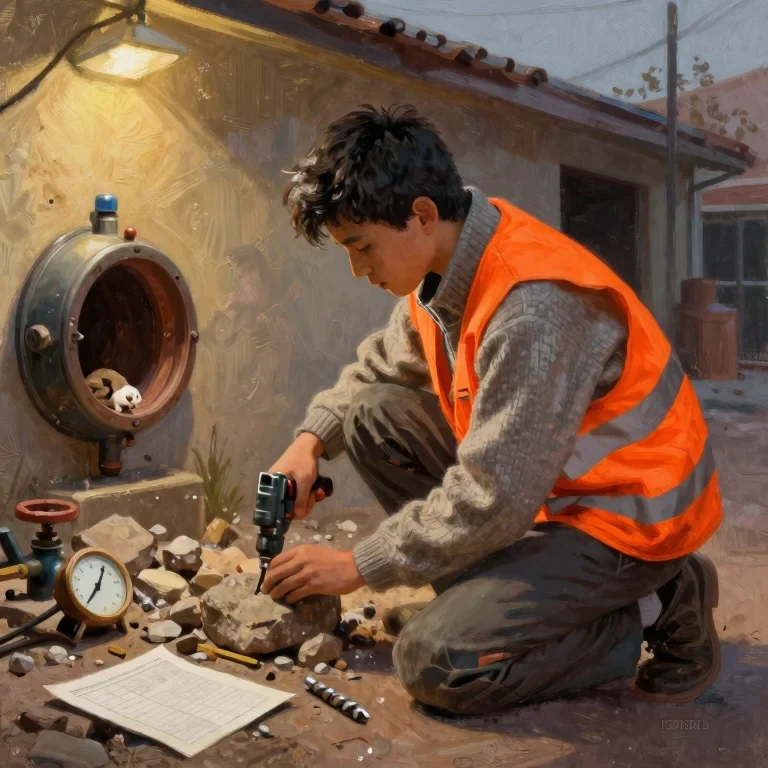
Hori read the tally sheet standing up and read it twice. “Show me the two tenths,” he said, and the boy showed him, and Hori did the sum on the back of a drill invoice and did it again. “Then it is fifty-one metres of nothing behind that face, and the roof over it is what is holding that drive up.” And the boy said, “I told him.” And Hori said, “Then go and tell the loader. The loader is Tam, and he is seventeen, and he will be at that face at eight because the trucks are booked.” And the boy was running up the ramp with about a minute to spare.
It did not fall all at once. It came down in a shape, the way a ceiling does, a long ridge of it about four metres wide, and it went into the bucket and past the bucket and along the floor, and the front of the bay came in behind it. Nothing was on that floor. Tam was on the berm, eleven metres back, and he got in behind the cab of the loader, and the noise was not loud, it was a sort of grinding, and then it was over.
Barrow came up the ramp at half past eight and wrote for a while. The 110 bay was out of it for the season, and the buyer took the rest of the fortnight's order and did not put it back, because a redraw cannot be signed until the 1986 section has been resurveyed from the stations, and the stations are in a dead drive, and that section is nine days of a man and a rod. Nine days of a man is a fortnight of overtime for nine men, and there was no fortnight of overtime in August, and Hori's younger brother gave up the second shift on the night-man's contract and went to the freezing works at the port, and nobody said the word sorry to anybody.
The reserve tonnage came off the plan by eight thousand tonnes, from forty-one to thirty-three, and the boy watched Barrow write both numbers and rule a line under them. The stone was not missing. The plan had been short of it, and a plan that is short of stone is a plan that somebody pays for twice.
Hobb's plan went back up on the wall behind the new one, and the new plan was in the millimetre hand of a man from Blenheim, and the survey book went back on the shelf with a weight on it, and it was Wiremu's own book. Inside it, in the margin opposite the eleventh of August, opposite the line where he had written 486.0 metres to the end of the 110 drive, there was a second number in pencil, and the second number was 484.
The 110 drive is straight for four hundred and eighty-six metres, and the only things in it that can send a sound back are the rock and the water standing in the old level, because the 110 cuts the old level at four hundred and fifty-two. Hobbs wrote drove to water at the end of that level in 1911. There were forty-eight millimetres of rain on the hill that week, and the water comes up to the roof of the workings in a wet week and goes down four or five metres in a dry one, and the boy did not know which kind of week it was, and there is no way on that hill to know afterwards.
At five hundred metres, with a stopwatch and a fifth of a second off, the difference between a rock wall and a water surface is two metres. So the number in the margin was two metres out, and the number in the book was the one that had been signed, and the boy did not rub either of them out, and both of them were true on the day they were written.