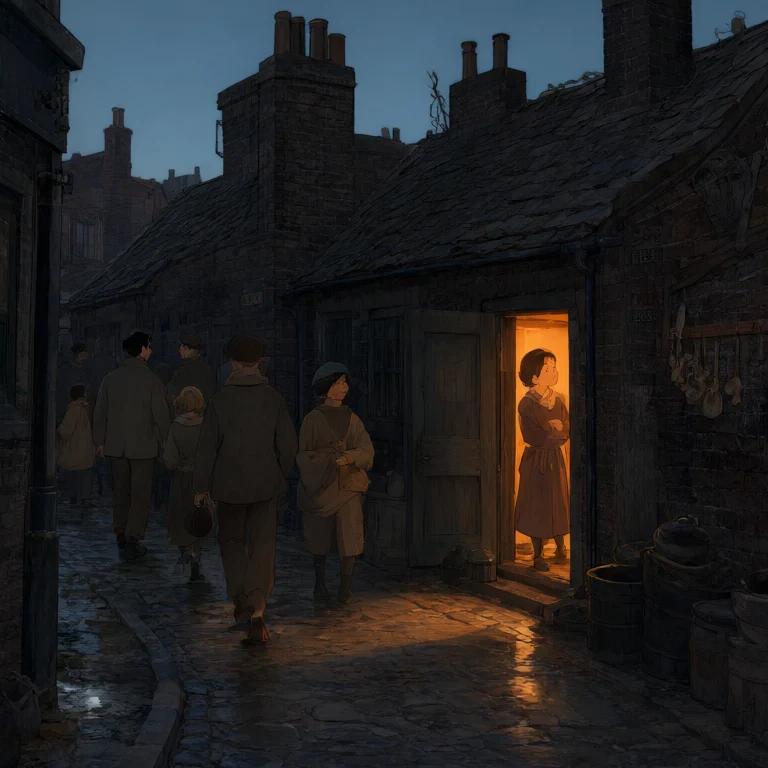
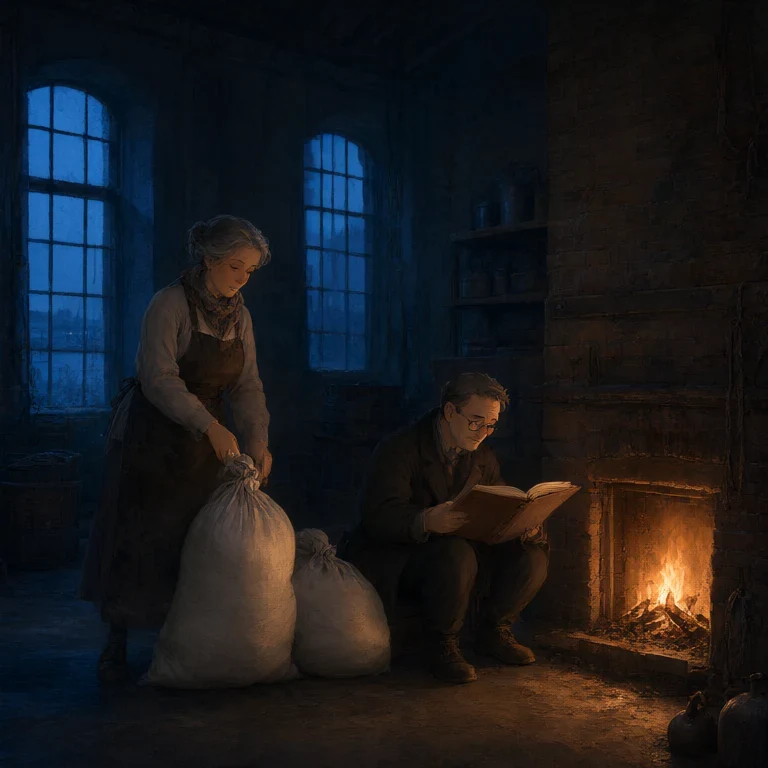
At twenty past three on a Thursday in February the fire in number 219 went out, and it went out on purpose. Ivet Slee put it out herself, and that is the part of the afternoon that matters. She raked it, she put the poker through the grate, and she stood and watched the smoke go up the chimney and out into a brown sky, and then she went upstairs and got her shawl, because the Scale House opens at dusk and the Rope Walk had decided, for the first time anybody could remember, to go down there as a street.
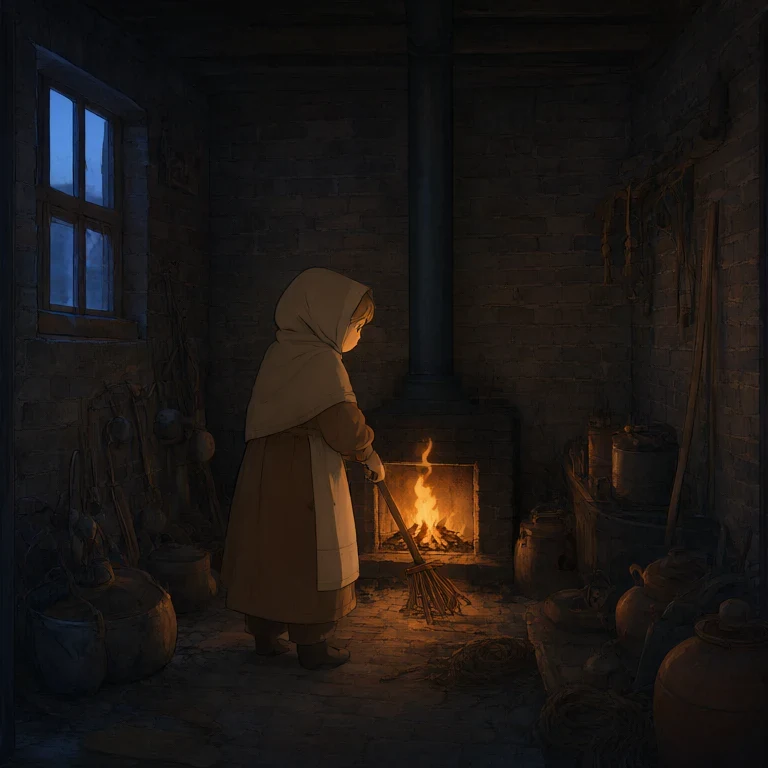
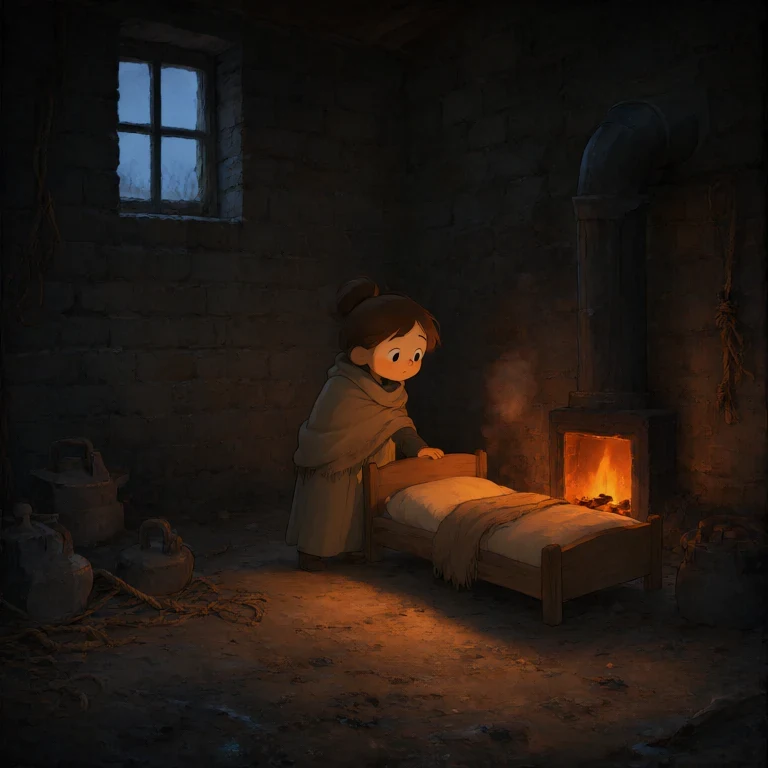
The fire in 219 had begun at twenty past three and had lasted forty minutes. What she had burned was her son’s cot, which he had been too big for since Michaelmas, and which was the only thing in that house that was still hers. “Forty minutes,” she said, out loud, to nobody. It was the kind of thing you said out loud on the Rope Walk. There was one more thing about 219, and Bess Tallis did not know it yet. It was the only board on the Rope Walk that was clean, and it had been clean since the September, and everybody on the street knew it and nobody had ever said so.
Ottoline Vray was on the step of 219 with an armful of sticks when the hearth-master came up the street. She put them down and turned her hat up, because an adult was looking at her, and then she picked them up again, which is what you do when you have been found twice and gone twice and you are not sure yet. “You have been leaving those since the September,” said Bess. “Yes.” “Nobody burns them.”
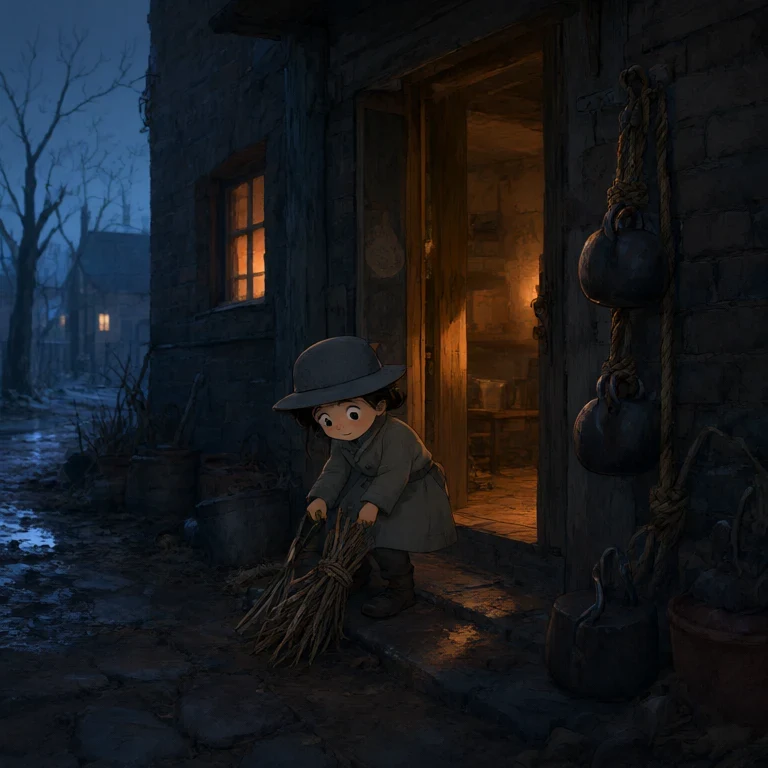
“No,” said Ottoline. “Burning a thing of a person’s is a claim against them, and the claim is read out at the Scale House inside the week with your name on it, and Ivet Slee has decided that she will not put a hundred and forty names in the book on her account, so she leaves them on the step.” “She leaves them on the step.” “For four months,” said Ottoline. “I bring them every day and she never brings one inside. The whole street knows. Nobody has ever said it to her face, because saying it out loud is a kind of claim as well, and in this city that is not a joke.”
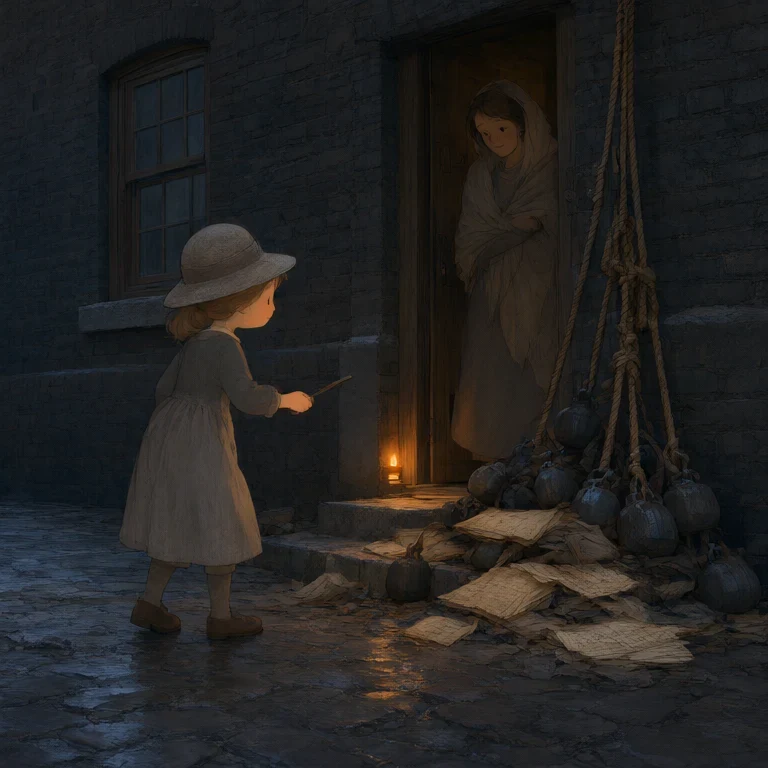
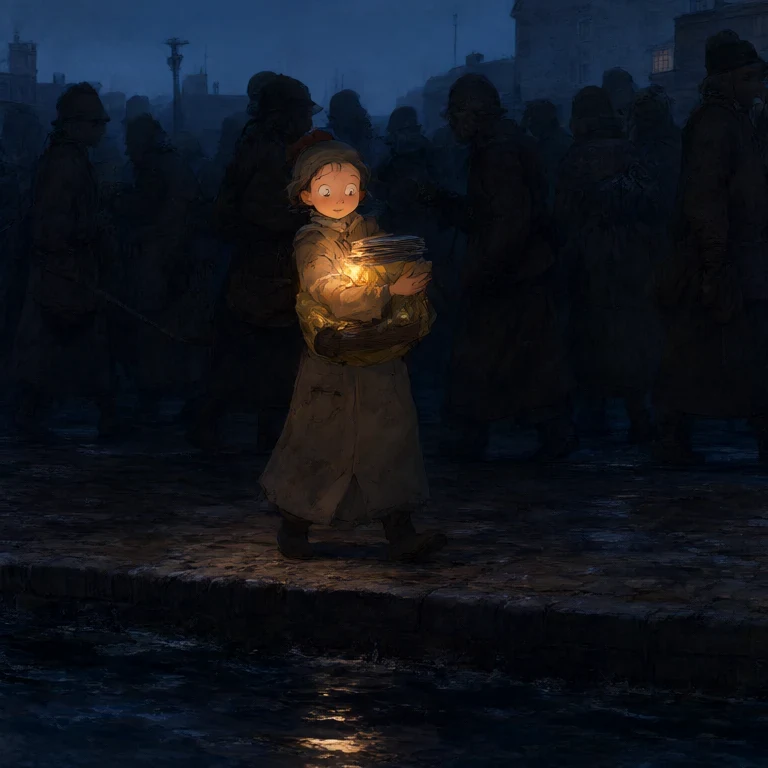
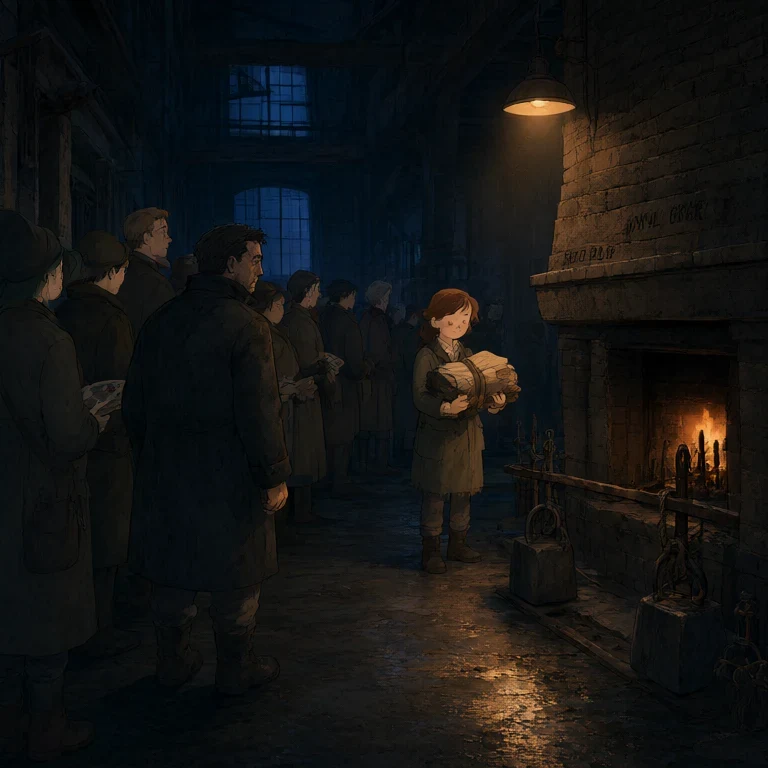
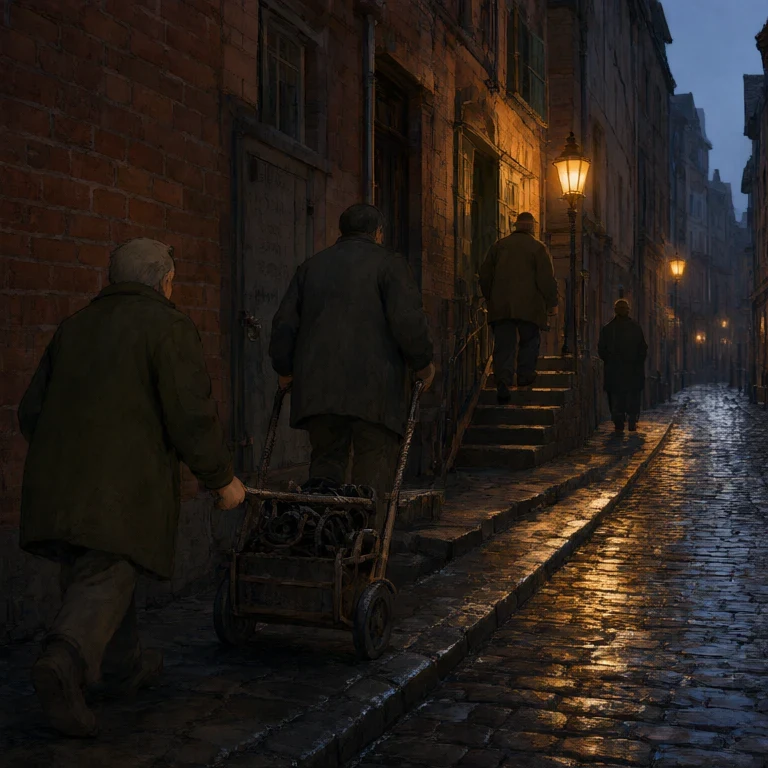
They went down the Rope Walk at half past four, two hundred hearths, and the street had never walked as a street in the history of Emberwyke. The weather was the fourth day of a kind of weather that had lasted five weeks. The rain came in from the north-east, not hard and not sideways but straight and fine and endless, the kind that gets into a coat in the first ten minutes and then stays there and is not felt again.
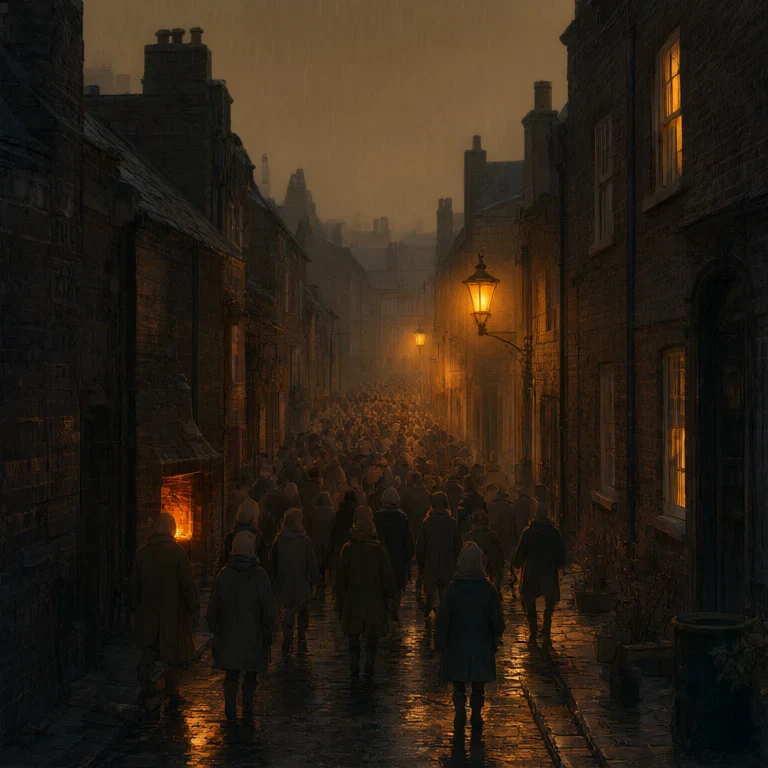
The lamps along the Rope Walk were unlit, because the sun never got over the Sallow Bridge chimneys, and the light in the street came off the floor, where the fires are, and so most of the Rope Walk was walking in the dark with orange seams showing at their ankles.
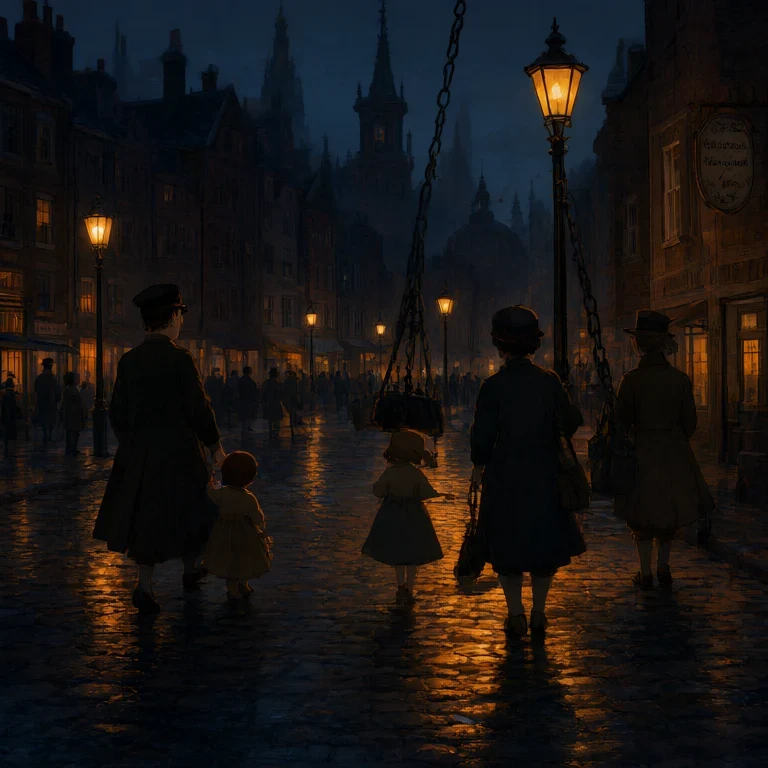
Bess Tallis walked at the front with the boards wrapped in oilcloth against her coat, thirteen boards for thirteen houses between 208 and 220, ruled in her own hand, every figure entered the night before because the cold is worse in the morning and it has been that way for two winters and every single figure has been right. It was thirty degrees below freezing in the shade of the ash-track and the river was not frozen, which in that city meant the weather had not decided yet.
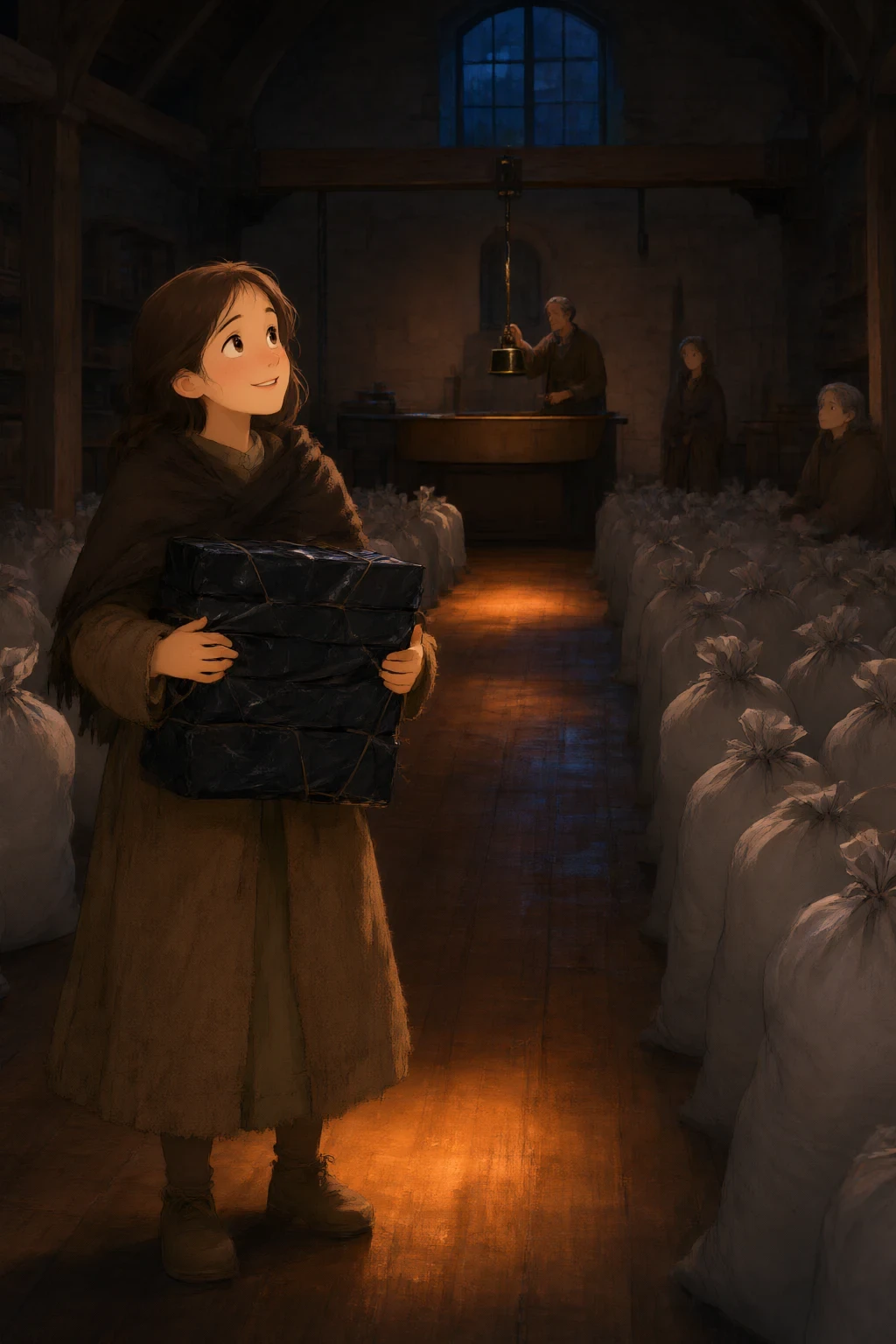
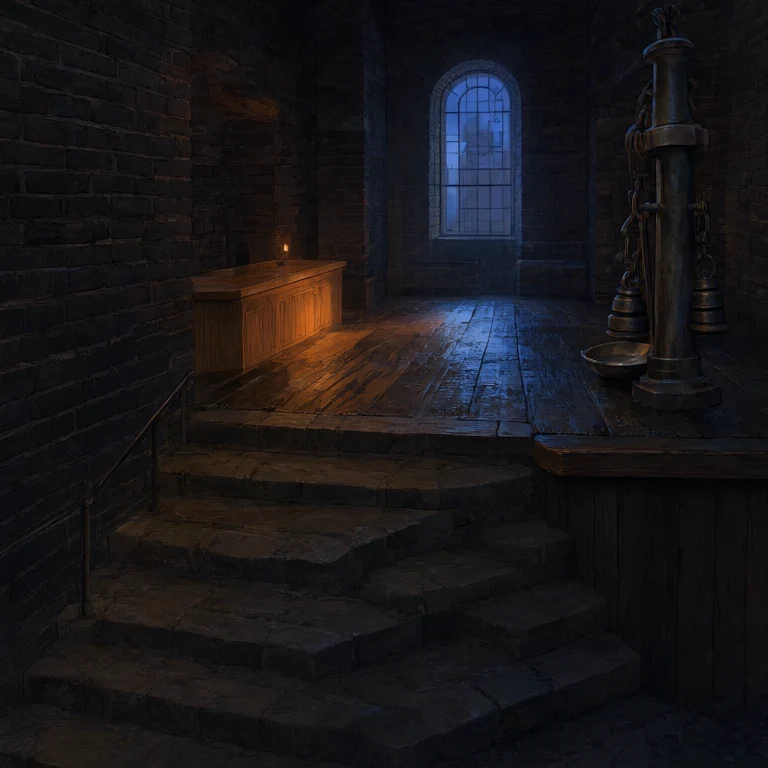
The Scale House is the only stone building in Emberwyke, and from the steps you could see the whole of it at once: the long low hall, the plank floor stained in three generations of ash, the oak counter, and at the far end under the north window the beam, a bronze yoke on a cast-iron column with twenty feet of throw, a stow of duck-weights down one side and a catch-pan underneath.
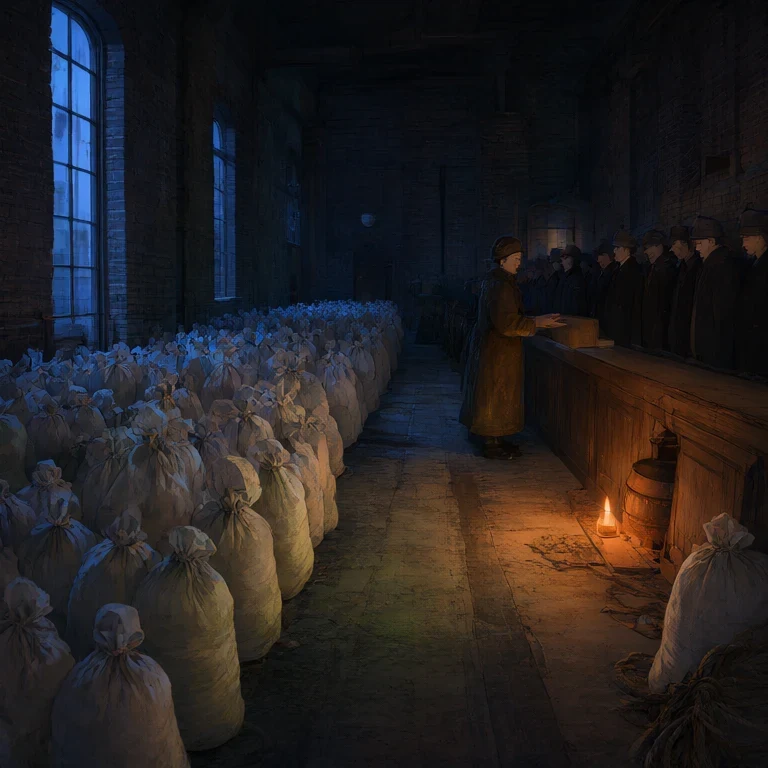
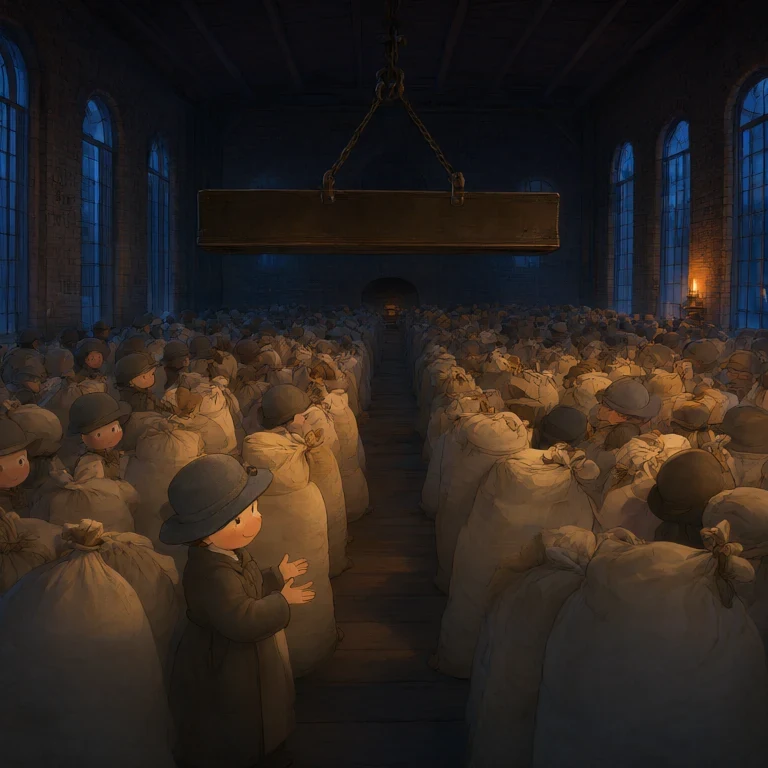
There were two hundred ash-sacks on the floor when Bess went in. The whole city passes through that hall in the four hours after dusk and the sound of the place is one voice at a time saying a number. Near the counter a man was standing outside the queue with his board in his hand, waiting, which meant he had already been weighed once. “I was in at eight,” he said to nobody in particular. “They will say it again at nine and it will be a different figure and I will take the better one.”
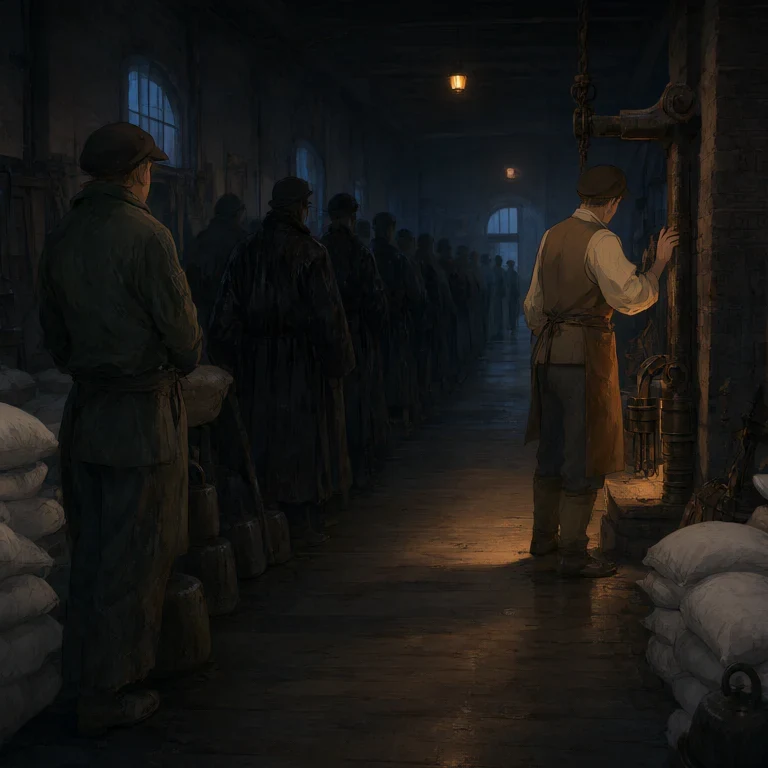
“No they will not,” said the beam-man, without turning round. “The Scale House cannot weigh a person twice in a day. What the beam says at dusk is the whole of that person for that day, and a hearthman who wants a different answer waits until tomorrow, which is why, in this city, nobody wants an answer at all.” “I want an answer.” Everybody in the hall within ten feet of the counter agreed with him and nobody said so.
The claims were read at nine, because that is what the Scale House does, and it does it in the same voice it uses for the numbers, which is the voice of a man reading out what is written down and not what he thinks about it. A claim is read aloud within the week with the giver named. Ash is not transferable, and if one household’s ash is put into another household’s fire it is not a gift, it is a claim, and so is anything of a person’s that gets burned.
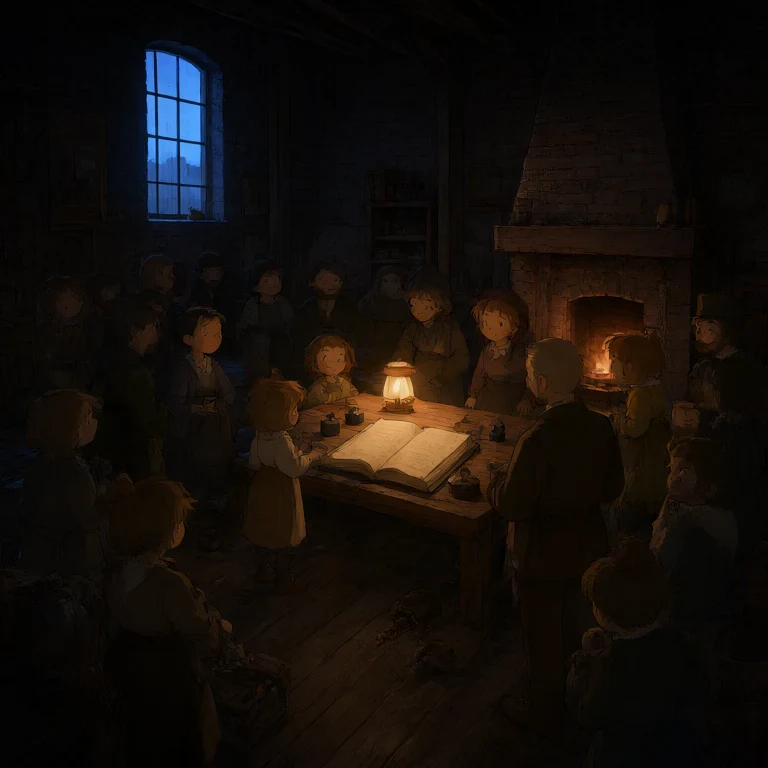
“Two hundred and nine, against two hundred and sixteen, giver two hundred and nine, for one door and frame, entered the fourth of November.” The Rope Walk did not move. Bess looked at her own boots, and then at the door of two hundred and sixteen, four houses down, which had a door in it in the September. “Two hundred and sixteen, against two hundred and fourteen, giver two hundred and sixteen, for a washtub and a pair of boots, entered the second of December.” Somebody said “oh” in a small voice, and the Rope Walk went on standing there.
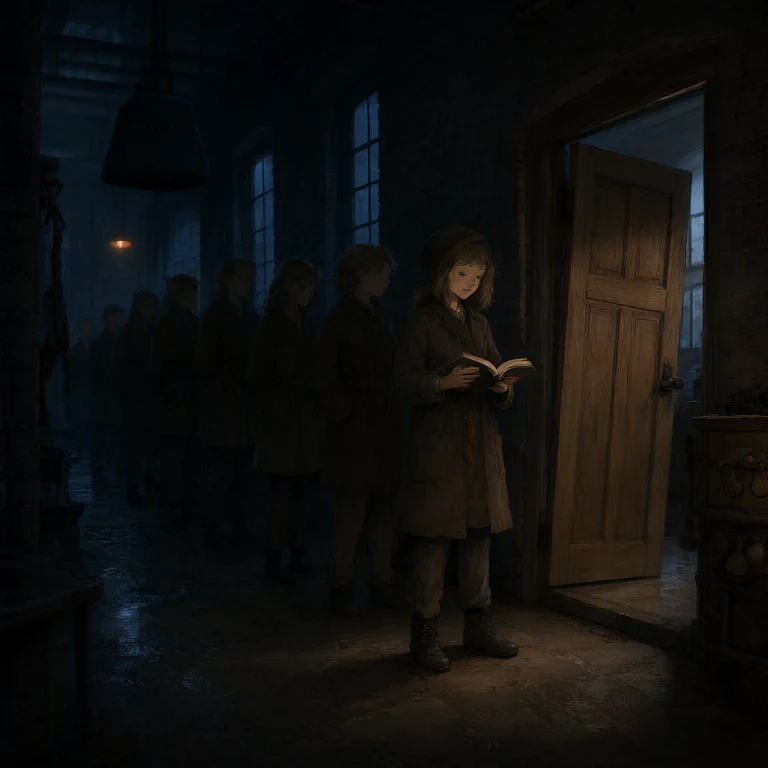
“Two hundred and eleven, against two hundred and twenty, giver two hundred and eleven, for the school slate, entered the nineteenth of January.” Nobody said anything at all about the slate. Half the Rope Walk had a child in the schoolroom, and the slate had gone in January, and every one of them had assumed it was broken and would be mended, and mending is not the same word as gone. “Two hundred and three, against two hundred and twenty, giver two hundred and three, for the stone steps at the top of the street, entered the ninth of December.”
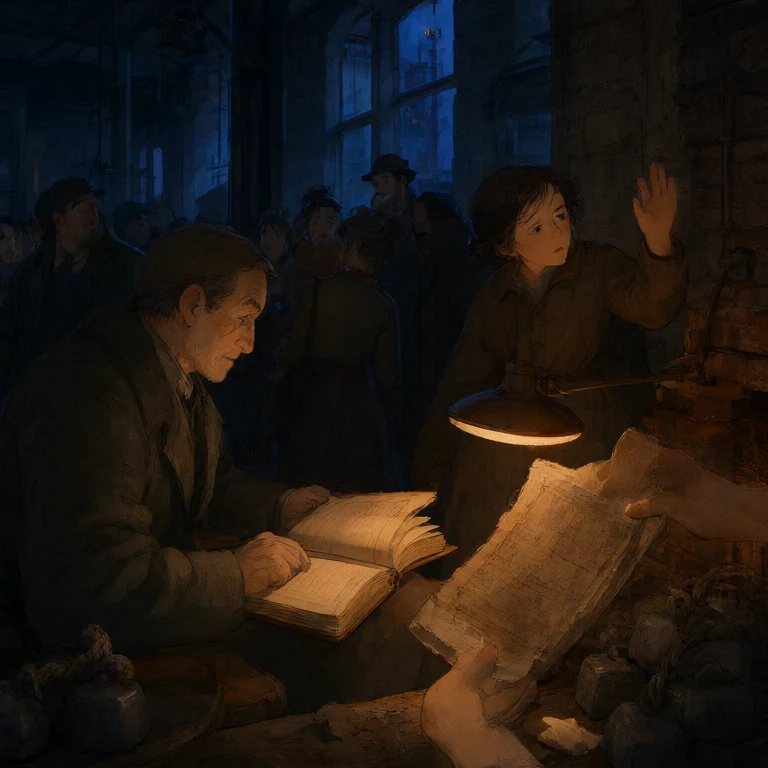
That one was the end of the room. Two hundred and twenty had been limping since the ninth of December and had said nothing about it, and there was nothing to be done about that now. At half past nine the fuel-grade matter was read, which is always read last, because it is the smallest column and the worst news. “Two hundred and eighteen. Marked. Entered the sixth of January, fuel-grade matter, at the discount, one hundred and eleven nights.” Seven years. A marked name cannot testify at any hearing, cannot hold a lease, and cannot be counted in a queue.
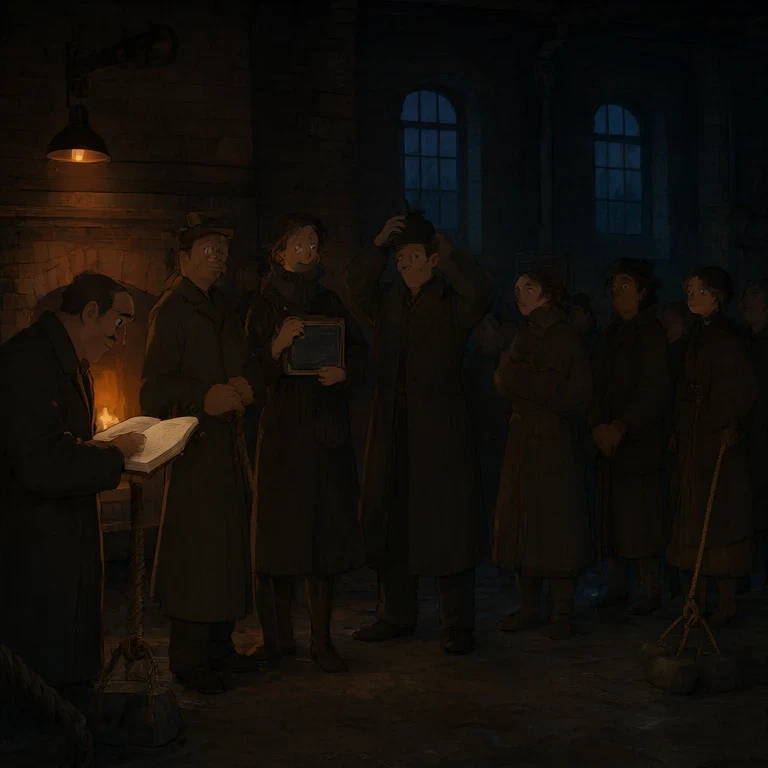
Two hundred and eighteen was sixty-three years old and had been a binder at the Coalquay for thirty years, and she sat down on her own sack. The Rope Walk looked at the floor for her, and then somebody at the back said, out loud and with no particular meaning, that the whole street had been eating off two hundred and nine since November anyway, so what was a door. The sacks, when they had been weighed, went out along the track to the Slag Bank, where the city gets its fill. There is a column for it in the Cinder Ledger and the column is called disposed, and it is never checked, and it is the only column nobody in Emberwyke argues about.
Upstairs, over the hall, nine clerks sat in a low room with one north window, and one stove, and that stove was the only legal fire in the building and it burned at a fixed figure recorded every hour, which is the one fire in this city nobody has to guess about. At midnight the day turned, and nobody in the hall noticed, which is the whole trouble with a hall like this. The people at the front had been weighed on Tuesday night. The people behind them were being weighed on Wednesday morning.
And the Scale House cannot weigh a person twice in a day, so a man who had stood at the pan at half eleven on Tuesday and was still standing in the queue at ten past midnight on Tuesday had, in the ordinary way, been weighed yesterday, and could not be weighed again until tomorrow, and would have to come back tomorrow, and would have to do it in the rain again, and nobody in the building could help him with any of it. Bess Tallis stood in the middle of the hall with thirteen boards wrapped in oilcloth and did the thing she had been not doing since the September.
She had ruled every figure on every one of those boards the night before. Tonight there was one board that could not be ruled in advance at all, because there was nothing to rule it from. The fire in 219 had been out since twenty past three, and what a fire that is out puts in the right-hand column is nothing at all, and what nothing at all costs is nothing at all, and the two columns were going to come out level on a board for the first time in her life. “Thirteen boards,” she said, “and I have known the answer to twelve of them since Monday night.” She had never once been wrong. That was the trouble.
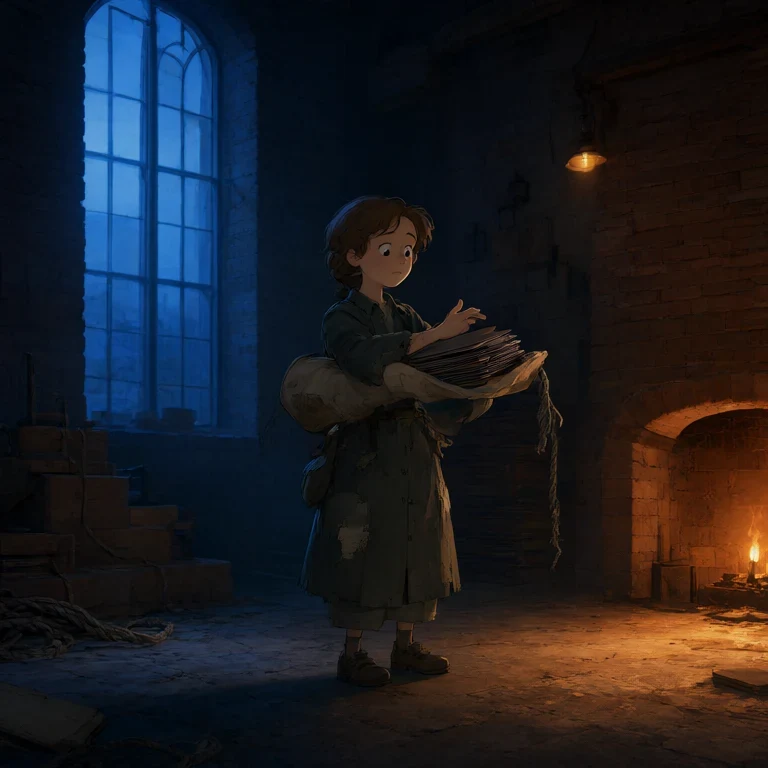
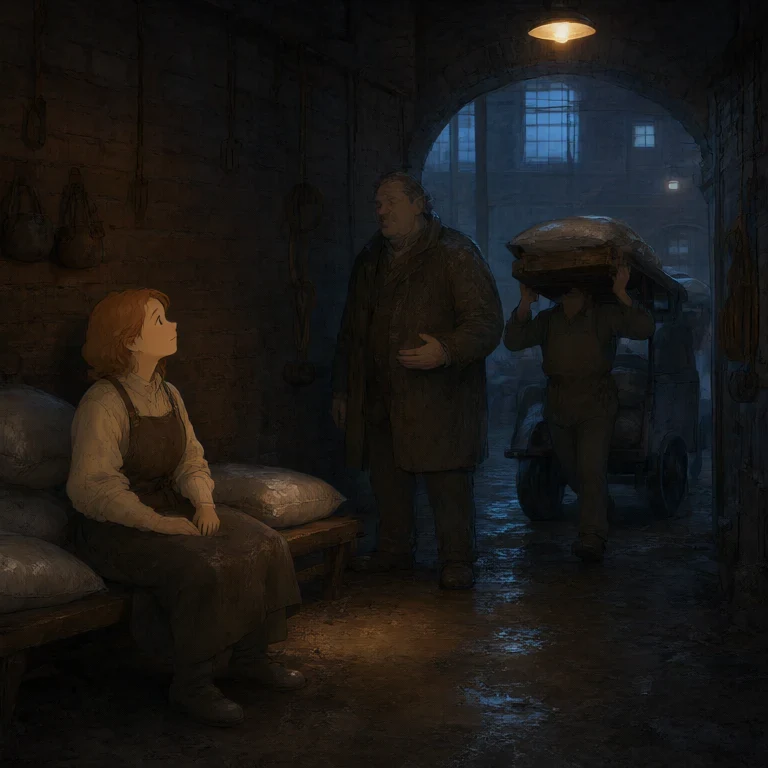
Ottoline was on the flags at the side of the hall where the draught comes in under the door, which is where the Scale House keeps the people nobody counts. She had been there since eight and nobody had asked her a single question, because there is no line in the roll for a child under nobody’s protection and so there is nothing to enter against her, and there being nothing to enter is the reason she is the only person in the building who can sit down.
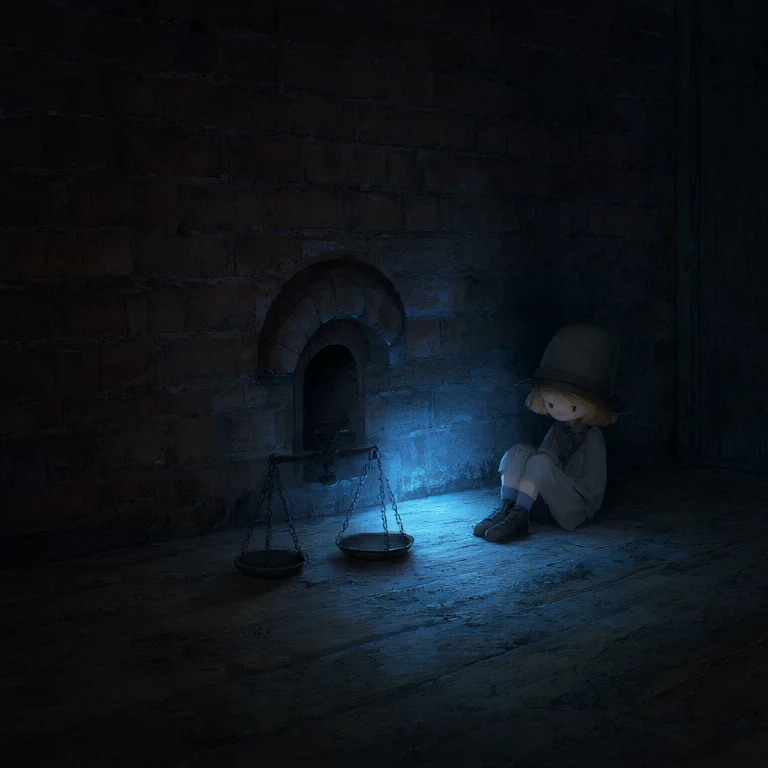
“You have been leaving those on that step since the September,” said Bess. “I have been leaving wood on that step since the September,” said Ottoline, “and I have never once been thanked for it, and I would not know what to do.” “That is fair,” said Bess. “It is also true,” said Ottoline, “and I am the only one who can say it, and you know why I can say it, and I would rather you did not say it out loud.” Bess said, “What do you mean, 219 is clean?”

“She has had no fire since the September,” said Ottoline. “No coal, no oil, nothing. So she has spent nothing and she has made nothing, and the Rope Walk has spent five months feeling awful about it and leaving sticks on the step and never once asking, and none of you can ask, because a shortfall is entered as a short, and nothing is not a short. That is why her board is clean. That is the whole of it.
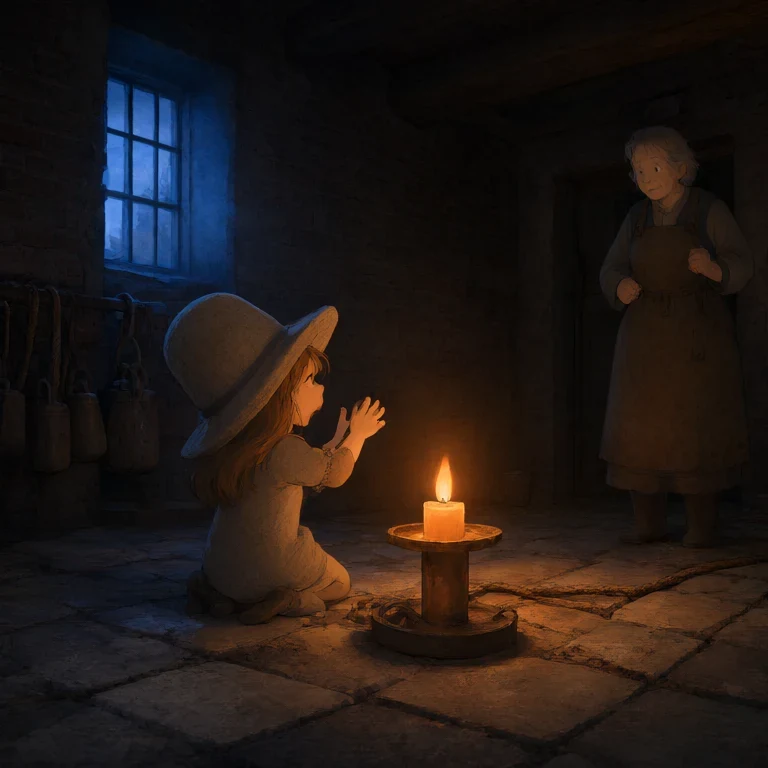
She is the only number on this street that is not owed anything, and it is because she is the coldest.” Nobody at the beam said a word. The hall went on saying numbers, one at a time, into the draught. The woman at 218 stood up off her own sack and said, out loud, to the middle of the hall, in the voice of somebody making an announcement about the weather: “She had the last piece of that cot this afternoon.”
The Rope Walk took a while with that. Twenty past three to three o’clock, forty minutes, and a fire that had been out since the September, and a boy who had been too big for it since Michaelmas, and a woman who burned her own thing because burning her own thing is the only kind of burning nobody can enter against anybody.
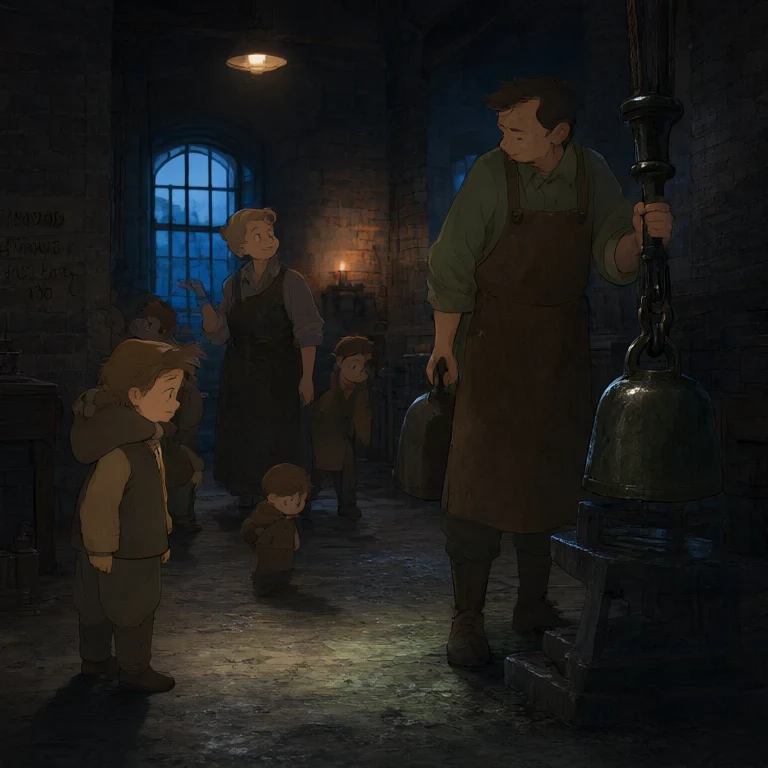
A fire that is put out is dormant and not dead. It can be relit only by the person who put it out, and only at the same hour it went out, and only if that person’s board is clean. Ivet Slee’s board was clean. That was the only reason there was anything to be done about it at all, and it was clean for the worst possible reason, and about nine people in that hall understood both halves of that at the same moment and looked at the floor.
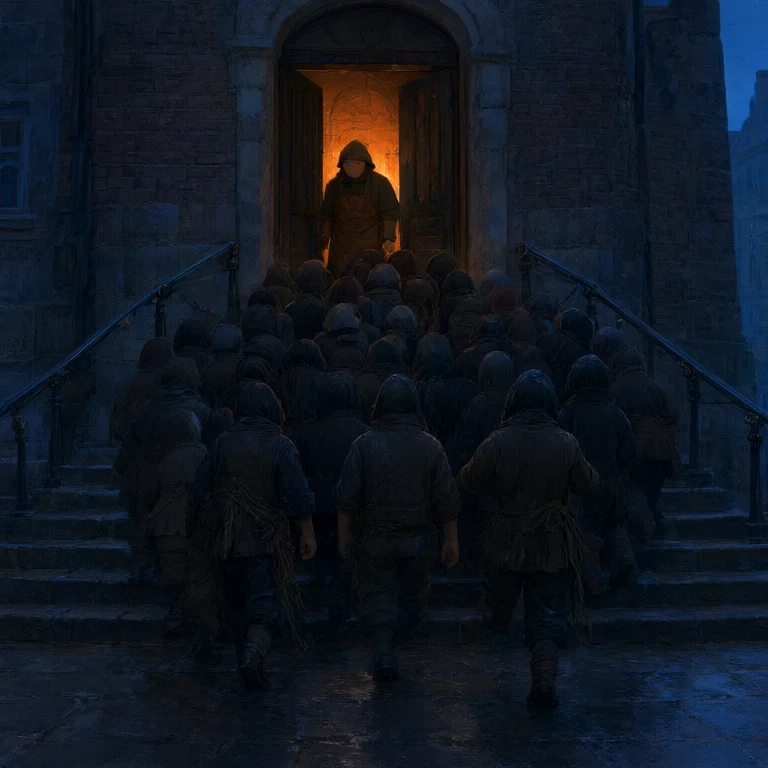
“At half past three tomorrow,” said the beam-man, from the far end, without turning round. “Same hour. Same person. And if you have been owed a night it is counted twice, and she is not owed a night, so that is the whole of the law and there is no more of it.” “That is not the law,” said the beam-man’s neighbour. “That is what the law happens to be this week.” “That is what the law happens to be this week,” said the beam-man. The hall shut at one, and the Rope Walk came out of it into the rain, all in one piece, which they had not been when they went in. That is the part nobody will believe afterwards, and it is the part that is true.
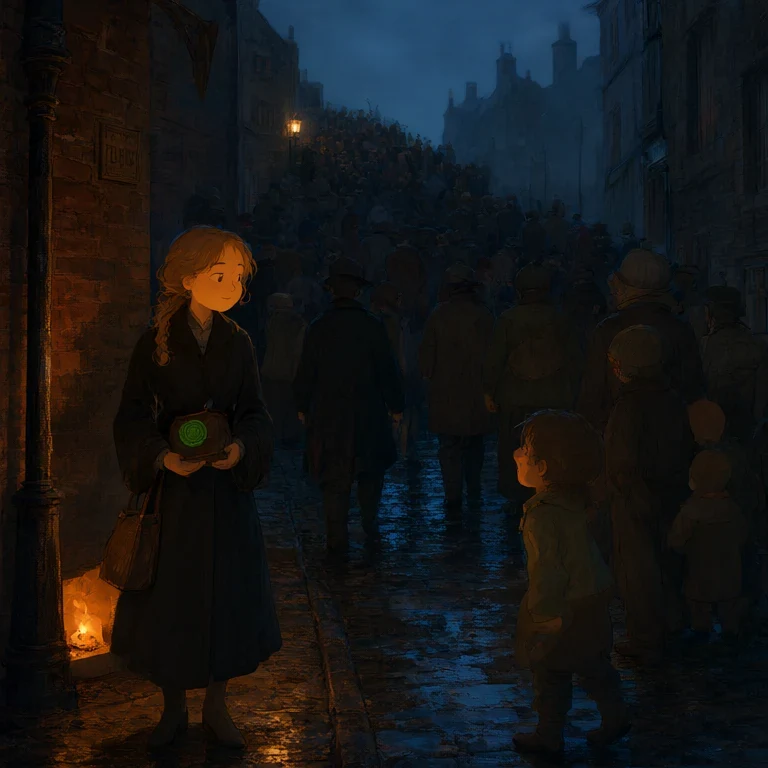
A hundred and forty people went up the street in the dark with the rain going in at their necks, and not one of them said a word about the door, or the washtub, or the slate, or the steps, and the people whose names had been read out as givers kept to the middle, and the people whose names had been read out as owed kept to the edges, and it was not arranged, and Cobb Renn counted them twice on the corner of the Coalquay and said afterwards that the room going out was smaller than the room
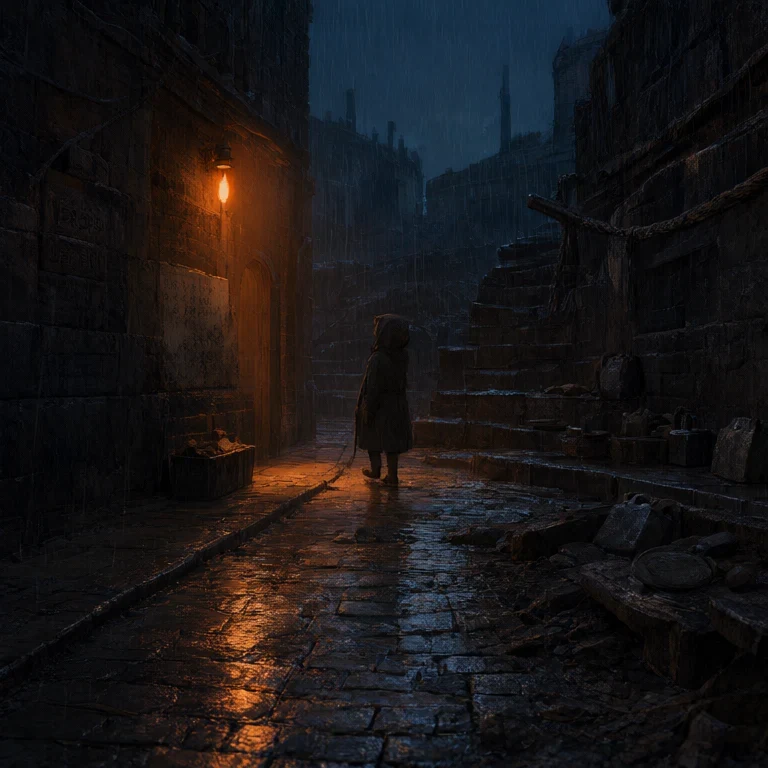
coming in, and she did not say by how much, because she did not know. The only thing anybody said was at the top of the street, at half past one, in the rain, to nobody. “Put the steps back.” At twenty past three on the Friday the Rope Walk came up the street again in daylight, which nobody had expected, because the rain had stopped at two in the morning and nobody had heard it stop. The stone steps were standing at the top of the street where they had stood for ninety years.
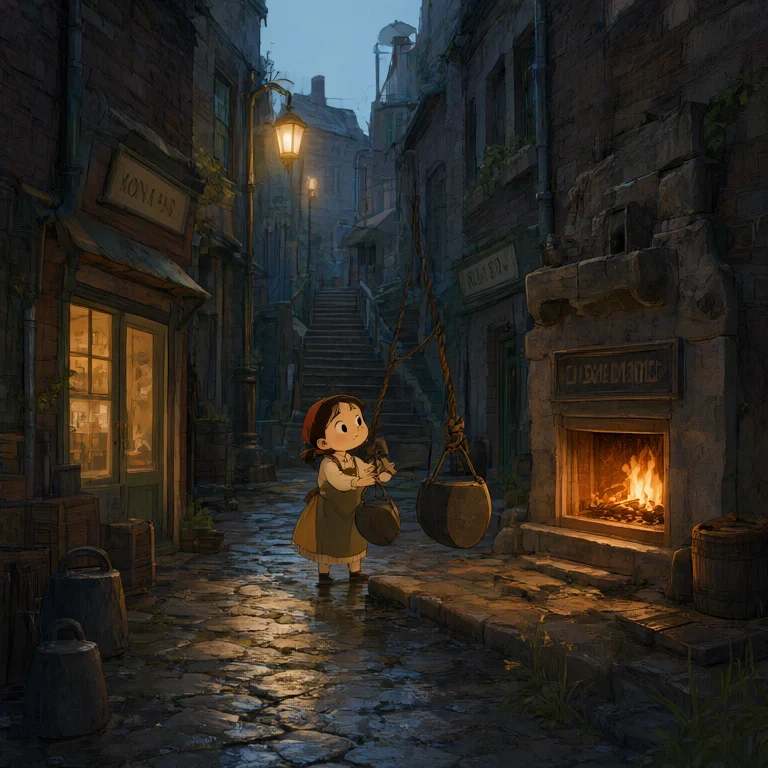
They had been carried up on a handcart by four men who would not give their names to the Scale House, at a cost to each of them of four pounds and something, and set down crooked, and the whole street had to step over them all afternoon and said not one word about it, and the two hundred and three, who had burned them on the ninth of December out of pure cold and had been reading about it aloud to a full hall on Wednesday night, walked past them four times and did not look down.
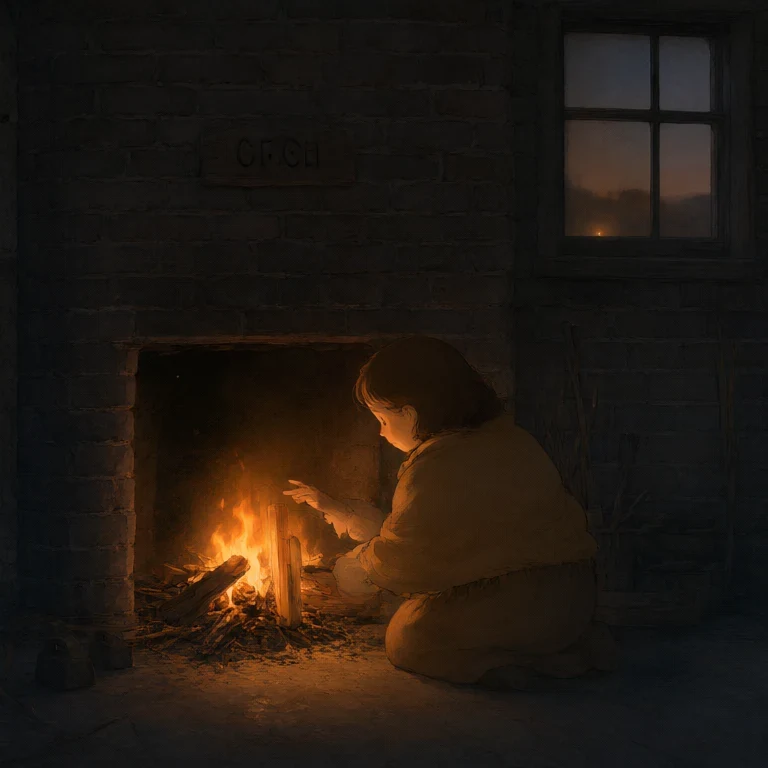
And in number 219, at half past three exactly, Ivet Slee relit the fire that she had put out at half past three the day before, on a board that was clean, at the same hour, being the person who had put it out, and what she put on it was the last upright of the cot, which she had stood by the door on Thursday night because it was hers and hers was the only kind there is, and after that there was nothing left of the cot anywhere in the world.
The next weighing is at four o’clock. The Rope Walk went back to its own houses and its own numbers and left the fire burning, and the rain did not start again that day, and the beam cannot weigh a person twice in a day, and nobody in the city asked for a second answer to anything.