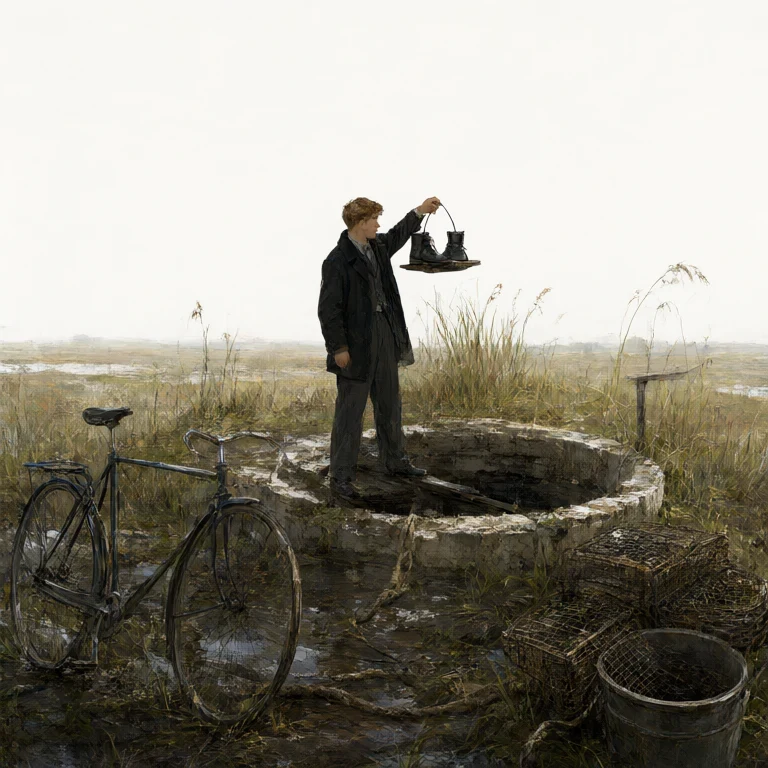
Gideon Sparre came to Coldwick-under-Fen on the Tuesday of the third week of November with a rate book under one arm and a pair of good boots on the tray of the railway hotel, and the boots were the first thing that went wrong, because nobody on the fen wore boots. He had come to enforce eleven hundred years of accumulation against the parish, at the sluice house’s own rate of four pails a day to every household and eleven gallons to the pail, a rate set down in a bad hand on the back of a rate book in a year nobody at the sluice could remember.
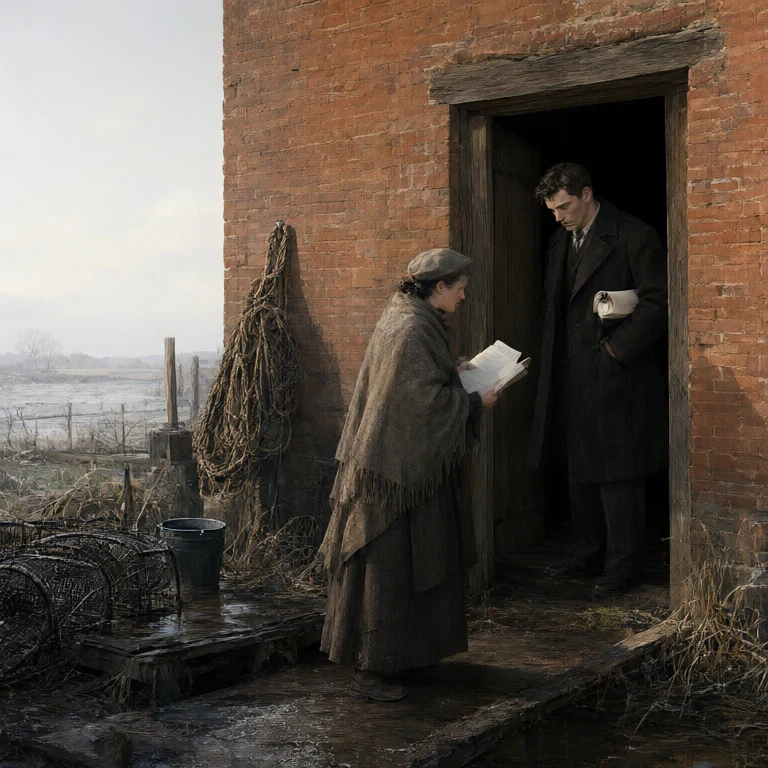
Nell Drury met him at the Sluice House door with a ledger under her arm that she could not lift one-handed. She read the claim back exactly as the writ had it, including the spelling of the parish, and said that in forty years of Thursdays nobody had ever asked her for that figure, and would he like the stove. He would like the stove. He wrote his steps on the back of the writ, because he was not a man who wrote on a letterhead. Step one is a unit, he said. Step two is a count. Step three is a rate. Step four is the demand, and I shall have the first three complete before the first Thursday. And the unit will be a pail, said Mrs Drury. Then you will want the pails of this parish measured, and I would remind you that the pails are not the property of the parish. They are the property of the households. You will meet that difference again.
The pails of Coldwick were measured on the Wednesday morning in the tithe barn with a bushel measure from the Sluice House, by a man who did not know the fen and a girl who had carried four of them a day for three years. The Fell pail held two gallons and ten pints. The pail at the school, with a thumbprint worn into its handle, held two gallons and eight. The lead pail off the Bent well held two gallons and four, and the man who kept it in his washhouse stood in the doorway until it had been filled again. The largest pail in the parish holds one gallon and six pints more than the smallest, said Gideon. A pail is not a unit. A pail is a family. He averaged the four, which came to ten gallons and eleven pints, and the sluice house had valued the parish at forty-four gallons a day, and he did the subtraction twice.
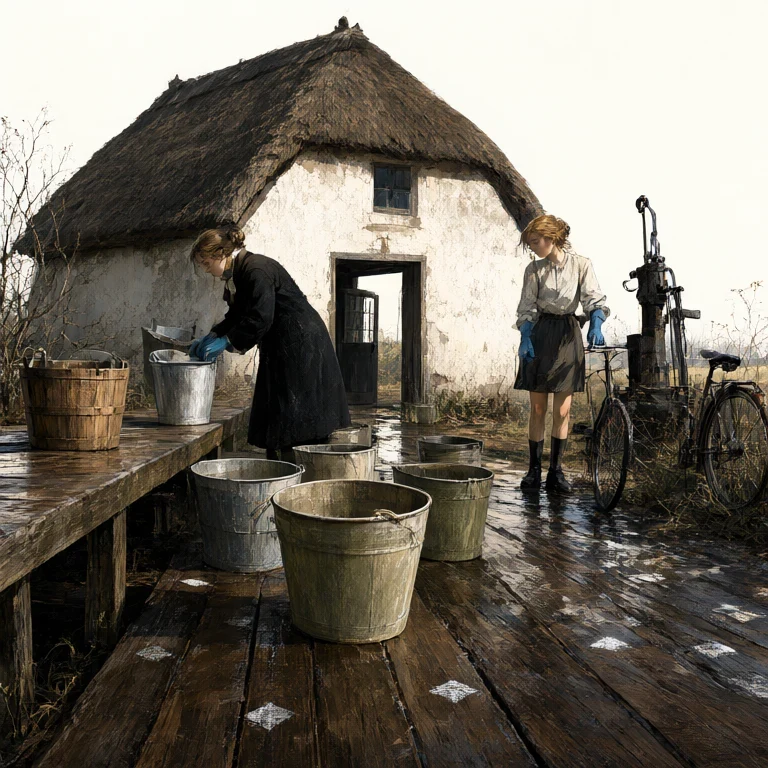
The sluice house is out by a factor of four, he said. The parish has been carrying four times the water the sluice house has been charging it for since the rate was set. It is the only checkable figure in the writ, said Mrs Drury. The rest of it is not wrong, Mr Sparre. That is a different thing, and it is the thing that will take you the rest of the autumn.
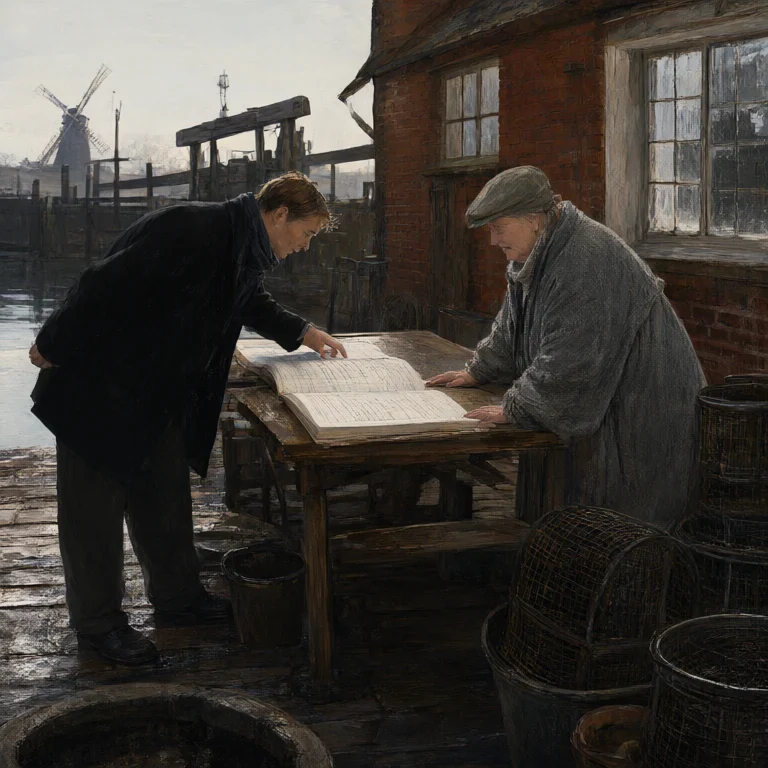
The count was step two, and it took a day and a half. The parish was four hundred and eleven people in one hundred and six households, and every household drew from one of nine wells. What broke the table was the ledger. It lay open on the long table from the middle of the Wednesday until the stove went out, and it was Mrs Drury’s alone. The book begins in 1841, she said. The rate book at the sluice begins in 1841. Same clerk, same year, same bad hand. Before 1841 there was a chapel and a sluice and wells with names, and nobody wrote to anybody about money, because there was nothing to write it on. The writ claims eleven hundred years. The record covers one hundred and eighty-five of them. That leaves nine hundred and fifteen unrecorded, said Gideon. Yes, said Mrs Drury, and she turned a page, and she read an entry out exactly as written, including the spelling.
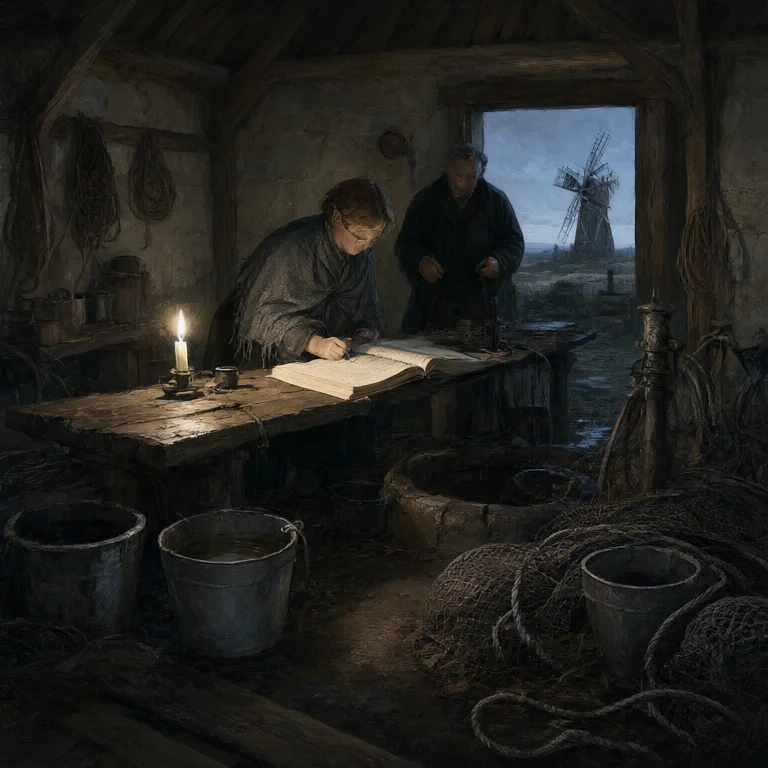
Bond given at the Cold One, this parish, witness two, the goodwife Marsh of the west row. Purpose not written. I have read that entry back four thousand times. I do not improve a bond and I do not paraphrase one for anybody, and if your report says the Cold One was bonded for the drainage, I shall have to tell the Court you invented it.

Step three was the rate, and that was where the whole thing stopped being a number and became a sentence. The parish of Coldwick-under-Fen had never once, in one hundred and eighty-five years, recorded a debt as a quantity of anything. It had recorded a purpose. A bond of 1871 on the Cold One: two acres of cow parsley against the east drain. A bond of 1876 on the Third, in a hand gone bad with damp: the eel ground at the lower end, drained and kept drained. A bond of 1888: the purpose not written. There is not one figure in the volume, said Gideon, with a finger on the 1871 entry. Two acres of cow parsley is not a number. I have a rate book of gallons and a ledger of purposes, and there is no table in England that turns one into the other. There is no such table, said Mrs Drury, because the fen does not trade in amounts. The fen trades in water. Your own rate book says so. The fen trades in water and it pays in use. Those are two trades, and no man has ever written a table between them, and the men who could have written it are the men who are dead.

He went out to the Bent well on the Friday for a rate. Teb Furroway offered him tea and the loan of a barrow, and neither was what he had come for. How much water does an acre of cow parsley want in a season? That depends. On the ground. That depends on the ground. On the drainage, then. On the season. On the chalk. It does, said the well-wright. I am not going to speculate above ground. He put his thumb into the joint of the pump and turned it and looked at it, which is what he did with every piece of iron within reach. Give me a depth, said Gideon. A depth is a measurement. There is forty-one feet of water in this well on a wet Tuesday in November, said the well-wright. It came up eighteen feet in the flood and it has been lower than that in a dry August, and the fen knows it. That is your depth.
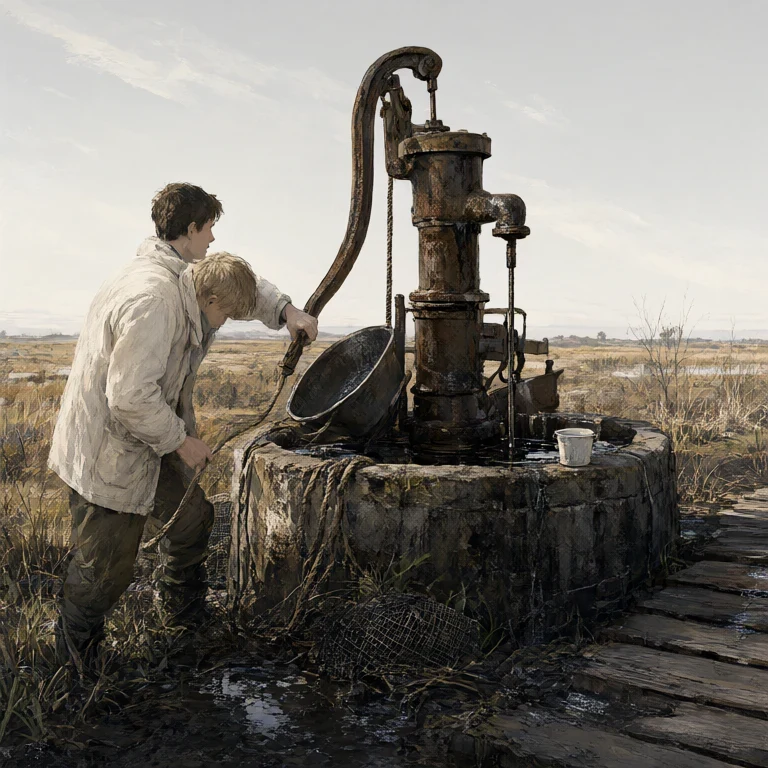
It is the only one I have got. I have been asked for a rate before by a man who wanted it for a report, and the report called it a yield of so many gallons a day, and there is a word for it four lines below where you would be looking. What word? An estimate. And a column of estimates is a thing you can add up, and if you add one up and send it to a man at the sluice he sends back a very large figure made of guesses multiplied by one hundred and six households. I have seen that done. It cost this parish a well.
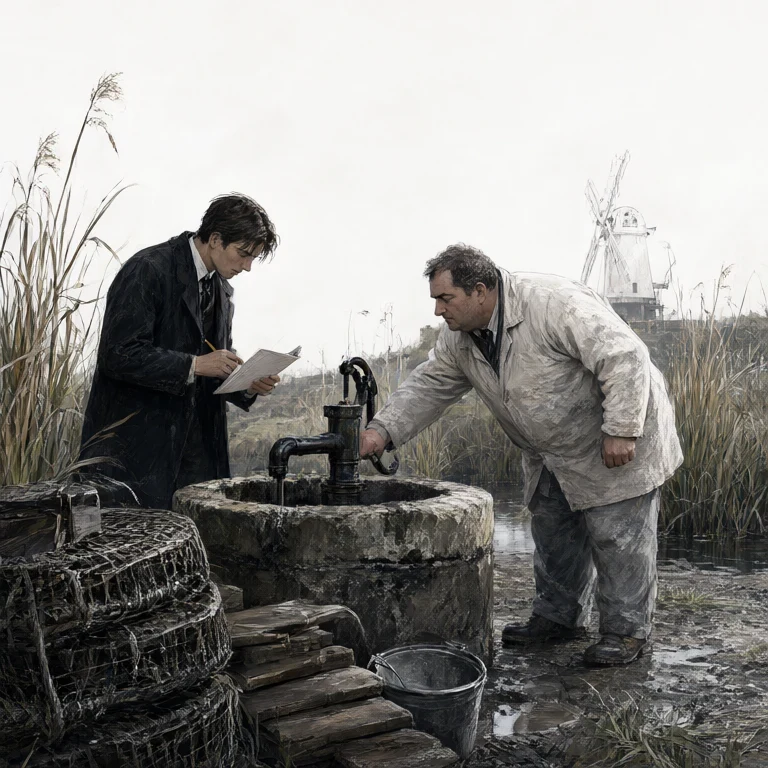
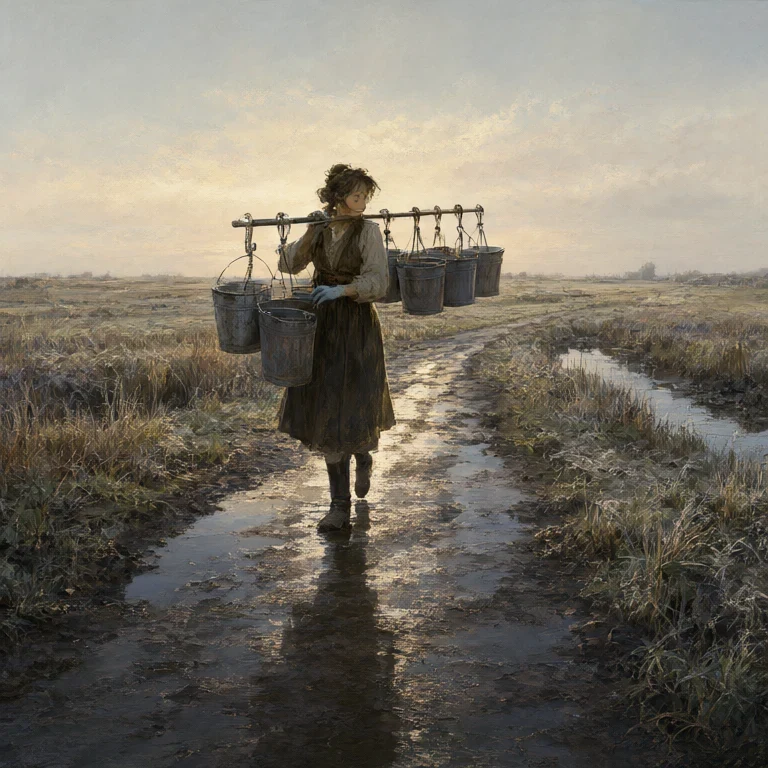
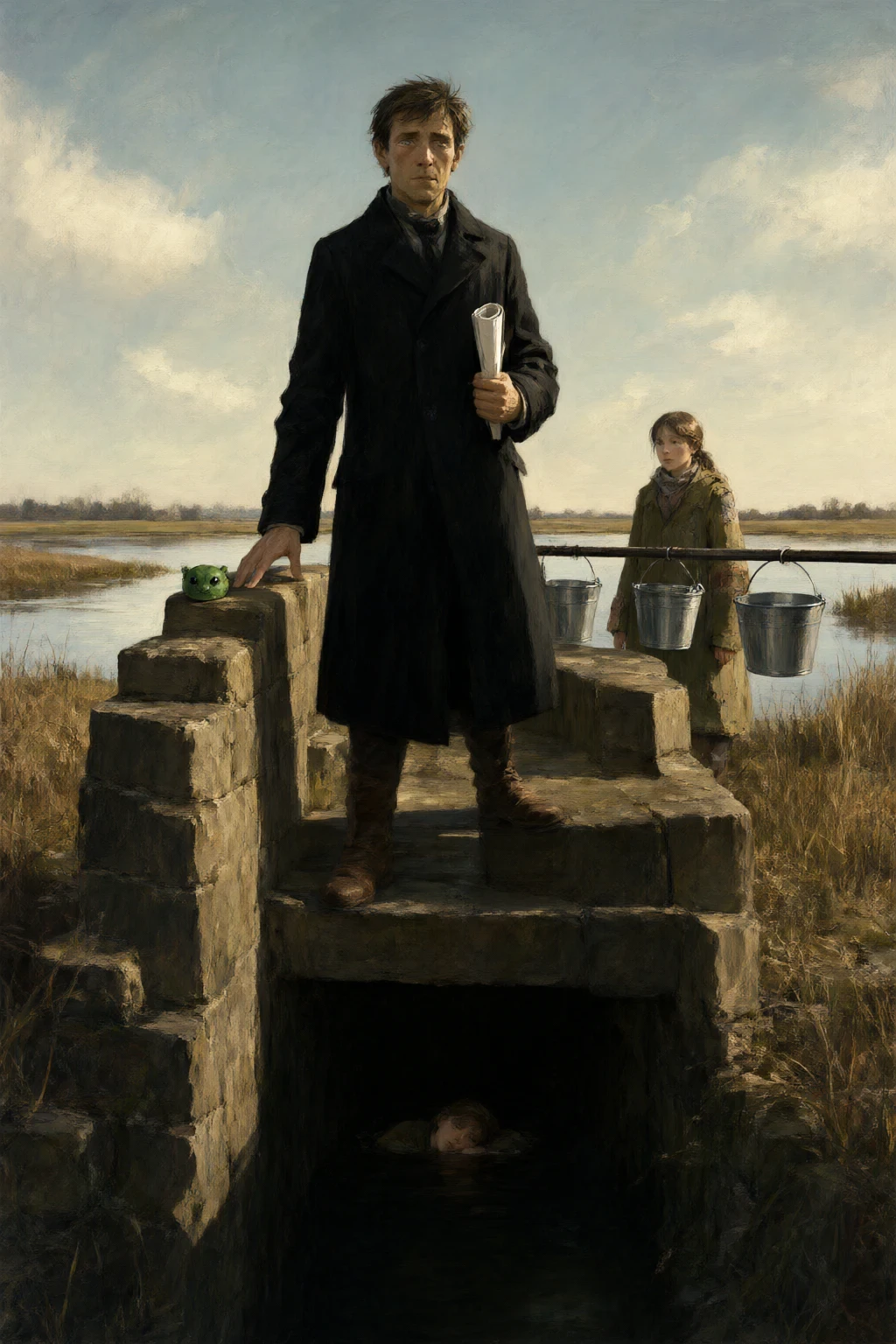
The audit reached the third well on the second Monday, and Gideon went out to it with Bess Brack. She had four pails on a rail and she walked the shape everybody in Coldwick walks, looking at the water on both sides the whole way, and did not say what she was looking at. The third well was the oldest in the fen. The windlass had gone to rust, and the name board had gone so far past legibility that it read what everybody called it anyway. There was a boy asleep in the water at the foot of it. On the collar sat a green thing with a bad cough, the dry two-note cough of something long in cold water.
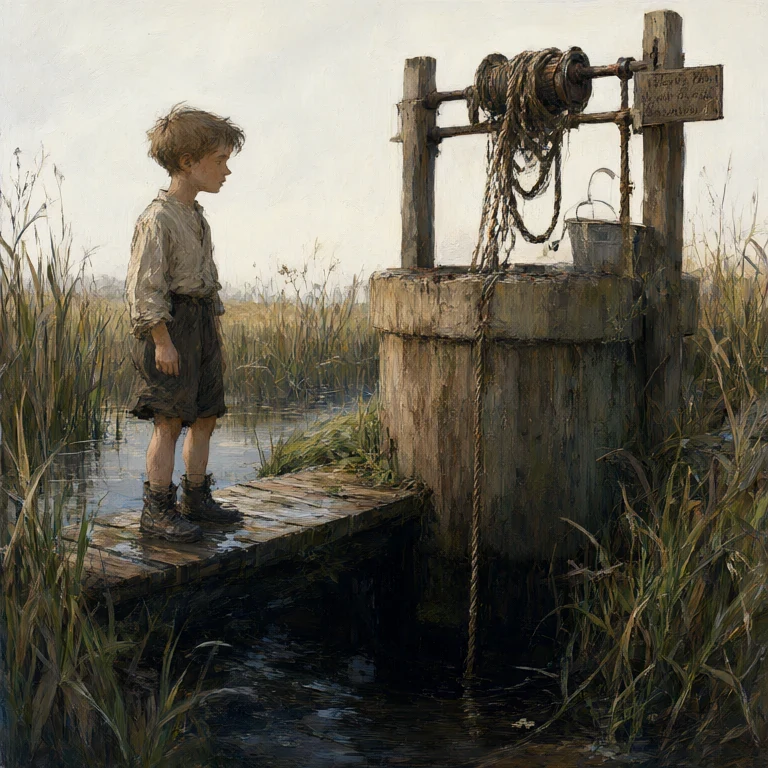
Micken, said the girl, up the shaft. His name is Micken. He will tell you it is. Gideon wrote Micken. Then he said, Thomas. Thomas, said the boy. He wrote Thomas. By the twelfth he had eleven names in a column and a twelfth at the bottom, and the twelfth was the one the boy had said twice, and the girl told him so, and Gideon said, strictly, that the parish would have to establish the boy’s name in a form that could be read back.
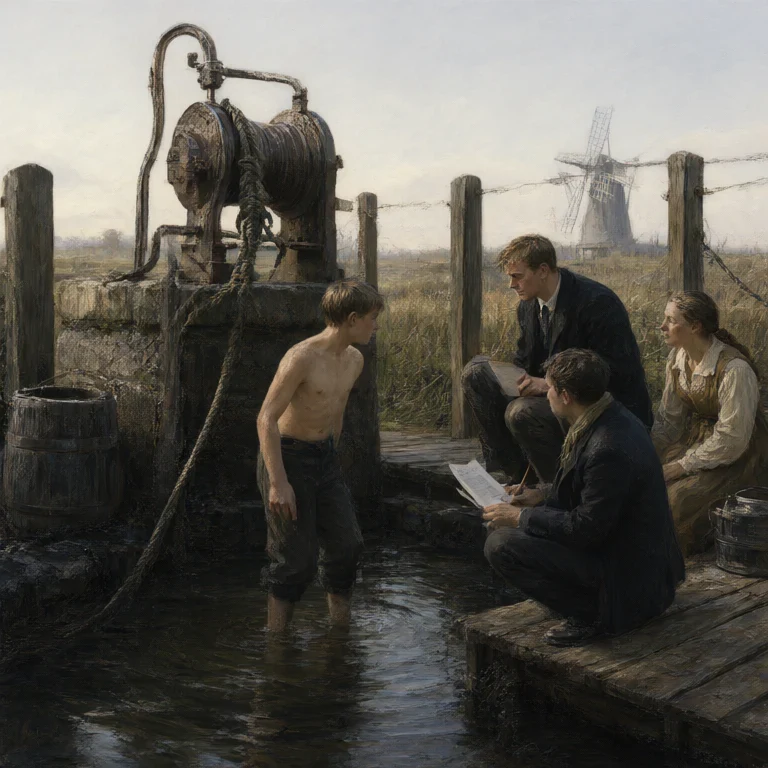
So he asked the only person on the fen who could read what is on a surface to read what was on the surface of the third well, and she tilted her head at the duckboard and was quiet a long time. That is a fortnight, she said. How much water is a fortnight? That is a fortnight, that is. That is not a quantity. No, she agreed. It is the amount. You can have it in gallons and it will tell you nothing, because a fortnight is not a depth, it is a since. The water does not know how much was drawn. It only knows how long it has been standing with whoever drew it. That is why it is a ring and not a hole. If it were a hole you could put a rod in it.
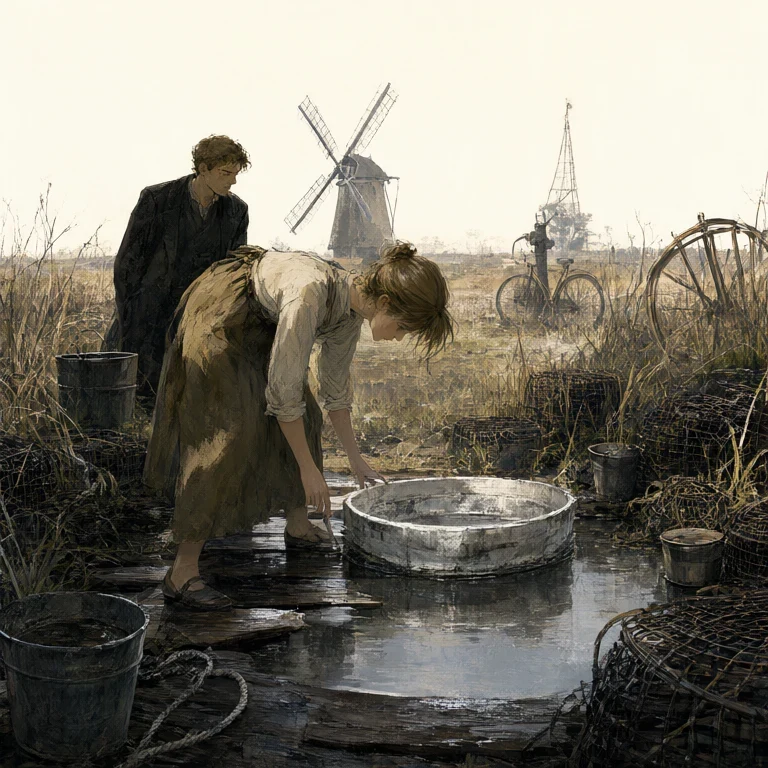
And then, on the Track, she told him there was a man at the Sluice House bonded to the drain, and that she had named a debt in front of a stranger in a coat once before and would not do it again. Then she said, and your boot. My boot is new. It is not new. It has been in the water on this fen for two days and it has a ring in it, and that is a day and a half, and the water does not know that you have never been bonded to anything in your life.
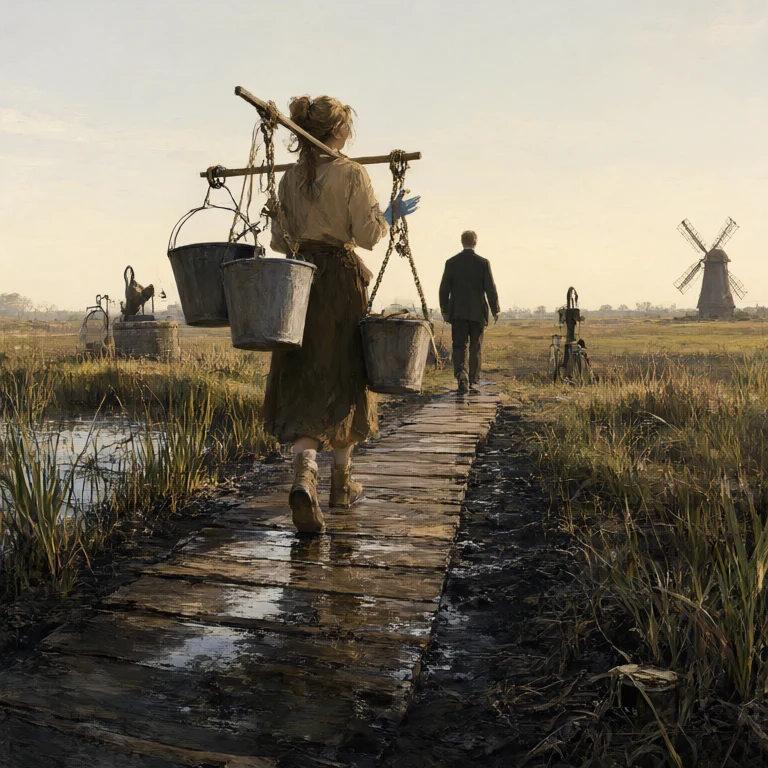
He had a unit that was not a unit, a count short by nine hundred and fifteen years, a rate that consisted of a well-wright’s thumb in a joint, and a lien a girl of sixteen could read and no man could add up. What he did next was the correct thing to do, and it ruined him. The account is stated at a collar, out loud, and the collar is the only place in Coldwick where a statement of that kind binds anybody. He went back out at four in the afternoon with the writ in his hand, and Nell Drury walked with him, because anything said at a collar is her business. At four in the afternoon the collar was a pale ring with a long cold highlight on one side of it, worn bright in a horseshoe where four hundred years of hands had gone down.
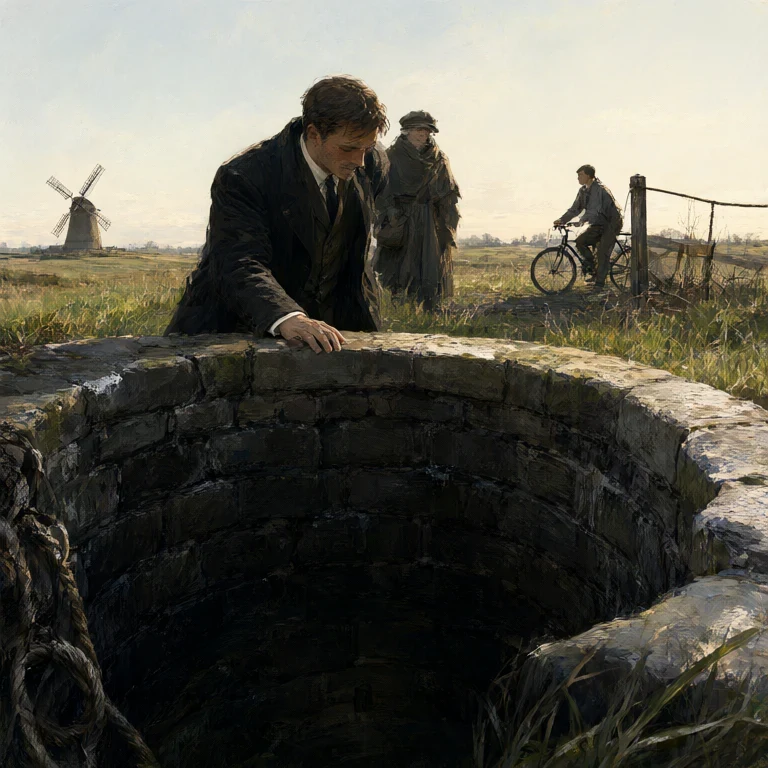
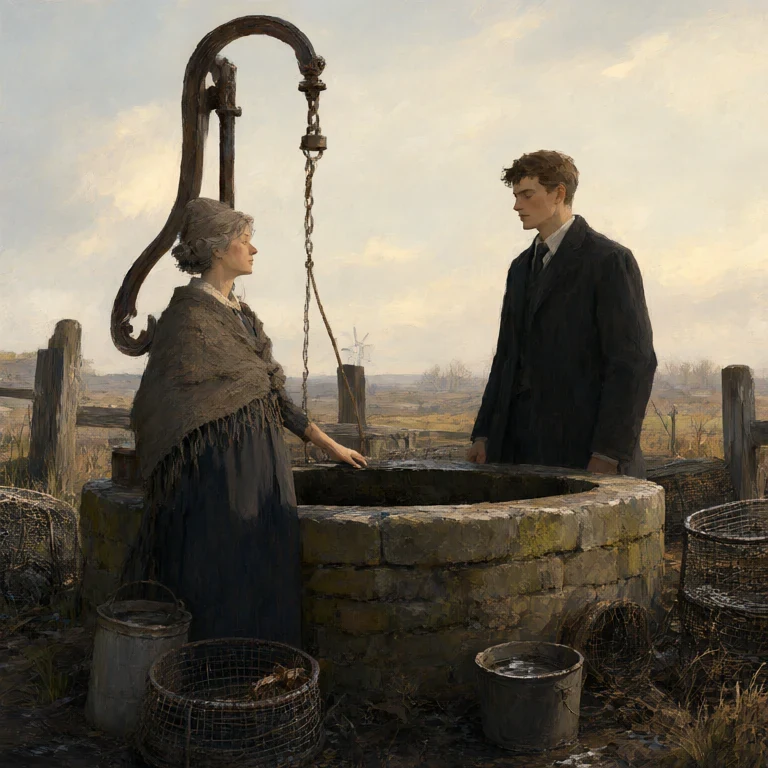
Gideon Sparre put his hand flat on the dressed blocks, because he had checked the latch behind him and one thing was going to be done properly that afternoon, and he said, in his small firm upright script turned out loud, that at the collar of this well there was nothing owed. Nell Drury shut her eyes for a moment and said, Mr Sparre. It is the audited position. It is a statement, and it has been made at a collar, and the collar has heard it. I read bonds back exactly as they are written and I cannot read that one back to you as a figure, because there is no figure in it. You have said it before two witnesses at a bonded well. You will have it twice over.
They began drawing at five, and by six the parish knew. The message that went along the Track was not a message about a man’s mistake. It said water was wanted tonight, at the third well, all of it, and that a man from the sluice had said something at the collar and would not say what. They drew all night in relays, the windlass being past use, so eleven pairs of hands worked the rope at the full drop. Micken Vaunt went up and down the rope all night and never once looked tired, because he sleeps in the water. And nobody could say when to stop, because the purpose of the 1888 bond was not written, and a fine is the whole amount twice over, and the whole amount is the one figure in Coldwick-under-Fen that no living person can state. So the water stood in the pails.
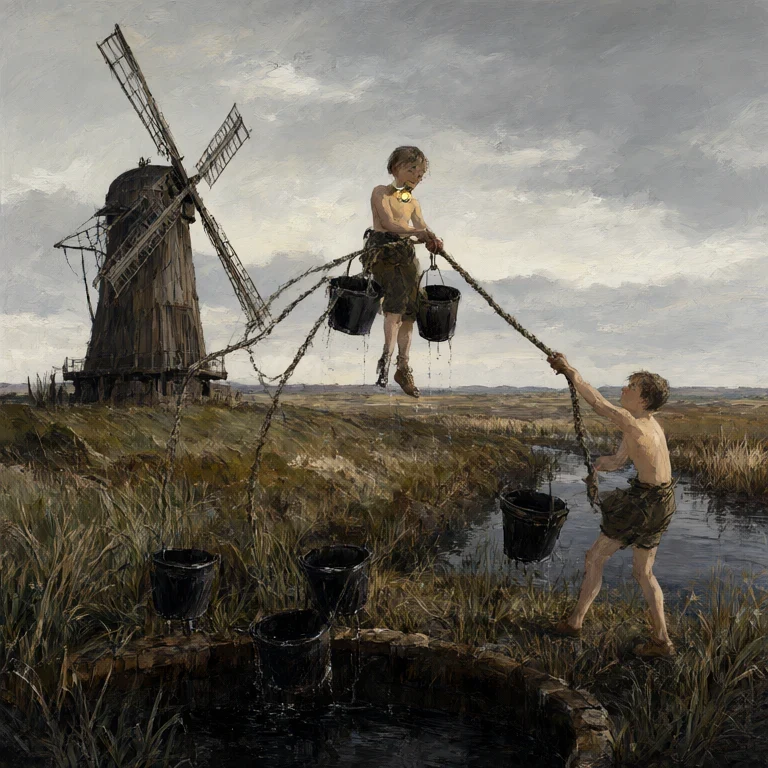
By first light on the Tuesday there were nine hundred pails on the Track in rows, four and five deep where they had been set down, and eleven inches of water over four hundred yards of the only dry walking in the parish, and the drainage, which has a fall of two feet in four miles, could not take eleven inches that Coldwick had put nine hundred pails into.
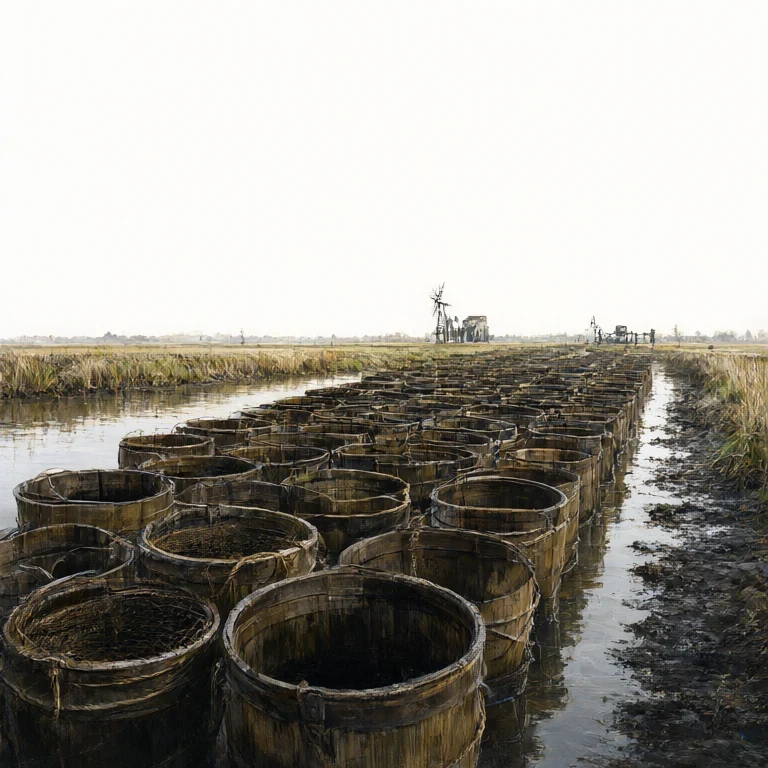
The Well Court met at ten, as it always met, on the first Thursday, with forty to ninety people in their coats and the stove in the middle of the barn doing all the work that forty to ninety coats can do in November. Gideon stood at the back with his writ rolled up and did not check the latch behind him, because both doors were propped for the crowd. They put the pails at the back in rows, where they stayed, and they came from nine villages. Nobody in the room was listening to a person. They were listening to the water, and there was eleven inches of it standing in the room, and it was flat, and it was cold, and it read nothing at all. That was the finding, and it took four hours.
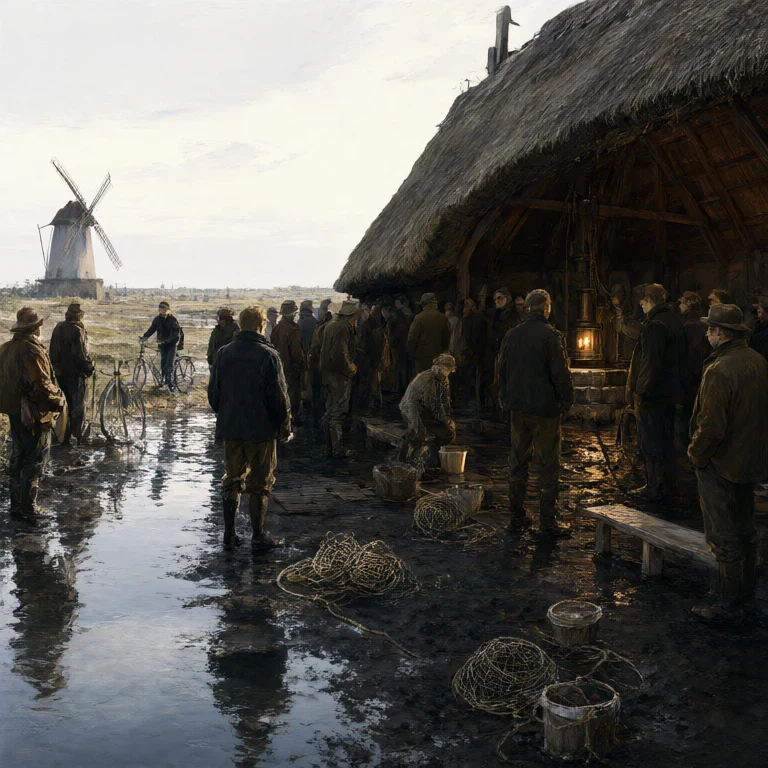
Nell Drury read the 1888 entry into the record of the Court exactly as written, including the spelling, and a man of sixty got up and said that in the bad summer of 1888 there had been a fever in the west row, and they had carried from the third well to nine houses for a fortnight, and his grandmother had done it, and it was in the family the way a debt is in a family, without anybody agreeing to it. A fortnight, said Gideon Sparre. A fortnight, said the man from the west row, and never a word said at a collar, because who says a word at a collar for a fortnight’s carrying in a fever? Where is it going now, said a woman from the school end, who had eleven children off with the same thing and no water worth the name, the fen being eleven inches deep and the third well drawn dry twice and filled twice in a night. Nobody answered her.
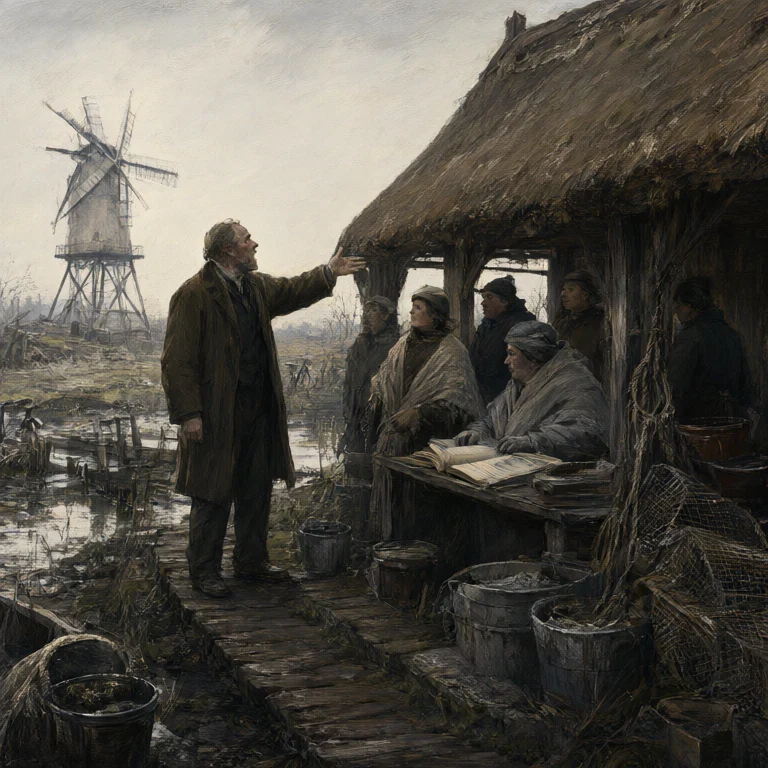
Gideon Sparre said that the 1888 bond was discharged or it was not, that a person must stand at a collar and name the thing owed and be right about it, and that a person right about it ends the account, and a person wrong about it pays the whole amount twice over, in water, in one night, which was what had happened to him on Monday.
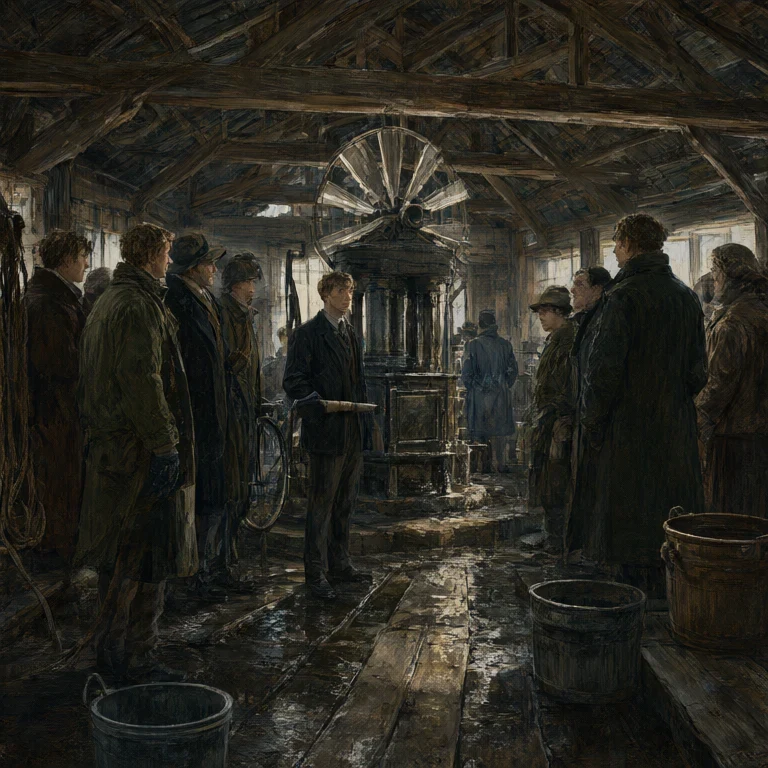
The thing on the collar was brought out and set on the bench by the stove. It sat there on a folded coat and coughed twice, and it had a very good memory. Mrs Drury asked it, in the words she had used for four thousand bonds, what it was owed. It said the water of the third well, carried to the houses where there was fever, for as long as there was fever. In 1888 there had been fever for a fortnight. The fortnight was carried. Nobody had ever said so at the collar. Carrying is a thing a person does, it said. A well does not carry. What I am owed is that somebody stop.
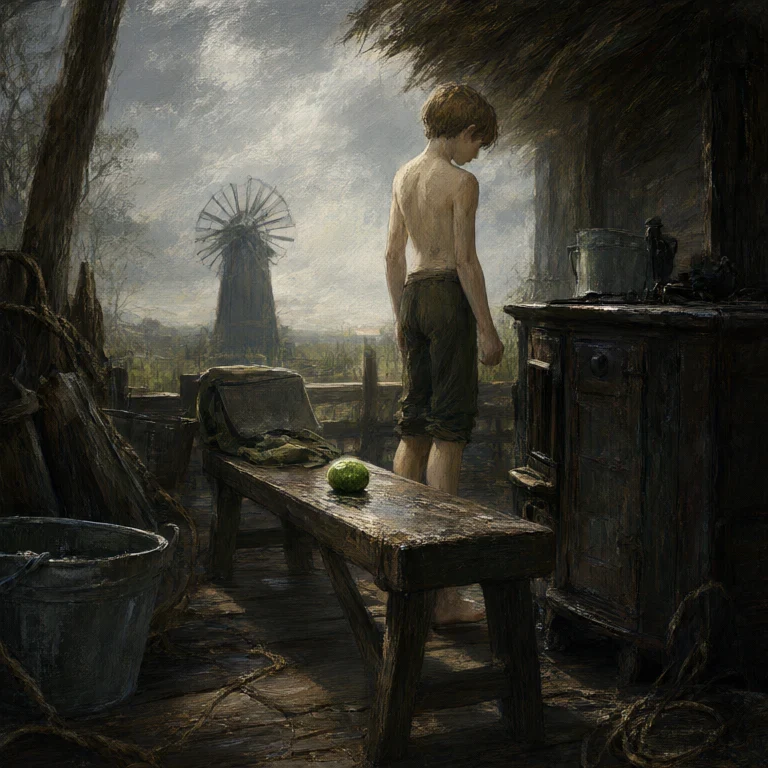
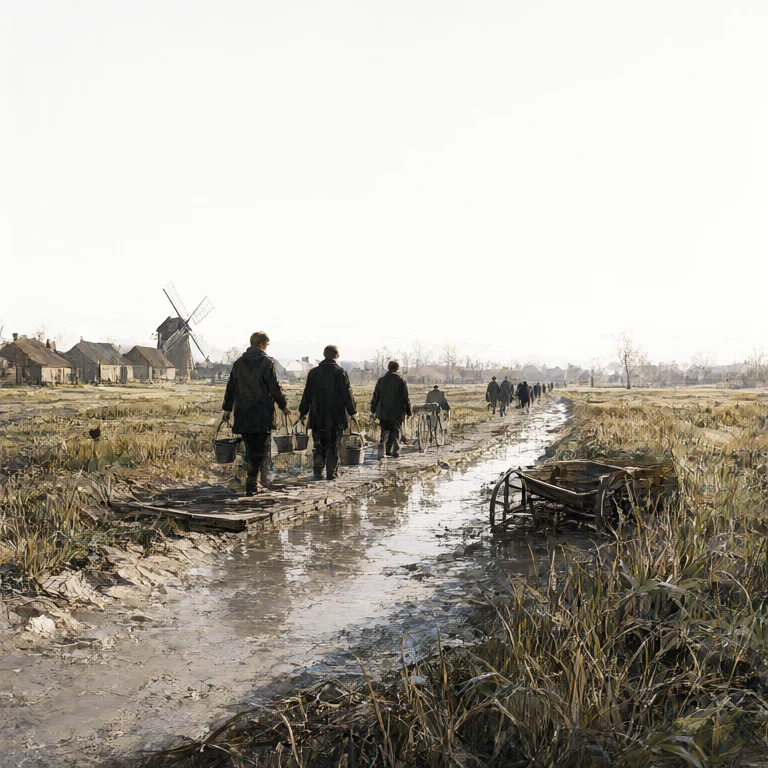
The nine hundred pails were carried out and up the Track that afternoon by the people who had filled them, and put down at nine houses, and each house took in what it needed and the rest went on the ground, and the fen had not been this dry underneath since before the war. The fine was the whole amount twice over, and the whole amount was a fortnight of carrying, so the parish carried a fortnight of water to nine houses in one night and then carried it again, and that was the end of the fine, and nobody wrote it in the book, because it was not a bond, and Mrs Drury does not enter things that are not bonds.
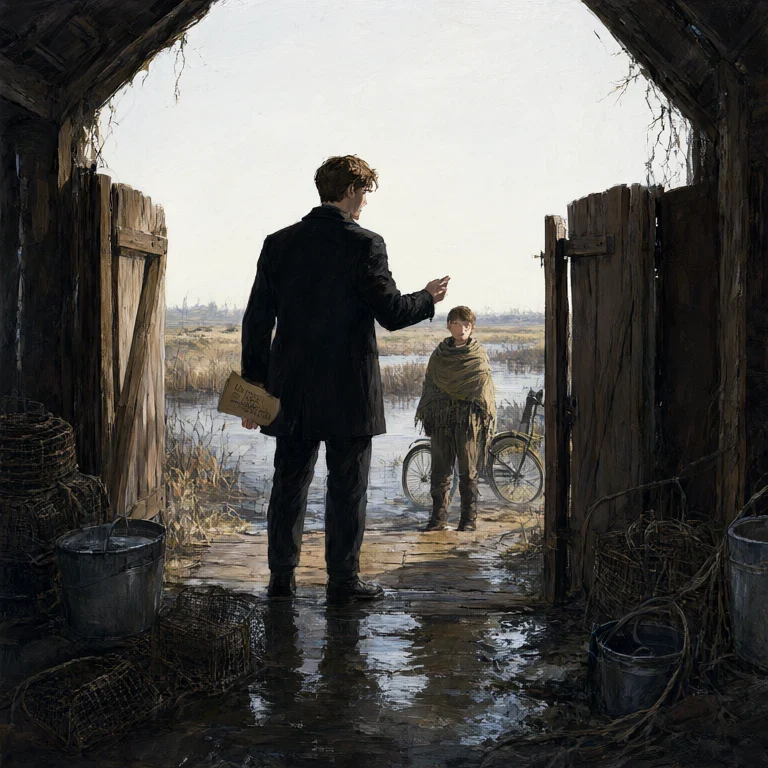
She entered the account of the third well on the first Thursday of December in her own hand, with the date, and read it back to the room afterwards exactly as written. Then Gideon Sparre asked whether he might go home. He asked it standing up, with the roll in his hand, and said strictly that he had an audit to close and could not close it, and that a smaller figure had been available since the first Wednesday and would take him an hour to write. The total obligation of the parish of Coldwick-under-Fen, as at the first Thursday of December, was one fortnight, discharged, and one night, discharged, and one pail a day, which was not in the writ and not in the book, and which the parish had begun at the third well on the Friday because the pails were on the rail that morning and the rail only holds four.

He wrote it on the back of the writ, where the steps were, and it took him eleven minutes, and at the end he wrote without prejudice, and then looked at the two words for a moment and put his thumb over them and left them. Nobody thanked him at the door, because nobody in Coldwick thanks a man for a figure, and one woman said her boots would not be the same and meant it kindly. He closed the barn door behind him, out of four years of habit, and did not check the latch.
Bess Brack went up the Fen Track on the Friday with five pails on the rail, because the third well now had one pail a day coming out of it for a house where there were eleven children with a fever, and nobody had asked her to carry it and nobody had asked her not to. The rail was made for four. She had carried four since she was thirteen, and the four sat level, and the fifth hung out to the left at an angle that pulled the whole rig over toward the water-cut every time she set it down. She walked the four miles with it in that attitude, and it took her longer, and she was aware the whole way of the exact number of things that were going to have to be said about a rail, and she could not think of one that would be any use, and so she did not say it. At the top she set the pails down, and the fifth stayed out over the ditch for a moment, catching the light off the water, and then she got her shoulder under it and took the weight.