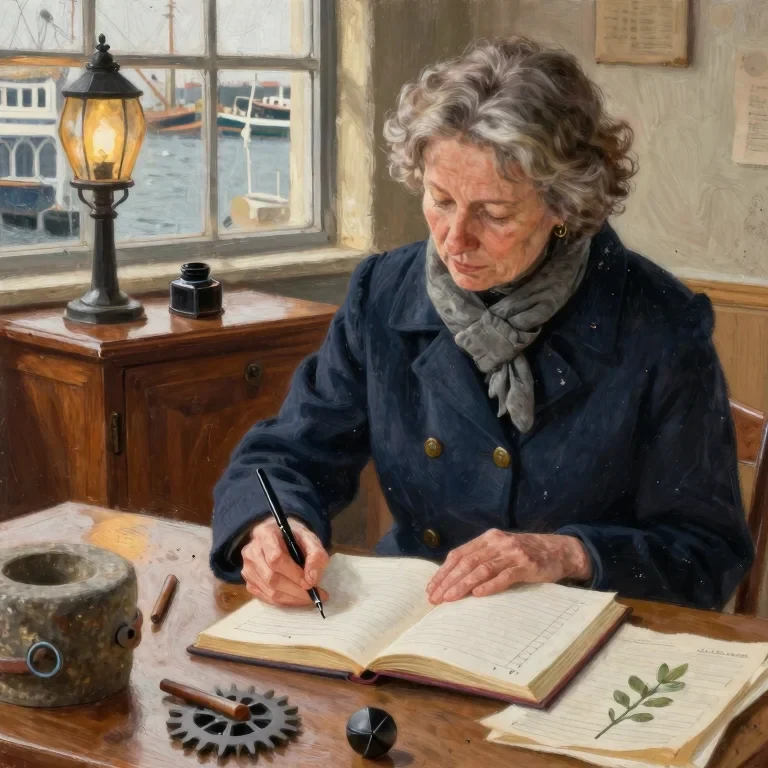
The crossing at Harklow runs from Harklow Quay on the east bank to Coldstrand Point on the west, three hundred and eighty yards. Underneath the crossing there is very little but sand. A ridge of it stands up out of the river in the middle of the channel, a mile and a half from the sea, and that ridge is called the Coldstrand Bar. At the bottom of a spring tide the crest of it stands clear of the water, wet and shining, and the geese stand on it and object. Adela Rayner was forty-one. Her hair was dark with grey coming in at the temple. She wore a navy serge coat with brass buttons, buttoned to the third one, a grey wool scarf, and boots cut away at the ankle. There was ink on the middle finger of her right hand, and it had been there so long that the creases of it were grey. She did not row the ferry. She wrote down when the ferry could go.

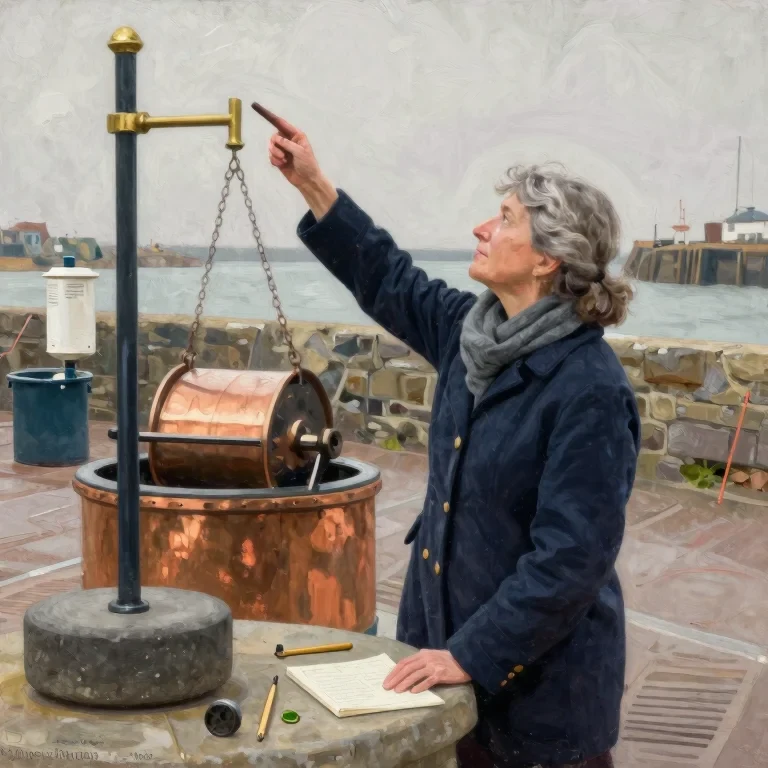
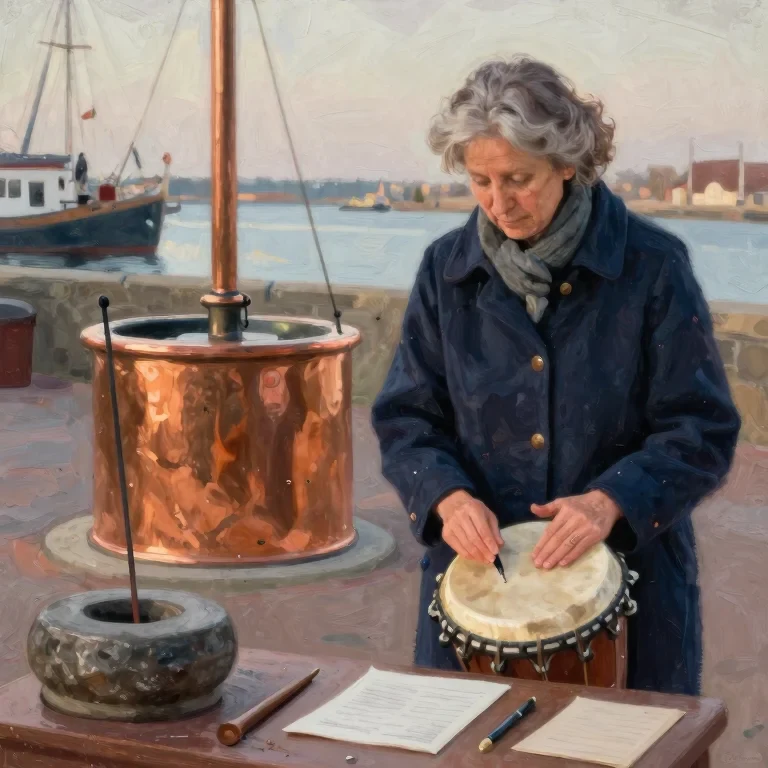
On the harbour wall at Harklow there is a tide gauge. It is a float in a copper well, and the well has a small hole in it, so that the water inside rises and falls with the water outside but never with a wave. Above the well a board is fixed to the stone, ruled in feet and inches, the figures painted white on black from zero up to twenty. A pointer on a brass arm stands over the board and shows how high the water is standing above the zero of the gauge. On a bracket beside the board is a drum that turns once in twenty-four hours, and a pen draws a line on ruled paper round the drum, and the line is the shape of that day's tide. The district's standing order, made at Leamouth in the barrow of 1861 and amended twice since, says that no boat shall be taken over the Coldstrand Bar while the gauge stands below six feet. Below six feet, and not below five feet and eleven inches. Six feet.
The reason is four numbers and a sum, and the sum was settled in a committee in a room with a fire in it. The crest of the bar lies one foot six inches above the zero of the gauge, so at the lowest water of a spring tide the bar stands a foot and a half proud of the river. The ferry draws four feet at her full load. The port's rule is six inches under her bottom at the least. Four feet and six inches of water over a crest a foot and a half high means the water on the gauge has to stand at six feet. Adela could say that standing up with her hands behind her back, and she said it perhaps forty times a year to men who wanted to be quite certain of it.
How long the water stands above six feet is the second question, and it is the one that took her the first ten years of the job. It is not the question anybody expects. A spring tide runs eleven feet from high water to low. A neap tide runs six feet six inches. You would think the spring tide gave the ferry the longer day. It does not. A small tide is a slow tide. The spring tide takes nothing away at the top. It takes the time away at the edge. At six feet on a spring tide the water is going down at thirty-three inches an hour. On a neap tide it goes down at twenty inches in the hour. The six inches that the rule allows under the ferry's bottom are eleven minutes on a spring tide and eighteen minutes on a neap tide, and eleven minutes is how long it takes to get a cart off the ramp at Coldstrand and into the road. Six inches is not a margin. Six inches is eleven minutes.
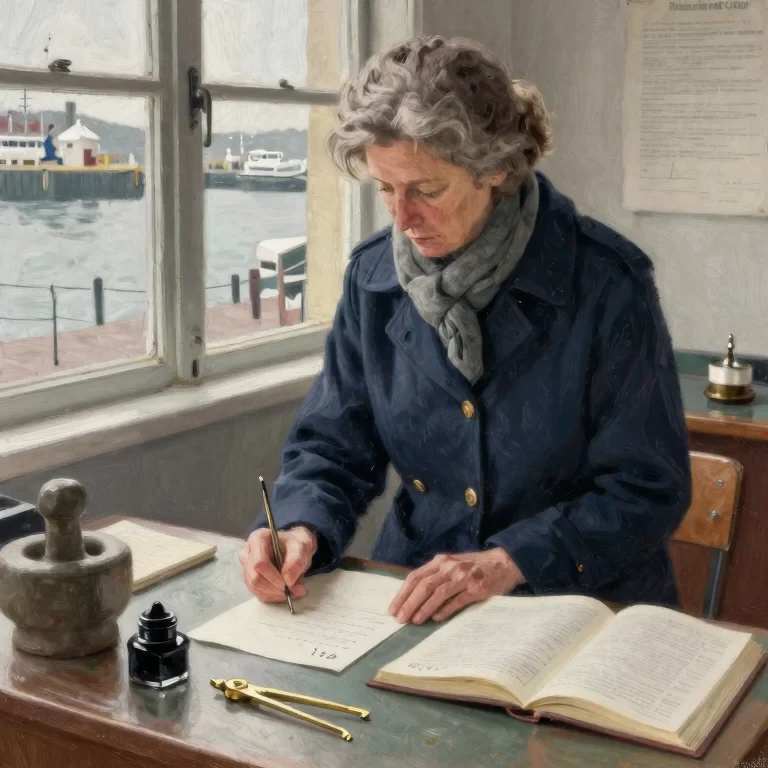
So she wrote a table. Twice a day, out of the Admiralty tide tables, which are the best in the world, she read off the predicted height of high water at the mouth of the river, carried the thing up eight miles, and worked backwards to the minute when the gauge would stand at six feet. That gave the opening and the closing of every window. Out of it she made a sheet of foolscap with the times in a column and CROSSING TIME at the head in a fair hand. Three hundred copies a month, printed at Leamouth and wrapped in oilcloth, and one of them nailed in a wooden case behind glass in the waiting room at Harklow Quay.
Working a time out of a height is arithmetic and not guessing. The predicted tide at the mouth is printed to the nearest minute, and she turned the height into a rate by taking the fall from the hour before high water to the fall in the hour after it, and then walked the rate backwards down the table until the column of six feet came up. On a big spring the two hours either side of high water are not the same, because the water hangs at the top and then lets go all at once, so she took the rate from the hour she was in and not from the average of the two, and that alone put ten minutes in or out at the closing. A tide that is written down in a book as one number a day is really four numbers, and the fourth one is the one the ferry stands on.
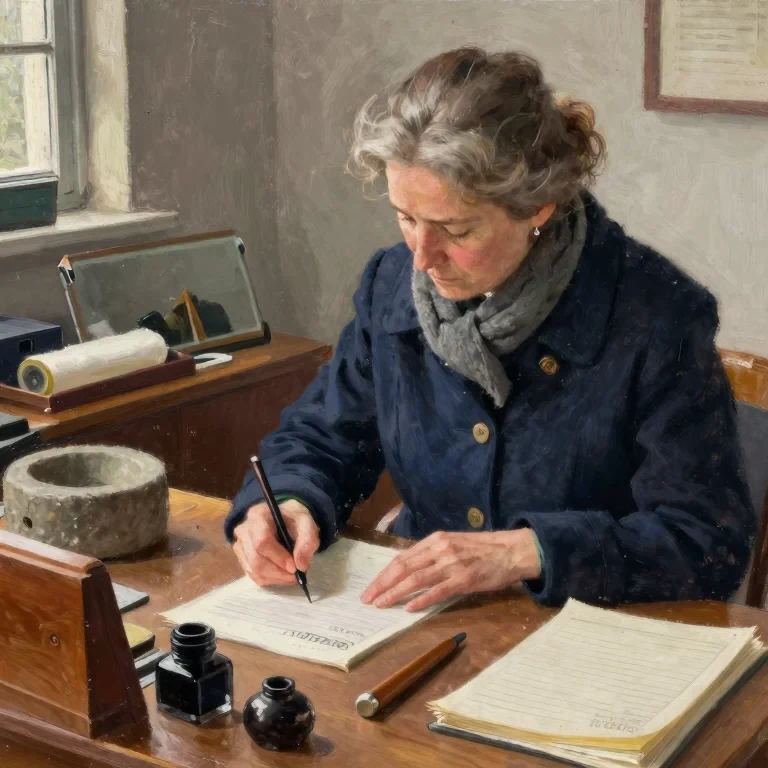
The times were not printed in ink but in a fair round hand, and she wrote out the twelve of them by hand in the last week of every month, which took a morning, and the carrier's men read them off the board in the waiting room and believed them because they were neat. Neatness was doing a great deal of work in that room, and she never said so to anybody. For seventeen years the numbers had been right. Then the water stopped agreeing with the book, and it stopped in two different ways. The first was rain. When it rained hard on the moor above Harklow the water came down the river ahead of the tide, and the gauge stood higher than the book said it would, and on the ebb of the day after it stood lower. In the wet weather of September 1888 the gauge at Harklow stood as much as nine inches above the table for a day at a time, and eight inches below it on a dry easterly blow. An inch of water is a few minutes. Nine inches is most of a window.
The second way happened at night, and it had happened four times in the ten years she had held the job. The water would come down toward low, and instead of making a low it would make a shallow dip, come up again a hand's breadth, and go down lower than it had been before. The pointer stood still for a few minutes and then went on down. She had never had an answer she could write down. It only came on the bigger tides, and always within two days of a spring. Once the boy who read the gauge at night, Ned Pyle, fifteen and full of himself about it, ran the half mile up to the house to tell her, and she walked down with him in the rain, and they watched the board together until two in the morning, and at ten past two the water did it again, and the pen on the drum drew a second dip into the paper.
The book never showed it. The book was made for the mouth, where there is deep water. Harklow is eight miles up a river that is forty feet deep at its bar and about ten feet deep in front of the quay, and a shallow river on a hard ebb does a thing that a deep one does not do, and there was no boat at Leamouth to find out with.

On the night of Friday the fourth of October the glass had been falling since noon and there was an easterly on the sand, hard and cold, and the mail coach was late. The last tide of that day closed at twenty-six minutes past one, according to the table. Adela had walked out to the gauge at half past ten to see the height for herself, because the gauge had been sitting above the table all the evening by seven or eight inches, and the drum showed an ordinary single curve, and at half past ten the water stood at eight feet one inch and had been up since nine o'clock, and everything was as it should be. The coach came in at twenty past eleven with Tobias Hake standing up on the box because of the wet. Vasey took the horses and the coach went on up the quay, and the mail came off, and the last return was loaded. Tobias Hake said the lamps were lit at the Coldstrand inn and the man there had been waiting since ten.
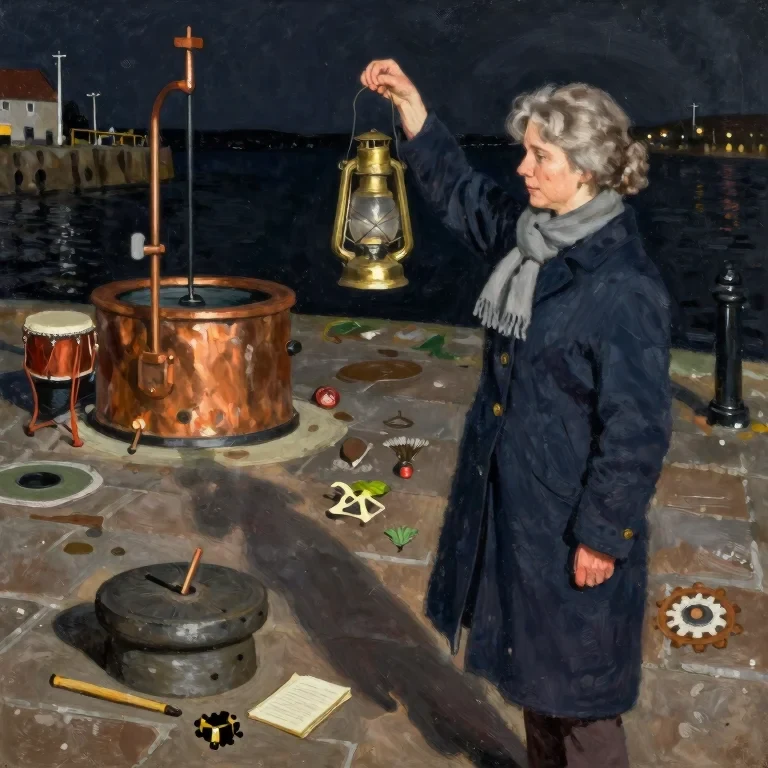
Vasey was fifty-eight and had a hip that told him the weather before the glass did. He looked at the table in the case by the wheelhouse, and it gave him until twenty-six minutes past one. He looked at the board on the wall at Coldstrand, and it stood at five feet two inches, and he said it was low but there was time in hand, and he took her out at half past eleven. Adela was at Coldstrand with the lamp. She had not gone back up with the coach. She stood on the ramp with the wind off the sand in her eyes, watching the pointer, and at four minutes past twelve the pointer stopped. It stood a moment and then went down, and at ten past twelve it was at four feet eleven inches, and Vasey was two hundred yards off the bar with the flood making under him and no way out of it but straight on. At twenty-five past twelve the Wren was on the Coldstrand Bar.
At half past eleven the water over the crest of the bar stood at three feet eight inches and the ferry drew four feet. There were two inches between the two numbers, and at thirty-three inches an hour two inches is three and a half minutes. At twenty-five past twelve she was fast, with three feet of water over the crest and a foot under her bottom, and she lay there with her heel over until six minutes past six in the morning. Six hours and forty-one minutes, in full view of the road, with the geese going round her and a man walking up from the inn to look at her and going down again.
Then the flood came up under her and she came off and went home to Harklow with the tide under her, and her garboard was broken and a plate was started at the turn of the bilge. The harbourmaster put Vasey's certificate aside for eleven days and sent an inspector aboard. The survey put the repair at eighty-four pounds. The mail went over twice a day instead of six times for eleven days, and Tobias Hake was paid by the trip, and the man at the inn was not a man anybody could tell not to sell a drink to a coachman waiting half an hour for a ferry that was not coming. Adela wrote out the crossings for that tide, and the count for that day was three. The table had promised five.
Then she did the thing that took her four months, which was to stop using the river's account of itself and begin using Harklow's own. In the harbour office there was a tin. In the tin were the gauge sheets, rolled up, one for every day for eleven years, wound on the drum by the same man since the copper well was put in, on the same paper. She took them out on the floor of the office and unrolled them one at a time and laid them in a row along the wall, and she went along the row on her knees with a candle held low in a dish. One sheet in nine had a second dip in it. On every one of those nine the book from London had a single valley where Harklow's own paper had two, and on the two worst of them the two dips in the book stood the wrong distance apart, by half an hour on one and by an hour and a quarter on the other.
And that was where her own sum came apart. The closing time was worked from the fall towards a low water. On the nights with a second dip the first dip came forty minutes earlier than the book had it, and the water was through six feet while the book still had it standing above six feet. It was not a fault of the gauge and it was not a fault of the men. It was the mouth of the river telling the truth about Harklow, forty miles of water nearer than it was.
While she was on the floor with the sheets she noticed that the framed copy of the 1861 order had come loose on the wall, and she took it down to put the wire right, and she turned it over. On the back of the sheet, in pencil, in the hand of Jonas Rayner, who had been the harbour clerk and had been her father and had died in the winter of sixty-three, there were two lines. They said that at six feet on a spring tide the water goes down at two feet and nine inches an hour, and that the six inches is therefore eleven minutes, and that a ferryman ought to be told that the six inches is time and not depth. Nobody had read the back of the sheet for twenty-five years. It had hung in that office all the time, facing the wall.
The harbourmaster was a careful man and a slow one, and he would not print a table made out of a candle and a floor. He wanted the arithmetic shown on paper, so she showed it on paper, and it took two evenings. The opening time on a spring, worked from six feet six inches instead of six feet, which takes eleven minutes off the front of the window. The closing time on the last tide of the night, worked to the first dip in Harklow's own curve, which takes an hour and ten minutes off the back of it, and that last tide was the one the mail went on. Leamouth wrote to say that the crossing times are compiled in accordance with the Admiralty tables, that the printed sheet is the sheet the carrier's men work to, and that no local variation may be adopted without the district's consent. The district's consent came in March, in a letter of two paragraphs, on the strength of nine sheets out of a tin.
Tranter of the mail and carrier company came out from Leamouth and sat in the waiting room with his hat on his knee. He was civil about it. He did not want an argument. “Three crossings a tide on the springs instead of four,” he said. “And the last one gone altogether on the neaps. Thirty-one a month, Mrs Rayner, where the contract pays for thirty-two.” “It pays for thirty-two crossings,” she said. “It had thirty-two. One of them was in the water on the fourth of October.”
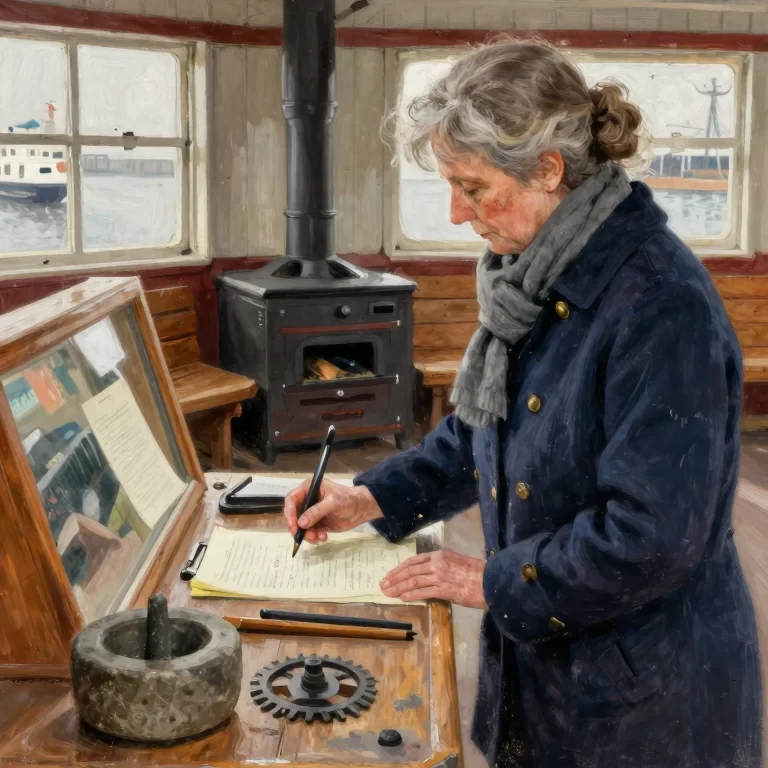
The new sheet went up in the case in April. Under the times, in a line of small print that the Leamouth printer was sure was a joke, it said THE GAUGE GOVERNS AND THE TIMES ARE A GUIDE. NO BOAT TO LEAVE COLDSTRAND WHILE THE GAUGE IS FALLING AND UNDER SIX FEET. Vasey's certificate came back on the ninth of November and he is on the boat again, and he reads that line on the wall at Coldstrand before he takes her down, every time, whatever the board happens to say. Ned Pyle is nineteen now and keeps the gauge and winds the drum, and he has the two dips on a card in the gauge house with the hours set out against them, so that he does not have to be clever at two in the morning. On the last night of April the last return was away from Coldstrand at fifty-eight minutes past eleven with the gauge standing at six feet one inch. One inch. On a spring tide that is one minute and fifty seconds, and a cart off the ramp takes a little under eleven, and nobody will ever know. She wrote the number of crossings for the month in its column in her round hand, and it was thirty-one, and she ruled the line under it, and closed the book.