Nobody in the house of the Rassks had spoken the language out loud for three generations. Ema's grandmother, Martina Rassk, was its last speaker. She had stopped somewhere around the year she turned forty, and she never gave a reason for it, and in fifty-odd years nobody had thought to ask her one. Her mother grew up on the radio and her father on the shipping forecast, and by the time Ema was born the language existed in that house the way a hallway does: everybody walked through it and nobody looked at it. The house is at the top of Tarnby, in a street of council houses with the hill behind it, and there is a second house higher up the hill that has been empty since the spring.

She learned it from the back of a bus timetable. She was fourteen and she had a Saturday job on the 44, and the 44 went as far as the coast, and the timetable was a folded sheet of stiff paper with a timetable on one side and the lost property notice on the back. Page six was in the language. It was a lost property notice, and it was set in the old print, and it listed a brown suitcase, a child's coat, and a set of house keys, and underneath there were three lines about what the company would do with what nobody came for. Ema read it standing up in the driver's cab with the timetable against the wheel, and she understood about a fifth of the words, and she copied the whole page into an exercise book with the date on the top, and she copied the line about the keys again the next week in case she had missed something the first time. Bastien Rolle drove the 44 on Saturdays for eleven years and he noticed, and he kept a folded spare timetable in the door pocket for anybody who wanted one, and he never once said anything about it except the once.

What she did with it after that took six years, and it went in this order. The library sale. A dictionary, third hand, published in another country, with the words in two columns and the wrong spelling in one of them. The parish paper, which had run a page in the language once a month since before anybody alive had been born, and which by the time she was fifteen took everything on that page from one woman who copied out notices for the old families and did not read it herself. The rest of it she learned off the walls. There were two shops in Tarnby with the old lettering still up above the door, and a chapel on the harbour road with a stone over the door, and a gravestone at the top of the cemetery with a name on it that nobody living could say, and she stood in front of all three of them for a long time before she understood that she was not reading them so much as matching them.

By the time she was nineteen she was the only person in Tarnby who read it, and it turned out that being the only one is not a small thing at all. It is a queue. The clinic wanted a line off a hospital letter for a man whose chest was going. The school wanted the founding deed of 1908, which was in the language, and which said that the field behind the playing field was held in trust, and which nobody could produce in court because no one could read it. The family wanted the last message. A woman at the bus station wanted a name from an old postcard. Four people a week, and all of them had an appointment at somebody else's convenience, and all of them were on the telephone, and Ema took the telephone on Sundays and most of the weeknights, and she was nineteen, and she worked Fridays and Saturdays in the shop on the corner.

Emil Vantz died on a Monday in the third week of January, in the house at the top of the hill, in his bed, at eighty-one. He had been a sign-writer for fifty-one years. He had painted the lettering on nine of the shops in Tarnby and four of them were still up there, and when a shop changed hands the new owner telephoned a painter, and the painter telephoned him, and he came out and did the words for the price of a bus fare. He had a granddaughter, Nell Arendt, who was twenty-six and lived sixty miles away and came up on the Saturday. He had a solicitor's letter that had been drafted and not sent. And he had three people in his house, and they were the ones he had actually lived with for eleven years, and they were not in the will. His heart had been the thing that stopped, and the doctor who came out had been the doctor for forty minutes and had done what the doctor does.
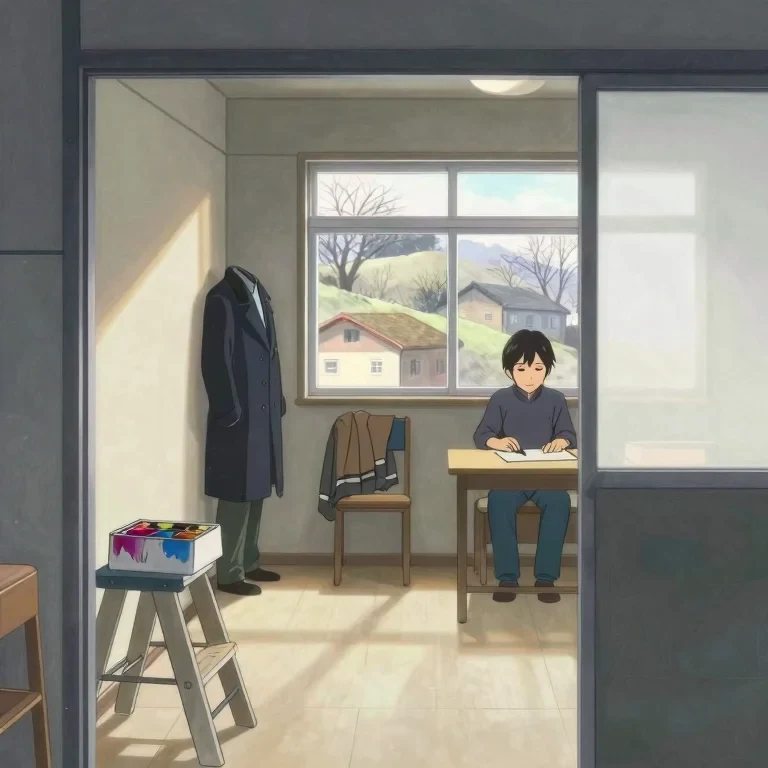
The solicitor was a firm in the town with one office and two partners, and the man who came out to read the will was twenty-four and had a laptop he did not need on a table he did not use. His name was Ruslan Rassk, and he was Ema's mother's cousin, and he had been named executor in a hurry four years ago and had never once asked what the job involved. “There is a codicil,” he said. “Handwritten. In the language. We have had it translated.” They had not had it translated. They had had a woman in the town with a laptop type it out, word for word, in an afternoon, from a photograph of a page. The version prepared for the court said that the residuary estate, being the house at the top of the hill and the four acres above it, devolved to Nell Arendt, sole beneficiary. “The rest is boilerplate,” said Ruslan. “It is four lines about the tools and the savings account and the cat.”

Ema read it on a Tuesday evening, standing up, in her grandmother's kitchen, with the door open because the kitchen was cold. The typewritten version was wrong. It was not a matter of a name. It was the first sentence. The original began with the three of them, by the names he used for them, including one he had used for Martina since before Ema was born, and Nell's name was not in the first sentence, and the typed page had moved her to the front of it. Everything after that was a choice. The typed page had been made by a careful person doing the best available thing with a page in a language she did not read, and she had done it in an afternoon, and the afternoon was the whole crime.

Then her grandmother came in with a cup and stood in the doorway, and Ema said, without turning round, that if she was going to stand there she might as well say what the page said. Her grandmother said, in English, that she had stopped in the winter of 1974, in a house at the harbour end where nobody else spoke it, for a year and a half. And that when she came back there was one person left in the country who had spoken to her, and that this was her own mother, and that her mother had said she had made a mistake, and that after that the words were in her mouth and would not come out, and that she had not told anybody that and was not going to tell it now, and that the kettle was boiling.

The school rang on Wednesday morning, which was the worst day of all, because the school had been at her since the summer. The deed of 1908 gave the field behind the playing field to the children of the parish in trust, and the trust was held by four named men, three of whom were dead and the fourth of whom had gone to Cornwall. When the playing field had to be drained in the autumn, the school found that it could not show anybody it had the field, because it could not produce the deed in a form the county would accept. They wanted it by Friday. So on Wednesday, between the clinic letter and the telephone call from the bus station, Ema did the deed of 1908. It is four pages and it is duller than anything she has ever read, and the trust clause is on page three, and the clause has a fault in it that has been in the original since 1908, because the man who wrote it used the wrong word for parish, and a wrong word in a trust deed is not a small thing.

She told the head teacher the clause and told her that a solicitor from the city would have the filed original out of the county archive in a week, and that the school should stop paying for translations and put the money into the drainage. The head teacher said thank you, and then said, after a moment, whether she could ring in March when the paperwork came, and Ema said she could, because there was nothing else to say. It is the fourth such thing that week. There were nineteen telephone calls in four days, and eleven of them were for other people, and Ema has not once in two years told anybody that the telephone takes her Sundays.
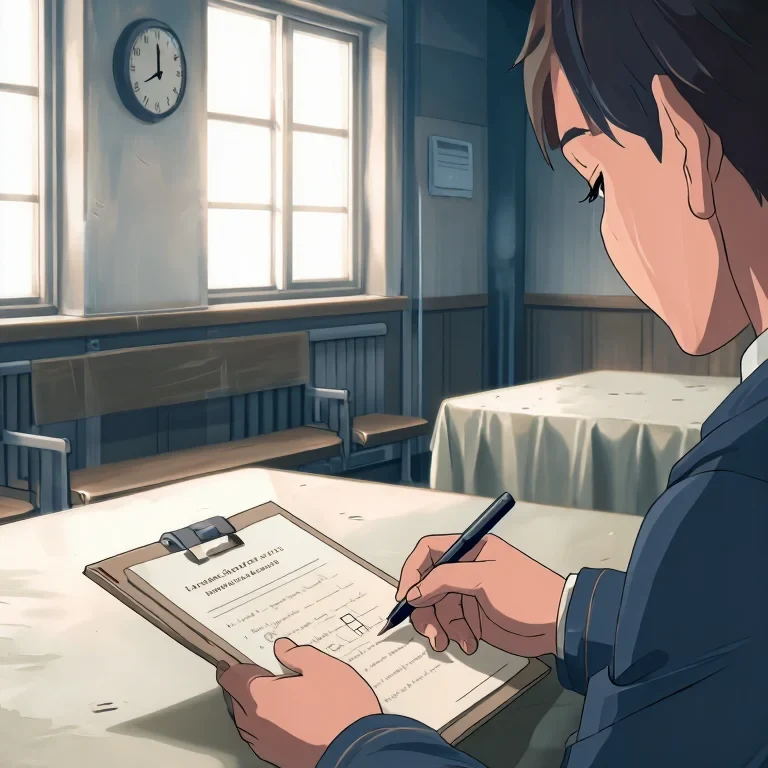
The form came out on Wednesday evening, walked round by hand, because Lorcan Fee said he did not want the post carrying a document about an old woman. It is one side of paper and it has two boxes on it. The first box asks whether the person named is a competent speaker of the language. The second box asks her to confirm that the version before the court is a true and accurate rendering of the document from which it was prepared. She filled the first box in with a date, because it was the only one of the two she could fill in standing up. The second box she read about forty times, sitting on the edge of the bath, and she understood while she was reading it that everything which had happened since Monday was inside a sentence about accuracy. Accuracy is a claim about a document. It has nothing in it about a room, and nothing in it about who will be sitting in that room, and nothing in it about the eleven seconds the third sentence will take. Whatever she put in that box, the words in the room on Thursday would be hers.

The county court sat in a room above the library on a Thursday, and it is not a dramatic room. There is a radiator, a bench, a table with a cloth on it, and a wall clock that is two minutes fast. The registrar was Lorcan Fee, who had been in post eight years and had the face of a man who is careful and does not enjoy being careful. He took her statement for the whole of the first ten minutes without asking her a single question, and then he said: “Miss Rassk, I want to put something to you, and I want to be exact, because this is the part where careers go wrong.” “Go on.”
“If I asked you what that document says, you would have an ordinary difficult morning. You would be a witness, you would say what is written, and then you would go home, and the court would decide the case on the merits. The language does not matter to me. It is a translation problem, and there are people who are paid for it.” He turned the page over. “But that is not what I am going to ask you. I am going to ask you whether you will read it out.”

She said that she would. There were nine people in the room, and she had counted them twice. Nell Arendt, in a grey coat, who had brought a folder and had not opened it. Ilva Arendt, Nell's mother, who was fifty-eight and had a way of sitting very straight. Ruslan Rassk, who was her cousin and who looked at the table. Toma Rez, who was fifty-eight and had kept Emil Vantz's garden for six years and had not expected to be in a room. Wren Halliday, thirty, who had done the letters and the shopping and the telephone, and who had brought a plastic bag with the original codicil in it in a carrier bag from a supermarket. And her grandmother, who was eighty-one, who had come because somebody had to walk her there, and who had not spoken in the language since Ema was five years old. Lorcan Fee looked at her for a moment before he read the typed page out, so that everybody in the room heard the thing that was going to happen, and then he read it.

The typed page was two minutes. The original was nine. Ema read it standing, because she was told to stand, with the sheet flat on her palm, and she did not look up and she did not stop and she did not put her voice up. The first sentence gave the house and the four acres to the three of them, in the order he had said he wanted it, in the words he used for them when he was not being formal, and the second sentence was about the tools and the savings account and the cat, and the cat was still alive and went to Wren. The third sentence was the one the typed page did not have. It said that in the spring of 2011 Ilva Arendt had paid four thousand one hundred pounds for the roof of the house, and that it had never been repaid, and that it was to be counted against the estate before any division of anything. Ema read it. She read it in the flat voice, in a room with a clock in it that was two minutes fast, and the sentence took eleven seconds.

Nobody shouted. That is the thing about it, and Ema has said so since, to anybody who asks her how it went. The one everybody imagines did not happen. Ilva Arendt did not stand up. She looked at her hands, and then she said, to nobody, that it was four thousand one hundred and not five thousand, because Nell had sent eleven hundred of it and had told her it was five. And Ruslan Rassk said, “I did not know that was in there,” six or seven times, in a voice that was not asking anybody to believe him. And her grandmother stood up. That was the part Ema had not planned for. Martina Rassk stood up in the second row of a county court above a library, at eighty-one years of age, and opened her mouth, and produced a word in the language, quietly, that was her own name as a girl. And then she sat down, because the sentence after that was about what had been done to her in that house for forty years, and she had not said it out loud since she was a girl, and she would not do it in a room with the radiator going.

It took nine weeks and the whole of what she had. The house went to the three of them and the four acres with it, and the roof money came out of the estate first, which meant eleven hundred of what Nell had sent her mother went back, and Nell sent it without being asked, and neither of them ever mentioned it again to anybody, including Ema. The cost of the week was not the week. Ema gave up the Friday shifts in the shop in the February, because the telephone does not stop for a tribunal. She lost eleven pounds. She did not sleep for four nights and stopped being able to tell whether she was tired or had been crying, which was a thing she had not known about herself before. Wren Halliday asked her to keep on reading the letters, weekly, for a year, and Ema said yes, and understood about halfway through the year what she had agreed to. Nell Arendt, who was the only person her own age in Tarnby, did not speak to her again for a long time, and when she did it was in a shop and it was about nothing.

And her grandmother, at the end of it, in the kitchen with the door shut, said, in English, that she had not been able to say the sentence and Ema had, and did not say whether that was a thing she was grateful for or a thing she had been asked to carry, and the two of those are not the same, and Ema has not been able to decide it either.

The codicil had been sitting in a carrier bag in a kitchen drawer for a year, being right, while a woman with a laptop did her best with it in an afternoon, and neither of those two things needed anybody to stand up in a room. What she learned in that room was not the language. She had had the language for five years. She learned that the words are the easy half, and the other half is saying them, out loud, in front of the person they are about. There is a difference between what a thing says and what a person will say, and only one of them is yours to choose.