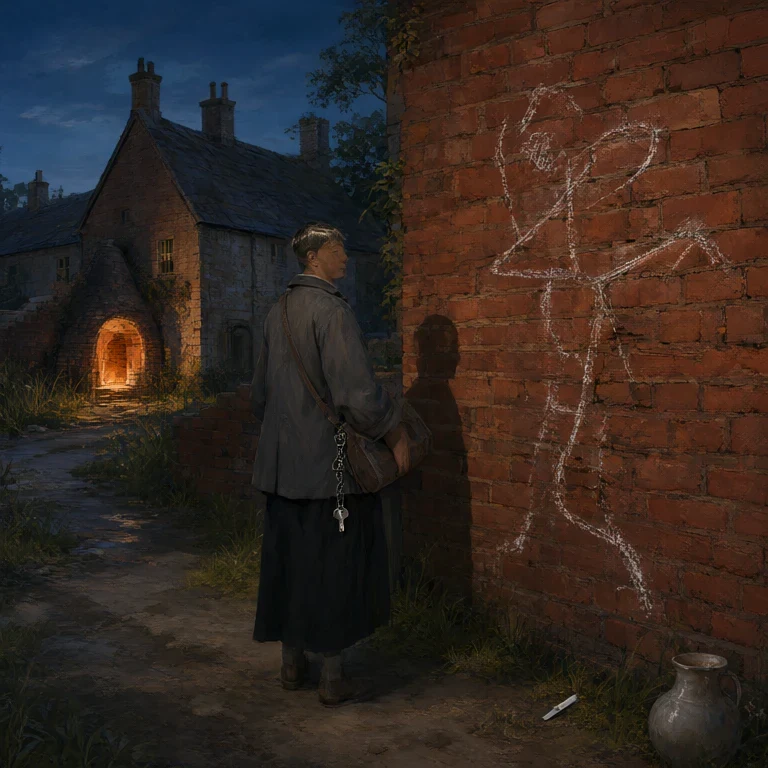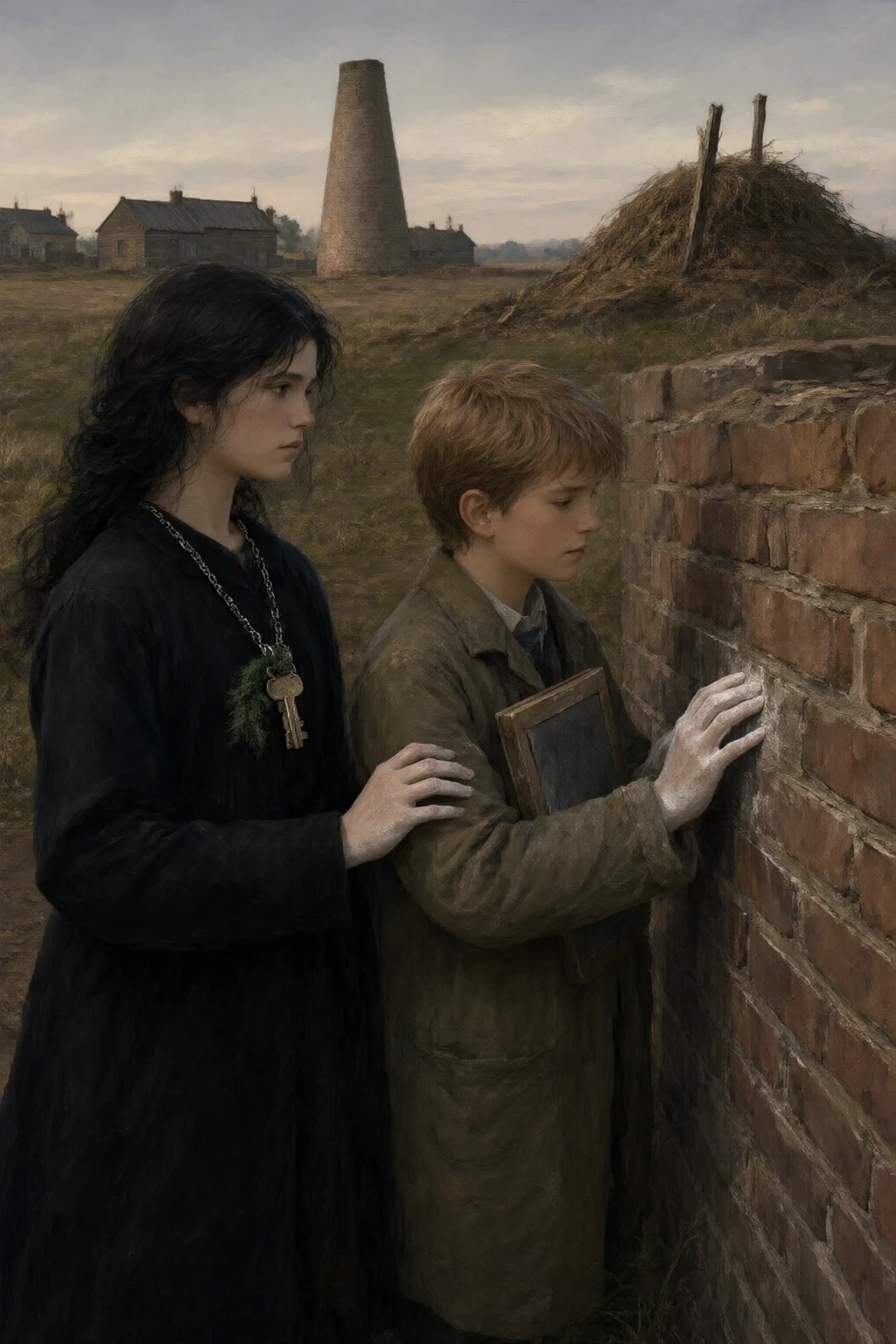
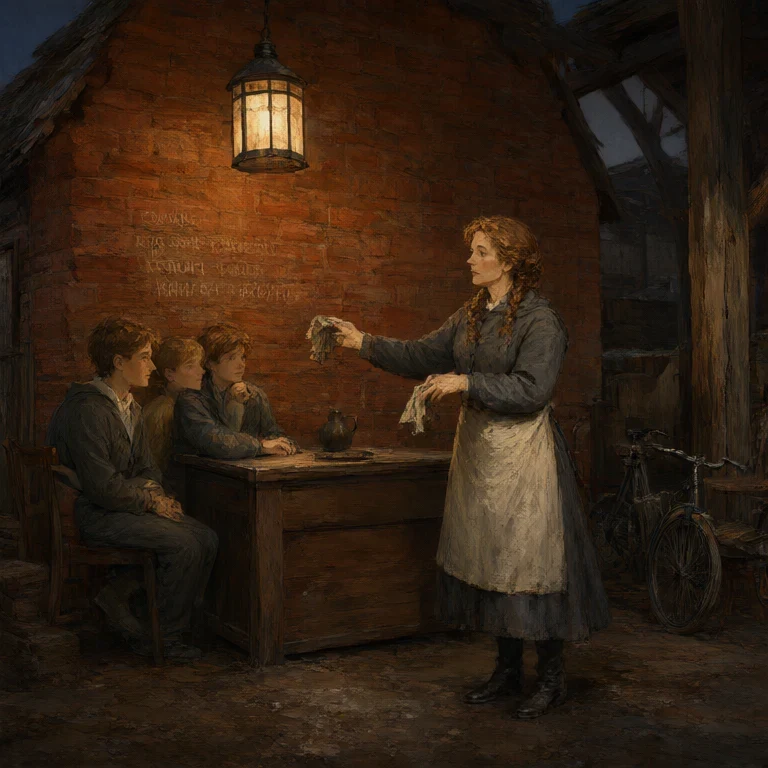
The gang came off the kiln at one and Tomas Peake walked up the furlong by himself, at the pace of a boy with six hours in him, trailing two fingers along the courses as he went. He could read all three walls. The brick house on the left had been standing since before anybody now living in Marl was born, and its gable said so in a mason’s chalk, small and upright, gone over twice, the first lot standing underneath the second. You could see a P under a P and a 1 under a 1, and the second lot had been done in a hurry in another decade, because the sevens had a bar through them. The order never varied. Five things. The date the promise was made. The material. The promise. The charges to date. The total.
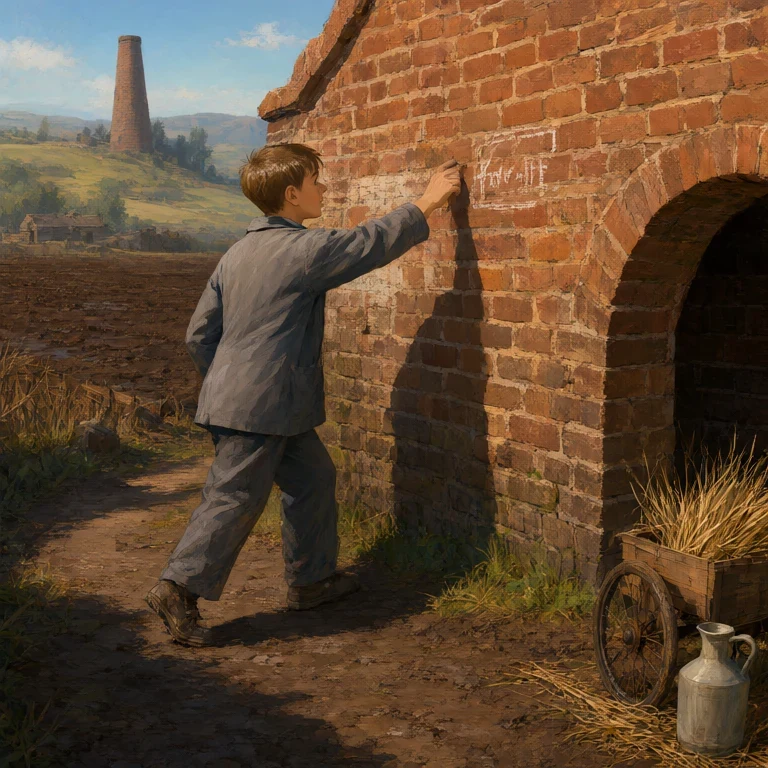
The charges on the brick house were in three hands and a fourth, and the fourth had never changed at all. Every ninety days, since the wall was first whitewashed: STANDING TO LADY DAY. STANDING TO MIDSUMMER. STANDING TO MICHAELMAS. STANDING TO CHRISTMAS. One shilling and twopence for every hundredweight of house, four times a year, in the same upright mason’s hand, and every man who ever wrote that figure on any wall in this village was taught it by one man. Tomas could do it off the top of his head by then, which is not the same as not needing the wall. One and twopence, forty-one hundredweight, forty-seven shillings and tenpence a quarter, nine pounds eleven shillings and fourpence a year, to stand. Nobody in Marl had ever said that figure out loud in a street. It was on a wall. That was the whole difference between it and a thing.
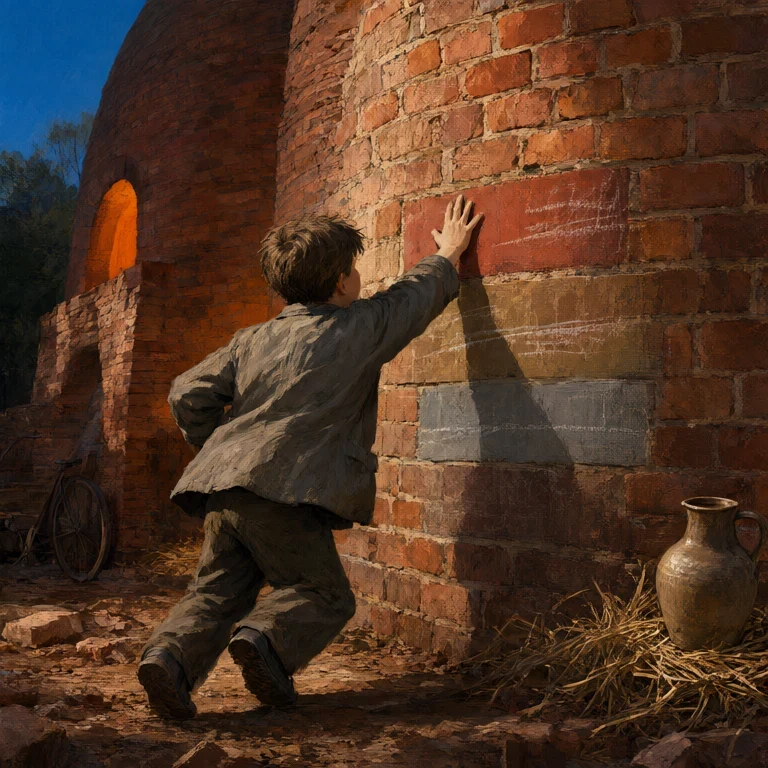
The middle house was tarred timber and mortgaged, and its total ran to nine figures, and the woman who had built it in nine days in 1904 had never been paid for one hour of any of them. Tomas had worked that out before he had worked out anything else about the village, and it was only on the wall: the first eleven lines were lime and sand and cartage and nails and a horse and a ladder, and after that every line for twenty-one years was interest, and no line said a wage, and one line said her name, the first, where she had written it to say the timber was hers and not her husband’s, which is the only free thing anybody at the end of the furlong has ever put on a wall.
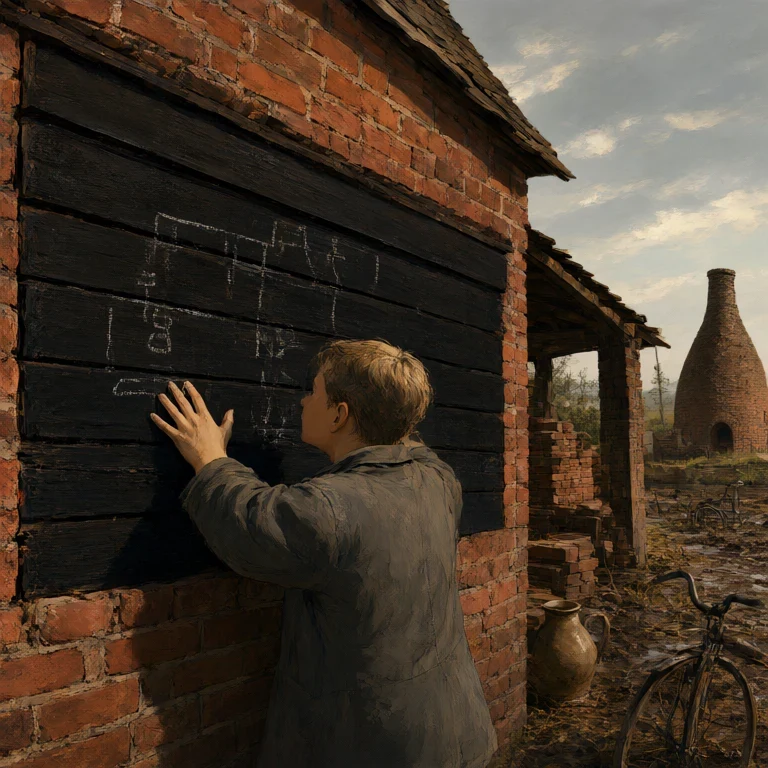
The third house was straw, and it was down, and its gable was a heap, and on the two uprights still standing there were four lines of chalk. Three shillings and fourpence. Wren Copse was sitting on the grass by the heap with a bricklayer’s glove in her lap and a string round her wrist, and she did not look up, which was her way of answering. “Three and four,” Tomas said. “Two hundredweight, so much a quarter the hundredweight, and it stood nine days, and then it stopped, and nobody in Marl has ever asked that house what it is made of.” “Are you telling me it fell because nobody asked it?” “No. I am telling you what is written on it. I am not the one who decides what a wall means. I am the one who can read one.” He put his hand flat on the upright, the way he did. “What is written on yours yet?” “Nothing, because I have not made a promise on it.”
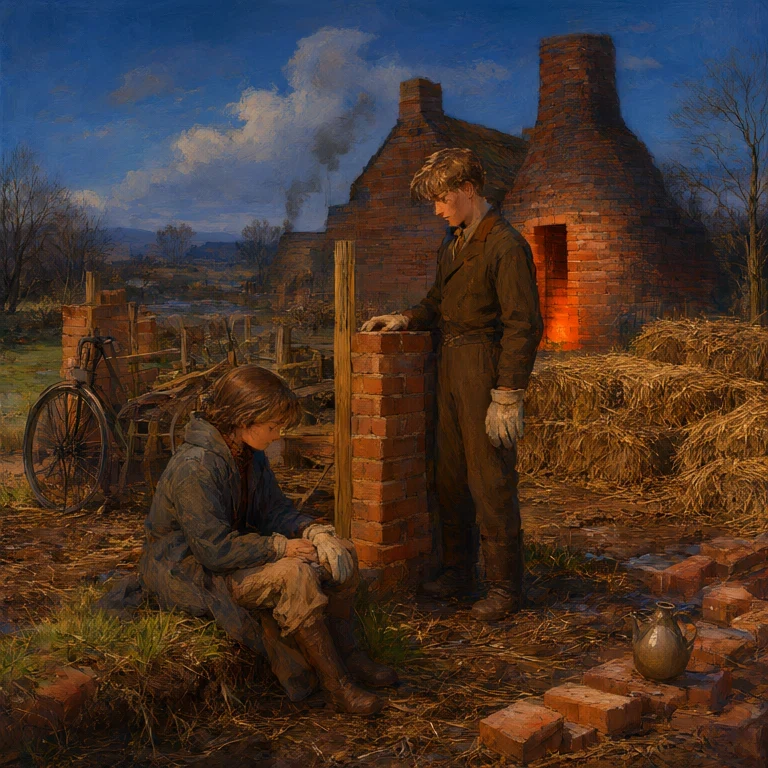
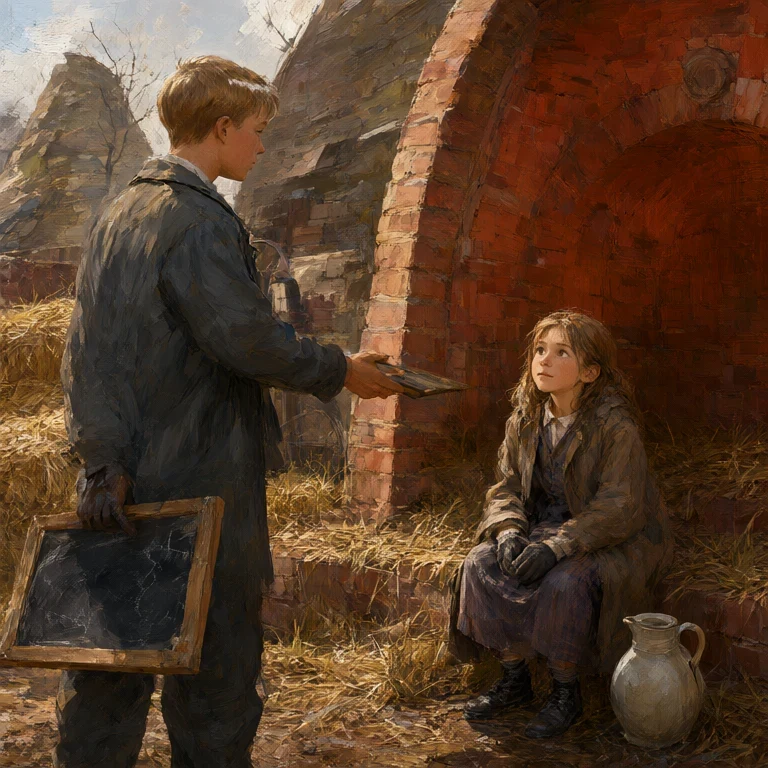
“You have made a promise. You told me in March you would have a wall by the equinox, and the wall will be charged for the promise whatever happens to you, and you are not a builder, so nobody will come and blow it, and it will stand while you are looking at it and not one hour longer.” He stopped. “I will say the figure again as often as you like. I will not say the other thing again.” “Write the figure down,” she said. “The three and four. On your slate. So that it is in two places, because a number in one place is a thing somebody can be frightened of.”
Mira Sedge came out of the terrace at half past two with the wind behind her, with a second key on a chain round her neck, the chain worn through the cloth and mended with a twist of green wool. “You have been at my gable for a quarter of an hour,” she said. “Yes, ma’am.” “Say the total.” “Four hundred and eleven pounds, nine shillings and twopence, at Christmas.” “That is three months out of date. Say the true one.” “Four hundred and fifteen pounds, thirteen shillings and sixpence, at Lady Day, being a quarter of forty-four shillings and fourpence, because I have thirty-eight hundredweight and there has been no entry since the twenty-fifth of December.” She looked at him for a while. “Who told you to read it?” “Nobody. I read the ends of this street at the end of every kiln day, and I have been doing it four years, and I do it because I can do it and because I cannot stop.”
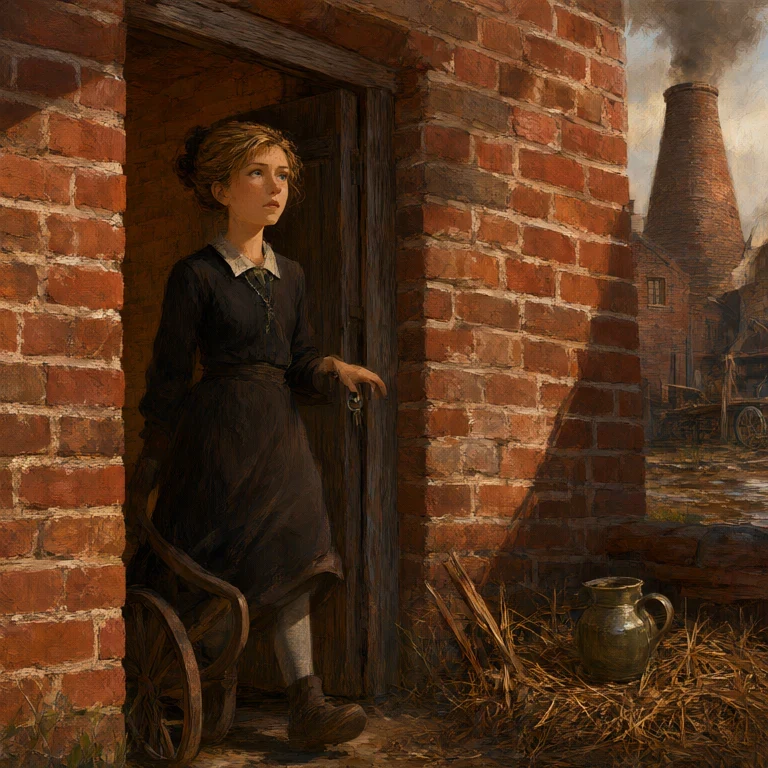
“That is the first honest answer anybody at the end of this furlong has given me about anything.” She put her hand on the wall beside his. “Now hear the other thing, because you are fourteen. Nobody knows that figure but us. That is not a secret I am keeping from the village. It is a number in the air, and a number in the air is a number somebody can use.” “Against you?”
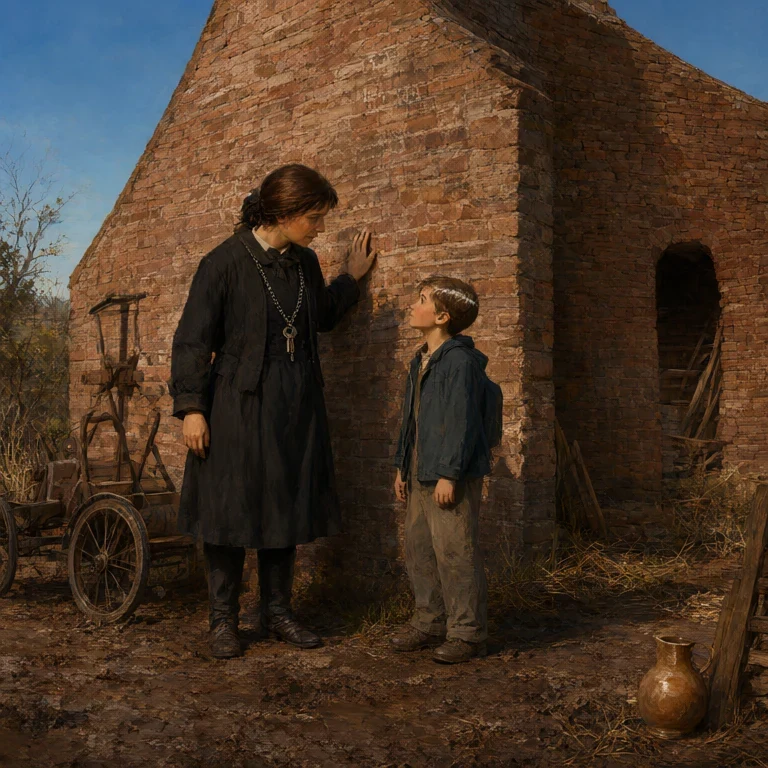
“Against me. Or the next person in this street.” She took her hand off the wall. “My house has not been asked what it is made of since my husband was buried. That is two years and four months. A house goes safe for a year, and then nobody can answer for it, and I have never been able to do a thing about it, because asking is not a thing you can do to a wall by yourself, and because the only person in this village who was ever going to think of it is standing in front of me, and he is fourteen and he works the kiln gang.”
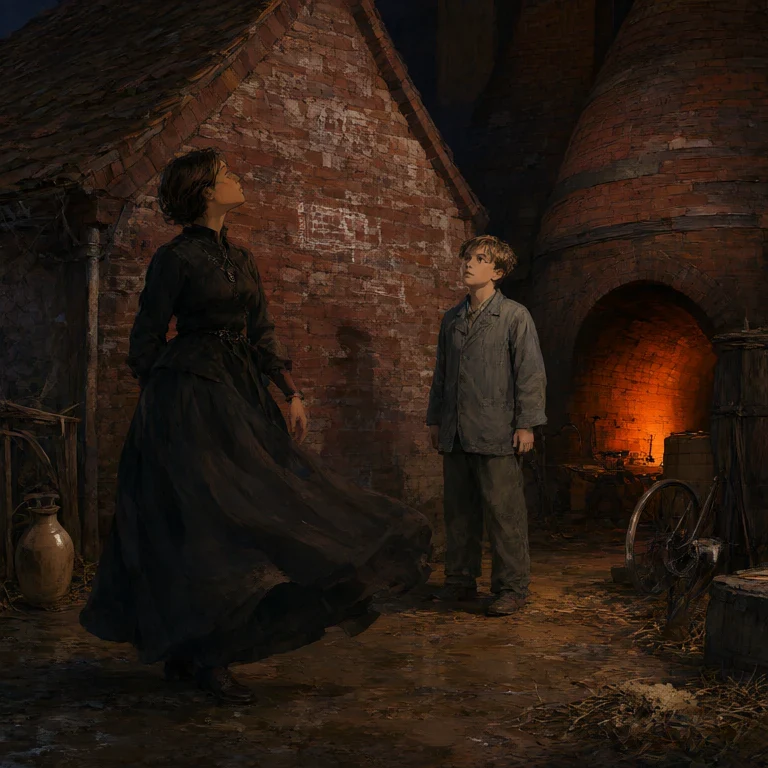
Fennick Roke had the queue book open on the anvil bench when they came in, because it was always open, and there were four men waiting, because it was always four. He looked at a man’s hands before his face, and Tomas came in with brick dust in the creases of both palms and one thumb black with the stub of chalk he kept for cutting lists, and Fennick Roke read all of that in about a second and then looked up. “Not this year,” he said, to the man at the front of the queue, who had a spade in his hand and had had it since Michaelmas. The man said nothing. He never did. He moved the spade to his other hand and stood back a foot, and that was the whole of the exchange. “The boy read my gable,” Mira Sedge said. “Out loud. On the road.”
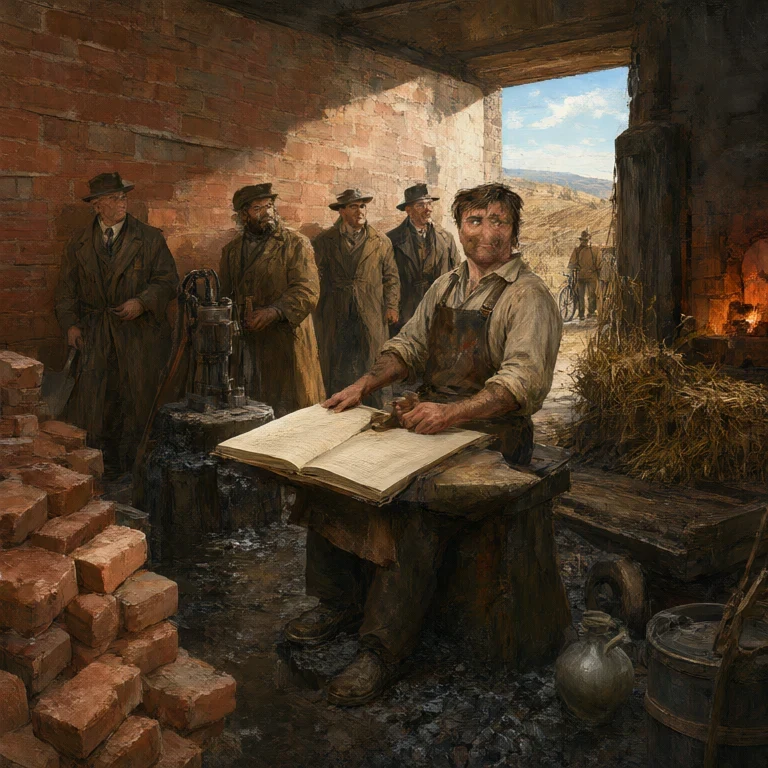
Fennick Roke put his thumb in the book at the page he had been at and did not look at it. “What did he read.” “Four hundred and fifteen pounds, thirteen and six. At Lady Day. Off the wall, in nine seconds. I have had the money four years and I have not had the wall.” “Then say it to the room,” said Fennick Roke, “and I will write it on a slip, and the slip will go in the book, and then it is a figure in a book and not a figure on a wall, and a figure in a book is a thing a man can dispute.”
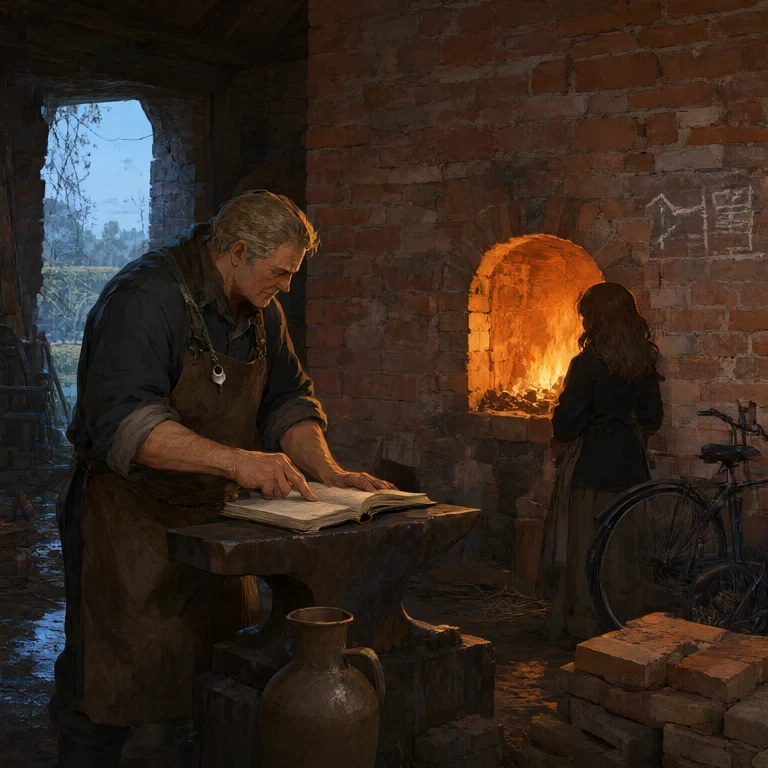
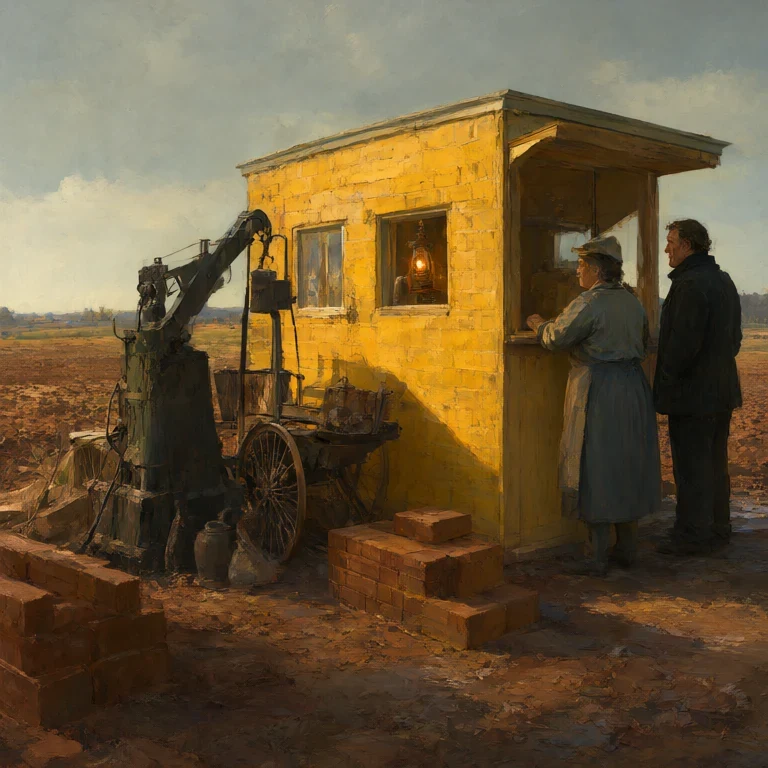
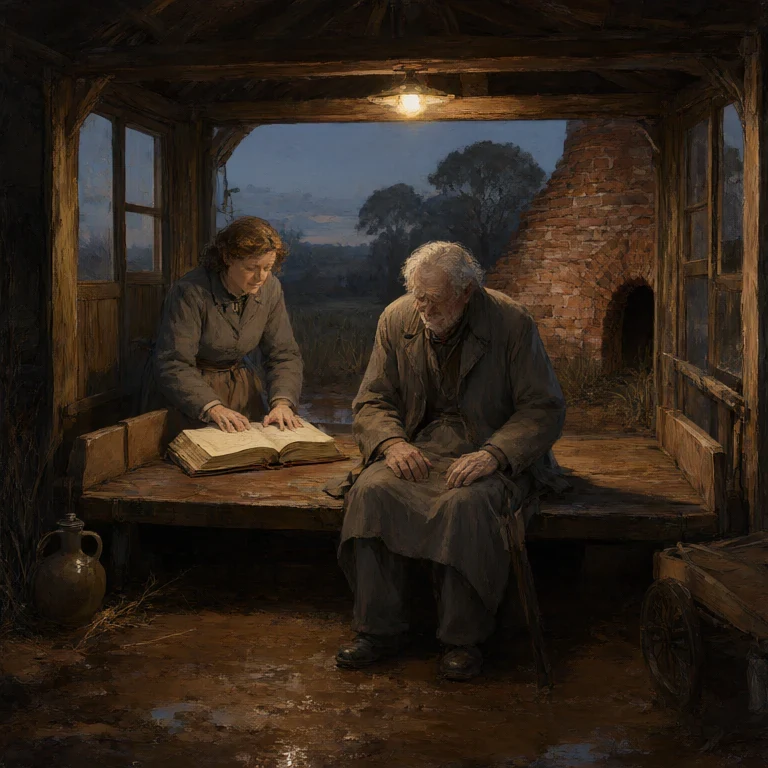
They went up to the weighbridge hut at four, because that is where the rate book is, and a house is weighed in Marl and has been since 1871 and is not a figure of speech. Hollis Merrick kept the hut and the book, and had a lamp going in the daytime because the windows were small and north-facing, and the book came to four hundredweight weight when it lay open flat, which Fennick Roke had once called the only honest weight in the village. Every house was entered twice: once built, with material, promise and weight, and once on every change of hands, and the second entry always gave the weight again. Hollis turned to the Sedge leaf without being asked which one, which told Tomas he was not the only man who could do this. “Thirty-eight hundredweight,” Hollis Merrick said. “Fourteenth of March, eighteen ninety-eight. Timber frame, brick nog, two floors. Promise: to shelter two and stand a hundred and fifty years.” “No, ma’am. Brick.”
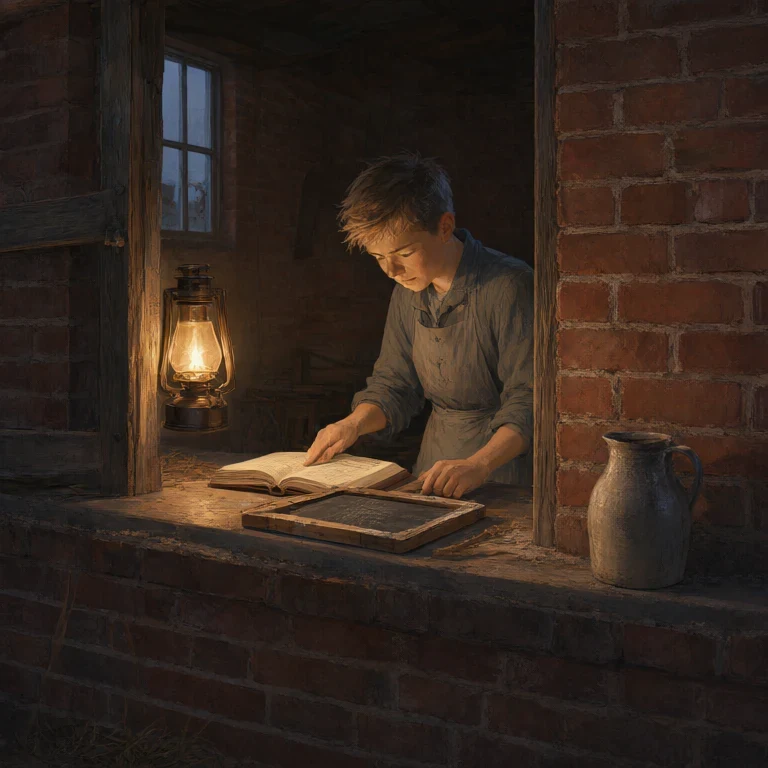
Hollis Merrick put his finger on the line and read it again. “It says timber frame.” “It says timber frame because in eighteen ninety-eight that is what it was, and the front was rebuilt in brick in nineteen eleven, and the weight went on eleven hundredweight when they did, and you weighed it, and I have seen the figure.” Tomas put his slate on the bench, a school slate with a wooden frame, the corner broken off and mended with a strip of tin. “Eleventh of March, nineteen sixty-one. Thirty-eight hundredweight. The standing is one and twopence the hundredweight the quarter, and thirty-eight times one and twopence is forty-four shillings and fourpence, and the wall says forty-four and four, and has said it since the wall was whitewashed, and that is how I know the rate.” Nobody said anything. The wind came round the hut and the lamp moved. “Where did you get one and twopence?” said Fennick Roke. “Off a wall,” said Tomas.
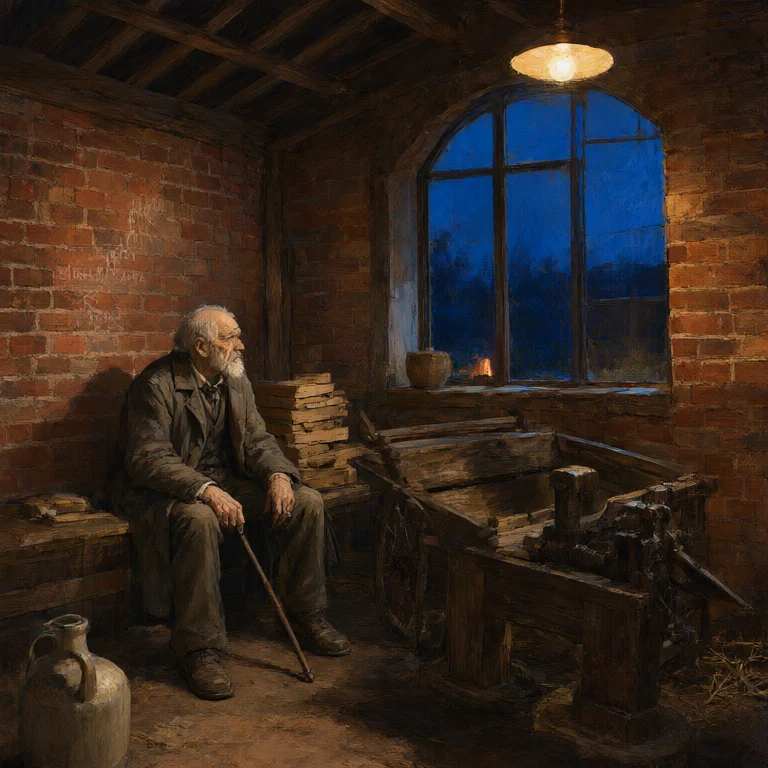
They sent for Obadiah Cressy at half past five, and Hollis Merrick took forty minutes to walk down and come back up, and the eighty-one-year-old man came up at walking pace and sat down with his back against the end wall, so that his face was the one thing in the room that could not be read from the side. He had held a wolf’s licence for thirty years. He was the last man in Marl to be granted one and the only one to refuse a renewal. He sat a while. Then he turned his head to the gable of the hut itself, which was four hundredweight of brick with a rate book inside it, and he said, to it, and not to anybody in the room: “I am sorry. I should have come up this sooner and I did not, and I will not pretend to you that I did not know.” Then he said, to Fennick Roke: “I wrote one and twopence.” “You wrote it.”
“In eighteen eighty-nine, in the licence, ninth article. One shilling and twopence for every hundredweight of brick, four times a year, charged to the house and to nobody else. It was how a wolf paid for being allowed to exist. I taught the figure to the smith before I taught it to the men, because I thought a man who keeps a book ought to know what a number in it is.” Fennick Roke had gone very still. “I have written it on nine thousand walls,” he said. “You have,” said Obadiah Cressy, “and I never once wrote down where you were getting it from, because I did not think anybody would ever ask, and because I have been ashamed of something since 1889 that I have not been able to put into a sentence.”
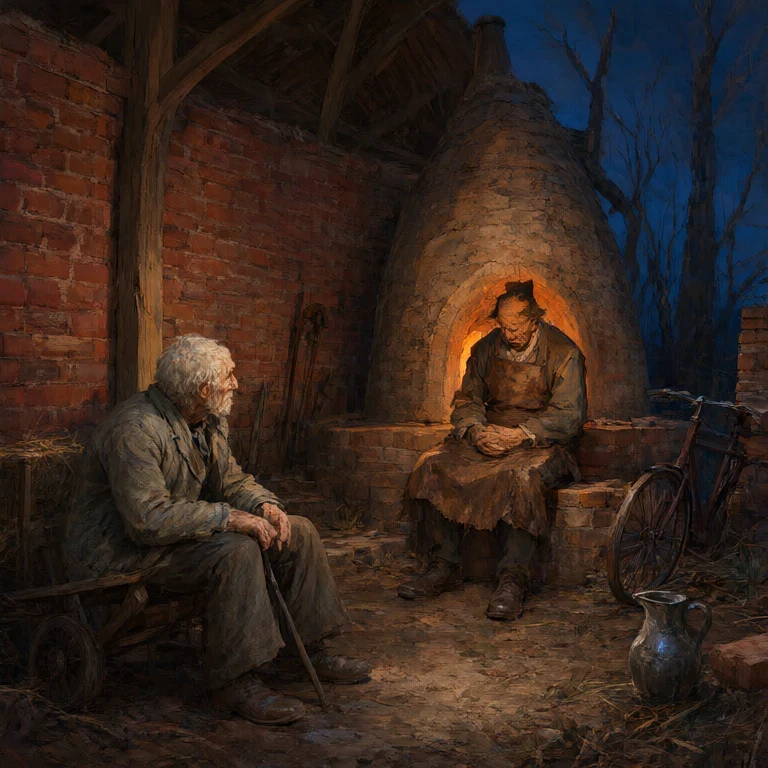
Hollis Merrick asked the question that was actually in the room. “Can it be got?” “What?” said Fennick Roke. “The standing. A wolf comes, and the house is a hundredweight or forty-one hundredweight, and the wolf takes the standing. That is what the figure is written for. Can a wolf take the standing?” “No,” said Obadiah Cressy.
“No, and be exact about why, because the boy has the figure on him and I do not want it in two places and true in one.” He put both hands flat on his knees. “A wolf may not take a thing the debtor has not promised. The house has not promised the standing. The house is not the debtor. The house is what the promise is charged to, and the promise was made by a builder in 1898, and the builder promised brick, and a hundred and fifty years, and a roof. He did not promise four times a year at one and twopence, because no builder in this county has ever promised anybody that. The standing is a charge with no promise behind it, and a wolf that took it would be taking outside the promise, and a wolf that takes outside the promise is not a wolf. It is a dog, for the rest of its life, and a dog can be kept.” “That is a licence paper talking,” said Fennick Roke. “It is a wall talking,” said Tomas. “It is the same sentence, sir. Only it is on the outside of a house where anybody can read it.”
They went at it for another hour, and the hour produced one decision and one thing nobody could do. The decision was that the standing stays. Hollis Merrick said he could rub it out, and said it reasonably, and said that a charge nobody can collect is not a charge, and that a wall in Marl is the house’s own book, and that a book with a false line in it is a book nobody can answer for. He was right, and Fennick Roke told him he was right, and then nobody rubbed anything out.
They did not, for three reasons, and every one of the three was in the rules and not one of them was sentiment. A house is asked what it is made of and answers, and the answer includes what it has been charged, and a total honestly kept for a hundred and twenty-eight years is part of an honest answer. Marl has no instrument for striking a line off a wall, and a village that begins inventing instruments on a Tuesday afternoon in April is a village that has stopped being a village. And, said Obadiah Cressy, to the wall again: the standing is the only entry in four houses on the highest and worst ground in this parish that has never once been wrong, and the day it comes off is the day nobody can say what it costs a house to keep standing. The thing nobody could do was Tomas.
A child may not be a creditor at all, so there was no way to pay him and no way to hire him, and a promise made to a child is not a promise until the child is grown, so there was no way to promise him anything either. He would be grown in six years, and not one of the rules concerning children has a second half to it. Fennick Roke said the only sentence he had.
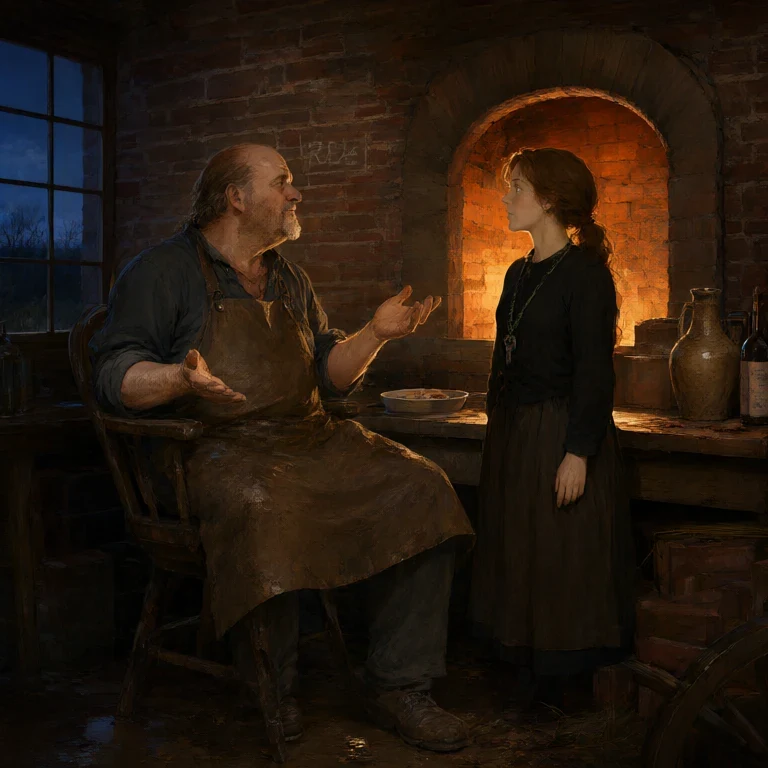
“Not this year,” he said. “And I cannot tell you why, and that is not me keeping something back. There is no rule. There has never been a rule. I have run this book for twenty-six years and decided who had a builder and who did not, and never once written down how I decided, and if I did it this afternoon you would all find out that I decided it by looking at their hands, which is a thing you do at a smithy and not a thing you do with a boy’s future.” “Then say that part out loud,” said Mira Sedge, “and I will put it in front of the parish, whatever it costs me.” “All right. You want it in a book, you can have it in a book.”
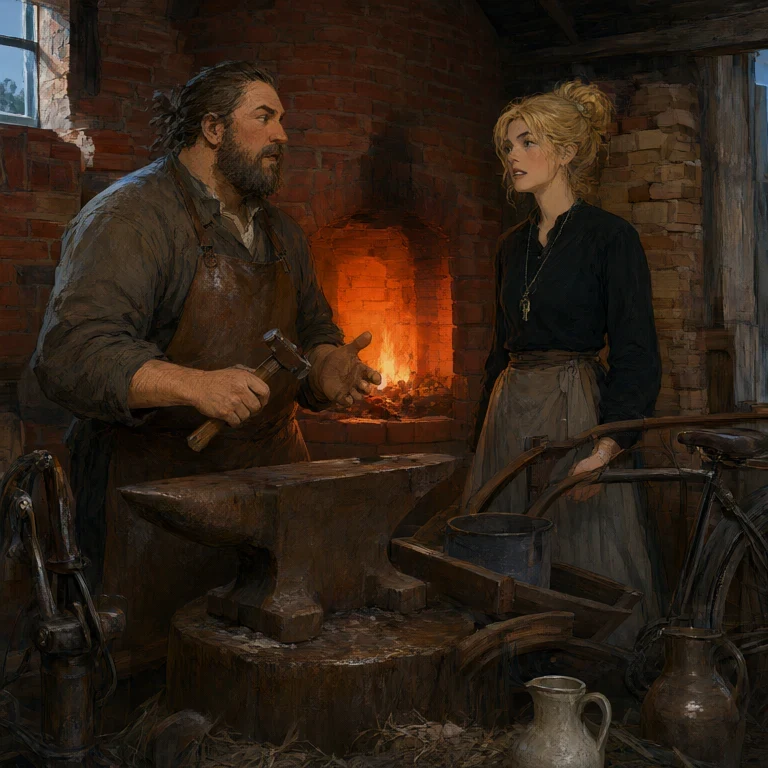
Tomas asked for one thing before they went down, and he asked it in the flat voice he used for a figure. “Read the Sedge gable into the queue book,” he said. “Not the slip. The book. The total, the last entry, the standing, and the date, so that if the chalk comes off in a winter the number is still in a place with a spine on it.” Hollis Merrick looked at the book, which had lived on the anvil bench since 1889, and said it would take a minute and a half and a new nib. It took four minutes. They ruled a line under the day’s entries and Hollis Merrick wrote in his careful rate-book hand: SEDGE, M. OF 14. BRICK, 38 CWT. STANDING 1/2 PER CWT PER QTR. LAST ENTERED CHRISTMAS. TRUE AT LADY DAY 415 13 6. ENTERED BY T. PEAKE, AGED 14, AT THE INSISTENCE OF M. SEDGE. Fennick Roke read it twice, put the nib down, looked at his own smith’s hands, and then at the boy’s, which were a bricklayer’s hands and had no business in a ledger at all. “It is in,” he said. “It is in,” said Tomas.
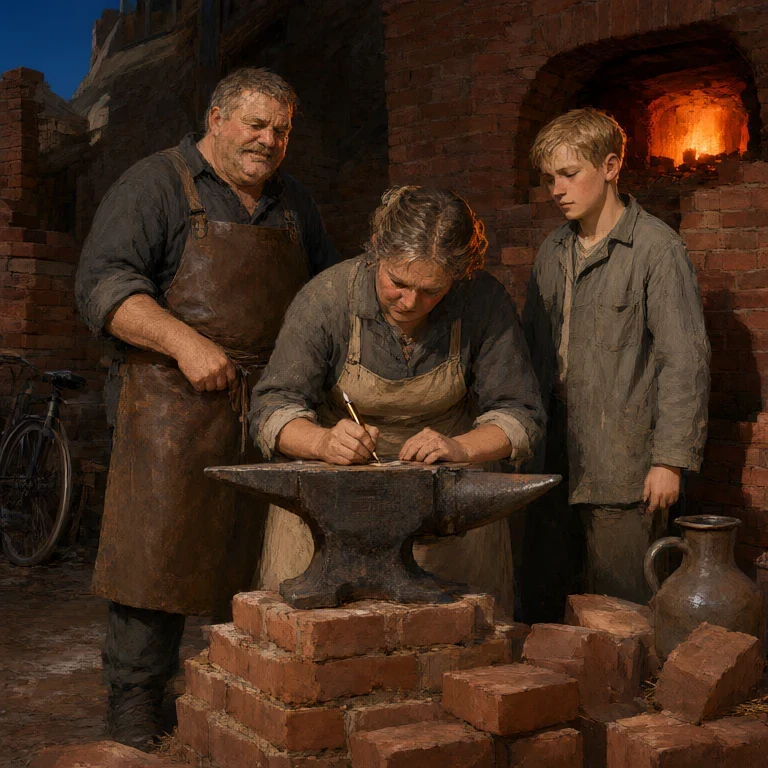
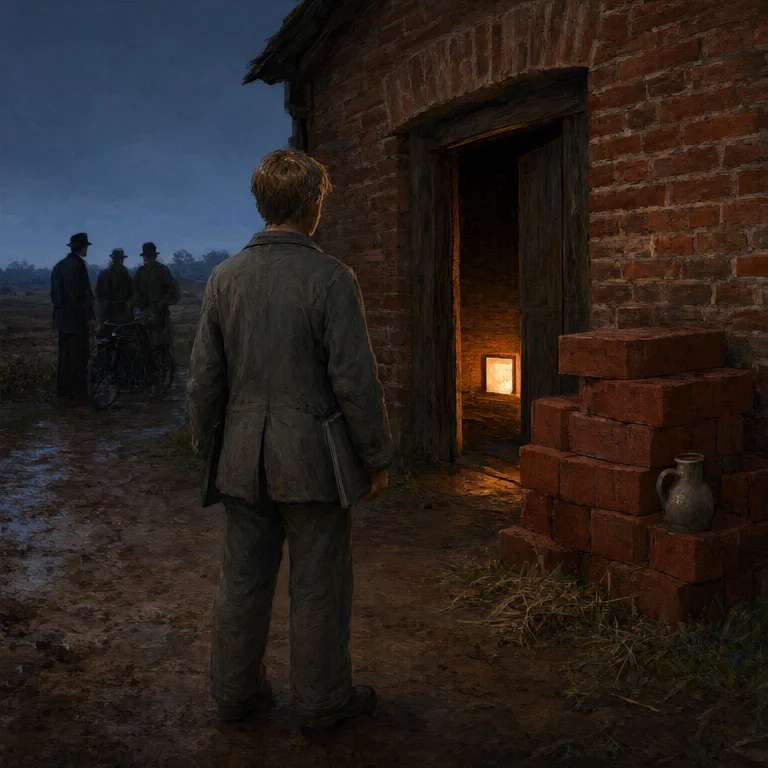
He came down the furlong at seven with his slate under his arm and the wind on his left, and Mira Sedge was standing at her own gable with a piece of chalk in her hand about the size of a thumbnail. She asked it out loud, on the road, with nobody else on the ridge but the two of them and a boy with a slate. She asked it the way you would ask a person. She asked it what the house was made of. Tomas turned round and looked at the fen, at the three works going out flat into the cold light and the kiln standing forty feet with its mouth shut, and he gave her the few minutes that asking properly takes, and when he came back the gable had two more lines on it under the total, in the mason’s small upright hand, and the chalk was lying at the foot of the wall.
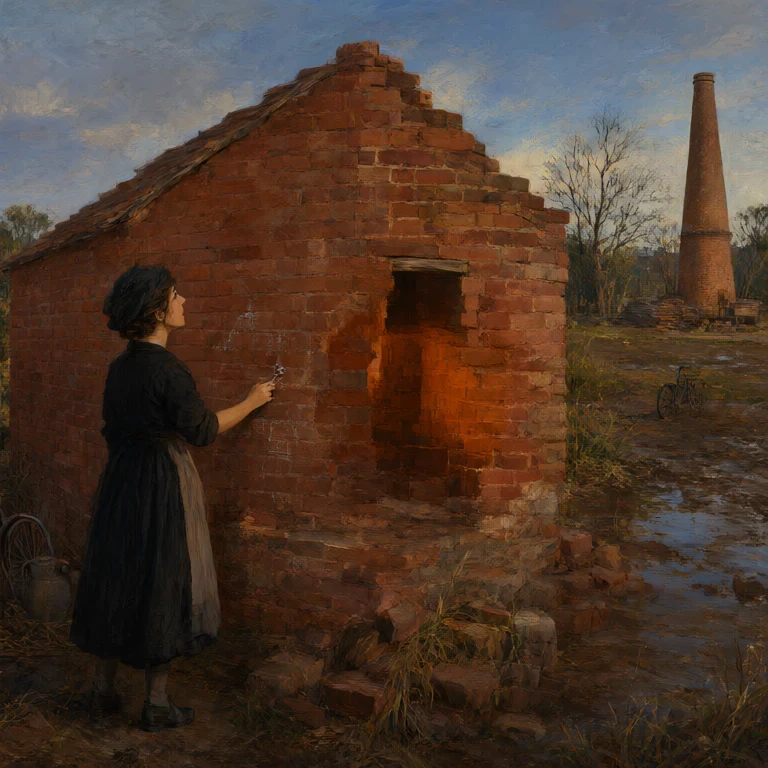
He did not write them. He said so twice. She said she had not written them either, and neither of them said anything else about it, and there was nobody on that ridge to see it happen except a boy who is going to be twenty. The lines said: ASKED THIS DAY BY M. SEDGE, WIDOW, OF THIS PLACE. ANSWERED BRICK. SAFE TO MICHAELMAS. Below them the standing went on running at one shilling and twopence the hundredweight the quarter, on the brick house and the timber house and the straw, on a house in the terrace where a man had died in it, and on a heap with three shillings and fourpence on it. It would go on running at the same figure when Tomas Peake was twenty and could have a builder’s licence. No man in Marl could collect it and no man in Marl could rub it out, and the wind came over the top of the furlong with nothing at all in front of it.