Anika had a book like her father’s, and for a different reason. His was about the weather. Hers was about a pump. It had been a school exercise book at first, squared, forty pages, and by the end of January there was not one empty square left in it. Date. Strokes. Litres. She wrote them at the tank, because that is the only place on the farm where you can see the trough and hear the pump at once.

The pump was a hundred and fifty millimetre bore set at sixty metres, with a power head bolted to the pad beside it and a crank turning a plunger up and down inside a cast iron cylinder. The cylinder was a hundred and twenty-five across and the plunger travelled four hundred millimetres, and once she had been shown how to work that out on paper she never forgot it. Just under five litres a stroke. Twenty-five strokes a minute, so a hundred and twenty litres a minute, which is seven and a third tonnes an hour.

Three hundred and twenty cows in milk, and a cow in milk drinks sixty litres a day if she can get it, and the shed wants water for the washdown and the milk cooler. So the farm wanted twenty-three thousand two hundred litres a day out of that hole, and the tank on the rise holds forty-five thousand, so it has to be filled every day. Seven and a third tonnes an hour is three hours and ten minutes to put a day’s water back. Ruka had that in his head the way other men have the price of wool. On the ninth of January the pump started to cough.

It was not a hum any more. It went plonk, plonk, plonk, and in the middle of every third stroke it made a noise like a man gargling, and the pipe juddered. Anika stood by the trough and watched. The water came out in spurts, and between the spurts there was air, white bubbles the size of a pinhead, and then it went solid again. “The pump’s sucking air,” said Ruka. “It’s got air in it,” said Anika. “Those are different.” They ran it that way for eleven days.

On the eleventh they were down to the bottom of the trough and the cows stood in it up to their hocks, and a truck came up the road with thirteen thousand litres on the back of it, twice, at four hundred and ninety dollars for the two loads. Two days later Ruka carried the motor to Tararua to have the windings cleaned and varnished, because the pump had been running dry at the end of every stroke, and it cost eight hundred and sixty. And on the twentieth Ruka came in from the paddock with a folder in his hand and put it on the table.

“Bore driller,” he said. “He says the casing is scaled up. He wants a new bore, sixty metres, re-cased and gravel-packed. Eight thousand five hundred, and half up front.” “Because it’s coughing.” “Because it’s coughing and he says scaling does that.” “How deep is the water?” He did not know. He had never once been down it.

She started on the Monday, between the morning and the evening milkings, because a cow cannot wait for a book. First she counted the strokes. She stood where she could see the crank through its guard and counted one full minute, and then she did it four times. Twenty-five strokes a minute. Exactly what it had always been. The motor was not slow and the gearbox was not slipping. Whatever was wrong, a driller was not going to fix it. Then she took the hose off the trough overflow, put the two hundred litre drum under it, and counted the strokes until the drum was full. Then she did it again. Eighty-four strokes.

She had a hundred and sixty others in the back of the book going back to August, and every one of them was forty-one. Forty-one strokes is five litres a stroke, which is what the plate on the power head says, and what the arithmetic says, and what Ruka says out loud. Eighty-four strokes is two and a third. She wrote it on the page and put a rule under it, and then she got the steel tape out of the pump shed, the yellow one with the ring on it, and unscrewed the inspection cap and dropped the tape down the hole. Ninety metres of it, hooked at the end.

Static level, meaning the water stands forty-two metres below the top of the casing when nothing is happening. Pumping level, while the pump runs, sixty-one. So it lifts nineteen metres more when it works than when it doesn’t. She shut it down and put the tape back down on the quarter hour. Forty-two. Fifty-three. Fifty-six. Fifty-nine. Fifty-nine. Fifty-nine. Forty minutes and the water was back where it started. Nineteen metres of drawdown in a hundred and fifty millimetre pipe is three hundred and thirty-six litres, and it came back on its own, from the sand, without anybody paying.

“The bore’s full of water,” Anika said, at the table that night with the tape round her neck. “He’s charging you eight thousand five hundred dollars to make a hole that’s already got water in it.” “Everything else has been checked.” “Everything else has been assumed.”

Ruka let her do it because she had the tape in her hand and he did not. She was allowed one thing on that farm, which was the motor, and she was careful with it. He got the tools at six in the morning. A ring spanner on the follower plate, a spanner on the stuffing box, and then the packing gland came up with four screws and a shower of rust, and out came the plunger on the end of its rod, wet to the elbow and steaming in the cold air. They laid it on an old wool bale.

The cup on the plunger was good. That surprised her. She had expected a black rubber ring like a bike tyre, and instead there was a leather cup laced up its side with waxed cord the way it had been when it was made, and it was soft, and when she pressed her thumb in, the leather took the print and kept it.
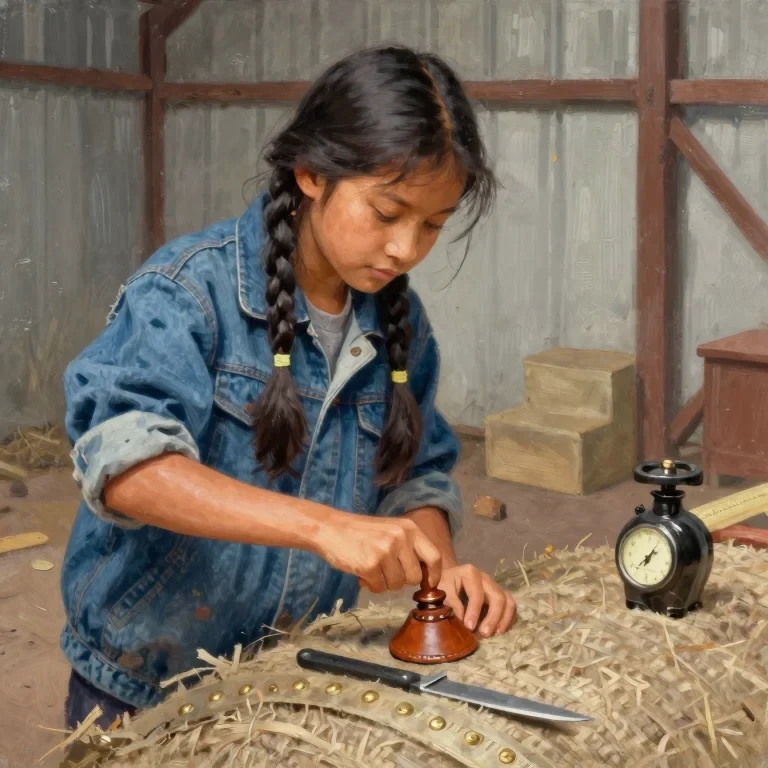
The plunger was the easy half. The other half was at the bottom of the cylinder, forty feet down inside the hole, and the only way to it was to put a hook on the end of the rod and fish. They rigged the rod to the crane jib with a chain sling, because a cast iron foot valve weighs four kilos and drops four hundred millimetres onto a concrete pad hard enough to crack it, and Ruka had opinions about that.
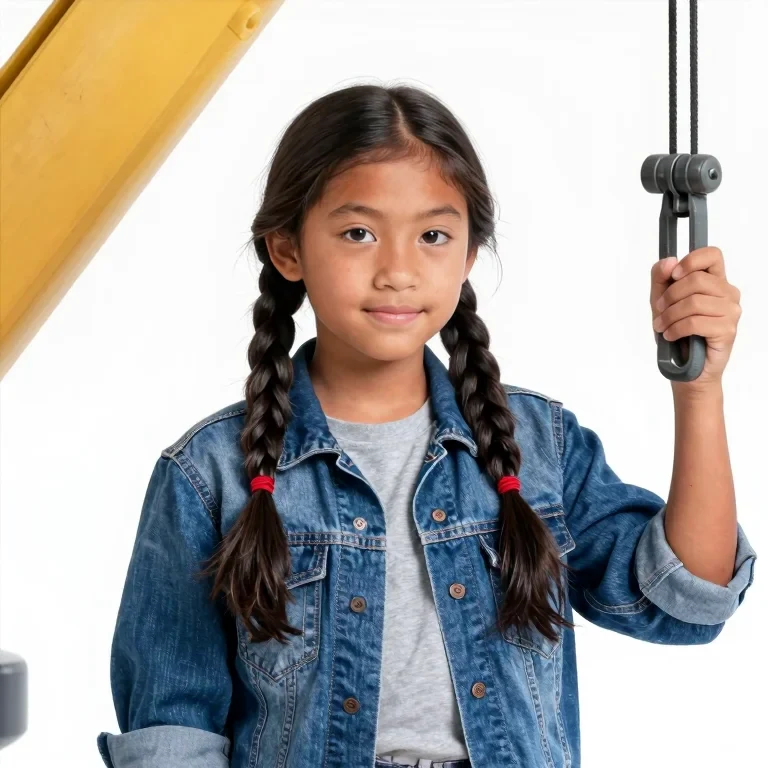
Anika made the hook out of the spare that comes with a new plunger cup, a rod with a bend in it that Ruka had thrown in the shed years ago and she had kept. It went down the cylinder and there was a lot of nothing, and then a clunk, and then the clunk of a hook on a flange, and then something turning over. The foot valve came up in the net with the water coming off it in sheets. It is a brass seat with a hinged leather flap over it, and that flap is what makes a pump a pump.

The flap was curled. It was curled up at the free edge like a page in an old book, and it was hard, and it stood about four millimetres off the seat, and underneath it was a grey crust like the bottom of a milk bottle left too long. That is the whole fault, and it took eleven days of coughing to say it. A plunger pump has two one-way doors in it. On the way down the bottom one opens to let bore water in and the top one shuts. On the way up the bottom one has to shut and stay shut and the top one opens, and whatever the top one pushes goes to the tank.
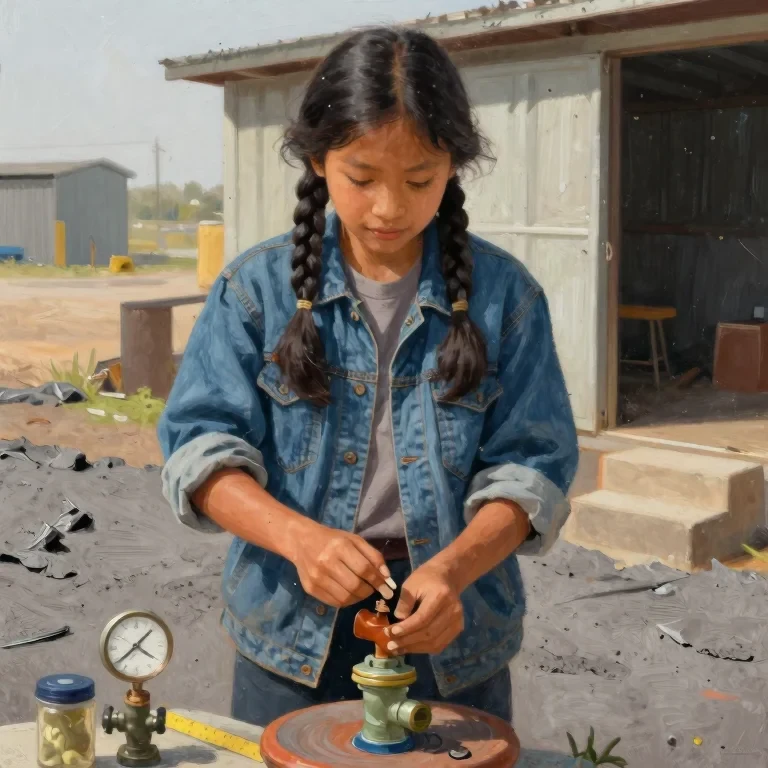
A foot valve flap that is curled and hard does not land. It lands on one corner and the water comes back past the other, and every stroke pushes a little under five litres up the pipe and drops the rest back down the hole.
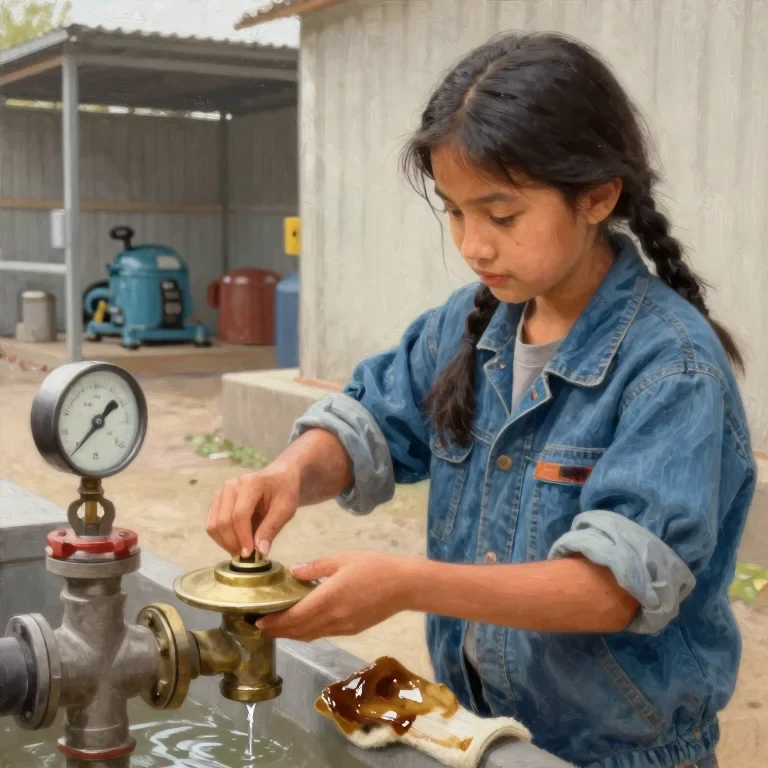
And the cough is the air. On the down stroke the flap gets pushed open, but it hangs there instead of snapping shut, so the cylinder fills with a gulp of bore water and a gulp of air. On the up stroke the cylinder has to get smaller, and the water in it cannot go back down past the flap because it is already moving that way at the bottom, so the bubble has nowhere to go but back down the hole, where it goes plonk, and the crank comes round and there is another gulp of air. That is the gargle.

They made the flaps. There is no spare in the world for a hundred and twenty-five millimetre bore, so they made them, which took two evenings and a pair of leatherworking punches borrowed from Tama on the road. The leather was three millimetre cup leather off a roll from the saddlery in Woodville. Anika soaked the offcuts in a bucket overnight, and the second morning it was as soft as the sole of a shoe, and she punched a disc at one hundred and twenty-two millimetres, to give the leather somewhere to swell.

Ruka wanted them one to one. She talked him out of it and made him punch the same disc twice, and showed him why by laying the two on the plate and letting him see that the soft one covered the seat opening and the tight one left a hair of light around it. A hair of light is four hundred litres an hour going back down. They soaked the new discs a day and a half, then fastened them with the original brass rivets, one each side of the hinge.

They did the delivery flap in the head at the same time, because it was the same leather and the same age and Ruka had the head off anyway. The pump went back in on the Sunday. Ruka bolted the follower down and filled the cylinder through the priming cock so it did not start on air, which is the one thing you must do and the one thing everybody forgets. Anika had the drum under the pipe before she turned the motor on.

It ran for four minutes before the drum was full. They did it eleven times over two days, because neither of them trusted four. Forty-two, forty-one, forty-two, forty, forty-one, forty-two, forty-one, forty-one, forty, forty-one, forty-two. Just under five litres a stroke. The plate was right. It had been right for forty-one years and nobody had needed to check it since the pump went in. They ran it until the tank was up and the trough was running over, and the tanker driver did not come up the road again that summer, and Ruka put the folder behind the reels and left it there.

The last line in Anika’s book for that January was the new figure, and she underlined it, because she had worked out that she could not write it exactly. She had counted by drum and by eye, so she knew it to about a tenth of a litre. The plunger cup was forty years old and squeezed a little less than it did the day it was laced. The delivery flap she had cut herself leaked a hair at the hinge, because she had seen the bubble go up beside it when she filled the cylinder.

So the true figure was somewhere under four point nine and over four point seven, and she wrote four point eight, and put a question mark after it, and that is the number the pump is run on. She shut the book on her thumb at the page for it and looked at the tank, which was at the line, and at the trough, spilling clear across the concrete into the grass, and neither of those was the number anybody argued about in January.