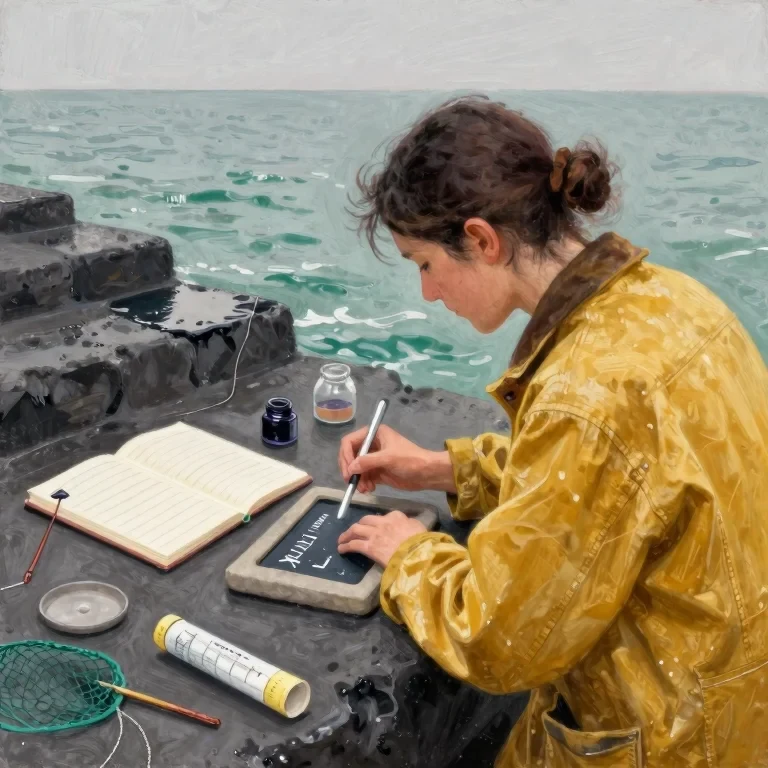
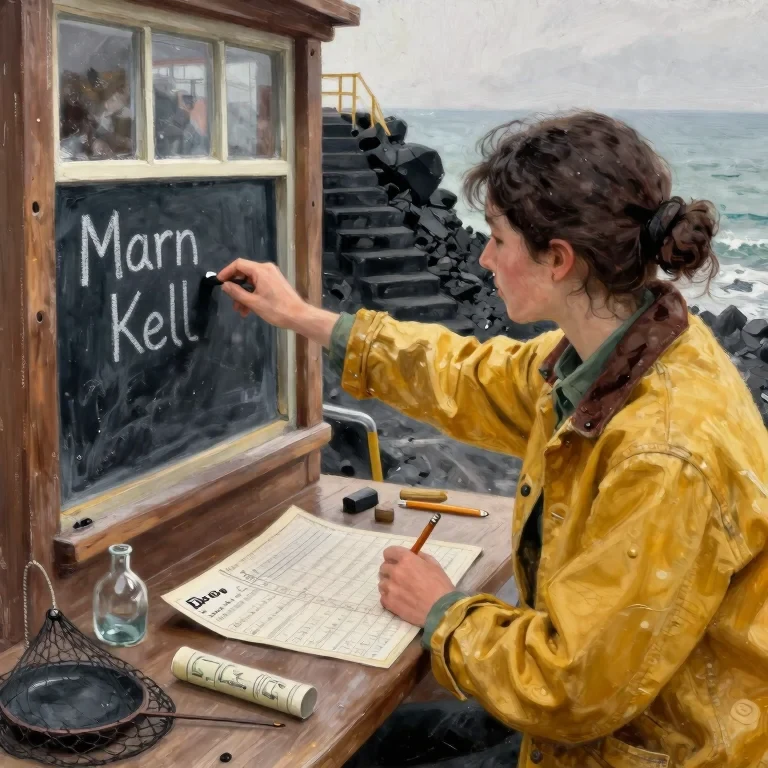
The tide board at Ōtākou stands at the head of the coal steps, and everybody waiting for a boat walks past it on the way down to the water, so it is the first thing they read and often the only one. Marn Kell has kept it for nine years. She is forty-one, she has dark hair in a knot, and she wears a waxed mustard-yellow oilcloth jacket in every month of the year, because the afternoon wind comes up the harbour, stands in the funnel of the coal steps and waits there for an hour.
The board is a slab of slate in a timber frame. On a Tuesday in September it carried seven days of tide, and beside each day Marn had written the two hours in which a ship could come through the bar. She is paid by the shipping and not by the Board. A tide table gives you two things a day. It gives the time and the height of high water, and the time and the height of low water, and that is all of it, and between those four numbers the table says nothing whatever. Everything between them is hers.
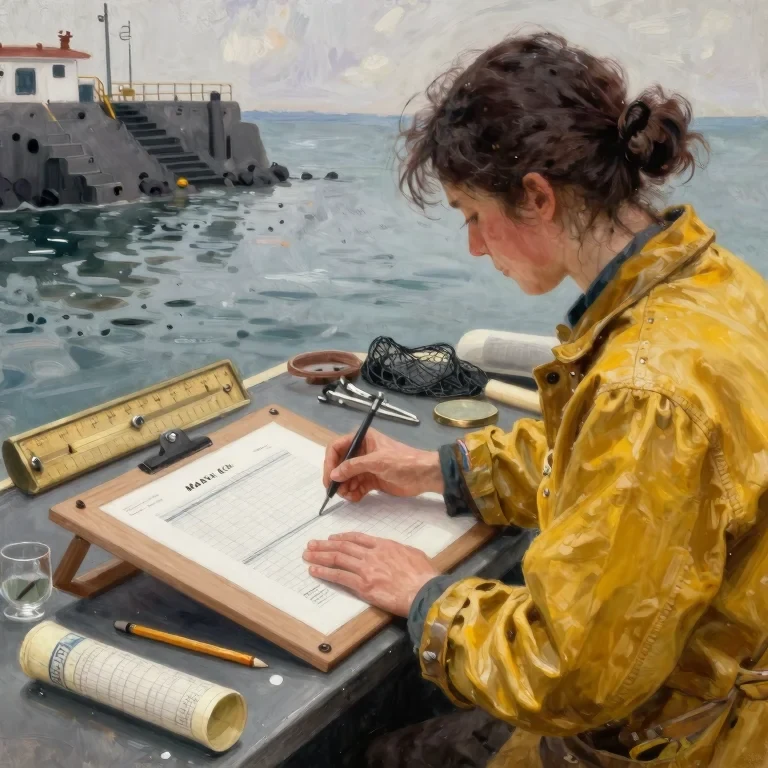
She works it on a brass slide with a cursor that runs along a printed scale, the way a joiner works a bevel, and the one rule she uses is the rule of twelfths. The rule of twelfths says the sea does not rise at a steady rate. In the first hour after low water it rises five twelfths of the greatest rate it will reach that day, then three, then two, then three, then five, then two, and it comes down the same way with the halves in the same order. The rule is an approximation. Marn has never told anybody that it is one, because the alternative is a number with nothing at all behind it.
So she does not write a height on the board. She writes a window, an hour of it, sometimes forty minutes and sometimes an hour and a half, and inside the window the depth she is prepared to put a keel on.
There is a sand bar across the harbour mouth, a kilometre and a half out from the coal steps, and the chart gives the controlling depth over it as forty centimetres below chart datum. The tide inside the harbour is not the tide at the bar, and the difference is printed in the same book in a column headed time and height difference. For the outer station it is fifty-six minutes later and thirty-four centimetres lower. Fifty-six minutes is a long while to be wrong by. Thirty-four centimetres is a great deal longer.
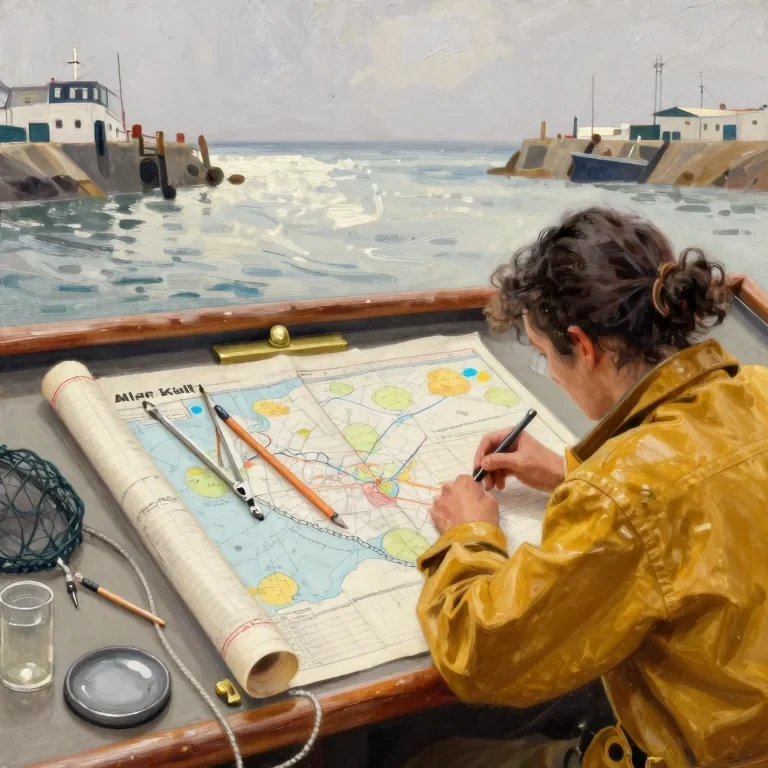
The Kaharoa lay in the roads for eleven days that September with nine hundred tonnes of grain for the mill at the head of the harbour, and her master was Del Sherwin, who was fifty-eight and had grey in his beard, and he wanted to come in on the Wednesday. She was a steel coaster of one thousand two hundred and forty tonnes and she drew two metres forty-five. Two and forty-five of draught, and two tenths under the keel that her master wanted, and forty centimetres of water over the bar, and all of it added together came to two metres and twenty-five of tide at the outer station. The table gave the outer station its Wednesday high water at two and forty. Fifteen centimetres.

Sherwin came up to the board at eight in the morning and put his finger on the fifteen. Then he asked her what the water was doing at the mouth itself, four hundred metres seaward of the bar. Water at a mouth and water inside a harbour are not the same water, she said. A tide running into an entrance comes up as a wave, and the wave puts its high water ahead of the high water behind it.
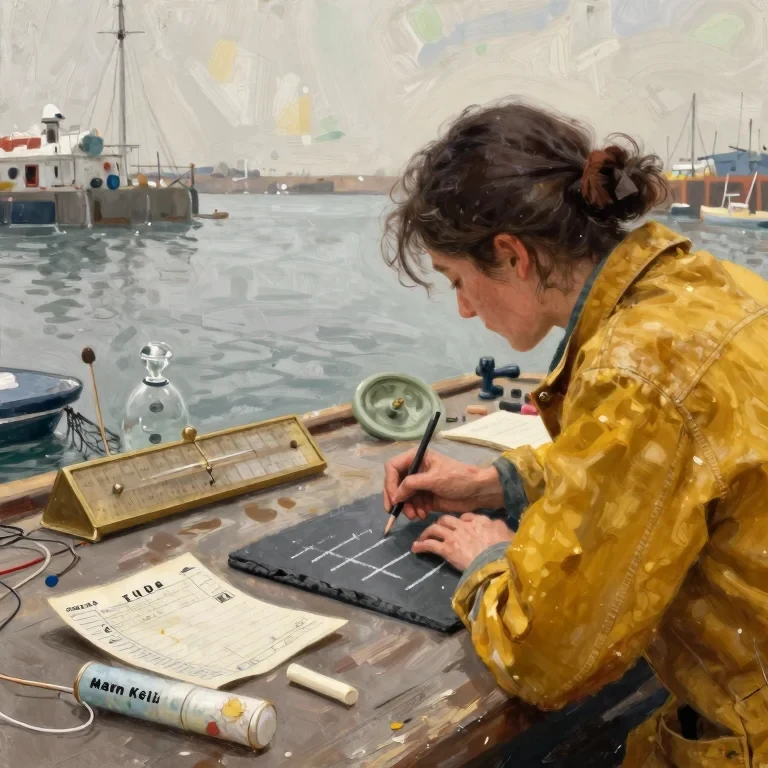
That is not a thing she needs to argue with him about. The pilot came down to the coal steps to say the same thing and to add a number to it. Gus Fairs was seventy-one. At six in the morning the mouth reads a foot higher than the bar, he said, and his father had the same figure in pencil on the beam of the Moana Puawai in 1971, and his father had it off a man at the old mill who had it off somebody before him. A foot, Marn said. A foot, said Fairs. Then who wrote it down, and when, and off what, she said.
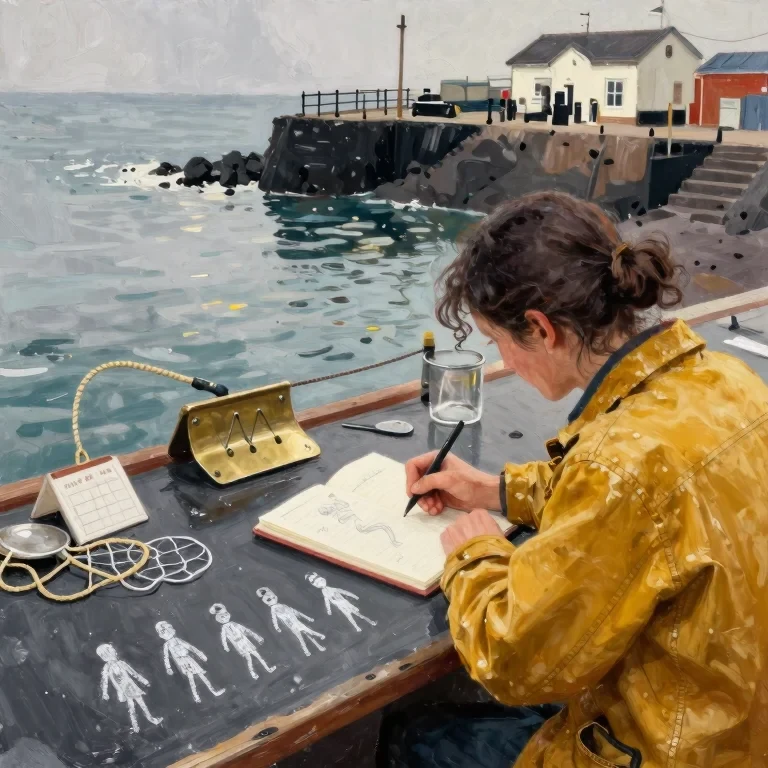
He did not have an answer to that, and he went away up the steps. He was not a bad man for it. He was seventy-one. Marn wrote the window on the slate in chalk and put her initials beside it, and the initials meant that the depth inside that window came out of a printed book, and the bar came out of a chart, and the draught came out of a piece of paper from a loading office in the city. She has asked for that piece of paper every week for nine years.
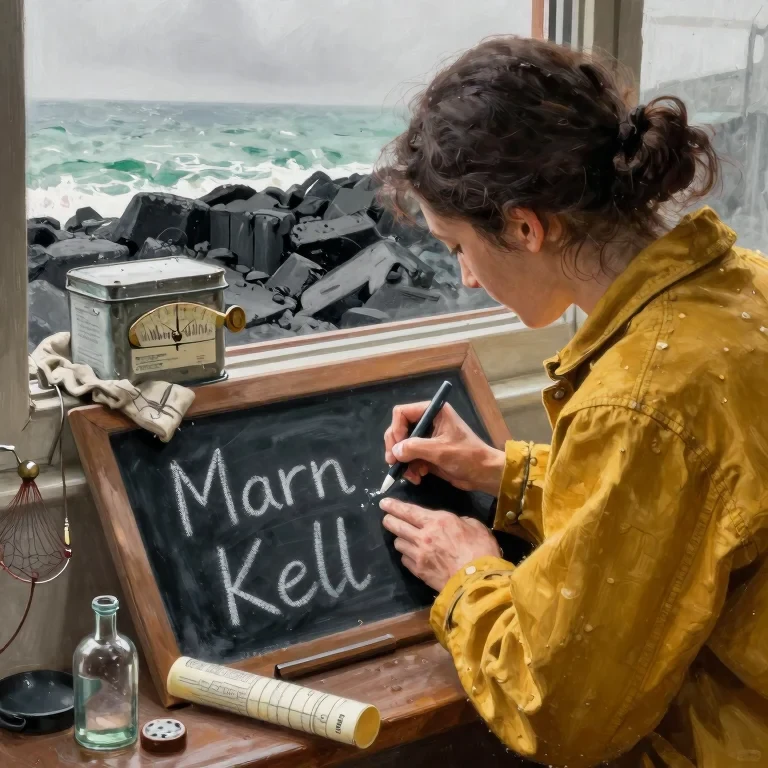
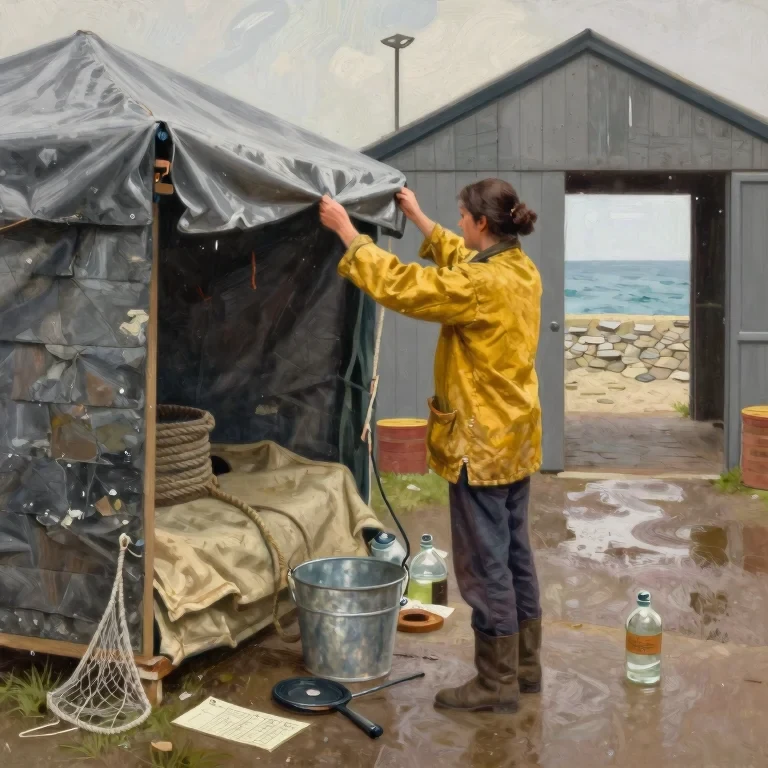
In September 1986 her father Amos Kell kept this board. He wrote a window on it, and the Moana Puawai came through the bar inside that window and touched the bottom with her port bilge keel and sat there for nine hours in the tide. Nobody was hurt. The record took eighteen months to clear his name, and he died in 1991, and the last number he ever wrote on this board was two and sixty, in chalk, in a hand that was not steady. The old slate is in the shed behind the gauge house under a tarpaulin. Marn has decided to throw it out twice in her life and both times she has gone out to the shed to make sure that it was still there. She kept this board because she is the one who is not him.
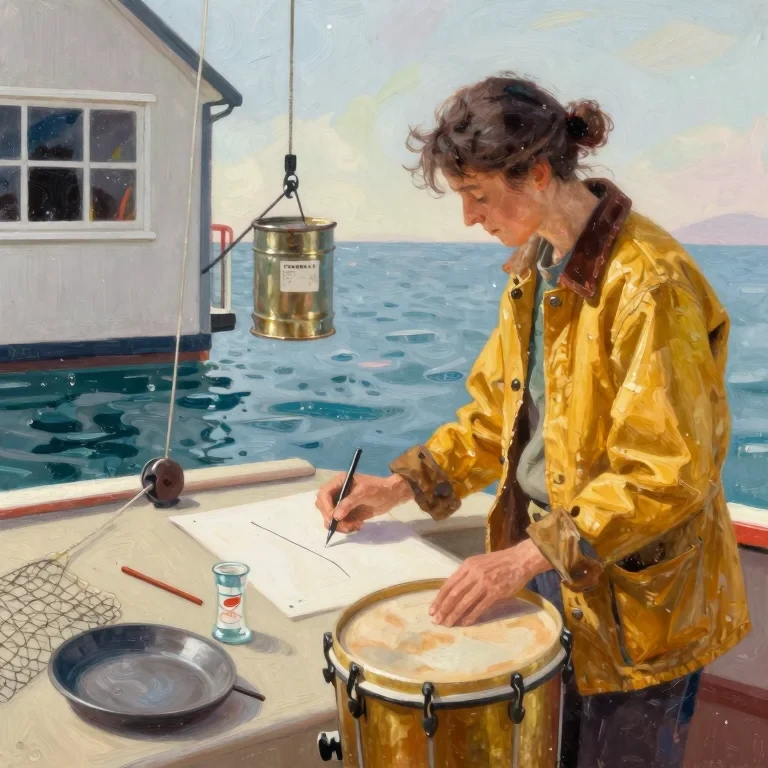
The gauge is a float in a stilling well, a wire, a brass drum, and a pen that draws one line on a sheet of paper for a month at a time. Marn reads it at six and at midnight, and the drum is dated and locked, and the sheet goes into a tin. On the Monday night the trace lay above the predicted curve for the third day running. On the Tuesday it lay further above it, and by six on Wednesday the offset was twenty-six centimetres. Twenty-six would have given the Kaharoa forty-one centimetres under the keel, which is a crossing and not a bet.
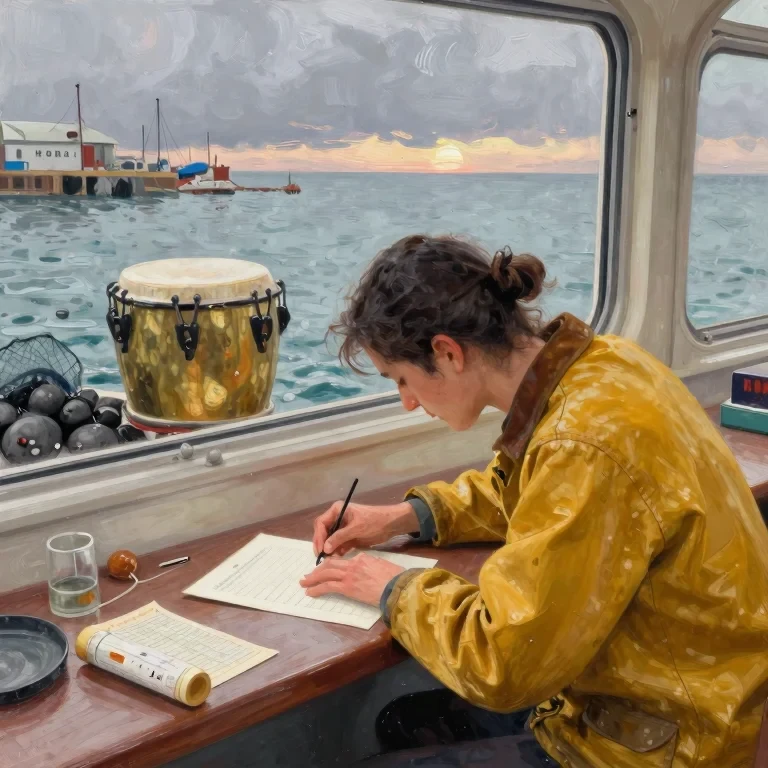
It is also the wrong number to add, and she knew that before she had finished saying it to herself. That offset was measured in nine metres of water at the end of a stone mole, and a west wind piles a quarter of a metre against a wall there without anybody noticing. She had the gauge, and the table, and the chart, and a piece of paper from a loading office, and the four of them did not agree with one another, and the only one she had measured herself was at the wrong end of the harbour.
The miller was Bev Signal. The mill was nine hundred tonnes of grain in a shed it did not own, and the hire of that shed was nine hundred dollars a day, and the shift was forty-one people. She came to the board on the Tuesday afternoon and did not ask for a number. She said, you said Thursday. I said Thursday at ten past four, said Marn. The water is not there at ten past four. It is there from half past four until ten past six, and then it is not there again, and that is the whole of the day. And if it is not there? Then the shed is yours on Thursday, and Friday, and Saturday, and Monday's shift is thirty-two people, and I will have put a Thursday on a board in my own hand that my daughter can read.
At three in the morning the wind went into the north-west and took the sea away with it, and the offset on the trace dropped to eleven centimetres and then to nothing. Marn did not add the twenty-six. She had not added it on the Monday either, and she wrote the date of that decision on the line, and the date is the eighth of September. At ten past four the Kaharoa let go. At five and nineteen she was inside the bar at twelve knots with her engines at half, and Del Sherwin came down to the coal steps afterwards and said she had touched the bottom twice and had not admitted it either time. At eleven minutes past six she was alongside the mill.
On the Friday she was told to go back out to the roads, and she went. The mill's grain stayed in the shed, and the shed hire ran at nine hundred dollars a day through four days of September, and the Monday shift ran with thirty-two people in it. The harbourmaster opened an inquiry on the Monday and asked Marn for her number. Two and twenty-five, she said. Two and forty-five and two tenths, less forty centimetres of bar. The draught came off a form from the stevedore's office, and it is the only one of the four numbers in it that nobody measured.
The surveyor found it on the Thursday. The Kaharoa was drawing two and sixty-seven by the stem, with eleven hundred and forty tonnes in the holds and two hundred and forty of ballast aft. She had left the wharf even keel at two and forty-five. Somebody loaded her and trimmed her by the head and told nobody, and the figure on the form was the loading computer's figure for a different ship. Two and sixty-seven and two tenths over forty is two and forty-seven. The Wednesday high water at the bar was two and forty. She was short by seven centimetres, and no window on any board in the world would ever have held that ship on that tide.
The finding was that no master had gone outside a window, and that the board carried no draught in it. The Board's clerk sent down a new slate in the spring with four extra lines ruled under the window: draught used, source of the draught, date, and one line for a number that nobody can account for. Bev Signal came up to look at it and put her thumb on the four new lines. So a number with a name on it now, she said. So a number with a name on it now, said Marn.
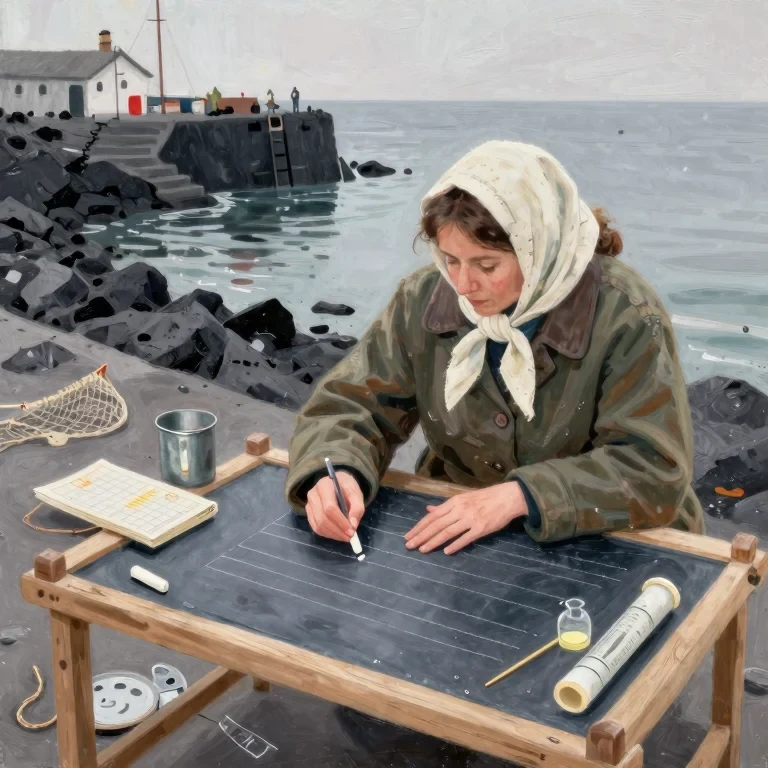
The Kaharoa came back through the bar on the Saturday with twenty-four centimetres under the keel, and the mill ran on the Sunday, and Bev Signal paid the shed hire on the second of October and never once mentioned it, and Marn took the invoice off the nail and put it in her book with the date, because that is the sort of thing she keeps. She still writes a window and not a height, an hour of it, sometimes forty minutes and sometimes an hour and a half, and under the window she writes the draught and where the draught came from and the day she was given it.
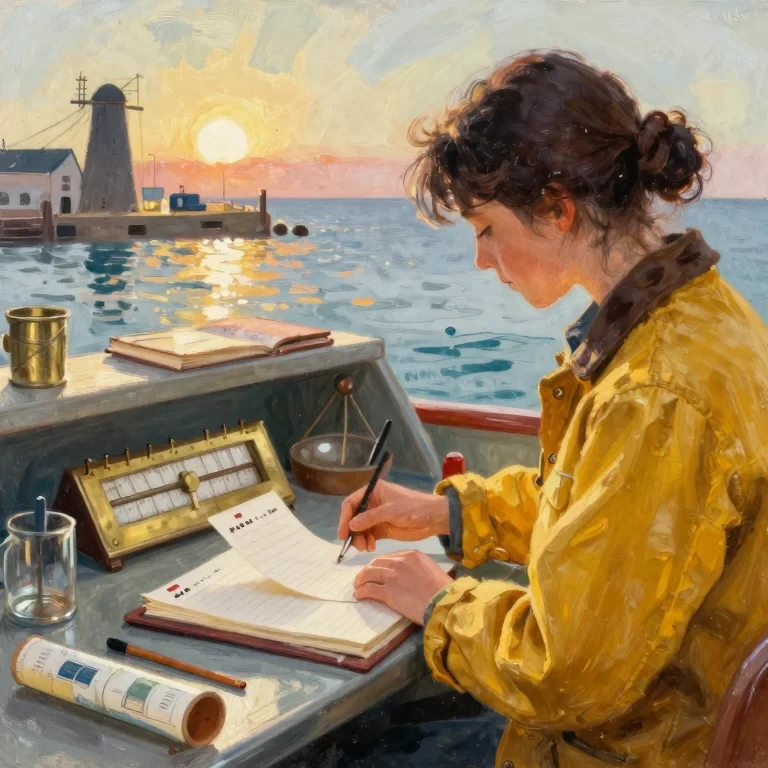
The last line of her book for that September is a loading computer's printout for a ship called the Kaharoa that is not coming back to Ōtākou. Beside it Marn has written a number, and beside the number she has written a question mark. The number is two and sixty-one. The question mark is there because the computer prints even keel, and nobody has told her what the ship will be trimmed by when it is loaded.