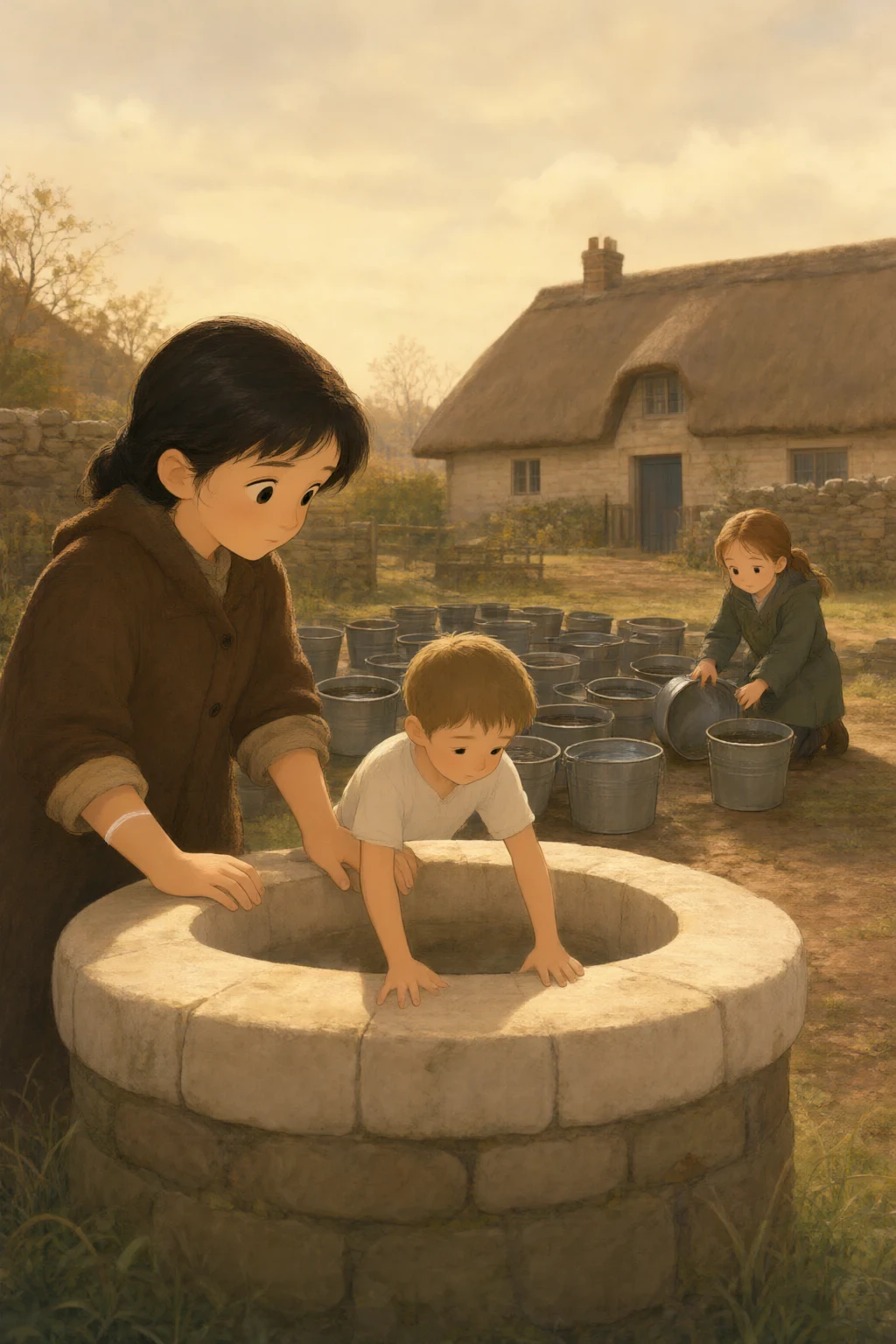
The Bent well leans. It has leaned since it was sunk, and the lane beside it went down eleven inches in the February frost and was never made up again, so the carts go round it now, and the men at the Sluice House call it the Bent dip and blame the frost. Teb Furroway was at the collar with his thumb in a joint, the way he has been since a boy. “They tell me the cold is the fault,” he said. “It is not. The cold is the fault the way a thermometer is the fault.”
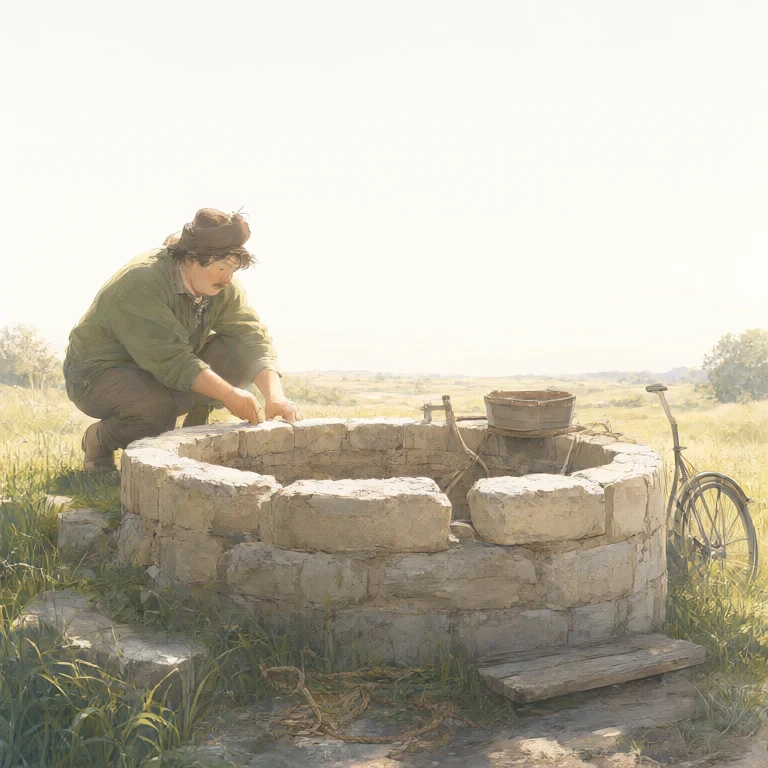
“Is it bad?” “It is down to the marl, that is. And below the marl it is not a well any more, it is a crack. I have said so for four years and nobody has ever stood at the top of it while I said it.” “It will not fail this year,” Teb Furroway said. “I will tell you that much and no more.”
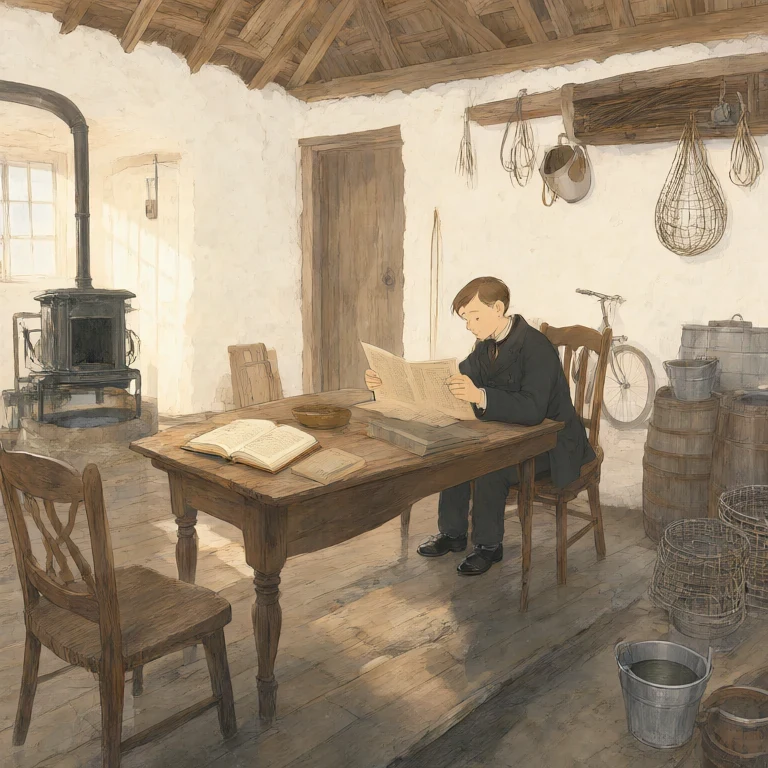
The man at the barn table on Wednesday was Gideon Sparre, from the Sluice House, and he had been in the parish four days and had already asked to have his chair moved away from the stove. The parish’s books were open in front of him. He had the rate book out of 1841, a wage book, and a sheet of his own with a figure on it that made the woman at the end of the table put her hand over her mouth.
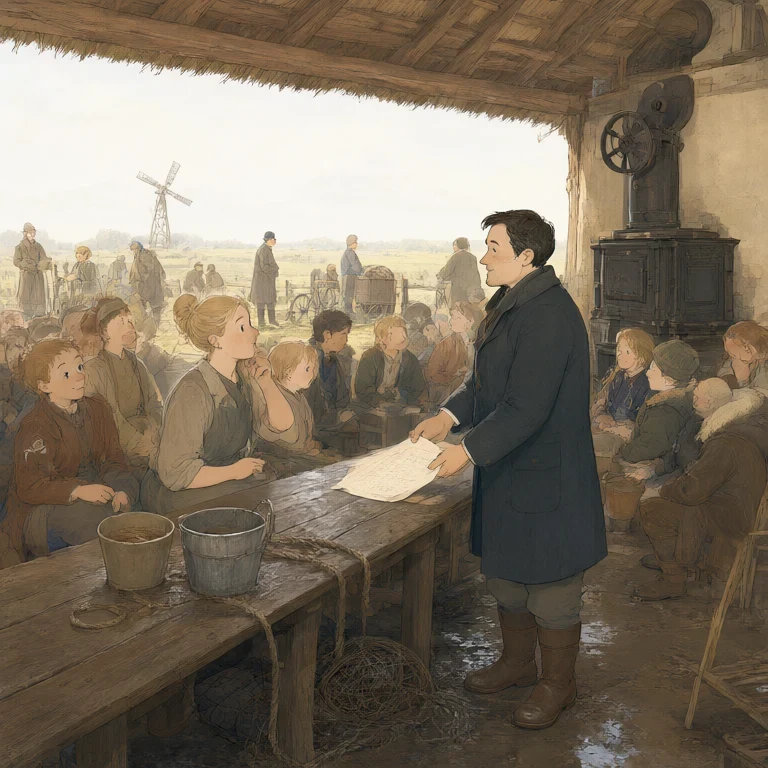
“Seventy-one thousand gallons outstanding, taken across the nine wells,” he said. “That is the parish’s figure. I am not here to argue the figure. I am here to close it.” “How do you close it?” said Hester Colm.
Hester had the Cold One and the Bent, both of them, taken in one night in 1988 on a Friday, and the clerk had written both in the same breath and read them back twice. She had been paying in use ever since, which meant thirty years of keeping other people’s fields: the Brack fields, the elm fields, the school garden, the low cottage. There was a chalk-white line at her wrist where the water had been.
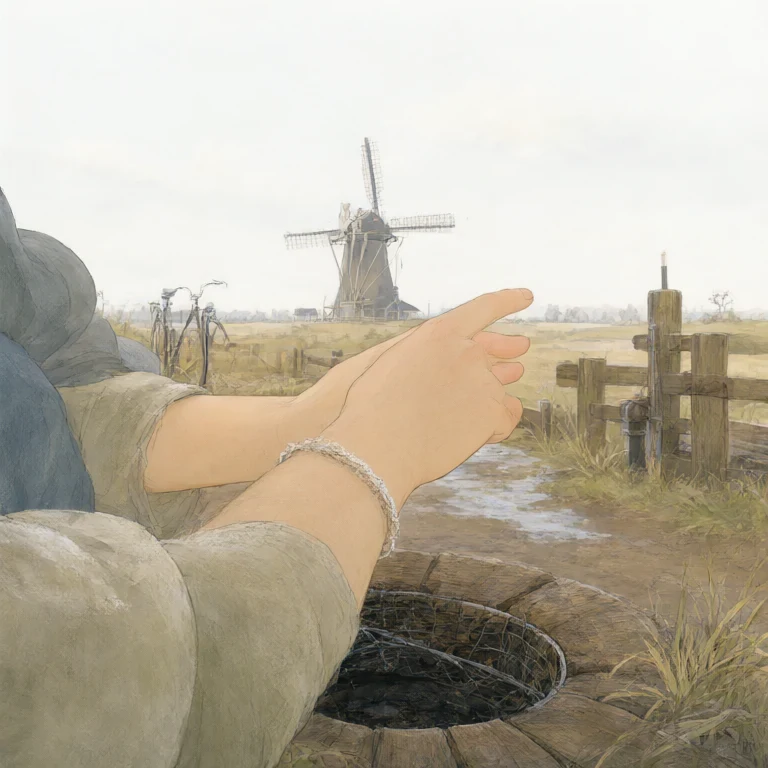
“A well cannot be shut,” Gideon Sparre said. “It is bonded. A person holds it, in their own name, for ever. Almost nobody will take a well. I do not want your well. I want my figure off your book. Give it to me and my book balances and I go home on Friday, and a clerk in the sluice office never knows your name existed.” Hester Colm washed her hands that had been clean.
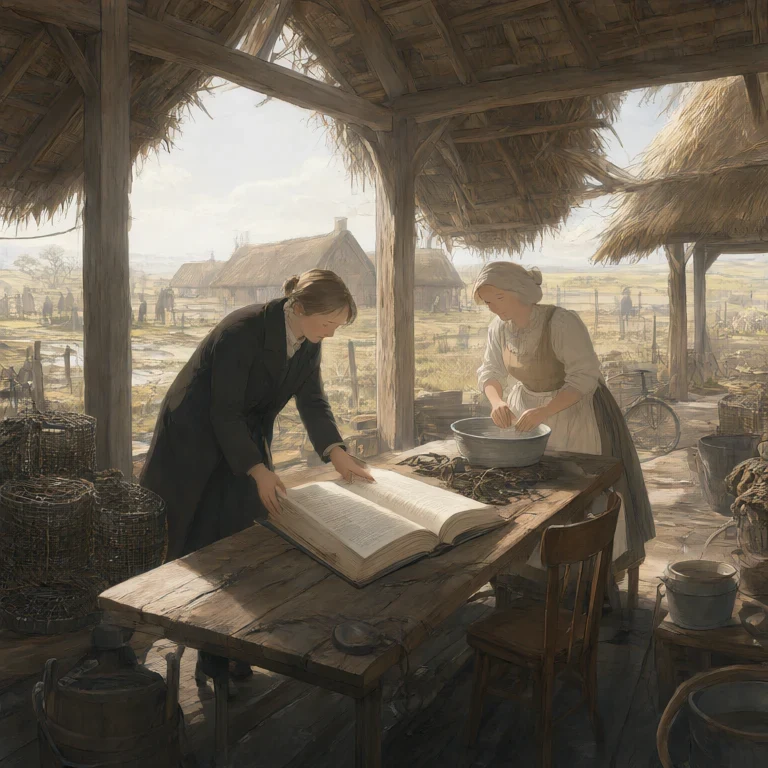
“Nell,” said Gideon Sparre. “Read me the entry. Exactly as it is written.” Nell Drury, who has been clerk of the Well Court for forty years of Thursdays, had the ledger on the table under both hands, because it is too heavy to lift one-handed. She read it back exactly as written, including the spelling, and she did not paraphrase it for anybody, and this is what the room heard.
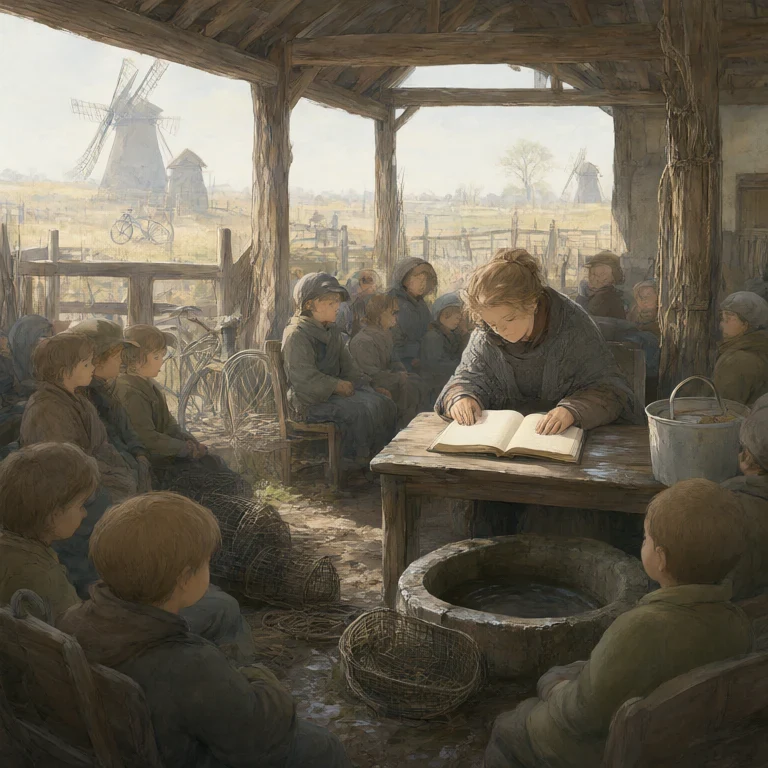
A bond goes from the person who holds it to the person who is named at the collar, and both are wanted. The holder says the name out loud, freely, in their own voice, with nobody standing over them. The one named puts both hands on the collar. Not one hand. Both, flat, on the dressed stone, where four hundred years of hands have gone down.
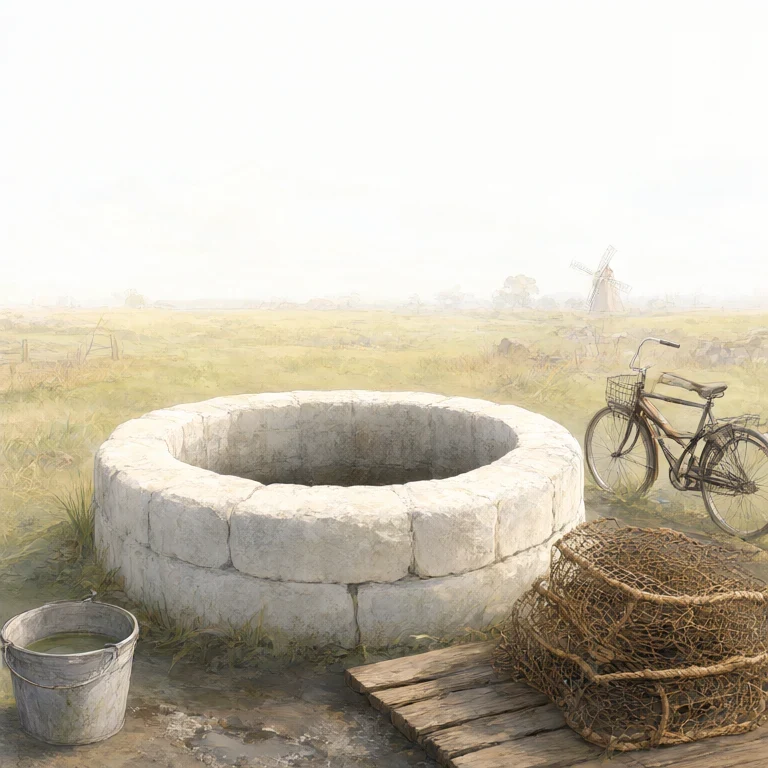
And if either of them is frightened, or paid, or got at — if the naming is done because the other one is standing there, and would stop if the other one went out of the door — then it does not take. Not a little. Not a bit. The well has never once taken half.
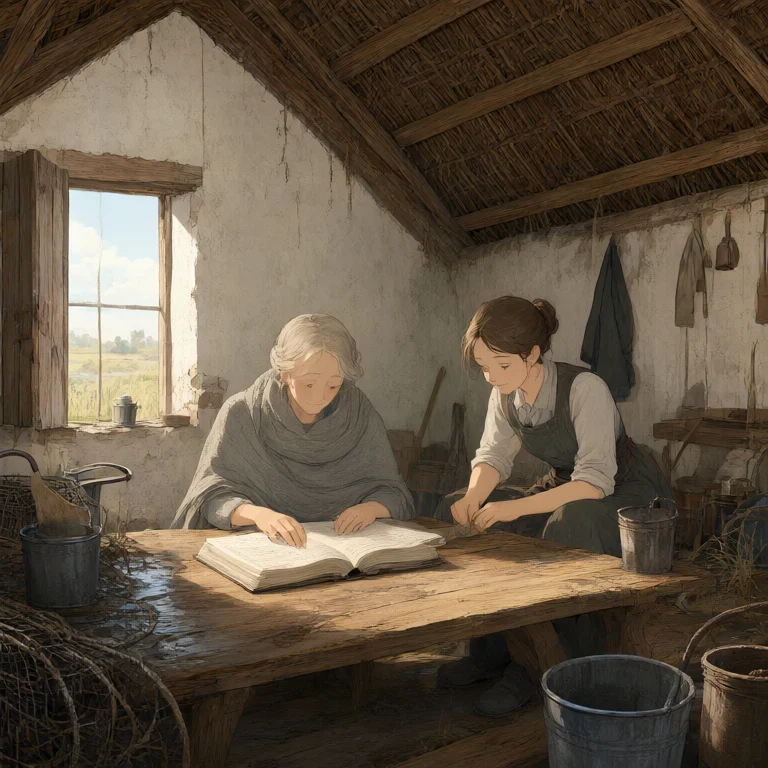
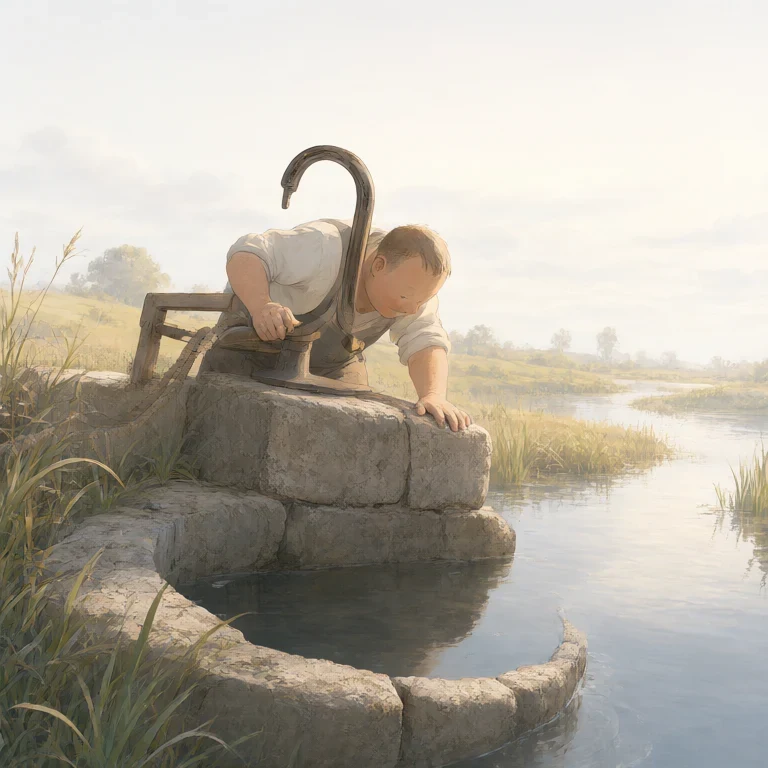
They went up to the Bent at ten, because the light is better at ten, and because it is better to do a thing like that in front of the parish. The collar is the coldest stone in Coldwick, polished to a pale horseshoe in one place by everybody who has ever transferred anything, and worn out of true on the high side, because the well leans. Hester put her right hand on it. “Gideon Sparre,” she said. “I hand the Bent to you, and I am quit of it, and I have paid for it.”
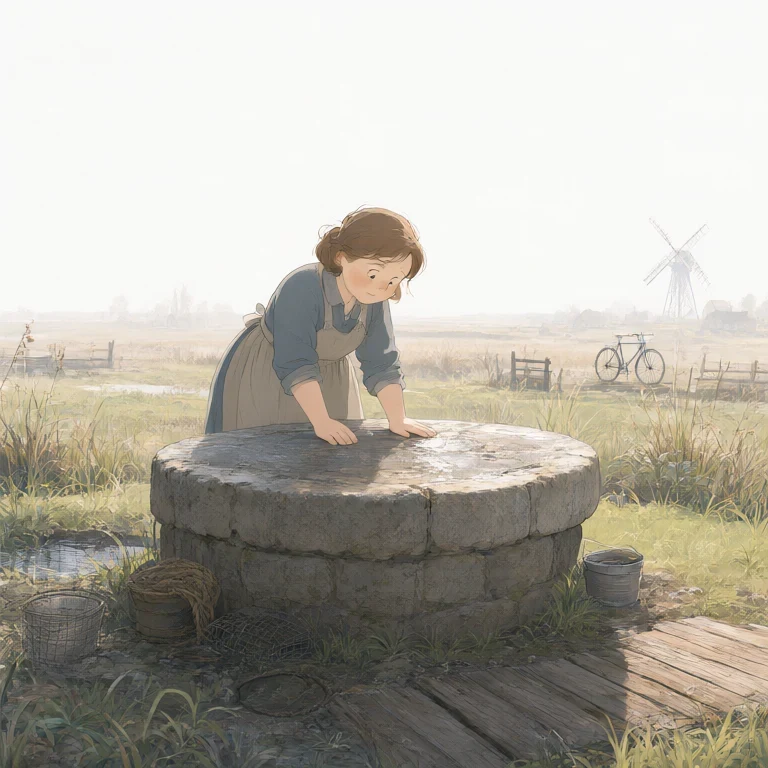
That is where the whole of the evening went wrong, in nine words. She had wanted the second sentence for thirty years, and that is not a slander on her. She had organised her entire life around not being discharged, and when the offer came she could not say no fast enough, and the sentence she had been saving came out of her mouth with her hand on the stone, and the well is the judge of what is true.
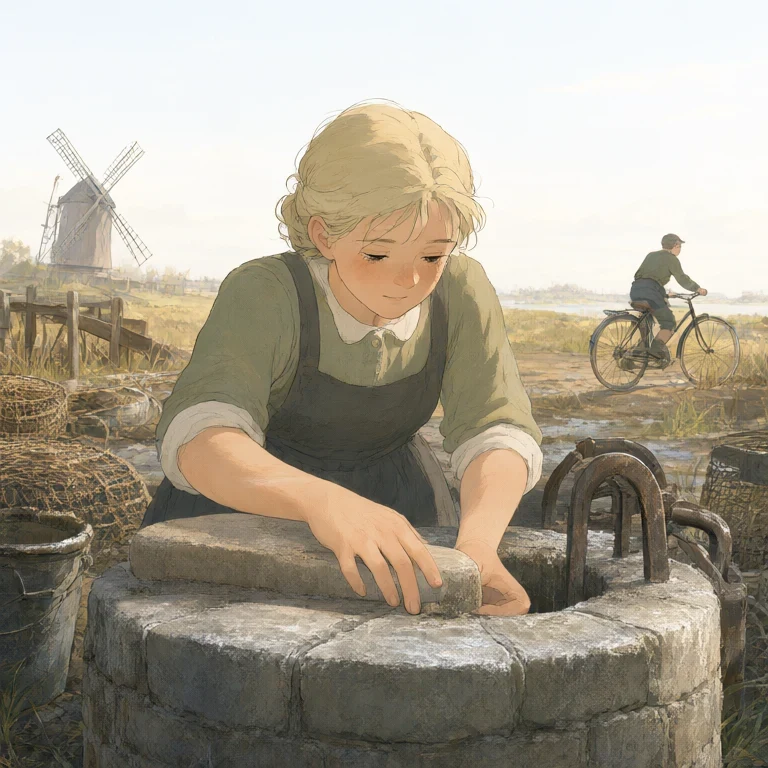
The Bent took it as a false discharge. The whole of what was owed, twice over, in water, in one night. As for the transfer, the well had a name given freely and two hands on the stone, and it looked at the two hands. Gideon Sparre put both hands on the collar. They were cold, and dry, and in good boots.
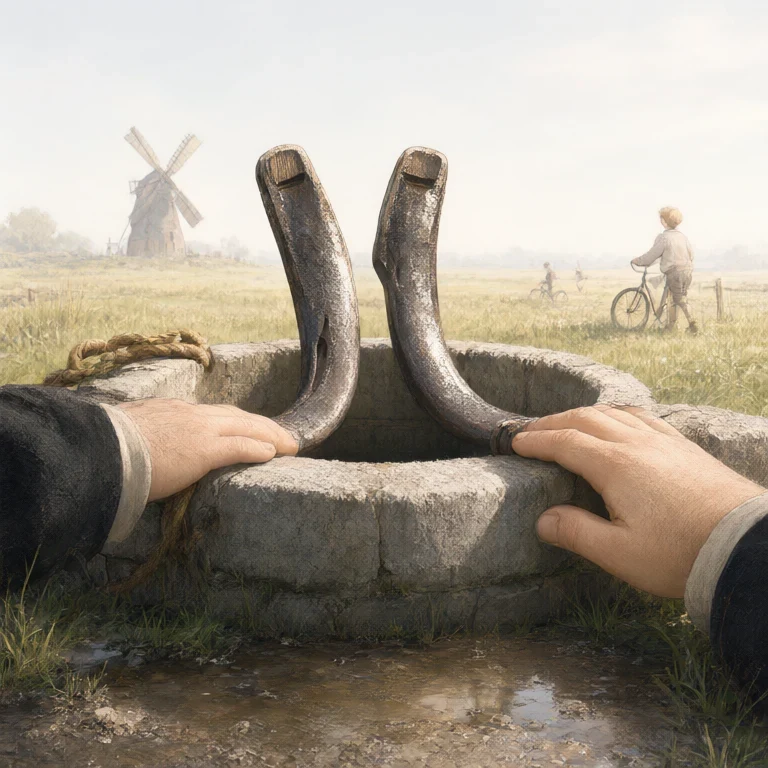
He was shaking. He did not know that he was shaking, and the well did not care, because shaking is not the test. The test is whether a person is frightened, and he had been frightened for four days, and everybody in the room knew it, and the well had known since Tuesday, when he asked to move his chair away from the stove. So his half did not take. Hester’s half took. Which meant the Bent had not gone to Gideon Sparre, and had not gone anywhere, and could not be got rid of that way at all.
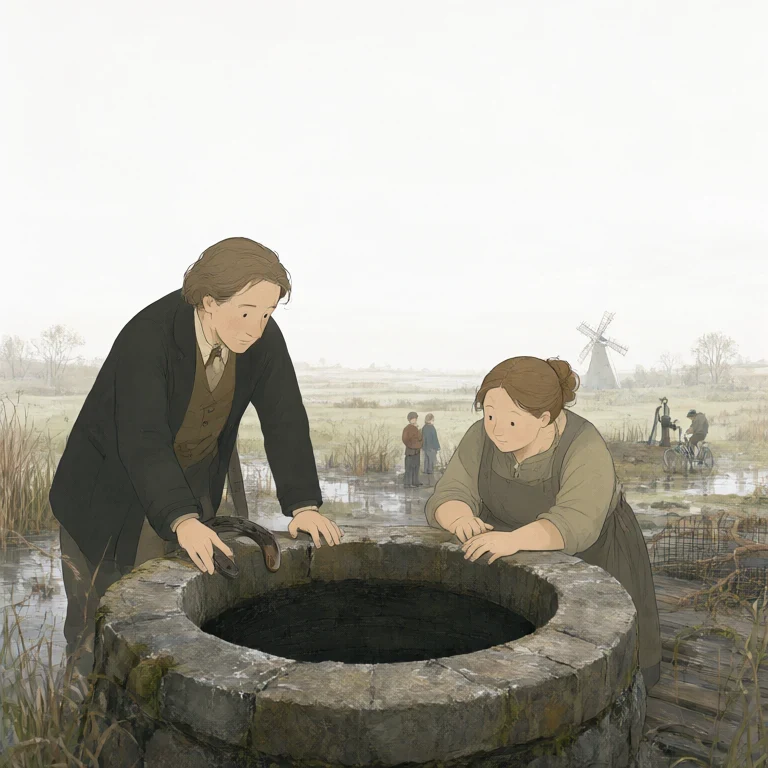
The Bent is the best water in the fen and the coldest, the lane beside it had sunk eleven inches, and the parish now had a fine on it of seventy-one thousand gallons twice over.
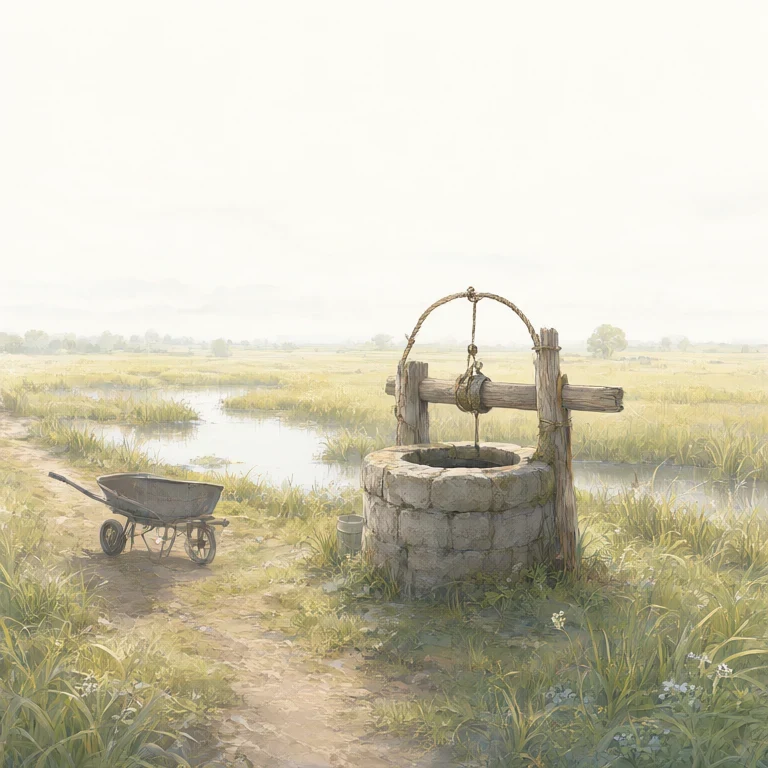
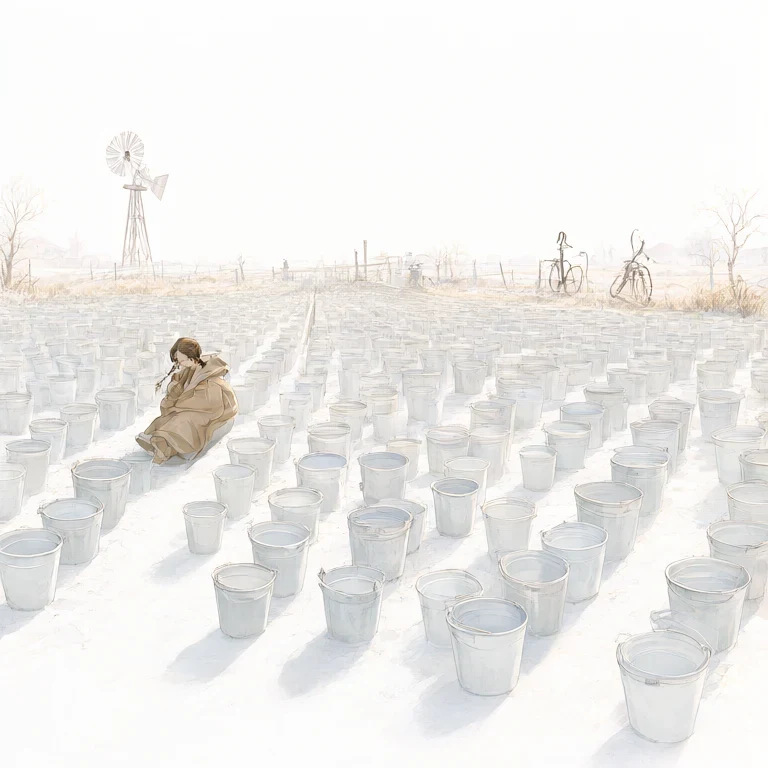
They drew it all night. Every pail in Coldwick-under-Fen went down the Bent and up the Fen Track, and the parish applied it in use before morning, because a fine is discharged by use and not by standing in a bucket. The Brack fields. The elm fields. The school garden. The low cottage. The second-night water went out on the drainage to the cut, and by three in the morning they were carrying to the Blind for mixing lime, because it was the only use left worth the walking.
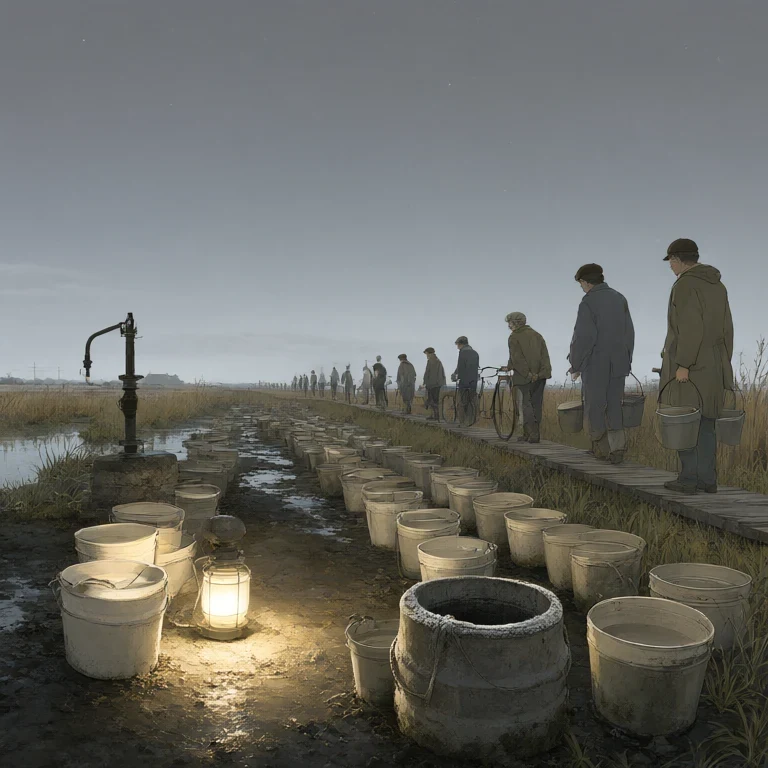
The stove went out at two and somebody’s wife relit it, and forty people slept on the benches in their coats. Teb Furroway said twice that the Bent would not fail that night, and nobody contradicted him, which was the first time in four years.
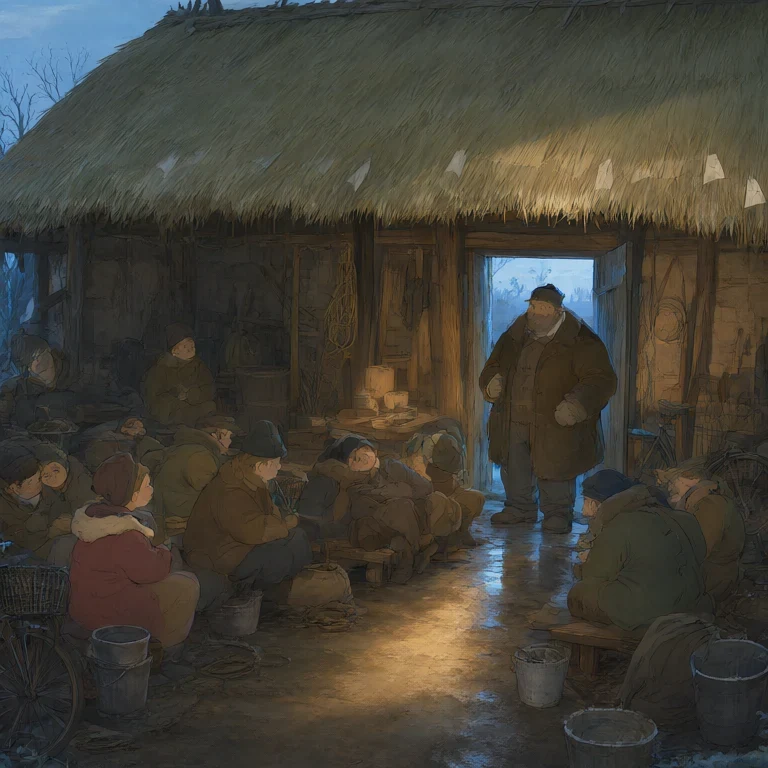
At nine on Thursday the pails stood in the yard of the tithe barn in forty rows, and there were pails on every sill between the barn and the Blind as well. The parish was inside arguing about the figure on Gideon Sparre’s sheet. Nell Drury had the ledger down and was writing with the book shut. The girl of nine came in out of the cold, wet to the waist, because she is the one the parish calls Tadpole, and she is always in some water or other. “Your pails are all different,” she said.
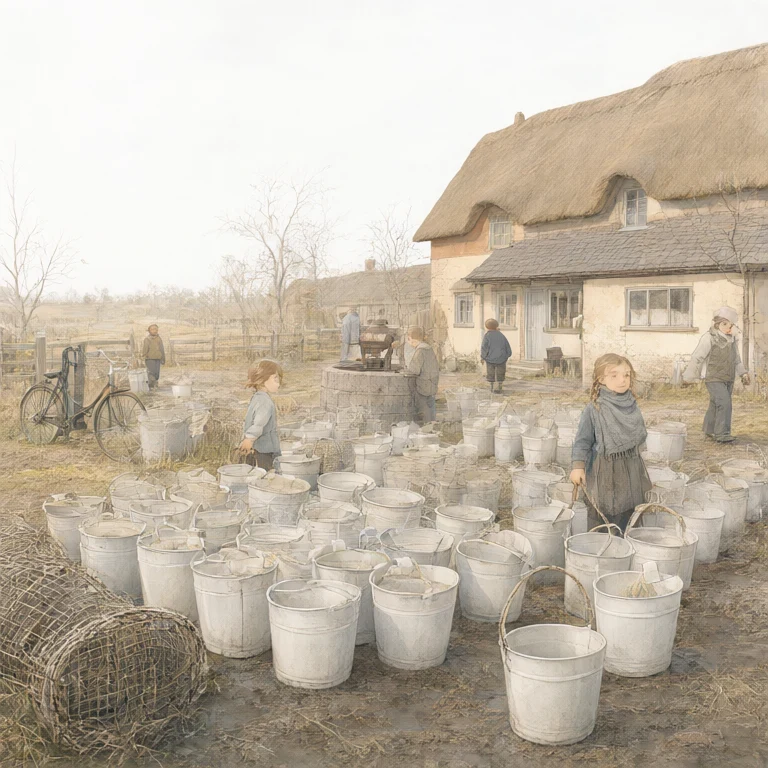
“Sit down, love,” said somebody. “No, look.” She put her hand into a pail and turned it round so the whole table could see the surface of it. Everybody in a tithe barn can read water, and has done since they were small. Hester Colm’s ring was on it. That is what a bonded person leaves in water they have stood in: a dull ring round the edge of it, a colder patch, and the width of the ring is the amount outstanding.
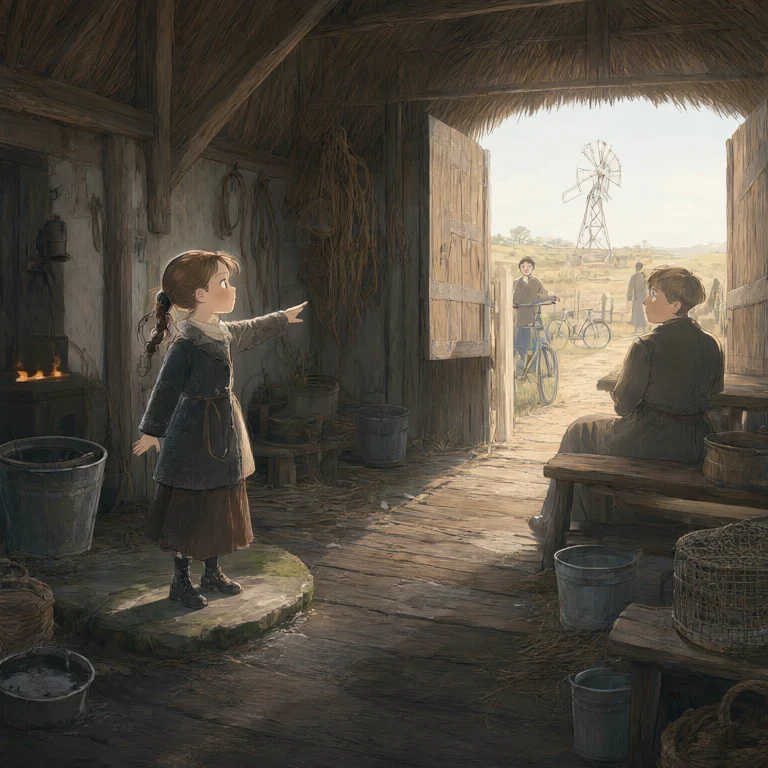
On the first pails of the night the ring was wide. That is what a fine of the whole amount twice over looks like when the water arrives. On the pails from between about five and about seven, the ring was narrow. After seven it was narrower again, and there was a notch in it. The whole table looked at the notch.
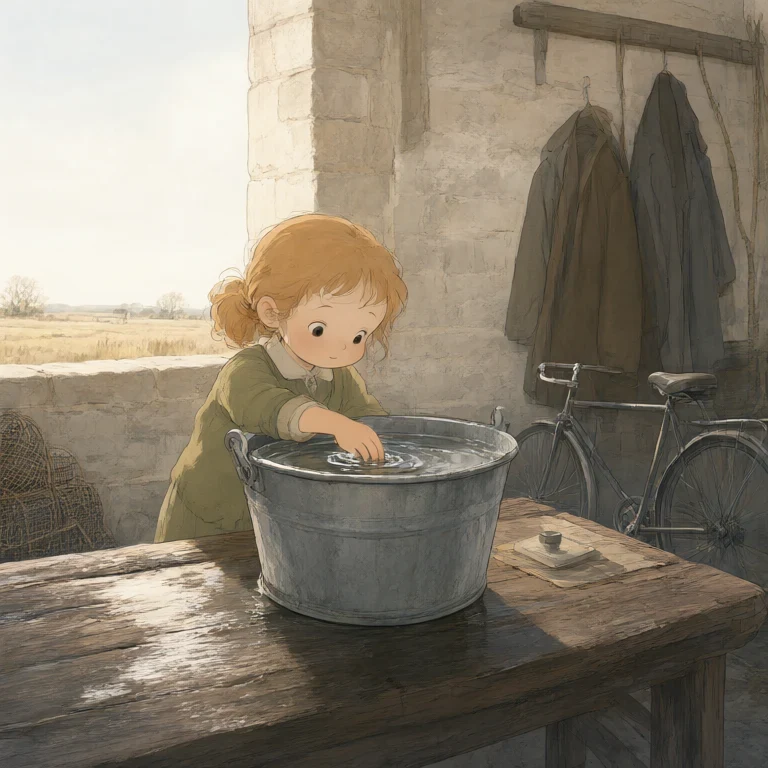
“It’s here,” the girl said, and went round the barn putting a finger into pail after pail. “It’s here, and here, and here, and here it isn’t. About a third of them have it. It is not a mark of anybody in this barn. It is a mark of the third well.”

They sent for Micken Vaunt, who was in the water up to his ribs, and who was eleven, and whom the parish had never once asked anything. He put his own hand into the pail she had chosen and looked at the ring. “That is the same as the gap,” he said.
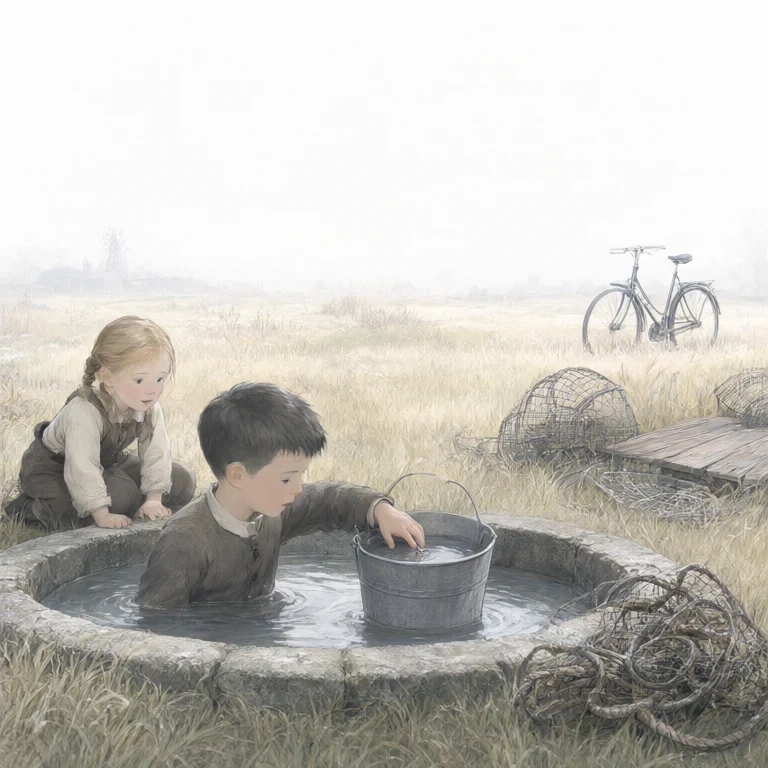
“That is what it is,” she said. “A foot of arc and a bit. The same arc, in the same place on the ring. And it is on the north side of every one of them, and the third well is north-west of the Bent. I counted those pails with a stick in the dirt by the school gate and there are four hundred and six, and a third of them are like this.” Hester Colm put her hand over her mouth and then took it away again.
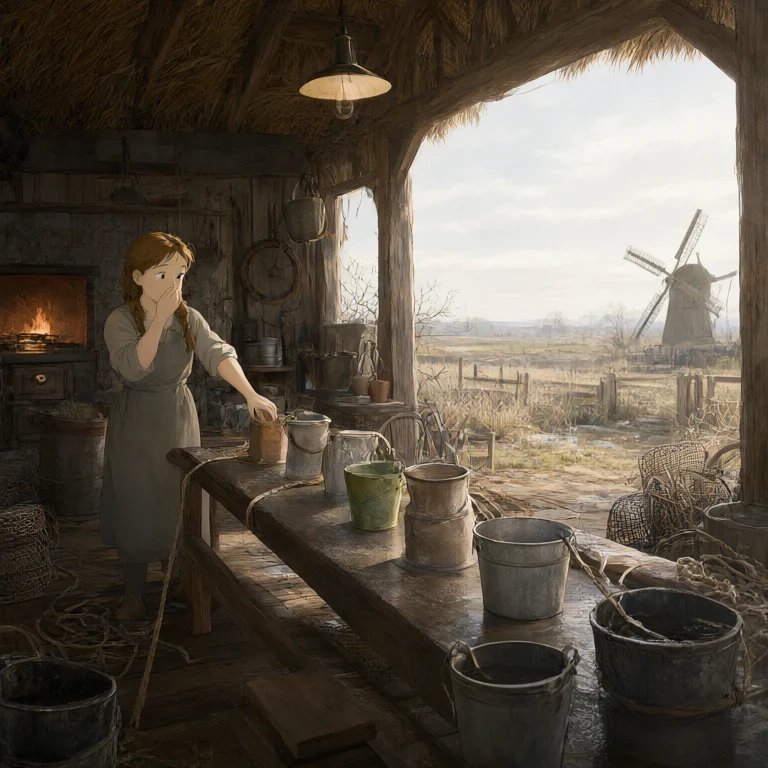
“Thirty years,” she said. “I carried the Bent’s water up to the third well on the nights the Bent was drawing heavy, and put it in at the top, and never wrote it in, because there was nowhere to write it and nobody had ever asked me for a page. A third of what the Bent was owed went into that well, every night, for thirty years, and nobody in this parish knew there was a boy in it.”
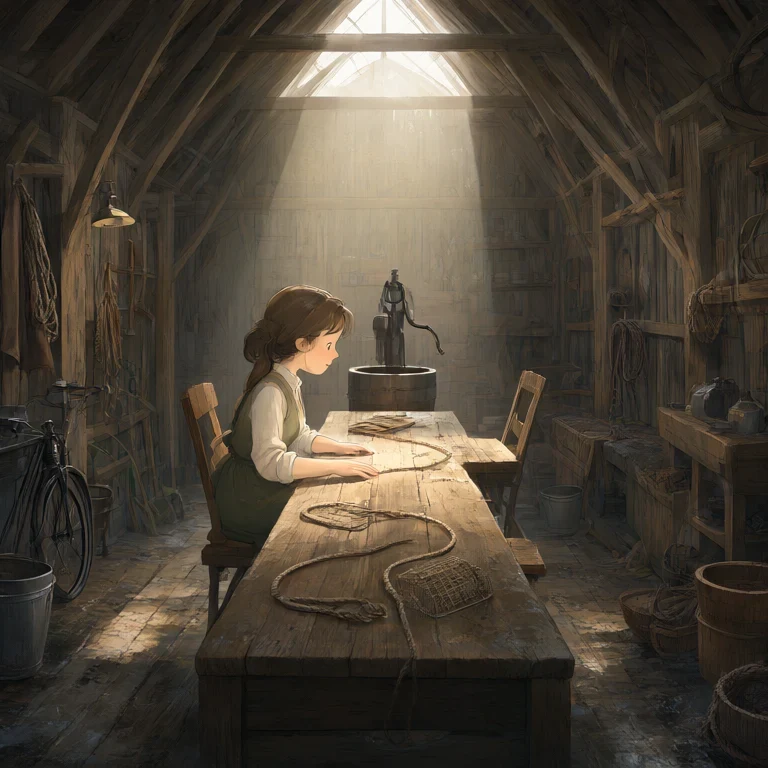
“There is a boy in it,” she said. “There has been one since I brought one up off the bottom in the winter of ninety-one, and he has been in and out of that water ever since, and he does not need pails. I did not tell anybody. I did not write it down, because I did not want to be a woman who is paid in pails.”

Then the girl said the other thing, which is the reason she is in this account at all. “There is no Gideon Sparre in any of them,” she said. “Not a finger of him. He has his hands on that collar, and there is not one pail in this yard with his name on it, and that is because he was frightened, and the well would not have him.” Gideon Sparre put his face in his hands for a moment and then took it out again, because he was a clerk of the sluice and there were figures outstanding. “Strictly,” he said. “Without prejudice, I would like it minuted that a boy of nine has told this bench that I am frightened.” “It is minuted,” said Nell Drury.
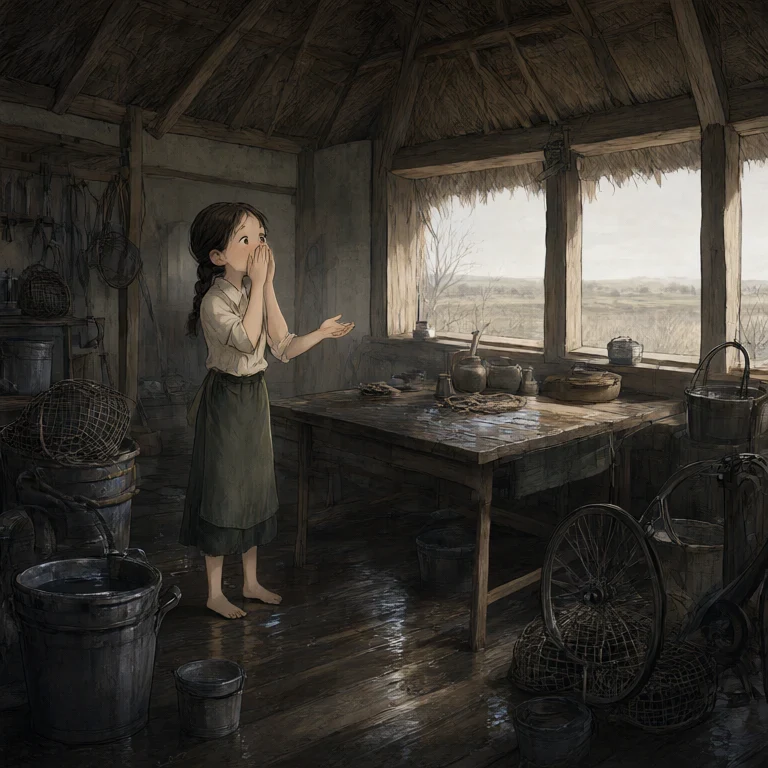
Before the Court sat they went up to the Bent and did it properly, because a well cannot be shut, only bonded, and a bond wants a person in their own name for ever, and by ten past ten the parish had run out of volunteers. Hester named the boy. He put both hands on the collar, flat, on the polished horseshoe, and he was not frightened of it, and nobody was standing over him. It took. Nell Drury wrote it and read it back exactly as it was written, including the spelling. “Marow Vaunt,” she said, “holds the Bent.”

“It’s Marrow,” said the boy. “Marrow Vaunt,” said Nell Drury, and read it again, and the bench heard it twice. And Hester Colm said her own name out loud at the collar for the first time in thirty years, and it was the name of a person giving something away, and the water was very cold, and she washed her hands in it afterward because they were already clean.
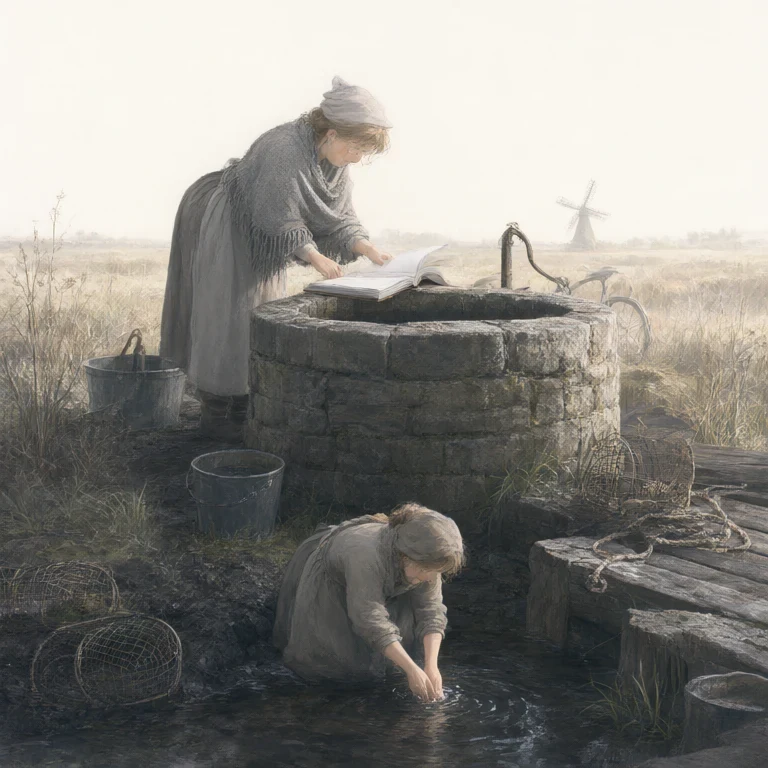
Gideon Sparre was in the yard at half past ten with his figure rolled up, and he wanted to be told that he might go home. “Strictly,” he said. “Without prejudice, may I go home.” Nobody could tell him. That is not mine to say, said Hester, and it was not hers to say, and it would be said on the next Thursday or the Thursday after. He checked the latch on the barn door behind him, twice, and then went out into the yard.
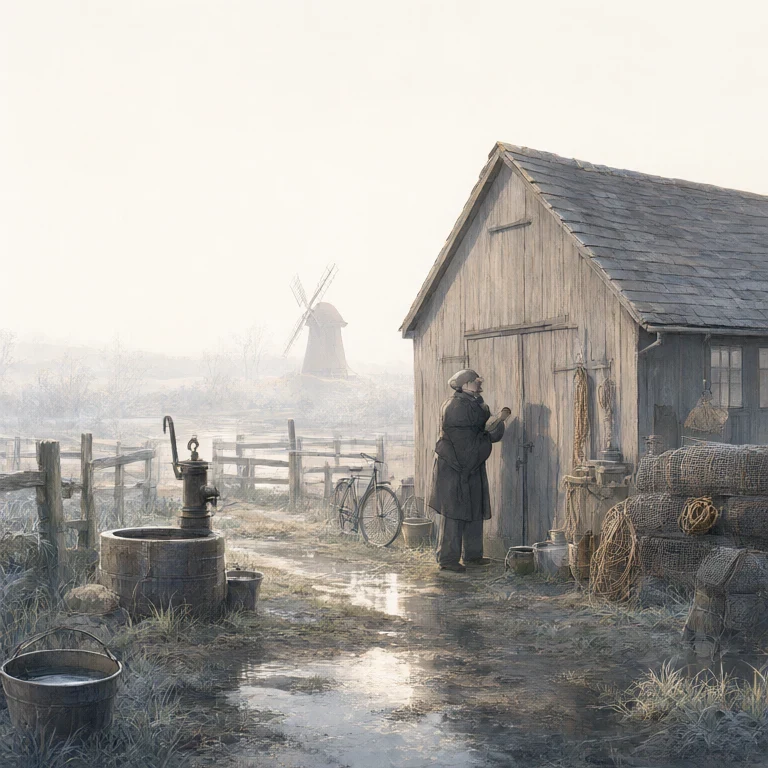
The pails were standing in forty rows in the first hard frost, and the girl of nine was asleep sitting up in the middle of them with a coat round her and one hand still in a pail, and the rings on all that water were perfectly clear, and the coldest of them had a notch in it: the same notch, the same arc, a foot and a bit, on the north side.