The stove in the Cinder Ledger Room gave four pounds an hour before noon and five after it, and the figure was chalked on the wall beside the door every hour by whichever clerk was nearest, because it was the only fire in the building that was lawful, and because in Emberwyke a fire that has not been written down is a fire that nobody can afterwards prove to have burned. Sim Uncle Prawd tested the beam with the toe of his shoe at a quarter to nine, as he had every morning for forty-four years, and then came up the outside stair two steps at a time, which he had not done since he was sixty-three.
“It is the reading,” he said, before anybody had said anything. “Which is a bad thing to be and a worse thing not to be, and I will tell you which of the two I am before you ask me. A book with a hole in it is not a book. A book with an error in it is a book, and the second is far more useful and far rarer, which is the point.” “Morning, Sim Uncle Prawd,” said the room.
The reading of the marked names is done once a year, at the lighting-up, in the Salt Hall, a long cold chamber off Sallow Bridge with six tall windows and no fire in it and never has had one. The names marked in the year are read aloud, one at a time, from a slate, by one voice, and the Hall keeps its own copy in a frame on the wall, and nobody may speak while it is being read. That is the mechanism. Nothing else about it is mysterious and nothing else about it is fair. “Reader is Hesk Vail,” said the senior clerk. “He has read it four times. He was to have read it a fifth.”
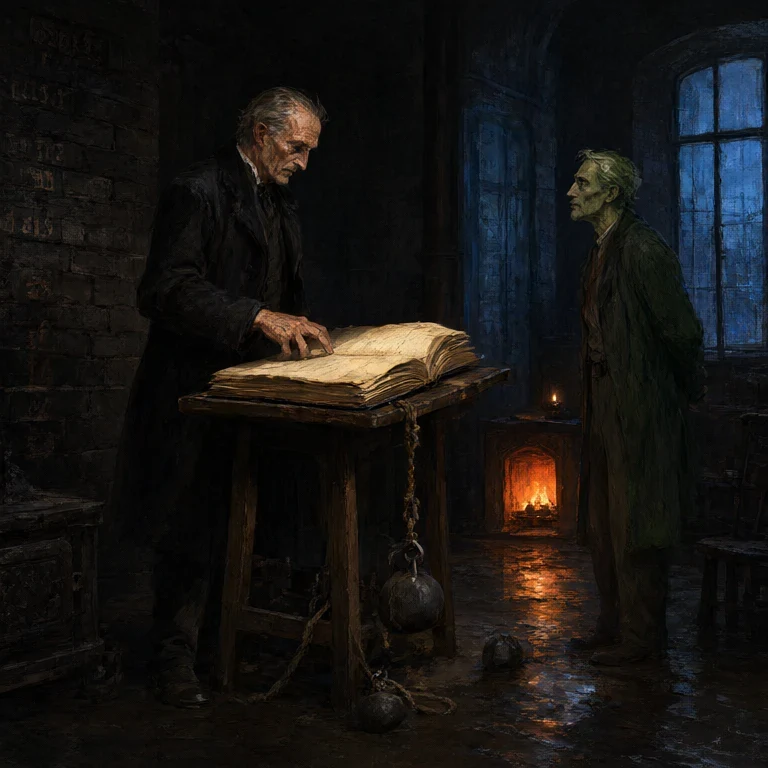
“He has the fever and a hundred and two and a half,” said Prawd. “Then it must not be Hesk Vail, because a man at a hundred and two and a half cannot stand in a cold room for forty minutes without coughing, and a cough in that room is a sentence, and a sentence in that room goes into the book. Or it must be somebody who reads it as a list and not as a reading, which is a different trade, and which I can do, and nobody has ever thought to ask me to do it.” He turned the shade up an eighth of an inch and back down. “Which is the worst of the three and the most honest, and is also the point.” They asked him at half past nine and he said yes, and then gave the reasons on both sides in the same breath, and would not be interrupted, and finished on the word point.

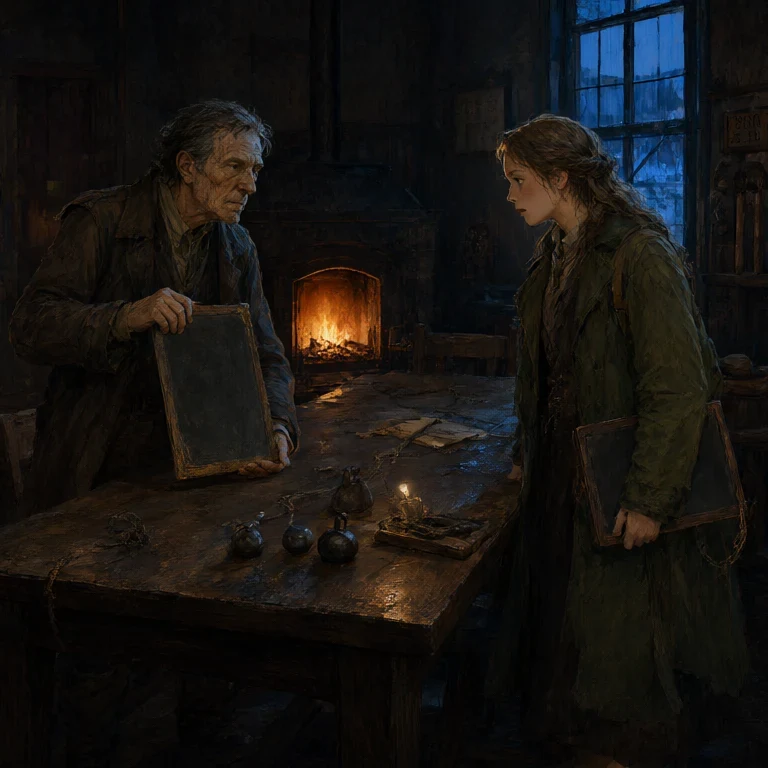
A reader needs a slate and not a sheet. Paper is no use to a man standing in a draught, and a hundred names are easier to follow in a ruled column. So they sent for a board-keeper, and fetched one off the Rope Walk. Bess Tallis came up at eleven with her slate on its loop of tarred twine under her coat. She is fourteen, the largest of the two hundred board-keepers in the city, and the man from the Scale House had walked the Rope Walk twice before he found a house with a child in it. She put the slate on the table and squared it to the edge, and she had the right-hand column ruled and figured before anybody had opened the book. “Give me the slate,” said Prawd. He turned it over, which is what a man does with a slate that has figures on it, and then did not turn it back, and stood looking at the underside of it for a while.
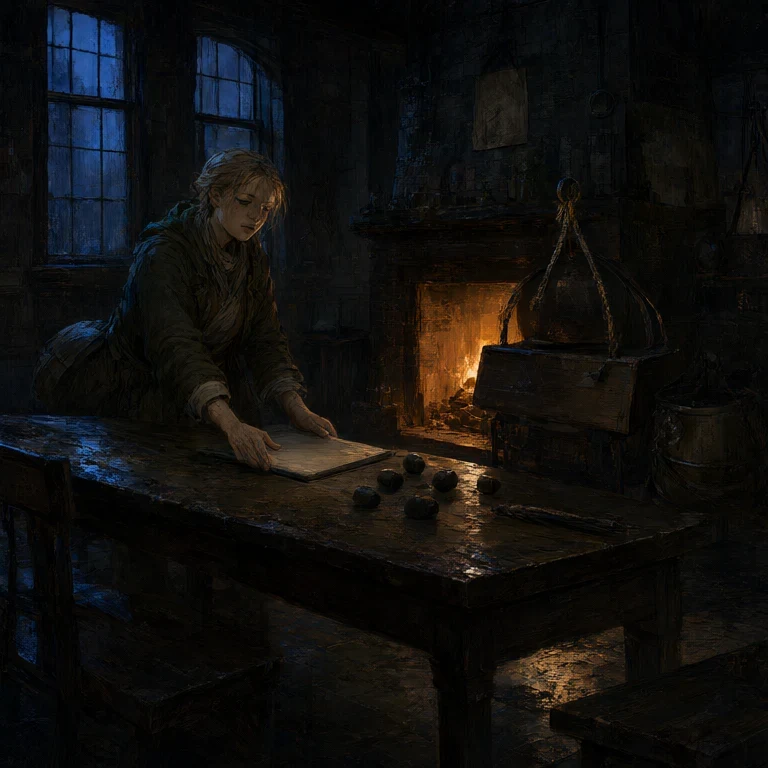
“You have ruled the first line.” “I have.” “With a figure in it.” “With a figure in it. Four pounds nine ounces, and it will be four pounds nine ounces, because I rule the night before, and it has been right every night for two winters.” “Yes,” said Prawd. “You are right, and that is the wrong reason, and if you and I built this city between us it would come down in a week. Tonight at dusk the beam will say what it says, and your figure goes into the right-hand column against the number in the left, and if the two agree it will not be because you knew. It will be because you were prepared to be wrong in a hand so neat that nobody could ever afterwards have found out which it was.” Bess Tallis looked at him for a while. “That is a two-sack week, that was,” she said, “and you have not asked me for a figure.” “No,” he said. “Not yet.”
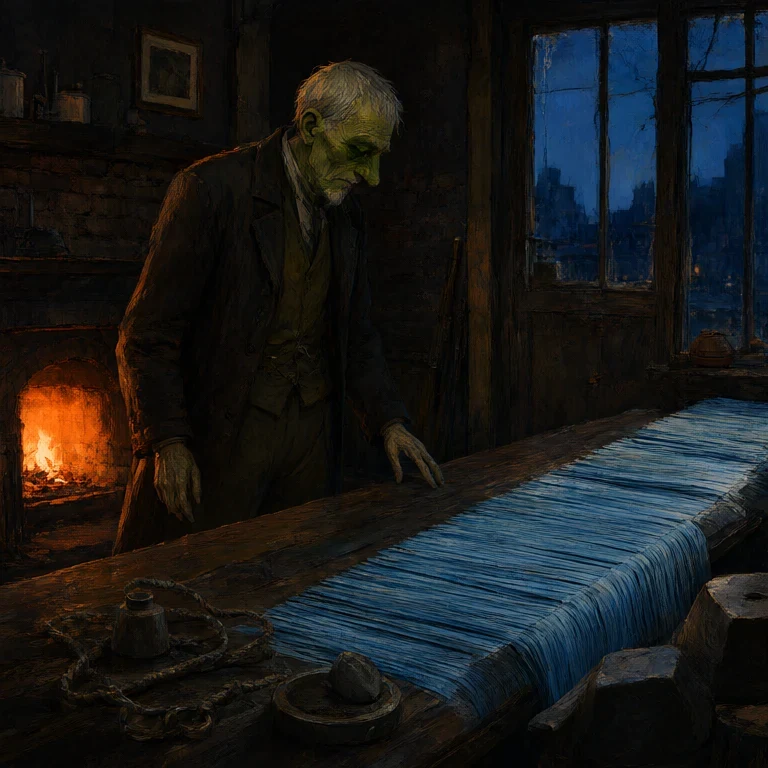
At ten they sent down for the slip. The Scale House sends a fanfold of blue paper up at the end of every night with the marks made at that night’s weighing on it, and at the end of the season the beam-man writes the total on the last fan and his initials, and the total is the number of names the city is to be given. The last fan of the season said this. MARKS ENTERED THIS SEASON. One hundred. R. PRAWD JUNIOR, beam. Prawd looked at his brother’s initials for some time and said nothing about them at all, and the room, which knew exactly what that silence was worth, said nothing either. The year’s marks were in the eleventh volume, in the mark column. The mark column is one column ruled down the page, with a square for each night, a date in the left margin, and a number in the right.
“It is one column for the whole book,” he said. “Not one column for each year. One column, with the year in the date.” He began at the first square of the year and read down. Bess entered the numbers, and he made her slow, and he read each one twice before she wrote it, and it took until half past eleven. One hundred and one. The slip said a hundred. Prawd had counted a hundred and one off his own fingers twice, and Bess had counted the second time and said each number out loud as he gave it to her, because he asked her to, and they had a hundred and one both times. “Then the slip is wrong,” said the senior clerk.
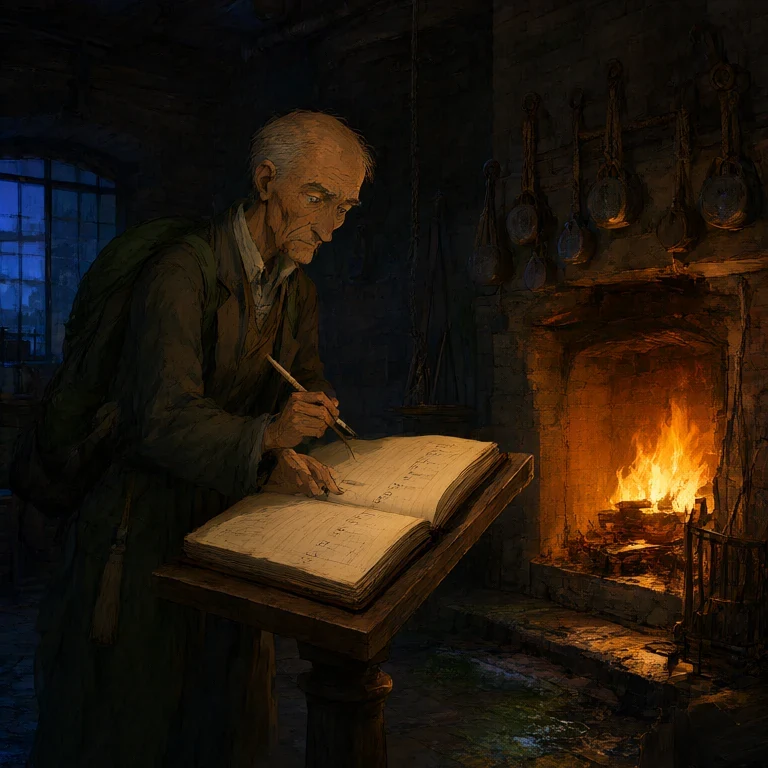
“A total written in a hurry on the last night of a season,” said Prawd, “and totals are the one thing in this building that is never checked, because there is nothing in the world to check them against. And a wrong number is not a number that is too big. It is a number. It is too big at this end and it may be too small at the other, and we shall not know which until we have looked, and looking is the whole of the trade.” Prawd went to the hundred-and-first. It sat at the top of the year, which is not where a mark made in the year goes. It was in a brown ink where the rest of the year was in black, and the ruling of the current page ran straight across it, because the page had been ruled again at some point by somebody who had ruled over what was already there. The date in the left margin: the twelfth of December, 1971.
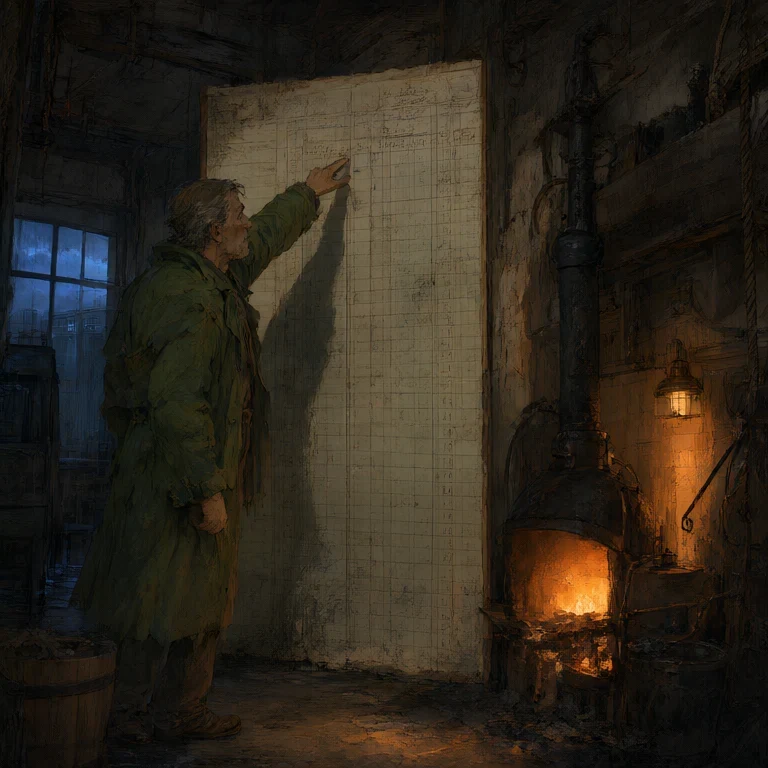
The number in the right: 2,814. And that was the whole of the hundred-and-first. “Fifty-four years ago,” he said. “Which means the leaf was ruled in nineteen fifty-eight and never ruled off, and the marks for seventy-one were entered in the column, and the marks for seventy-two went in underneath them, because the column is one column and the year is only a date. There is a place in this book where a man ruled forty squares for nineteen seventy-one and then ruled the next forty for nineteen seventy-two, in the same hand, in the same week, and neither of them said a word to the other, and neither has been read since.” “Who was it?” said Bess. “A man closing a year in a fortnight in a bad winter,” said Prawd. “And he was not a liar. That is the part people will not believe. Nobody has to have done anything. The lines have to have been ruled, and then not read.”
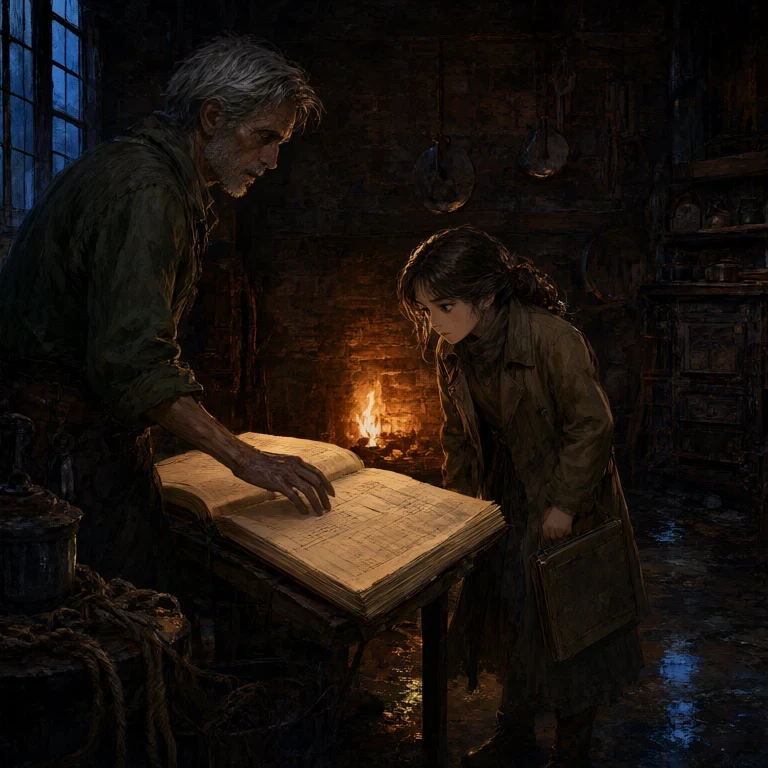
He sent the number down by the messenger and asked for two books out of the roll-room: the roll of licensed hearths for the season, and the index of names. A number is struck off the roll when its hearth is extinguished, and a number not on the roll is a hearth that will take a match, hold it, and go out. 2,814 was struck off. The strike was in the ordinary hand, and the date of the striking was the ninth of December, 1971, and beside it, in the clerk’s small letters: EXTINGUISHED BY ORDER. The house was to the Slag Bank for fill. The mark was dated the twelfth of December, 1971. “So the beam weighed a hearth short three days after that hearth had been put out by order,” said the senior clerk, “and both entries are correct, and they cannot both be true, and a man reading either one on its own is reading a true book.”
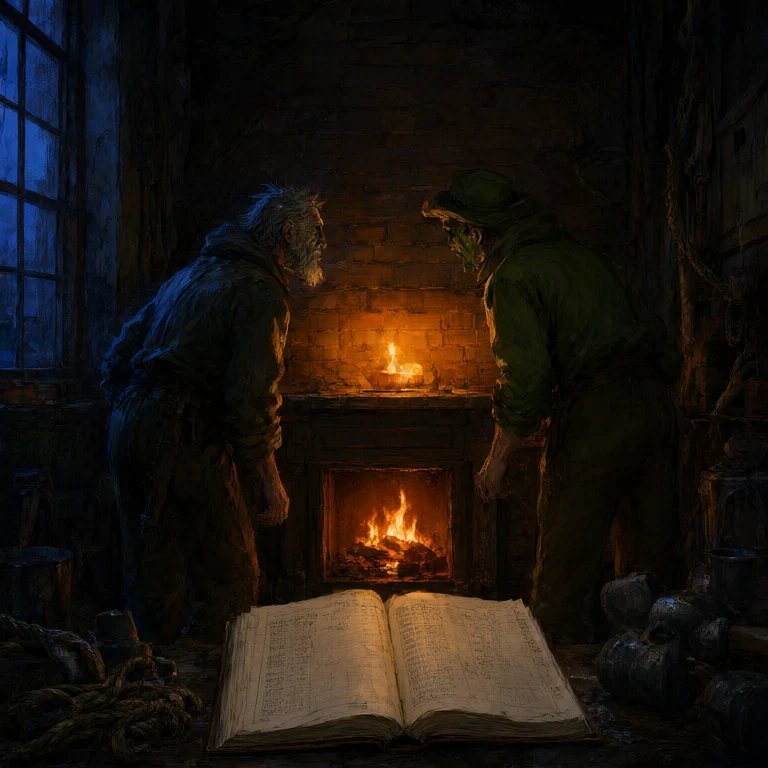
“So it is a ghost,” said Prawd. “It cannot be read as a mark. But it will be read, because the reader reads down a column and says a number, and a woman in that room with a house on Tanner’s Gate will hear a number she has never heard in her life, and by Friday it will be in the Hall’s book in a frame on the wall for ever, and it is the one line in this business that cannot be taken back.” “Then do not read it.” “Then I do not read it, and I write down that I did not read it, with the reason, and the reason goes in the volume, and the reason is not shame. It is a discrepancy.” He pushed the shade up. “Which is the only way anything in a book is ever mended, and I have watched forty years of men try the other way, and the other way is how you get a book with a hole in it.” “Write nothing and it is as though it never happened.” “It happened on the twelfth of December, 1971, and it is in the book, and the book is not going to pretend otherwise to save me an afternoon.”
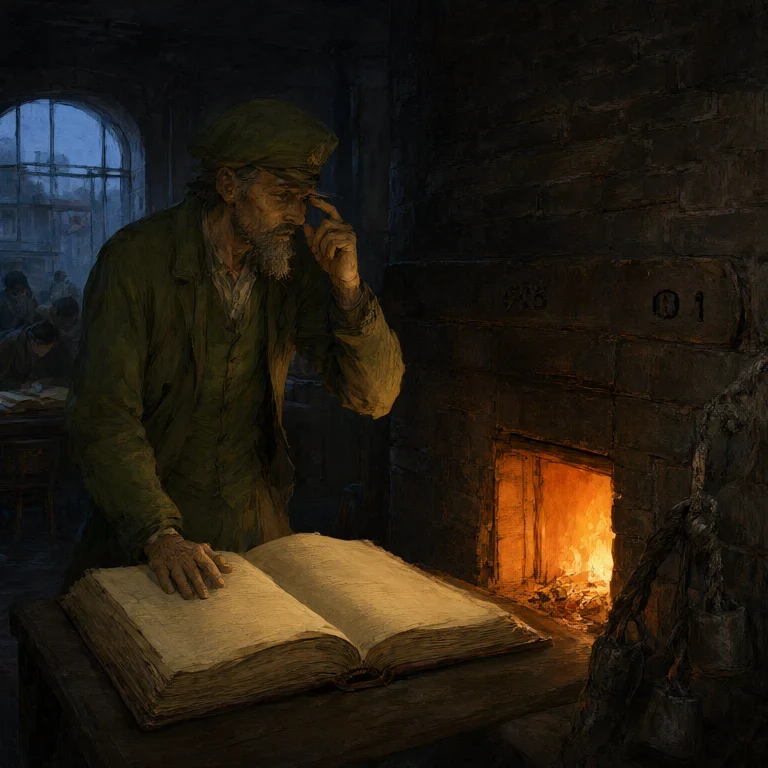
The index of names is every hearth number in the city with the household name against it, in the order in which the hearth was first entered. It began in 1911 and nobody has ever been in a hurry with it. 2,814 was in it. Against it: Tarn. Joce Tarn, and before him his father, and the year of entry 1922, and the address Tanner’s Gate, and no strike, and no note, and the name in the same black as everything else, and never touched.
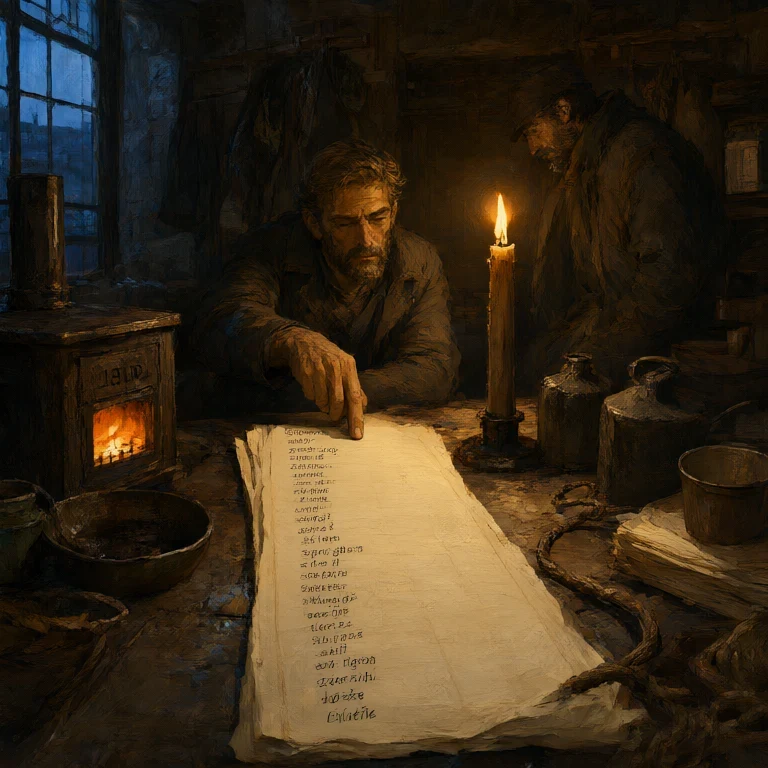
“The index says he was entered in 1922 and that nobody has ever thought to strike him off, which is the same sentence with a book in it,” said Prawd. “It is not a false sentence. It is fifty-four years old. Which is how a house that has not existed since 1971 is about to have its number read out in the Salt Hall. Nobody has done anything to anybody. Two books in one room disagree, and they have been disagreeing quietly since before the war, and this afternoon is the first time the room has needed to know which of them is right.” “Now the other half of it,” he said. “A wrong number is a wrong number in both directions. If a hundred and one is too many, then a hundred is too few, and somebody in this city has been left off the Hall’s wall, and that somebody has a mark he does not know he has.”
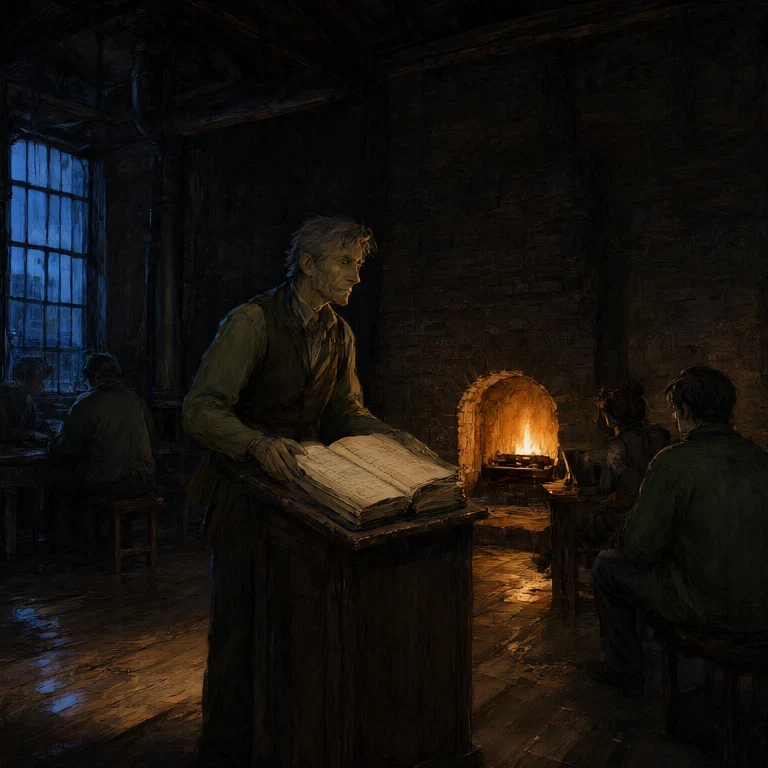
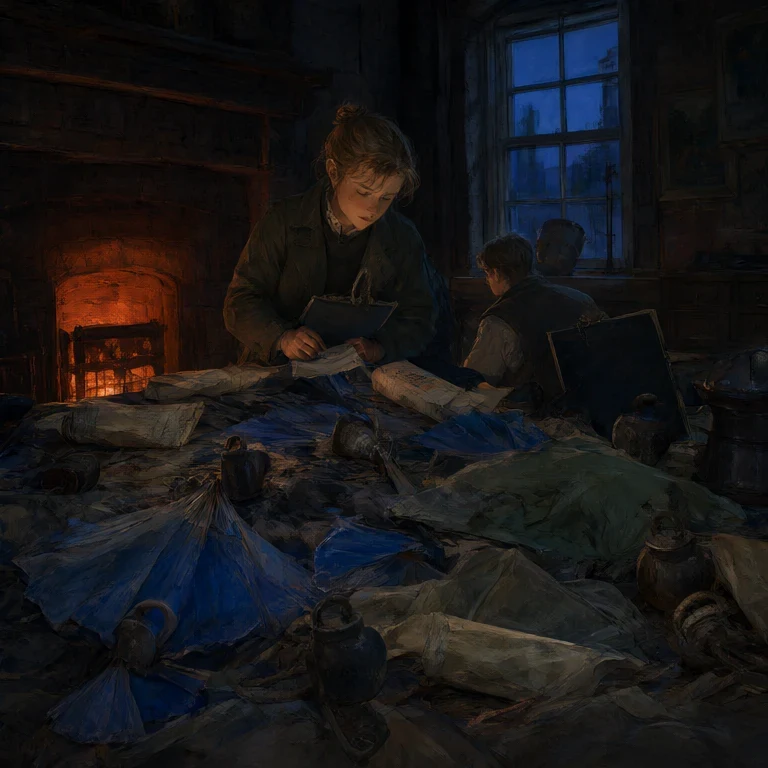
The season’s fans came up out of the canvas tube in the corner, four hundred and fifty-six nights of them, blue and grey and soft as cloth, and they filled the table, and the table filled the room. They were read twice, once by Bess and once by the senior clerk, and the senior clerk read them out loud because Prawd made him, and Bess kept the tally in the left margin, and the tally ran past the ruled line and out onto the bench. There was one mark on the fans that was not in the column. The nineteenth of December. Hearth 5,077, short by two pounds one ounce, entered in the column on the wrong leaf, at the foot, in the year before, where a clerk closing a page in a hurry puts a line and signs it.
“So the count in the year is one over,” said the senior clerk, “and the count of marked names in the city is one under, and it is the same mistake seen from two ends.” “It is the same mistake seen from two ends,” said Prawd, “and the hundred-and-first is a number in a book and not a person in a city. Nineteen days ago, and the man is marked and does not know it, and in three weeks he will try to hold a lease and be told he cannot, and it will take a man a whole afternoon to explain it to him, and he will be sixty-one.” He squared the volume on the lectern. “So we have two entries to enter tonight and one to rule out, and I want both entries made before I say one word about the other, because the nineteen days is a live man and the fifty-four years is a line.”
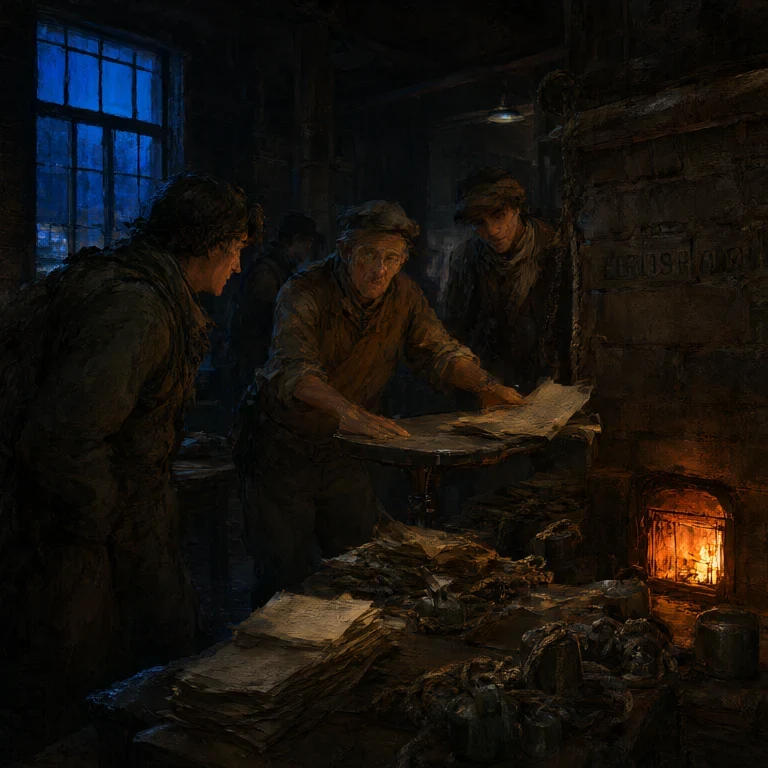
They entered 5,077 at its date, in black, in the column, in the ordinary way. Bess Tallis entered it, and initialed the margin, and did not take the slate away. The stroke through 2,814 was one diagonal, once, the way a man rules through an entry he is not willing to strike out. It went across the number and the date and the brown ink and the ruling of nineteen fifty-eight, and the number stayed legible underneath, which is the entire intention. Beside it, in the same hand, Prawd wrote: EXCEPTION. MARK OF XII.XII.71 ON RE-INSERTED LEAF. HEARTH EXTINGUISHED BY ORDER IX.XII.71. NOT OF THIS YEAR. NOT READ. “Not of this year,” said Bess. “It is of 1971.”
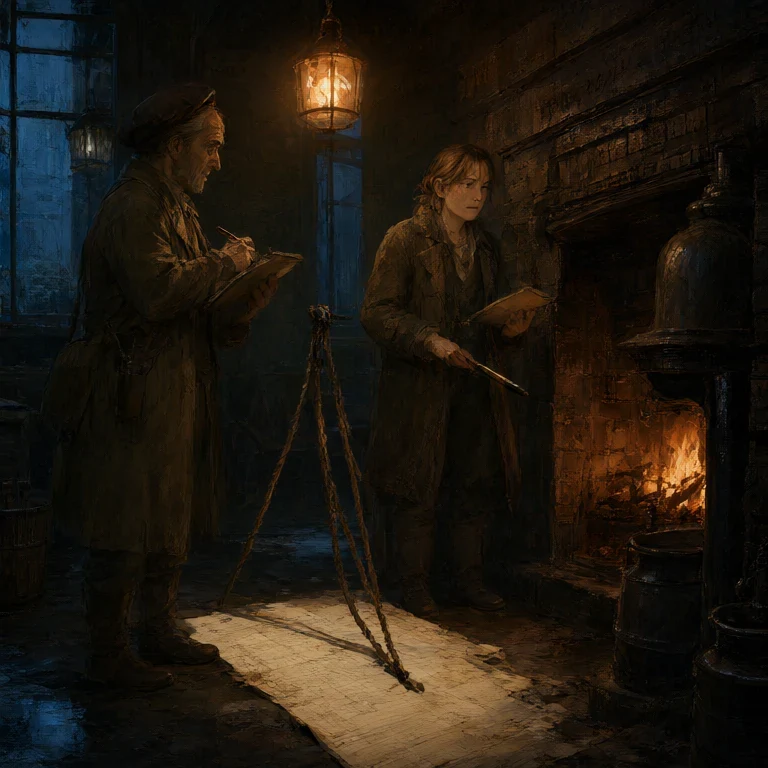
“It is of 1971,” he agreed, “and the year is a date in a column, and the year we are reading is this one, and I am not going to stand in the coldest room in Emberwyke and explain to six hundred people what a leaf is.”
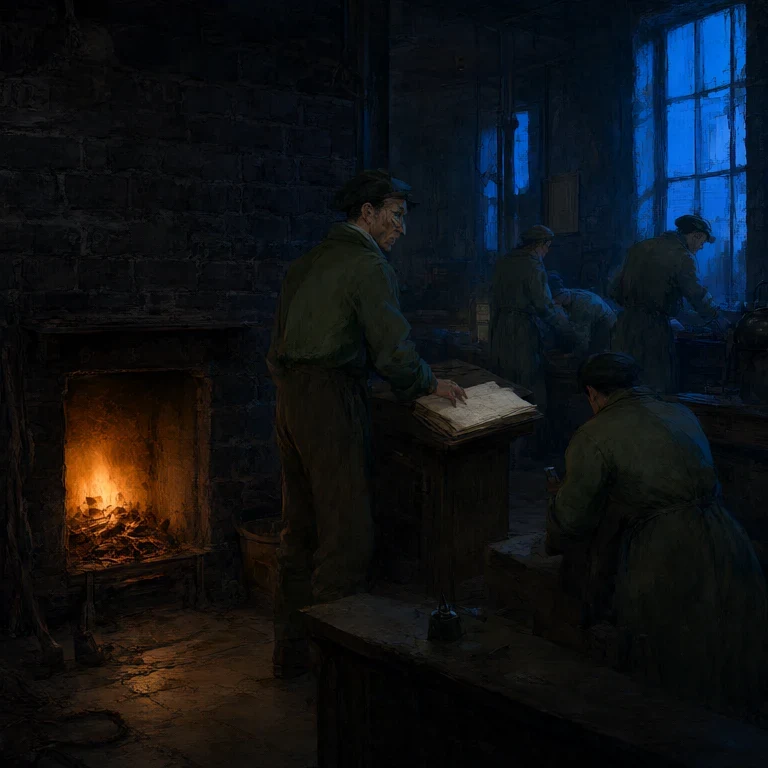
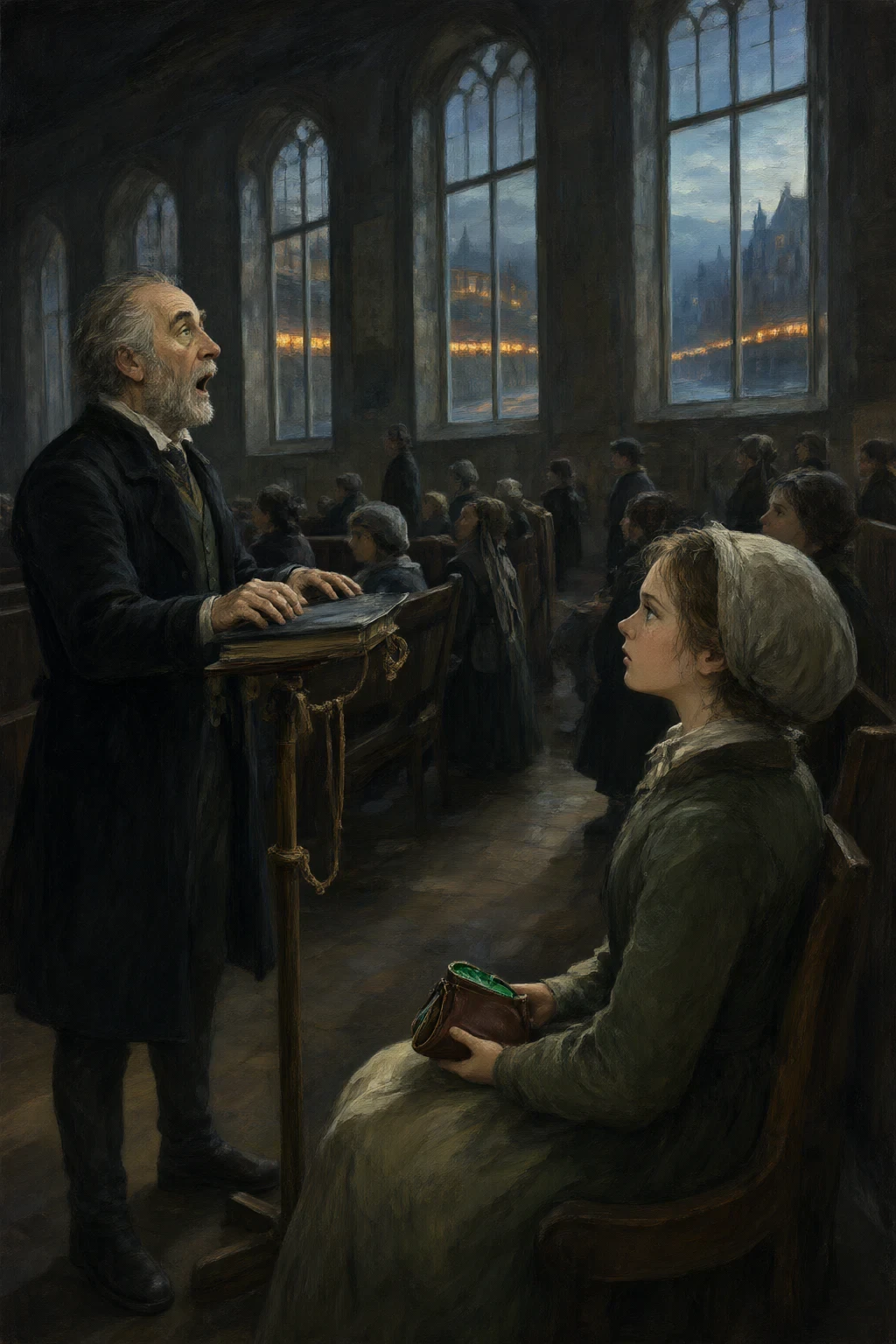
The lighting-up was at four, and the reading at half past three, because the reading is done in the cold before the fires go up, and the city sees it from the street. The Salt Hall has six tall windows and no fire in it and never has had one. In December the glass sweats on the inside and the floor is the coldest stone in the city, and by half past three there were nine hundred people in it. Prawd read from a slate on a reading stand, one voice, and the rules are that he does not stop, and does not explain, and does not look at anybody, and the room is told that if the reading is stopped the year is not read. Bess Tallis stood at the end of the slate with her hand on the frame, and turned no pages, because there were none.
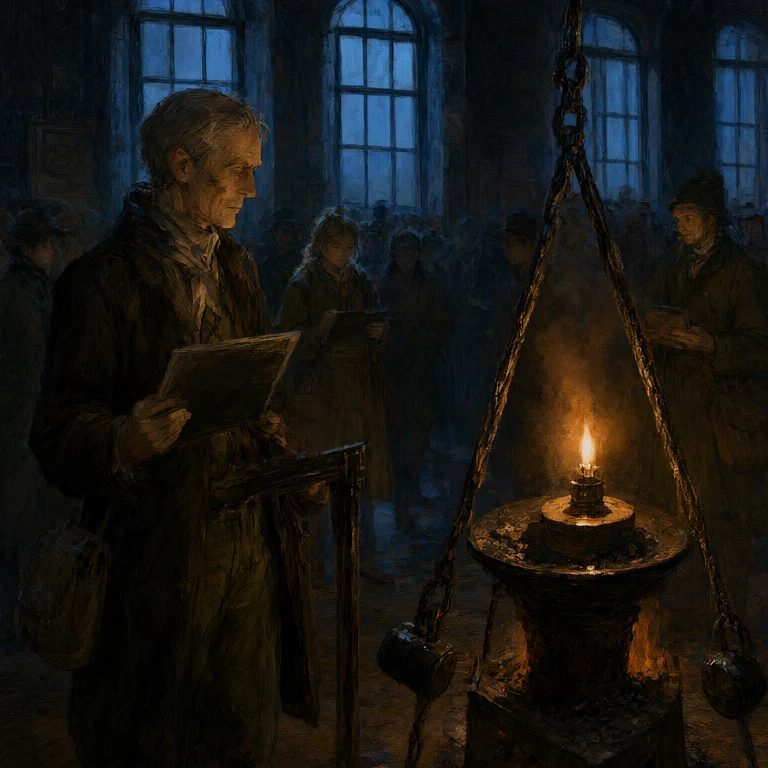
The hundred took forty-one minutes. I do not set them all down, because the room had heard them for four winters and had stopped hearing them, and because a name is the smallest thing this city owns. One thousand nine hundred and four, of Cinder Row. Six thousand two hundred and twenty, of Ember Lane. Seven thousand one hundred and thirty-three, of the Coalquay. Two thousand and ninety, of the Rope Walk. And after the last of them a woman said “that one is mine” in a voice that carried no further than the bench she was on. At the end of the hundred Prawd stopped, which he was not permitted to do, and the room waited, and the six tall windows had gone from grey to blue, and outside, down the length of Sallow Bridge, the first of the winter’s fires were going up along the walls one after another in a long low line, orange, low down, at the mouths. Then he turned the slate.
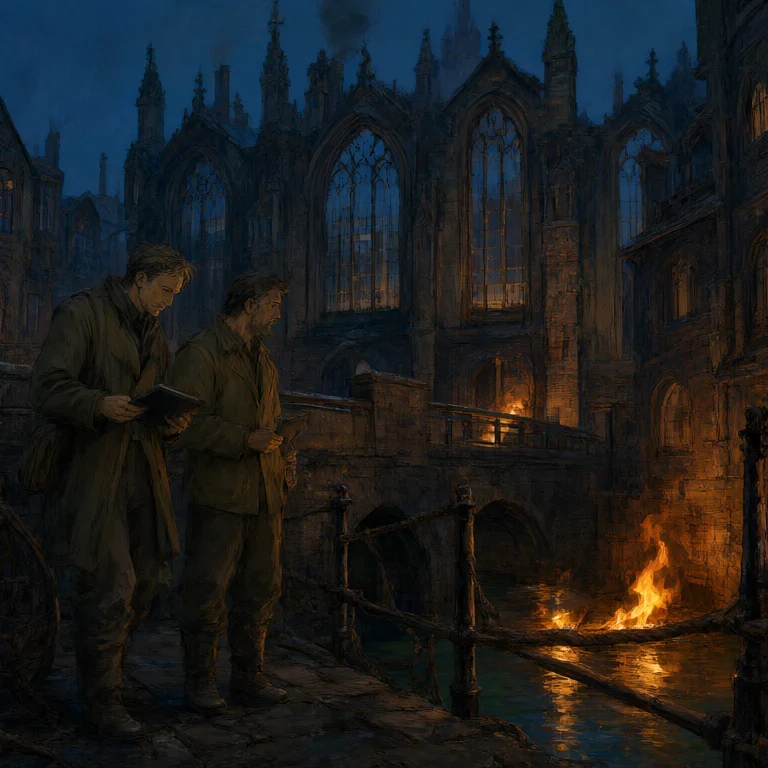
“Two thousand eight hundred and fourteen,” he said. “Tanner’s Gate. The name of Tarn.” Six hundred people did not move. A woman near the middle of the standing room said, “That is my mother’s,” to nobody in particular. Cobb Renn was in the third bench with a leather purse against her knee and the green wax showing at the mouth of it, and she did not open it, and that was the whole of what she did.
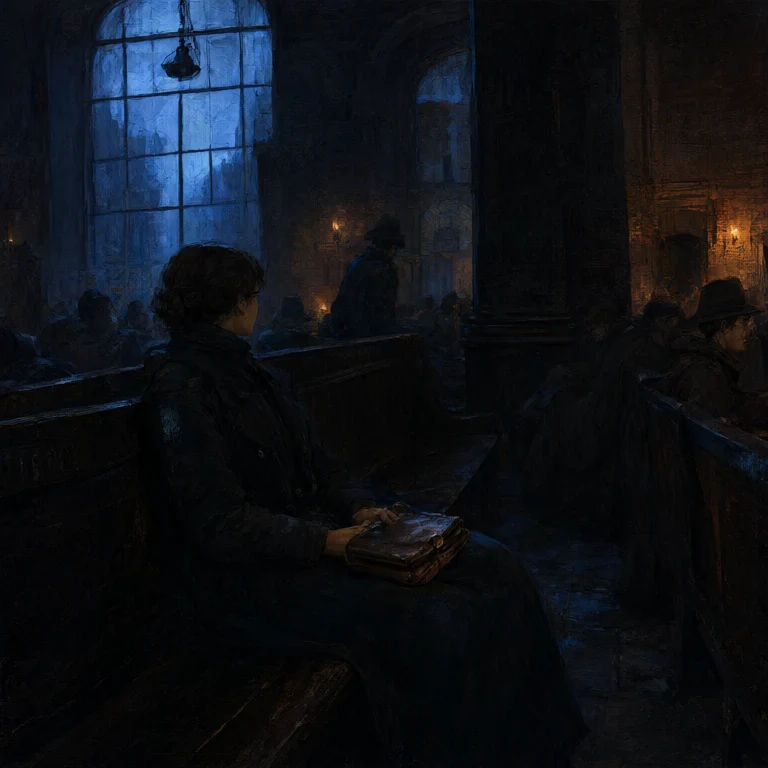
“That is the hundred and first, and it is an exception,” said Prawd, “and I am required to read the exception. The number was marked on the twelfth of December, 1971. The hearth was extinguished by order on the ninth of December, 1971. The mark belongs to a house that has not existed since 1971. It is not of this year, and it is not of any year that is being read tonight.” He looked at the room for the first and only time. “It is the only line in the year that I have read that is not a person. I have read it, because it is in the column, and the column is what it is. I have not read it as a name.
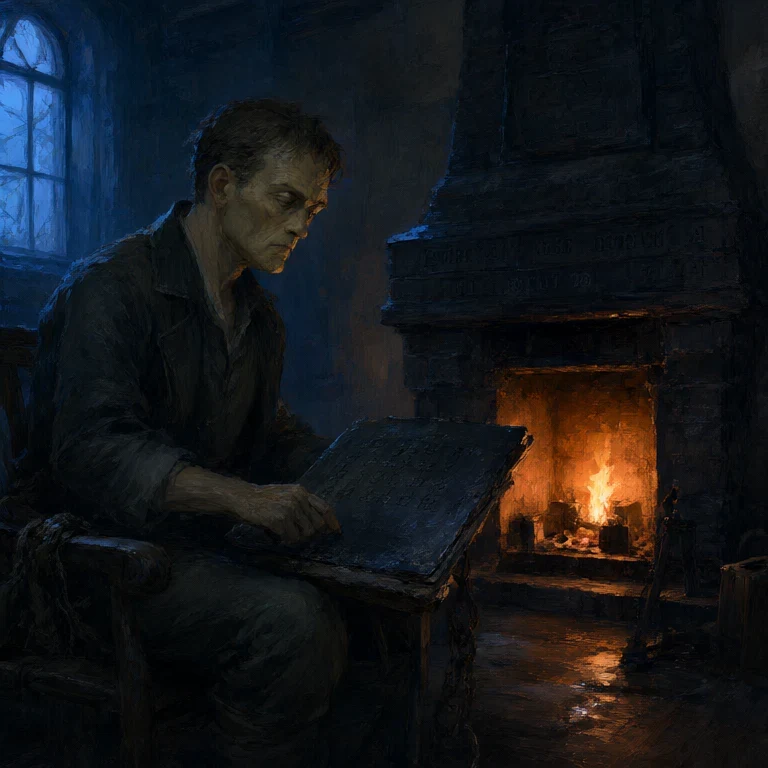
The Hall will have it in the frame with my initials against it, and in fifty years somebody will take the frame down and read the initials and not the line, and that is the correct arrangement, and I have had a very cold afternoon.” Then the fires went up outside the glass, all down the length of the bridge, and the room began to move, and it took another twenty minutes to clear, because nobody in Emberwyke has ever been the first person out of a room.
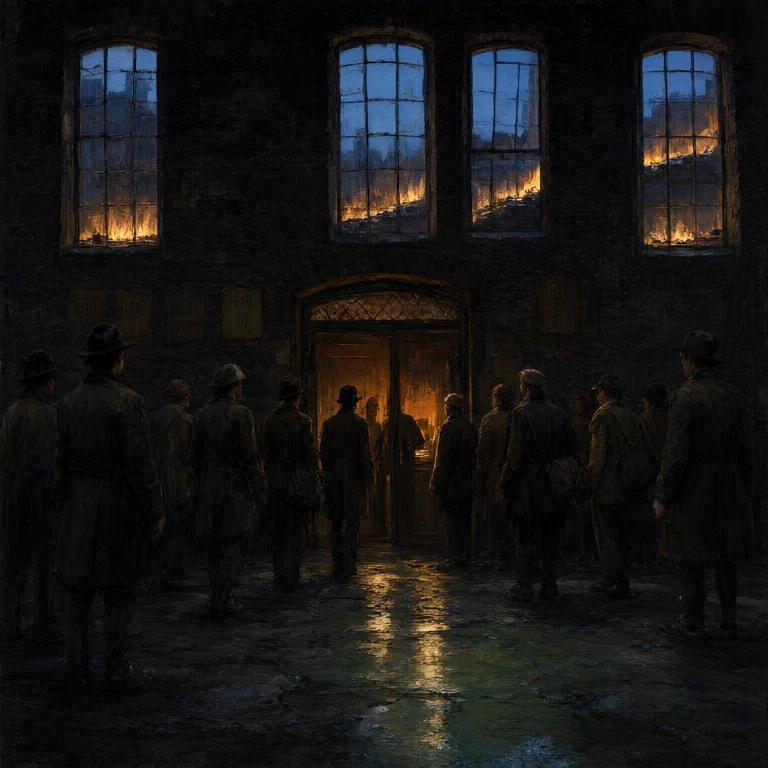
On Tanner’s Gate, number 2,814 is in the third course of the brick with the casting hand’s tick under it, and the house it was on has been a lock-up store since the winter of 1971, because the city was ordered to take it to the Slag Bank for fill and never did, and a store is not a hearth, and a store is not on the roll, and the key has been on a nail inside that door since 1971, and nobody has ever struck the number off the index. In the morning the clerk who rules the margin of that column will rule four ink strokes against the entry, the way she rules them against everything in it, and the four strokes will mean that the exception was read, and struck, and the slate turned, and the year closed, and nobody will look at them again for fifty years.