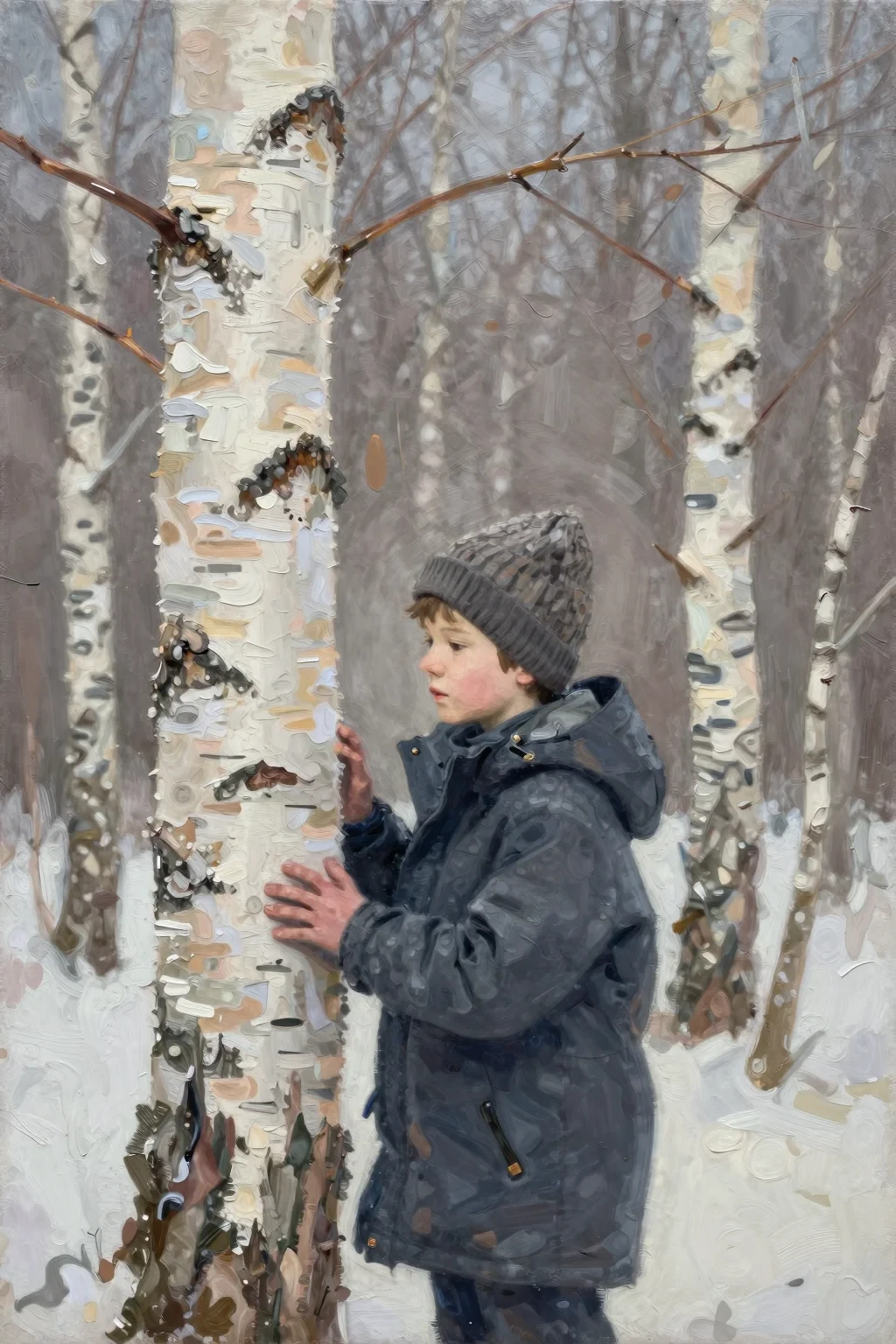
Every village with a wood at its edge keeps one custom, and in Starn it belonged to the North Wind. The rule was this. The North Wind is a guest, and a guest is fed before he is asked for anything, and a guest waits for the answer to whatever he asks. A village that forgets the first loaf of winter loses a year of grain to a single night.
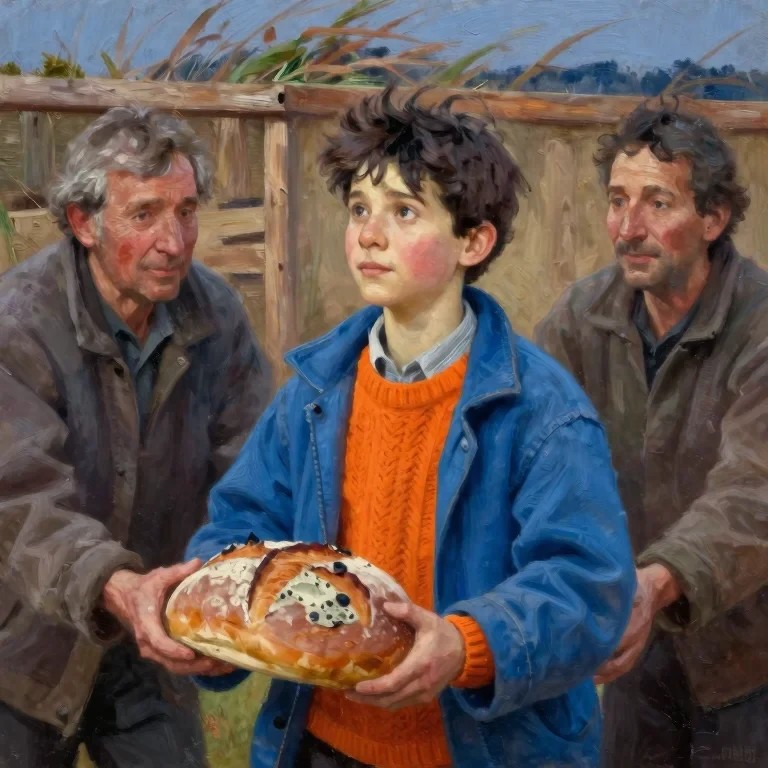
The year before, they had forgotten, and Timo was six. He remembered the wind coming down on the fields at dusk, and afterwards the barns full of chaff. So this winter the reeve said the custom would be kept and picked a child, and Timo's mother pushed a loaf into his hands at the top of the lane. “It is the year's first loaf,” she said. “And you are not to give it away.” He nodded and went up the path while she was still talking.
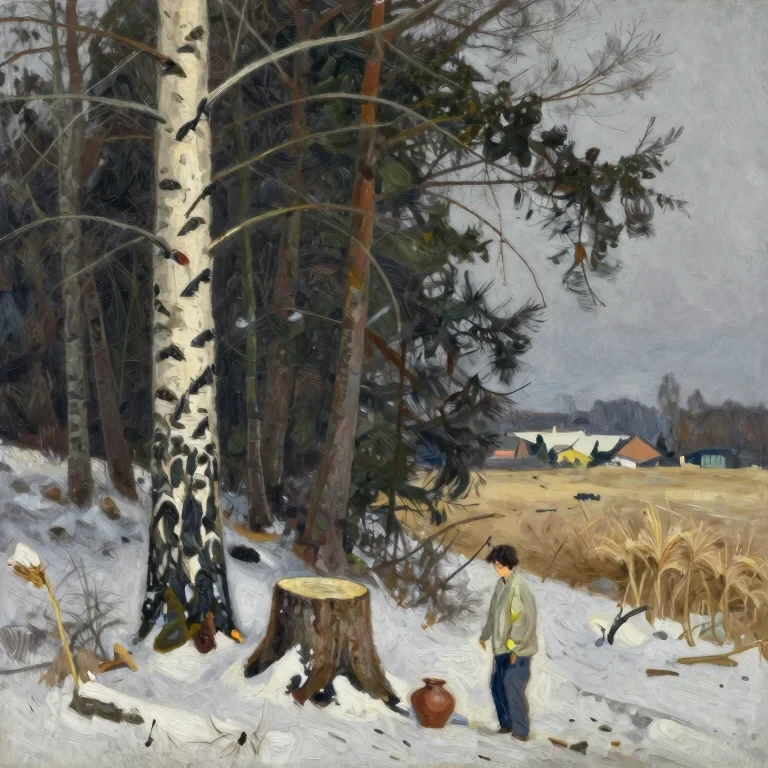
Timo was eight. He carried the loaf in his two hands, which filled them both, and the crust had his fingerprints in it from his grip. He was to take it to the birch stump by the north edge, where the table stood. He saw it from his first step: no cloth on the plank, no knife, no cup, and the plank grey and bare in the snow.
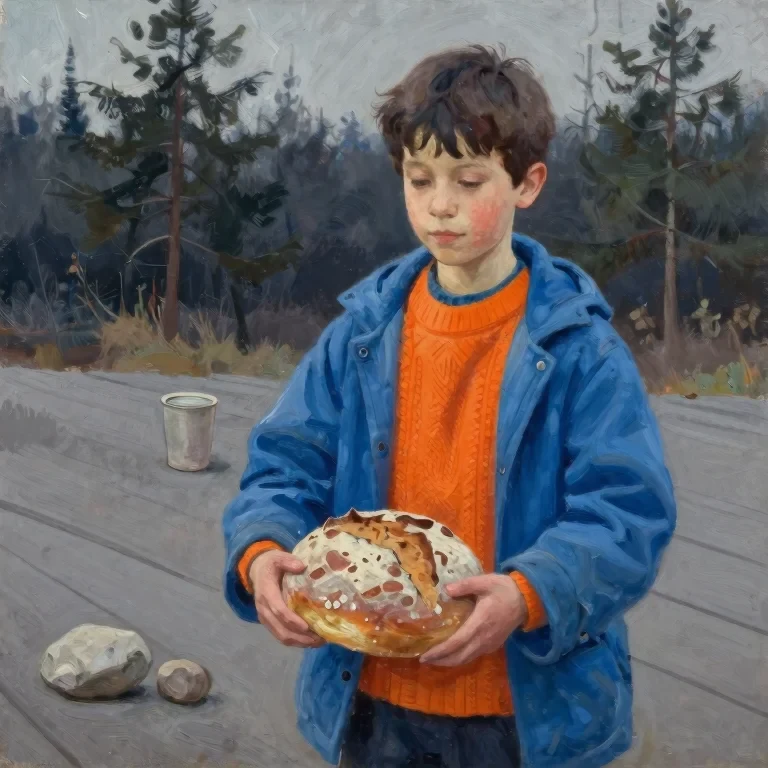
The wind arrived as a pressure, like a hand laid flat between his shoulder blades. “Good,” said a voice in the trees, pleased, and not loud at all. “The year's first loaf. I will take it kindly.” Timo was not afraid. He was sorry, and sorry is quieter than fear. He held the loaf out. The first mouthful took the crust. It lifted off the top in one piece, the way a lid comes off a pot, and it was not on the ground and not in the air.
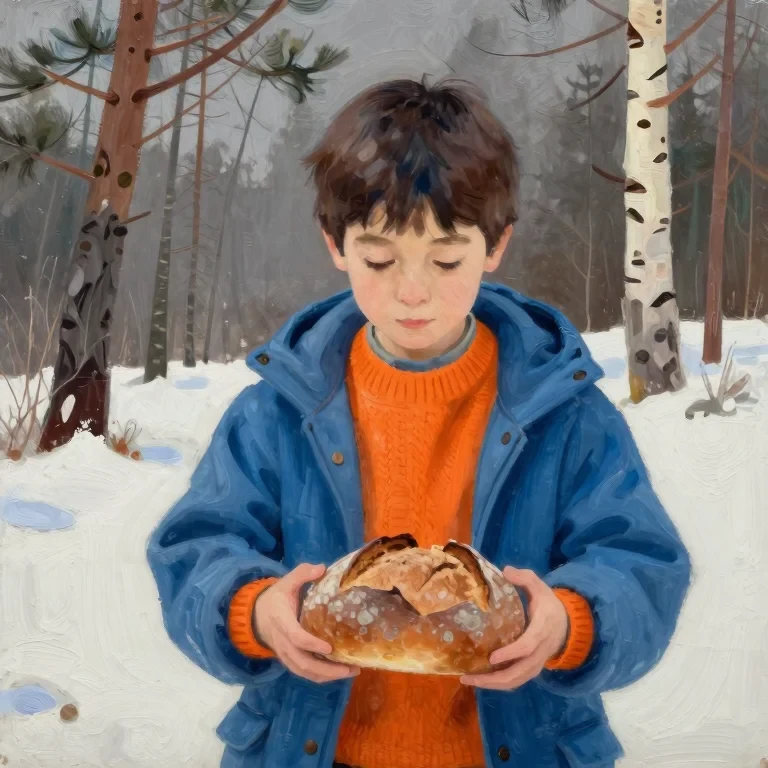
The second mouthful took the middle. The loaf went down in the middle first, softening like wet paper, and the crust cracked all the way round it, and the weight in his hands went from a loaf to a shell. The third mouthful took the heel, the hard brown end nobody had wanted. Then it was gone. Timo held his two hands out flat and waited for the crumb, the way you wait for a spoon, and no crumb came. What was left lay across his two hands in three ragged pieces, and crumbs stuck in the creases of both palms.
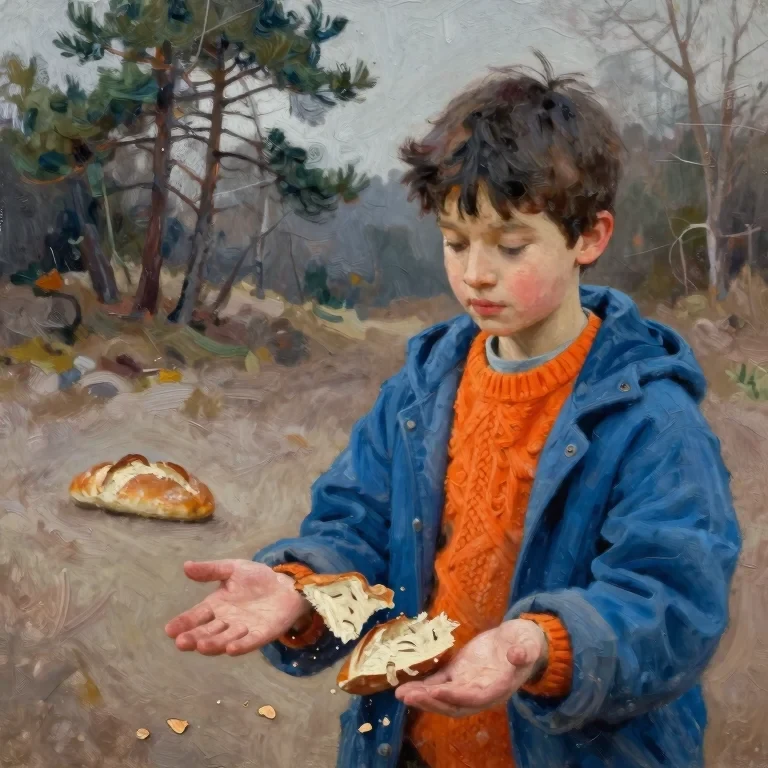
“Now,” said the wind, quite pleasantly. “You have not laid a table.” “No,” said Timo. “Then I will take the harvest,” said the wind. “Everything standing and everything in the barn, in one night.”
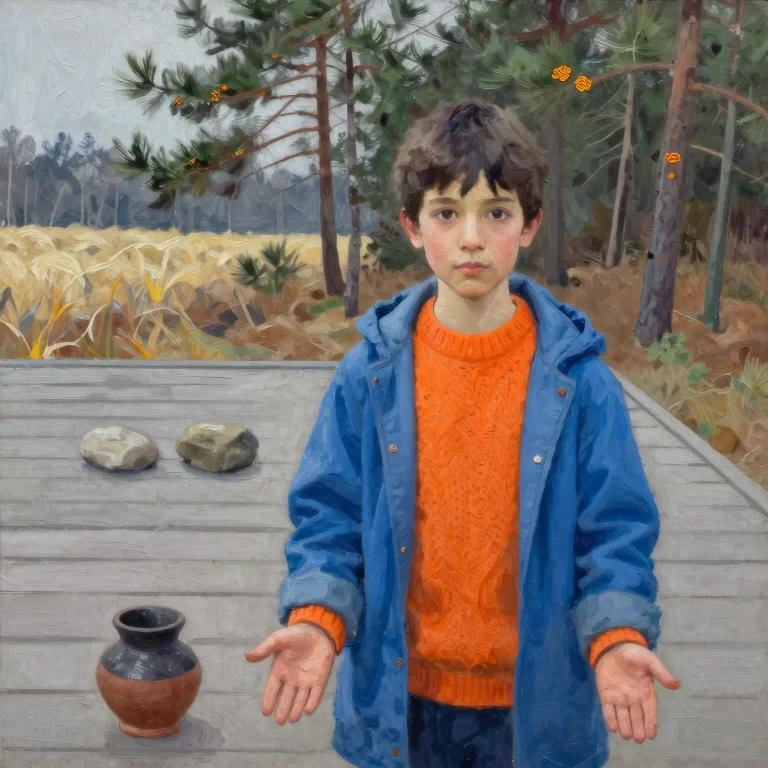
“They did not send you out empty-handed,” he said. “They sent a child, and they sent the first loaf out of the oven, and you have eaten it.” “Then you have had your supper, and you have asked me a question, and I must give you the answer, because a guest waits for the answer.” The trees stopped moving. That was how Timo knew the wind was deciding.
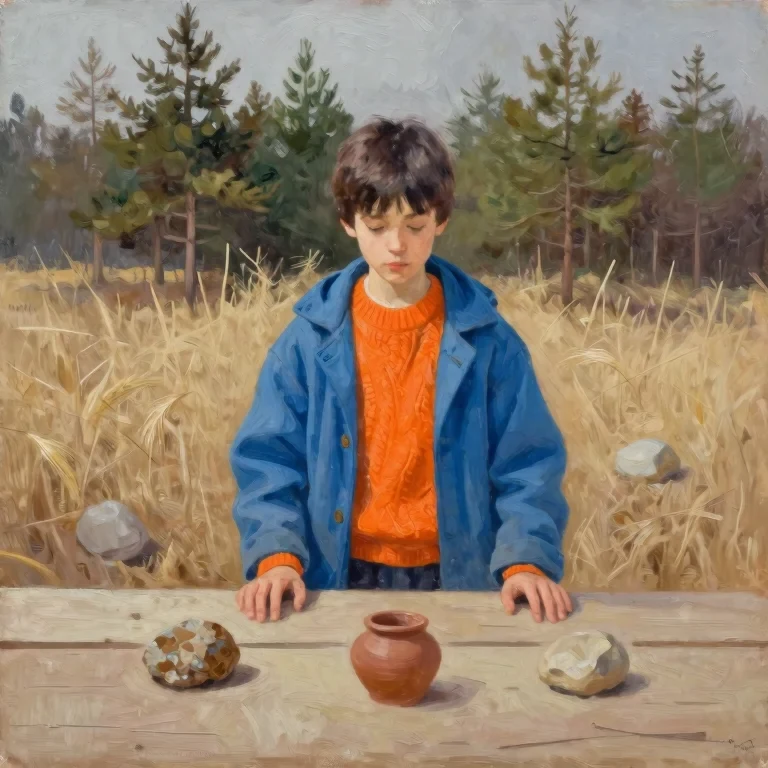
“The answer is no,” said the wind at last, and it sounded almost disappointed. “Not this year. They sent a child and they sent a loaf, and there is that much order in it.” “You will go hungry,” said Timo. “I will wait,” said the wind. “I am good at waiting, and I must have a chair to sit in before I am answered.”
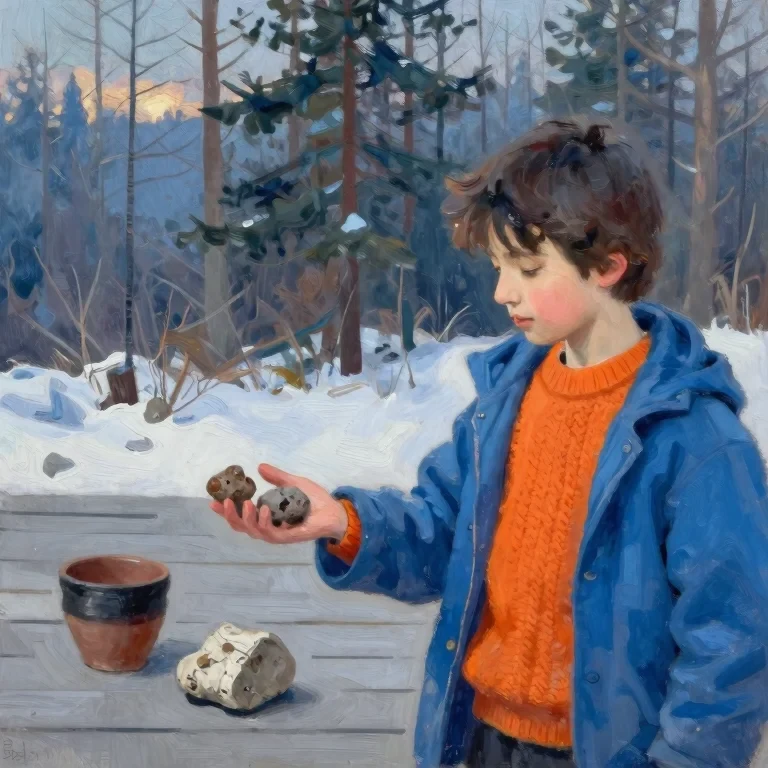
The next morning the reeve had nine men up the path before light, cutting a plank and two stones and a cup, and by noon there was a table at the north edge of the wood with a cloth on it, a knife, a cup of water, and a pinch of salt. They nailed the pattern of it to a board in the square, and every first morning of winter since, a child has carried the first loaf out and set it on the cloth.
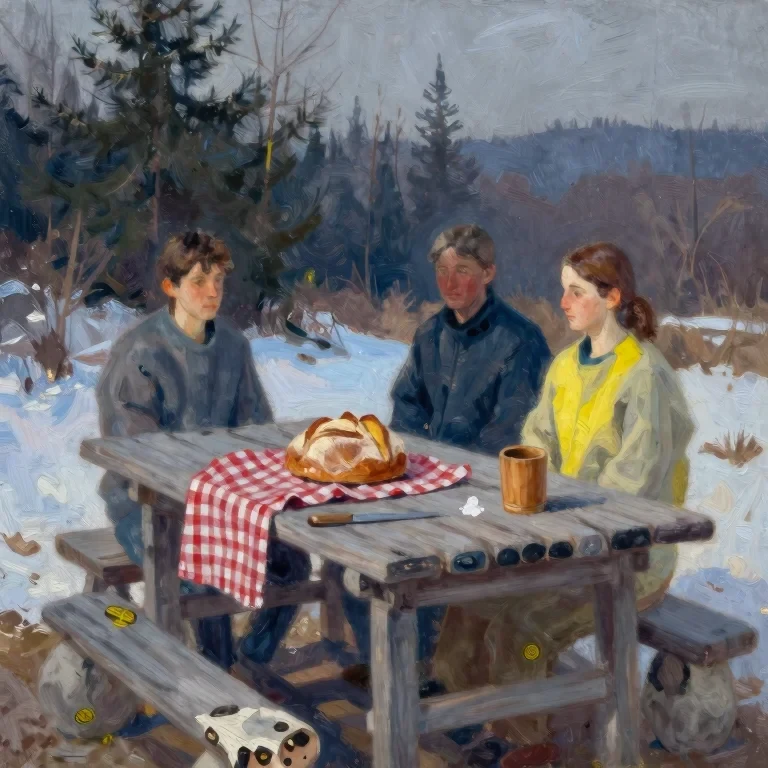
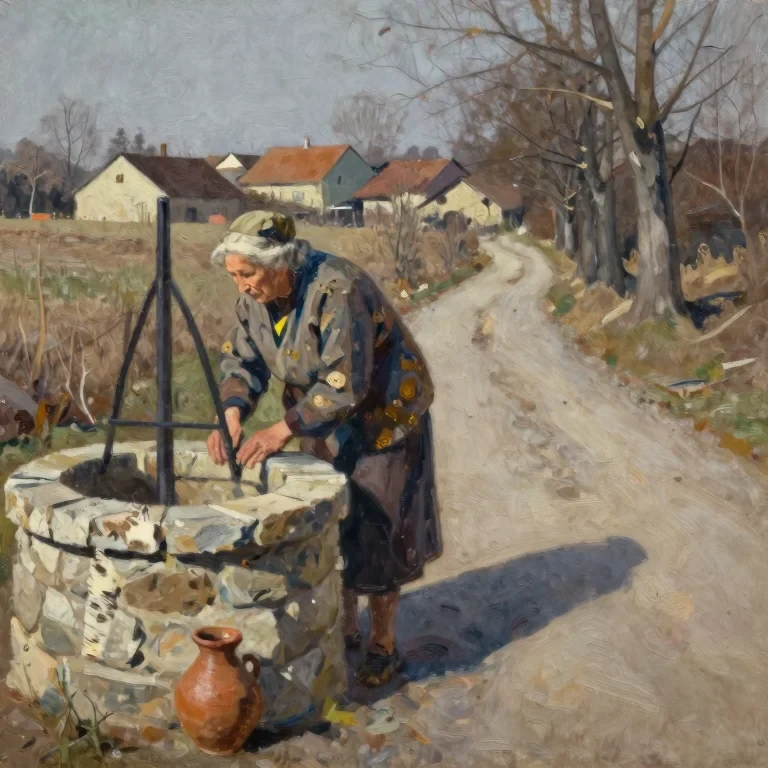
The old woman by the well watches the child go up the path and waits until the path is empty again. You keep the custom, she says, or you pay for the forgetting.