
The town of Wrenford had nine hundred people, one river, and four hundred years of not owning it. There was no deed to the Wren anywhere in Wrenford. The water belonged to nobody and everybody in common, so anybody in the town could take from it for any ordinary use, which meant the mill could grind and the Ings, the low water-meadow below the weir, could be cut for hay. Keeping that working was a trade, and the Ardles had been in it four generations.

Keeping the bank meant mowing the shoulder of it twice a year, and cutting the ditch along the top so the water went where it was supposed to go, and opening the sluice at the Ings in the spring and shutting it in the autumn, and after a flood going out along the two miles of it with a pole to find where the bank had gone, and putting it back, unpaid and in season, for the sake of everybody's hay.

Nemi was fifteen, and she was the fourth generation, and she was the last one, because her mother had gone to the coast at eleven and her aunt had married a man in Selby and did not come back. She could find the water line at the sluice by looking at the wall, and she could read a gauge, and she knew where the old channel went, and nobody else in Wrenford knew that last thing except a man who was seventy-nine.

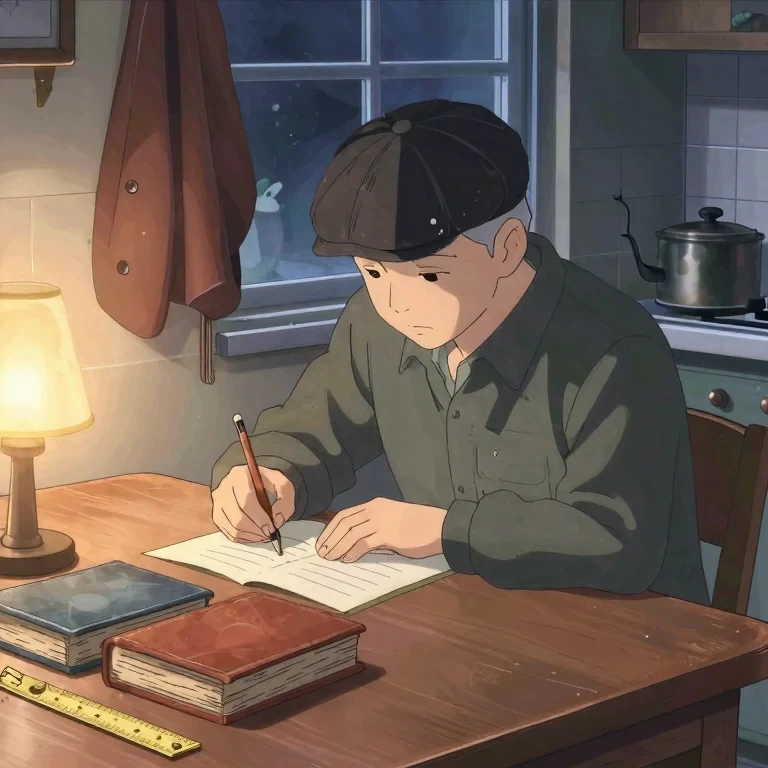
Her grandfather was Wynn, and he had been on the bank forty-one years, and he carried a folding rule in his coat pocket and a brown coat with the right sleeve patched and a two-inch bristle of white on his chin. He had kept a book since the year his father died. Three of them, one for each decade, and every evening in the growing season he wrote in the top one the depth of water in inches at the sluice, the state of the ditch, what had been done, and the date. “You do not argue with a book,” he said to Nemi the first time she asked what the books were for. “You keep a book of your own and let it be old.” Nobody had ever called on it. That was the word at the town clerk's office, and it was said kindly.
The company came in June. It was the Coldwell Water Company, and it had a claim of its own registered at the county town in May, on the upper Wren, above the reservoir, and it wanted a licence to take a quantity that was not yet fixed and would be fixed in the third year. The town clerk read it out at the water committee in the schoolroom and then read out the other parts of it, which were the parts that mattered.

The town's take of the Wren was not a right any more. It was a licence, and a licence had a fee, the fee was per unit of water, and a unit had to be measured by somebody the company accepted. The company would be the accepting party. And the schedule was set out in a table with three columns. The first year, the same as now. The second year, a tenth less. The third year, a third less than the first year. After that, a third less again, held. “Nothing happens this summer,” the clerk said. “That is what the table says. The river is where the river is.”

Nothing did happen to the river. Nemi went down to the sluice in June the way she had every year of her life, and the water came over the sill, and the Ings were green, and the swifts were in the sallows. Everything that happened that summer happened in an office, at a table, in a book, at a price.

Then Wynn was pushed off his own work. It was done with a letter, and the letter was polite. The bank works were being put out to a contractor from Selby, who would mend the bank and cut the ditch to a specification drawn up by the company, and the bankwardens of Wrenford would no longer be needed, and would they please keep to their own reaches. Wynn read it twice at the kitchen table and put it down and said, “Then somebody has to show them where the ditches are.”

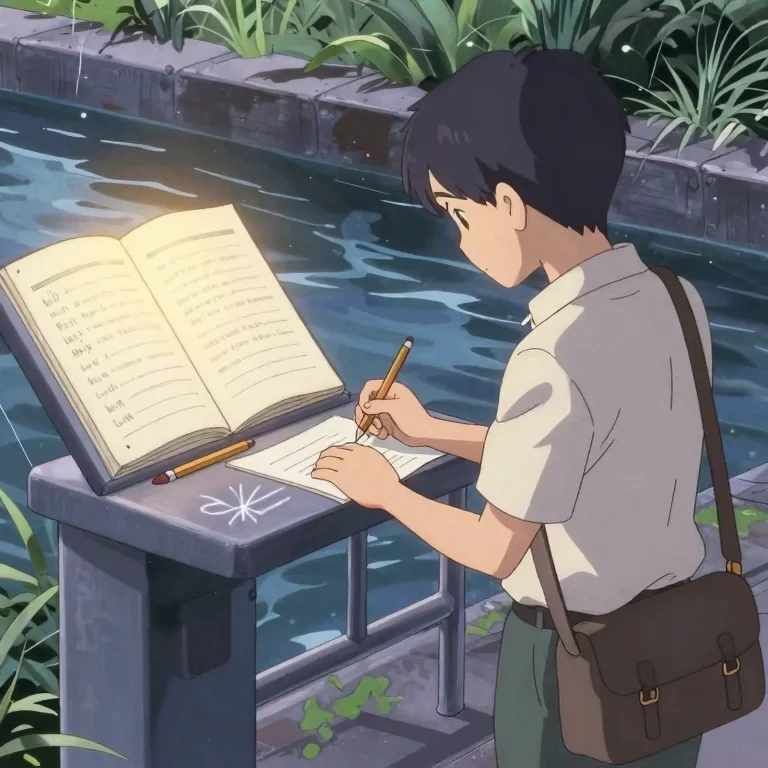
So Nemi took the readings. She began in the first week of July, at the sluice, at six in the evening, because six was when Wynn had taken them for forty-one years. The method was his. A wooden bucket, a string with a stone on the end, and a line marked in inches with a nail and ink. She let the stone go and waited for it to stop swinging, and read the mark where the string came out of the water, and wrote it in the book in Wynn's hand, because he had told her to keep the hand the same. Then she went to the gatepost of the sluice house and drew the day's figure in chalk, low down, where the rain would not get it. The post had a chest of marks on it going back years, in three or four hands, in chalk and in pencil and once in what appeared to be charcoal.

The company sent a man in the second week. He was twenty-four, and he had dark hair, and a grey coat with a small white mark on the cuff that meant nothing to anybody in Wrenford, and a permit book under his arm, and a folding rule of his own. His name was Fen, and he had been in the job two years, and he asked her what the marks on the post were. “Water,” said Nemi. “Every evening since my grandfather was thirty-eight.”

Fen looked at the post for a while. Then he took out his book, asked her the date, wrote the date and the figure down, and said that the figure he would send up to Selby was the figure he had measured, and not a figure in a table. “That is the only one I am allowed to send,” he said. “There is a column in the book for what is wanted. I have never had anything in it.”
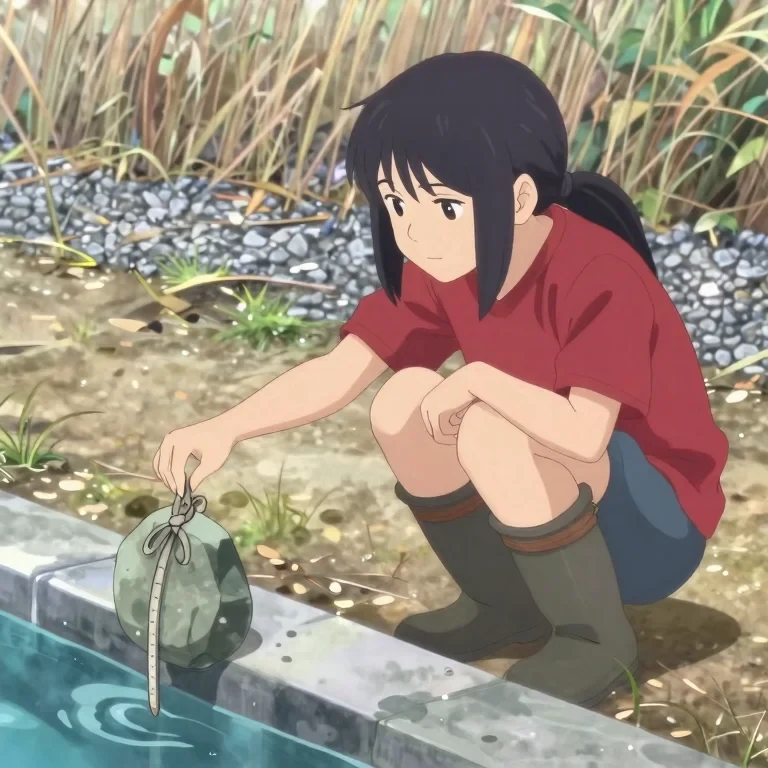
She showed him the old channel that afternoon, because the section of the Cut he was surveying ended in a straight line on his plan and the water was not there. It started at the mill pool, where the old river had run before the Cut was made in a year with no name left. It went under the road at the ford, through a stone arch that had been a bridge once. It ran along the willows for half a mile where nobody could see it, and came up into the sluice at the Ings, and the sluice was where the meadow's water came from.

Wynn had walked her over it when she was seven, and he had said, once, that the day would come when somebody with a plan in his hand would ask her where the old river was, and that she was to answer and to be exact.

The arithmetic came out in Wynn's kitchen on a wet evening in August, on the back of a seed catalogue. The Ings' sluice had to have so much water standing above it to discharge, and not much. The sluice was old and the notch was worn. It wanted four inches over the sill to spill into the meadow, and in a dry August it had three and three-quarters, which is a thing you can read off a post.
A third less water in the river meant less standing in the old channel, because the old channel was the low place and the water stood in it first. Take a third out of the river and you took it out of the old channel before you took it out of the Cut, which was cut deep and straight over a bed of stone. The new figure for the sluice was not three and three-quarters. It was two and a quarter. Below two and a quarter, the sluice did not spill at all. The Ings did not get wet enough to cut hay, and the hay at the Ings fed the town through one winter, and three families took the mowing there.
Wynn had the thirty-one years of it, and that was the whole value of the three books. They showed the sluice figure in June, July and August for thirty-one years, and the lowest it had ever stood in the third week of August was three and an eighth, and that was the year the Ings had not been cut at all.

What the company wanted was not what anybody in Wrenford had expected. The Coldwell Water Company was not a set of men laughing in a room. It was a company with a claim, a schedule and a table, and the table had to be defensible, and a schedule that took a third of the water out of the Wren without evidence of harm was a schedule that got an enquiry into it. So the company asked Wrenford for its figures.

They asked the town clerk, and the clerk asked the water committee, and the committee asked the one man in Wrenford who had thirty-one years of them, and Wynn went to the schoolroom with the three books under his arm and put them on the table in front of eleven people. And nobody would take them off his hands. They were not in the form. They were the notebook of a bankwarden whose work the company had already put out to a contractor, and one of the aldermen said they were thirty years of a man writing in a shed, and nobody contradicted him. The clerk said he could not put an unofficial book into a county file. Wynn said he would not have him put it in.

Nemi was in the room and she said nothing, and afterwards, walking home, she thought about how far a number got on the kind of paper it was written on.

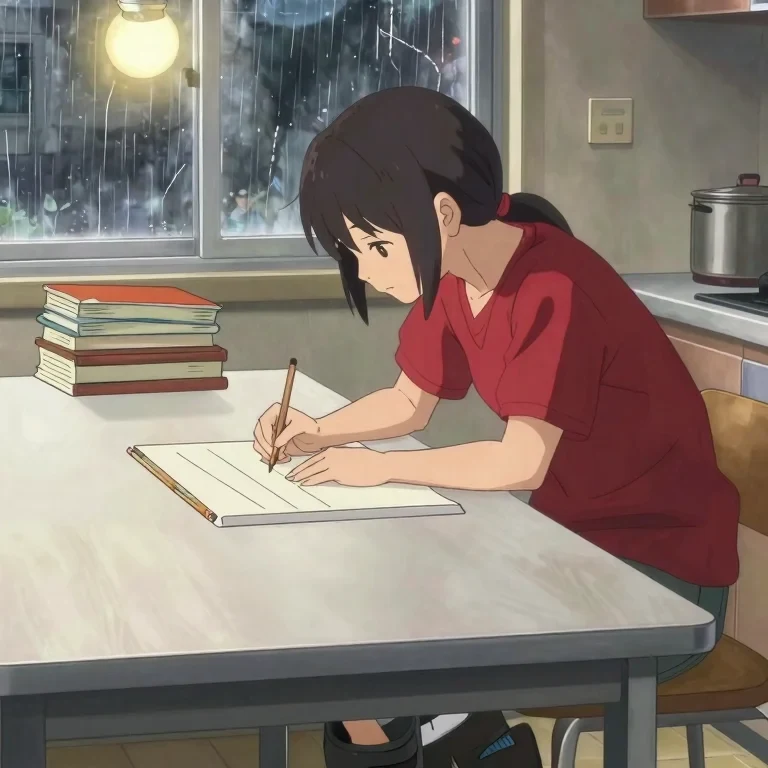
She went back the next morning and did the only thing there was to do, which was to make the numbers official without making her grandfather the man who had said them. She copied the figures out of the three books into the company's own form, every one of them, for thirty-one years, in a fair hand, and she signed it with her own name, which is not a bankwarden's name, and then she walked it down to the post office in the next town and sent it registered to the Coldwell Water Company's address, and it cost her fourpence, which she had.
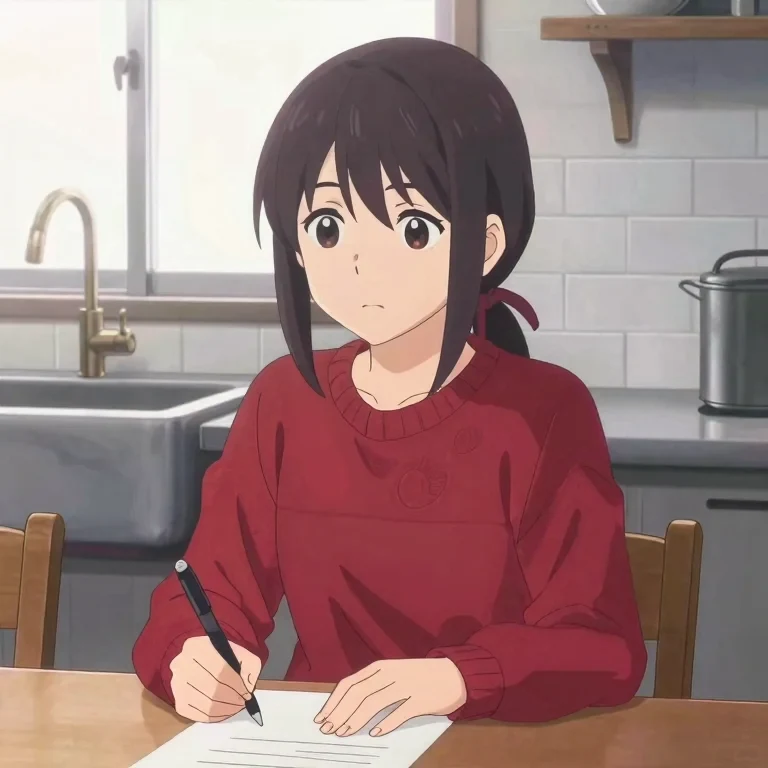
Nobody told her to do it and nobody approved it. Her mother's people would have told her to wait. The clerk called it a child exercising a right of access to an abstraction record, and then he wrote a letter about it, and the letter went to Selby, and the third letter came back.
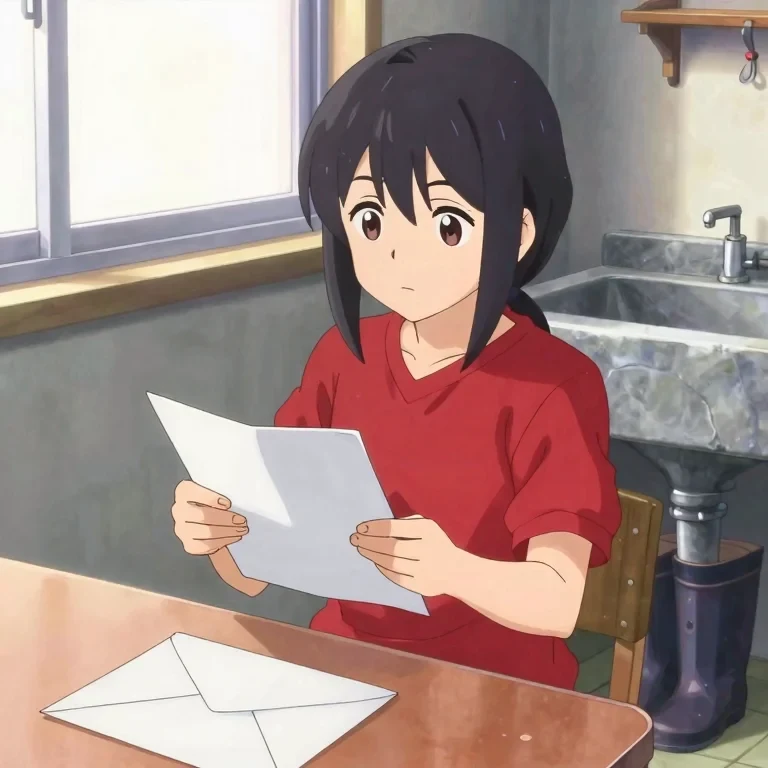
The answer came in the last week of September, and Fen brought it up himself on a bicycle, and he read it standing in the yard. The reduction was cut in half, the second year was deferred, and the sluice level was written into the licence as a condition, in inches, at four, and the company would pay for a gauge on the sluice house. Then he said the rest, which was that the bank works in Wrenford would be given to the contractor from Selby, and that the bankwardens of Wrenford would be paid nothing and would keep to their own reaches.

So the Ings got cut the following year, and the mill ground its hours, and three families did the mowing, and four inches went into the licence in ink and stayed there as long as anybody cared to look. Nobody in Wrenford wrote to say thank you. And the name of Nemi Ardle was on the first page of a file in a county town, under the heading of persons who have supplied figures, and nobody had ever read that heading. Wynn was never asked about the books again, and his name was on the last page, where somebody had written in a small hand that the earlier figures had been given by a bankwarden of the town and were not in form.

He did not speak to her for eleven days. On the twelfth he came down to the sluice at six in the evening with his folding rule in his hand, and she was already there with the bucket, and they took the reading together, and he wrote it in the book in his own hand, because she had asked him to. “The truth is a weapon,” he said, without looking up from the page. “And the hand that picks it up is still the hand that has to live with it, and it is the same hand every morning at six.”

Then he shut the book and went up the path, and the water came over the sill and went into the meadow the way it had gone for four hundred years. The gatepost had a chest of marks on it by then. The last one of that summer was the highest chalk figure in a month of them, and it stood clear of all the rest, because that was the evening the sluice began to spill again.